

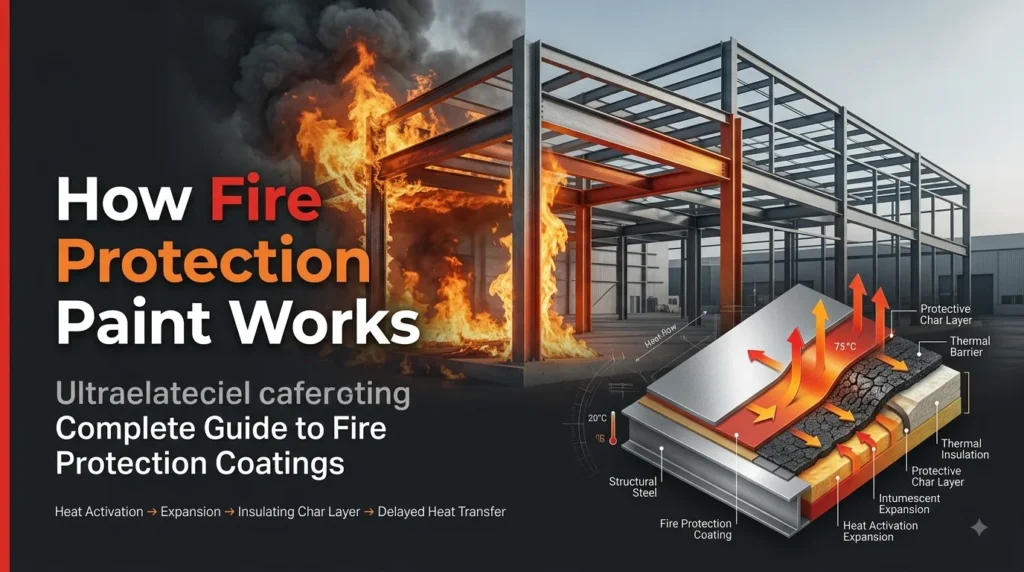
Fire protection paint is a specialized coating designed to help protect structural materials from the effects of high temperatures during a fire. It works by creating a protective thermal barrier that slows heat transfer and delays the temperature rise of the coated surface. This can help reduce the rate at which materials such as structural steel lose strength and stiffness during fire exposure.
One of the most common technologies is intumescent fire protection paint. When exposed to high heat, an intumescent coating expands and forms an insulating protective layer. This layer acts as a barrier between the fire and the underlying material, helping slow the heating process.
Introduction to How Fire Protection Paint Works
Fire protection paint is a specialized coating designed to help protect surfaces from the effects of high temperatures during a fire. It works by creating a protective barrier that can slow heat transfer and delay the temperature rise of the protected material. This makes fire protection coatings an important part of passive fire protection systems for suitable building and industrial applications.
What Is Fire Protection Paint?
Fire protection paint is a coating formulated to provide additional protection to materials when exposed to fire or intense heat. Depending on the coating technology, it may form an insulating layer or expand when heated.
It can be used on suitable substrates such as:
- Structural steel
- Metal surfaces
- Wood
- Walls and gypsum boards
- Other approved building materials
Why Is Fire Protection Paint Used?
Fire protection paint is used to help reduce the effects of high temperatures on protected materials. For structural steel, slowing the rate of heating can help delay heat-related weakening and support structural stability during fire exposure.
Its main purposes include:
- Reducing heat transfer
- Delaying temperature rise
- Protecting structural components
- Supporting passive fire protection
- Helping improve fire safety
How Fire Protection Paint Supports Fire Safety
Fire protection paint forms part of a broader passive fire protection strategy. It remains on the protected surface and provides thermal protection without requiring manual activation.
When correctly selected and applied, the coating can help delay heat-related damage and provide additional time for evacuation, emergency response, and fire-control operations.
How Does Fire Protection Paint Work?
Fire protection paint works by providing a protective barrier between a fire and the underlying material. When exposed to high temperatures, the coating can reduce the rate of heat transfer and delay the temperature rise of the protected surface. This is particularly important for structural steel, where controlling the rate of heating can help delay heat-related weakening.
What Happens When Fire Protection Paint Is Exposed to Heat?
When fire protection paint is exposed to intense heat, its response depends on the coating technology. Intumescent coatings react to heat by expanding and forming an insulating protective layer.
The basic process is:
Heat exposure → Coating activation → Expansion → Protective layer formation → Reduced heat transfer
This protective response helps shield the underlying material from rapid heating.
How the Coating Creates a Thermal Barrier
A fire protection coating creates a barrier between the heat source and the protected surface. In an intumescent system, the coating expands and forms a thick insulating layer when exposed to high temperatures.
This layer acts as thermal insulation and helps reduce the amount of heat reaching the underlying material.
How Fire Protection Paint Slows Heat Transfer
The insulating layer reduces the rate at which heat moves from the fire through the coating to the substrate. Slower heat transfer means the protected material takes longer to reach high temperatures.
For structural steel, this can help delay the loss of strength and stiffness associated with increasing temperature.
How the Coating Delays Material Temperature Rise
The primary purpose of thermal fire protection is to slow the temperature rise of the protected material. The effectiveness depends on factors such as coating type, thickness, substrate characteristics, fire exposure, and correct application.
For steel structures, maintaining the specified coating thickness is particularly important because the required thickness is determined by the approved coating system and required fire-resistance performance.
How Intumescent Fire Protection Paint Works
Intumescent fire protection paint is designed to react to high temperatures and provide thermal protection to the underlying substrate. When exposed to fire, the coating expands and forms an insulating char layer that helps slow heat transfer. This process is particularly useful for protecting structural steel and other approved surfaces during fire exposure.
What Is an Intumescent Coating?
An intumescent coating is a specialized fire protection coating that expands when exposed to high heat. Unlike conventional paint, it undergoes a controlled chemical and physical reaction during fire exposure.
The coating is applied as a relatively thin layer during normal conditions. When heated, it can expand significantly and create a thicker insulating layer that helps protect the underlying material.
How Intumescent Paint Expands During Fire
When the coating reaches its activation temperature, its components react and produce an expanded protective structure.
The basic process can be described as:
Heat exposure → Activation → Expansion → Char formation → Thermal insulation
The expansion increases the thickness of the protective layer, creating greater resistance to heat transfer from the fire to the substrate.
Formation of the Insulating Char Layer
The expanded coating forms a carbon-rich, insulating char layer on the surface. This layer acts as a thermal barrier and helps reduce the rate at which heat reaches the underlying material.
A properly applied coating system can therefore help:
- Reduce heat transfer
- Slow temperature increase
- Delay heat-related damage
- Protect the underlying substrate
- Support the specified fire-resistance performance
How the Char Layer Protects the Substrate
The char layer separates the intense heat source from the protected surface. Its insulating properties help slow the movement of heat through the coating.
For structural steel, this can delay the temperature rise and help maintain the steel’s structural performance for the specified fire-resistance period, when the coating system has been appropriately designed, tested, and applied.
How Fire Protection Paint Protects Steel
Fire protection paint helps protect structural steel by slowing the transfer of heat from a fire to the steel surface. This can delay the rise in steel temperature and help reduce the effects of heat-related weakening during fire exposure. The level of protection depends on the coating type, thickness, steel section, fire exposure, and approved coating system.
Effect of High Temperatures on Structural Steel
Steel does not burn, but its strength and stiffness can decrease as its temperature increases. During a fire, unprotected steel can heat rapidly, potentially causing deformation and reducing its ability to safely support structural loads.
Fire protection paint helps slow this heating process and provides a thermal barrier around the steel.
Slowing the Heating of Steel
Fire protection coatings reduce the rate at which heat reaches the steel. In an intumescent system, the coating expands when exposed to high temperatures and forms an insulating char layer.
This protective layer helps:
- Slow heat transfer
- Delay the temperature rise of steel
- Reduce heat-related weakening
- Support the required fire-resistance period
Protecting Steel Columns and Beams
Steel columns and beams are important load-bearing components in buildings and industrial structures. Applying a suitable fire protection coating can help delay their heating during a fire.
Common applications include:
- Steel columns
- Steel beams
- Structural frames
- Roof-support members
- Industrial steel structures
The required coating thickness should be determined from the approved coating system and the specified fire rating.
Supporting Structural Stability During Fire
By delaying the temperature rise of structural steel, fire protection paint can help maintain the performance of critical steel members for the specified protection period. This may provide additional time for evacuation, emergency response, and fire-control operations.
However, fire protection paint is only one part of an overall fire-safety strategy. Its performance depends on correct surface preparation, compatible primers, specified coating thickness, proper application, inspection, and maintenance.
How Fire Protection Paint Works on Different Materials
Fire protection paint does not work identically on every material. The coating type, substrate, required fire performance, coating thickness, and tested system all influence how the protection performs.
Fire Protection Paint for Steel
Structural steel can heat rapidly during fire exposure. Fire protection coatings help slow heat transfer to the steel and delay its temperature rise. Intumescent systems expand when exposed to high temperatures and form an insulating protective layer between the fire and the steel substrate.
Fire Protection Paint for Metal
Fire protection coatings can also be used on suitable metal and structural surfaces. The coating system should be selected according to the specific metal substrate and required fire-protection performance.
Proper surface preparation and compatibility between the substrate, primer, fire protection coating, and topcoat are important for reliable performance.
Fire Protection Paint for Wood
Fire protection coatings can be applied to suitable wood surfaces to help reduce the effects of fire exposure. The appropriate coating should be selected according to the type of wood, surface condition, required fire performance, and application requirements.
These coatings can be used for suitable wood structures, panels, and other approved wooden surfaces.
Fire Protection Paint for Walls and Gypsum Boards
Walls and gypsum boards may require fire protection depending on the building design and fire-safety requirements. Suitable coatings can provide additional protection by helping reduce heat transfer or flame spread, depending on the coating technology.
The coating should be specifically designed for the wall or gypsum-board substrate and applied according to the manufacturer’s technical requirements.
Types of Fire Protection Paint and Their Working Principles
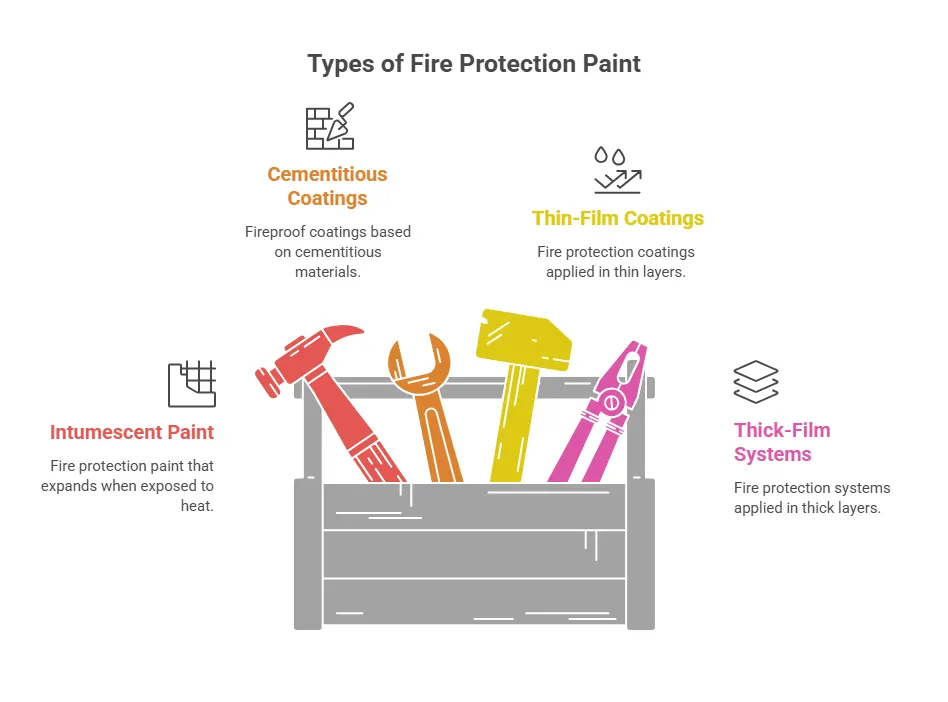
Fire protection coatings use different technologies to help protect materials from high temperatures and fire exposure. The most suitable type depends on the substrate, required fire rating, coating thickness, application environment, and approved coating system.
Intumescent Fire Protection Paint
Intumescent fire protection paint reacts when exposed to high temperatures. The coating expands and forms a thick, insulating char layer over the protected surface.
This protective layer helps:
- Slow heat transfer
- Delay the temperature rise of the substrate
- Protect structural steel from rapid heating
- Support the specified fire-resistance period
Working principle:
Heat exposure → Coating activation → Expansion → Insulating char formation → Reduced heat transfer
Cementitious Fireproof Coatings
Cementitious fireproof coatings provide protection through a thicker insulating layer applied over the substrate. The coating acts as a thermal barrier, helping reduce the rate at which heat reaches the protected material.
These systems can be suitable for selected structural steel and industrial applications where a higher-build protective layer is appropriate.
Working principle:
Fire exposure → Insulating coating layer → Reduced heat transfer → Delayed substrate heating
Thin-Film Fire Protection Coatings
Thin-film fire protection coatings provide fire protection with a relatively lower coating thickness compared with thick-film systems. Intumescent technology is commonly associated with thin-film fire protection.
When exposed to heat, the coating can expand and form an insulating layer that helps protect the underlying substrate.
Working principle:
Thin coating → Heat activation → Expansion/insulation → Delayed temperature rise
Thick-Film Fire Protection Systems
Thick-film fire protection systems use a higher-build protective layer to provide thermal insulation. The increased coating thickness creates a substantial barrier between the heat source and the protected substrate.
These systems may be selected where the project requires a robust insulating fire protection layer.
Working principle:
High-build coating → Thermal insulation → Slower heat transfer → Delayed heating of substrate
Factors That Affect Fire Protection Paint Performance
The performance of fire protection paint depends on more than the coating itself. The required fire rating, coating thickness, surface preparation, primer and topcoat compatibility, and exposure conditions can all influence the effectiveness and durability of the complete coating system.
Required Fire Rating
The required fire rating determines the level of protection the coating system needs to provide during fire exposure. Ratings may be specified in minutes or hours, such as 30, 60, 90, or 120 minutes.
The coating should be selected according to the project’s fire-safety requirements, and the specified system should be capable of achieving the required rating.
Coating Thickness
Coating thickness is a critical factor in fire protection performance. Applying the correct Dry Film Thickness (DFT) helps ensure that the coating provides the intended level of thermal protection.
The required thickness can vary depending on:
- Required fire rating
- Steel section and geometry
- Coating technology
- Fire exposure
- Approved test or design data
Both insufficient and uncontrolled excessive application should be avoided. DFT should be measured and verified after application.
Surface Preparation
Proper surface preparation is essential for good adhesion and long-term coating performance. Dust, oil, grease, rust, loose material, and unsuitable existing coatings can interfere with adhesion.
A properly prepared surface helps:
- Improve coating adhesion
- Reduce premature peeling
- Support coating durability
- Improve the overall performance of the coating system
Primer and Topcoat Compatibility
The primer, fire protection coating, and topcoat should be compatible with one another. An incompatible layer can affect adhesion, durability, and the performance of the complete system.
Before application, verify:
- Primer compatibility
- Fire protection coating compatibility
- Topcoat compatibility
- Recommended application sequence
- Required drying and curing conditions
Indoor and Outdoor Exposure
The environment in which the coated steel is installed can significantly affect coating durability.
Indoor steel may be exposed to humidity, condensation, chemicals, dust, or mechanical impact.
Outdoor steel may face rain, moisture, UV radiation, temperature fluctuations, and weathering.
For outdoor applications, the fire protection system may require a compatible protective topcoat to provide additional environmental protection.
How Coating Thickness Affects Fire Protection
Coating thickness is an important factor in the performance of fire protection paint. The required thickness is not the same for every application and should be determined according to the required fire rating, steel section, coating system, and approved technical or test documentation. Correct thickness control helps ensure that the coating provides the intended level of thermal protection.
What Is Dry Film Thickness (DFT)?
Dry Film Thickness (DFT) is the thickness of the fire protection coating after it has dried or cured. It is generally measured in microns (µm) or millimetres (mm).
DFT is different from wet film thickness because the coating can lose volume during the drying process as water or solvents evaporate.
Why Correct DFT Is Important
Maintaining the specified DFT is essential because the coating thickness is part of the approved fire protection system.
Correct DFT helps:
- Provide the intended thermal protection
- Slow the temperature rise of the protected material
- Support the specified fire rating
- Maintain consistent coating performance
- Reduce the risk of under-application
Applying a thickness outside the specified system requirements should be avoided.
Factors Affecting Required Coating Thickness
The required coating thickness can vary depending on several factors:
- Fire rating: Higher protection periods may require different coating thicknesses.
- Steel section: The size and geometry of the steel member affect heating behaviour.
- Section factor: The exposed steel surface relative to its volume can influence the protection requirement.
- Number of exposed sides: More exposed surfaces can affect the heating rate.
- Coating technology: Different fire protection systems have different thickness requirements.
- Environmental conditions: Indoor and outdoor exposure can influence the selected coating system.
- Approved technical data: The manufacturer’s technical documentation and applicable fire-test or design data determine the appropriate thickness.
Measuring and Verifying DFT
DFT should be measured after the coating has dried or cured using a suitable coating-thickness measurement method.
A typical inspection process includes:
- Confirm the specified DFT before application.
- Apply the coating according to the approved procedure.
- Allow the coating to dry or cure.
- Measure the dry film thickness at appropriate locations.
- Compare the readings with the specified requirements.
- Correct areas that do not meet the required thickness.
How Is Fire Protection Paint Applied?
Proper application of fire protection paint is important for achieving the intended coating performance. The application process generally includes surface preparation, primer application, fire protection coating application, drying and curing, and final thickness inspection.
Steel or Surface Preparation
The surface should be properly prepared before applying the coating. Remove dust, dirt, oil, grease, rust, loose material, and other contaminants that could affect adhesion.
A clean and properly prepared surface helps improve coating adhesion and supports the long-term performance of the fire protection system.
Primer Application
A compatible primer may be applied to the prepared steel or substrate when required by the approved coating system. The primer can help improve adhesion and provide additional substrate protection.
The primer should be compatible with the fire protection coating, and its specified thickness and drying requirements should be followed.
Fire Protection Coating Application
The fire protection coating should be applied according to the manufacturer’s recommended application procedure. Depending on the product and project requirements, application may be carried out using brush, roller, or airless spray.
The coating should be applied uniformly, with attention to:
- Required coating thickness
- Edges, corners, and difficult areas
- Uniform coverage
- Recommended number of coats
- Recoat intervals
Drying and Curing
Each coat should be allowed to dry or cure according to the specified conditions before applying subsequent coats or protective topcoats.
Temperature, humidity, ventilation, and coating thickness can affect drying and curing time. The manufacturer’s technical instructions should be followed.
Final Thickness Inspection
After the coating has dried or cured, the Dry Film Thickness (DFT) should be measured and verified.
Final inspection should check:
- Coating thickness
- Uniform coverage
- Visible defects
- Cracks, peeling, or damage
- Proper drying and curing
- Overall coating condition
Any areas that do not meet the specified requirements should be corrected using the approved repair procedure.
How Fire Protection Paint Supports Passive Fire Protection
Fire protection paint can form an important part of a passive fire protection (PFP) strategy by helping protect suitable structural and building components from the effects of fire and high temperatures. Unlike active fire-safety systems, the coating remains in place and provides protection without requiring manual activation.
What Is Passive Fire Protection?
Passive fire protection refers to building measures designed to limit the effects and spread of fire and help protect structural elements. Fire protection coatings can contribute to this strategy by providing thermal protection to suitable surfaces such as structural steel.
Common passive fire protection measures include:
- Fire protection coatings
- Fire-rated walls and barriers
- Fire doors
- Fire-resistant partitions
- Protected structural members
Protection Without Manual Activation
Fire protection paint provides protection as part of the building’s passive fire protection system without requiring a person to activate it during a fire.
For example, an intumescent coating can react automatically when exposed to high temperatures. It expands and forms an insulating layer that helps slow heat transfer to the protected substrate.
This can help:
- Delay temperature rise
- Reduce heat-related damage
- Protect critical structural components
- Support the required fire-resistance period
Working Alongside Fire Doors and Fire-Rated Systems
Fire protection paint is generally one component of an overall fire-safety strategy rather than a standalone solution. It can work alongside fire doors, fire-rated walls, barriers, and other passive fire protection systems.
Together, these measures can help maintain protected areas, limit fire effects, protect structural components, and support safer evacuation and emergency response.
Benefits of Understanding How Fire Protection Paint Works
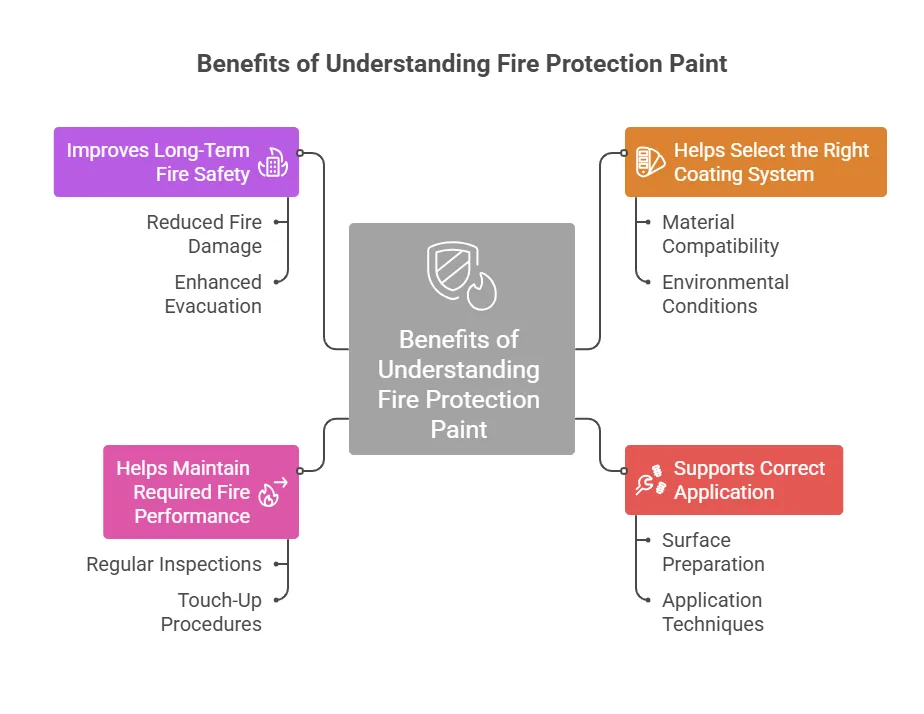
Understanding how fire protection paint works makes it easier to select, apply, inspect, and maintain the right coating system. It also helps ensure that the coating is used according to its intended fire-protection requirements.
Helps Select the Right Coating System
Understanding the working principle of different fire protection coatings helps you choose a system suitable for the substrate, required fire rating, application environment, and project requirements.
For example, intumescent coatings work by expanding and forming an insulating layer when exposed to heat, while other systems provide protection through a thicker insulating barrier.
Supports Correct Application
Knowledge of how the coating works highlights the importance of proper surface preparation, primer compatibility, application method, coating thickness, drying, and curing.
Following the recommended application system helps achieve consistent coating performance.
Helps Maintain Required Fire Performance
Understanding the relationship between coating thickness and fire protection performance helps ensure that the specified Dry Film Thickness (DFT) is achieved and maintained.
Regular inspection can identify coating damage, cracking, peeling, or coating loss that may require repair.
Improves Long-Term Fire Safety
Correct selection, application, inspection, and maintenance help maintain the condition of the fire protection coating over time.
A properly maintained coating system can continue to support the intended passive fire protection strategy and help protect critical structural components during fire exposure.
Common Mistakes That Can Affect Fire Protection Performance
The performance of fire protection paint depends on proper product selection, surface preparation, application, coating thickness, and ongoing maintenance. Avoiding common mistakes helps maintain the intended protection of the coating system.
Applying Insufficient Coating Thickness
Applying less coating than the specified thickness can reduce the intended level of fire protection. The required Dry Film Thickness (DFT) should be determined according to the approved coating system and required fire rating.
Always measure and verify the final coating thickness after application.
Poor Surface Preparation
Poor surface preparation can lead to weak adhesion, peeling, cracking, and premature coating failure. Before application, the surface should be clean, dry, and free from contaminants such as dust, oil, grease, rust, and loose material.
Proper preparation helps the fire protection coating perform as intended.
Using an Incompatible Primer
An incompatible primer can affect adhesion and the performance of the complete coating system. The primer should be compatible with the selected fire protection coating and used according to the recommended application system.
Selecting the Wrong Coating for the Application
Not every fire protection coating is suitable for every substrate or environment. Selection should consider the surface material, required fire rating, coating thickness, indoor or outdoor exposure, and environmental conditions.
Choosing the correct system helps ensure that the coating is appropriate for the intended application.
Ignoring Inspection and Maintenance
Skipping regular inspection can allow cracks, peeling, impact damage, corrosion, or coating loss to remain unnoticed. Damaged areas should be identified and repaired using compatible materials and approved procedures.
Regular inspection and maintenance help preserve the long-term condition and performance of the fire protection coating.
Frequently Asked Questions About How Fire Protection Paint Works
How Does Fire Protection Paint Work?
Fire protection paint works by creating a protective thermal barrier that slows heat transfer to the protected surface. This helps delay the temperature rise of materials such as structural steel during fire exposure.
How Does Intumescent Paint Work?
Intumescent paint reacts to high temperatures by expanding and forming an insulating char layer. This expanded layer acts as a thermal barrier and helps slow the transfer of heat to the underlying substrate.
Does Fire Protection Paint Prevent Fire?
No. Fire protection paint does not prevent a fire from starting or completely stop a fire. Its purpose is to help protect the coated material from high temperatures and delay heat-related damage during fire exposure.
How Does Fire Protection Paint Protect Steel?
Fire protection paint helps protect steel by slowing the rate at which heat reaches the steel surface. This can delay the temperature rise of structural members and help reduce heat-related loss of strength and stiffness.
What Happens to Intumescent Paint During a Fire?
When exposed to sufficient heat, intumescent paint expands and forms a thick insulating char layer. The char layer helps reduce heat transfer and provides thermal protection to the underlying steel or other suitable substrate.
How Thick Should Fire Protection Paint Be?
There is no single thickness suitable for every application. Required Dry Film Thickness (DFT) depends on the required fire rating, steel section, coating technology, exposure conditions, and approved test or design documentation.
The specified DFT should always be followed and verified after application.
Can Fire Protection Paint Be Used Outdoors?
Yes, provided the coating system is designed and approved for outdoor exposure. Outdoor applications may require additional protection against moisture, UV radiation, rain, weathering, and corrosion, including a compatible protective topcoat where specified.
How Long Does Fire Protection Paint Last?
The service life depends on the coating system, surface preparation, application quality, environmental exposure, mechanical damage, and maintenance. Regular inspection can help identify cracking, peeling, coating loss, or corrosion so that damaged areas can be repaired promptly.
Conclusion – Understanding How Fire Protection Paint Works
Understanding how fire protection paint works helps in selecting and using the right coating system for a specific fire-safety application. These coatings are designed to slow heat transfer and delay the temperature rise of protected materials, helping support passive fire protection during fire exposure.
Understanding the Heat Protection Process
Fire protection paint creates a thermal barrier between the heat source and the protected substrate. In an intumescent system, the coating expands when exposed to high temperatures and forms an insulating char layer. This helps slow heat transfer and delay heat-related damage.
Selecting the Right Fire Protection System
The coating should be selected according to the substrate, required fire rating, environmental conditions, and intended application. Steel, metal, wood, walls, and gypsum boards may require different coating systems and application requirements.
Following Correct Application and DFT Requirements
Proper surface preparation, compatible primers, correct application methods, and specified Dry Film Thickness (DFT) are essential for achieving the intended performance. The coating thickness should be measured and verified according to the approved system requirements.
Supporting Long-Term Fire Safety
Regular inspection and maintenance help identify coating damage, cracks, peeling, corrosion, or coating loss. Timely repairs and continued maintenance can help preserve the condition and performance of the fire protection system over its service life.