

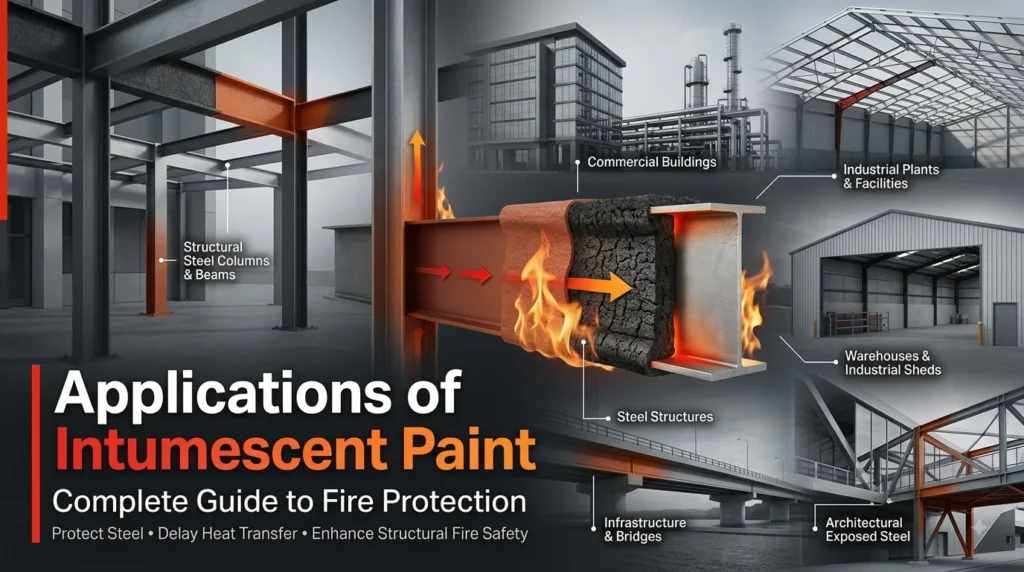
Intumescent paint is widely used as a passive fire protection coating, particularly for structural steel in commercial, industrial, and infrastructure projects. When exposed to high temperatures, the coating expands and forms an insulating char layer that slows heat transfer to the protected steel. This helps delay the rise in steel temperature and supports structural stability for the specified fire-resistance period.
The applications of intumescent paint vary according to the building type, structural design, required fire rating, environmental conditions, and coating system. It can be used where fire protection is required without significantly increasing the size or weight of the protected structural members.
Introduction to Applications of Intumescent Paint
Intumescent paint is a specialized passive fire protection coating used to protect suitable substrates from the effects of high temperatures. When exposed to fire, the coating reacts to heat, expands, and forms an insulating char layer. This protective layer slows heat transfer to the underlying material and helps support its fire-resistance performance for the specified period.
What Is Intumescent Paint?
Intumescent paint is a heat-reactive coating that remains relatively thin under normal conditions. When exposed to elevated temperatures, it undergoes a chemical reaction and expands to form a thicker, carbon-rich protective char.
For structural steel, this char layer acts as thermal insulation and helps delay the increase in steel temperature during fire exposure. The required coating system and thickness depend on the application, fire rating, substrate, and applicable technical specifications.
Why Is Intumescent Paint Used?
Intumescent paint is used to provide passive fire protection without requiring mechanical activation or external power. Its relatively thin profile makes it useful where fire protection is required while maintaining the dimensions and appearance of structural elements.
It is particularly valuable for applications where fire safety, lightweight protection, space efficiency, and architectural appearance need to be considered together.
Where Is Intumescent Paint Commonly Applied?
Intumescent paint is commonly applied to structural steel and suitable building or infrastructure components in:
- Commercial and high-rise buildings
- Industrial plants and manufacturing facilities
- Warehouses and storage facilities
- Oil and gas installations
- Power plants
- Hospitals and airports
- Railway and transit facilities
- Public and institutional buildings
The appropriate intumescent system should be selected according to the required fire rating, steel section factor, environmental exposure, DFT requirements, and compatibility with primers and topcoats.
Intumescent Paint for Structural Steel
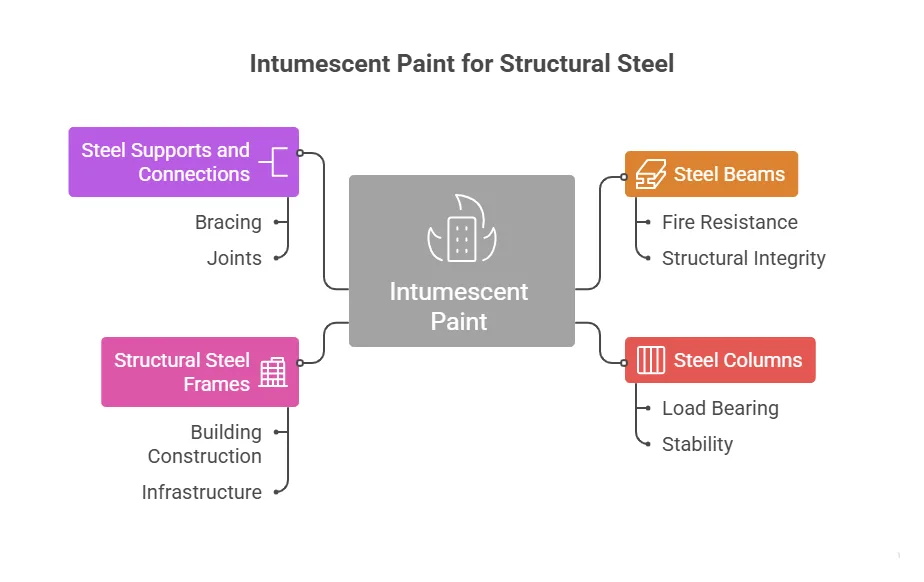
Intumescent paint is widely used for passive fire protection of structural steel because it can help delay the heating of load-bearing steel members during fire exposure. When activated by heat, the coating expands and forms an insulating char layer around the steel. This helps slow heat transfer and supports the required fire-resistance performance of the approved coating system.
Steel Beams
Steel beams are important load-bearing elements that support floors, roofs, and other structural components. During a fire, their strength and stiffness can decrease as temperature rises.
An appropriate intumescent coating system can be applied to steel beams to slow the rate of heating. The required coating thickness depends on factors such as the fire rating, steel section factor, and approved coating specification.
Steel Columns
Steel columns carry vertical loads and are critical to the stability of a building. Protecting these members can help delay their temperature rise during fire exposure.
Intumescent paint forms an insulating char around the protected column, helping maintain its structural performance for the specified fire-resistance period. Proper surface preparation, compatible primer selection, application, and DFT control are essential.
Structural Steel Frames
Structural steel frames consist of interconnected beams, columns, and other steel members that form the primary structural system. Fire protection may be required across the frame to support overall structural stability.
Intumescent coatings can provide a relatively thin fire protection system while allowing steel members to retain a clean and visually acceptable finish. This makes them suitable for both industrial and architectural applications.
Steel Supports and Connections
Steel supports and connections can also be important parts of a protected structural system. Depending on the project design and approved fire-protection system, suitable intumescent coatings may be applied to these areas.
Special attention should be given to surface preparation, geometry, coating access, required DFT, and compatibility with adjacent coating systems. The protection requirements should always follow the project’s fire engineering specifications and the coating manufacturer’s approved system.
Intumescent Paint in Commercial Buildings
Intumescent paint is commonly used in commercial construction to provide passive fire protection for structural steel while maintaining a relatively thin and visually acceptable coating system. When exposed to fire, the coating expands and forms an insulating char layer that slows heat transfer to the steel. This can help structural members maintain their required performance for the specified fire-resistance period.
Office Buildings
Office buildings often use structural steel beams, columns, and frames as part of their primary structure. Intumescent paint can protect these members while allowing them to retain a relatively smooth architectural appearance.
This is particularly useful in modern offices where exposed steel is part of the interior design. The coating system should be selected according to the required fire rating, steel section factor, environmental conditions, and specified DFT.
Shopping Centers and Malls
Shopping centers and malls contain large structural spaces, steel frameworks, and areas with high occupant loads. Passive fire protection of structural steel can form an important part of the overall fire safety strategy.
Intumescent coatings can be applied to suitable beams, columns, and structural frames to help delay heating during fire exposure. Their relatively low-profile finish can also be beneficial where structural steel remains visible.
Hotels and High-Rise Buildings
Hotels and high-rise buildings require careful consideration of structural fire protection because maintaining structural stability during a fire is critical for occupant safety and emergency response.
Intumescent paint can be used on suitable structural steel members to provide passive fire protection while preserving the architectural appearance of exposed steel. The coating thickness and complete system should be determined according to the required fire rating and approved technical specifications.
Mixed-Use Buildings
Mixed-use buildings may combine offices, retail spaces, hotels, residential areas, and other occupancies within the same development. Different areas may have different fire protection requirements depending on their design and use.
Intumescent paint can provide a flexible solution for protecting suitable structural steel across these environments. Proper selection should consider fire rating, steel section factor, indoor or outdoor exposure, primer and topcoat compatibility, DFT, and application conditions.
Intumescent Paint in Industrial Facilities
Intumescent paint is widely used for passive fire protection in industrial environments where structural steel forms an important part of the building or facility. When exposed to high temperatures, the coating expands and forms an insulating char layer that slows heat transfer to the steel. This helps delay the rise in steel temperature and supports structural performance for the specified fire-resistance period.
Manufacturing Plants
Manufacturing plants often contain extensive steel beams, columns, frames, platforms, and supports. Intumescent paint can be applied to suitable structural steel members to provide passive fire protection while maintaining a relatively low-profile coating.
The coating system should be selected according to the required fire rating, steel section factor, environmental exposure, and application requirements. In industrial environments, moisture, chemicals, temperature variations, and mechanical damage should also be considered.
Industrial Warehouses
Industrial warehouses and distribution facilities commonly use large steel frameworks to support roofs, walls, storage systems, and other structural components. Intumescent coatings can help protect these steel members from rapid heating during a fire.
The relatively thin coating profile can be advantageous where maintaining clearances and the original dimensions of steel members is important. Correct DFT application and inspection are essential for achieving the specified fire-protection performance.
Processing Facilities
Processing facilities may operate under demanding environmental conditions, including elevated temperatures, humidity, chemicals, and industrial contaminants. Structural steel in these areas may require a coating system designed for both fire protection and the expected service environment.
An appropriate intumescent system should include compatible primer and topcoat components where required. Product selection should be based on the fire rating, environmental exposure, substrate condition, and manufacturer’s approved specifications.
Production and Storage Areas
Production and storage areas can contain significant amounts of equipment, materials, and structural steel. Protecting suitable steel beams, columns, frames, and supports with an intumescent system can form part of the facility’s passive fire protection strategy.
For reliable performance, the coating should be correctly specified, applied, and inspected. Surface preparation, DFT control, environmental conditions, primer compatibility, and regular maintenance are important considerations for long-term coating performance.
Intumescent Paint for Oil and Gas Facilities
Intumescent paint can be used as part of a passive fire protection system for structural steel in oil and gas facilities. These environments can involve elevated fire risks and demanding operating conditions, so coating selection must consider the required fire rating, environmental exposure, corrosion protection, application requirements, and compatibility of the complete coating system.
Refineries
Refineries contain extensive structural steel supporting process equipment, platforms, pipe racks, buildings, and other facility components. Suitable intumescent coating systems can help protect structural steel from rapid temperature rise during fire exposure.
The coating system should be selected according to the required fire-resistance period and the specific environmental conditions within the refinery. Proper surface preparation, primer compatibility, DFT control, and inspection are essential for reliable performance.
Petrochemical Plants
Petrochemical plants can contain flammable materials and processes that create demanding fire protection requirements. Intumescent coatings can be applied to suitable structural steel members as part of the facility’s passive fire protection strategy.
For these applications, the coating system should be evaluated for both fire exposure and environmental durability, including moisture, chemicals, corrosion, and temperature variations.
Processing Facilities
Processing facilities may contain steel structures around reactors, process equipment, pipe systems, platforms, and supporting frameworks. Intumescent paint can provide thermal protection to suitable structural steel where required by the project’s fire protection design.
The complete system should include compatible primers and protective topcoats where necessary. Application should follow the approved technical specifications, including surface preparation, environmental conditions, coating thickness, and curing requirements.
Structural Steel in High-Risk Areas
Structural steel located in high-risk areas may require specialized passive fire protection based on the facility’s fire assessment and engineering requirements. Intumescent coatings can help delay the heating of protected steel by forming an insulating char layer during fire exposure.
For high-risk applications, important considerations include:
- Required fire rating
- Steel section factor
- Required Dry Film Thickness (DFT)
- Fire exposure conditions
- Corrosion and chemical exposure
- Primer and topcoat compatibility
- Surface preparation
- Inspection and maintenance
Selecting a tested and approved coating system and applying it according to the manufacturer’s specifications are essential for achieving the intended fire-protection performance.
Intumescent Paint for Power Plants
Power plants contain extensive structural steel, equipment supports, and utility structures that may require passive fire protection as part of the facility’s overall fire safety strategy. Intumescent paint can help protect suitable steel members by expanding during fire exposure and forming an insulating char layer that slows heat transfer.
Power Generation Structures
Power generation facilities often use structural steel for buildings, platforms, pipe racks, access structures, and equipment-supporting frameworks. Intumescent coatings can be applied to suitable steel members where a specified fire-resistance period is required.
The coating system should be selected according to the required fire rating, steel section factor, environmental conditions, and approved technical specifications.
Steel Equipment Supports
Steel supports around generators, process equipment, piping, and other plant systems may require passive fire protection depending on the facility’s fire engineering requirements.
An appropriate intumescent coating can help delay the heating of protected steel during fire exposure. Proper surface preparation, compatible primer selection, specified DFT, and inspection are important for achieving consistent coating performance.
Turbine and Boiler Areas
Turbine and boiler areas can involve elevated operating temperatures and demanding industrial conditions. Structural steel and equipment-supporting members in these areas may require carefully selected fire protection systems.
When intumescent paint is specified, the coating system should be suitable for the expected operating and environmental conditions. Factors such as temperature, moisture, chemicals, ventilation, and maintenance access should be considered during system selection and application.
Utility and Infrastructure Structures
Power plants also include utility structures, service platforms, pipe supports, access structures, and other steel infrastructure. Where passive fire protection is required, suitable intumescent coating systems can be used to help protect these structural members.
For reliable long-term performance, the complete system should be properly specified and maintained. Surface preparation, primer and topcoat compatibility, DFT control, environmental conditions, inspection, and maintenance should all follow the approved coating system requirements.
Intumescent Paint for Public Infrastructure
Intumescent paint can be used as part of a passive fire protection strategy for suitable structural steel in public infrastructure. These facilities often have high occupancy, complex structures, and critical operational requirements. An appropriately specified intumescent coating can help delay the heating of protected steel during fire exposure while maintaining a relatively thin coating profile.
Airports
Airports may contain large structural steel frameworks in terminals, service buildings, parking structures, and other facilities. Intumescent paint can be applied to suitable steel beams, columns, and frames where passive fire protection is required.
Because many airport structures have exposed or architecturally visible steel, the relatively smooth finish possible with intumescent coatings can be an advantage. The coating system should be selected according to the required fire rating, environmental exposure, and project specifications.
Hospitals
Hospitals require careful consideration of fire safety because they serve occupants who may have limited mobility and require continuous access to essential services. Structural steel can be protected with an appropriate intumescent coating as part of the building’s passive fire protection system.
The selected coating should meet the specified fire-resistance requirements and be compatible with the building’s environmental conditions. Proper surface preparation, application, DFT control, and inspection are important for reliable performance.
Railway and Transit Facilities
Railway stations, metro facilities, terminals, and other transit structures may contain extensive structural steel. Intumescent coatings can be used on suitable steel members where fire protection is required by the project design.
The coating system can provide protection while maintaining a relatively low-profile finish, which can be useful in areas where structural steel remains visible or where space is limited.
Public and Institutional Buildings
Government offices, educational facilities, cultural buildings, civic centers, and other institutional structures may use structural steel that requires passive fire protection.
Intumescent paint can help protect suitable steel beams, columns, and structural frames while supporting the required fire-resistance period. Selection should consider fire rating, steel section factor, DFT, environmental exposure, primer and topcoat compatibility, and application requirements.
For all public infrastructure applications, the coating should be part of an appropriately specified and approved fire-protection system, with installation and inspection carried out according to the relevant project and manufacturer requirements.
Intumescent Paint for Exposed Structural Steel
Intumescent paint is particularly useful for exposed structural steel where fire protection is required without significantly changing the appearance or dimensions of the steelwork. Unlike bulky fireproofing systems, an appropriately specified intumescent coating can provide passive fire protection through a relatively thin coating system while allowing structural elements to remain visible.
Architectural Steel
Architectural steel is often used as a visible design feature in modern offices, commercial buildings, hotels, public spaces, and contemporary industrial interiors. Intumescent paint can provide the required passive fire protection while helping preserve the visual character of the steel.
The coating system can be finished to suit the architectural requirements of the project. Selection should consider the required fire rating, steel section factor, DFT, environmental exposure, and compatibility of the complete coating system.
Visible Beams and Columns
Exposed beams and columns may require fire protection while remaining visible as part of the building’s interior or exterior design. Intumescent coatings can protect these structural members with a relatively low-profile system.
A properly applied coating can provide a smooth and uniform appearance, reducing the need to conceal structural steel behind bulky protective materials. The required coating thickness should be determined from the approved fire-protection system.
Maintaining Structural Appearance
One of the key advantages of intumescent paint for exposed steel is its ability to combine fire protection with architectural flexibility. The coating can help maintain the original visual character of beams, columns, and structural frames while providing passive thermal protection.
To maintain appearance and performance, attention should be given to surface preparation, application uniformity, DFT control, compatible primers and topcoats, and final inspection. For exposed or outdoor steel, the coating system should also be selected according to the expected environmental conditions.
Factors to Consider for Different Applications
Selecting the right intumescent paint system depends on the building type, structural design, fire-protection requirements, and environmental exposure. Factors such as fire rating, steel section factor, Dry Film Thickness (DFT), exposure conditions, and coating compatibility should be evaluated before application.
Required Fire Rating
The required fire rating determines the duration for which the protected structural member needs to maintain its required performance during fire exposure. Project requirements may specify ratings such as 30, 60, 90, 120, or more minutes.
A higher fire-resistance requirement may require a different coating thickness or coating system. The required thickness should always be determined from the manufacturer’s approved specifications and applicable fire-test data.
Steel Section Factor
The steel section factor is an important consideration when protecting structural steel. It relates the exposed surface area of a steel member to its cross-sectional area and influences how quickly the member heats during a fire.
Members with different shapes, sizes, and exposure conditions can therefore require different intumescent coating thicknesses. Accurate section-factor determination is important when specifying the coating system.
Dry Film Thickness (DFT)
Dry Film Thickness (DFT) directly affects the fire-protection performance of an intumescent coating. The required DFT is determined according to factors such as the fire rating, steel section factor, and approved coating system.
Insufficient thickness may result in inadequate protection, while uneven or excessive application can create coating defects. DFT should be checked using suitable calibrated equipment during inspection.
Indoor and Outdoor Exposure
Environmental exposure should be considered before selecting an intumescent coating system. Indoor dry environments generally have different requirements from exterior or exposed industrial environments.
Outdoor applications may involve moisture, rain, UV radiation, temperature changes, and other weathering conditions. Where required, a compatible protective topcoat should be used to protect the intumescent layer and maintain long-term performance.
Primer and Topcoat Compatibility
Intumescent paint should normally be considered as part of a complete coating system, including the primer and, where required, the topcoat.
An incompatible primer or topcoat can affect adhesion, curing, durability, and fire-protection performance. Therefore, coating components should be selected according to the manufacturer’s approved system and technical specifications.
Intumescent Paint Application Requirements
The performance of an intumescent paint system depends on correct surface preparation, compatible primers and topcoats, controlled application, and accurate Dry Film Thickness (DFT) inspection. Each stage should follow the coating manufacturer’s approved technical specifications and the project’s fire-protection requirements.
Surface Preparation
Proper surface preparation provides the foundation for the complete intumescent coating system. The steel surface should be clean, dry, and free from rust, oil, grease, dust, loose material, and other contaminants that could reduce coating adhesion.
The required preparation method should be selected according to the substrate condition and approved coating specification. Proper preparation helps reduce the risk of peeling, blistering, corrosion, and premature coating failure.
Primer Application
The primer creates a suitable interface between the prepared steel and the intumescent coating. A compatible and approved primer should be selected according to the complete coating system.
The primer should be applied at the specified thickness and allowed to dry or cure for the required period before the intumescent layer is applied. Using an incompatible primer can negatively affect adhesion and the performance of the coating system.
Intumescent Coating Application
The intumescent coating should be applied using the method recommended by the manufacturer, such as airless spray, brush, or roller, depending on the product.
The coating may require multiple coats to achieve the specified DFT. Each coat should be allowed to dry for the recommended interval before the next coat is applied. Uniform application is important to avoid areas of insufficient or excessive thickness.
DFT Inspection
Dry Film Thickness (DFT) inspection verifies whether the applied intumescent coating has achieved the thickness required by the approved fire-protection system.
DFT should be measured using suitable calibrated equipment, with readings recorded as part of the quality-control process. Any areas below the specified thickness should be corrected according to the manufacturer’s approved repair procedure.
Protective Topcoat
A protective topcoat may be required when the intumescent coating is exposed to moisture, UV radiation, weathering, chemicals, or other demanding environmental conditions.
The topcoat must be compatible with the intumescent system and should be applied according to the manufacturer’s specifications. For exterior or aggressive industrial applications, correct topcoat selection can help protect the intumescent layer and support long-term coating durability.
Benefits of Intumescent Paint Across Applications
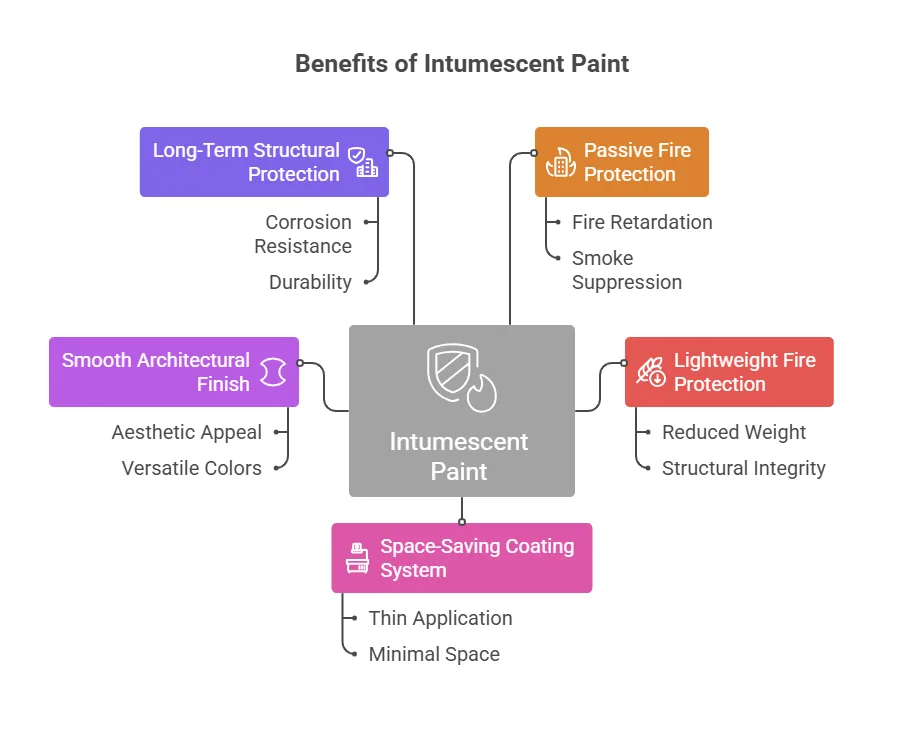
Intumescent paint provides a practical passive fire protection solution for suitable structural steel in commercial, industrial, infrastructure, and other building applications. Its ability to react to heat and form an insulating char layer allows it to protect steel while maintaining a relatively thin coating profile. The benefits can vary depending on the coating system, fire rating, application environment, and quality of installation.
Passive Fire Protection
The primary benefit of intumescent paint is its ability to provide passive fire protection without external activation. When exposed to high temperatures, the coating expands and forms a protective char layer.
This char slows heat transfer to the underlying steel, helping delay the increase in steel temperature and supporting structural performance for the specified fire-resistance period.
Lightweight Fire Protection
Intumescent coatings provide fire protection through a comparatively thin coating system, making them a lightweight alternative to some thicker fireproofing methods.
This can be particularly beneficial for commercial buildings, industrial facilities, and exposed structural steel where adding significant weight to the structure is undesirable.
Space-Saving Coating System
The relatively thin profile of an intumescent coating can help preserve the original dimensions of structural steel. This makes it useful where clearances, usable space, or architectural dimensions are important.
Unlike bulky protection systems, an appropriately specified intumescent system can protect beams and columns without substantially increasing their overall dimensions.
Smooth Architectural Finish
Intumescent paint can provide a smooth and visually acceptable finish when properly applied. This makes it suitable for exposed structural steel in offices, commercial buildings, hotels, public spaces, and architectural projects.
The coating can help combine fire protection with design requirements, allowing structural beams and columns to remain visible rather than being concealed behind thicker protective materials.
Long-Term Structural Protection
When correctly specified, applied, inspected, and maintained, an intumescent coating system can provide long-term passive fire protection for suitable structural steel.
Long-term performance depends on factors such as surface preparation, correct DFT, environmental exposure, primer and topcoat compatibility, application quality, and maintenance. Regular inspection can help identify damage or deterioration and ensure that the coating system continues to perform as intended.
Common Application Mistakes to Avoid
Correct application is essential for achieving the intended fire-protection performance of an intumescent coating system. Mistakes in product selection, coating thickness, surface preparation, or environmental control can affect adhesion, durability, and fire-protection performance.
Selecting the Wrong Coating System
One of the most important mistakes is selecting an intumescent coating that is not suitable for the specific application. The coating system should match the substrate, required fire rating, steel section factor, environmental exposure, and project requirements.
A system designed for an indoor environment, for example, may not be appropriate for exterior or aggressive industrial exposure without additional protection. Product selection should always follow the manufacturer’s approved specifications.
Incorrect DFT
Dry Film Thickness (DFT) is critical to the performance of an intumescent coating. Applying less than the specified thickness can reduce the intended fire protection, while excessive or uneven application may cause coating defects.
The required DFT should be determined according to the approved coating system, fire rating, and steel section factor. Measurements should be taken with suitable calibrated equipment and recorded during inspection.
Poor Surface Preparation
Poor surface preparation can result in weak adhesion, peeling, blistering, corrosion, and premature coating failure. Steel surfaces should be properly cleaned and prepared before primer and intumescent coating application.
Rust, oil, grease, dust, moisture, and loose materials should be removed according to the specified surface-preparation requirements.
Incompatible Primer or Topcoat
The primer and protective topcoat must be compatible with the selected intumescent coating. Using unsuitable coating components can affect adhesion, curing, durability, and overall fire-protection performance.
The complete coating system should therefore be selected from compatible or manufacturer-approved products. Any proposed substitution should be technically verified before application.
Ignoring Environmental Conditions
Environmental conditions during application and curing can significantly affect coating performance. Temperature, humidity, moisture, ventilation, and surface temperature should remain within the limits specified for the coating system.
For outdoor or demanding industrial applications, exposure to rain, UV radiation, chemicals, and moisture should also be considered. A suitable protective topcoat may be required to maintain the coating system over its service life.
Frequently Asked Questions (FAQs)
Where Is Intumescent Paint Used?
Intumescent paint is commonly used for passive fire protection of structural steel in commercial buildings, industrial facilities, warehouses, power plants, oil and gas facilities, airports, hospitals, railway facilities, and other infrastructure projects. It can be applied to suitable beams, columns, frames, supports, and other structural steel members where fire protection is required.
Can Intumescent Paint Be Used on Structural Steel?
Yes. Intumescent paint is widely used on structural steel beams, columns, frames, supports, and suitable connections. When exposed to high temperatures, the coating expands and forms an insulating char layer that slows heat transfer to the steel and helps delay the rise in steel temperature.
Is Intumescent Paint Suitable for Industrial Buildings?
Yes, provided the coating system is selected according to the required fire rating and industrial environment. Manufacturing plants, warehouses, processing facilities, power plants, and oil and gas facilities may require additional consideration for moisture, chemicals, corrosion, temperature, and other environmental conditions.
Can Intumescent Paint Be Used Outdoors?
Yes, but the selected coating system must be suitable for exterior exposure. Outdoor steel may be exposed to rain, humidity, UV radiation, temperature changes, and other weathering conditions. A compatible protective topcoat may be required to protect the intumescent layer and maintain long-term durability.
What Determines the Required Intumescent Coating Thickness?
The required coating thickness is determined by factors such as the required fire rating, steel section factor, coating formulation, and approved fire-protection system. The required Dry Film Thickness (DFT) should be obtained from the manufacturer’s technical documentation or applicable tested system rather than estimated independently.
Conclusion
Intumescent paint is a practical passive fire protection solution for suitable structural steel in commercial, industrial, and infrastructure applications. When exposed to high temperatures, the coating expands and forms an insulating char layer that slows heat transfer and helps delay the rise in steel temperature. Its effectiveness depends on selecting the appropriate system and applying it correctly.
Choosing Intumescent Paint for the Application
The right intumescent paint should be selected according to the required fire rating, steel section factor, environmental exposure, substrate condition, and project requirements. Indoor, outdoor, industrial, and high-risk applications may require different coating systems and protective topcoats.
Following the Correct Coating System
Intumescent paint should be treated as part of a complete coating system that may include surface preparation, compatible primer, intumescent coating, and protective topcoat. Correct application thickness, environmental conditions, curing, and DFT inspection are essential for achieving the intended fire-protection performance.
Improving Structural Fire Protection
When correctly specified, applied, inspected, and maintained, intumescent paint can help improve the fire protection of structural steel by delaying heat transfer during fire exposure. Following the approved coating system and manufacturer requirements helps support reliable long-term performance and contributes to an effective passive fire protection strategy.