

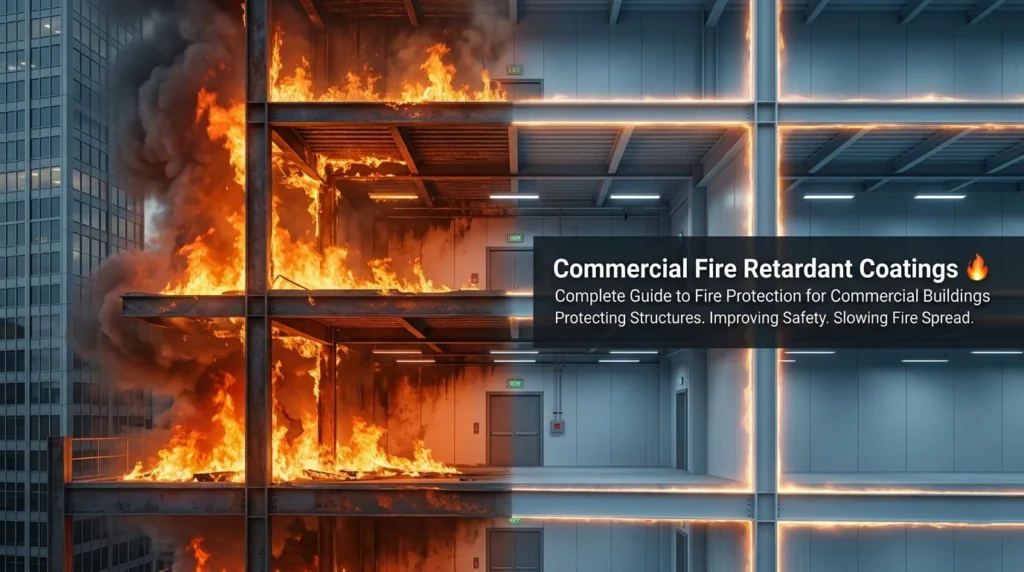
Fire safety is one of the most important considerations in modern commercial construction. Offices, shopping malls, hotels, hospitals, schools, and other public buildings accommodate large numbers of occupants every day, making effective fire protection essential for both life safety and asset protection. One of the most reliable passive fire protection solutions used in commercial spaces today is commercial fire retardant coatings.
Commercial fire retardant coatings are specialized protective coatings designed to slow flame spread, reduce heat transfer, and improve the fire resistance of building materials during fire exposure. When exposed to high temperatures, many of these coatings react by forming an insulating char layer that helps protect steel, wood, walls, ceilings, and other structural surfaces from rapid heat damage.
These coatings are widely used throughout commercial buildings to protect structural frameworks, decorative finishes, utility systems, and high-occupancy interiors. Their purpose is not only to help limit fire damage but also to provide more time for occupant evacuation, emergency response, and fire suppression efforts.
As building codes become stricter and developers place greater emphasis on safety, certified fire retardant coatings are increasingly becoming part of standard commercial building design. They help improve compliance, reduce fire-related risks, protect investments, and support long-term building performance.
In this guide, we’ll explore how commercial fire retardant coatings work, where they are used, their benefits, application methods, maintenance requirements, and how to choose the right fire protection coating system for commercial buildings.
Introduction to Commercial Fire Retardant Coatings
Commercial buildings are designed to accommodate people, operations, and valuable assets every day. From office towers and shopping malls to hotels, hospitals, and schools, these spaces require strong fire safety systems to protect occupants and minimize damage during emergencies. One of the most effective passive fire protection solutions used in modern construction is commercial fire retardant coatings.
These specialized coatings help slow the spread of fire, reduce heat transfer, and improve the fire resistance of structural and interior building materials. Applied to steel, wood, walls, ceilings, and utility systems, they provide an added layer of protection that helps buildings remain safer during fire exposure.
As fire safety regulations continue to evolve, commercial fire retardant coatings are becoming an essential part of modern building design, helping improve compliance, reduce risk, and protect long-term property value.
What Are Commercial Fire Retardant Coatings?
Commercial fire retardant coatings are specially formulated protective coatings designed to improve the fire resistance of building materials used in commercial construction. Their purpose is to slow ignition, reduce flame spread, and delay structural damage when exposed to fire.
Many commercial systems use intumescent coating technology, which reacts under high temperatures by expanding into a thick insulating char layer. This layer protects the surface underneath from direct heat and helps slow temperature rise.
Commercial fire retardant coatings are commonly applied to:
- Structural steel beams and columns
- Interior walls and ceilings
- Wood doors and panels
- Decorative architectural finishes
- Cable trays and service areas
- Utility and mechanical rooms
These coatings provide passive fire protection without changing the normal function or appearance of the building.
Why Fire Protection Matters in Commercial Buildings
Fire protection is especially important in commercial buildings because these spaces often have high occupancy, multiple ignition sources, and complex evacuation requirements. Electrical systems, kitchens, HVAC equipment, furnishings, decorative materials, and continuous daily use all increase fire risk.
Without adequate fire protection, a fire can result in:
- Rapid flame spread through interior finishes
- Structural weakening of steel or support systems
- Damage to property and equipment
- Disruption of business operations
- Safety risks for occupants and staff
- Expensive repairs and downtime
Commercial fire retardant coatings help reduce these risks by improving how building materials respond during a fire. By slowing heat transfer and limiting flame spread, they help provide more time for evacuation and emergency response.
Growing Demand for Fire Safety Coatings in Modern Construction
Demand for fire safety coatings in commercial construction continues to grow as developers, architects, and facility owners prioritize safer buildings and stricter compliance standards.
Several factors are driving this growth, including:
- Stronger fire safety regulations and building codes
- Increased focus on occupant safety
- Higher investment in commercial real estate and infrastructure
- Greater awareness of passive fire protection systems
- Insurance and risk management requirements
- Demand for safer, code-compliant building materials
Modern commercial projects increasingly specify fire retardant coatings as part of complete building fire protection systems—especially in:
- Office buildings
- Retail centers
- Hotels
- Hospitals
- Educational institutions
- Airports and public infrastructure
As commercial spaces become larger, taller, and more design-focused, fire retardant coatings provide a practical solution that combines safety, performance, and long-term protection.
How Commercial Fire Retardant Coatings Work
Commercial fire retardant coatings are designed to improve the fire resistance of building materials by slowing flame spread and reducing heat transfer during a fire. Unlike regular decorative coatings, they actively react to extreme heat and create a protective barrier that helps shield structural and interior surfaces from rapid damage.
These coatings are widely used in commercial buildings because they provide reliable passive fire protection while preserving the appearance and functionality of the structure.
Intumescent Coating Technology Explained
Many commercial fire retardant coatings work using intumescent technology. Intumescent coatings are engineered to react automatically when exposed to high temperatures.
When heat reaches a critical level, the coating undergoes a chemical reaction that causes it to expand many times its original thickness.
This process typically includes:
- Heat exposure activates the coating
- Fire-reactive additives begin expanding
- The coating swells outward
- A thick insulating char layer forms over the surface
This expanded layer acts as thermal insulation between the fire and the substrate underneath.
Intumescent coatings are commonly used to protect:
- Structural steel
- Wood surfaces
- Wall systems
- Ceilings
- Decorative architectural elements
Because the coating activates only during fire exposure, it remains visually unchanged during normal building use.
Heat Reaction & Char Formation Process
The protective performance of commercial fire retardant coatings depends on the char formation process. Once exposed to fire, the coating reacts chemically and transforms into a carbon-rich insulating layer.
During this reaction:
- The coating softens under heat
- Expanding gases are released within the film
- The coating expands outward
- A thick char barrier forms over the protected surface
This char layer helps:
- Reduce heat transfer
- Shield the substrate from direct flame contact
- Slow temperature rise in structural materials
- Delay weakening of steel or ignition of combustible surfaces
This barrier remains in place during the fire, helping protect the building material underneath for a longer period.
How Fire Retardant Coatings Slow Flame Spread
One of the main functions of commercial fire retardant coatings is slowing the movement of fire across surfaces. In commercial interiors, fire can spread rapidly through connected materials such as steel framing, wood finishes, walls, ceilings, and service areas.
Fire retardant coatings help control this by:
- Delaying ignition of coated surfaces
- Reducing surface burning speed
- Lowering heat transfer to nearby materials
- Limiting flame spread across walls, ceilings, and structural members
- Helping contain fire to a smaller area for longer
This extra protection can significantly reduce fire damage and improve conditions for evacuation and firefighting.
Passive Fire Protection for Commercial Structures
Commercial fire retardant coatings are classified as passive fire protection systems. Unlike sprinklers, alarms, or extinguishers, they do not require manual activation, electricity, or mechanical systems to function.
They remain in place continuously and activate automatically only when exposed to high temperatures.
Key passive fire protection benefits include:
- Continuous protection 24/7
- No moving parts or external activation required
- Minimal impact on building design and aesthetics
- Improved structural fire resistance
- More evacuation time for occupants
- Additional protection for valuable building assets
When combined with active fire systems such as alarms and sprinklers, commercial fire retardant coatings form an important part of a complete building fire safety strategy—helping protect people, property, and operations during fire emergencies.
Where Commercial Fire Retardant Coatings Are Used
Commercial fire retardant coatings are used across a wide range of building elements to improve fire resistance and reduce the spread of fire in commercial spaces. From structural frameworks to interior finishes and service areas, these coatings help protect critical building components while supporting fire code compliance and occupant safety.
Because commercial buildings often combine structural steel, decorative materials, utilities, and high public occupancy, fire retardant coatings play an important role in creating a complete passive fire protection system.
Structural Steel & Steel Frameworks
Structural steel is one of the most common applications for commercial fire retardant coatings. Although steel is non-combustible, it can weaken rapidly when exposed to high temperatures, which may lead to loss of structural stability during a fire.
Fire retardant coatings are commonly applied to:
- Steel columns
- Structural beams
- Roof trusses
- Mezzanine supports
- Staircase frameworks
- Load-bearing steel assemblies
These coatings help insulate steel surfaces and delay temperature rise, allowing the structure to maintain its load-bearing capacity for longer during fire exposure.
Typical applications include:
- Office towers
- Shopping malls
- Hotels
- Airports
- Large public buildings
Interior Walls, Ceilings & Partitions
Interior walls, ceilings, and partitions are also commonly protected with fire retardant coatings to reduce flame spread through occupied spaces.
Common coated surfaces include:
- Gypsum partitions
- Interior wall panels
- Ceiling systems
- Decorative wall cladding
- Corridor partition walls
- Acoustic panels
These coatings help slow surface burning and improve fire resistance in critical circulation areas such as hallways, lobbies, meeting rooms, and open-plan interiors.
They are especially useful in commercial buildings where fire containment between zones is important for safe evacuation.
Wood Doors, Panels & Decorative Surfaces
Wood remains widely used in commercial interiors for both design and function. Fire retardant coatings help improve the fire performance of timber-based materials without significantly changing their appearance.
Common applications include:
- Wooden fire doors
- Decorative wall panels
- Timber partitions
- Reception desk finishes
- Veneer cladding
- Architectural wood detailing
This makes fire retardant coatings ideal for spaces where aesthetics and safety must work together, such as hospitality interiors, offices, conference spaces, and premium commercial developments.
Electrical Rooms, Cable Trays & Utility Areas
Electrical infrastructure is a common source of fire risk in commercial buildings due to overload, short circuits, and overheating equipment. Fire retardant coatings provide added protection in these service-critical zones.
They are often used on:
- Cable trays
- Cable supports
- Electrical panel housings
- Utility shafts
- Mechanical service rooms
- Control and distribution rooms
These coatings help slow flame spread around electrical systems and reduce heat transfer to nearby building materials, improving protection for critical building operations.
Public Spaces & High-Occupancy Areas
High-occupancy commercial spaces require strong fire protection because evacuation can be more complex during emergencies. Fire retardant coatings are widely used in areas where large numbers of people gather daily.
Common applications include:
- Hotel lobbies
- Shopping mall common areas
- Auditorium interiors
- Restaurants and banquet halls
- Hospital corridors and waiting areas
- School halls and lecture theatres
- Airport terminals and public access spaces
In these environments, coatings help:
- Reduce the spread of flames across exposed surfaces
- Improve fire compartmentation
- Protect structural and decorative materials
- Provide more evacuation time for occupants
- Support fire safety compliance for public-use buildings
By protecting both structural and interior surfaces, commercial fire retardant coatings help create safer buildings while maintaining the design flexibility required in modern commercial construction.
Commercial Applications of Fire Retardant Coatings
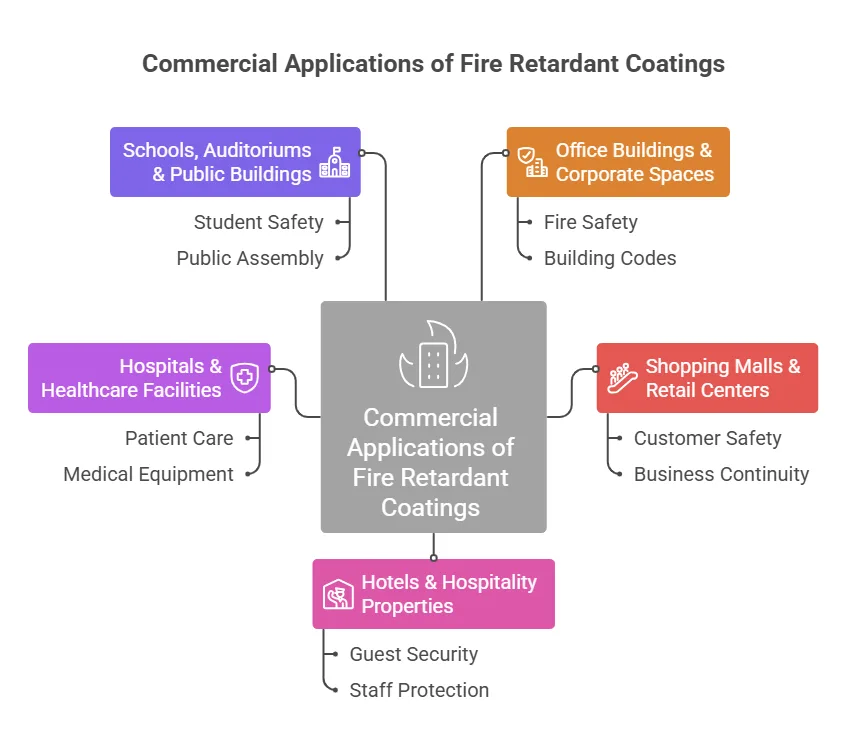
Commercial fire retardant coatings are used across many building types where occupant safety, asset protection, and fire code compliance are essential. From corporate offices to hospitals and public institutions, these coatings help protect structural surfaces, interior finishes, and building materials from fire exposure while reducing the risk of rapid flame spread.
Their ability to combine fire protection with long-term durability makes them an important part of modern commercial building design.
Office Buildings & Corporate Spaces
Office buildings often include open-plan workspaces, meeting rooms, server rooms, reception areas, and shared public zones—all of which require effective fire protection planning.
Commercial fire retardant coatings are commonly used on:
- Structural steel frames
- Partition walls
- Ceilings
- Raised flooring supports
- Electrical service rooms
- Interior wood finishes and doors
These coatings help protect both the building structure and workplace interiors, while supporting employee safety and business continuity in the event of a fire.
Shopping Malls & Retail Centers
Shopping malls and retail developments experience high daily foot traffic and contain a mix of retail units, food courts, escalator zones, storage spaces, and service areas.
Common protected surfaces include:
- Steel columns and beams
- Shopfront framing
- Interior wall panels
- Ceilings and decorative finishes
- Utility corridors
- Service shafts and electrical rooms
Fire retardant coatings help improve fire resistance across public areas and tenant spaces while supporting safer evacuation in large commercial complexes.
Hotels & Hospitality Properties
Hotels rely heavily on both structural safety and interior aesthetics. Guest rooms, lobbies, restaurants, banquet halls, and conference areas often use a combination of steel, wood, decorative panels, and upholstered surfaces.
Fire retardant coatings are commonly applied to:
- Structural steel frameworks
- Fire-rated doors
- Decorative timber panels
- Ceiling systems
- Corridor walls
- Back-of-house utility areas
These coatings help protect guests, staff, and property while maintaining the architectural finish expected in hospitality environments.
Hospitals & Healthcare Facilities
Healthcare buildings require particularly high fire safety standards because occupants may include patients with limited mobility and sensitive medical equipment requiring continuous operation.
Common applications include:
- Structural steel supports
- Patient room doors and partitions
- Corridor walls and ceilings
- Mechanical rooms
- Cable trays and electrical service areas
- Utility shafts and equipment enclosures
Commercial fire retardant coatings help improve fire containment, protect escape routes, and support safer evacuation while reducing disruption to critical healthcare operations.
Schools, Auditoriums & Public Buildings
Schools, auditoriums, libraries, municipal buildings, and public institutions accommodate large groups of people and often require strict compliance with fire regulations.
Typical applications include:
- Steel frameworks and roof supports
- Stage and auditorium structures
- Interior walls and partitions
- Wooden doors and wall panels
- Ceiling systems
- Hallways and assembly spaces
These coatings help slow flame spread, protect structural materials, and provide more time for evacuation during emergencies—especially in high-occupancy public buildings where fire safety is a top priority.
Across all of these applications, commercial fire retardant coatings provide a practical and effective solution for improving fire resistance, protecting assets, and supporting safer commercial building performance over the long term.
Benefits of Commercial Fire Retardant Coatings
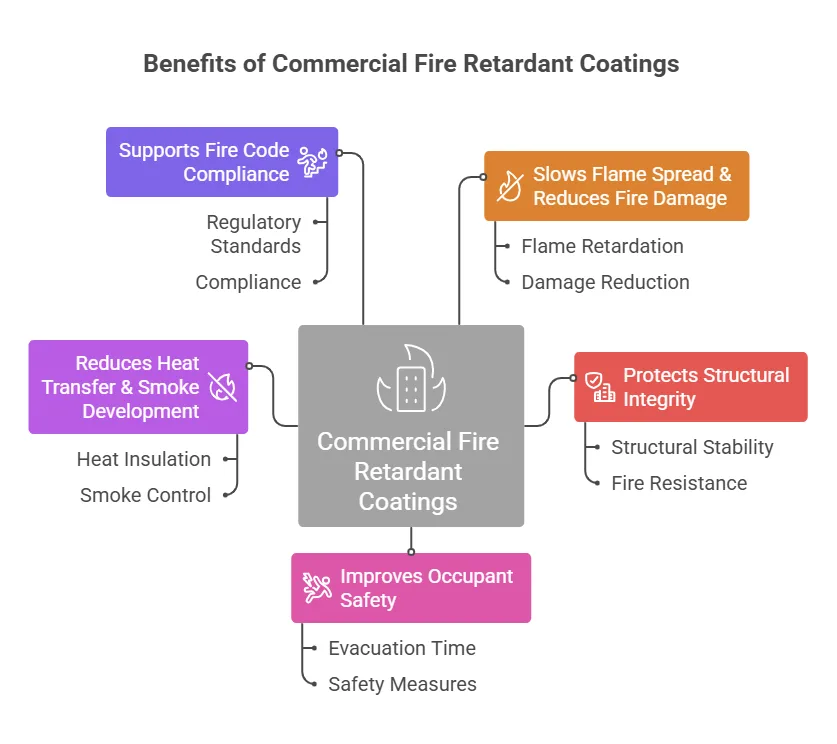
Commercial fire retardant coatings offer more than just surface protection—they are a critical part of a building’s passive fire safety strategy. By helping materials withstand fire exposure for longer, these coatings improve structural resilience, reduce fire damage, and provide safer conditions for occupants during emergencies.
Used across offices, hotels, malls, hospitals, and public buildings, fire retardant coatings deliver both safety and long-term property protection.
Slows Flame Spread & Reduces Fire Damage
One of the biggest benefits of commercial fire retardant coatings is their ability to slow the spread of flames across building surfaces. During a fire, exposed walls, ceilings, steel, and interior finishes can accelerate fire growth if left unprotected.
Fire retardant coatings help by:
- Delaying ignition of coated materials
- Slowing flame movement across surfaces
- Reducing fire spread between rooms or building zones
- Helping contain fire to a smaller area for longer
By slowing fire progression, these coatings can significantly reduce damage to structural components, interiors, equipment, and building assets.
Protects Structural Integrity During Fire
Structural integrity is essential in any commercial building. During fire exposure, steel and other construction materials can weaken quickly, increasing the risk of collapse.
Commercial fire retardant coatings help protect structural elements by:
- Insulating surfaces against extreme heat
- Slowing temperature rise in structural steel
- Delaying thermal weakening of beams and columns
- Helping maintain load-bearing capacity during fire exposure
This added protection helps the building remain stable for longer, reducing structural damage and supporting safer emergency response.
Improves Occupant Safety & Evacuation Time
Commercial buildings often accommodate large numbers of occupants, employees, visitors, guests, or patients. Safe evacuation becomes more challenging when fire spreads quickly.
Fire retardant coatings improve occupant safety by:
- Slowing fire development
- Protecting escape routes such as corridors and stairwells
- Reducing rapid structural failure risk
- Providing more time for evacuation
- Supporting safer access for emergency responders
This additional response time can be critical in offices, malls, hotels, hospitals, and public gathering spaces.
Reduces Heat Transfer & Smoke Development
Commercial fire retardant coatings also help reduce heat transfer through building materials during a fire. Many intumescent coatings expand under heat to create an insulating char layer that shields the substrate underneath.
This helps:
- Reduce direct heat exposure to structural surfaces
- Lower surface temperature rise
- Delay fire penetration through coated materials
- Protect nearby materials from ignition
Some systems may also help reduce smoke generation from coated surfaces compared with untreated combustible materials, which can improve visibility and evacuation conditions during emergencies.
Supports Fire Code Compliance
Commercial fire retardant coatings are widely used to help buildings meet fire safety regulations and project-specific compliance requirements. Many commercial developments require certified fire-resistant coating systems as part of design approval and occupancy certification.
These coatings can help support:
- Building fire code compliance
- Fire safety inspections and approvals
- Passive fire protection specifications
- Insurance documentation and risk management reviews
- Long-term safety planning for commercial assets
Coatings tested to recognized standards such as ASTM International, British Standards Institution, and Bureau of Indian Standards provide documented fire performance and added confidence for architects, contractors, and building owners.
By combining fire resistance, structural protection, occupant safety, and compliance support, commercial fire retardant coatings offer a reliable long-term solution for protecting modern commercial buildings.
How to Choose the Right Commercial Fire Retardant Coating
Choosing the right commercial fire retardant coating is essential for achieving reliable fire protection, long-term durability, and compliance with building safety regulations. Commercial spaces vary widely in design, occupancy, and exposure conditions, so selecting the correct coating system requires more than simply choosing a fire-rated product.
Factors such as required fire resistance time, substrate type, environmental conditions, appearance, and certification all influence performance. A properly selected coating system helps protect the building structure while supporting both safety and design goals.
Understanding Fire Resistance Ratings (30, 60, 90, 120 Minutes)
One of the first considerations when selecting a commercial fire retardant coating is the required fire resistance rating. Fire ratings indicate how long the coating can help protect the substrate during fire exposure before reaching a critical temperature.
Common commercial fire ratings include:
- 30 minutes – Basic fire resistance for lower-risk commercial interiors
- 60 minutes – Standard fire protection for offices, retail units, and interior structures
- 90 minutes – Higher protection for larger commercial buildings and high-occupancy spaces
- 120 minutes – Advanced protection for critical infrastructure or buildings with strict fire performance requirements
The required rating depends on:
- Building occupancy type
- Local fire regulations
- Height and layout of the building
- Fire load within the space
- Evacuation strategy
- Insurance or project specification requirements
Higher ratings generally require greater coating thickness to provide longer protection under fire conditions.
Surface Compatibility & Substrate Selection
Commercial fire retardant coatings must be compatible with the material being protected. Different substrates require different formulations to ensure proper adhesion, durability, and fire performance.
Common commercial substrates include:
- Structural steel
- Mild steel
- Wood doors and timber panels
- Gypsum partitions
- Cement-based boards
- Decorative architectural finishes
Before selecting a coating, it is important to evaluate:
- Material type
- Existing primer or paint system
- Surface condition
- Interior or exterior use
- Required appearance and finish
Choosing a coating designed specifically for the substrate helps improve long-term performance and reduces the risk of peeling, cracking, or adhesion failure.
Indoor vs Outdoor Application Requirements
The location of the coated surface also plays an important role in coating selection. Interior and exterior environments expose coatings to very different conditions.
Indoor applications commonly include:
- Offices
- Hotel interiors
- Shopping mall ceilings
- Corridor walls
- Conference spaces
- Decorative wood finishes
Indoor systems often prioritize:
- Smooth decorative finish
- Low odor during application
- Aesthetic appearance
- Compatibility with interior coatings
Outdoor applications may include:
- Exterior steel structures
- Building entrances
- Loading bays
- Covered steel frameworks
- Utility service areas
Outdoor systems may also require resistance to:
- Rain and moisture
- UV exposure
- Humidity
- Temperature fluctuation
- Pollution and corrosion
Exterior commercial fire coating systems often include protective topcoats to maintain weather resistance while preserving fire performance.
Aesthetic Finish vs Fire Protection Performance
In commercial buildings, appearance is often just as important as performance—especially in offices, hotels, retail spaces, and public-facing interiors.
When choosing a fire retardant coating, it’s important to balance:
- Required fire rating
- Surface appearance
- Finish texture
- Color requirements
- Topcoat compatibility
- Architectural design intent
Some commercial coatings are designed to provide:
- Smooth architectural finishes
- Paintable surfaces
- Decorative topcoat compatibility
- Minimal visible change to wood or steel
This allows architects and designers to maintain the intended visual finish while still achieving fire protection requirements.
Certification & Compliance Requirements
Certification should always be reviewed before selecting a commercial fire retardant coating. A certified system provides tested and documented proof of fire performance.
Important documents to verify include:
- Fire test reports
- Product data sheets
- Application specifications
- Approved primer and topcoat compatibility
- Dry film thickness requirements
- Maintenance recommendations
Look for coatings tested to recognized standards such as:
- ASTM International
- British Standards Institution
- Bureau of Indian Standards
- Underwriters Laboratories
Choosing a certified coating system helps support:
- Building approvals
- Fire inspections
- Code compliance
- Insurance documentation
- Long-term risk management
By selecting the right commercial fire retardant coating based on fire rating, substrate compatibility, environmental exposure, appearance, and certification, building owners and project teams can ensure dependable fire protection without compromising design or durability.
Application Process for Commercial Fire Retardant Coatings
Proper application is essential for commercial fire retardant coatings to deliver reliable fire resistance, strong adhesion, and long-term durability. Even a high-performance coating system can underperform if the surface is poorly prepared or the specified film thickness is not achieved. Following the correct application process helps ensure consistent protection, code compliance, and long-term performance across commercial buildings.
Whether applied in offices, hotels, shopping malls, hospitals, or public spaces, the coating system should always follow manufacturer guidelines and project specifications.
Surface Preparation & Cleaning
Surface preparation is the first and most important step before applying a commercial fire retardant coating. A clean and properly prepared substrate helps the coating bond correctly and perform as intended during fire exposure.
Typical preparation includes:
- Removing dust, grease, oil, and loose particles
- Cleaning stains, surface contaminants, and residue
- Removing rust or corrosion from steel surfaces
- Repairing damaged plaster, wood, or substrate defects
- Ensuring the surface is dry before application
Common preparation methods may include:
- Abrasive blasting for steel
- Sanding for wood surfaces
- Mechanical cleaning
- Solvent wiping
- Pressure cleaning where required
Poor preparation can lead to peeling, cracking, blistering, or adhesion failure over time.
Primer Selection & System Compatibility
In many commercial fire coating systems, a primer is applied before the fire retardant coating. The primer improves adhesion and may also provide corrosion resistance or surface sealing depending on the substrate.
Primer selection depends on:
- Substrate type
- Existing coating condition
- Indoor or outdoor exposure
- Moisture or corrosion risk
- Manufacturer-approved system requirements
Common primers include:
- Epoxy primers
- Anti-corrosive metal primers
- Sealers for porous surfaces
- Wood primers for decorative timber elements
It is important that the primer is fully compatible with the fire retardant coating and any decorative topcoat used afterward. Using an unapproved primer can affect fire performance and durability.
Spray, Brush & Roller Application Methods
Commercial fire retardant coatings can be applied using several methods depending on the project size, substrate, and finish requirement.
Spray Application
Spray application is widely used for large commercial areas because it provides:
- Fast application speed
- Uniform coating build
- Smooth finish
- Efficient coverage of large steel frameworks and ceilings
It is commonly used on:
- Structural steel
- Ceilings
- Wall systems
- Large exposed building surfaces
Brush Application
Brush application is often used for:
- Small areas
- Detail work
- Edges and corners
- Repair and touch-up applications
Roller Application
Roller application is commonly used on:
- Flat walls
- Partition systems
- Interior panel surfaces
- Controlled decorative finish areas
The method selected depends on required thickness, finish quality, and project access conditions.
Drying & Curing Time
After application, the coating must be allowed to dry and cure properly before use or topcoat application. Drying and curing times vary depending on product formulation and site conditions.
Factors that affect curing include:
- Ambient temperature
- Humidity
- Airflow and ventilation
- Coating thickness
- Number of coats applied
Proper curing allows the coating to:
- Fully adhere to the substrate
- Reach specified dry film thickness
- Develop intended fire resistance performance
- Prepare for topcoat application if required
Premature exposure to moisture, impact, or loading before full cure can affect durability and coating performance.
Inspection & Quality Control Testing
Once the commercial fire retardant coating has been applied, inspection is carried out to verify that the system meets project specifications and fire protection requirements.
Quality control typically includes:
- Visual inspection for complete coverage
- Checking for runs, cracks, pinholes, or missed areas
- Surface finish review
- Adhesion checks where required
- Primer and topcoat verification
One of the most important checks is Dry Film Thickness (DFT) testing.
DFT testing confirms that the coating has been applied to the required thickness needed to achieve the specified fire rating—such as 30, 60, 90, or 120 minutes.
This testing helps verify:
- Correct coating build
- Consistent application across all surfaces
- Compliance with fire test certification
- Performance according to project design requirements
Accurate inspection and quality control ensure that the commercial fire retardant coating system performs reliably and delivers the intended level of fire protection throughout the building’s life.
Maintenance & Long-Term Performance
Commercial fire retardant coatings are designed to provide durable, long-term passive fire protection, but their performance depends on regular inspection and proper maintenance throughout the life of the building. Exposure to moisture, impact, cleaning activities, building modifications, and environmental conditions can gradually affect the coating system over time.
A planned maintenance program helps preserve fire resistance, maintain appearance, and ensure the coating continues to meet fire safety requirements for years after installation.
Inspection Frequency for Commercial Buildings
Routine inspection is important to verify that fire retardant coatings remain intact and continue to provide the required level of protection. Inspection schedules may vary depending on the building type, occupancy, and exposure conditions.
Typical recommendations include:
- Every 6–12 months for most commercial buildings
- Annual inspections for offices, retail spaces, and hospitality interiors
- More frequent inspections in high-traffic or service-intensive areas
- Additional inspections after renovation, maintenance work, or accidental damage
- Immediate inspection after any fire event or water damage incident
Areas that often require closer attention include:
- Structural steel exposed to view
- Service corridors
- Mechanical and utility rooms
- Ceiling void access areas
- Stairwells and escape routes
- Public-facing interior wall systems
Documented inspections help support compliance and make future maintenance easier to manage.
Recoating Guidelines
Over time, some commercial fire retardant coatings may require repair or recoating to maintain protection. Recoating can range from small localized touch-ups to full system renewal depending on the condition of the surface.
Recoating may be required when:
- Coating thickness falls below specification
- Physical damage exposes the substrate
- Surface wear affects coverage or adhesion
- Building upgrades or renovations disturb coated areas
- Water ingress affects the coating system
- The manufacturer’s maintenance cycle recommends renewal
Before recoating, the surface should typically be:
- Inspected for damage
- Cleaned thoroughly
- Repaired if required
- Checked for compatibility with the original coating system
Matching the original fire-rated system helps maintain tested performance and certification.
Signs of Coating Damage or Wear
During routine maintenance inspections, it is important to identify early signs of damage before fire performance is affected.
Common signs include:
- Cracking on the coating surface
- Peeling or flaking
- Blistering
- Scratches or impact marks
- Surface chipping around corners or edges
- Water staining or moisture damage
- Delamination from the substrate
- Exposed steel, wood, or base material
Damage is often more common around:
- Door frames
- Public corridors
- Loading and service zones
- Maintenance access points
- Ceiling penetrations
- Mechanical service areas
Any damaged sections should be repaired promptly to maintain continuous fire protection.
Factors That Affect Long-Term Durability
The long-term performance of commercial fire retardant coatings depends on both product quality and environmental conditions within the building.
Key factors that affect durability include:
- Quality of initial surface preparation
- Primer and topcoat compatibility
- Correct application thickness
- Indoor or outdoor exposure
- Humidity and moisture levels
- UV exposure on exterior surfaces
- Cleaning frequency and maintenance procedures
- Physical impact or abrasion from daily use
- Building movement or vibration
- Exposure to chemicals or cleaning agents
In commercial spaces such as hotels, hospitals, shopping malls, and offices, aesthetic wear may also influence maintenance schedules, especially in visible architectural areas.
With proper application, regular inspections, and timely repairs, commercial fire retardant coatings can provide dependable fire protection for many years—helping protect building occupants, preserve structural integrity, and support long-term compliance with fire safety requirements.
Fire Safety Standards & Compliance for Commercial Coatings
Fire safety standards are a key part of specifying commercial fire retardant coatings. In commercial buildings, coatings must not only provide fire resistance but also meet recognized testing standards, building regulations, and project approval requirements. Choosing certified commercial fire protection coatings ensures the system has been tested for performance and is suitable for real-world applications across offices, hotels, malls, hospitals, and public infrastructure.
Compliance also helps building owners, architects, and contractors meet approval requirements while reducing long-term safety and liability risks.
ASTM Fire Testing Standards
ASTM International standards are widely used to evaluate the fire performance of commercial fire retardant coatings. These tests assess how coatings behave under controlled fire exposure and help determine whether they can meet specific fire resistance requirements.
ASTM testing may evaluate:
- Flame spread resistance
- Heat transfer performance
- Fire resistance duration
- Surface burning characteristics
- Temperature rise of coated substrates
- Structural performance under fire conditions
These tests are commonly used to verify whether a coating can achieve fire ratings such as:
- 30 minutes
- 60 minutes
- 90 minutes
- 120 minutes
ASTM-tested coatings are widely specified for structural steel, walls, ceilings, wood finishes, and commercial interior systems.
BS & IS Fire Protection Certifications
Many commercial projects also require compliance with British Standards Institution (BS) and Bureau of Indian Standards (IS) fire safety certifications.
These certifications are especially important for commercial developments in India, the UK, and international projects where local regulations reference these standards.
BS and IS certifications may assess:
- Fire resistance performance
- Flame spread behavior
- Surface ignition characteristics
- Protection of structural steel under heat exposure
- Product consistency and quality assurance
Using coatings tested to BS or IS standards helps ensure the fire protection system aligns with project specifications and local approval requirements.
Commercial Building Code Compliance
Commercial fire retardant coatings often form part of a building’s overall fire code compliance strategy. Building regulations frequently require fire-rated protection for structural elements and interior materials depending on the size, occupancy, and use of the building.
Code compliance requirements may depend on:
- Occupancy classification
- Building height
- Fire load within the building
- Type of materials used
- Evacuation design
- Local fire authority requirements
- Interior finish classifications
Commercial coatings are commonly specified to help meet compliance in:
- Office buildings
- Shopping malls
- Hotels
- Hospitals
- Schools
- Airports
- Auditoriums and public-use buildings
Project approval may also require:
- Product certification documentation
- Fire test reports
- Approved system specifications
- Application records
- Dry film thickness verification
- Maintenance guidelines
Proper documentation supports inspections, approvals, and future building maintenance programs.
Insurance & Risk Management Benefits
Certified commercial fire retardant coatings also provide important benefits for insurance planning and long-term risk management. Fire-resistant coatings help reduce the severity of structural damage and improve overall building resilience during fire incidents.
Key benefits include:
- Reduced fire-related repair costs
- Better protection of commercial assets and interiors
- Lower risk of structural failure
- Reduced business interruption after fire incidents
- Improved occupant safety planning
- Stronger documentation for insurers and compliance audits
Many insurers review passive fire protection systems during risk assessments, especially in buildings with:
- High occupancy
- Public access
- Valuable interior assets
- Large floor areas
- Complex evacuation requirements
By choosing tested and certified commercial fire retardant coatings, building owners can strengthen fire safety compliance, support insurance requirements, reduce liability exposure, and improve the long-term safety of the property.
Frequently Asked Questions About Commercial Fire Retardant Coatings
Below are answers to some of the most common questions about commercial fire retardant coatings, their uses, durability, and performance in commercial buildings.
What are commercial fire retardant coatings used for?
Commercial fire retardant coatings are used to improve the fire resistance of building materials by slowing flame spread, reducing heat transfer, and protecting structural and interior surfaces during fire exposure.
They are commonly applied to:
- Structural steel beams and columns
- Interior walls and ceilings
- Wood doors and wall panels
- Utility rooms and electrical service areas
- Decorative architectural finishes
- Public-facing interior spaces
Their primary purpose is to improve fire safety, reduce fire-related damage, and provide more time for evacuation and emergency response in commercial buildings.
Can fire retardant coatings be used on steel and wood?
Yes. Commercial fire retardant coatings are widely used on both steel and wood surfaces.
Steel applications include:
- Structural columns
- Steel beams
- Roof trusses
- Staircase frameworks
- Mezzanine supports
The coating helps insulate the steel and delay heat transfer, allowing it to retain strength longer during a fire.
Wood applications include:
- Fire doors
- Wall panels
- Decorative timber cladding
- Wooden ceilings
- Joinery and architectural finishes
On wood, the coating helps slow ignition and reduce flame spread while maintaining the appearance of the surface.
How long do commercial fire retardant coatings last?
The lifespan of commercial fire retardant coatings depends on several factors, including:
- Product quality
- Surface preparation before application
- Indoor or outdoor use
- Exposure to moisture or UV
- Building traffic and wear
- Maintenance and inspection frequency
When correctly applied and properly maintained, commercial fire retardant coatings can remain effective for many years.
Generally:
- Indoor applications often have a longer service life due to lower environmental exposure
- Exterior applications may require protective topcoats and more regular maintenance
Routine inspections help ensure the coating continues performing as intended over time.
Are commercial fire retardant coatings suitable for interior use?
Yes. Commercial fire retardant coatings are commonly designed specifically for interior applications.
Typical interior uses include:
- Office walls and ceilings
- Hotel corridors
- Shopping mall interiors
- Auditorium wall panels
- Hospital service areas
- Wooden doors and decorative finishes
Many interior-grade systems are formulated to provide:
- Smooth decorative finishes
- Low odor during application
- Paintable or topcoat-compatible surfaces
- Minimal visual change to architectural finishes
This makes them ideal where both aesthetics and fire protection are important.
How often should commercial fire coatings be inspected?
Commercial fire coatings should be inspected regularly as part of the building’s maintenance and fire safety program.
Typical inspection recommendations include:
- Every 6–12 months for most commercial buildings
- Annual inspections for offices, hotels, and retail spaces
- More frequent inspections in high-traffic or service-intensive areas
- Immediate inspection after renovation work, impact damage, leaks, or any fire event
Inspections should check for:
- Cracking
- Peeling or flaking
- Surface wear
- Water damage
- Delamination
- Areas of exposed substrate
- Coating thickness where required
Regular inspection and timely repair help maintain fire performance, preserve appearance, and support long-term compliance with commercial fire safety requirements.
Conclusion – Why Commercial Fire Retardant Coatings Are Essential
Fire safety is a critical requirement in every commercial building, whether it is an office tower, shopping mall, hotel, hospital, school, or public facility. With large numbers of occupants, valuable infrastructure, and continuous day-to-day operations, the consequences of fire can be severe—resulting in property damage, operational disruption, and serious safety risks. This is why commercial fire retardant coatings are an essential part of modern building protection.
By slowing flame spread, reducing heat transfer, and improving the fire resistance of structural and interior building materials, these coatings provide reliable passive fire protection that helps safeguard both people and property.
Importance of Passive Fire Protection in Commercial Buildings
Commercial fire retardant coatings play a major role in passive fire protection. Unlike active systems such as alarms or sprinklers, passive protection works continuously without manual activation or electrical dependency.
These coatings remain on the surface at all times and react automatically during fire exposure to help:
- Slow fire spread across building materials
- Delay heat penetration into structural components
- Reduce the risk of rapid structural failure
- Protect escape routes and access areas
- Support safer evacuation during emergencies
Because they work silently in the background, they form an important layer of protection within the overall fire safety strategy of a commercial building.
Long-Term Safety & Asset Protection Benefits
Commercial fire retardant coatings offer long-term value beyond fire resistance alone. They help protect the building structure, reduce damage during fire incidents, and improve resilience over the building’s lifespan.
Key long-term benefits include:
- Improved structural fire resistance
- Better protection of steel, wood, and interior finishes
- Reduced fire-related repair and replacement costs
- Lower business interruption risk after a fire
- Enhanced occupant safety and evacuation support
- Preservation of commercial property value and assets
For building owners and facility managers, this makes fire retardant coatings both a safety investment and a long-term asset protection solution.
Choosing Certified Fire Protection Systems
Selecting a certified commercial fire retardant coating system is essential to achieving dependable performance. The coating should be chosen based on:
- Required fire resistance rating
- Surface compatibility
- Indoor or outdoor exposure conditions
- Design and finish requirements
- Maintenance expectations
- Regulatory compliance requirements
Always review:
- Fire test certifications
- Product technical data sheets
- Approved primer and topcoat systems
- Application thickness requirements
- Inspection and maintenance recommendations
Choosing systems tested to standards such as ASTM International, British Standards Institution, Bureau of Indian Standards, or Underwriters Laboratories helps ensure compliance and reliable fire performance.
Final Recommendations for Commercial Fire Safety
To maximize the benefits of commercial fire retardant coatings:
- Select the coating based on required fire rating and substrate type
- Use manufacturer-approved primer and topcoat systems
- Ensure proper application and dry film thickness during installation
- Perform regular inspections and maintenance
- Repair damaged areas promptly to maintain continuous protection
- Verify certification and compliance before project approval
When properly specified, applied, and maintained, commercial fire retardant coatings provide dependable long-term protection for commercial buildings—helping protect occupants, preserve structural integrity, support code compliance, and reduce the overall impact of fire.
For modern commercial construction, investing in certified fire retardant coatings is not just a design decision—it is a critical commitment to building safety.