

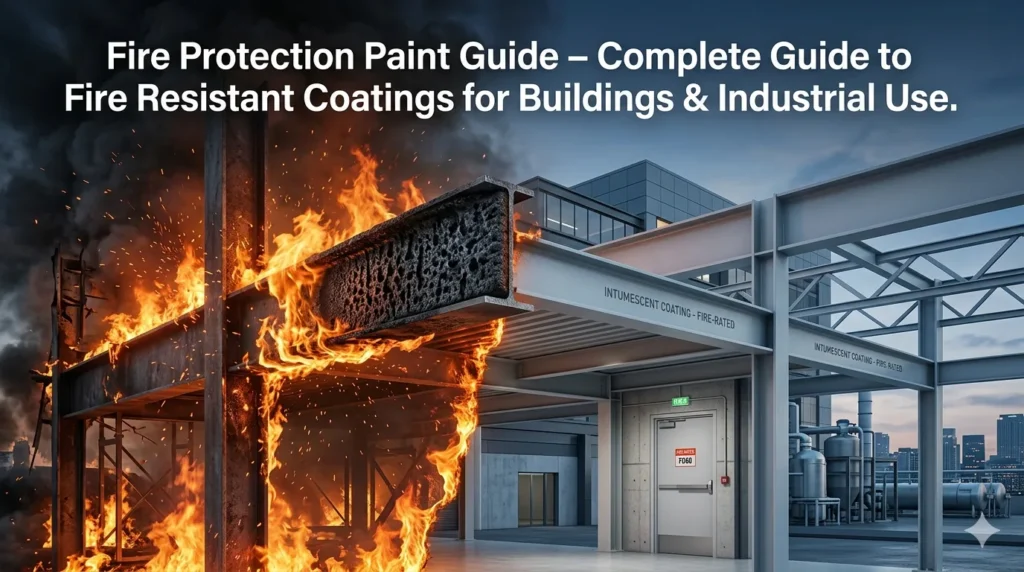
Fire safety is a critical part of modern construction, industrial operations, and infrastructure design. Whether protecting a commercial building, factory, warehouse, or steel structure, reducing fire risk is essential for protecting lives, assets, and long-term structural performance. One of the most effective passive fire protection solutions used today is fire protection paint.
Fire protection paint is a specialized coating designed to improve the fire resistance of building materials by slowing flame spread, reducing heat transfer, and delaying structural damage during fire exposure. Unlike conventional paint, it is engineered to react under extreme temperatures and provide an added layer of protection to steel, wood, walls, ceilings, and other surfaces.
Many fire protection paints use intumescent technology, which expands when exposed to heat to create an insulating char barrier. This protective layer helps shield the substrate beneath from direct flame and rapid temperature rise. The result is improved fire resistance and additional time for evacuation, firefighting, and emergency response.
Fire protection paints are widely used across a range of applications, including:
- Structural steel beams and columns
- Fire doors and wooden surfaces
- Interior walls and ceilings
- Electrical rooms and cable trays
- Warehouses and industrial plants
- Offices, hotels, hospitals, and public buildings
These coatings play an important role in passive fire protection strategies because they work continuously in the background without requiring activation like alarms or sprinklers.
As fire safety standards continue to evolve and building regulations become stricter, demand for certified fire resistant coatings continues to grow. Architects, engineers, contractors, and facility owners increasingly specify fire protection paint to improve code compliance, reduce risk, and extend the life of critical infrastructure.
Introduction to Fire Protection Paint
Fire protection paint is an essential part of modern fire safety design in buildings and industrial facilities. As structures become larger, more complex, and more heavily occupied, the need for reliable passive fire protection continues to grow. Fire protection paint offers an effective way to improve fire resistance without significantly changing the appearance or function of the protected surface.
Applied to steel, wood, walls, ceilings, and other building materials, fire protection paint helps slow flame spread, reduce heat transfer, and delay structural damage during fire exposure. It plays a critical role in protecting people, property, and infrastructure while supporting building code compliance and long-term safety planning.
Used across commercial buildings, warehouses, factories, hotels, hospitals, and public infrastructure, fire protection paint has become a widely specified solution for modern construction and industrial fire safety.
What is Fire Protection Paint?
Fire protection paint is a specialized coating formulated to improve the fire resistance of a surface when exposed to high temperatures or direct flame. Unlike conventional decorative paint, it is engineered to react during a fire and provide thermal protection to the substrate beneath.
Many fire protection paints use intumescent technology, which means the coating expands when exposed to heat. This expansion creates a thick insulating char layer that helps shield the surface from direct heat and slows temperature rise.
Fire protection paint is commonly applied to:
- Structural steel beams and columns
- Fire doors and wooden surfaces
- Interior walls and ceilings
- Cable trays and service areas
- Industrial machinery supports
- Commercial building frameworks
Depending on the system, it can provide fire resistance ratings such as:
- 30 minutes
- 60 minutes
- 90 minutes
- 120 minutes or more
This added protection helps delay structural failure and improves building fire performance.
Why Fire Protection Paint Matters for Safety
Fire protection paint is important because it provides passive fire protection that works continuously without requiring activation. In a fire emergency, every minute matters. Slowing the spread of fire and delaying heat damage can significantly reduce risk to occupants and the building itself.
Key safety benefits include:
- Slows flame spread across coated surfaces
- Reduces heat transfer to structural materials
- Helps maintain structural stability during fire exposure
- Protects critical escape routes and access areas
- Gives occupants more time to evacuate
- Supports safer conditions for emergency responders
- Reduces property damage and business interruption
For steel structures especially, fire protection paint is critical because steel can lose strength rapidly when exposed to high temperatures. Coatings help delay this temperature rise and extend the structural stability of the building during a fire.
Growing Demand for Fire Resistant Coatings in Modern Construction
Demand for fire resistant coatings continues to increase across construction and industrial sectors as fire safety regulations become stricter and awareness of passive fire protection grows.
Several factors are driving this demand, including:
- Stronger building fire safety regulations
- Increased focus on occupant protection
- Growth in commercial and industrial infrastructure development
- Greater use of exposed structural steel in modern architecture
- Insurance and risk management requirements
- Higher emphasis on long-term asset protection and durability
Fire protection paint is now commonly specified in:
- Office buildings
- Shopping malls
- Hotels
- Hospitals
- Warehouses
- Manufacturing plants
- Power plants
- Airports and transport hubs
Because it combines fire resistance, durability, and design flexibility, fire protection paint continues to be a practical solution for architects, contractors, facility managers, and property owners seeking safer and code-compliant buildings.
How Fire Protection Paint Works
Fire protection paint is designed to react during a fire and help protect the underlying surface from extreme heat and flame exposure. Unlike conventional coatings that mainly provide color or corrosion resistance, fire protection paint is engineered to improve fire resistance and delay damage during high-temperature conditions.
Its primary function is to slow flame spread, reduce heat transfer, and help structural materials maintain their integrity for longer during a fire. This extra protection gives occupants more time to evacuate, allows emergency responders more time to act, and helps reduce damage to the building.
Many fire protection paint systems rely on intumescent technology, which automatically activates when exposed to elevated temperatures.
Intumescent Fire Protection Technology Explained
The most common technology used in fire protection paint is intumescent coating technology. Intumescent coatings remain stable under normal conditions but react when exposed to fire or extreme heat.
When temperatures rise beyond a critical level, the coating undergoes a chemical reaction that causes it to expand significantly—often many times its original thickness.
This process generally involves:
- Heat activating the fire-reactive ingredients
- Expansion of the coating layer
- Formation of a thick insulating char
- Thermal protection of the substrate beneath
This expanded barrier acts as insulation between the fire and the protected surface.
Intumescent coatings are widely used on:
- Structural steel
- Wood doors and timber surfaces
- Walls and partitions
- Ceilings
- Commercial and industrial frameworks
Because the coating remains thin and visually unobtrusive until exposed to heat, it provides fire protection without affecting building design.
Heat Reaction & Protective Char Formation
The protective performance of fire protection paint depends on how it reacts under heat. Once exposed to fire, the coating begins to transform into a carbon-rich insulating layer called char.
During this reaction:
- The coating softens under extreme heat
- Fire-reactive compounds expand within the film
- The coating swells outward
- A thick char barrier forms on the surface
This char layer helps:
- Block direct flame contact
- Reduce heat transfer to the substrate
- Slow temperature rise in steel or wood
- Delay ignition of combustible surfaces
- Protect structural materials from weakening too quickly
This thermal barrier remains in place during the fire, helping preserve the integrity of the protected surface for a longer period.
How Fire Protection Paint Slows Flame Spread
One of the most important functions of fire protection paint is slowing the spread of flames across building materials.
Without protection, fire can move quickly across exposed structural surfaces, wall finishes, timber elements, or service areas. Fire protection paint helps interrupt this process by creating resistance between the flame and the material underneath.
It helps by:
- Delaying ignition of coated surfaces
- Reducing surface burning speed
- Lowering heat transmission into adjacent materials
- Limiting flame spread across connected building components
- Slowing fire progression between building zones
This added time can significantly reduce the speed at which a fire develops inside a building.
Passive Fire Protection vs Active Fire Protection
Fire protection paint is considered a passive fire protection system. Passive systems are built into the structure and remain in place at all times, providing protection automatically when needed.
Examples of passive fire protection include:
- Fire protection paint
- Fire-rated walls
- Fire doors
- Fire-resistant partitions
- Firestopping systems
By contrast, active fire protection systems require activation or operation during an emergency.
Examples of active fire protection include:
- Fire alarms
- Sprinkler systems
- Smoke detection systems
- Fire extinguishers
- Emergency suppression systems
The difference is:
Passive fire protection:
- Always present
- No activation required
- Built into the building structure
Active fire protection:
- Activated manually or automatically during a fire
- Often depends on mechanical or electrical systems
Both systems work best together. Fire protection paint supports active systems by slowing fire spread early, helping maintain structural stability, and giving alarms, sprinklers, and emergency responders more time to work effectively during a fire emergency.
Types of Fire Protection Paint
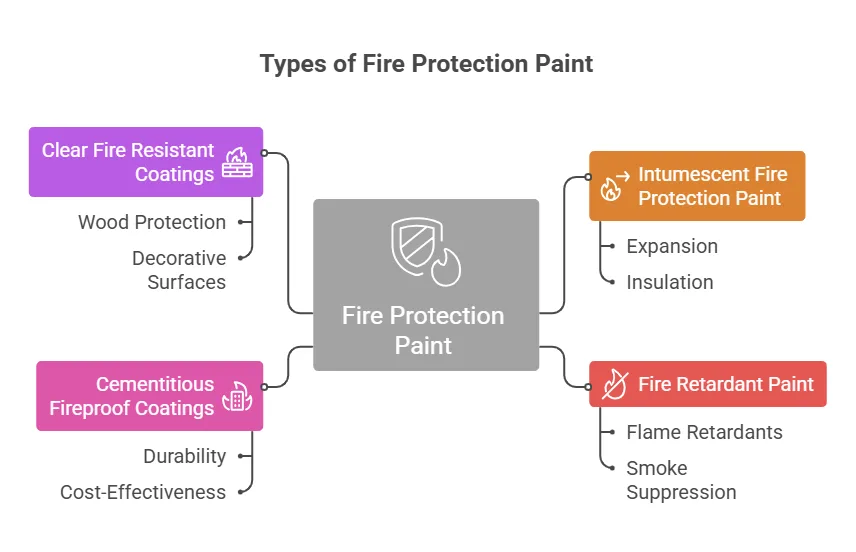
Fire protection paint is available in several types, each designed for specific surfaces, fire resistance requirements, and environmental conditions. Choosing the right type depends on the substrate being protected, the required fire rating, aesthetic expectations, and whether the application is industrial, commercial, or decorative.
Understanding the differences between fire protection coating systems helps ensure the right balance of performance, durability, and compliance for the project.
Intumescent Fire Protection Paint
Intumescent fire protection paint is one of the most widely used fire-resistant coating systems in modern construction. It is specially formulated to react when exposed to high temperatures.
When exposed to fire, the coating expands dramatically and forms a thick insulating char layer. This layer protects the substrate beneath from direct heat and slows temperature rise.
Key characteristics include:
- Expands under heat exposure
- Forms an insulating char barrier
- Helps delay structural weakening during fire
- Maintains fire resistance for a specified time period
- Suitable for both visible and architectural applications
Common applications include:
- Structural steel columns and beams
- Commercial steel frameworks
- Warehouses and industrial buildings
- Fire-rated doors
- Interior wall and ceiling systems
Intumescent coatings are often selected because they offer strong fire performance while maintaining a smooth decorative finish.
Fire Retardant Paint
Fire retardant paint is designed to slow ignition and reduce flame spread across the coated surface. Unlike some intumescent systems that expand significantly under heat, fire retardant paints are formulated to reduce how quickly a surface burns and limit fire propagation.
Its main functions include:
- Slowing flame spread
- Reducing surface ignition speed
- Lowering heat release during fire exposure
- Improving surface fire resistance
Fire retardant paint is commonly used on:
- Wood surfaces
- Interior wall finishes
- Ceiling systems
- Decorative panels
- Fabric surfaces
- Cable coatings and utility areas
It is widely used in commercial interiors, hospitality spaces, public buildings, and industrial facilities where reducing flame spread is a key requirement.
Cementitious Fireproof Coatings
Cementitious fireproof coatings are thicker fire-resistant materials designed primarily for structural fireproofing rather than decorative finishing. They are typically cement- or mineral-based and provide thermal insulation for steel structures.
Unlike paint-like coatings, these systems are often spray-applied at greater thickness to achieve high fire resistance ratings.
Benefits include:
- High thermal insulation performance
- Excellent protection for steel structures
- Suitable for large industrial or commercial projects
- Effective for high fire resistance requirements
Typical applications include:
- Structural steel in factories
- Warehouses
- Basements and service areas
- Parking structures
- Utility buildings
- Heavy industrial infrastructure
Because of their textured appearance, they are often used in concealed or non-decorative structural zones.
Clear Fire Resistant Coatings for Wood & Decorative Surfaces
Clear fire resistant coatings are designed for surfaces where appearance must be preserved while improving fire safety. These coatings provide flame resistance without hiding the natural look of the substrate.
They are especially popular for architectural wood finishes where grain, texture, or decorative detailing needs to remain visible.
Common uses include:
- Wooden wall panels
- Decorative timber cladding
- Veneer finishes
- Fire-rated wooden doors
- Furniture surfaces
- Heritage or exposed timber interiors
Benefits include:
- Preserves natural wood appearance
- Transparent or low-visibility finish
- Helps slow flame spread on timber surfaces
- Suitable for aesthetic commercial interiors
These coatings are often specified in:
- Hotels
- Offices
- Restaurants
- Auditoriums
- Luxury interiors
- Public architectural spaces
By selecting the correct type of fire protection paint—whether intumescent, fire retardant, cementitious, or clear fire-resistant coatings—project teams can match fire performance requirements with structural needs, environmental exposure, and architectural design goals.
Where Fire Protection Paint is Used
Fire protection paint is used across a wide range of residential, commercial, and industrial applications to improve fire resistance and reduce the spread of fire through building materials. It can be applied to structural elements, architectural surfaces, utility infrastructure, and fire-rated building components to help protect both occupants and property during fire exposure.
Because it can be tailored for steel, wood, concrete, and other substrates, fire protection paint is one of the most versatile passive fire protection solutions in modern construction.
Structural Steel & Steel Beams
Structural steel is one of the most common applications for fire protection paint. While steel is non-combustible, it can lose strength rapidly when exposed to high temperatures. Without fire protection, this can lead to structural weakening and possible collapse during a fire.
Fire protection paint is commonly applied to:
- Steel columns
- Structural beams
- Roof trusses
- Mezzanine structures
- Staircase frameworks
- Load-bearing steel supports
The coating helps:
- Insulate steel from direct heat
- Delay temperature rise
- Maintain load-bearing capacity for longer
- Improve structural stability during fire exposure
These systems are widely used in both commercial and industrial steel structures.
Fire Doors & Wooden Surfaces
Fire protection paint is also widely used on wood and timber surfaces where both fire resistance and appearance are important. Wood is naturally combustible, so protective coatings help reduce ignition risk and slow flame spread.
Common applications include:
- Fire-rated wooden doors
- Timber wall panels
- Decorative wood cladding
- Ceiling panels
- Veneer finishes
- Joinery and interior timber detailing
Benefits include:
- Slower ignition during fire exposure
- Reduced flame spread across timber surfaces
- Improved compliance for fire-rated doors
- Protection while preserving decorative appearance
Clear fire-resistant coatings are often chosen where the natural wood grain needs to remain visible.
Walls, Ceilings & Partitions
Interior walls, ceilings, and partitions are critical areas for controlling fire spread within buildings. Fire protection paint helps improve the fire performance of these surfaces and supports compartmentation between spaces.
Common applications include:
- Interior walls
- Ceiling systems
- Gypsum partitions
- Drywall systems
- Decorative wall panels
- Acoustic panels
These coatings help:
- Slow surface burning
- Reduce flame spread between rooms
- Improve protection in escape routes and corridors
- Support safer evacuation during emergencies
They are especially useful in commercial spaces, public buildings, and high-occupancy interiors.
Electrical Panels, Cable Trays & Utility Areas
Electrical systems are a major source of fire risk in many buildings due to overload, overheating, or short circuits. Fire protection paint is often used in service areas to provide additional protection around critical electrical infrastructure.
Typical applications include:
- Electrical control panels
- Cable trays
- Cable supports
- Utility shafts
- Switchgear rooms
- Mechanical service spaces
- Equipment enclosures
These coatings help:
- Slow flame spread around electrical systems
- Reduce heat transfer to nearby materials
- Protect service infrastructure during fire exposure
- Support fire compartmentation in utility areas
This protection is especially important in industrial facilities and commercial buildings with complex service networks.
Warehouses, Factories & Commercial Buildings
Fire protection paint is widely specified across large buildings where structural safety, asset protection, and fire code compliance are critical.
Common applications include:
- Warehouses and storage facilities
- Manufacturing plants
- Commercial office buildings
- Shopping malls
- Hotels
- Hospitals
- Airports
- Educational institutions
- Public infrastructure projects
In these environments, fire protection paint helps protect:
- Structural frameworks
- Interior finishes
- Service areas
- Fire-rated building components
- High-value assets and equipment
Its widespread use is driven by the need to:
- Improve occupant safety
- Protect critical infrastructure
- Reduce fire-related damage
- Maintain structural integrity during fire
- Support building code compliance and insurance requirements
Because of its flexibility and performance, fire protection paint remains one of the most practical and effective fire safety solutions for modern buildings and industrial facilities.
Benefits of Fire Protection Paint
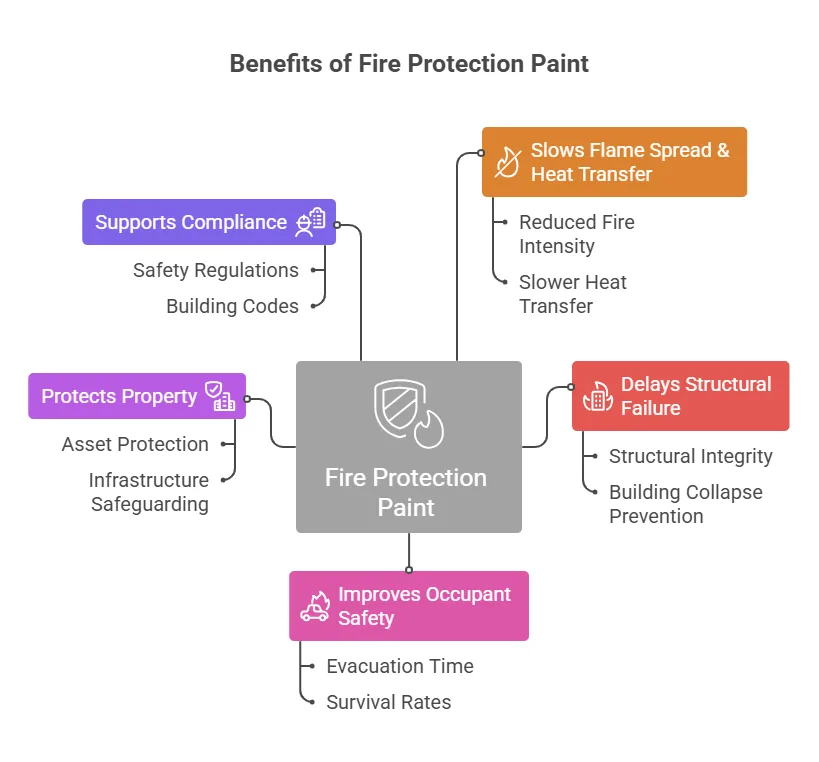
Fire protection paint offers a practical and effective way to improve fire resistance in buildings and industrial structures. More than just a surface coating, it acts as a critical part of a passive fire protection system—helping slow fire development, protect structural materials, and reduce damage during a fire emergency.
Whether applied to steel, wood, walls, ceilings, or service areas, fire protection paint delivers both immediate fire performance and long-term safety benefits. It is widely used because it combines protection, durability, and compliance without significantly changing the appearance of the building.
Slows Flame Spread & Heat Transfer
One of the most important benefits of fire protection paint is its ability to slow the spread of flames across coated surfaces. In a fire, untreated surfaces can allow flames to travel quickly through a structure. Fire protection paint helps interrupt this process and slows the fire’s progression.
It works by:
- Delaying ignition of the coated surface
- Slowing surface burning speed
- Creating a thermal barrier against heat
- Reducing heat transfer into the substrate
- Helping prevent fire from spreading rapidly between connected surfaces
This additional protection can significantly reduce the severity of a fire and help contain it for longer.
Delays Structural Failure During Fire
High temperatures can weaken structural materials quickly—especially steel. Fire protection paint helps delay this weakening by insulating the substrate from direct heat.
When exposed to fire, many intumescent coatings expand to form an insulating char layer. This barrier helps:
- Reduce the temperature rise in steel beams and columns
- Delay thermal expansion and deformation
- Protect load-bearing elements
- Extend structural stability during fire exposure
This delay is critical because it helps prevent premature collapse and provides more time for evacuation and firefighting.
Common protected structural elements include:
- Steel columns
- Structural beams
- Roof trusses
- Mezzanine supports
- Staircase frames
Improves Occupant Safety & Evacuation Time
Fire protection paint helps create safer conditions for people inside the building during a fire emergency. By slowing fire spread and protecting structural elements, it provides valuable extra time for evacuation.
Safety benefits include:
- More time for occupants to exit safely
- Better protection of corridors, stairwells, and escape routes
- Reduced risk of rapid structural failure during evacuation
- Improved access for firefighters and emergency responders
- Lower exposure to extreme heat in critical building areas
This is especially important in:
- Offices
- Hotels
- Hospitals
- Schools
- Shopping malls
- Public assembly spaces
Where evacuation time and safe movement are essential.
Protects Property, Assets & Infrastructure
Beyond life safety, fire protection paint also helps reduce damage to buildings, equipment, and valuable infrastructure.
By slowing fire growth, it helps protect:
- Structural frameworks
- Machinery and equipment
- Interior finishes
- Inventory and stored materials
- Electrical systems
- Building services infrastructure
This can lead to:
- Lower repair costs after a fire
- Reduced replacement costs
- Less business interruption
- Faster recovery after fire incidents
- Better long-term asset preservation
For industrial and commercial properties, this protection can significantly reduce operational and financial losses.
Supports Fire Safety Compliance & Building Codes
Fire protection paint is widely used to help buildings meet fire safety regulations and project-specific compliance requirements. Certified fire-resistant coatings are often required as part of building approvals, inspections, and fire engineering specifications.
These coatings help support:
- Fire resistance requirements for structural elements
- Building fire code compliance
- Fire safety inspections and certifications
- Insurance risk assessments
- Project approval documentation
- Long-term facility maintenance planning
Many fire protection paint systems are tested to recognized standards such as:
- ASTM International
- British Standards Institution
- Bureau of Indian Standards
- Underwriters Laboratories
Using certified systems gives architects, contractors, and building owners confidence that the coating meets performance expectations and regulatory requirements.
Overall, fire protection paint provides a valuable combination of fire resistance, structural protection, safety improvement, and compliance support—making it an essential solution for modern buildings and industrial fire safety.
How to Choose the Right Fire Protection Paint
Choosing the right fire protection paint is essential for ensuring effective fire resistance, long-term durability, and compliance with building safety requirements. Not all fire protection coatings perform the same way, and selecting the correct system depends on the substrate, required fire rating, environmental exposure, and the performance standards of the project.
Whether the application is for structural steel, wood, walls, ceilings, or industrial equipment, evaluating the coating system carefully helps ensure reliable protection throughout the life of the building.
Understanding Fire Ratings (30, 60, 90, 120 Minutes)
One of the most important factors when choosing fire protection paint is the required fire resistance rating. This rating indicates how long the coating can protect the substrate during fire exposure before it reaches a critical failure temperature.
Common fire ratings include:
- 30 minutes – Basic fire protection for lower-risk areas
- 60 minutes – Common for commercial interiors and structural protection
- 90 minutes – Higher fire resistance for larger buildings or higher occupancy spaces
- 120 minutes – Advanced protection for critical infrastructure or high-risk environments
The required fire rating depends on:
- Building type and occupancy
- Local fire regulations
- Structural design
- Fire load within the space
- Evacuation planning
- Insurance or project specifications
Higher fire ratings usually require greater coating thickness and must follow tested application specifications.
Surface Compatibility & Substrate Selection
Fire protection paint must be compatible with the material it is protecting. Different substrates require different coating systems to achieve proper adhesion, durability, and certified fire performance.
Common substrates include:
- Structural steel
- Mild steel
- Wood and timber surfaces
- Fire doors
- Gypsum walls and partitions
- Cement boards
- Interior architectural finishes
Before selecting a coating, consider:
- Surface condition
- Existing primer or paint system
- Porosity of the substrate
- Required finish appearance
- Exposure to wear or moisture
Choosing the correct system for the substrate helps avoid issues such as:
- Poor adhesion
- Peeling
- Cracking
- Delamination
- Reduced fire performance
Manufacturer-approved coating systems are typically recommended for best results.
Indoor vs Outdoor Applications
Fire protection paint should also be selected based on whether it will be used indoors or outdoors. Environmental exposure can significantly affect performance and durability.
Indoor applications may include:
- Office interiors
- Hotel corridors
- Shopping mall ceilings
- Fire doors
- Decorative wall panels
- Utility rooms
Indoor coatings often prioritize:
- Smooth finish
- Decorative appearance
- Low odor during application
- Compatibility with interior topcoats
Outdoor applications may include:
- Exterior steel frameworks
- Building entrances
- Industrial steel structures
- Utility enclosures
- Loading bay steel supports
Outdoor fire protection paint may require resistance to:
- Rain and moisture
- UV exposure
- Humidity
- Temperature changes
- Corrosive environments
Exterior systems often use protective sealers or topcoats to preserve both fire performance and weather resistance.
Environmental & Chemical Exposure Considerations
Environmental conditions play a major role in coating performance—especially in industrial settings. The selected fire protection paint should be suitable for the environment where it will be installed.
Important exposure conditions to assess include:
- High humidity
- Water exposure
- Condensation
- UV exposure
- Chemical splash or fumes
- Oil and grease contact
- Abrasion or mechanical impact
- Industrial pollutants
In environments such as:
- Warehouses
- Manufacturing plants
- Oil & gas facilities
- Chemical processing units
- Utility service areas
additional corrosion resistance or chemical resistance may be required alongside fire protection.
Selecting a coating system that can handle these conditions helps improve service life and reduces maintenance requirements.
Certification & Compliance Requirements
Certification is one of the most important checks when selecting fire protection paint. A certified system confirms that the coating has been tested under recognized fire conditions and meets required performance standards.
Before specification, review:
- Fire test reports
- Product data sheets
- Application manuals
- Dry film thickness requirements
- Approved primer and topcoat combinations
- Maintenance recommendations
Look for systems tested to recognized standards such as:
- ASTM International
- British Standards Institution
- Bureau of Indian Standards
- Underwriters Laboratories
Certified coatings help support:
- Building approvals
- Fire inspections
- Project compliance documentation
- Insurance requirements
- Long-term risk management
By choosing fire protection paint based on fire rating, substrate compatibility, application environment, and certification, building owners, architects, and contractors can ensure dependable fire performance while protecting both the structure and its occupants for years to come.
Application Process for Fire Protection Paint
Proper application is critical to the performance of fire protection paint. Even the best fire-resistant coating can fail to deliver the required protection if it is applied incorrectly. Surface condition, coating thickness, curing conditions, and inspection standards all directly affect fire performance, adhesion, and durability.
Whether used on steel, wood, walls, ceilings, or industrial equipment, fire protection paint should always be applied according to manufacturer guidelines and project specifications to ensure reliable long-term protection.
Surface Preparation & Cleaning
Surface preparation is the foundation of a successful fire protection coating system. A clean and properly prepared surface allows the coating to bond effectively and perform correctly during fire exposure.
Preparation requirements vary depending on the substrate, but generally include:
- Removing dust and loose particles
- Cleaning oil, grease, and contaminants
- Removing rust or corrosion from steel surfaces
- Repairing cracks, dents, or damaged areas
- Ensuring the surface is dry before coating begins
Common preparation methods may include:
- Abrasive blasting for structural steel
- Mechanical wire brushing
- Sanding for timber or wooden surfaces
- Solvent wiping
- Pressure washing where appropriate
Poor surface preparation can lead to:
- Weak adhesion
- Peeling or flaking
- Blistering
- Cracking
- Reduced fire resistance performance
A properly prepared substrate ensures strong adhesion and longer coating life.
Primer Selection & System Compatibility
In many applications, a primer is applied before the fire protection paint. The primer helps improve adhesion and may also provide corrosion resistance, surface sealing, or moisture protection depending on the substrate.
Primer selection depends on:
- Surface material
- Existing coating condition
- Indoor or outdoor environment
- Exposure to moisture or corrosion
- Manufacturer-approved coating system requirements
Common primers include:
- Epoxy primers
- Anti-corrosive steel primers
- Wood sealers
- Surface bonding primers for porous materials
It is important that the primer is fully compatible with:
- The fire protection paint
- Any intermediate coats
- Decorative topcoats if required
Using incompatible primers can negatively affect adhesion, durability, and certified fire performance.
Spray, Brush & Roller Application Methods
Fire protection paint can be applied using different methods depending on the size of the project, required finish, substrate shape, and coating thickness.
Spray Application
Spray application is the most common method for large-scale projects.
Benefits include:
- Fast application speed
- Uniform coverage
- Smooth finish
- Better productivity for large areas
Commonly used on:
- Structural steel
- Ceilings
- Large walls
- Warehouses
- Commercial frameworks
Airless spray systems are frequently used for intumescent coatings because they can handle higher-build materials efficiently.
Brush Application
Brush application is commonly used for:
- Small areas
- Detail work
- Corners and edges
- Repairs and touch-ups
- Hard-to-reach surfaces
It provides better control where precision is needed, although it is slower than spray application.
Roller Application
Roller application is often used on:
- Flat wall surfaces
- Partitions
- Ceiling panels
- Interior decorative areas
Benefits include:
- Controlled film build
- Smooth finish on flat surfaces
- Suitable for medium-sized applications
The application method should be selected based on required coating thickness, substrate type, and project accessibility.
Drying & Curing Requirements
After application, the coating must dry and cure properly before it reaches full performance. Drying allows the coating to become touch-safe, while curing allows it to fully develop adhesion, strength, and fire resistance properties.
Drying and curing time depends on:
- Product formulation
- Ambient temperature
- Relative humidity
- Air circulation
- Coating thickness
- Number of coats applied
Proper curing is essential because it helps the coating:
- Bond correctly to the substrate
- Achieve the required dry film thickness
- Deliver certified fire performance
- Accept topcoats if part of the system
During curing, the coating should be protected from:
- Water exposure
- Condensation
- Dust contamination
- Mechanical damage
- Premature loading or handling
Failure to allow proper curing can affect both durability and fire resistance.
Dry Film Thickness Testing & Quality Inspection
Inspection is the final step of the fire protection paint application process and is essential to verify performance and compliance.
One of the most important checks is Dry Film Thickness (DFT) testing.
DFT testing confirms that the coating has been applied to the thickness required to achieve the specified fire rating—such as:
- 30 minutes
- 60 minutes
- 90 minutes
- 120 minutes
Since fire resistance performance depends heavily on coating thickness, accurate measurement is critical.
Quality control inspections typically include:
- Visual inspection for full surface coverage
- Dry film thickness measurement
- Wet film thickness checks during application
- Inspection for cracks, pinholes, runs, or voids
- Adhesion testing where required
- Primer and topcoat verification
- Repair of missed or damaged areas
Inspection records are often maintained for:
- Fire compliance documentation
- Project approvals
- Building handover reports
- Future maintenance planning
Proper testing and inspection ensure the fire protection paint system meets design requirements and performs reliably throughout the life of the building or structure.
Maintenance & Inspection of Fire Protection Paint
Fire protection paint is designed to provide long-term passive fire resistance, but its performance depends on regular inspection and proper maintenance throughout the life of the structure. Exposure to moisture, physical impact, environmental changes, or building modifications can gradually affect the coating system over time.
A planned maintenance and inspection program helps ensure the coating continues to perform as intended, maintains its certified fire resistance, and remains compliant with fire safety standards.
Whether used in commercial buildings, warehouses, factories, or industrial structures, regular inspection helps protect both the substrate and the people inside the building.
Inspection Frequency & Maintenance Planning
Routine inspection is essential to confirm that fire protection paint remains intact and capable of providing the required fire resistance.
Inspection frequency can vary depending on:
- Type of building or facility
- Indoor or outdoor exposure
- Traffic and usage conditions
- Environmental conditions
- Age of the coating system
- Manufacturer recommendations
Typical inspection schedules include:
- Every 6–12 months for most commercial and industrial buildings
- Annual inspections for structural steel, fire doors, and interior fire-rated systems
- More frequent inspections in harsh industrial environments
- Immediate inspection after fire exposure, water damage, or accidental impact
- Additional checks after renovation or maintenance work near coated areas
Areas that often require closer monitoring include:
- Exposed structural steel
- Fire doors
- Service shafts and utility rooms
- Mechanical and electrical rooms
- Stairwells and escape routes
- Exterior steel structures exposed to weather
Maintaining inspection records also helps support compliance audits and future maintenance planning.
Recoating Guidelines
Over time, fire protection paint may require touch-up repairs or full recoating to maintain performance. Recoating helps restore damaged areas and preserve the required level of fire resistance.
Recoating may be necessary when:
- Coating thickness falls below specification
- Damage exposes the substrate beneath
- Surface wear affects coverage or adhesion
- Corrosion appears under the coating
- Water ingress has affected the coating system
- Building modifications disturb coated areas
Before recoating, the surface should typically be:
- Inspected thoroughly
- Cleaned to remove contaminants
- Repaired where needed
- Checked for adhesion of existing layers
- Reviewed for compatibility with the original primer and topcoat system
Using the same approved fire-rated system or a compatible manufacturer-approved repair system is recommended to maintain tested performance.
Signs of Coating Damage or Failure
Routine inspections should look for early signs of damage that could affect fire performance. Identifying issues early allows repairs to be completed before the coating system deteriorates further.
Common signs include:
- Cracking on the coating surface
- Peeling or flaking
- Blistering
- Surface chipping
- Scratches from impact or abrasion
- Delamination from the substrate
- Water staining or moisture marks
- Rust bleeding through steel coatings
- Areas where the substrate is visible
Damage is commonly found around:
- Corners and edges
- Door frames
- Access panels
- Service penetrations
- High-traffic maintenance zones
- Areas exposed to moisture or condensation
Any visible damage should be inspected promptly and repaired to maintain continuous fire protection.
Long-Term Durability & Performance Factors
The long-term durability of fire protection paint depends on several factors—from product quality to the surrounding environment.
Key factors that influence performance include:
- Quality of surface preparation before application
- Correct primer selection
- Proper dry film thickness during installation
- Indoor or outdoor exposure conditions
- Moisture and humidity levels
- UV exposure for exterior systems
- Mechanical impact or abrasion
- Exposure to chemicals or industrial pollutants
- Building movement or vibration
- Frequency of cleaning and maintenance
In industrial environments such as warehouses, manufacturing plants, or refineries, additional exposure to heat, fumes, oil, or chemical splash may require more frequent monitoring.
With proper installation, routine inspection, and timely maintenance, fire protection paint can provide dependable fire resistance for many years. Regular upkeep helps preserve structural safety, maintain compliance with fire regulations, and protect long-term building performance and asset value.
Fire Safety Standards & Certifications
Fire safety standards and certifications are a critical part of selecting and specifying fire protection paint. A coating system must do more than simply cover a surface—it must be tested, verified, and approved to perform under real fire conditions. Certified fire protection coatings provide confidence that the product can deliver the required fire resistance while meeting regulatory and project compliance requirements.
For architects, contractors, consultants, and building owners, choosing coatings that comply with recognized standards helps ensure reliable performance, smoother approvals, and long-term protection for both occupants and property.
ASTM Fire Testing Standards
ASTM International standards are widely used to evaluate the fire performance of fire protection paints and fire-resistant coating systems.
These standards help determine how coatings perform under heat and flame exposure by measuring:
- Fire resistance duration
- Flame spread characteristics
- Heat transfer performance
- Surface burning behavior
- Structural protection under elevated temperatures
- Temperature rise of protected substrates
ASTM testing helps verify whether a coating can achieve required fire ratings such as:
- 30 minutes
- 60 minutes
- 90 minutes
- 120 minutes or more
These standards are commonly referenced for coatings applied to:
- Structural steel
- Wood surfaces
- Fire doors
- Wall and ceiling systems
- Industrial building components
ASTM-tested coatings are widely specified in commercial, industrial, and infrastructure projects around the world.
BS & IS Fire Protection Certifications
Many projects also require compliance with British Standards Institution (BS) and Bureau of Indian Standards (IS) certifications.
These standards are particularly important in India, the UK, and international construction projects where local authorities reference regional fire safety codes.
BS and IS certifications may assess:
- Fire resistance of coated surfaces
- Flame spread performance
- Ignition resistance
- Structural protection under fire exposure
- Product consistency and manufacturing quality
They are commonly used for:
- Fire protection coatings for steel
- Fire-rated doors
- Wood protection coatings
- Interior wall systems
- Commercial and industrial fireproofing systems
Using coatings tested to BS or IS standards helps support project approval and demonstrates compliance with local fire protection requirements.
Building Code Compliance Requirements
Fire protection paint is often specified to help buildings meet fire code requirements and project-specific safety regulations. Building codes typically define where fire-resistant materials or coatings are required based on the structure’s design and occupancy.
Compliance requirements often depend on:
- Building height
- Occupancy type
- Fire load
- Structural design
- Escape route planning
- Surface material classification
- Local fire authority regulations
Fire protection paint is commonly used to support code compliance in:
- Office buildings
- Shopping malls
- Hotels
- Hospitals
- Schools and educational buildings
- Warehouses and factories
- Airports and transport hubs
- Public infrastructure projects
Project documentation may also require:
- Fire test certificates
- Product technical data sheets
- Approved system specifications
- Application records
- Dry film thickness reports
- Inspection and maintenance documentation
Proper documentation is often essential during approvals, inspections, handover, and future building maintenance.
Insurance & Risk Management Benefits
Certified fire protection paint also provides important advantages for insurance planning and risk management. Fire-resistant coatings help reduce the severity of fire damage, protect structural elements, and improve building resilience during emergencies.
Key benefits include:
- Reduced fire-related repair and replacement costs
- Lower risk of structural collapse
- Better protection of building assets and equipment
- Reduced business interruption after fire incidents
- Improved occupant safety planning
- Stronger support during insurance risk assessments
- Better long-term property protection and asset management
Insurance providers often review passive fire protection systems when evaluating:
- Commercial buildings
- Industrial facilities
- Warehouses
- High-occupancy spaces
- Critical infrastructure projects
Buildings with certified fire protection systems may benefit from stronger compliance records and improved risk documentation.
By choosing fire protection paint that meets recognized standards such as ASTM International, British Standards Institution, Bureau of Indian Standards, and Underwriters Laboratories, building owners and project teams can improve fire safety performance, meet regulatory requirements, reduce long-term risk, and protect people and property more effectively.
Frequently Asked Questions About Fire Protection Paint
Below are answers to some of the most common questions about fire protection paint, including where it is used, how it performs, and what to consider before application.
What is fire protection paint used for?
Fire protection paint is used to improve the fire resistance of surfaces by slowing flame spread, reducing heat transfer, and helping protect structural materials during fire exposure.
It is commonly applied to:
- Structural steel beams and columns
- Fire doors
- Wood panels and timber surfaces
- Interior walls and ceilings
- Electrical panels and cable trays
- Warehouses and industrial facilities
- Commercial buildings and public spaces
Its main purpose is to help delay fire damage, improve structural protection, and provide more time for evacuation and emergency response.
Is fire protection paint the same as fire retardant paint?
Fire protection paint and fire retardant paint are closely related, but they are not always exactly the same.
Fire protection paint is a broader term used for coatings designed to improve a surface’s fire resistance. This can include intumescent coatings, fire retardant paints, and other fire-resistant systems.
Fire retardant paint specifically focuses on reducing flame spread and slowing ignition on the coated surface.
In many projects:
- Fire protection paint = overall fire-resistant coating system
- Fire retardant paint = coating designed to reduce flame spread
Some systems may overlap depending on the product and application.
Can fire protection paint be used on steel and wood?
Yes. Fire protection paint is widely used on both steel and wood.
Steel Applications
Common uses on steel include:
- Structural columns
- Steel beams
- Roof trusses
- Staircases
- Industrial steel supports
The coating helps insulate steel from heat and delay the loss of structural strength during a fire.
Wood Applications
Common uses on wood include:
- Fire-rated doors
- Timber cladding
- Decorative panels
- Wooden ceilings
- Joinery and interior finishes
On wood, it helps slow ignition and reduce flame spread while preserving the surface finish.
Different coating systems may be required depending on the substrate and fire rating requirement.
How long does fire protection paint last?
The lifespan of fire protection paint depends on:
- Product quality
- Surface preparation
- Application quality
- Indoor or outdoor exposure
- Moisture levels
- UV exposure
- Maintenance and inspection frequency
When correctly applied and maintained, fire protection paint can provide long-term protection for many years.
In general:
- Interior systems often last longer because they are protected from weather exposure
- Exterior systems may require additional protective topcoats and periodic maintenance
Routine inspections help ensure the coating remains intact and continues to perform as intended over time.
Can fire protection paint be used outdoors?
Yes—many fire protection paint systems are suitable for outdoor use, but the product must be specifically designed for exterior exposure.
Outdoor applications may include:
- Structural steel frameworks
- Exterior staircases
- Industrial buildings
- Warehouses
- Utility enclosures
- External support structures
Exterior coatings may need added resistance to:
- Rain and moisture
- Humidity
- UV exposure
- Temperature changes
- Corrosion
For outdoor use, fire protection paint is often applied as part of a complete coating system that may include:
- Primer
- Fire protection coating
- Weather-resistant protective topcoat
Choosing a certified exterior-grade system helps maintain both fire resistance and long-term durability in outdoor environments.
Conclusion – Choosing the Right Fire Protection Paint for Long-Term Safety
Fire protection paint plays an important role in modern building safety by providing reliable passive fire resistance for structural and architectural surfaces. Whether used in commercial buildings, warehouses, factories, or industrial facilities, it helps slow flame spread, reduce heat transfer, and protect critical building components during fire exposure.
From structural steel and fire doors to walls, ceilings, and utility areas, fire protection paint adds an essential layer of defense that supports both life safety and property protection. When properly selected, applied, and maintained, it can significantly improve a building’s ability to withstand fire while reducing long-term damage and operational risk.
Importance of Passive Fire Protection
Fire protection paint is a core part of passive fire protection because it works continuously without requiring activation. Unlike alarms, sprinklers, or suppression systems, passive protection is built directly into the structure and remains ready at all times.
During a fire, it helps to:
- Slow the spread of flames across surfaces
- Delay heat penetration into structural materials
- Maintain the stability of steel and other substrates
- Protect escape routes and occupied spaces
- Provide more time for evacuation and emergency response
Because it activates automatically under heat, fire protection paint serves as a dependable safety layer in any fire protection strategy.
Benefits of Certified Fire Protection Coatings
Choosing a certified fire protection coating system helps ensure proven performance and regulatory compliance. Certified coatings are tested under recognized fire conditions to verify that they deliver the required fire resistance for specific applications.
Key benefits include:
- Verified fire resistance performance
- Improved safety for occupants and emergency responders
- Better protection for structural steel, wood, and building finishes
- Support for project approvals and inspections
- Compliance with building regulations and fire safety standards
- Greater confidence in long-term durability and coating performance
Coatings tested to standards from ASTM International, British Standards Institution, Bureau of Indian Standards, or Underwriters Laboratories help ensure dependable fire performance and easier compliance documentation.
Long-Term Safety & Structural Protection
Beyond fire resistance, fire protection paint delivers long-term value by helping preserve the integrity and service life of the building.
Long-term benefits include:
- Delayed structural failure during fire
- Protection of steel frameworks and timber surfaces
- Reduced repair and replacement costs after fire incidents
- Improved resilience of commercial and industrial assets
- Lower risk of operational downtime after fire damage
- Better long-term maintenance planning and asset protection
With regular inspections, timely repairs, and proper maintenance, fire protection paint can remain effective for many years.
Final Recommendations for Fire-Safe Buildings & Industrial Applications
To maximize performance and long-term protection, it is important to approach fire protection paint as part of a complete fire safety system.
Recommended best practices include:
- Select the coating based on required fire rating (30, 60, 90, or 120 minutes)
- Confirm compatibility with the substrate, such as steel, wood, or interior wall systems
- Choose systems suitable for indoor or outdoor exposure conditions
- Use manufacturer-approved primers and topcoats
- Apply the coating to the required dry film thickness
- Verify performance through inspection and testing
- Schedule regular maintenance and periodic inspection
- Review certifications and compliance documentation before project approval
When chosen carefully and installed correctly, fire protection paint provides dependable long-term fire resistance, helps protect occupants and assets, supports compliance with fire safety regulations, and strengthens the overall safety of buildings and industrial structures.
For any project where fire safety matters, investing in the right fire protection paint is a practical and essential step toward creating safer, more resilient spaces.
Great blog you’ve got here.. It’s hard to
find excellent writing like yours these days.
I honestly appreciate people like you! Take care!!
Fantastic goods from you, man. I’ve understand your stuff previous to and you are just
extremely magnificent. I really like what you’ve acquired here,
really like what you are stating and the way in which you
say it. You make it enjoyable and you still take care of to keep it
wise. I cant wait to read far more from you. This is really a wonderful site.
Useful info, thanks for sharing your knowledge on sport 18811. More at alticpaint.com
Hey there! This post couldn’t be written any better!
Reading through this post reminds me of my old room mate! He always kept chatting about this.
I will forward this article to him. Pretty sure he will have a good read.
Many thanks for sharing!
Useful info, thanks for sharing your knowledge on sport 18811. More at alticpaint.com
I always used to study post in news papers but now as I am a user of net therefore from now I am using net for articles
or reviews, thanks to web.
You’re so interesting! I do not believe I have read
something like that before. So great to find somebody with genuine thoughts on this topic.
Really.. thank you for starting this up. This web site is one thing that is needed on the web, someone with a little originality!