

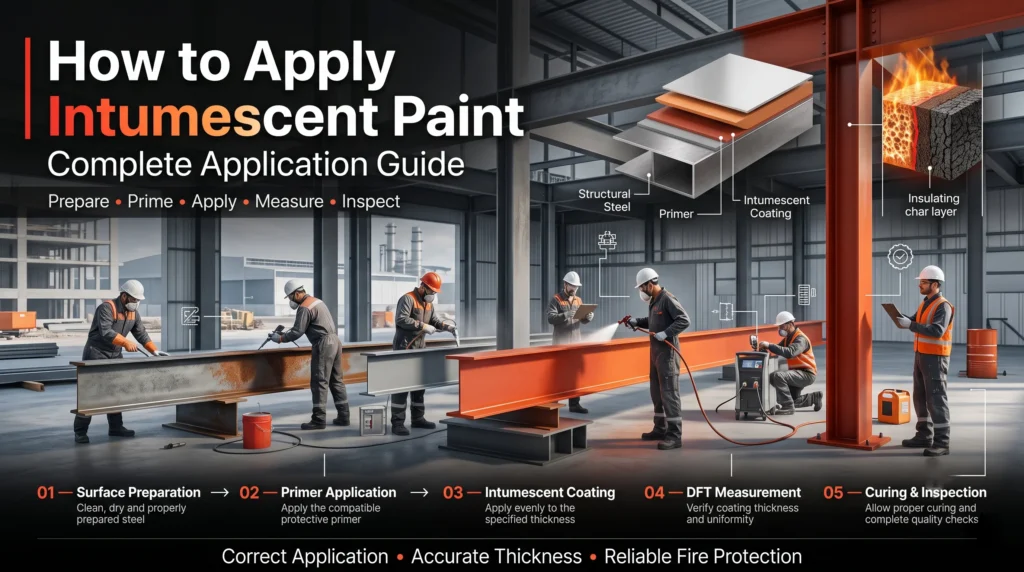
Applying intumescent paint correctly is essential for achieving reliable passive fire protection of structural steel. The coating system normally involves surface preparation, compatible primer application, intumescent coating application, Dry Film Thickness (DFT) control, and a protective topcoat where required. Each stage should be carried out according to the manufacturer’s technical specifications and the required fire-protection system.
Proper application helps ensure good adhesion, uniform coating thickness, durability, and the intended fire-resistance performance. Before starting, the steel surface, environmental conditions, coating compatibility, and required fire rating should be checked carefully. The required DFT should be determined from the approved coating system rather than estimated independently.
For best results, intumescent paint should be applied by trained applicators using the recommended application method and equipment. Surface preparation should remove rust, oil, grease, dust, and other contaminants. A compatible primer should then be applied where specified, followed by the required number of intumescent coats. Each coat should be allowed to dry or cure according to the manufacturer’s requirements.
Finally, the completed coating should be inspected for DFT, uniformity, adhesion, visible defects, and overall system compliance. Where the coating is exposed to outdoor or aggressive industrial conditions, a compatible protective topcoat may be required. Following the complete approved coating system helps support long-term fire protection and structural safety.
Introduction to Intumescent Paint Application
Intumescent paint is a specialized passive fire protection coating used to help protect suitable structural materials, particularly structural steel, during fire exposure. When subjected to high temperatures, the coating reacts and expands to form an insulating char layer. This layer slows heat transfer to the protected substrate and helps delay the rise in steel temperature.
What Is Intumescent Paint?
Intumescent paint is a heat-reactive coating that remains relatively thin under normal conditions. When exposed to high temperatures, it undergoes a chemical reaction and expands to create a thicker, insulating protective layer.
For structural steel, this char layer helps reduce the rate of heat transfer and supports the required fire-resistance performance of the coating system.
Why Correct Application Is Important
Correct application is essential for achieving the intended performance of an intumescent coating. Surface preparation, primer compatibility, coating thickness, environmental conditions, curing, and inspection can all influence the quality and effectiveness of the finished system.
The coating should be applied according to the manufacturer’s technical requirements and the approved fire-protection system. Maintaining the specified Dry Film Thickness (DFT) is particularly important because the required thickness is related to the fire rating and application conditions.
Where Is Intumescent Paint Applied?
Intumescent paint is commonly applied to suitable structural steel in a variety of commercial, industrial, and infrastructure applications, including:
- Office and commercial buildings
- High-rise buildings
- Industrial plants
- Manufacturing facilities
- Warehouses
- Oil and gas facilities
- Power plants
- Airports and hospitals
- Railway and transit facilities
- Public and institutional buildings
The appropriate coating system should be selected according to the substrate, required fire rating, steel section factor, environmental exposure, and project specifications.
Preparation Before Applying Intumescent Paint
Proper preparation is an important first step in applying intumescent paint. Before coating begins, the steel surface, surrounding conditions, and complete coating system should be checked to help ensure proper adhesion, coating quality, and the required fire-protection performance.
Checking the Steel Surface
Inspect the steel surface carefully before application. Check for rust, existing coatings, moisture, dust, oil, grease, loose material, and other contaminants that could affect adhesion.
Any damaged or unsuitable areas should be identified and corrected according to the requirements of the selected coating system.
Removing Rust, Oil, Grease and Dust
The steel surface should be properly cleaned before applying primer or intumescent paint. Rust, oil, grease, dust, mill scale, and loose contaminants should be removed using the surface-preparation method specified for the coating system.
A clean and suitably prepared surface helps provide better adhesion and reduces the risk of peeling, blistering, or premature coating failure.
Checking Environmental Conditions
Environmental conditions should be checked before and during application. Important factors include ambient temperature, steel surface temperature, humidity, moisture, and ventilation.
The coating should be applied only within the environmental limits specified by the manufacturer. Unsuitable conditions can affect drying, curing, adhesion, and final coating performance.
Selecting the Correct Coating System
Before application, confirm that the complete coating system is suitable for the intended project. This may include a compatible primer, intumescent coating, and protective topcoat where required.
The selected system should match the required fire rating, steel section factor, substrate, environmental exposure, and specified DFT. Following the manufacturer’s approved coating system helps ensure that the application is suitable for the intended passive fire protection requirements.
Surface Preparation for Intumescent Paint
Proper surface preparation is essential for achieving strong adhesion and reliable performance from an intumescent coating system. The steel should be clean, dry, and suitably prepared before primer or intumescent paint is applied. The preparation method should always follow the coating manufacturer’s technical requirements.
Cleaning and Degreasing
Before mechanical or abrasive preparation, remove oil, grease, dirt, dust, and other surface contaminants from the steel. Degreasing helps ensure that contaminants do not interfere with subsequent surface preparation or coating adhesion.
The cleaned surface should be allowed to dry properly before proceeding to the next stage.
Abrasive Blast Cleaning
Where specified by the coating system, abrasive blast cleaning can be used to remove rust, mill scale, old coatings, and other firmly attached contaminants. It also creates a suitable surface profile that helps the primer bond effectively to the steel.
The required blast-cleaning grade and abrasive type should be selected according to the manufacturer’s specification and project requirements.
Surface Profile and Cleanliness
After preparation, the steel should have the required surface profile and cleanliness level for the selected primer and intumescent system. An unsuitable profile or remaining contamination can negatively affect coating adhesion and durability.
Dust, abrasive residues, moisture, and other contaminants should be removed before coating application. Surface preparation should be checked against the specified requirements before proceeding.
Surface Inspection
A final inspection should be completed before applying the primer. Check the steel for remaining rust, dust, grease, moisture, loose material, surface defects, and areas requiring additional preparation.
Only after the surface meets the specified preparation requirements should the coating system proceed. Proper inspection at this stage helps reduce adhesion problems and supports consistent intumescent coating performance.
Primer Application
Primer application is an important stage in an intumescent paint system because it provides a suitable foundation between the prepared steel surface and the intumescent coating. The primer should be selected and applied according to the approved coating system and manufacturer’s technical requirements.
Selecting a Compatible Primer
Choose a primer that is compatible with the specified intumescent coating. The primer should be suitable for the substrate, environmental conditions, and intended service exposure.
Using an incompatible primer can affect adhesion, curing, durability, and the overall performance of the fire-protection system. Always verify compatibility before application.
Primer Application Method
Apply the primer using the application method recommended by the manufacturer, such as airless spray, brush, or roller. The prepared steel should receive uniform coverage without missed areas, runs, sags, or other coating defects.
The primer should be applied under the specified environmental conditions and allowed to dry before the intumescent layer is applied.
Primer DFT Requirements
The Dry Film Thickness (DFT) of the primer should remain within the range specified for the approved coating system. Correct primer thickness helps provide the required adhesion and corrosion protection without adversely affecting the intumescent system.
DFT should be checked using suitable measuring equipment where required, and any areas outside the specified range should be corrected before proceeding.
Primer Drying and Curing
The primer must be allowed to dry and cure for the manufacturer’s specified period before applying the intumescent coating. Drying time can vary according to product formulation, temperature, humidity, ventilation, and film thickness.
Applying the next coating layer before the primer has adequately cured may lead to adhesion or coating-system problems. The primer surface should therefore be inspected and confirmed suitable before intumescent paint application.
How to Apply Intumescent Paint
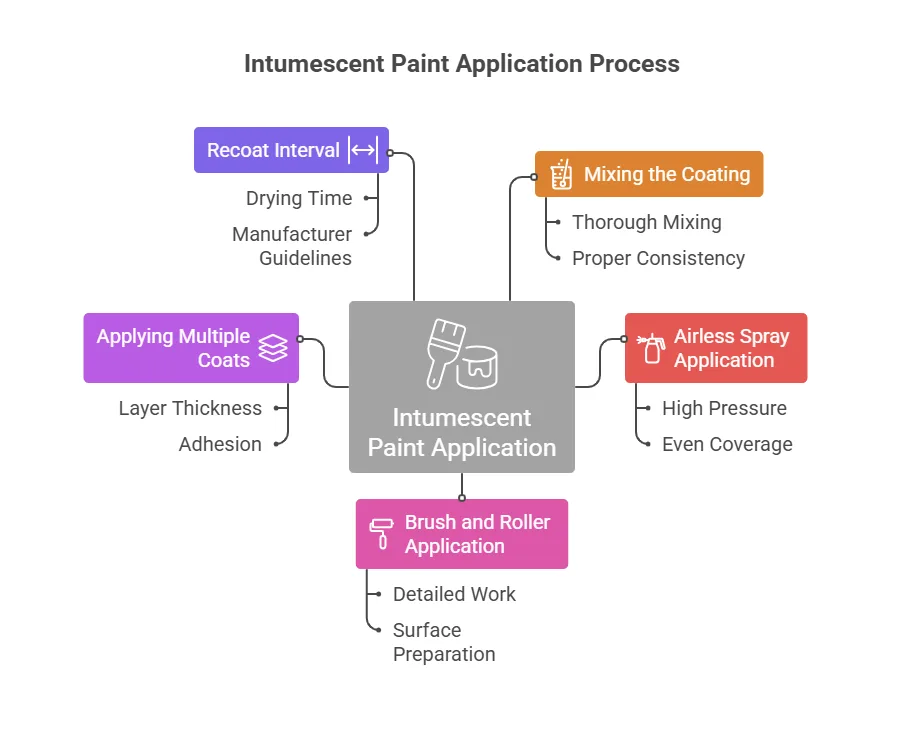
Applying intumescent paint requires controlled mixing, suitable application equipment, and careful management of coating thickness and drying time. The coating should be applied according to the manufacturer’s Technical Data Sheet (TDS) and the approved fire-protection system.
Mixing the Coating
Before application, prepare and mix the intumescent coating according to the manufacturer’s instructions. Ensure that the coating is properly homogenized and that any specified mixing ratio, thinning requirement, or pot life is followed.
Avoid adding excessive thinner or making unauthorized formulation changes, as these can affect application properties and coating performance.
Airless Spray Application
Airless spray application is commonly suitable for applying intumescent coatings, particularly on large structural steel surfaces. It allows relatively uniform coverage and efficient application over large areas.
The spray equipment, tip size, pressure, and application technique should be selected according to the coating manufacturer’s recommendations. The applicator should maintain consistent spray movement to minimize runs, sags, and uneven thickness.
Brush and Roller Application
Brush and roller application can be useful for small areas, touch-ups, edges, repairs, and difficult-to-access locations. However, the suitability of these methods depends on the specific intumescent product.
The coating should be applied evenly without leaving excessive brush marks, missed areas, runs, or other defects. Multiple coats may be necessary to achieve the specified DFT.
Applying Multiple Coats
Intumescent paint may require multiple coats to achieve the required Dry Film Thickness (DFT). Each coat should be applied uniformly and allowed to dry sufficiently before the next coat is applied.
Avoid applying an excessively thick single coat unless specifically permitted by the manufacturer, as improper film thickness can contribute to sagging, cracking, extended drying times, or other coating defects.
Recoat Interval
The recoat interval is the minimum or recommended time between successive coats. It depends on factors such as coating formulation, temperature, humidity, ventilation, and applied film thickness.
Always follow the manufacturer’s specified recoat time rather than relying only on a general drying estimate. Before applying the next coat, confirm that the previous layer is sufficiently dry and suitable for recoating.
Dry Film Thickness (DFT) Control
Dry Film Thickness (DFT) control is a critical part of intumescent paint application. The required coating thickness is determined by the approved fire-protection system and can depend on factors such as the required fire rating, steel section factor, and coating specification. Accurate thickness control helps ensure consistent fire-protection performance.
Why DFT Is Important
The DFT determines whether the applied intumescent coating has reached the thickness required by the specified fire-protection system. Insufficient thickness may result in inadequate protection, while excessive or uneven application can lead to defects such as sagging, cracking, or prolonged drying.
DFT should therefore be monitored throughout the application process rather than checked only after the entire project is completed.
Measuring Wet Film Thickness
Wet Film Thickness (WFT) can be checked while the coating is still wet using an appropriate wet-film thickness gauge. WFT measurements provide an early indication of whether the application is within the required range.
Monitoring WFT during application allows applicators to adjust the application technique or number of coats before the coating dries. The relationship between WFT and final DFT depends on the coating’s volume solids and product specification.
Measuring Dry Film Thickness
Once the coating has dried sufficiently, DFT can be measured using a suitable calibrated thickness gauge. Measurements should be taken at representative locations across the protected steel.
The recorded values should be compared with the DFT requirements specified by the approved coating system. Inspection records should be maintained as part of the project’s quality-control documentation.
Correcting Insufficient DFT
If inspection identifies areas where the DFT is below the specified requirement, additional intumescent coating may be required. The corrective application should follow the manufacturer’s approved procedure, including surface condition, recoat requirements, and maximum allowable thickness per coat.
After corrective coating has dried, the affected areas should be re-inspected to confirm that the required DFT has been achieved without creating excessive thickness or other coating defects.
Protective Topcoat Application
A protective topcoat can be an important part of an intumescent coating system, particularly where the coating will be exposed to demanding environmental conditions. The topcoat helps protect the intumescent layer from moisture, UV exposure, chemicals, and weathering while providing the required final appearance. It should always be compatible with the approved intumescent system.
When Is a Topcoat Required?
A topcoat may be required when the intumescent coating is exposed to outdoor conditions, high humidity, moisture, UV radiation, chemicals, or other aggressive environments.
For interior dry environments, a topcoat may not always be necessary, depending on the manufacturer’s system requirements. The need for a topcoat should therefore be determined from the product specification and intended exposure conditions.
Selecting a Compatible Topcoat
The topcoat should be chemically and technically compatible with the intumescent coating. It should not interfere with the coating’s ability to react and expand during fire exposure.
Selection should consider:
- Environmental exposure
- Required appearance
- Chemical resistance
- UV and weather resistance
- Compatibility with the intumescent layer
- Manufacturer’s approved coating system
An unapproved topcoat should not be substituted without confirming its suitability for the complete system.
Topcoat Application
Before applying the topcoat, the intumescent coating should be sufficiently dry and properly inspected. Apply the topcoat using the manufacturer’s recommended method and within the specified environmental conditions.
The topcoat should be applied uniformly to achieve the required finish without excessive thickness, runs, sags, pinholes, or other defects. The specified recoat interval and curing requirements should also be followed.
Outdoor and Industrial Protection
For outdoor and industrial applications, the coating system may need additional protection against rain, humidity, UV radiation, temperature variations, chemicals, and industrial contaminants.
A suitable protective topcoat can help improve the durability of the intumescent system under these conditions. However, long-term performance depends on the complete coating system, correct application, environmental exposure, regular inspection, and appropriate maintenance.
Environmental Conditions During Application
Environmental conditions can significantly affect the application, drying, curing, adhesion, and final performance of an intumescent coating system. Before and during application, conditions such as temperature, humidity, moisture, steel surface temperature, and ventilation should be monitored and maintained within the limits specified by the coating manufacturer.
Temperature Requirements
Ambient temperature should remain within the manufacturer’s specified application range. Very low or high temperatures can influence coating viscosity, drying time, curing, and film formation.
Before application, confirm that the temperature conditions are suitable for the selected intumescent coating and that they are expected to remain acceptable during the required drying and curing period.
Humidity and Moisture
High humidity and moisture can affect the drying and curing of intumescent coatings. The steel surface should be clean and dry before coating application, with no visible condensation or surface moisture.
Where environmental conditions are unsuitable, application should be delayed until conditions meet the product’s specified requirements.
Steel Surface Temperature
The temperature of the steel surface is an important consideration during application. The surface should remain within the manufacturer’s specified temperature range and should be suitable for coating application.
The surface temperature should also be checked for conditions that could cause condensation. Applying coating to a damp or condensation-prone surface can reduce adhesion and affect coating performance.
Ventilation and Drying Conditions
Adequate ventilation helps moisture and coating solvents dissipate and supports consistent drying and curing. This is particularly important in enclosed areas, where poor airflow can significantly extend drying times.
During the drying period, the coated surface should be protected from rain, condensation, excessive moisture, dust, and other contaminants. Following the manufacturer’s specified drying and curing conditions helps achieve the intended coating performance.
Inspection and Quality Control
Inspection and quality control are essential steps when applying intumescent paint because the coating must achieve the specified thickness, uniformity, adhesion, and overall system requirements. Proper inspection helps identify application problems before the coating system is accepted for service.
Visual Inspection
A visual inspection should be carried out after application to check the coating surface for runs, sags, cracks, pinholes, missed areas, uneven application, blistering, or other visible defects.
The coating should provide consistent coverage across the protected steel. Any damaged or defective areas should be repaired according to the manufacturer’s approved procedure.
DFT Inspection
Dry Film Thickness (DFT) inspection verifies whether the applied intumescent coating meets the thickness specified by the approved fire-protection system.
Measurements should be taken at representative locations using suitable calibrated equipment. Areas with insufficient or excessive thickness should be evaluated and corrected where necessary. DFT readings should be documented as part of the quality-control process.
Adhesion and Coating Defects
Where required by the project specification, coating adhesion can be evaluated using an appropriate test method. The inspection should also identify defects that could affect the coating’s durability or fire-protection performance.
Common issues may include poor adhesion, cracking, blistering, peeling, pinholes, sagging, and incomplete coverage. Repairs should follow the coating manufacturer’s recommendations.
Application Records and Documentation
Maintaining accurate application records provides evidence that the coating system was installed according to the specified requirements. Documentation may include:
- Surface-preparation records
- Primer details and DFT readings
- Intumescent coating batch information
- Application dates and environmental conditions
- Wet and dry film thickness measurements
- Inspection results
- Repair records
- Topcoat details
- Final approval documentation
Complete records help support quality assurance, project handover, future maintenance, and verification of the installed fire-protection system.
Common Mistakes When Applying Intumescent Paint
Correct application is essential for achieving the intended passive fire protection performance of an intumescent coating system. Errors during preparation, application, or inspection can affect adhesion, durability, coating thickness, and fire-resistance performance.
Applying Incorrect DFT
Applying an incorrect Dry Film Thickness (DFT) is one of the most important mistakes to avoid. If the coating is too thin, it may not provide the required level of fire protection. Excessive thickness can also create problems such as sagging, cracking, extended drying times, or other coating defects.
The required DFT should be determined from the approved coating system based on factors such as the required fire rating and steel section factor. DFT should be measured using suitable calibrated equipment.
Poor Surface Preparation
Poor surface preparation can lead to poor adhesion, peeling, blistering, corrosion, and premature coating failure. Rust, oil, grease, dust, moisture, and loose materials should be removed before primer or intumescent coating application.
The required surface-preparation method should follow the manufacturer’s specifications and the approved coating system.
Using an Incompatible Primer
The primer must be compatible with the selected intumescent coating. An incompatible primer can interfere with adhesion, curing, durability, and fire-protection performance.
Before application, confirm that the primer is approved for use with the specific intumescent system. Avoid replacing the specified primer without technical confirmation from the coating manufacturer.
Applying Under Unsuitable Conditions
Applying intumescent paint under unsuitable environmental conditions can affect drying, curing, adhesion, and coating quality. Temperature, humidity, moisture, steel surface temperature, and ventilation should be checked before and during application.
The coating should be applied only when conditions fall within the limits specified by the manufacturer.
Ignoring Manufacturer Instructions
Every intumescent coating has specific requirements for mixing, application method, thinning, recoat intervals, DFT, drying, curing, and compatible primers or topcoats.
Ignoring these instructions or making unauthorized changes to the coating system can compromise its intended performance. Following the manufacturer’s Technical Data Sheet (TDS) and approved application procedure is therefore essential for reliable passive fire protection.
Safety Precautions During Application
Safety should be considered throughout the application of intumescent paint, from surface preparation and coating application to drying, curing, and storage. Applicators should follow the product’s Safety Data Sheet (SDS), Technical Data Sheet (TDS), workplace safety procedures, and applicable regulations.
Personal Protective Equipment (PPE)
Appropriate Personal Protective Equipment (PPE) should be worn during surface preparation and coating application. Depending on the product and application method, this may include protective gloves, safety goggles or face protection, suitable protective clothing, and appropriate respiratory protection.
PPE requirements should always be determined from the product’s Safety Data Sheet and the specific workplace risk assessment.
Ventilation and Workplace Safety
Adequate ventilation is important, particularly when applying coatings in enclosed or poorly ventilated areas. Proper airflow can help control vapours and support appropriate drying conditions.
The work area should be kept organized and free from unnecessary obstacles. Applicators should also follow safe practices when working at height, around equipment, or when using spray application machinery.
Safe Handling and Storage
Intumescent paint should be handled, transported, and stored according to the manufacturer’s instructions and Safety Data Sheet. Containers should remain properly closed when not in use and should be stored under the specified temperature and environmental conditions.
Avoid unauthorized mixing, thinning, or transfer of products between containers. Before application, workers should review the product safety information and understand the appropriate precautions for handling the specific coating.
Frequently Asked Questions (FAQs)
How Is Intumescent Paint Applied?
Intumescent paint is applied to a properly prepared substrate as part of an approved coating system. The typical process includes surface preparation, compatible primer application, intumescent coating application, DFT inspection, and protective topcoat application where required. The application method may include airless spray, brush, or roller, depending on the product and project requirements.
Can Intumescent Paint Be Applied by Brush or Roller?
Yes, brush or roller application can be used for small areas, touch-ups, repairs, edges, and difficult-to-access locations, provided the specific product allows these methods. For large structural steel surfaces, airless spray application is often preferred for efficient and more uniform coverage. Always follow the manufacturer’s application instructions.
How Many Coats of Intumescent Paint Are Required?
The number of coats depends on the required fire rating, specified DFT, product formulation, application method, and coating system. Multiple coats may be required to achieve the specified thickness. Each coat should be allowed to dry or cure for the manufacturer’s recommended interval before the next coat is applied.
How Is Intumescent Paint Thickness Checked?
Intumescent paint thickness is checked primarily through Dry Film Thickness (DFT) measurement after the coating has dried sufficiently. A suitable calibrated thickness gauge is used to take readings at representative locations. Wet Film Thickness (WFT) can also be checked during application to help control the final DFT.
Does Intumescent Paint Need a Primer and Topcoat?
An intumescent coating system may require a compatible primer and, depending on the environment, a protective topcoat. The primer provides a suitable base and may contribute to corrosion protection, while a topcoat can protect the intumescent layer against moisture, UV exposure, chemicals, or weathering. Requirements vary by product and application, so the complete system should follow the manufacturer’s approved specifications.
Conclusion
Applying intumescent paint correctly is essential for achieving the intended passive fire protection performance of structural steel. A systematic application process, accurate DFT control, and proper quality inspection help ensure that the coating system performs according to its specified fire-resistance requirements.
Following the Correct Application Process
A successful application begins with proper surface preparation and continues through compatible primer application, intumescent coating application, drying, inspection, and protective topcoat application where required. Each stage should follow the manufacturer’s approved coating system and technical instructions.
Maintaining Required DFT and Coating Quality
Maintaining the specified Dry Film Thickness (DFT) is critical to the performance of an intumescent coating. Regular thickness measurements, visual inspections, and correction of coating defects help maintain uniform protection across the steel surface. Environmental conditions should also be monitored throughout application and curing.
Achieving Reliable Passive Fire Protection
When correctly specified, applied, inspected, and maintained, an intumescent coating system can provide reliable passive fire protection for suitable structural steel. Using compatible coating components, following application requirements, and maintaining proper documentation can help support long-term coating performance and structural fire safety.