

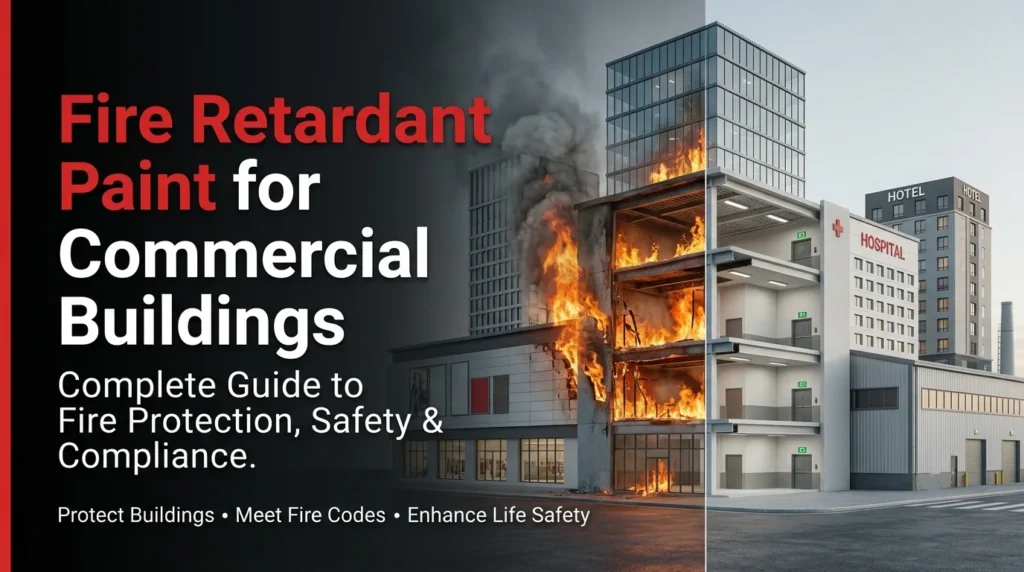
Commercial buildings accommodate hundreds or even thousands of people every day, making fire safety one of the most critical aspects of modern construction and facility management. Offices, shopping malls, hotels, hospitals, educational institutions, and mixed-use developments contain valuable assets, complex infrastructure, and high occupant densities that require effective fire protection measures.
Fire retardant paint has become an essential component of passive fire protection systems, helping to slow the spread of flames, reduce heat transfer, and delay structural failure during a fire. When applied to structural steel, wood, concrete, and other building materials, these specialized coatings provide valuable additional time for evacuation, support firefighting operations, and help minimize property damage.
Unlike conventional decorative paints, fire retardant coatings are engineered to react under high temperatures by forming a protective insulating barrier that shields the underlying substrate from extreme heat. This enhanced fire resistance helps preserve the structural integrity of commercial buildings while supporting compliance with national and international fire safety regulations.
From corporate offices and retail centers to hospitals, hotels, airports, and industrial-commercial complexes, fire retardant paint plays a vital role in protecting occupants, safeguarding business operations, and reducing financial losses associated with fire incidents.
This comprehensive guide explains how fire retardant paint works, its key applications in commercial buildings, the different types of fire protection coatings available, their benefits, application methods, maintenance requirements, and the fire safety standards that help ensure long-term performance and regulatory compliance. Whether you are an architect, contractor, facility manager, or building owner, understanding fire retardant paint is essential for creating safer, more resilient commercial properties.
Introduction to Fire Retardant Paint for Commercial Buildings
Fire safety is a fundamental requirement in the design, construction, and operation of commercial buildings. Offices, shopping malls, hotels, hospitals, educational institutions, airports, and other public facilities accommodate large numbers of people every day, making effective fire protection essential for safeguarding lives, protecting property, and ensuring business continuity.
Among the various passive fire protection solutions available today, fire retardant paint has become one of the most effective and practical options. Unlike conventional decorative coatings, fire retardant paint is specially formulated to reduce flame spread, delay ignition, and minimize heat transfer when exposed to high temperatures. By forming a protective barrier during a fire, these coatings help maintain the integrity of structural elements and provide valuable additional time for safe evacuation and emergency response.
Modern commercial buildings use a wide range of materials—including structural steel, timber, concrete, and electrical infrastructure—that require reliable fire protection. Applying certified fire retardant paint enhances the fire performance of these surfaces while supporting compliance with national and international fire safety standards.
As building regulations continue to evolve and the demand for safer, more resilient infrastructure grows, fire retardant paint has become an integral part of comprehensive passive fire protection strategies across commercial construction projects.
What is Fire Retardant Paint?
Fire retardant paint is a specialized protective coating designed to reduce the rate at which fire spreads across a surface. Unlike ordinary paints that provide only decorative or corrosion-resistant properties, fire retardant coatings are engineered to improve the fire performance of building materials.
When exposed to intense heat or flames, the coating undergoes a chemical reaction that helps:
- Slow flame spread
- Reduce heat transfer
- Delay ignition of combustible materials
- Protect structural components
- Improve fire resistance
Many advanced fire retardant paints use intumescent technology, where the coating expands into a thick insulating char when heated. This char layer acts as a thermal barrier, protecting the substrate from extreme temperatures and delaying structural damage.
Fire retardant paint is commonly applied to:
- Structural steel
- Wooden doors and partitions
- Concrete surfaces
- Fire doors
- Electrical panels
- Cable trays
- Interior wall systems
By enhancing the fire resistance of these building elements, fire retardant paint contributes significantly to overall building safety.
Why Fire Protection is Essential in Commercial Buildings
Commercial buildings present unique fire safety challenges due to their size, occupancy levels, and complex infrastructure. A fire can spread rapidly through interconnected spaces, threatening occupants, damaging assets, and disrupting business operations.
Fire retardant paint helps reduce these risks by improving the fire performance of critical structural and architectural components.
Key Reasons Fire Protection is Important
- Protects employees, customers, and visitors
- Extends safe evacuation time
- Reduces flame spread between building areas
- Helps preserve structural stability during a fire
- Minimizes property damage
- Supports emergency response operations
- Reduces downtime following fire incidents
Industries that particularly benefit include:
- Corporate office buildings
- Shopping malls
- Hotels
- Hospitals
- Educational institutions
- Airports
- Government facilities
- Commercial warehouses
Investing in fire protection not only safeguards lives but also helps organizations reduce financial losses and maintain operational continuity.
Growing Importance of Passive Fire Protection in Modern Construction
Modern construction increasingly emphasizes passive fire protection, which consists of built-in systems that function automatically during a fire without requiring activation by occupants or external power sources.
Fire retardant paint is one of the most effective passive fire protection solutions because it continuously protects building materials throughout the life of the structure.
Why Passive Fire Protection is Becoming More Important
- Stricter building regulations
- Higher occupant safety expectations
- Increased use of steel and timber construction
- Greater focus on sustainable building design
- Improved insurance and risk management requirements
- Enhanced resilience against fire-related losses
Fire retardant coatings work alongside other passive fire protection measures such as:
- Fire-rated walls
- Fire-resistant doors
- Firestopping systems
- Smoke barriers
- Compartmentation systems
Together, these systems help contain fires, slow their progression, and provide occupants with more time to evacuate safely.
As commercial buildings become larger and more complex, incorporating certified fire retardant paint into the overall fire protection strategy is no longer just a best practice—it is an essential investment in long-term safety, regulatory compliance, and the protection of people, property, and business operations.
Understanding How Fire Retardant Paint Works
Fire retardant paint is an advanced passive fire protection coating designed to improve the fire resistance of building materials without affecting their structural function or aesthetic appearance. Unlike conventional paints that serve primarily decorative or protective purposes, fire retardant coatings are formulated with specialized compounds that react when exposed to high temperatures.
During a fire, these coatings help reduce flame spread, slow heat transfer, and delay the ignition of combustible materials such as wood while protecting non-combustible substrates like structural steel from rapid temperature rise. Many modern fire retardant paints use intumescent technology, which expands under heat to form a thick insulating char layer that shields the underlying surface.
In commercial buildings, this additional layer of protection provides valuable extra time for occupants to evacuate safely, enables firefighters to respond more effectively, and helps maintain the structural stability of the building. By becoming an integral part of a building’s passive fire protection strategy, fire retardant paint contributes significantly to life safety, asset protection, and compliance with fire safety regulations.
Fire Retardant Technology Explained
Fire retardant paint contains specially engineered fire-resistant additives and binders that activate when exposed to elevated temperatures. Instead of allowing flames to spread rapidly across a surface, the coating undergoes a controlled chemical reaction that slows combustion and reduces heat penetration.
Depending on the coating system, fire retardant paint may work by:
- Delaying ignition of combustible materials
- Reducing the rate of flame spread
- Lowering heat transfer to the substrate
- Limiting smoke generation
- Forming an insulating protective layer
Modern fire retardant paints are commonly available as:
- Intumescent fire retardant coatings
- Water-based fire protection coatings
- Solvent-based fire retardant paints
- Clear fire retardant coatings for decorative wood
These coatings are widely used to protect:
- Structural steel
- Fire doors
- Timber panels
- Concrete walls
- Electrical panels
- Cable trays
- Commercial building interiors
Their primary objective is to improve fire resistance while maintaining the functionality and appearance of the protected surface.
Heat Reaction and Protective Barrier Formation
The effectiveness of fire retardant paint becomes evident when it is exposed to fire or extreme heat.
As temperatures rise, the coating begins to activate through a carefully engineered chemical process. Intumescent fire retardant paints expand dramatically—often many times their original thickness—to form a lightweight, carbon-rich insulating char.
This protective barrier:
- Insulates the substrate from extreme heat
- Reduces temperature rise
- Slows thermal conductivity
- Protects structural materials
- Delays fire damage
The insulating char acts like a thermal shield, preventing rapid heat penetration and helping structural components retain their strength for a longer period.
This process is particularly important for:
- Structural steel columns
- Steel beams
- Timber structures
- Fire doors
- Load-bearing frameworks
By delaying the effects of heat, the protective barrier helps maintain building stability during the critical stages of a fire.
Reducing Flame Spread and Heat Transfer
One of the primary functions of fire retardant paint is to control the movement of fire across building surfaces.
Without fire protection, flames can spread rapidly from one area to another, increasing the risk of structural damage and reducing available evacuation time.
Fire retardant paint helps by:
- Slowing surface flame propagation
- Reducing heat transfer
- Delaying ignition of adjacent materials
- Limiting fire growth
- Improving fire compartmentation
Benefits for Commercial Buildings
Reducing flame spread helps:
- Protect occupants
- Slow fire development
- Reduce damage to building assets
- Improve emergency response conditions
- Increase evacuation time
These advantages are particularly valuable in:
- Office buildings
- Shopping malls
- Hotels
- Hospitals
- Schools
- Airports
- Warehouses
By slowing both flame spread and heat transfer, fire retardant paint significantly improves the overall fire performance of commercial buildings.
Role in Passive Fire Protection Systems
Fire retardant paint is an essential element of a building’s passive fire protection system. Unlike active fire protection systems—such as sprinklers, fire alarms, or extinguishers—passive fire protection works continuously without requiring manual operation or external power.
Fire retardant coatings complement other passive fire protection measures, including:
- Fire-rated walls
- Fire doors
- Fire-resistant ceilings
- Smoke barriers
- Fire compartmentation systems
- Structural fireproofing
Key Functions
Within a passive fire protection strategy, fire retardant paint helps:
- Preserve structural integrity
- Delay structural collapse
- Protect escape routes
- Reduce fire spread between compartments
- Improve occupant safety
- Support firefighter access during emergencies
Long-Term Advantages
Integrating certified fire retardant paint into commercial buildings provides:
- Continuous fire protection
- Enhanced life safety
- Reduced property damage
- Improved building resilience
- Compliance with fire safety regulations
- Lower long-term maintenance and risk management costs
As modern commercial buildings become larger and more complex, fire retardant paint has become a vital component of passive fire protection systems. By reducing flame spread, forming an insulating barrier under heat, and helping maintain structural stability, these advanced coatings play a crucial role in protecting lives, safeguarding valuable assets, and ensuring compliance with today’s fire safety standards.
Why Commercial Buildings Need Fire Retardant Paint
Commercial buildings are designed to accommodate large numbers of people while supporting critical business operations and protecting valuable infrastructure. From office towers and shopping malls to hotels, hospitals, educational institutions, and mixed-use developments, these buildings face unique fire safety challenges due to high occupancy, complex layouts, and the presence of combustible materials and essential equipment.
Fire retardant paint provides an effective passive fire protection solution by reducing flame spread, slowing heat transfer, and delaying the impact of fire on structural components. Applied to structural steel, timber, concrete, fire doors, and service areas, these specialized coatings help maintain building stability, improve occupant safety, and minimize fire-related losses.
As fire safety regulations become more stringent, incorporating certified fire retardant paint into commercial buildings is no longer optional—it is a proactive investment in protecting lives, preserving assets, and ensuring long-term operational resilience.
High Occupancy and Life Safety Requirements
Commercial buildings often accommodate hundreds or even thousands of occupants daily, making life safety the highest priority during a fire emergency.
Unlike residential buildings, commercial facilities typically contain multiple floors, interconnected spaces, large public gathering areas, and complex evacuation routes. A rapidly spreading fire can significantly reduce the time available for occupants to evacuate safely.
Fire retardant paint enhances life safety by:
- Slowing the spread of flames
- Delaying heat penetration into structural elements
- Increasing available evacuation time
- Helping maintain safe escape routes
- Supporting emergency response operations
High-Occupancy Buildings That Benefit
Fire retardant paint is commonly used in:
- Office buildings
- Shopping malls
- Hotels
- Hospitals
- Educational institutions
- Convention centers
- Airports
- Government buildings
By slowing fire development, these coatings help create safer conditions for occupants, visitors, and emergency responders.
Protecting Structural Elements and Building Assets
Commercial buildings represent significant investments in infrastructure, equipment, technology, and interior finishes. A fire can quickly damage structural components and destroy valuable business assets.
Fire retardant paint helps protect critical building elements by delaying heat transfer and reducing the rate at which fire affects structural materials.
Common Protected Components
Fire retardant coatings are applied to:
- Structural steel beams and columns
- Timber doors and partitions
- Concrete walls and ceilings
- Fire doors
- Cable trays
- Electrical panels
- Mechanical service areas
Asset Protection Benefits
Properly applied fire retardant paint helps:
- Delay structural weakening
- Reduce fire damage
- Protect valuable equipment
- Preserve architectural finishes
- Minimize repair and replacement costs
- Improve building resilience
Protecting these components helps maintain the integrity of the building and reduces the overall impact of a fire.
Meeting Fire Safety Regulations
Commercial construction projects must comply with strict fire safety regulations established by building authorities and industry standards. Fire retardant paint plays an important role in helping buildings meet these regulatory requirements.
Certified fire retardant coating systems are designed to achieve specified fire resistance ratings and are tested according to recognized fire safety standards.
Compliance Benefits
Fire retardant paint supports:
- Passive fire protection strategies
- Building code compliance
- Fire safety inspections
- Project specifications
- Occupancy certification
- Insurance requirements
Common Fire Resistance Ratings
Commercial buildings often require coatings capable of providing:
- 30 Minutes – Light commercial applications
- 60 Minutes – Offices and educational facilities
- 90 Minutes – Hotels and healthcare buildings
- 120 Minutes – Industrial and high-occupancy commercial structures
Using certified fire retardant coatings helps architects, contractors, and building owners demonstrate compliance with applicable fire safety standards while improving overall building safety.
Minimizing Business Interruption and Property Damage
Beyond protecting lives, fire retardant paint also helps reduce the financial impact of fire incidents.
A major fire can result in:
- Extended business closures
- Equipment replacement
- Structural repairs
- Lost revenue
- Customer disruption
- Increased insurance costs
Fire retardant paint helps minimize these risks by slowing fire progression and limiting damage to structural and architectural components.
Long-Term Business Benefits
Investing in fire retardant paint can help:
- Reduce property damage
- Protect business assets
- Lower restoration costs
- Support faster recovery after fire incidents
- Improve business continuity
- Strengthen risk management strategies
For facilities that operate continuously—such as hospitals, hotels, manufacturing units, retail centers, and corporate offices—reducing downtime is critical to maintaining operations and customer confidence.
By preserving key building elements and limiting the extent of fire damage, fire retardant coatings contribute to long-term operational stability and financial resilience.
Fire retardant paint is an essential component of modern commercial building design because it addresses the critical challenges of occupant safety, structural protection, regulatory compliance, and business continuity. By slowing flame spread, protecting structural elements, helping meet fire safety regulations, and minimizing property damage, certified fire retardant coating systems provide reliable passive fire protection that enhances the safety, durability, and resilience of commercial buildings for years to come.
Applications of Fire Retardant Paint in Commercial Buildings
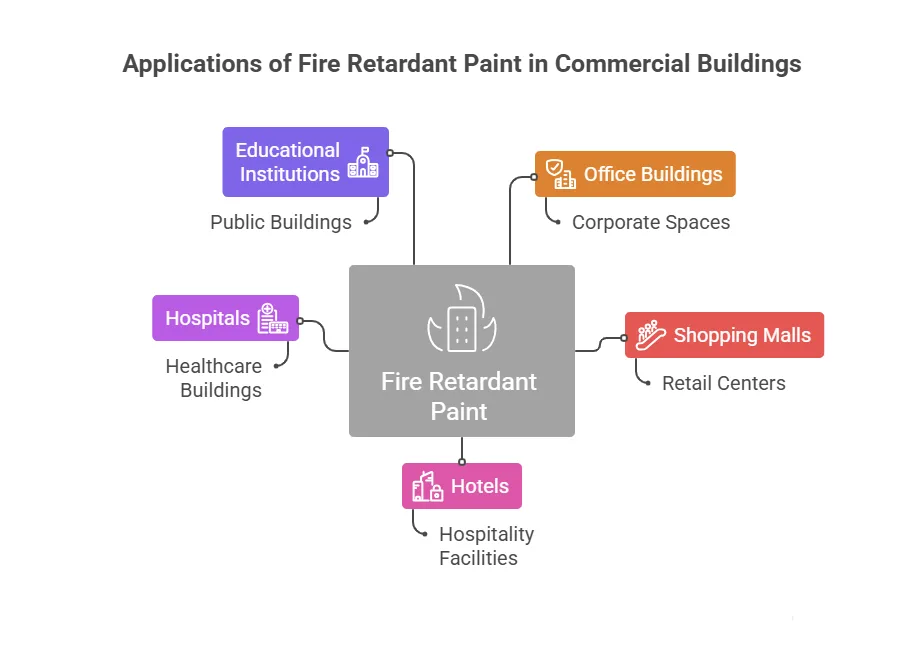
Fire retardant paint is widely used throughout commercial buildings to enhance passive fire protection and improve the fire performance of structural and architectural components. Whether applied to structural steel, wooden surfaces, fire doors, concrete walls, ceilings, or service areas, these specialized coatings help slow flame spread, reduce heat transfer, and delay structural failure during a fire.
Commercial buildings often accommodate large numbers of occupants and contain valuable equipment, furnishings, and infrastructure. Applying certified fire retardant paint helps protect these assets, supports compliance with fire safety regulations, and provides additional time for safe evacuation and emergency response.
From office complexes and shopping malls to hotels, hospitals, schools, and public facilities, fire retardant coatings play a vital role in creating safer and more resilient buildings.
Office Buildings and Corporate Spaces
Modern office buildings incorporate a combination of structural steel, timber finishes, glass partitions, electrical systems, and interior architectural elements that require effective fire protection.
Fire retardant paint is commonly applied to:
- Structural steel beams and columns
- Fire-rated doors
- Wooden wall panels
- Suspended ceilings
- Electrical service rooms
- Cable trays
- Meeting rooms and reception areas
- Emergency escape routes
Benefits
Using fire retardant paint in office environments helps:
- Slow flame spread across interior surfaces
- Delay heating of structural steel
- Protect critical business infrastructure
- Improve occupant safety
- Extend evacuation time
- Reduce business interruption following fire incidents
- Support compliance with commercial fire safety regulations
These coatings help create safer workplaces while preserving the modern architectural appearance of corporate interiors.
Shopping Malls and Retail Centers
Shopping malls and retail complexes experience high daily foot traffic and contain numerous shops, restaurants, entertainment zones, and storage areas, making comprehensive fire protection essential.
Fire retardant paint is used to protect:
- Structural steel frameworks
- Retail shop interiors
- Wooden display fixtures
- Fire doors
- Service corridors
- Food court ceilings
- Electrical and utility rooms
- Public circulation areas
Advantages
Fire retardant coatings provide:
- Reduced flame spread between retail units
- Improved structural fire resistance
- Enhanced shopper and staff safety
- Protection of valuable retail assets
- Support for emergency evacuation
- Reduced property damage
By limiting the impact of fire, these coatings contribute to safer shopping environments and improved operational resilience.
Hotels and Hospitality Facilities
Hotels, resorts, and hospitality facilities rely heavily on decorative wood finishes and high-quality interiors while accommodating guests around the clock. Fire safety is therefore a critical aspect of their design and operation.
Typical applications include:
- Fire-rated wooden doors
- Timber wall panels
- Decorative ceilings
- Reception counters
- Guest room interiors
- Banquet halls
- Conference rooms
- Corridors and stairwells
Key Benefits
Fire retardant paint helps:
- Reduce flame spread across interior finishes
- Protect structural elements
- Increase evacuation time for guests
- Preserve premium architectural finishes
- Support hospitality fire safety compliance
- Minimize fire-related property damage
These coatings combine reliable fire protection with attractive decorative finishes, making them ideal for hospitality environments.
Hospitals and Healthcare Buildings
Hospitals and healthcare facilities require the highest standards of fire protection because patients, visitors, and medical staff may face complex evacuation procedures during emergencies.
Fire retardant paint is commonly applied to:
- Fire doors
- Structural steel
- Wooden partitions
- Patient room interiors
- Medical equipment rooms
- Electrical panels
- Utility shafts
- Escape corridors
Benefits
Fire retardant coatings provide:
- Delayed fire development
- Improved protection of critical healthcare infrastructure
- Enhanced patient and staff safety
- Extended evacuation time
- Reduced structural damage
- Support for healthcare fire safety standards
Reliable passive fire protection helps hospitals maintain safer environments while protecting essential medical services.
Educational Institutions and Public Buildings
Schools, colleges, universities, libraries, museums, government buildings, and community centers accommodate large numbers of occupants and require dependable fire protection systems.
Fire retardant paint is widely used on:
- Classroom doors
- Structural steel
- Timber ceilings
- Library shelving
- Auditorium wall panels
- Administrative offices
- Public corridors
- Emergency staircases
Advantages
Applying fire retardant paint helps:
- Reduce flame spread
- Delay structural failure
- Improve student and public safety
- Protect educational resources
- Preserve public infrastructure
- Support compliance with building fire regulations
These coatings contribute to creating secure learning environments and safer public facilities while reducing long-term maintenance and repair costs.
Why Fire Retardant Paint Is Essential Across Commercial Buildings
Regardless of the building type, fire retardant paint offers significant advantages by strengthening passive fire protection and reducing the consequences of fire incidents.
Key Benefits Across Commercial Applications
- Slows flame spread and heat transfer
- Delays structural failure
- Increases occupant evacuation time
- Protects valuable assets and infrastructure
- Enhances business continuity
- Supports compliance with fire safety standards
- Reduces repair and restoration costs
- Improves overall building resilience
Whether used in office buildings, shopping malls, hotels, hospitals, educational institutions, or other public facilities, fire retardant paint is a critical component of modern commercial fire safety strategies. Its ability to protect structural elements, safeguard occupants, and minimize fire-related losses makes it an indispensable solution for achieving long-term safety, regulatory compliance, and operational continuity.
Fire Retardant Paint for Different Building Materials
Commercial buildings are constructed using a combination of structural steel, wood, concrete, electrical infrastructure, and fire-rated assemblies. Each material responds differently to fire and therefore requires a fire protection solution specifically designed for its properties and performance requirements.
Fire retardant paint enhances the fire resistance of these building materials by reducing flame spread, slowing heat transfer, and delaying structural failure. When properly selected and applied, certified fire retardant coatings become an integral part of a building’s passive fire protection system, helping protect occupants, preserve structural integrity, and ensure compliance with fire safety regulations.
From steel frameworks and timber interiors to concrete walls, electrical installations, and fire doors, fire retardant paint provides reliable protection across a wide range of commercial building components.
Structural Steel and Steel Frameworks
Structural steel forms the backbone of many commercial buildings because of its high strength and design flexibility. However, during a fire, steel rapidly absorbs heat and begins to lose its load-bearing capacity when temperatures rise above approximately 500–600°C.
Fire retardant paint, particularly intumescent coatings, protects structural steel by expanding under high temperatures to form an insulating char layer that slows heat transfer.
Common Applications
Fire retardant paint is applied to:
- Steel beams
- Steel columns
- Roof trusses
- Mezzanine structures
- Industrial steel frames
- Staircase supports
- Structural girders
Benefits
- Delays steel temperature rise
- Maintains structural stability
- Extends fire resistance ratings
- Prevents premature structural collapse
- Supports safe evacuation
- Helps meet building code requirements
Protecting structural steel is essential for preserving the overall integrity of commercial buildings during a fire.
Wooden Doors, Panels, and Interior Joinery
Wood is widely used in commercial interiors for its natural appearance and architectural appeal. However, because timber is combustible, it requires additional fire protection to improve its fire performance.
Fire retardant paint reduces the ignition rate of wood and slows the spread of flames across wooden surfaces.
Common Applications
These coatings are used on:
- Wooden doors
- Wall panels
- Decorative cladding
- Timber ceilings
- Reception counters
- Office partitions
- Furniture
- Interior joinery
Benefits
- Delays ignition of timber
- Reduces flame spread
- Preserves decorative finishes
- Improves occupant safety
- Protects architectural woodwork
- Supports passive fire protection
Clear and pigmented fire retardant coatings allow designers to maintain the desired appearance while enhancing fire safety.
Concrete Walls and Ceilings
Although concrete is naturally non-combustible, prolonged exposure to extreme heat can lead to cracking, spalling, and reduced structural performance. Fire retardant coatings provide an additional layer of protection by helping reduce surface heat absorption and improving overall fire resistance.
Typical Applications
Fire retardant paint is commonly used on:
- Concrete walls
- Ceilings
- Stairwells
- Lift lobbies
- Service corridors
- Utility rooms
- Parking structures
- Fire compartments
Advantages
- Improves fire resistance
- Helps reduce surface deterioration
- Protects reinforcement from excessive heat
- Enhances passive fire protection
- Supports compartmentation strategies
- Extends building durability
These coatings complement the inherent fire-resistant properties of concrete in demanding commercial environments.
Electrical Panels, Cable Trays, and Utility Areas
Electrical installations are among the most common sources of commercial building fires. Protecting these critical systems helps reduce the risk of fire spreading through electrical rooms and service shafts.
Fire retardant paint is often applied to components surrounding electrical infrastructure to improve fire containment and protect essential building services.
Typical Applications
- Electrical panels
- Switchgear rooms
- Cable trays
- Cable supports
- Utility shafts
- Control rooms
- Equipment enclosures
- Service corridors
Benefits
- Reduces fire spread around electrical systems
- Protects critical utilities
- Supports uninterrupted building operations
- Enhances safety of service areas
- Improves passive fire containment
- Helps protect valuable electrical equipment
These applications are especially important in hospitals, data centers, manufacturing plants, and commercial office buildings where uninterrupted electrical service is critical.
Fire Doors and Escape Routes
Fire doors and designated escape routes are essential elements of a building’s fire safety strategy. Their primary purpose is to contain fire and smoke while providing occupants with safe evacuation paths.
Fire retardant paint enhances the fire performance of these critical building components without compromising their appearance or functionality.
Common Applications
Fire retardant coatings are applied to:
- Fire-rated wooden doors
- Steel fire doors
- Door frames
- Escape corridors
- Staircase walls
- Emergency exits
- Fire compartment doors
- Refuge areas
Benefits
- Slows flame spread
- Improves compartmentation
- Extends fire door performance
- Protects evacuation routes
- Supports safe occupant evacuation
- Assists emergency response operations
Maintaining the integrity of fire doors and escape routes is vital for protecting lives during fire emergencies.
Why Material-Specific Fire Protection Matters
Each construction material reacts differently when exposed to fire, making it essential to select the appropriate fire retardant coating system for the specific substrate.
Advantages of Material-Specific Fire Retardant Paint
- Optimized fire performance for different substrates
- Improved adhesion and coating durability
- Enhanced structural protection
- Reduced flame spread and heat transfer
- Extended fire resistance ratings
- Better compliance with fire safety regulations
- Long-term protection for commercial building assets
By applying certified fire retardant paint to structural steel, timber, concrete, electrical infrastructure, and fire-rated assemblies, commercial buildings achieve a comprehensive passive fire protection system. This integrated approach enhances occupant safety, protects valuable assets, supports regulatory compliance, and improves the overall resilience of the building against fire hazards.
Benefits of Fire Retardant Paint in Commercial Buildings
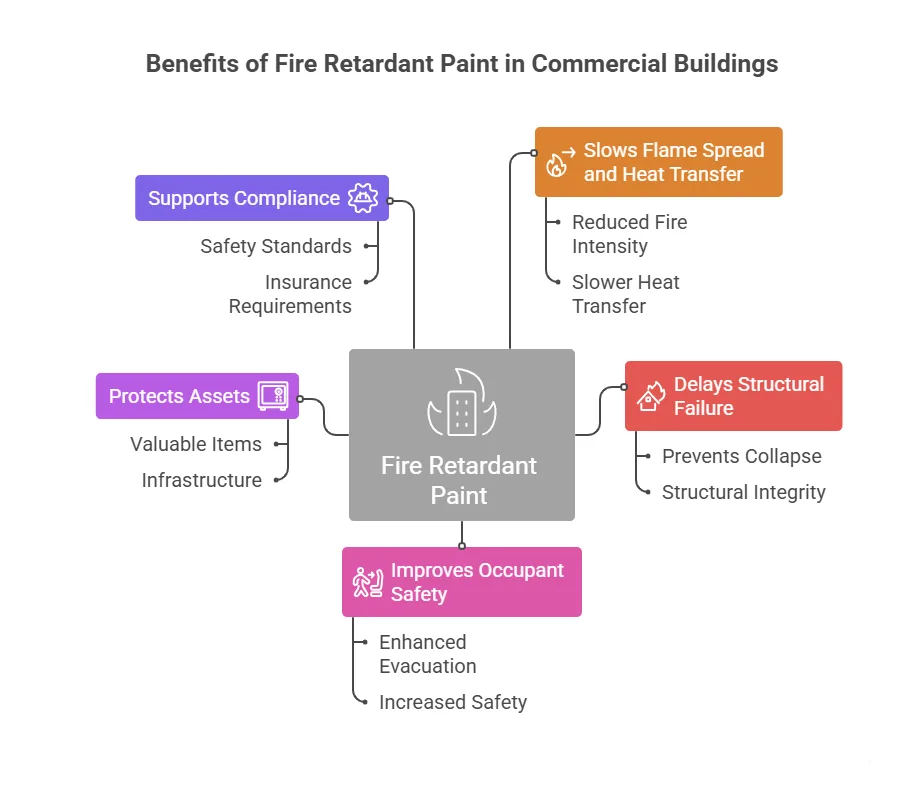
Fire retardant paint offers far more than basic surface protection. It is an essential passive fire protection solution that enhances the fire performance of commercial buildings by slowing flame spread, reducing heat transfer, and protecting critical structural components during a fire. Applied to structural steel, timber, concrete, fire doors, and electrical infrastructure, these specialized coatings help safeguard occupants, preserve valuable assets, and support compliance with fire safety regulations.
For office buildings, shopping malls, hotels, hospitals, educational institutions, and other commercial facilities, fire retardant paint contributes to safer environments while reducing the financial and operational impact of fire incidents. Investing in certified fire retardant coatings not only improves building resilience but also supports long-term maintenance, business continuity, and regulatory compliance.
Slows Flame Spread and Heat Transfer
One of the primary advantages of fire retardant paint is its ability to reduce the speed at which flames spread across building surfaces. During a fire, many fire retardant coatings react to heat by forming an insulating protective layer that limits heat transfer to the underlying substrate.
How It Works
Fire retardant paint helps by:
- Slowing surface flame propagation
- Reducing heat transfer
- Delaying ignition of combustible materials
- Protecting structural components from rapid temperature rise
- Limiting fire growth between compartments
Benefits for Commercial Buildings
This improved fire performance helps:
- Slow the development of fire
- Reduce damage to structural elements
- Protect adjacent building materials
- Improve conditions for emergency response
- Increase the effectiveness of passive fire protection systems
By controlling the spread of fire, the coating provides valuable additional time for evacuation and firefighting operations.
Delays Structural Failure During Fire
Many commercial buildings rely on structural steel and load-bearing elements to support the building. Although steel is non-combustible, it loses strength rapidly when exposed to high temperatures.
Fire retardant paint, particularly intumescent coatings, helps delay this process by insulating structural members against extreme heat.
Protected Structural Components
Fire retardant coatings are commonly applied to:
- Steel beams
- Steel columns
- Roof trusses
- Structural frames
- Load-bearing timber
- Concrete structural elements
Advantages
These coatings help:
- Maintain structural stability
- Delay deformation of steel
- Reduce the risk of structural collapse
- Preserve load-bearing capacity
- Improve overall building resilience
Extending structural integrity during a fire provides emergency responders with more time to control the incident while allowing occupants to evacuate safely.
Improves Occupant Safety and Evacuation Time
The primary objective of any fire protection system is to protect human life. Fire retardant paint contributes significantly to occupant safety by slowing fire progression and maintaining safer evacuation routes.
How Occupants Benefit
Fire retardant coatings help:
- Delay fire growth
- Reduce heat exposure
- Protect escape routes
- Improve visibility by slowing fire development
- Support fire compartmentation
- Increase available evacuation time
High-Occupancy Buildings
These benefits are especially valuable in:
- Office buildings
- Shopping malls
- Hotels
- Hospitals
- Schools
- Airports
- Government buildings
- Convention centers
By providing additional time during the early stages of a fire, fire retardant paint improves the effectiveness of emergency evacuation procedures and enhances overall life safety.
Protects Valuable Assets and Infrastructure
Commercial buildings contain expensive equipment, interior finishes, IT infrastructure, inventory, and mechanical systems that can suffer extensive damage during a fire.
Fire retardant paint helps protect these investments by limiting fire spread and reducing heat damage to critical building components.
Assets Commonly Protected
Fire retardant coatings help safeguard:
- Structural steel
- Electrical systems
- Server rooms
- Machinery and equipment
- Interior wood finishes
- Fire doors
- Cable trays
- Utility infrastructure
Business Benefits
Protecting these assets helps:
- Reduce repair costs
- Minimize equipment replacement
- Preserve valuable infrastructure
- Protect tenant property
- Improve business continuity
- Reduce operational downtime
By minimizing fire-related losses, fire retardant paint helps businesses recover more quickly after an emergency.
Supports Fire Safety Compliance and Insurance Requirements
Commercial buildings are required to meet stringent fire safety regulations and building codes. Certified fire retardant paint helps building owners and contractors satisfy these requirements while improving overall fire protection.
Compliance Advantages
Fire retardant coatings support:
- Passive fire protection strategies
- Fire resistance ratings
- Building code compliance
- Fire safety inspections
- Occupancy approvals
- Regulatory documentation
Insurance Benefits
Many insurers recognize the value of enhanced passive fire protection because it helps reduce fire risk and potential losses.
Using certified fire retardant paint can contribute to:
- Improved risk management
- Better protection of insured assets
- Reduced potential fire damage
- Greater confidence during safety audits
- Support for insurance assessments
Selecting coatings tested to recognized fire safety standards ensures reliable performance and demonstrates a commitment to protecting people, property, and business operations.
Why Fire Retardant Paint Is a Smart Investment for Commercial Buildings
Fire retardant paint delivers long-term value by combining advanced fire protection with structural preservation and regulatory compliance.
Key Benefits at a Glance
- Slows flame spread and heat transfer
- Delays structural failure during fire
- Improves occupant safety and evacuation time
- Protects valuable assets and critical infrastructure
- Supports fire safety compliance and insurance requirements
- Reduces fire-related repair and restoration costs
- Enhances business continuity and operational resilience
- Strengthens the overall passive fire protection strategy
Whether used in office buildings, retail centers, hotels, hospitals, educational institutions, or public infrastructure, certified fire retardant paint is a cost-effective investment that enhances safety, protects valuable assets, and improves the long-term resilience of commercial buildings against fire hazards.
Types of Fire Retardant Paint for Commercial Applications
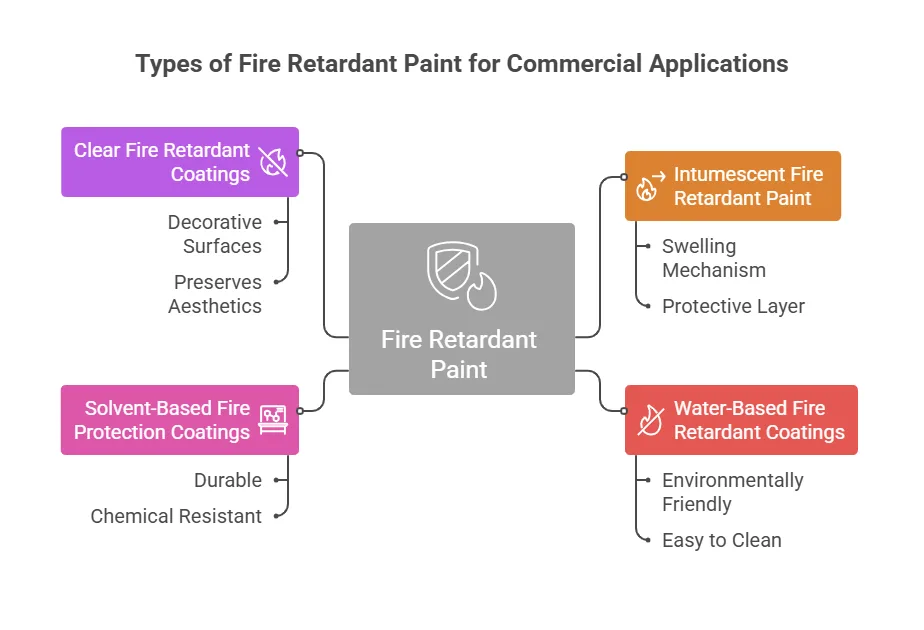
Commercial buildings require fire protection solutions that are tailored to different construction materials, environmental conditions, and fire resistance requirements. Fire retardant paints are available in several formulations, each designed to provide specific levels of passive fire protection while meeting the functional and aesthetic needs of commercial spaces.
From structural steel in high-rise office buildings to decorative wooden panels in hotels and retail centers, selecting the appropriate fire retardant coating is essential for achieving reliable fire performance, long-term durability, and compliance with building regulations.
The most commonly used fire retardant paints for commercial applications include intumescent coatings, water-based systems, solvent-based coatings, and clear fire retardant finishes.
Intumescent Fire Retardant Paint
Intumescent fire retardant paint is one of the most widely used passive fire protection coatings in commercial construction. It is specially formulated to expand when exposed to high temperatures, creating a thick insulating char layer that protects the underlying substrate from heat.
How It Works
When exposed to fire:
- The coating activates at elevated temperatures.
- It expands many times its original thickness.
- A carbon-rich insulating char is formed.
- The char slows heat transfer to the substrate.
- Structural elements remain cooler for longer periods.
Common Commercial Applications
Intumescent coatings are ideal for:
- Structural steel beams
- Steel columns
- Roof trusses
- Load-bearing frameworks
- Fire-rated doors
- Timber structures
- Industrial steel supports
Key Benefits
- Provides excellent fire resistance
- Delays structural failure
- Supports fire ratings of 30, 60, 90, and 120 minutes or more
- Maintains architectural appearance
- Suitable for commercial and industrial buildings
- Enhances passive fire protection
Intumescent coatings are commonly specified for office buildings, shopping malls, airports, hospitals, hotels, and high-rise commercial structures.
Water-Based Fire Retardant Coatings
Water-based fire retardant paints are environmentally friendly coatings that provide effective fire protection with low emissions and easy application. They are widely used for interior commercial environments where air quality and sustainability are important considerations.
Characteristics
Water-based coatings offer:
- Low VOC emissions
- Low odor during application
- Fast drying
- Easy cleanup with water
- Smooth decorative finishes
- Excellent indoor performance
Typical Applications
Common uses include:
- Office interiors
- Schools
- Hospitals
- Hotels
- Retail stores
- Public buildings
- Wooden wall panels
- Fire doors
Advantages
Water-based fire retardant coatings provide:
- Improved indoor air quality
- Environmentally responsible performance
- Excellent adhesion
- Attractive decorative finishes
- Reduced maintenance requirements
- Compliance with green building initiatives
These coatings are particularly suitable for occupied commercial buildings where minimizing disruption during installation is important.
Solvent-Based Fire Protection Coatings
Solvent-based fire retardant coatings are designed for demanding commercial and industrial environments where superior durability and resistance to harsh conditions are required.
These coatings provide excellent adhesion and long-lasting protection on a variety of substrates.
Suitable Applications
Solvent-based systems are commonly used on:
- Structural steel
- Industrial buildings
- Warehouses
- Manufacturing facilities
- Exterior steel structures
- Utility infrastructure
- Oil and gas facilities
- Power plants
Performance Benefits
They offer:
- High durability
- Excellent adhesion
- Moisture resistance
- Chemical resistance
- Weather resistance
- Superior mechanical strength
- Long service life
Ideal Environments
Solvent-based coatings perform well in areas exposed to:
- High humidity
- Industrial pollutants
- Mechanical abrasion
- Outdoor weather conditions
- Chemical exposure
- Temperature fluctuations
These coatings are often selected for commercial facilities that require maximum durability under challenging operating conditions.
Clear Fire Retardant Coatings for Decorative Surfaces
Many commercial buildings feature premium timber finishes that contribute to their architectural appeal. Clear fire retardant coatings provide effective fire protection while preserving the natural beauty of wood.
Unlike opaque coatings, clear systems allow the wood grain and texture to remain visible.
Common Applications
Clear fire retardant coatings are widely used on:
- Decorative timber panels
- Luxury hotel interiors
- Executive offices
- Conference rooms
- Museums
- Auditoriums
- Restaurants
- Reception areas
Benefits
These coatings:
- Preserve the natural appearance of wood
- Maintain visible wood grain
- Provide transparent fire protection
- Enhance premium architectural finishes
- Improve fire performance without altering aesthetics
- Support passive fire protection strategies
Clear fire retardant coatings are particularly popular in projects where design quality and fire safety must coexist.
Choosing the Right Fire Retardant Paint for Commercial Applications
Selecting the appropriate fire retardant coating depends on several project-specific factors.
Consider the Following
- Building material (steel, wood, concrete, etc.)
- Required fire resistance rating
- Interior or exterior application
- Environmental exposure conditions
- Moisture and chemical resistance requirements
- Desired decorative finish
- Maintenance expectations
- Compliance with fire safety standards
Comparison of Fire Retardant Paint Types
| Coating Type | Best Applications | Main Advantages |
| Intumescent Fire Retardant Paint | Structural steel, timber, fire doors | Expands under heat to provide high fire resistance |
| Water-Based Fire Retardant Coatings | Offices, hospitals, schools, hotels | Low VOC, low odor, environmentally friendly, fast drying |
| Solvent-Based Fire Protection Coatings | Industrial buildings, warehouses, exterior steel | High durability, weather resistance, chemical resistance |
| Clear Fire Retardant Coatings | Decorative wood, premium interiors | Preserves natural wood appearance while providing fire protection |
Choosing the right type of fire retardant paint is essential for achieving reliable passive fire protection in commercial buildings. Whether protecting structural steel with intumescent coatings, enhancing indoor safety with water-based systems, safeguarding industrial facilities using solvent-based coatings, or preserving architectural timber with clear fire retardant finishes, each coating type offers unique advantages. Selecting a certified coating system based on the building material, environmental conditions, and required fire resistance ensures long-term safety, durability, regulatory compliance, and protection of valuable commercial assets.
Choosing the Right Fire Retardant Paint for Commercial Buildings
Selecting the right fire retardant paint is one of the most important decisions in a commercial building’s fire protection strategy. Different building materials, occupancy types, environmental conditions, and fire safety regulations require specialized coating systems to ensure reliable performance during a fire.
A fire retardant coating should not be selected based solely on cost or appearance. Instead, architects, contractors, and facility managers should evaluate factors such as substrate compatibility, required fire resistance rating, application environment, durability, and compliance with recognized fire testing standards.
Choosing a certified coating system that is specifically designed for the intended application ensures optimal fire protection, long-term durability, and regulatory compliance while helping safeguard occupants, infrastructure, and business operations.
Building Material Compatibility
Commercial buildings are constructed using a variety of materials, each of which reacts differently when exposed to fire. Selecting a fire retardant paint that is compatible with the substrate is essential for achieving maximum adhesion, durability, and fire performance.
Common Building Materials
Fire retardant coatings are available for:
- Structural steel
- Mild steel frameworks
- Timber and wood
- Fire-rated doors
- Concrete walls and ceilings
- Gypsum boards
- Cable trays
- Electrical panels
- Interior wall systems
Why Compatibility Matters
Using the correct coating system helps:
- Improve adhesion
- Prevent coating failure
- Maintain fire protection performance
- Extend coating lifespan
- Reduce maintenance costs
- Ensure certified fire resistance
Always follow the manufacturer’s recommendations regarding primers, topcoats, and compatible substrates to achieve the specified fire performance.
Required Fire Resistance Ratings (30, 60, 90 & 120 Minutes)
Fire retardant paint is designed to provide specific fire resistance ratings based on the building’s occupancy, structural requirements, and applicable fire safety regulations.
These ratings indicate how long the protected element can maintain its performance when exposed to standard fire conditions.
Common Fire Resistance Ratings
30-Minute Rating
Suitable for:
- Small offices
- Low-rise commercial buildings
- Light commercial interiors
Provides:
- Basic passive fire protection
- Improved evacuation time
- Reduced flame spread
60-Minute Rating
Commonly specified for:
- Office buildings
- Educational institutions
- Retail stores
- Public buildings
Benefits include:
- Enhanced structural protection
- Improved occupant safety
- Better compliance with commercial fire codes
90-Minute Rating
Recommended for:
- Hotels
- Hospitals
- Shopping malls
- High-occupancy buildings
Advantages:
- Extended structural stability
- Longer evacuation periods
- Increased fire resistance performance
120-Minute Rating
Typically required for:
- High-rise commercial buildings
- Industrial facilities
- Warehouses
- Critical infrastructure
- Power plants
Benefits:
- Maximum passive fire protection
- Delayed structural failure
- Greater protection for valuable assets
- Enhanced emergency response time
Selecting the correct fire rating should always be based on project specifications, building regulations, and risk assessments.
Interior vs Exterior Applications
Commercial buildings often require fire retardant coatings for both interior and exterior surfaces. However, each environment presents different performance requirements.
Interior Applications
Typical interior areas include:
- Offices
- Hotels
- Hospitals
- Shopping malls
- Conference rooms
- Fire doors
- Wooden wall panels
- Escape corridors
Interior coatings should provide:
- Excellent fire resistance
- Decorative appearance
- Low VOC emissions
- Smooth finish
- Long-term durability
Exterior Applications
Exterior fire retardant coatings are commonly used on:
- Structural steel
- External staircases
- Industrial frameworks
- Utility structures
- Equipment supports
- Exterior timber
Exterior coatings should resist:
- UV radiation
- Rain and moisture
- Temperature fluctuations
- Humidity
- Corrosion
- Environmental pollutants
In many cases, exterior fire retardant systems also require weather-resistant primers and protective topcoats to ensure long-term performance.
Environmental Exposure and Durability
The service life of fire retardant paint depends largely on the environmental conditions in which it operates.
Commercial buildings may expose coatings to varying levels of moisture, sunlight, chemicals, abrasion, and temperature changes.
Environmental Factors
Consider exposure to:
- High humidity
- Rainwater
- UV radiation
- Industrial chemicals
- Salt-laden air
- Mechanical wear
- Dust accumulation
- Thermal cycling
Selecting Durable Coating Systems
For demanding environments, choose coatings that offer:
- Excellent adhesion
- Moisture resistance
- UV stability
- Chemical resistance
- Abrasion resistance
- Long-term weather durability
Regular inspections and preventive maintenance further extend the service life of fire retardant coatings and ensure consistent fire protection.
Fire Testing and Certification Standards
Certified fire retardant paint provides assurance that the coating has been independently tested and verified for fire performance.
Selecting products that comply with recognized national and international standards is essential for commercial construction projects.
Important Fire Testing Standards
Common standards include:
- ASTM fire testing standards
- BS fire protection standards
- IS fire safety standards
- Other internationally recognized fire resistance certifications, where applicable
Certification Typically Verifies
A certified coating system confirms:
- Fire resistance rating
- Flame spread performance
- Heat transfer reduction
- Approved substrates
- Dry film thickness requirements
- Compatible primer and topcoat systems
- Application procedures
Benefits of Certified Fire Retardant Paint
Choosing certified coatings provides:
- Verified fire performance
- Compliance with building regulations
- Improved occupant safety
- Reliable structural protection
- Easier project approvals and inspections
- Greater confidence for architects, contractors, and building owners
Always review the product’s technical data sheet, fire test reports, certification documents, and application guidelines before specifying a fire retardant coating for a commercial project.
Selecting the right fire retardant paint for commercial buildings requires careful consideration of building material compatibility, required fire resistance ratings, application environment, durability, and certified fire performance. By choosing a coating system that is specifically designed for the project’s requirements and complies with recognized fire safety standards, building owners and construction professionals can enhance passive fire protection, improve occupant safety, protect valuable assets, and ensure long-term compliance with modern fire safety regulations.
Application Process for Commercial Building Fire Retardant Paint
The effectiveness of fire retardant paint depends not only on the quality of the coating but also on proper surface preparation, correct application techniques, and strict quality control. Even a certified fire retardant coating may fail to deliver its specified fire resistance if it is applied incorrectly or at an insufficient thickness.
Commercial buildings contain a variety of substrates—including structural steel, timber, concrete, fire doors, and utility systems—each requiring specific preparation and application procedures. Following the manufacturer’s recommendations and industry best practices ensures maximum adhesion, durability, and long-term fire protection performance.
A professionally applied fire retardant coating system helps maintain structural integrity during fire exposure, improves occupant safety, and supports compliance with building codes and fire safety standards.
Surface Preparation and Cleaning
Proper surface preparation is the foundation of every successful fire retardant coating system. Clean, dry, and properly prepared substrates ensure strong adhesion and consistent fire protection performance.
Preparation Steps
Before applying fire retardant paint:
- Remove dust and loose particles
- Eliminate grease and oil contamination
- Remove rust from steel surfaces
- Repair damaged concrete or timber
- Remove loose or peeling coatings
- Ensure the surface is completely dry
Surface Preparation by Material
Structural Steel
- Abrasive blasting or mechanical cleaning
- Rust and mill scale removal
- Surface profile preparation
- Degreasing before primer application
Wooden Surfaces
- Sand smooth surfaces
- Remove dust and contaminants
- Repair cracks and imperfections
- Ensure moisture content is within acceptable limits
Concrete
- Remove laitance and loose material
- Fill cracks and voids
- Allow adequate curing before coating
- Clean using suitable preparation methods
Proper preparation improves:
- Adhesion
- Coating durability
- Uniform finish
- Long-term fire resistance
- Reduced maintenance requirements
Primer Selection and System Compatibility
Primers are an essential part of many fire retardant coating systems. They improve adhesion, protect the substrate, and ensure compatibility between the surface and the fire protection coating.
Why Primers Matter
A compatible primer helps:
- Improve coating adhesion
- Prevent corrosion on steel
- Seal porous substrates
- Increase coating durability
- Enhance overall system performance
Primer Selection by Substrate
Structural Steel
Typically requires:
- Anti-corrosion primer
- Zinc-rich primer (where specified)
- Epoxy primer
- Compatible fire-rated primer system
Wood
May require:
- Wood sealer
- Fire-rated primer
- Moisture-resistant primer
Concrete
Often requires:
- Penetrating primer
- Masonry primer
- Concrete sealer
System Compatibility
Always ensure compatibility between:
- Primer
- Fire retardant paint
- Intermediate coats (if required)
- Protective topcoat
Using products from the same approved coating system helps maintain certified fire performance and long-term durability.
Spray, Brush, and Roller Application Methods
Fire retardant paint can be applied using several methods depending on the project size, substrate type, and required coating thickness.
Airless Spray Application
Airless spraying is the preferred method for large commercial projects.
Common applications include:
- Structural steel
- Warehouses
- Shopping malls
- Office buildings
- Industrial facilities
Advantages
- Fast application
- Uniform coating thickness
- High productivity
- Smooth finish
- Reduced labor time
Brush Application
Brush application is suitable for:
- Small repairs
- Weld joints
- Touch-up work
- Corners and edges
- Difficult-to-access areas
Benefits
- Excellent control
- Ideal for detailed work
- Minimal material waste
- Easy maintenance repairs
Roller Application
Rollers are commonly used for:
- Concrete walls
- Ceilings
- Large flat surfaces
- Interior commercial spaces
Advantages
- Consistent coverage
- Cost-effective application
- Suitable for medium-sized projects
- Easy operation
Regardless of the application method, manufacturers’ recommendations for spreading rate, wet film thickness, and recoat intervals should always be followed.
Drying and Curing Requirements
Proper drying and curing are essential to achieve the specified fire resistance and long-term durability of fire retardant coatings.
Premature exposure to moisture or mechanical loads can negatively affect coating performance.
Factors Affecting Drying
Drying time depends on:
- Ambient temperature
- Relative humidity
- Ventilation
- Coating thickness
- Product formulation
- Air circulation
Typical Drying Stages
The coating generally progresses through:
- Surface dry
- Touch dry
- Recoat stage
- Full cure
Best Practices
To ensure proper curing:
- Maintain recommended temperature ranges
- Avoid rain or moisture exposure during curing
- Provide adequate ventilation
- Follow manufacturer-specified recoat intervals
- Protect coated surfaces from mechanical damage until fully cured
Proper curing ensures that the coating develops its designed fire protection and mechanical properties.
Dry Film Thickness (DFT) Inspection and Quality Control
Dry Film Thickness (DFT) is one of the most critical factors affecting the performance of fire retardant paint. Fire resistance ratings are achieved only when the coating is applied to the specified thickness.
Why DFT Is Important
Correct DFT ensures:
- Certified fire resistance performance
- Uniform insulation during fire
- Consistent coating durability
- Reliable passive fire protection
Quality Control Procedures
Inspection typically includes:
- Surface preparation verification
- Primer inspection
- Wet Film Thickness (WFT) measurement
- Dry Film Thickness (DFT) measurement
- Visual inspection for defects
- Adhesion testing (where required)
- Final coating approval
Common Inspection Equipment
Quality inspectors commonly use:
- DFT gauges
- Wet film combs
- Adhesion testers
- Surface profile gauges
- Environmental monitoring instruments
Common Coating Defects
Inspectors should identify:
- Pinholes
- Runs and sags
- Cracking
- Blistering
- Uneven coating thickness
- Poor adhesion
- Missed areas
Any defects should be repaired before the coating system is accepted for service.
Best Practices for Successful Fire Retardant Paint Application
Following a systematic application process helps maximize coating performance and service life.
Recommended Best Practices
- Prepare the substrate according to specifications.
- Use compatible primers and topcoats.
- Apply the coating using approved methods.
- Maintain recommended environmental conditions during application.
- Allow sufficient drying and curing time.
- Verify the required Dry Film Thickness (DFT).
- Conduct final quality inspections before project completion.
- Follow the manufacturer’s technical data sheet and application guidelines.
A properly executed application process is essential for ensuring that fire retardant paint delivers its intended level of passive fire protection in commercial buildings. By combining thorough surface preparation, compatible primer systems, appropriate application methods, controlled drying and curing, and rigorous DFT inspection, contractors can achieve durable, high-performance fire protection that enhances occupant safety, preserves structural integrity, and supports compliance with modern fire safety standards.
Maintenance and Long-Term Performance
Fire retardant paint is designed to provide long-lasting passive fire protection, but its performance depends on regular maintenance, periodic inspections, and timely repairs. Even the highest-quality fire retardant coating can lose its effectiveness if it is exposed to mechanical damage, moisture, UV radiation, or harsh environmental conditions without proper upkeep.
Commercial buildings such as offices, shopping malls, hospitals, hotels, educational institutions, and industrial facilities experience varying levels of wear and environmental exposure. A structured maintenance program helps ensure that fire-protected surfaces continue to meet their intended fire resistance ratings while preserving the integrity of structural elements and critical building assets.
Routine inspections, scheduled recoating, and early identification of coating defects are essential for maintaining reliable fire protection throughout the service life of the building.
Routine Inspection of Fire-Protected Surfaces
Regular inspections help verify that fire retardant coatings remain intact and continue to provide the required level of passive fire protection.
Inspections should be incorporated into the building’s preventive maintenance schedule and carried out by trained maintenance personnel or qualified coating inspectors.
Areas to Inspect
Routine inspections should include:
- Structural steel beams and columns
- Fire doors and door frames
- Wooden wall panels
- Concrete walls and ceilings
- Electrical panels
- Cable trays
- Utility shafts
- Escape routes and stairwells
Inspection Checklist
Inspect coated surfaces for:
- Cracks
- Peeling or flaking
- Blistering
- Chalking
- Discoloration
- Moisture damage
- Corrosion (on steel)
- Mechanical impact damage
- Delamination
- Exposed substrate
Recommended Inspection Frequency
| Building Type | Inspection Frequency |
| Office Buildings | Every 12 months |
| Shopping Malls | Every 6–12 months |
| Hotels | Every 6–12 months |
| Hospitals | Every 6 months |
| Industrial Facilities | Every 6 months |
| High-Traffic Public Buildings | More frequent inspections as needed |
Routine inspections help detect minor issues before they compromise the coating’s fire protection performance.
Recoating Guidelines
Over time, fire retardant coatings may require recoating due to normal aging, environmental exposure, renovations, or mechanical damage.
Recoating restores the coating’s protective properties and helps maintain the specified fire resistance rating.
Recoating May Be Required When
- The coating has reached the end of its service life.
- Significant wear or damage is visible.
- Dry Film Thickness (DFT) falls below the specified level.
- Building renovations affect coated surfaces.
- Corrosion or substrate deterioration is detected.
- Fire safety inspections recommend corrective action.
Typical Recoating Process
A standard recoating procedure includes:
- Cleaning the surface thoroughly.
- Removing loose or damaged coating.
- Repairing defects in the substrate.
- Preparing the surface according to specifications.
- Applying a compatible primer where required.
- Applying the specified fire retardant paint.
- Inspecting the final Dry Film Thickness (DFT).
Best Practices
- Use only compatible coating systems.
- Follow the manufacturer’s recoating intervals.
- Maintain the specified coating thickness.
- Conduct quality inspections after recoating.
- Document all maintenance activities for future reference.
Proper recoating extends the lifespan of the fire protection system and helps maintain regulatory compliance.
Identifying Coating Damage and Wear
Early identification of coating deterioration is essential for preventing reduced fire protection performance.
Small defects can gradually develop into larger areas of coating failure if left unaddressed.
Common Signs of Damage
Maintenance personnel should look for:
- Peeling paint
- Flaking
- Surface cracking
- Blistering
- Chalking
- Rust staining
- Water damage
- Surface erosion
- Scratches
- Impact damage
- Uneven coating thickness
Common Causes of Coating Failure
Damage may occur due to:
- Mechanical abrasion
- Moisture ingress
- UV exposure
- Chemical spills
- Temperature fluctuations
- Poor surface preparation
- Incorrect application methods
- Aging of the coating system
When Repairs Should Be Performed
Repairs should be carried out immediately when:
- Structural steel becomes exposed.
- Corrosion develops beneath the coating.
- Fire doors show coating deterioration.
- The substrate becomes visible.
- Large sections of coating have detached.
- Fire safety inspections identify deficiencies.
Prompt repairs help restore fire protection before more extensive damage occurs.
Factors Affecting Long-Term Performance
The long-term effectiveness of fire retardant paint depends on several environmental, operational, and application-related factors.
Understanding these factors helps building owners maximize coating durability and reduce maintenance costs.
Environmental Conditions
Performance may be affected by:
- High humidity
- Rainwater exposure
- UV radiation
- Industrial pollution
- Salt-laden environments
- Temperature fluctuations
- Condensation
Exterior applications generally require more frequent inspections than interior coatings.
Surface Preparation
Proper substrate preparation improves:
- Adhesion
- Durability
- Uniform coating thickness
- Fire resistance performance
Poor preparation is one of the leading causes of premature coating failure.
Application Quality
Professional application ensures:
- Correct Dry Film Thickness (DFT)
- Uniform coverage
- Proper curing
- Reliable fire resistance
Incorrect application can reduce the coating’s effectiveness and shorten its service life.
Mechanical Wear
Commercial buildings experience varying levels of physical wear depending on usage.
High-risk areas include:
- Corridors
- Staircases
- Service rooms
- Loading bays
- Fire doors
- Equipment rooms
These locations may require more frequent maintenance due to abrasion and impact damage.
Preventive Maintenance Program
Implementing a preventive maintenance program provides several long-term advantages:
- Extends coating service life
- Maintains certified fire resistance
- Reduces repair and replacement costs
- Protects structural components
- Improves building safety
- Supports regulatory compliance
- Enhances business continuity
- Preserves valuable commercial assets
Why Maintenance Is Critical for Commercial Fire Protection
Fire retardant paint is not a “fit-and-forget” solution. Regular inspection, timely maintenance, and proper recoating are essential to ensure that the coating continues to deliver its intended passive fire protection throughout the life of the building.
Key Long-Term Benefits
- Maintains fire resistance performance
- Preserves structural integrity during fire
- Protects occupants and critical infrastructure
- Reduces costly repairs and downtime
- Supports compliance with fire safety regulations
- Maximizes the return on investment in fire protection systems
A proactive maintenance strategy ensures that fire retardant paint remains effective for years, helping commercial buildings achieve long-term safety, durability, and compliance while protecting people, property, and business operations from the devastating effects of fire.
Fire Safety Standards and Certifications
Fire retardant paint plays a critical role in passive fire protection, but its effectiveness depends on more than just the coating itself. To ensure reliable performance during a fire, fire retardant coatings must be independently tested and certified according to recognized national and international fire safety standards.
These standards evaluate important performance characteristics such as flame spread, heat transfer, fire resistance duration, smoke development, and the coating’s ability to protect structural elements under fire conditions. For commercial buildings, selecting certified fire retardant paint helps architects, contractors, and building owners comply with regulatory requirements while providing confidence that the coating system will perform as intended during a fire emergency.
Whether used in office buildings, shopping malls, hospitals, hotels, educational institutions, or industrial facilities, certified fire retardant coatings contribute to safer buildings, improved structural protection, and long-term regulatory compliance.
ASTM Fire Testing Standards
ASTM International develops globally recognized testing standards used to evaluate the fire performance of building materials and protective coatings.
ASTM fire tests help determine how fire retardant paint behaves under controlled fire conditions and whether it meets the required performance criteria for commercial applications.
Common ASTM Fire Tests
Commonly referenced ASTM standards include:
- ASTM E84 – Surface Burning Characteristics of Building Materials (Flame Spread Index and Smoke Developed Index)
- ASTM E119 – Fire Tests of Building Construction and Materials
- ASTM D3359 – Adhesion Testing of Protective Coatings
- ASTM D4541 – Pull-Off Strength of Coatings
What ASTM Testing Evaluates
These tests assess:
- Flame spread performance
- Smoke generation
- Fire resistance duration
- Heat transfer characteristics
- Coating adhesion
- Structural protection capability
Benefits of ASTM-Certified Coatings
ASTM-tested fire retardant paint helps:
- Improve passive fire protection
- Support project specifications
- Verify fire performance
- Increase confidence in coating quality
- Facilitate regulatory approvals
ASTM standards are widely referenced in commercial construction projects around the world.
BS Fire Protection Standards
British Standards (BS) are internationally respected benchmarks for evaluating fire protection systems and building materials. Many commercial construction projects specify BS-tested fire retardant coatings because of their proven reliability and acceptance across global markets.
Common BS Standards
Frequently referenced standards include:
- BS 476 – Fire Tests on Building Materials and Structures
- BS EN 13381 – Fire Resistance Testing for Structural Members
- BS EN 13501 – Fire Classification of Construction Products and Building Elements
Areas Evaluated
BS testing assesses:
- Structural fire resistance
- Flame spread
- Fire classification
- Thermal insulation performance
- Load-bearing capability during fire
- Integrity of fire protection systems
Advantages
Fire retardant coatings tested to BS standards provide:
- Reliable fire resistance performance
- Internationally recognized certification
- Enhanced structural protection
- Improved project specification compliance
- Greater confidence for designers and building owners
These standards are commonly specified for commercial buildings, airports, healthcare facilities, and infrastructure projects.
IS Fire Safety Standards
In India, fire retardant paint used in commercial construction should comply with applicable Indian Standards (IS) and the requirements of the National Building Code (NBC) of India. These standards help ensure that fire protection materials meet acceptable levels of safety, quality, and performance.
Importance of Indian Standards
IS-compliant fire retardant coatings help:
- Improve fire safety in buildings
- Support regulatory approvals
- Ensure consistent product quality
- Meet project specifications
- Enhance occupant safety
Applications
IS-compliant coatings are commonly used in:
- Office buildings
- Shopping malls
- Hotels
- Hospitals
- Educational institutions
- Government buildings
- Industrial facilities
- Public infrastructure
Benefits
Selecting products that comply with relevant Indian standards provides:
- Greater confidence in product performance
- Improved compatibility with local regulations
- Better support during inspections and approvals
- Reliable long-term fire protection
Building owners should always verify that the selected coating system has been tested and certified for its intended application.
Building Code Compliance and Fire Certification
Building codes establish the minimum fire safety requirements for commercial construction. Fire retardant paint contributes to compliance by improving the fire resistance of structural and architectural elements when used as part of an approved passive fire protection system.
However, compliance depends on more than choosing a certified product. Proper surface preparation, correct application methods, specified Dry Film Thickness (DFT), and system compatibility are all essential for achieving the required fire performance.
Fire Certification Typically Confirms
A certified fire retardant coating system generally verifies:
- Fire resistance rating (such as 30, 60, 90, or 120 minutes)
- Approved substrates (steel, wood, concrete, etc.)
- Required primer and topcoat systems
- Specified Dry Film Thickness (DFT)
- Tested application methods
- Compliance with relevant fire testing standards
Importance of Building Code Compliance
Meeting building code requirements helps:
- Protect occupants and emergency responders
- Preserve structural integrity during a fire
- Support occupancy approvals
- Simplify fire safety inspections
- Reduce legal and operational risks
- Improve business continuity and asset protection
Best Practices for Commercial Projects
To ensure compliance and long-term performance:
- Specify certified fire retardant coating systems.
- Follow the manufacturer’s technical data sheet and application guidelines.
- Apply the coating at the specified Dry Film Thickness (DFT).
- Use compatible primers and topcoats.
- Maintain inspection and maintenance records.
- Conduct periodic inspections to verify continued performance.
Why Standards and Certifications Matter
Choosing fire retardant paint that complies with recognized fire safety standards is essential for achieving dependable passive fire protection in commercial buildings. Independent testing and certification provide assurance that the coating has been evaluated for flame spread, fire resistance, adhesion, and overall performance under fire conditions.
Key Benefits of Certified Fire Retardant Paint
- Verified fire protection performance
- Compliance with national and international fire safety standards
- Enhanced occupant safety
- Improved structural fire resistance
- Greater confidence during inspections and approvals
- Long-term durability and reliability
- Support for insurance and risk management requirements
By selecting certified fire retardant paint and ensuring it is applied according to approved specifications, commercial building owners, architects, and contractors can create safer, code-compliant structures that offer reliable protection for people, property, and critical infrastructure throughout the building’s service life.
Industries That Benefit from Fire Retardant Paint
Fire retardant paint is an essential component of passive fire protection across a wide range of commercial industries. As buildings become larger, more complex, and more densely occupied, the need for reliable fire protection has grown significantly. Fire retardant coatings help reduce flame spread, slow heat transfer, delay structural failure, and provide valuable time for safe evacuation and emergency response.
Whether protecting structural steel, timber, fire doors, concrete surfaces, or electrical infrastructure, certified fire retardant paint enhances building safety while supporting compliance with fire safety regulations and industry standards. From corporate offices and retail centers to hospitals, hotels, educational institutions, and government facilities, these coatings play a vital role in protecting people, property, and business continuity.
Corporate Office Buildings
Modern office buildings accommodate large numbers of employees, visitors, and valuable business assets. Fire retardant paint helps improve the fire performance of structural and interior building components, reducing the risk of extensive fire damage.
Common Applications
Fire retardant paint is applied to:
- Structural steel beams and columns
- Fire-rated doors
- Wooden wall panels
- Ceilings and partitions
- Electrical service rooms
- Cable trays
- Emergency staircases
- Escape corridors
Benefits
For office buildings, fire retardant paint:
- Slows flame spread
- Delays structural failure
- Protects office equipment and IT infrastructure
- Improves employee safety
- Extends evacuation time
- Supports compliance with commercial fire safety regulations
- Minimizes business interruption after fire incidents
These coatings help create safer and more resilient workplaces while protecting valuable corporate assets.
Shopping Malls and Commercial Complexes
Shopping malls, retail centers, and mixed-use commercial complexes experience high daily foot traffic and house numerous retail stores, restaurants, cinemas, and entertainment areas. Fire retardant paint helps contain fire, protect structural elements, and support safe evacuation.
Typical Applications
Common areas include:
- Structural steel frameworks
- Retail shop interiors
- Food courts
- Public corridors
- Fire doors
- Utility rooms
- Electrical panels
- Service areas
Benefits
Fire retardant coatings help:
- Reduce flame spread between retail units
- Protect shoppers and employees
- Improve structural fire resistance
- Safeguard retail inventory
- Reduce property damage
- Support emergency evacuation
- Improve business continuity
These coatings contribute to safer shopping environments while reducing the financial impact of fire incidents.
Hotels and Hospitality Projects
Hotels, resorts, convention centers, and hospitality facilities require high levels of fire protection because they accommodate guests around the clock and often feature premium interior finishes.
Fire retardant paint provides effective protection without compromising architectural aesthetics.
Common Applications
These coatings are commonly used on:
- Fire-rated doors
- Timber wall panels
- Decorative ceilings
- Reception areas
- Guest rooms
- Banquet halls
- Conference facilities
- Escape routes
Advantages
Fire retardant paint offers:
- Reduced flame spread
- Protection of decorative wood finishes
- Improved guest safety
- Enhanced fire compartmentation
- Longer evacuation times
- Reduced repair costs
- Compliance with hospitality fire safety requirements
By protecting both structural and decorative elements, fire retardant coatings help maintain guest safety and preserve the property’s value.
Hospitals and Healthcare Facilities
Hospitals and healthcare buildings require reliable passive fire protection because many occupants may have limited mobility, making evacuation more challenging during emergencies.
Fire retardant paint helps protect essential medical infrastructure while maintaining safe evacuation routes.
Typical Applications
Fire retardant coatings are applied to:
- Structural steel
- Fire doors
- Patient rooms
- Medical equipment areas
- Electrical rooms
- Utility shafts
- Service corridors
- Emergency staircases
Benefits
These coatings help:
- Delay fire development
- Protect critical healthcare infrastructure
- Improve patient and staff safety
- Maintain structural integrity
- Extend evacuation time
- Support healthcare fire safety compliance
- Minimize disruption to essential medical services
Reliable fire protection helps hospitals continue critical operations while enhancing overall building safety.
Educational Institutions and Government Buildings
Schools, colleges, universities, government offices, libraries, museums, and other public buildings serve large numbers of occupants every day. Fire retardant paint helps improve the fire safety of these facilities by protecting structural elements and reducing the spread of fire.
Common Applications
Fire retardant paint is used on:
- Structural steel
- Classroom doors
- Timber ceilings
- Library shelving
- Auditoriums
- Administrative offices
- Public corridors
- Emergency exits
Benefits
Applying fire retardant coatings helps:
- Improve student and public safety
- Protect educational resources
- Delay structural failure
- Reduce flame spread
- Support safe evacuation
- Preserve public infrastructure
- Meet government fire safety regulations
These coatings provide long-term protection for buildings that play a critical role in education and public services.
Why Fire Retardant Paint Is Essential Across Industries
Although each industry has unique operational requirements, the objectives of passive fire protection remain the same: protecting lives, preserving structural integrity, minimizing property damage, and ensuring business continuity.
Key Benefits Across All Industries
- Slows flame spread and heat transfer
- Delays structural failure during fire
- Protects occupants and emergency responders
- Preserves valuable assets and infrastructure
- Supports compliance with fire safety standards
- Reduces repair and restoration costs
- Enhances business continuity
- Improves long-term building resilience
From corporate offices and shopping malls to hotels, hospitals, educational institutions, and government buildings, fire retardant paint is an indispensable component of modern commercial fire protection. By providing certified passive fire protection for structural and architectural elements, these coatings help create safer, more resilient buildings while supporting regulatory compliance and long-term operational reliability.
Frequently Asked Questions About Fire Retardant Paint for Commercial Buildings
Choosing the right fire retardant paint for a commercial building often raises questions about performance, durability, applications, and compliance. Below are answers to some of the most frequently asked questions to help building owners, architects, contractors, and facility managers make informed decisions about passive fire protection.
Why is fire retardant paint important for commercial buildings?
Fire retardant paint is an essential component of a commercial building’s passive fire protection system. It helps slow the spread of flames, reduce heat transfer, and delay structural failure during a fire.
By providing additional time for evacuation and emergency response, fire retardant coatings improve occupant safety while protecting valuable assets and critical infrastructure.
Key Benefits
- Slows flame spread across surfaces
- Delays heating of structural steel and timber
- Protects fire-rated building components
- Improves occupant evacuation time
- Reduces fire-related property damage
- Supports compliance with fire safety regulations
- Enhances overall building resilience
Commercial facilities such as offices, hotels, hospitals, shopping malls, schools, and public buildings commonly use fire retardant paint to strengthen their fire safety strategy.
Can fire retardant paint be applied to steel, wood, and concrete?
Yes. Fire retardant paint is available in formulations designed for a wide variety of construction materials. However, the coating system must be compatible with the specific substrate and applied according to the manufacturer’s recommendations.
Common Compatible Surfaces
Fire retardant coatings can be applied to:
- Structural steel
- Steel columns and beams
- Wooden doors
- Timber panels
- Interior joinery
- Concrete walls
- Concrete ceilings
- Fire doors
- Electrical panels
- Cable trays
Different substrates may require specific primers, application methods, and Dry Film Thickness (DFT) to achieve the required fire resistance rating.
How long does fire retardant paint last?
The service life of fire retardant paint depends on several factors, including the coating type, application quality, environmental conditions, and maintenance practices.
When correctly applied and maintained, fire retardant coatings can provide effective protection for many years.
Factors Affecting Service Life
The longevity of the coating is influenced by:
- Interior or exterior exposure
- UV radiation
- Moisture and humidity
- Chemical exposure
- Mechanical wear
- Surface preparation quality
- Application thickness
- Routine maintenance
Regular inspections, prompt repairs, and recoating when required help maintain long-term fire protection performance and extend the coating’s lifespan.
Is fire retardant paint suitable for both interior and exterior applications?
Yes. Fire retardant paint is available for both interior and exterior commercial applications, but the formulation should be selected based on the environmental conditions.
Interior Applications
Typical interior uses include:
- Offices
- Hotels
- Hospitals
- Schools
- Fire doors
- Wooden wall panels
- Ceilings
- Escape corridors
Interior coatings often prioritize decorative finishes, low VOC emissions, and smooth aesthetics.
Exterior Applications
Exterior fire retardant coatings are commonly used on:
- Structural steel
- Industrial buildings
- External staircases
- Utility structures
- Warehouses
- Power plants
- Oil and gas facilities
Exterior systems generally require weather-resistant primers and topcoats to withstand UV exposure, moisture, temperature fluctuations, and other environmental conditions.
How do I choose the right fire retardant coating for my commercial building?
Selecting the appropriate fire retardant paint depends on the building’s construction materials, fire protection requirements, environmental exposure, and applicable regulations.
Important Selection Factors
Consider the following before specifying a coating:
- Building material (steel, wood, concrete, etc.)
- Required fire resistance rating (30, 60, 90, or 120 minutes)
- Interior or exterior application
- Environmental and weather exposure
- Required durability and maintenance expectations
- Primer and topcoat compatibility
- Compliance with recognized fire testing standards
- Manufacturer’s technical specifications and certification
Consulting experienced fire protection specialists and following the manufacturer’s application guidelines helps ensure the selected coating system delivers reliable passive fire protection and long-term performance.
Conclusion – Protecting Commercial Buildings with Fire Retardant Paint
Fire safety is one of the most critical considerations in modern commercial construction, and fire retardant paint has become an essential component of comprehensive passive fire protection systems. From structural steel and timber to concrete surfaces, fire doors, and electrical infrastructure, these specialized coatings help slow flame spread, reduce heat transfer, and delay structural failure during a fire.
Whether used in office buildings, shopping malls, hotels, hospitals, educational institutions, or government facilities, certified fire retardant paint enhances occupant safety, protects valuable assets, and supports compliance with building regulations. By investing in the right coating system and ensuring proper application and maintenance, building owners can significantly improve the resilience and long-term performance of their commercial properties.
Importance of Passive Fire Protection in Commercial Construction
Passive fire protection is designed to contain fire, preserve structural stability, and provide occupants with sufficient time to evacuate safely. Unlike active fire protection systems such as sprinklers or fire alarms, passive systems work continuously without requiring activation.
Fire retardant paint strengthens passive fire protection by:
- Slowing flame spread across building surfaces
- Reducing heat transfer to structural components
- Delaying the collapse of load-bearing elements
- Maintaining the integrity of fire compartments
- Protecting escape routes and emergency exits
- Supporting emergency response operations
Incorporating fire retardant coatings into commercial buildings enhances overall fire resilience and complements other fire safety measures.
Benefits of Certified Fire Retardant Coating Systems
Selecting certified fire retardant paint ensures that the coating has been independently tested and verified for fire performance under recognized standards. Certified systems provide greater confidence in their ability to perform during fire emergencies.
Key Benefits
Certified fire retardant coatings offer:
- Verified fire resistance performance
- Reliable protection for steel, wood, and concrete
- Reduced flame spread and heat transfer
- Improved structural stability during fire
- Enhanced occupant safety
- Long-lasting durability
- Consistent coating quality
- Support for regulatory compliance and project approvals
Using approved coating systems also simplifies inspections and helps meet the fire safety requirements of commercial construction projects.
Long-Term Safety, Compliance, and Asset Protection
Fire retardant paint delivers lasting value by protecting both people and property throughout the life of a building. When combined with proper installation, regular inspections, and scheduled maintenance, these coatings continue to provide dependable passive fire protection for many years.
Long-Term Advantages
Commercial building owners benefit from:
- Improved life safety for occupants
- Reduced fire-related property damage
- Protection of critical infrastructure
- Extended service life of structural elements
- Lower maintenance and repair costs
- Better business continuity after fire incidents
- Compliance with fire safety regulations and insurance requirements
A proactive maintenance program—including routine inspections and timely recoating—helps ensure the coating continues to perform as intended.
Choosing the Right Fire Retardant Paint for Modern Commercial Buildings
Every commercial building has unique fire protection requirements based on its design, occupancy, construction materials, and environmental conditions. Selecting the right fire retardant paint requires careful evaluation of several factors.
Consider Before Selecting a Coating
Choose a coating system based on:
- Building material compatibility
- Required fire resistance rating
- Interior or exterior application
- Environmental exposure and durability
- Primer and topcoat compatibility
- Fire testing and certification
- Manufacturer’s technical specifications
- Long-term maintenance requirements
Working with experienced coating professionals and following the manufacturer’s application guidelines ensures optimal fire protection performance and long-term reliability.