

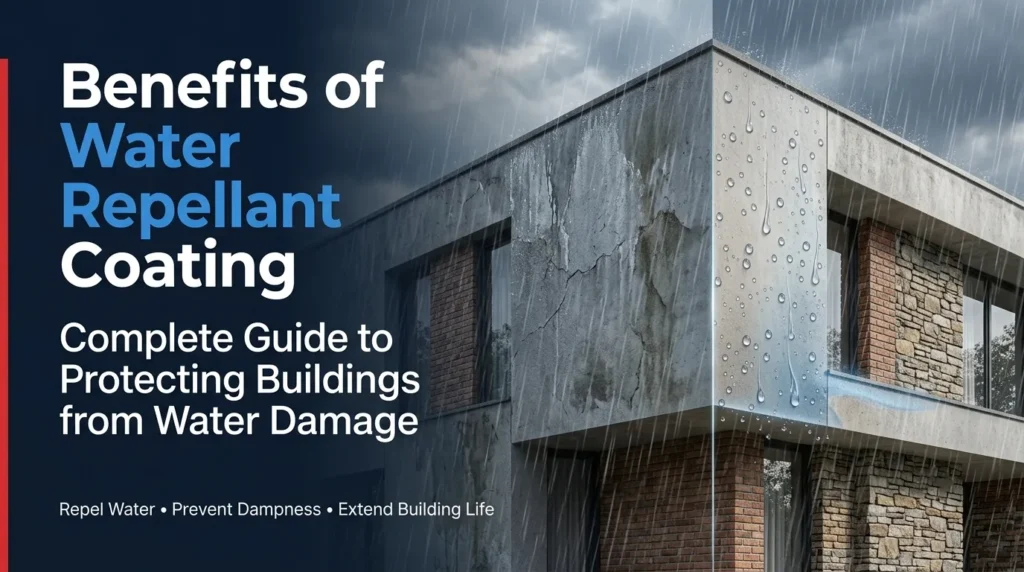
Water is one of the leading causes of building deterioration, affecting both the appearance and structural integrity of residential, commercial, and industrial properties. Continuous exposure to rain, humidity, and moisture can lead to damp walls, water seepage, cracks, efflorescence, mold growth, and costly repairs. Without proper protection, these issues can significantly reduce the lifespan of building materials and increase long-term maintenance expenses.
A water repellant coating is an advanced protective solution designed to minimize water absorption on porous surfaces while allowing trapped moisture vapor to escape. By creating a hydrophobic barrier, it protects concrete, brick, natural stone, cement plaster, and masonry from water penetration without blocking their natural breathability. This helps maintain the strength, appearance, and durability of exterior surfaces even under harsh weather conditions.
Water repellant coatings are widely used in residential homes, commercial buildings, industrial facilities, educational institutions, healthcare buildings, and infrastructure projects. They provide long-lasting protection against rain, humidity, and environmental pollutants while reducing the risk of structural damage and surface deterioration.
In this comprehensive guide, you’ll learn the key benefits of water repellant coating, how it works, where it can be applied, the different surfaces it protects, application best practices, maintenance tips, and answers to frequently asked questions. Whether you’re a homeowner, architect, contractor, or facility manager, this guide will help you understand why water repellant coatings are an essential investment for protecting buildings from water damage and extending their service life.
What is Water Repellant Coating?
Water repellant coating is a specialized protective treatment designed to reduce water absorption on porous building surfaces while maintaining their natural breathability. It forms an invisible hydrophobic barrier that prevents rainwater and moisture from penetrating materials such as concrete, brick, stone, cement plaster, and masonry. Unlike traditional waterproofing systems that create a surface membrane, water repellant coatings penetrate the substrate, helping protect buildings from water damage without trapping moisture inside.
These coatings are widely used on residential, commercial, and industrial buildings to prevent dampness, seepage, efflorescence, mold growth, and premature deterioration caused by prolonged exposure to moisture and harsh weather conditions.
Definition of Water Repellant Coating
A water repellant coating is a protective chemical coating that makes building surfaces resistant to water penetration. It penetrates porous materials and creates a hydrophobic layer that causes water to bead up and roll off instead of being absorbed.
The primary purpose of a water repellant coating is to protect exterior surfaces from moisture while allowing water vapor trapped within the building material to escape. This balance helps prevent structural damage without affecting the natural appearance of the surface.
Key characteristics include:
- Reduces water absorption
- Allows surface breathability
- Protects against rain and humidity
- Helps prevent dampness and efflorescence
- Maintains the natural appearance of masonry and concrete
How Water Repellant Technology Works
Water repellant technology works by penetrating the microscopic pores of construction materials and lining them with hydrophobic molecules. These molecules reduce the surface energy, making it difficult for liquid water to enter while still allowing water vapor to pass through.
When rainwater comes into contact with a treated surface, it forms droplets that roll away instead of soaking into the material. This “water beading” effect significantly reduces moisture penetration and minimizes the risk of long-term water damage.
The technology offers several advantages:
- Prevents rainwater absorption
- Reduces cracks caused by moisture expansion
- Minimizes mold and algae growth
- Protects against freeze-thaw damage in colder climates
- Improves the durability of exterior building materials
Water Repellant Coating vs. Waterproof Coating
Although both coatings provide protection against moisture, they serve different purposes and work in different ways.
| Feature | Water Repellant Coating | Waterproof Coating |
| Protection Method | Repels water from the surface | Creates a waterproof membrane |
| Breathability | Allows moisture vapor to escape | Usually blocks moisture movement |
| Surface Appearance | Maintains the natural look | May alter the surface finish |
| Best For | Exterior walls, masonry, concrete, brick, stone | Roofs, terraces, basements, water tanks |
| Water Resistance | Reduces water absorption | Completely blocks water penetration |
| Application | Penetrates into porous surfaces | Forms a protective surface layer |
Water repellant coatings are ideal for protecting exposed exterior walls, while waterproof coatings are better suited for areas that experience continuous water exposure or hydrostatic pressure.
Key Features of Water Repellant Coatings
Modern water repellant coatings are engineered to provide long-lasting protection against environmental moisture while preserving the structural integrity and appearance of buildings.
Some of the most important features include:
- Hydrophobic protection against rainwater
- Deep penetration into porous substrates
- High breathability for moisture vapor transmission
- Resistance to UV radiation and weathering
- Protection against dampness and seepage
- Prevention of efflorescence and salt deposits
- Reduced mold, mildew, and algae growth
- Suitable for concrete, brick, stone, plaster, and masonry
- Long service life with minimal maintenance
- Preserves the natural color and texture of building surfaces
These features make water repellant coatings a reliable solution for extending the lifespan of buildings while reducing maintenance costs and protecting exterior surfaces from water-related deterioration.
Why Buildings Need Water Repellant Coating
Buildings are constantly exposed to rain, humidity, UV radiation, temperature fluctuations, and environmental pollutants. Over time, these elements allow moisture to penetrate porous construction materials such as concrete, brick, stone, and plaster. Once water enters the structure, it can cause dampness, cracks, efflorescence, mold growth, corrosion, and gradual structural deterioration.
A water repellant coating provides a proactive solution by reducing water absorption while maintaining the natural breathability of the surface. Instead of allowing moisture to seep into walls, the coating forms a hydrophobic barrier that repels water and helps preserve the strength, appearance, and durability of building materials. This preventive approach minimizes repair costs, extends the lifespan of structures, and improves overall building performance.
Common Sources of Water Damage
Water damage can occur from multiple sources, many of which are unavoidable due to environmental exposure. Without proper surface protection, moisture gradually penetrates porous materials and weakens the building over time.
Some of the most common sources of water damage include:
- Heavy rainfall and wind-driven rain
- High humidity and condensation
- Wall cracks and damaged plaster
- Poor drainage systems
- Leaking roofs and gutters
- Faulty window and door seals
- Groundwater and rising damp
- Continuous exposure to moisture in coastal or high-humidity regions
Identifying these sources early and protecting exterior surfaces with a water repellant coating helps prevent costly repairs and long-term deterioration.
Effects of Moisture on Building Materials
Moisture is one of the primary causes of building material degradation. When water is absorbed into porous surfaces, it weakens the material, affects its appearance, and reduces its durability.
Common effects of moisture include:
- Damp patches on walls
- Paint peeling and blistering
- Surface cracks
- Efflorescence (white salt deposits)
- Mold and mildew growth
- Algae formation on exterior walls
- Concrete deterioration
- Corrosion of embedded steel reinforcement
- Reduced insulation efficiency
- Discoloration and staining
These issues not only impact the building’s appearance but can also compromise occupant comfort and increase maintenance expenses.
Long-Term Structural Risks
If moisture infiltration is left untreated, it can gradually affect the structural integrity of a building. Water penetrates deeper into construction materials, causing continuous deterioration that becomes more expensive to repair over time.
Some long-term structural risks include:
- Weakening of concrete and masonry
- Corrosion of reinforcing steel
- Expansion of cracks due to repeated wetting and drying cycles
- Freeze-thaw damage in colder climates
- Reduced load-bearing capacity of structural elements
- Damage to interior finishes and insulation
- Higher maintenance and restoration costs
- Shortened service life of the building
Protecting building surfaces before these problems develop is more cost-effective than repairing extensive water damage later.
Importance of Preventive Protection
Preventive protection is one of the most effective ways to maintain the durability and value of any building. Applying a water repellant coating before water damage occurs helps preserve construction materials and reduces the likelihood of future repairs.
The key benefits of preventive protection include:
- Minimizes water penetration into porous surfaces
- Reduces dampness and seepage
- Helps prevent mold, mildew, and algae growth
- Protects against efflorescence and staining
- Extends the lifespan of exterior walls
- Lowers maintenance and repair costs
- Preserves the appearance of the building
- Improves long-term structural performance
- Enhances weather resistance throughout the year
By investing in preventive protection, property owners can safeguard residential, commercial, and industrial buildings from the damaging effects of moisture while ensuring long-lasting performance and durability.
Top Benefits of Water Repellant Coating
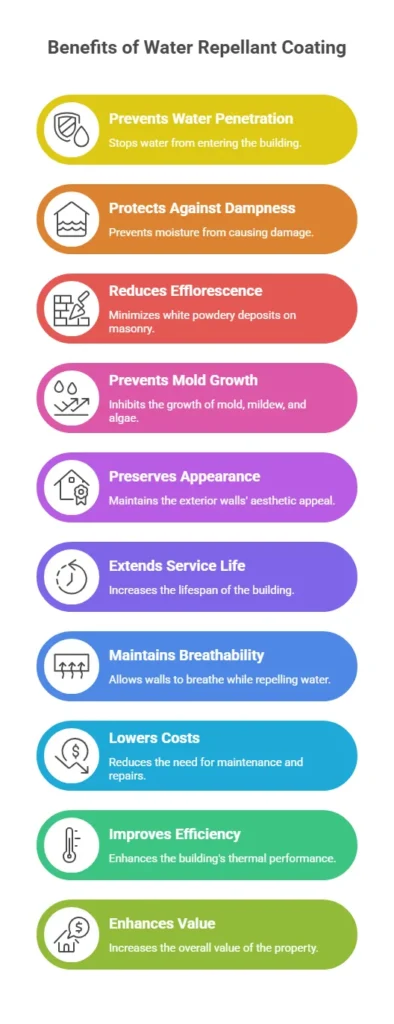
Water repellant coatings offer more than just protection against rainwater. They help preserve the structural integrity, appearance, and durability of buildings by minimizing water absorption while allowing surfaces to remain breathable. Whether applied to residential, commercial, or industrial structures, these coatings provide long-term protection against moisture-related damage and reduce maintenance requirements.
Below are the key benefits of using a water repellant coating.
Prevents Water Penetration
One of the primary benefits of a water repellant coating is its ability to prevent water from penetrating porous building materials. The coating forms a hydrophobic barrier that causes rainwater to bead on the surface and roll off instead of being absorbed.
This protection helps safeguard materials such as concrete, brick, natural stone, and plaster from water-related deterioration while maintaining their strength and appearance.
Benefits include:
- Reduces water absorption
- Protects exterior walls from rain damage
- Minimizes moisture infiltration
- Helps maintain structural integrity
Protects Against Dampness and Seepage
Damp walls and water seepage are common problems caused by prolonged exposure to moisture. A water repellant coating significantly reduces the amount of water entering the building envelope, helping to keep walls dry and protected.
By preventing moisture penetration, the coating reduces the likelihood of peeling paint, damaged plaster, and interior damp patches.
Key advantages:
- Prevents damp walls
- Reduces wall seepage
- Protects interior finishes
- Improves indoor comfort
Reduces Efflorescence on Masonry
Efflorescence appears as white powdery deposits on brick, concrete, and masonry surfaces when water dissolves salts within the material and carries them to the surface.
Since water repellant coatings minimize water absorption, they also reduce salt migration, helping prevent unsightly efflorescence and preserving the natural appearance of exterior walls.
Benefits include:
- Reduces salt deposits
- Preserves masonry aesthetics
- Minimizes surface staining
- Protects decorative finishes
Prevents Mold, Mildew, and Algae Growth
Moist surfaces create favorable conditions for mold, mildew, algae, and fungal growth. These organisms not only affect the appearance of buildings but can also contribute to poor indoor air quality and surface deterioration.
By keeping exterior walls dry, water repellant coatings help inhibit biological growth and maintain cleaner building surfaces.
Advantages include:
- Reduces mold formation
- Prevents algae growth
- Minimizes mildew development
- Improves hygiene and aesthetics
Preserves Exterior Wall Appearance
Continuous exposure to rain and moisture can cause staining, discoloration, peeling paint, and surface deterioration. Water repellant coatings help maintain the original appearance of exterior walls by protecting them from weather-related damage.
Many formulations are transparent, allowing the natural texture and color of materials such as brick and stone to remain visible.
Benefits include:
- Maintains natural surface appearance
- Reduces discoloration
- Protects decorative finishes
- Improves curb appeal
Extends Building Service Life
Moisture is one of the leading causes of premature building deterioration. By reducing water penetration, water repellant coatings help preserve construction materials and delay the aging process.
Protecting building surfaces from moisture-related damage contributes to improved structural durability and longer service life.
Long-term benefits:
- Slows material deterioration
- Protects structural components
- Extends building lifespan
- Improves long-term performance
Maintains Breathability of Walls
Unlike membrane-based waterproofing systems, water repellant coatings allow water vapor trapped within the building material to escape. This breathable protection prevents moisture from accumulating inside walls while still blocking liquid water from entering.
Maintaining vapor permeability helps reduce internal moisture buildup and associated damage.
Key benefits include:
- Allows moisture vapor transmission
- Prevents trapped moisture
- Reduces internal condensation
- Supports healthier building performance
Lowers Maintenance and Repair Costs
Water damage often leads to expensive repairs involving repainting, plaster replacement, crack repairs, and mold remediation. Applying a water repellant coating helps prevent these issues before they develop.
The result is lower maintenance costs and fewer unexpected repair expenses throughout the building’s life cycle.
Cost-saving benefits:
- Reduces repair frequency
- Minimizes repainting costs
- Prevents expensive structural repairs
- Lowers long-term maintenance expenses
Improves Thermal Efficiency
Dry building materials generally provide better thermal insulation than moisture-saturated materials. By reducing water absorption, water repellant coatings help maintain the insulating properties of walls.
This can contribute to improved indoor comfort and may reduce the energy required for heating or cooling.
Advantages include:
- Maintains insulation performance
- Reduces moisture-related heat loss
- Improves indoor comfort
- Supports energy efficiency
Enhances Property Value
Well-maintained buildings with protected exterior surfaces are more attractive to buyers, tenants, and investors. Water repellant coatings help preserve the appearance and condition of a property, contributing to its long-term value.
Investing in preventive protection demonstrates proper building maintenance and can improve overall market appeal.
Property value benefits:
- Enhances exterior aesthetics
- Demonstrates proactive maintenance
- Increases buyer confidence
- Supports long-term asset value
Key Takeaway
A water repellant coating is a practical investment for protecting buildings against water damage and environmental exposure. From preventing water penetration and dampness to preserving exterior finishes, reducing maintenance costs, and extending service life, these coatings provide long-lasting protection for concrete, brick, stone, plaster, and other porous construction materials. When applied correctly, they help maintain the durability, appearance, and value of buildings for years to come.
Where Can Water Repellant Coating Be Applied?
Water repellant coatings are suitable for a wide range of porous construction materials exposed to rain, humidity, and environmental pollutants. These coatings penetrate the surface to create a hydrophobic barrier that reduces water absorption without affecting the material’s natural breathability. As a result, they help protect buildings from moisture-related damage while preserving their appearance and structural integrity.
Below are the most common surfaces where water repellant coatings are applied.
Concrete Walls
Concrete is naturally porous and can absorb significant amounts of water over time. Continuous exposure to moisture may lead to cracks, efflorescence, corrosion of reinforcing steel, and gradual deterioration of the structure.
Applying a water repellant coating helps protect concrete walls by minimizing water penetration while allowing trapped moisture vapor to escape.
Benefits for concrete walls include:
- Reduces water absorption
- Prevents surface cracking
- Minimizes efflorescence
- Protects reinforced concrete from moisture-related damage
- Extends the lifespan of concrete structures
Brick Masonry
Brick masonry is highly susceptible to water absorption due to its porous nature. Rainwater can penetrate bricks and mortar joints, leading to dampness, staining, mold growth, and freeze-thaw damage in colder climates.
A water repellant coating helps preserve the appearance and durability of brickwork while maintaining its natural texture and color.
Benefits for brick masonry include:
- Prevents rainwater penetration
- Reduces dampness and seepage
- Protects mortar joints
- Prevents white salt deposits (efflorescence)
- Preserves the natural appearance of bricks
Natural Stone Surfaces
Natural stones such as sandstone, limestone, granite, and marble are commonly used for building facades and decorative elements. Although durable, many natural stones can absorb moisture, causing discoloration, staining, biological growth, and weathering.
Water repellant coatings provide invisible protection without altering the stone’s natural finish.
Benefits for natural stone include:
- Reduces water absorption
- Prevents staining and discoloration
- Protects against moss, algae, and mold
- Maintains the stone’s natural appearance
- Improves weather resistance
Cement Plaster
Exterior cement plaster is constantly exposed to changing weather conditions. Moisture penetration through plaster can result in peeling paint, blistering, cracks, and damp interior walls.
Applying a water repellant coating creates an additional protective layer that helps preserve the plaster surface and improves the durability of decorative finishes.
Benefits for cement plaster include:
- Prevents moisture penetration
- Reduces paint failure
- Protects against cracks and damp patches
- Improves surface durability
- Extends repainting intervals
Exterior Building Facades
Building facades are the first line of defense against rain, UV radiation, pollution, and environmental exposure. Without adequate protection, facades can suffer from discoloration, water stains, algae growth, and structural deterioration.
Water repellant coatings help maintain clean, attractive, and durable exterior surfaces while reducing maintenance requirements.
Suitable facade materials include:
- Concrete
- Brick
- Stone
- Cement plaster
- Fiber cement panels
- Architectural masonry
Benefits include:
- Improves weather resistance
- Maintains facade appearance
- Reduces maintenance frequency
- Protects against water-related deterioration
Roof Tiles and Cladding
Roof tiles and exterior cladding systems are continuously exposed to rainfall and moisture. Water penetration through porous roofing materials can contribute to leaks, biological growth, and material degradation.
Applying a water repellant coating helps reduce water absorption while preserving the appearance and durability of roofing materials and cladding panels.
Benefits for roof tiles and cladding include:
- Repels rainwater effectively
- Reduces moss and algae growth
- Prevents moisture-related deterioration
- Preserves the original appearance
- Improves long-term weather resistance
Key Takeaway
Water repellant coatings are versatile protective solutions for a variety of porous building materials, including concrete walls, brick masonry, natural stone, cement plaster, exterior facades, and roof tiles. By reducing water absorption while maintaining breathability, these coatings help prevent moisture damage, preserve surface aesthetics, and extend the service life of buildings across residential, commercial, and industrial applications.
Industries and Buildings That Benefit from Water Repellant Coating
Water repellant coatings are widely used across various industries and building types to protect exterior surfaces from rain, moisture, humidity, and environmental pollutants. By reducing water absorption while maintaining surface breathability, these coatings help extend the lifespan of structures, minimize maintenance costs, and preserve their appearance. Whether for new construction or renovation projects, water repellant coatings provide long-term protection for a wide range of applications.
Residential Homes and Apartments
Homes and apartment buildings are constantly exposed to changing weather conditions, making exterior walls vulnerable to water seepage, dampness, and paint deterioration. Applying a water repellant coating helps protect these surfaces, ensuring long-lasting durability and improved aesthetics.
Benefits for residential buildings include:
- Prevents wall seepage and dampness
- Protects exterior paint and plaster
- Reduces mold and mildew growth
- Extends the lifespan of exterior walls
- Lowers long-term maintenance costs
Commercial Buildings
Commercial properties such as offices, shopping malls, retail stores, and business complexes require attractive and well-maintained exteriors. Moisture damage can affect both the appearance and structural performance of these buildings.
Water repellant coatings help maintain professional-looking facades while protecting the building envelope from weather-related deterioration.
Benefits for commercial buildings include:
- Preserves exterior aesthetics
- Protects concrete, brick, and stone surfaces
- Reduces repair and maintenance expenses
- Improves weather resistance
- Supports long-term building performance
Industrial Facilities
Factories, warehouses, manufacturing plants, and logistics centers often operate in harsh environments where buildings are exposed to rain, humidity, and airborne contaminants. Moisture intrusion can accelerate deterioration and increase maintenance requirements.
Applying water repellant coatings helps protect industrial buildings and improve their durability.
Benefits for industrial facilities include:
- Protects exterior walls from water penetration
- Reduces moisture-related deterioration
- Improves structural durability
- Minimizes maintenance downtime
- Extends the service life of industrial buildings
Hospitals and Healthcare Buildings
Healthcare facilities require clean, safe, and hygienic environments. Moisture infiltration can contribute to mold growth, staining, and damage to building materials, potentially affecting indoor air quality and patient comfort.
Water repellant coatings help maintain dry, durable, and visually appealing healthcare facilities.
Benefits for healthcare buildings include:
- Prevents dampness and water seepage
- Reduces mold and mildew growth
- Protects exterior building materials
- Improves long-term durability
- Supports a healthier environment
Educational Institutions
Schools, colleges, universities, and training centers require durable infrastructure that can withstand continuous environmental exposure with minimal maintenance. Protecting these buildings from moisture helps preserve their condition and reduces repair costs.
Water repellant coatings provide reliable protection for educational campuses of all sizes.
Benefits for educational institutions include:
- Protects classrooms and administrative buildings
- Prevents exterior wall deterioration
- Reduces maintenance interruptions
- Extends the lifespan of campus buildings
- Maintains an attractive learning environment
Hotels and Hospitality Projects
Hotels, resorts, restaurants, and hospitality facilities rely heavily on attractive building exteriors to create a positive first impression. Weather-related damage can affect both appearance and property value.
Water repellant coatings help maintain clean, well-protected facades throughout the year.
Benefits for hospitality projects include:
- Preserves architectural appearance
- Prevents staining and discoloration
- Protects decorative finishes
- Reduces maintenance frequency
- Enhances guest experience through better building aesthetics
Heritage and Historical Structures
Historic buildings, monuments, museums, and heritage sites often feature natural stone, brick, and traditional masonry that require protection without altering their original appearance. Water repellant coatings provide invisible protection while allowing these materials to breathe naturally.
This makes them an ideal solution for preserving culturally significant structures.
Benefits for heritage structures include:
- Protects original masonry from moisture damage
- Reduces efflorescence and biological growth
- Maintains the natural appearance of historic materials
- Allows vapor permeability to prevent trapped moisture
- Helps preserve architectural heritage for future generations
Key Takeaway
Water repellant coatings are suitable for a wide variety of industries and building types, including residential, commercial, industrial, healthcare, educational, hospitality, and heritage structures. By protecting exterior surfaces from water penetration, dampness, and weather-related deterioration, these coatings improve building durability, reduce maintenance costs, and help preserve both structural integrity and visual appeal over the long term.
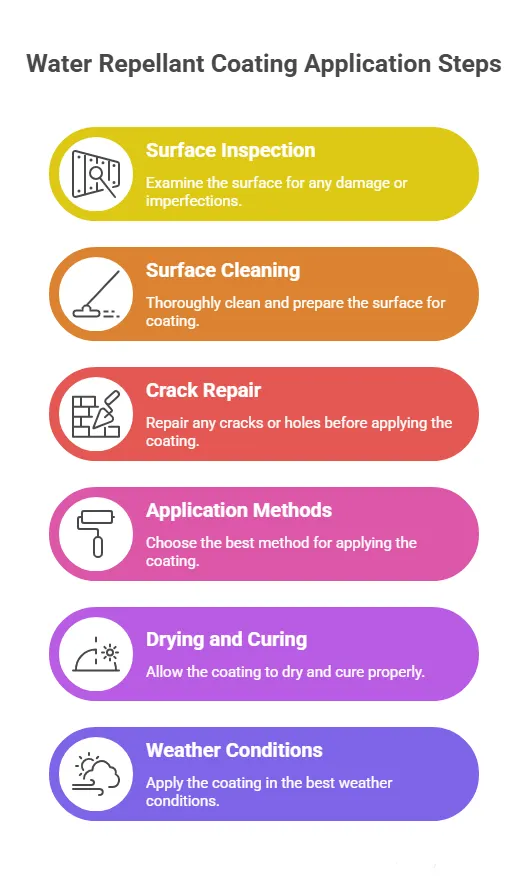
How to Apply Water Repellant Coating
Proper application is essential to ensure a water repellant coating delivers long-lasting protection against moisture, rain, and weather-related damage. Careful surface preparation, correct application techniques, and suitable weather conditions all contribute to the coating’s effectiveness and durability.
Follow these key steps to achieve the best results.
Surface Inspection
Before applying a water repellant coating, inspect the surface thoroughly to identify any defects that could affect adhesion or performance. The substrate should be structurally sound, dry, and free from any issues that may allow water to penetrate.
During inspection, check for:
- Surface cracks and damaged plaster
- Loose or flaking paint
- Water seepage or damp areas
- Efflorescence (white salt deposits)
- Mold, mildew, or algae growth
- Dust, dirt, oil, or grease
- Weak or deteriorated masonry
Addressing these problems before application helps ensure maximum protection and coating longevity.
Surface Cleaning and Preparation
A clean surface is essential for proper penetration and adhesion of the water repellant coating. Remove all contaminants that could interfere with the coating’s performance.
Surface preparation typically includes:
- Removing dust, dirt, and loose particles
- Washing away grease, oil, and stains
- Cleaning mold, mildew, and algae using appropriate cleaners
- Removing efflorescence with a suitable cleaning solution
- Allowing the surface to dry completely before application
Proper preparation enables the coating to penetrate deeply into porous materials, resulting in more effective and durable water protection.
Repairing Cracks Before Application
Water repellant coatings are designed to repel water but are not intended to bridge or seal structural cracks. Any visible cracks, damaged joints, or surface defects should be repaired before coating application.
Recommended repairs include:
- Filling hairline and surface cracks
- Repairing damaged plaster
- Repointing deteriorated mortar joints
- Sealing gaps around windows and doors
- Replacing loose or damaged masonry units if necessary
Completing these repairs helps create a uniform surface and prevents water from entering through existing defects.
Application Methods (Brush, Roller, Spray)
Water repellant coatings can be applied using different methods depending on the project size, surface type, and manufacturer recommendations.
Brush Application
- Suitable for small areas and detailed work
- Ideal around corners, edges, and joints
- Provides better control during application
Roller Application
- Recommended for smooth and moderately textured surfaces
- Ensures uniform coating thickness
- Suitable for residential and commercial projects
Spray Application
- Best for large building facades and industrial structures
- Delivers fast and even coverage
- Allows deep penetration into porous surfaces
- Reduces application time on large projects
Apply the coating evenly according to the manufacturer’s recommended coverage rate. Some substrates may require multiple coats for optimal protection.
Drying and Curing Time
After application, the coating requires adequate drying and curing to develop its full water-repellent properties. Drying time depends on the product formulation, temperature, humidity, and surface conditions.
General recommendations include:
- Allow sufficient drying time between coats if multiple coats are required.
- Avoid exposing freshly coated surfaces to rain or water until the coating has fully cured.
- Ensure adequate ventilation during the curing process.
- Follow the manufacturer’s specified drying and curing times for best results.
Proper curing ensures maximum durability, water resistance, and long-term performance.
Best Weather Conditions for Application
Weather conditions play an important role in the successful application of water repellant coatings. Applying the coating under suitable environmental conditions helps achieve proper penetration, adhesion, and curing.
For best results:
- Apply during dry weather with no rain forecast during the curing period.
- Avoid application on wet or damp surfaces.
- Do not apply during heavy rain, fog, or high humidity.
- Avoid application under extremely hot temperatures or direct, intense sunlight.
- Choose moderate temperatures to promote uniform drying and curing.
Planning the application under favorable weather conditions helps maximize the coating’s effectiveness and ensures reliable, long-lasting protection against water damage.
Key Takeaway
A properly applied water repellant coating provides durable protection against water penetration, dampness, and weather-related deterioration. By following the correct process—inspecting the surface, preparing it thoroughly, repairing defects, using the appropriate application method, allowing sufficient curing time, and applying under suitable weather conditions—you can maximize the coating’s performance and extend the life of exterior building surfaces.
How to Choose the Right Water Repellant Coating
Selecting the right water repellant coating is essential for achieving long-lasting protection against water penetration, dampness, and weather-related damage. Different building materials and environmental conditions require coatings with specific performance characteristics. Evaluating factors such as surface compatibility, water resistance, UV stability, breathability, durability, and environmental impact will help ensure the coating performs effectively throughout its service life.
Below are the key factors to consider before choosing a water repellant coating.
Surface Compatibility
Not all water repellant coatings are suitable for every construction material. Choosing a coating that is compatible with the substrate ensures proper penetration, adhesion, and long-term performance.
Common compatible surfaces include:
- Concrete
- Brick masonry
- Natural stone
- Cement plaster
- Exterior render
- Masonry walls
- Roof tiles
- Fiber cement panels
Before application, always verify that the coating is recommended for the specific surface type and condition.
Why it matters:
- Improves coating adhesion
- Maximizes water repellency
- Extends coating life
- Prevents compatibility issues
Water Resistance Performance
The primary purpose of a water repellant coating is to minimize water absorption without sealing the surface completely. A high-performance coating should effectively repel rainwater while protecting porous materials from long-term moisture damage.
Look for coatings that offer:
- Excellent water beading effect
- Low water absorption
- Protection against driving rain
- Resistance to dampness and seepage
- Long-lasting hydrophobic performance
Better water resistance helps preserve the structural integrity and appearance of exterior surfaces.
UV and Weather Resistance
Exterior building surfaces are continuously exposed to sunlight, rainfall, humidity, temperature fluctuations, and environmental pollutants. A quality water repellant coating should maintain its protective properties despite prolonged weather exposure.
Choose coatings with:
- High UV resistance
- Excellent weather durability
- Resistance to temperature changes
- Protection against heavy rainfall
- Long-term outdoor performance
Weather-resistant coatings reduce premature deterioration and maintain consistent protection throughout changing seasons.
Breathability
One of the most important characteristics of a water repellant coating is its ability to allow moisture vapor to escape from within the building material while preventing liquid water from entering.
This breathable performance helps:
- Prevent trapped moisture
- Reduce blistering and peeling
- Minimize internal condensation
- Protect masonry from moisture buildup
- Maintain the health of the building envelope
Breathable coatings are particularly beneficial for concrete, brick, and natural stone structures where vapor permeability is essential.
Durability and Expected Service Life
Durability determines how long the coating will continue protecting the building before reapplication becomes necessary. High-quality water repellant coatings provide reliable performance for many years when applied correctly and maintained properly.
Consider factors such as:
- Long-term water repellency
- Resistance to environmental aging
- Abrasion resistance
- Chemical stability
- Manufacturer’s expected service life
- Maintenance requirements
Choosing a durable coating reduces lifecycle costs and minimizes maintenance frequency.
Environmental and Low-VOC Considerations
Many modern water repellant coatings are formulated to reduce environmental impact while maintaining excellent performance. Low-VOC (Volatile Organic Compound) coatings contribute to safer application conditions and support sustainable construction practices.
When selecting a coating, consider:
- Low-VOC formulations
- Environmentally responsible chemistry
- Low odor during application
- Compliance with environmental regulations
- Safe application for occupied buildings
Environmentally friendly coatings help improve air quality during application while supporting green building initiatives.
Key Takeaway
Choosing the right water repellant coating involves more than selecting a product that repels water. The ideal coating should be compatible with the building material, provide excellent water resistance, withstand UV exposure and harsh weather, maintain breathability, deliver long-term durability, and meet environmental standards. By considering these factors, property owners, architects, and contractors can ensure reliable, long-lasting protection for residential, commercial, and industrial buildings.
Maintenance Tips for Long-Lasting Protection
Applying a water repellant coating is only the first step in protecting a building from water damage. Regular maintenance helps preserve the coating’s performance and ensures continuous protection against rain, moisture, UV exposure, and environmental pollutants. Routine inspections, timely repairs, and proper cleaning can significantly extend the service life of both the coating and the building’s exterior surfaces.
Below are the essential maintenance practices for maximizing the effectiveness of a water repellant coating.
Regular Exterior Inspections
Periodic inspections help identify early signs of wear or damage before they become major problems. Inspect exterior surfaces at least once or twice a year, especially after heavy rainfall or severe weather.
During inspections, check for:
- Damp patches or water stains
- Surface cracks
- Peeling or damaged finishes
- Efflorescence (white salt deposits)
- Mold, mildew, or algae growth
- Areas where water no longer beads on the surface
Early detection allows timely maintenance and helps preserve the coating’s protective performance.
Cleaning Exterior Surfaces
Dust, dirt, pollution, bird droppings, and biological growth can accumulate on exterior walls over time, reducing the coating’s effectiveness and affecting the building’s appearance.
Regular cleaning helps maintain both aesthetics and performance.
Recommended cleaning practices include:
- Wash surfaces with clean water or a mild detergent.
- Remove dirt and dust using a soft brush or low-pressure water.
- Clean mold, mildew, and algae using suitable cleaning solutions.
- Avoid abrasive tools or harsh chemicals that may damage the coating.
- Rinse thoroughly after cleaning.
Keeping surfaces clean helps maintain the coating’s hydrophobic properties and improves the overall appearance of the building.
Monitoring Cracks and Joint Sealants
Although water repellant coatings protect surfaces from moisture penetration, they cannot bridge structural cracks or replace damaged sealants. Regularly inspect joints, expansion gaps, and repaired areas to ensure they remain watertight.
Maintenance should include:
- Repairing newly formed cracks
- Replacing deteriorated sealants around windows and doors
- Inspecting expansion joints
- Repairing damaged plaster or masonry
- Sealing gaps that may allow water intrusion
Prompt repairs help maintain the effectiveness of the coating and prevent moisture from entering the building.
Reapplication Schedule
Over time, exposure to sunlight, rain, and environmental conditions gradually reduces the effectiveness of any protective coating. Reapplying the coating at the appropriate interval helps maintain continuous water resistance.
Consider reapplication when:
- Water no longer beads on the treated surface.
- The coating shows visible signs of wear.
- Water absorption begins to increase.
- Recommended maintenance intervals provided by the manufacturer have been reached.
The exact reapplication schedule depends on factors such as product quality, surface type, climate, and exposure to weather.
Seasonal Maintenance Before Monsoon
Preparing buildings before the rainy season is one of the most effective ways to prevent water damage. A pre-monsoon inspection ensures that exterior surfaces remain protected when exposed to heavy rainfall.
Before the monsoon, it is recommended to:
- Inspect all exterior walls for cracks or damage.
- Clean dirt, algae, and accumulated debris.
- Repair damaged plaster and seal open joints.
- Check roof edges, gutters, and drainage systems.
- Verify that the water repellant coating is performing effectively.
- Reapply the coating if necessary before heavy rains begin.
Seasonal maintenance helps reduce the risk of seepage, dampness, and costly repairs during periods of intense rainfall.
Key Takeaway
Routine maintenance is essential for ensuring the long-term performance of a water repellant coating. Regular inspections, cleaning exterior surfaces, repairing cracks and sealants, following an appropriate reapplication schedule, and performing preventive maintenance before the monsoon season help maximize protection against water damage. With proper care, water repellant coatings can continue to safeguard buildings, preserve their appearance, and extend the lifespan of exterior surfaces for many years.
Common Mistakes to Avoid
Even the highest-quality water repellant coating may fail to provide effective protection if it is applied incorrectly. Poor surface preparation, unsuitable weather conditions, or using the wrong product can reduce the coating’s performance and shorten its service life. Understanding and avoiding these common mistakes helps ensure maximum water resistance, durability, and long-term building protection.
Applying Over Damp Surfaces
One of the most common mistakes is applying a water repellant coating to damp or wet surfaces. Moisture trapped within the substrate prevents proper penetration and adhesion, reducing the coating’s effectiveness.
Before application, ensure that the surface is completely dry and free from standing water or excessive moisture.
Problems caused by applying on damp surfaces:
- Poor penetration into the substrate
- Reduced water repellency
- Uneven coating performance
- Shortened service life
- Increased risk of coating failure
Allow sufficient drying time after cleaning or rainfall before beginning the application.
Skipping Surface Preparation
Proper surface preparation is essential for achieving a durable and effective coating. Applying the product over dirty, dusty, or contaminated surfaces prevents proper bonding and reduces long-term performance.
Surface preparation should include:
- Removing dust and loose particles
- Cleaning dirt, grease, and oil
- Eliminating mold, mildew, and algae
- Removing efflorescence
- Repairing damaged plaster and cracks
Taking time to prepare the surface properly ensures better penetration and longer-lasting protection.
Using the Wrong Product for the Surface
Different construction materials have different levels of porosity and require compatible water repellant coatings. Using an unsuitable product may result in poor adhesion, limited protection, or changes in surface appearance.
Before selecting a coating, consider:
- Surface material (concrete, brick, stone, plaster, etc.)
- Porosity of the substrate
- Exposure to weather conditions
- Manufacturer’s recommended applications
- Required level of water resistance
Choosing the correct product ensures optimal performance and long-term durability.
Applying During Rain or High Humidity
Weather conditions significantly influence the application and curing of water repellant coatings. Applying the coating during rainfall, fog, or periods of high humidity can interfere with penetration and curing.
Avoid application when:
- Rain is expected during the curing period
- The surface is wet
- Humidity levels are excessively high
- Heavy dew is present
- Strong winds may carry dust onto the freshly coated surface
Choose dry weather with moderate temperatures to achieve the best results.
Ignoring Manufacturer’s Coverage Guidelines
Applying too little or too much coating can reduce its effectiveness. Every product has a recommended coverage rate based on the type and porosity of the substrate.
Following the manufacturer’s instructions helps ensure:
- Uniform coating thickness
- Proper penetration into porous surfaces
- Maximum water repellency
- Consistent long-term performance
- Efficient product usage
Always follow the recommended application method, number of coats, coverage area, and drying intervals to achieve the intended level of protection.
Key Takeaway
Most water repellant coating failures are caused by improper application rather than the coating itself. Avoiding common mistakes—such as applying over damp surfaces, neglecting surface preparation, using an incompatible product, applying in unsuitable weather, and ignoring the manufacturer’s coverage recommendations—helps ensure long-lasting protection against water penetration, dampness, and weather-related damage. Proper application practices maximize the coating’s performance and extend the lifespan of exterior building surfaces.
Frequently Asked Questions About Water Repellant Coating
Below are answers to some of the most common questions about water repellant coatings. These FAQs will help homeowners, contractors, architects, and facility managers better understand their benefits, applications, and maintenance.
What is the difference between water repellant and waterproof coatings?
Water repellant coatings and waterproof coatings both protect buildings from moisture, but they work differently.
A water repellant coating penetrates porous surfaces and creates a hydrophobic barrier that repels liquid water while allowing water vapor to escape. This helps maintain the natural breathability of materials such as concrete, brick, stone, and masonry.
A waterproof coating, on the other hand, forms a continuous membrane that blocks water from passing through the surface. It is commonly used in areas exposed to continuous water contact, such as roofs, terraces, basements, and water tanks.
How long does a water repellant coating last?
The lifespan of a water repellant coating depends on factors such as product quality, surface type, weather conditions, and maintenance practices.
Under normal conditions, a high-quality water repellant coating can provide effective protection for several years when properly applied and maintained. Regular inspections and timely reapplication help maintain optimal performance.
Can it be applied over painted surfaces?
Most water repellant coatings are designed for porous, unpainted surfaces such as concrete, brick, stone, and cement plaster. Painted surfaces may prevent the coating from penetrating properly, reducing its effectiveness.
Before applying a water repellant coating over painted surfaces, always check the manufacturer’s recommendations to ensure compatibility.
Will it change the appearance of the surface?
Most water repellant coatings are formulated to be clear or transparent and are designed to preserve the natural appearance, color, and texture of the treated surface.
However, some products may slightly enhance the surface color or create a subtle darkening effect depending on the substrate. Performing a small test application on an inconspicuous area is recommended before full application.
Is it suitable for new and old buildings?
Yes. Water repellant coatings are suitable for both new construction projects and existing buildings.
For new buildings, they provide preventive protection against future water damage. For older buildings, they help reduce further moisture penetration after any necessary repairs to cracks, damaged plaster, or deteriorated masonry have been completed.
Can water repellant coating prevent wall seepage completely?
Water repellant coatings significantly reduce water absorption through porous exterior surfaces and help minimize wall seepage caused by rainwater.
However, they cannot solve problems caused by structural cracks, plumbing leaks, faulty waterproofing systems, or rising damp. Any underlying defects should be repaired before applying the coating to achieve the best results.
Is it safe for residential buildings?
Yes. Most modern water repellant coatings are designed for use on residential, commercial, and industrial buildings.
Many formulations are low in volatile organic compounds (VOCs), making them suitable for exterior applications when used according to the manufacturer’s instructions. Choosing a quality product and following proper application practices ensures safe and effective performance.
How often should it be reapplied?
Reapplication depends on factors such as climate, UV exposure, rainfall, surface condition, and the performance of the existing coating.
As part of routine building maintenance, inspect exterior surfaces periodically. If water no longer beads on the surface or signs of moisture absorption begin to appear, it may be time to reapply the coating according to the manufacturer’s maintenance recommendations.
Key Takeaway
Water repellant coatings provide an effective solution for protecting porous building materials from water penetration while maintaining breathability. Understanding their differences from waterproof coatings, proper application methods, expected lifespan, and maintenance requirements helps ensure long-lasting protection and improved building durability.
Conclusion – Why Water Repellant Coating Is a Smart Investment
Protecting a building from water damage is essential for maintaining its structural integrity, appearance, and long-term value. A water repellant coating provides an effective solution by reducing water absorption while allowing building materials to breathe naturally. This balance helps prevent common moisture-related problems such as dampness, seepage, efflorescence, mold growth, and surface deterioration without affecting the appearance of concrete, brick, stone, or masonry.
Protect Buildings from Water Damage
Water penetration is one of the leading causes of building deterioration. Applying a water repellant coating creates a protective barrier that repels rainwater and moisture, helping to safeguard exterior walls from weather-related damage. This preventive protection keeps buildings stronger and more resilient throughout changing environmental conditions.
Reduce Long-Term Maintenance Costs
Repairing water-damaged walls, peeling paint, cracked plaster, and mold growth can be both expensive and time-consuming. A high-quality water repellant coating helps minimize these issues before they occur, reducing the need for frequent repairs and lowering overall maintenance costs throughout the building’s life cycle.
Improve Building Durability and Appearance
By preventing moisture from entering porous construction materials, water repellant coatings help preserve the strength and condition of exterior surfaces. They also reduce staining, discoloration, efflorescence, and biological growth, allowing buildings to maintain a clean and attractive appearance for many years.
Increase the Lifespan of Exterior Surfaces
Continuous exposure to rain, humidity, and environmental pollutants can gradually weaken concrete, brick, plaster, and natural stone. Water repellant coatings provide long-lasting protection that slows material deterioration, improves weather resistance, and extends the service life of exterior walls and facades.
Choosing the Right Water Repellant Coating for Long-Term Protection
Selecting a high-quality water repellant coating that is compatible with the building surface and environmental conditions is essential for achieving reliable, long-lasting performance. Proper surface preparation, correct application, and regular maintenance ensure maximum water resistance and help protect residential, commercial, and industrial buildings from costly water-related damage.
Investing in the right water repellant coating is a proactive approach to building maintenance, offering improved durability, lower maintenance costs, enhanced appearance, and long-term protection against moisture and harsh weather conditions.