

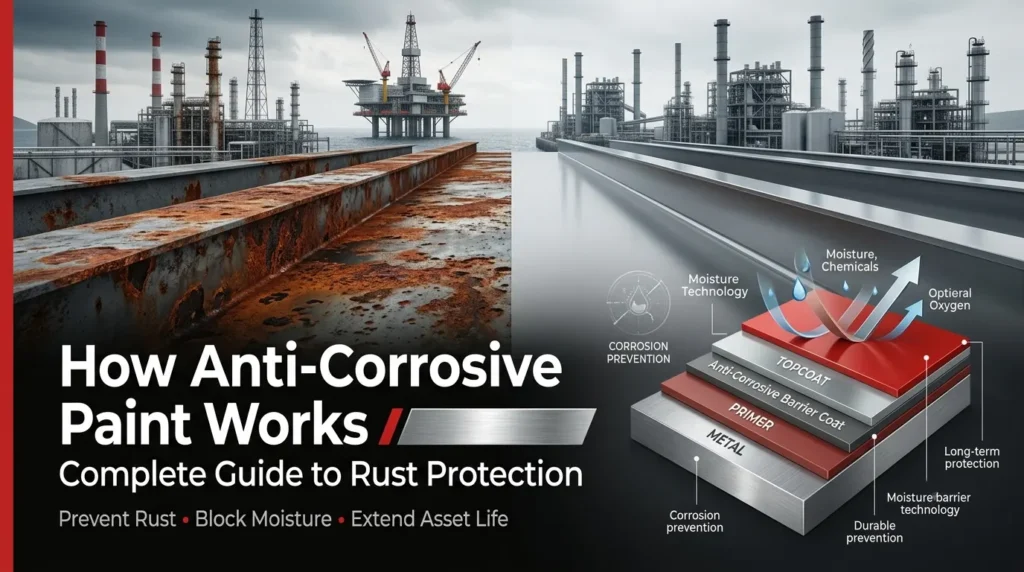
Anti-corrosive paint is a specialized protective coating designed to prevent rust and corrosion by creating a durable barrier between metal surfaces and environmental elements such as moisture, oxygen, chemicals, and salt. It is widely used in industries including construction, manufacturing, marine, oil & gas, and infrastructure to extend the service life of metal assets and reduce maintenance costs.
Unlike ordinary paint, anti-corrosive paint contains advanced resins, corrosion-inhibiting pigments, and protective additives that actively defend metal against oxidation. Depending on the coating system, it can protect through physical barrier protection, chemical inhibition, or sacrificial action using zinc-rich pigments. These mechanisms work together to maintain the strength, appearance, and reliability of metal structures in harsh operating conditions.
Understanding how anti-corrosive paint works is essential for selecting the right coating system for your project. Whether you are protecting steel structures, industrial machinery, storage tanks, pipelines, or bridges, choosing the appropriate anti-corrosive coating helps improve durability, minimize downtime, and ensure long-term protection against rust and environmental damage.
Introduction to How Anti-Corrosive Paint Works
Anti-corrosive paint is designed to protect metal surfaces from rust and corrosion by forming a durable protective layer. It acts as a shield that prevents moisture, oxygen, chemicals, and other corrosive elements from coming into direct contact with the metal. This protection is essential for maintaining the strength, appearance, and performance of metal structures in industrial and commercial environments.
Modern anti-corrosive coatings use advanced resins, corrosion-inhibiting pigments, and specialized additives to provide long-lasting protection. Depending on the coating type, they can work through barrier protection, chemical inhibition, or sacrificial protection, making them highly effective in extending the lifespan of steel structures, machinery, pipelines, and other metal assets.
Understanding Corrosion
What is Corrosion?
Corrosion is the gradual deterioration of a metal caused by chemical or electrochemical reactions with its surrounding environment. When metals are exposed to moisture, oxygen, chemicals, or salts, they react to form oxides or other compounds, resulting in rust and surface degradation. If left untreated, corrosion can weaken the metal and reduce its structural integrity.
Why Metal Surfaces Corrode
Metal surfaces corrode because they naturally react with environmental elements such as air and water. Factors like high humidity, rainfall, industrial pollution, chemical exposure, and saltwater accelerate this process. Once the protective surface of the metal is damaged, corrosion spreads quickly, leading to costly repairs and reduced equipment lifespan.
Common Factors That Cause Corrosion
Several factors contribute to metal corrosion, including continuous exposure to moisture and humidity, oxygen in the atmosphere, corrosive chemicals, acids, alkalis, and salt-laden coastal environments. High temperatures, abrasive conditions, and poor surface maintenance can also increase the rate of corrosion. Applying a high-quality anti-corrosive paint helps minimize these risks by providing a strong, long-lasting protective barrier.
How Anti-Corrosive Paint Protects Metal
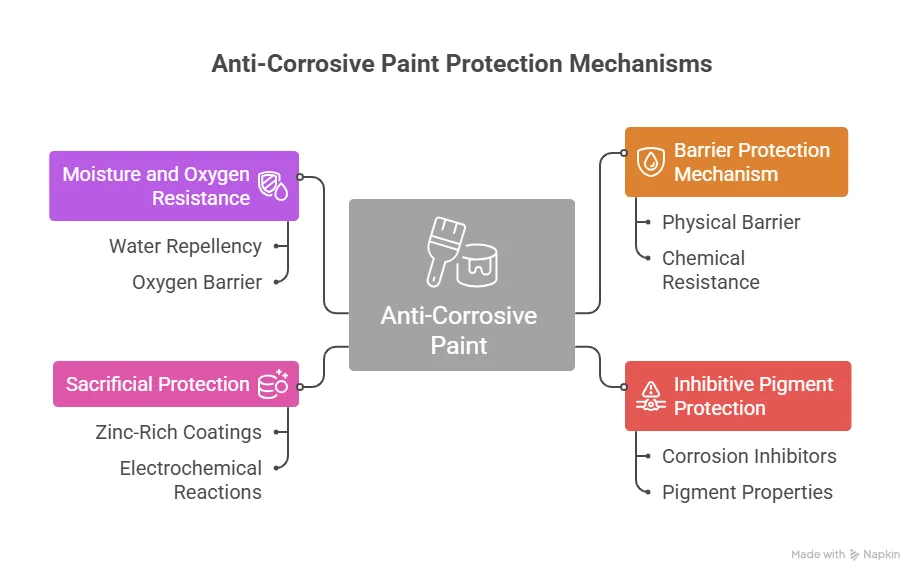
Anti-corrosive paint protects metal surfaces by combining multiple protection mechanisms that prevent rust and corrosion. Instead of simply covering the surface, these coatings create a durable defense against moisture, oxygen, chemicals, and other corrosive elements. High-performance anti-corrosive paints use advanced resins, corrosion-inhibiting pigments, and specialized additives to provide long-lasting protection in demanding industrial environments.
Barrier Protection Mechanism
The primary function of anti-corrosive paint is to form a continuous protective barrier over the metal surface. This barrier prevents water, oxygen, dirt, and harmful chemicals from reaching the metal, significantly reducing the chances of oxidation and rust formation. A properly applied coating system provides excellent resistance to weathering and environmental damage.
Inhibitive Pigment Protection
Many anti-corrosive paints contain corrosion-inhibiting pigments such as zinc phosphate and other protective compounds. These pigments chemically interact with the metal surface to slow down the corrosion process and reduce the formation of rust. Even if minor damage occurs to the coating, inhibitive pigments continue to provide additional protection against corrosion.
Sacrificial Protection with Zinc-Rich Coatings
Zinc-rich coatings protect steel through a process known as sacrificial or cathodic protection. Since zinc is more reactive than steel, it corrodes first, protecting the underlying metal from rust. This makes zinc-rich primers an excellent choice for bridges, industrial structures, pipelines, and heavy-duty steel equipment exposed to harsh environments.
Moisture and Oxygen Resistance
Moisture and oxygen are the primary causes of corrosion. Anti-corrosive paint is specially formulated to resist water penetration and limit oxygen exposure, preventing the chemical reactions that lead to rust. This moisture-resistant barrier helps maintain the strength, appearance, and durability of metal structures, even in humid, coastal, and chemically aggressive environments.
Components of Anti-Corrosive Paint
The effectiveness of anti-corrosive paint depends on the quality and combination of its components. Each ingredient has a specific function, from forming a protective barrier to preventing corrosion and improving the coating’s durability. Together, these components ensure long-lasting protection for metal surfaces in demanding industrial environments.
Protective Resins
Protective resins are the primary binding agents in anti-corrosive paint that hold the coating together and ensure strong adhesion to the metal surface. Common resins such as epoxy, polyurethane, and alkyd provide excellent durability, chemical resistance, and weather protection. They also create a tough, continuous film that acts as the first line of defense against corrosion.
Anti-Corrosive Pigments
Anti-corrosive pigments are specially formulated compounds that help prevent rust and oxidation. Pigments such as zinc phosphate, zinc dust, and iron oxide inhibit the corrosion process by protecting the metal surface from chemical reactions. Zinc-rich pigments also provide sacrificial protection, making them highly effective for steel structures exposed to harsh environmental conditions.
Solvents and Additives
Solvents help maintain the correct viscosity of the paint, making it easier to apply by brush, roller, or spray. During drying, the solvent evaporates, allowing the protective coating to form. Additives are included to enhance specific properties such as faster drying, improved flow, UV resistance, abrasion resistance, and long-term coating stability. These ingredients ensure consistent performance and maximize the lifespan of the anti-corrosive coating.
Different Protection Mechanisms
Anti-corrosive paint protects metal through multiple mechanisms that work together to prevent rust and extend the lifespan of metal structures. Depending on the formulation, the coating may provide a physical barrier, chemically inhibit corrosion, or offer sacrificial protection. These mechanisms ensure reliable performance even in harsh industrial and outdoor environments.
Physical Barrier Protection
Physical barrier protection is the most common mechanism used by anti-corrosive paints. The coating forms a continuous, impermeable film over the metal surface, preventing moisture, oxygen, salts, and chemicals from reaching the metal. By isolating the surface from these corrosive elements, the paint significantly reduces the risk of rust formation and environmental damage.
Chemical Inhibition
Chemical inhibition is achieved through corrosion-inhibiting pigments such as zinc phosphate and other specialized compounds. These pigments react with the metal surface to slow or stop the electrochemical reactions responsible for corrosion. This additional layer of protection helps preserve the integrity of the coating, even if minor scratches or damage occur.
Cathodic (Sacrificial) Protection
Cathodic protection, also known as sacrificial protection, is commonly provided by zinc-rich coatings. In this process, zinc acts as a sacrificial metal because it corrodes before the underlying steel. As the zinc gradually deteriorates, it protects the base metal from rust, ensuring long-lasting corrosion resistance. This protection method is widely used for bridges, pipelines, offshore structures, storage tanks, and other steel assets exposed to severe environmental conditions.
Factors That Affect Anti-Corrosive Paint Performance
The performance and lifespan of anti-corrosive paint depend on several key factors, including surface preparation, coating thickness, environmental conditions, and application techniques. Even the highest-quality coating may fail if it is not applied correctly. Understanding these factors helps ensure maximum corrosion resistance and long-term protection for metal surfaces.
Surface Preparation
Proper surface preparation is the foundation of a successful anti-corrosive coating system. The metal surface should be thoroughly cleaned to remove rust, oil, grease, dirt, and old paint using methods such as sanding, wire brushing, or abrasive blasting. A clean and properly prepared surface improves paint adhesion and allows the coating to provide effective, long-lasting protection.
Coating Thickness
Applying the correct coating thickness is essential for achieving optimal corrosion resistance. A coating that is too thin may not provide adequate protection, while an excessively thick coating can lead to cracking, peeling, or longer curing times. Following the manufacturer’s recommended dry film thickness (DFT) ensures consistent performance and durability.
Environmental Conditions
Environmental conditions during application and service life greatly influence coating performance. High humidity, rain, extreme temperatures, dust, and direct sunlight can affect paint adhesion, drying, and curing. Selecting a coating suitable for the intended environment, such as coastal, marine, chemical, or industrial conditions, helps maximize its effectiveness.
Proper Application Methods
Using the correct application method is crucial for achieving a uniform and durable coating. Whether applied by brush, roller, or spray, the paint should be mixed properly and applied according to the manufacturer’s guidelines. Allowing sufficient drying and curing time between coats ensures strong adhesion, improved durability, and reliable long-term protection against corrosion.
Where Anti-Corrosive Paint is Used
Anti-corrosive paint is widely used across industries where metal surfaces are exposed to moisture, chemicals, salt, and harsh environmental conditions. It provides long-lasting protection against rust, enhances durability, and reduces maintenance costs. From heavy industrial equipment to critical infrastructure, anti-corrosive coatings help ensure the reliability and safety of valuable metal assets.
Steel Structures
Steel structures used in commercial buildings, factories, warehouses, and industrial plants are constantly exposed to environmental conditions that can cause corrosion. Anti-corrosive paint protects structural steel from rust, preserving its strength, appearance, and load-bearing capacity while extending its service life.
Industrial Machinery
Industrial machinery operates in demanding environments where exposure to moisture, chemicals, and abrasion can lead to corrosion. Applying anti-corrosive paint protects machine components from rust, minimizes equipment downtime, and improves operational efficiency by extending the lifespan of valuable machinery.
Oil & Gas Pipelines
Pipelines used in the oil and gas industry are exposed to corrosive substances, moisture, and varying weather conditions. Anti-corrosive coatings provide a durable protective barrier that helps prevent leaks, maintain pipeline integrity, and reduce maintenance requirements, ensuring safe and reliable operation.
Marine and Offshore Equipment
Ships, offshore platforms, ports, and coastal equipment are continuously exposed to saltwater, humidity, and harsh marine environments. Anti-corrosive paint offers excellent resistance to salt spray and moisture, protecting metal surfaces from accelerated corrosion and increasing the durability of marine infrastructure.
Bridges and Infrastructure
Bridges, transmission towers, railway structures, and other public infrastructure require long-term protection against weather exposure and environmental pollutants. Anti-corrosive coatings help prevent structural deterioration, reduce maintenance costs, and improve the safety and longevity of these critical assets.
Benefits of Anti-Corrosive Paint
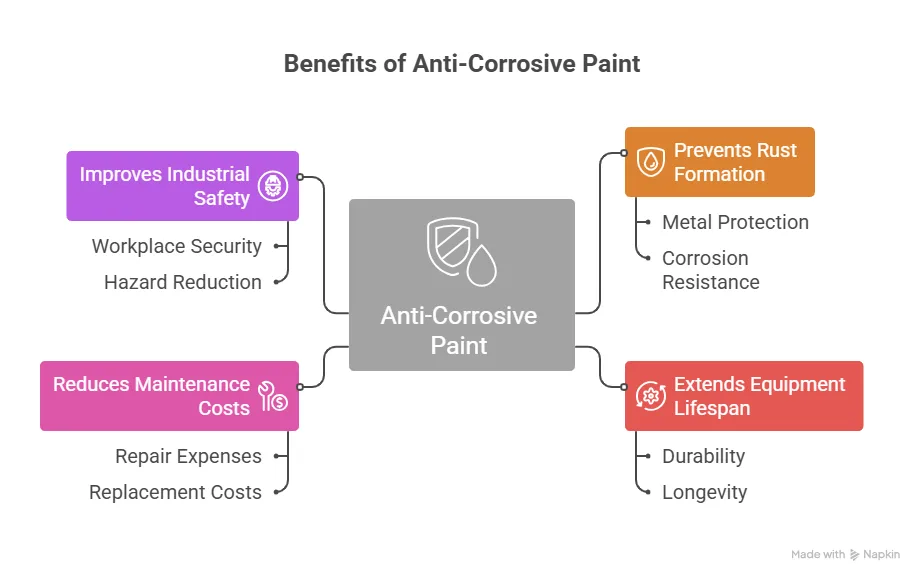
Anti-corrosive paint offers long-term protection for metal surfaces by preventing rust, reducing damage from environmental exposure, and improving the durability of industrial assets. Whether used on machinery, pipelines, steel structures, or marine equipment, these coatings help lower maintenance costs and enhance operational efficiency. Investing in a high-quality anti-corrosive coating is a cost-effective way to protect valuable infrastructure and extend its service life.
Prevents Rust Formation
One of the primary benefits of anti-corrosive paint is its ability to prevent rust formation. The coating creates a protective barrier that blocks moisture, oxygen, chemicals, and other corrosive elements from reaching the metal surface. This significantly reduces oxidation and keeps metal components strong and reliable for longer periods.
Extends Equipment Lifespan
By protecting metal surfaces from corrosion and environmental damage, anti-corrosive paint helps extend the lifespan of industrial equipment and structures. It minimizes wear and deterioration, allowing machinery, storage tanks, pipelines, and steel frameworks to perform efficiently for many years with fewer repairs or replacements.
Reduces Maintenance Costs
Corrosion can lead to frequent repairs, equipment failure, and costly downtime. Anti-corrosive coatings reduce these expenses by providing durable, long-lasting protection that minimizes the need for regular maintenance and repainting. This results in lower operating costs and improved productivity for industrial facilities.
Improves Industrial Safety
Corrosion can weaken metal structures and equipment, increasing the risk of accidents and operational failures. Anti-corrosive paint helps maintain the structural integrity of critical assets, ensuring safer working conditions for employees while improving the reliability of industrial operations.
Best Practices for Maximum Protection
To achieve the best performance from anti-corrosive paint, it is essential to follow proper application and maintenance practices. Even high-quality coatings can fail if the surface is not prepared correctly or if the paint is applied under unsuitable conditions. Following industry best practices ensures maximum corrosion resistance, longer coating life, and reliable protection for metal surfaces.
Proper Surface Cleaning
Surface preparation is the first and most important step before applying anti-corrosive paint. Remove all rust, grease, oil, dirt, dust, and old paint using methods such as wire brushing, sanding, or abrasive blasting. A clean and dry surface improves paint adhesion and allows the coating to provide effective, long-lasting corrosion protection.
Using the Right Primer
Selecting the appropriate primer is essential for enhancing adhesion and corrosion resistance. Primers such as epoxy or zinc-rich primers create a strong bonding layer between the metal and the topcoat while providing additional protection against rust. Always choose a primer that is compatible with both the substrate and the final coating system.
Correct Application and Curing
Apply anti-corrosive paint according to the manufacturer’s recommended film thickness and application method, whether by brush, roller, or spray. Ensure proper drying and curing time between coats to achieve maximum hardness, adhesion, and durability. Avoid painting during high humidity, rain, or extreme temperatures, as these conditions can affect coating performance.
Regular Inspection and Maintenance
Routine inspection helps identify early signs of coating damage, such as scratches, peeling, or rust spots, before they become major problems. Clean coated surfaces regularly and repair damaged areas promptly to maintain continuous protection. Periodic maintenance and timely recoating significantly extend the lifespan of both the coating and the underlying metal structure.
Common Mistakes to Avoid
Applying anti-corrosive paint correctly is just as important as selecting the right coating. Common application mistakes can reduce the effectiveness of the paint, leading to premature coating failure, rust formation, and increased maintenance costs. Avoiding these errors helps ensure long-lasting protection and optimal coating performance.
Poor Surface Preparation
One of the most common reasons for coating failure is inadequate surface preparation. Applying paint over rust, grease, oil, dust, or loose old paint prevents proper adhesion and allows corrosion to continue beneath the coating. Always clean and prepare the metal surface thoroughly before painting to achieve maximum protection.
Applying Thin or Uneven Coats
Applying anti-corrosive paint too thinly or unevenly can leave parts of the metal exposed to moisture and oxygen, reducing the coating’s protective ability. On the other hand, excessively thick coats may lead to cracking, sagging, or improper curing. Follow the manufacturer’s recommended dry film thickness (DFT) and apply uniform coats for consistent coverage and durability.
Ignoring Environmental Conditions
Environmental conditions such as high humidity, rain, extreme temperatures, or dusty surroundings can affect paint adhesion, drying, and curing. Applying anti-corrosive paint under unsuitable conditions may result in blistering, peeling, or reduced corrosion resistance. Always apply the coating within the recommended temperature and humidity range.
Delaying Maintenance
Even the best anti-corrosive coatings require regular inspection and maintenance. Ignoring minor damage such as scratches, chips, or peeling can allow moisture to penetrate the coating and cause corrosion underneath. Timely repairs, cleaning, and recoating when necessary help maintain continuous protection and significantly extend the lifespan of metal structures and equipment.
Frequently Asked Questions (FAQs)
How does anti-corrosive paint prevent rust?
Anti-corrosive paint prevents rust by creating a protective barrier between the metal surface and corrosive elements such as moisture, oxygen, chemicals, and salt. Many formulations also contain corrosion-inhibiting pigments or zinc-rich compounds that provide additional protection by slowing or preventing the oxidation process.
Does anti-corrosive paint work on all metals?
Anti-corrosive paint can be used on a wide range of metals, including steel, iron, aluminum, and galvanized metal. However, the type of primer and coating system should be selected based on the specific metal, environmental conditions, and application requirements to achieve the best results.
How long does anti-corrosive paint last?
The lifespan of anti-corrosive paint depends on factors such as coating quality, surface preparation, application method, and environmental exposure. In general, a properly applied high-performance coating can provide effective protection for 5 to 15 years or more, depending on the service conditions and maintenance schedule.
Can anti-corrosive paint be applied over rust?
Anti-corrosive paint should not be applied directly over heavy rust. For maximum adhesion and long-term protection, loose rust, dirt, grease, and old paint should be removed through proper surface preparation. In some cases, rust converters or specialized rust-inhibiting primers can be used before applying the anti-corrosive coating.
Conclusion – Why Understanding How Anti-Corrosive Paint Works Matters
Importance of Rust Prevention
Rust is one of the leading causes of metal deterioration, reducing the strength, appearance, and reliability of industrial assets. Understanding how anti-corrosive paint works helps industries implement effective corrosion protection strategies, preventing costly damage and ensuring the safe operation of metal structures and equipment.
Long-Term Protection for Industrial Assets
Anti-corrosive paint provides long-lasting protection by shielding metal surfaces from moisture, oxygen, chemicals, and other corrosive elements. When combined with proper surface preparation, correct application, and routine maintenance, these coatings significantly extend the lifespan of machinery, pipelines, storage tanks, steel structures, and other industrial assets while reducing maintenance costs and downtime.
Choosing the Right Anti-Corrosive Coating System
Selecting the right anti-corrosive coating system depends on factors such as the type of metal, environmental conditions, and the level of chemical or weather exposure. High-quality coatings applied using the recommended procedures deliver superior durability, improved performance, and reliable corrosion resistance. Investing in the right anti-corrosive paint is a smart long-term solution for protecting valuable metal infrastructure and maximizing operational efficiency.