

Fire safety has become one of the most important considerations in modern construction and industrial operations. Whether in factories, warehouses, commercial complexes, or residential buildings, protecting structures from fire hazards is essential for safeguarding lives and reducing property damage. This is where fire retardant paint benefits become highly valuable in today’s safety-focused environment.
Fire retardant paint is a specially engineered coating designed to slow down flame spread, reduce heat transfer, and improve structural fire resistance during emergencies. Unlike conventional paints, it reacts under extreme temperatures to form a protective insulating layer that helps delay structural failure. These coatings are widely used on steel structures, wood surfaces, electrical systems, and industrial equipment to improve overall fire safety performance.
One of the major advantages of fire retardant paint is its role in passive fire protection. It works automatically during a fire without requiring activation, helping provide valuable extra time for evacuation and emergency response. In addition to improving safety, fire retardant coatings support compliance with fire safety regulations, reduce long-term maintenance risks, and enhance structural durability.
As industries and modern buildings continue to adopt stricter fire protection standards, understanding the benefits of fire retardant paint has become essential for architects, contractors, facility managers, and property owners seeking reliable long-term fire protection solutions.
Introduction to Fire Retardant Paint Benefits
Fire accidents can cause severe damage to buildings, industrial facilities, equipment, and human life within a short period of time. As safety standards continue to evolve, fire protection has become a critical part of modern construction and infrastructure planning. Fire retardant paint offers an effective passive fire protection solution that helps reduce fire risks and improve structural safety across multiple industries.
What is Fire Retardant Paint?
Fire retardant paint is a specially formulated coating designed to slow down the spread of flames and reduce heat transfer during a fire. Unlike regular paint, it reacts under high temperatures by expanding and forming a protective insulating char layer.
This protective barrier helps shield underlying materials such as steel, wood, and electrical systems from extreme heat, improving fire resistance and delaying structural damage.
Why Fire Protection Matters
Fire protection is essential for safeguarding lives, assets, and business operations. In industrial and commercial environments, fire incidents can lead to major financial losses, operational downtime, and safety hazards.
Fire retardant coatings help minimize these risks by slowing fire progression and providing valuable additional time for evacuation and emergency response. Effective fire protection systems also support regulatory compliance and improve overall building safety.
Growing Demand for Fire Safety Coatings
The demand for fire safety coatings has increased significantly due to stricter building regulations, industrial safety standards, and rising awareness of passive fire protection.
Industries such as manufacturing, oil and gas, power generation, warehousing, healthcare, and commercial construction increasingly rely on fire retardant paint to improve structural fire resistance and reduce long-term safety risks. Modern construction projects now consider fire retardant coatings an essential component of comprehensive fire protection planning.
How Fire Retardant Paint Works
Fire retardant paint is designed to provide passive fire protection by reacting automatically when exposed to high temperatures. Unlike ordinary paint, it is engineered with advanced chemical technology that helps slow down flame spread, reduce heat transfer, and protect structural materials during fire emergencies. Understanding how these coatings work explains why they are widely used in industrial, commercial, and residential fire safety systems.
Intumescent Coating Technology
Most modern fire retardant paints use intumescent coating technology. When exposed to extreme heat, the coating undergoes a chemical reaction and rapidly expands many times its original thickness.
This expansion creates a thick foam-like insulating layer called char. The char acts as a protective thermal barrier between the fire and the surface underneath, helping delay temperature rise and structural damage.
Heat Resistance & Char Formation
The main function of fire retardant paint is to resist heat transfer during a fire. As temperatures increase, the coating activates and forms a carbon-rich char layer that shields the substrate from direct heat exposure.
This insulating barrier helps:
- Slow heat penetration
- Protect structural materials
- Delay weakening of steel structures
- Reduce the risk of collapse
The effectiveness of the coating depends on factors such as film thickness, fire rating, and environmental conditions.
Flame Spread Reduction Mechanism
Fire retardant paint also helps control how quickly flames spread across a surface. The protective char layer reduces oxygen availability and limits combustible reactions, slowing down fire progression.
By reducing flame spread and minimizing smoke generation, the coating provides valuable extra time for evacuation and emergency response operations. This makes fire retardant paint an essential component of modern passive fire protection systems.
Key Fire Retardant Paint Benefits
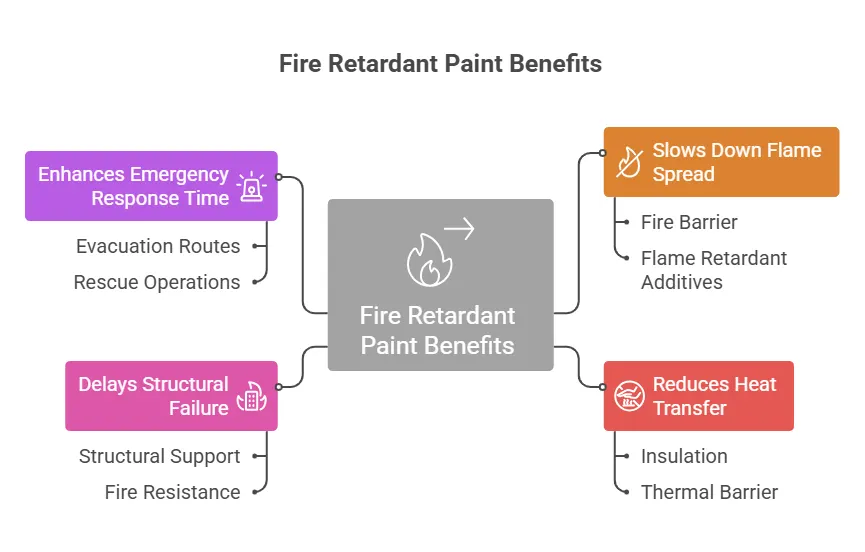
Fire retardant paint provides multiple safety and performance advantages for industrial, commercial, and residential structures. These coatings are designed to improve fire resistance, protect structural components, and reduce the impact of fire-related damage. Below are some of the most important benefits of using fire retardant paint in modern construction and infrastructure.
Slows Down Flame Spread
One of the primary benefits of fire retardant paint is its ability to slow down the spread of flames across a surface. During a fire, the coating reacts to heat and forms a protective insulating layer that limits combustion and reduces oxygen access.
This controlled reaction helps contain the fire for a longer period, reducing the speed at which flames move through a structure and improving overall fire safety.
Reduces Heat Transfer
Fire retardant paint helps reduce the transfer of heat from the fire source to the underlying material. The insulating char layer formed during high-temperature exposure acts as a thermal barrier that slows temperature rise on structural surfaces.
This is especially important for steel structures, which can rapidly lose strength under extreme heat conditions.
Delays Structural Failure
High temperatures can weaken construction materials and increase the risk of collapse during a fire emergency. Fire retardant coatings help maintain the integrity of structural components by delaying heat penetration and reducing thermal stress.
This added protection provides valuable extra time before structural failure occurs, improving safety for occupants and emergency responders.
Enhances Emergency Response Time
By slowing fire progression and maintaining structural stability, fire retardant paint gives firefighters and emergency teams more time to respond effectively. It also improves evacuation safety by reducing rapid flame spread and smoke development.
This extended response window can significantly reduce injuries, property damage, and operational losses during fire incidents.
Structural Protection Benefits
Fire retardant paint plays a critical role in protecting structural components during fire emergencies. High temperatures can weaken construction materials and lead to severe structural damage if proper fire protection systems are not in place. By improving fire resistance and reducing heat transfer, fire retardant coatings help maintain the integrity and stability of buildings across industrial, commercial, and residential applications.
Steel Structure Fire Protection
Steel is widely used in construction because of its strength and durability, but it can lose significant load-bearing capacity when exposed to high temperatures. Fire retardant paint forms an insulating char layer that slows heat penetration and protects steel beams, columns, and frameworks during a fire.
This protection helps delay structural weakening and reduces the risk of collapse, especially in high-rise buildings, factories, warehouses, and industrial facilities.
Wood Surface Fire Resistance
Wood is a combustible material commonly used in interiors, partitions, roofing, and decorative structures. Fire retardant coatings help improve the fire resistance of wooden surfaces by slowing ignition and reducing flame spread.
These coatings are widely applied in schools, hotels, auditoriums, residential interiors, and public spaces where enhanced fire safety is required without compromising appearance.
Protection for Electrical Systems
Electrical systems are one of the leading causes of fire incidents in buildings and industrial environments. Fire retardant paint helps protect cable trays, conduits, electrical panels, and wiring systems by reducing flame propagation and limiting heat exposure.
This added protection improves operational safety and helps minimize the risk of fire spreading through electrical networks.
Improved Building Stability
One of the most important structural benefits of fire retardant paint is improved overall building stability during fire emergencies. By delaying heat transfer and protecting critical structural elements, these coatings help maintain the strength of the building for a longer period.
This additional protection provides valuable time for safe evacuation, firefighting operations, and emergency response while reducing the likelihood of severe structural damage.
Industrial Benefits of Fire Retardant Coating
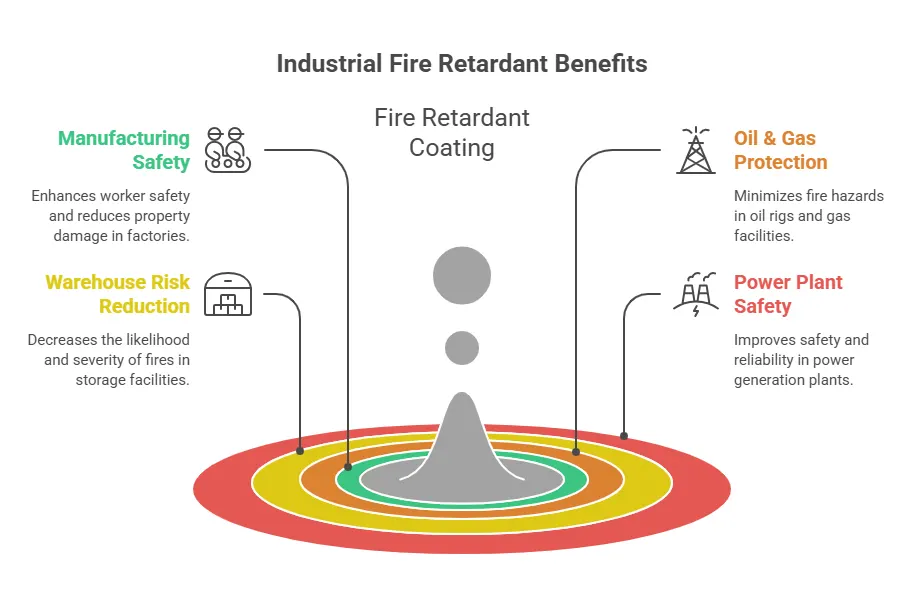
Industrial environments are exposed to high temperatures, heavy machinery, combustible materials, and complex electrical systems, making fire protection a critical safety requirement. Fire retardant coating provides reliable passive fire protection that helps reduce operational risks, protect infrastructure, and improve workplace safety across multiple industries.
Safety in Manufacturing Plants
Manufacturing facilities often contain heat-generating equipment, production lines, and flammable raw materials that increase the possibility of fire incidents. Fire retardant coatings help protect structural steel, machinery support systems, and production areas from rapid heat exposure.
By slowing flame spread and reducing structural damage, these coatings improve worker safety and help minimize production downtime caused by fire emergencies.
Oil & Gas Industry Protection
The oil and gas industry operates in extremely high-risk environments where fire hazards are a constant concern. Fire retardant coatings are widely used on structural steel, pipelines, storage tanks, and processing equipment to improve fire resistance and delay structural failure during emergencies.
These coatings help protect critical infrastructure, support safe evacuation procedures, and reduce the impact of fire-related accidents in refineries, offshore platforms, and processing plants.
Warehouse Fire Risk Reduction
Warehouses commonly store large volumes of combustible materials, packaging products, and inventory, increasing the potential for rapid fire spread. Fire retardant paint applications help protect steel frameworks, storage structures, and electrical systems from heat damage and structural collapse.
Improved fire resistance helps reduce property loss, supports insurance compliance, and enhances overall operational safety in storage and logistics facilities.
Power Plant Safety Applications
Power plants operate under high thermal and electrical loads, making fire protection essential for safe and uninterrupted operations. Fire retardant coatings are applied to cable trays, electrical systems, structural supports, and equipment areas to reduce flame spread and improve heat resistance.
These coatings help maintain operational stability, reduce fire-related risks, and support compliance with industrial fire safety standards in thermal, gas, and power generation facilities.
Commercial Building Safety Benefits
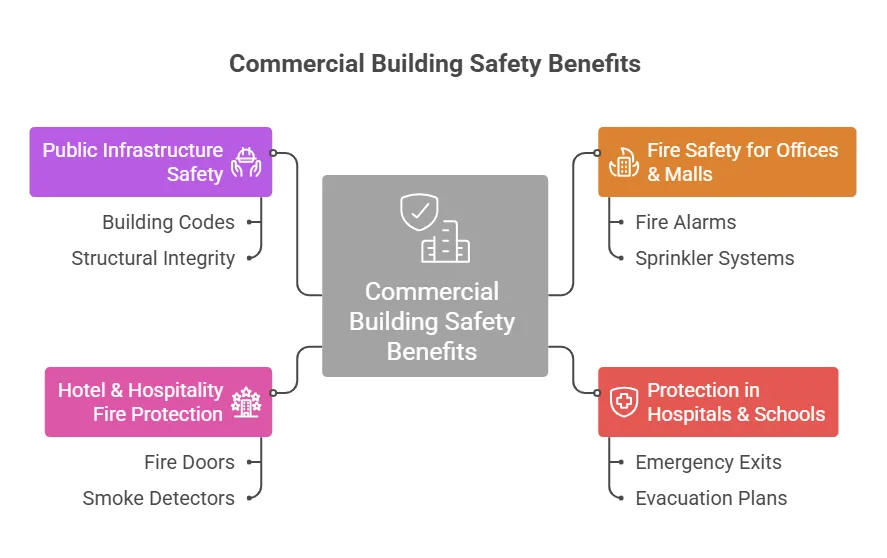
Commercial buildings accommodate large numbers of people every day, making fire safety a major priority for property owners, facility managers, and regulatory authorities. Fire retardant paint provides effective passive fire protection that helps improve structural safety, reduce fire spread, and protect valuable infrastructure during emergencies. These coatings are widely used in offices, shopping malls, healthcare facilities, hospitality spaces, and public infrastructure projects.
Fire Safety for Offices & Malls
Office buildings and shopping malls contain extensive electrical systems, HVAC equipment, interior furnishings, and high occupant density, increasing fire risk. Fire retardant coatings help protect structural steel, ceilings, walls, and service areas from rapid heat exposure and flame spread.
This added protection improves evacuation safety, reduces property damage, and helps maintain building stability during fire emergencies.
Protection in Hospitals & Schools
Hospitals, schools, colleges, and educational institutions require advanced fire safety measures because they serve vulnerable and high-occupancy populations. Fire retardant paint applications help slow down fire progression and protect critical evacuation routes, corridors, staircases, and structural components.
By improving passive fire protection, these coatings provide valuable additional time for evacuation and emergency response operations.
Hotel & Hospitality Fire Protection
Hotels, resorts, banquet halls, and hospitality spaces often use decorative interiors, wooden furnishings, and large public gathering areas that can contribute to fire spread. Fire retardant coatings help reduce the combustibility of these materials while preserving their visual appearance.
These coatings enhance guest safety, support regulatory compliance, and help reduce fire-related operational risks in hospitality environments.
Public Infrastructure Safety
Public infrastructure such as airports, railway stations, metro systems, government buildings, and convention centers require reliable fire protection systems due to heavy public usage and complex operations. Fire retardant paint is commonly applied to structural frameworks, cable systems, ceilings, and service areas to improve fire resistance and reduce safety risks.
These applications help protect critical infrastructure, improve emergency preparedness, and support long-term public safety standards.
Residential Fire Retardant Paint Benefits
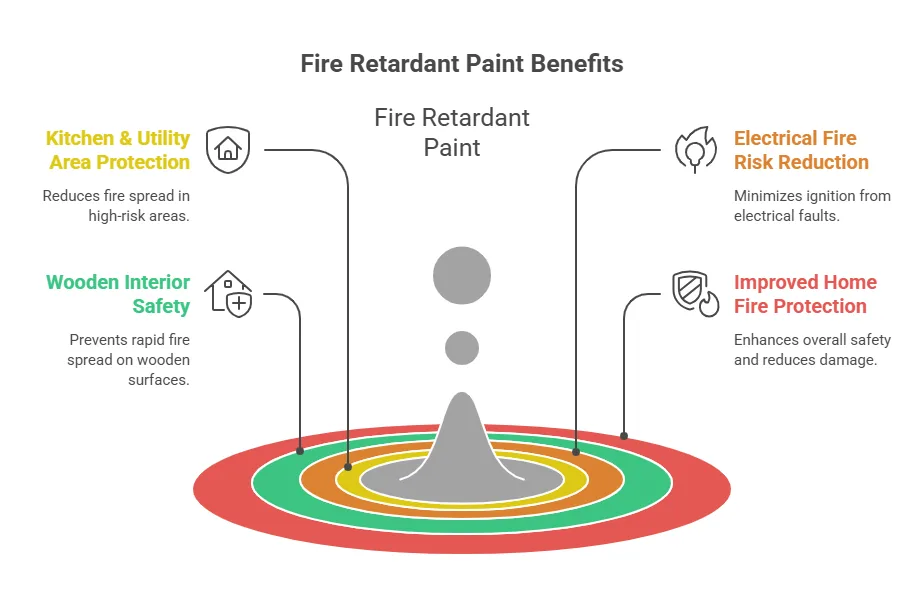
Fire safety is becoming increasingly important in modern homes due to the growing use of electrical appliances, modular interiors, and combustible decorative materials. Fire retardant paint provides an additional layer of passive fire protection that helps reduce fire risks and improve overall residential safety. These coatings are widely used in homes to protect structural elements, interiors, and high-risk areas from rapid fire spread.
Kitchen & Utility Area Protection
Kitchens and utility rooms are among the most fire-prone areas in residential properties because of cooking equipment, gas lines, and electrical appliances. Fire retardant paint helps reduce flame spread on walls, ceilings, and nearby surfaces during accidental fires.
This added protection can help contain fire damage and provide valuable extra time for evacuation and emergency response.
Electrical Fire Risk Reduction
Electrical faults are one of the leading causes of residential fires. Fire retardant coatings applied around electrical distribution panels, cable pathways, and wiring zones help reduce flame propagation and heat transfer during electrical failures.
These applications improve overall electrical safety and help minimize the risk of fire spreading throughout the home.
Wooden Interior Safety
Wooden furniture, wall panels, ceilings, partitions, and decorative interiors can increase fire risk if left untreated. Fire retardant paint helps improve the fire resistance of wooden surfaces by slowing ignition and reducing combustion rates.
This allows homeowners to maintain aesthetic wooden finishes while enhancing indoor fire safety.
Improved Home Fire Protection
One of the biggest benefits of fire retardant paint in residential spaces is improved overall home safety. By delaying flame spread and protecting structural materials, these coatings help maintain building stability during fire emergencies.
This additional protection supports safer evacuation, reduces property damage, and provides greater peace of mind for homeowners and occupants.
Compliance & Regulatory Benefits
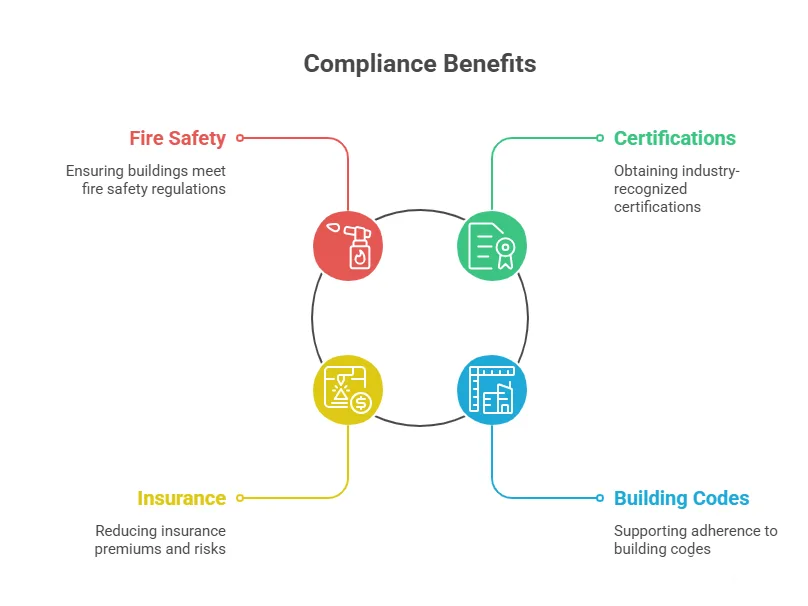
Fire retardant paint not only improves safety but also helps buildings and industrial facilities meet important regulatory and compliance requirements. Modern fire safety regulations demand certified passive fire protection systems that can reduce fire risks and improve structural performance during emergencies. Using approved fire retardant coatings supports legal compliance, insurance requirements, and long-term operational safety.
Meeting Fire Safety Standards
Fire safety standards are designed to ensure that buildings and structures can withstand fire exposure for a specified duration. Fire retardant paint helps improve fire resistance by slowing flame spread and reducing heat transfer on structural surfaces.
These coatings are commonly used to achieve required fire ratings such as 30, 60, 90, or 120 minutes, depending on project specifications and safety regulations.
ASTM, BS & IS Certifications
Certified fire retardant coatings are tested according to recognized national and international standards such as:
- ASTM Standards (American Society for Testing and Materials)
- BS Standards (British Standards)
- IS Codes (Indian Standards)
These certifications verify the fire resistance performance, durability, and application reliability of the coating system. Using certified products provides greater confidence in safety compliance and structural protection.
Insurance & Risk Management Benefits
Insurance companies often evaluate fire protection measures when assessing industrial and commercial properties. Buildings protected with certified fire retardant coatings may benefit from improved risk profiles and reduced exposure to fire-related losses.
Effective passive fire protection can also help minimize operational downtime, property damage, and financial losses caused by fire incidents, making it an important part of overall risk management planning.
Support for Building Code Compliance
Modern building codes require strict fire protection systems for commercial buildings, industrial facilities, public infrastructure, and high-occupancy spaces. Fire retardant paint helps contractors, architects, and property owners meet these requirements while improving overall structural safety.
Using compliant fire protection systems simplifies inspections, supports project approvals, and ensures long-term adherence to fire safety regulations.
Financial & Long-Term Benefits
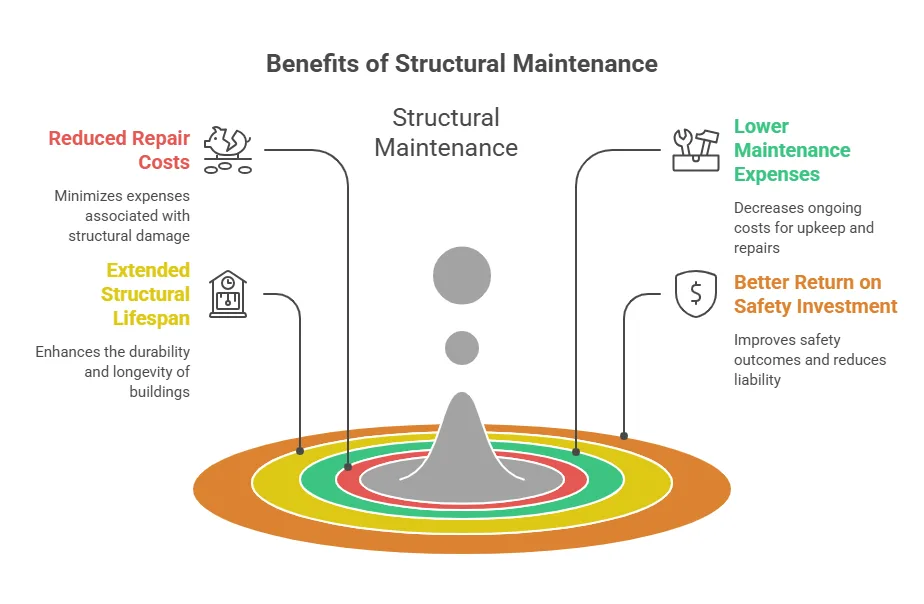
Investing in fire retardant paint is not only a safety decision but also a smart long-term financial investment. Fire incidents can result in major structural damage, business interruption, equipment loss, and expensive repairs. Fire retardant coatings help reduce these risks by improving fire resistance and protecting critical assets over time.
Reduced Repair Costs
Fire retardant paint helps minimize structural and surface damage during fire emergencies by slowing heat transfer and flame spread. This additional protection can significantly reduce repair and replacement costs for steel structures, walls, ceilings, electrical systems, and industrial equipment.
By limiting the extent of fire damage, businesses and property owners can recover more quickly after an incident.
Lower Maintenance Expenses
Modern fire retardant coatings are designed for long-term durability and performance. When properly applied and maintained, these coatings require less frequent repairs and recoating compared to untreated or lower-quality systems.
Routine inspection and preventive maintenance help extend coating life, reducing long-term maintenance expenses and operational disruptions.
Extended Structural Lifespan
Continuous exposure to heat, moisture, industrial pollutants, and environmental conditions can weaken structural materials over time. Fire retardant paint provides an additional protective layer that helps preserve steel, wood, and other substrates from fire-related deterioration.
This protection contributes to a longer structural lifespan and improved long-term reliability for industrial, commercial, and residential buildings.
Better Return on Safety Investment
While fire retardant coatings require an initial investment, they provide long-term value through improved safety, reduced damage risks, and enhanced compliance with fire safety standards.
By protecting assets, reducing downtime, and lowering potential financial losses, fire retardant paint delivers a strong return on investment while supporting safer and more sustainable building operations.
Environmental & Modern Construction Benefits
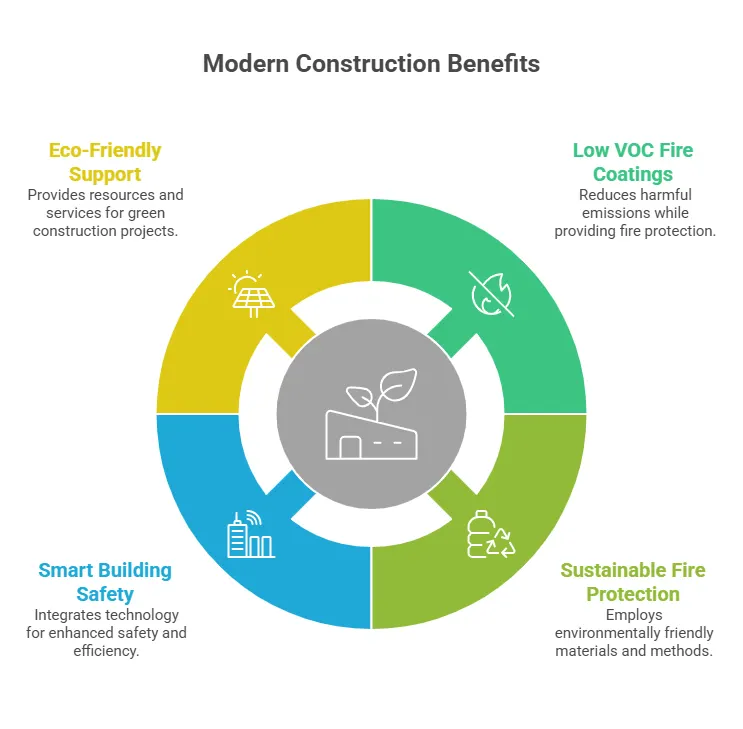
Modern construction increasingly focuses on sustainability, energy efficiency, and environmentally responsible building practices. Fire retardant paint not only improves fire safety but also supports eco-friendly construction goals and advanced building safety systems. Many modern fire protection coatings are designed to provide long-term performance while reducing environmental impact.
Low VOC Fire Coatings
Many advanced fire retardant paints are now available in low VOC (Volatile Organic Compound) formulations. Low VOC coatings release fewer harmful emissions during application and curing, helping improve indoor air quality and reduce environmental pollution.
These coatings are especially beneficial for commercial buildings, hospitals, schools, and residential projects where environmental safety and occupant health are important considerations.
Sustainable Fire Protection Solutions
Sustainable construction practices require materials that provide durability, efficiency, and long service life. Fire retardant coatings help reduce structural damage during fire incidents, minimizing the need for extensive rebuilding and material replacement.
Their long-term protective performance supports sustainable infrastructure development while improving overall building resilience.
Smart Building Safety Systems
Modern smart buildings integrate advanced safety technologies such as automated alarms, sensors, and fire monitoring systems. Fire retardant paint complements these systems by providing passive fire protection that works automatically during emergencies without requiring activation.
This combination of active and passive fire protection enhances overall building safety and supports more efficient emergency response planning.
Eco-Friendly Construction Support
Green building standards increasingly encourage the use of environmentally responsible and safety-focused construction materials. Fire retardant coatings support eco-friendly construction by improving building durability, reducing potential fire-related waste, and extending structural lifespan.
By combining safety performance with environmental responsibility, modern fire retardant paint systems contribute to safer, smarter, and more sustainable construction practices.
Choosing the Right Fire Retardant Paint
Selecting the right fire retardant paint is essential for achieving effective fire protection, long-term durability, and regulatory compliance. Different environments and structural materials require specific fire protection systems, and choosing the wrong coating may reduce performance during a fire emergency. Understanding key selection factors helps ensure better safety and reliable structural protection.
Understanding Fire Ratings
Fire ratings indicate how long a coating can resist fire exposure and protect the underlying structure. Common fire resistance ratings include 30, 60, 90, and 120 minutes.
The required rating depends on factors such as:
- Building type and occupancy
- Structural design requirements
- Local fire safety regulations
- Industrial risk assessment
Higher fire ratings generally require thicker coating applications and certified testing to ensure reliable performance under extreme heat conditions.
Indoor vs Outdoor Applications
Environmental conditions play a major role in selecting the correct fire retardant paint. Indoor coatings are designed for controlled environments with limited exposure to moisture, sunlight, and harsh weather conditions.
Outdoor fire retardant coatings require additional resistance to:
- UV radiation
- Rain and humidity
- Temperature fluctuations
- Industrial pollutants and corrosion
Using the correct coating system ensures long-term durability and consistent fire protection performance.
Surface Compatibility
Fire retardant paints are formulated for different substrates such as steel, wood, concrete, cable systems, and metal surfaces. Choosing a coating compatible with the intended surface improves adhesion, durability, and fire resistance efficiency.
It is also important to ensure compatibility with primers and existing coatings to avoid issues such as peeling, cracking, or reduced fire performance.
Certified Fire Protection Systems
Always select fire retardant coatings that are tested and certified according to recognized standards such as ASTM, BS, or IS codes. Certified systems provide verified fire resistance ratings and proven performance under standardized testing conditions.
Using approved fire protection systems helps ensure compliance with building regulations, supports insurance requirements, and improves confidence in long-term structural safety.
Frequently Asked Questions
Below are answers to some of the most common questions about fire retardant paint and its benefits in industrial, commercial, and residential applications.
What are the main benefits of fire retardant paint?
Fire retardant paint provides several important benefits, including slowing down flame spread, reducing heat transfer, delaying structural failure, and improving overall fire safety. It also helps protect steel, wood, and electrical systems while supporting compliance with fire safety regulations and building standards.
Is fire retardant paint suitable for steel and wood?
Yes, fire retardant paint is widely used on both steel and wood surfaces. On steel structures, it helps maintain load-bearing strength during fire exposure by reducing heat penetration. On wooden surfaces, it slows ignition and minimizes flame spread, improving overall fire resistance.
Different formulations may be required depending on the substrate type and environmental conditions.
Can fire retardant paint reduce fire damage?
Yes, fire retardant coatings help reduce fire damage by slowing the spread of flames and limiting heat transfer to structural components. This added protection helps reduce structural weakening, minimize property loss, and improve evacuation safety during fire emergencies.
While it does not completely stop fire, it significantly improves the ability of a structure to withstand fire exposure for a longer duration.
How long does fire retardant coating last?
The lifespan of a fire retardant coating depends on factors such as product quality, environmental exposure, application thickness, and maintenance practices. When properly applied and maintained, many fire retardant coatings can provide effective protection for several years.
Regular inspection and timely recoating help maintain long-term performance and ensure continued compliance with fire safety standards.
Conclusion – Why Fire Retardant Paint is a Smart Safety Investment
Fire safety is no longer optional in modern construction and industrial operations. As buildings become more advanced and safety regulations continue to evolve, investing in reliable fire protection systems has become essential. Fire retardant paint offers an effective and practical solution for improving structural fire resistance, reducing fire risks, and protecting valuable assets.
Long-Term Fire Protection Advantages
One of the biggest advantages of fire retardant paint is its long-term protective performance. These coatings help slow flame spread, reduce heat transfer, and delay structural failure during emergencies.
By providing passive fire protection, they improve building durability and help minimize the impact of fire-related incidents over time.
Importance of Certified Fire Coatings
Using certified fire retardant coatings is critical for ensuring dependable performance and regulatory compliance. Products tested according to recognized standards such as ASTM, BS, and IS codes provide verified fire resistance ratings and proven safety reliability.
Certified systems offer greater confidence for engineers, contractors, facility managers, and property owners seeking long-term structural protection.
Enhancing Industrial & Commercial Safety
Fire retardant paint plays a major role in improving safety across industrial plants, warehouses, commercial buildings, public infrastructure, and residential spaces. By protecting structural steel, wood surfaces, electrical systems, and operational equipment, these coatings help reduce risks to both occupants and assets.
They also support emergency response efforts by providing additional time for evacuation and firefighting operations.
Final Recommendations for Maximum Protection
For the best results, always select fire retardant paint based on fire ratings, environmental conditions, surface compatibility, and certification standards. Proper surface preparation, professional application, and regular maintenance are equally important for maintaining long-term performance.
Investing in high-quality fire retardant coatings is not just a compliance requirement — it is a smart safety investment that protects lives, property, and business continuity for years to come.