

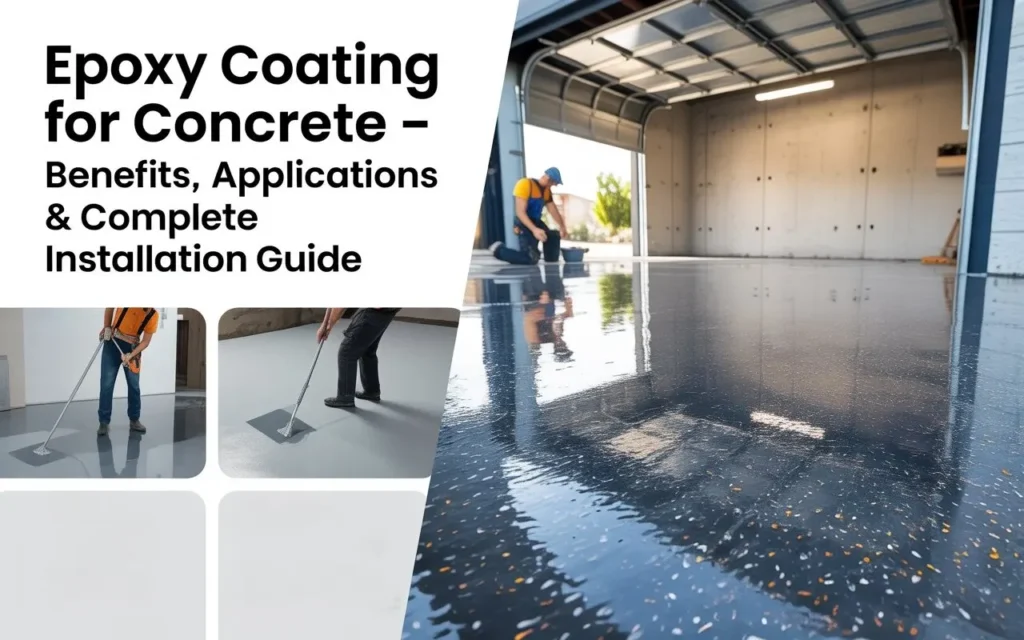
Concrete floors are widely used in industrial, commercial, and residential spaces because of their strength and durability. However, untreated concrete surfaces can still suffer from cracks, dust formation, moisture damage, stains, and chemical exposure over time. To improve performance and extend the lifespan of concrete floors, many industries choose epoxy coating for concrete as a reliable protective solution.
Epoxy coating is a high-performance system created by combining epoxy resin and hardener to form a strong, seamless, and durable surface over concrete. Once cured, the coating creates a protective layer that enhances the floor’s resistance to wear, heavy traffic, chemicals, moisture, and impact damage. This makes epoxy-coated concrete ideal for demanding environments such as factories, warehouses, parking garages, hospitals, showrooms, and commercial facilities.
One of the biggest advantages of epoxy coating for concrete is its ability to transform ordinary concrete into a smooth, easy-to-maintain, and visually appealing surface. The coating seals the porous concrete, preventing dust buildup and liquid penetration while also improving hygiene and safety. In industrial settings, epoxy flooring can also include anti-slip finishes and safety markings for better workplace protection.
In addition to performance benefits, epoxy coatings are available in different colors, textures, and decorative finishes, making them suitable for both functional and aesthetic applications. With proper installation and maintenance, epoxy-coated concrete floors can provide long-term durability and cost-effective protection.
What Is Epoxy Coating for Concrete?
Epoxy coating for concrete is a protective and decorative flooring system created by applying a mixture of epoxy resin and hardener over a prepared concrete surface. When these components react chemically, they form a strong, seamless, and durable layer that bonds tightly with the concrete substrate.
This coating enhances the concrete floor by improving its strength, durability, chemical resistance, and appearance, making it suitable for industrial, commercial, and residential applications.
Understanding Epoxy Coating Systems
An epoxy coating system consists of multiple layers designed to provide surface protection and long-term performance. These systems can vary depending on the environment and usage requirements, but they generally include:
- A primer layer for better adhesion
- One or more epoxy coating layers for durability and protection
- A topcoat or seal coat for enhanced resistance and finish
Epoxy coating systems are widely used because they create a non-porous and seamless surface that protects concrete from wear, chemicals, moisture, and heavy traffic.
How Epoxy Bonds with Concrete Surfaces
Epoxy forms a strong bond with concrete through a chemical and mechanical adhesion process. Before application, the concrete surface is cleaned and mechanically prepared using methods like grinding or shot blasting.
This preparation creates a rough surface profile that allows the epoxy to penetrate and bond effectively with the concrete. Once cured, the coating becomes a hard and durable protective layer that is firmly attached to the substrate.
Proper surface preparation is essential because it directly affects the strength, durability, and lifespan of the epoxy coating.
Why Epoxy Is Used for Concrete Protection
Concrete surfaces are naturally porous and can be damaged by moisture, chemicals, heavy traffic, abrasion, and impact. Epoxy coating is used to protect concrete by creating a barrier that prevents these elements from penetrating the surface.
Key reasons epoxy is used for concrete protection include:
- Improved resistance to chemicals, oils, and stains
- Protection against moisture and surface wear
- Increased durability under heavy traffic and machinery
- Easier cleaning and reduced dust formation
- Enhanced appearance with a smooth and glossy finish
Because of these benefits, epoxy coating is widely used in factories, warehouses, garages, hospitals, retail spaces, and industrial facilities where long-lasting concrete protection is required.
Benefits of Epoxy Coating for Concrete
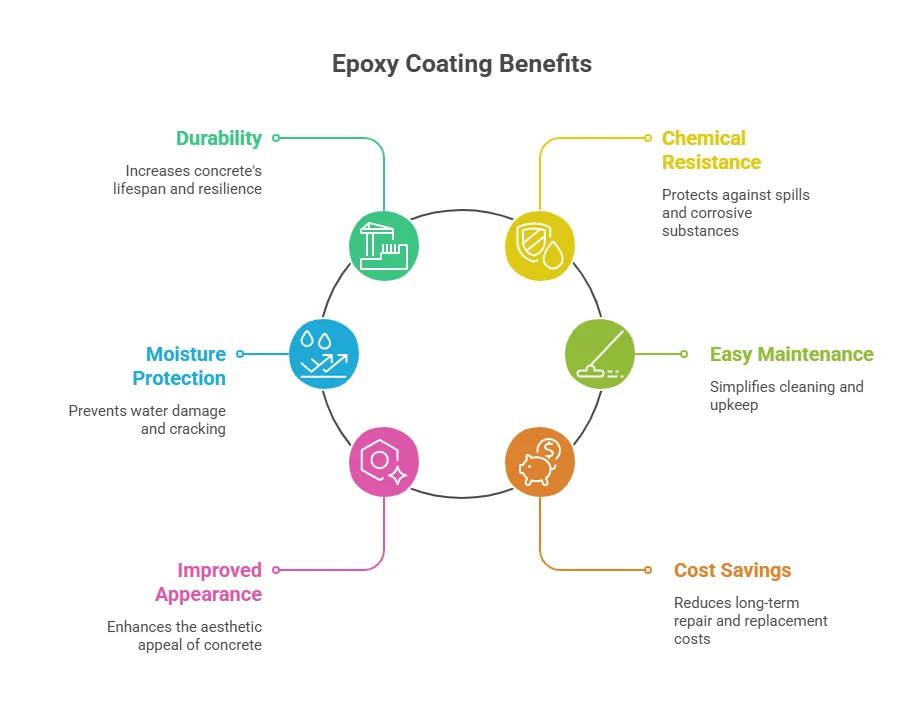
Epoxy coating is one of the most effective solutions for improving the performance and lifespan of concrete floors. By creating a strong, seamless, and protective surface, epoxy enhances the durability, safety, and appearance of concrete in industrial, commercial, and residential environments.
Below are some of the major benefits of epoxy coating for concrete.
Enhanced Durability and Strength
One of the biggest advantages of epoxy coating is its ability to increase the strength and durability of concrete floors. The hardened epoxy layer protects the surface from:
- Heavy foot traffic
- Vehicle movement
- Machinery impact
- Abrasion and wear
This makes epoxy-coated concrete ideal for factories, warehouses, garages, and industrial facilities where floors are exposed to demanding conditions.
Resistance to Chemicals and Stains
Concrete floors can easily absorb oil, chemicals, and industrial fluids, leading to stains and surface deterioration. Epoxy coating creates a non-porous protective layer that resists chemical spills and prevents liquids from penetrating the concrete.
This chemical resistance makes epoxy flooring suitable for:
- Manufacturing plants
- Automotive workshops
- Laboratories
- Food processing units
Protection Against Moisture and Cracks
Untreated concrete is porous and vulnerable to moisture penetration, which can weaken the surface over time. Epoxy coating seals the concrete and helps protect it from:
- Water damage
- Surface erosion
- Minor cracks and deterioration
By reducing moisture-related damage, epoxy coatings help extend the life of the concrete floor.
Easy Maintenance and Cleaning
Epoxy-coated floors are smooth and seamless, making them easy to clean and maintain. Dust, dirt, and liquids remain on the surface rather than getting trapped inside pores or cracks.
Routine maintenance usually involves:
- Sweeping or dust mopping
- Occasional mopping with mild cleaners
- Prompt cleaning of spills
This low-maintenance feature is especially beneficial for commercial and industrial facilities where cleanliness is important.
Improved Appearance and Glossy Finish
In addition to protection, epoxy coating enhances the visual appeal of concrete floors. It provides a smooth, glossy, and professional-looking finish that improves the overall appearance of the space.
Epoxy coatings are available in different:
- Colors
- Textures
- Decorative finishes
This makes them suitable for both functional and decorative applications in showrooms, retail stores, offices, and residential garages.
Long-Term Cost Savings
Although epoxy coating may involve an initial investment, it offers significant long-term cost savings by reducing maintenance, repairs, and floor replacement expenses.
Its durability and protective qualities help:
- Minimize floor damage
- Reduce downtime in industrial operations
- Extend the lifespan of concrete surfaces
As a result, epoxy coating becomes a cost-effective flooring solution for businesses and property owners.
Overall, the combination of durability, chemical resistance, easy maintenance, and aesthetic improvement makes epoxy coating for concrete a reliable and long-lasting protective solution.
Common Applications of Epoxy Coating for Concrete
Epoxy coating for concrete is widely used in different industries because of its durability, chemical resistance, and easy maintenance. Its ability to protect concrete surfaces while improving appearance makes it suitable for both industrial and commercial environments. From heavy-duty factories to residential garages, epoxy-coated concrete provides a long-lasting and reliable flooring solution.
Below are some of the most common applications of epoxy coating for concrete.
Industrial Factories and Warehouses
Industrial facilities require flooring that can withstand heavy machinery, forklift traffic, chemical exposure, and constant operational activity. Epoxy coating strengthens concrete surfaces and protects them from wear, abrasion, and impact damage.
Its seamless finish also reduces dust formation, helping maintain a cleaner and safer working environment in factories and warehouses.
Commercial Buildings and Retail Spaces
In commercial spaces, flooring must be both durable and visually appealing. Epoxy-coated concrete provides a smooth and glossy finish that enhances the appearance of:
- Shopping malls
- Retail stores
- Offices
- Showrooms
Because of its easy maintenance and modern appearance, epoxy flooring is commonly used in high-traffic commercial environments.
Parking Areas and Garages
Parking garages and vehicle service areas are exposed to vehicle movement, oil spills, tire abrasion, and moisture. Epoxy coating protects concrete floors from these conditions while improving durability and safety.
Its resistance to stains and chemicals makes it ideal for:
- Commercial parking facilities
- Automotive workshops
- Residential garages
- Basement parking areas
Hospitals and Pharmaceutical Facilities
Healthcare and pharmaceutical environments require flooring that supports strict hygiene standards. Epoxy-coated concrete creates a seamless and non-porous surface that is easy to sanitize and resistant to bacteria buildup.
This makes epoxy flooring suitable for:
- Hospitals
- Laboratories
- Clean rooms
- Pharmaceutical manufacturing units
Its durability and chemical resistance also support the demanding conditions found in medical environments.
Residential Garages and Basements
Epoxy coating is increasingly popular in residential spaces because it improves both the functionality and appearance of concrete floors.
In garages and basements, epoxy coating helps protect against:
- Moisture damage
- Cracks and surface wear
- Oil and chemical stains
The glossy finish and decorative options also create a cleaner and more attractive look for residential concrete floors.
These diverse applications demonstrate why epoxy coating for concrete is considered one of the most versatile and durable flooring solutions for industrial, commercial, and residential environments.
Types of Epoxy Coating for Concrete
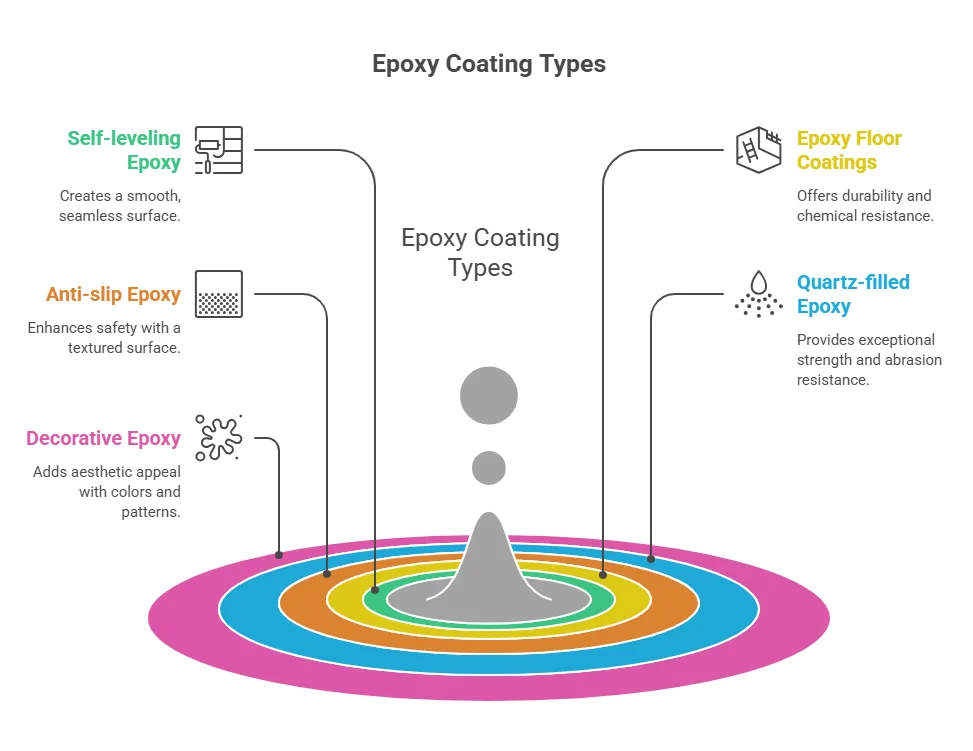
Different environments require different epoxy systems depending on factors such as traffic, safety requirements, durability, and appearance. Epoxy coatings are available in various formulations designed to provide specific performance benefits for industrial, commercial, and residential concrete floors.
Below are some of the most commonly used types of epoxy coating for concrete.
Self-Leveling Epoxy Coatings
Self-leveling epoxy coatings are designed to create a smooth, seamless, and even surface over concrete floors. These coatings automatically spread across the floor, filling minor cracks and surface imperfections.
Key benefits include:
- Smooth and glossy finish
- High durability and chemical resistance
- Easy cleaning and maintenance
Self-leveling epoxy is commonly used in:
- Warehouses
- Manufacturing facilities
- Commercial buildings
- Showrooms
Epoxy Floor Coatings
Standard epoxy floor coatings provide a strong protective layer over concrete surfaces. These coatings improve resistance to:
- Abrasion and wear
- Chemicals and stains
- Heavy foot and vehicle traffic
They are widely used in industrial and commercial spaces where long-lasting floor protection is required.
Anti-Slip Epoxy Coatings
Anti-slip epoxy coatings are specially formulated with textured additives or aggregates to improve traction and reduce the risk of slips and falls.
These coatings are ideal for areas exposed to:
- Water or moisture
- Oil and grease spills
- Frequent cleaning operations
Common applications include:
- Industrial kitchens
- Parking garages
- Workshops
- Food processing facilities
Quartz-Filled Epoxy Systems
Quartz-filled epoxy systems combine epoxy resin with colored quartz granules to create a highly durable and decorative surface.
Advantages include:
- Enhanced slip resistance
- Excellent impact and abrasion resistance
- Attractive appearance with customizable colors
These systems are commonly installed in:
- Hospitals
- Schools
- Laboratories
- Commercial facilities
Decorative Epoxy Coatings
Decorative epoxy coatings are designed to improve the aesthetic appearance of concrete floors while still providing protection and durability.
These coatings may include:
- Metallic finishes
- Colored flakes
- Glossy or textured surfaces
Decorative epoxy flooring is popular in:
- Retail stores
- Offices
- Residential garages
- Showrooms
Choosing the right type of epoxy coating for concrete depends on the environment, performance requirements, and desired appearance. Each system offers unique benefits that help improve the durability, safety, and functionality of concrete floors.
Epoxy Coating vs Traditional Concrete Flooring
When choosing a flooring solution for industrial, commercial, or residential spaces, many property owners compare epoxy-coated concrete with traditional concrete flooring. While plain concrete is strong and widely used, it often lacks the protection and performance needed in demanding environments. Epoxy coating enhances the surface by adding a durable, seamless, and protective layer that improves functionality and appearance.
Below is a comparison between epoxy coating and traditional concrete flooring.
Durability Comparison
Traditional concrete floors are durable but can still develop:
- Cracks and surface wear
- Dust formation
- Stains and moisture damage
- Abrasion from heavy traffic and machinery
Epoxy coating significantly improves the durability of concrete by creating a hard protective surface that resists impact, chemicals, and heavy loads.
As a result, epoxy-coated floors are better suited for:
- Factories and warehouses
- Parking garages
- Commercial facilities
- High-traffic environments
Maintenance and Cleaning Differences
Untreated concrete is naturally porous, allowing dirt, oil, and liquids to penetrate the surface. This makes cleaning more difficult and may lead to long-term staining or deterioration.
Epoxy-coated concrete provides a:
- Smooth and seamless surface
- Non-porous protective layer
- Dust-free finish
Because contaminants remain on the surface rather than soaking into the floor, cleaning becomes much easier with simple sweeping and mopping.
Safety and Performance Comparison
Traditional concrete floors may become slippery when wet and can develop uneven surfaces or cracks over time, increasing safety risks.
Epoxy coatings improve safety by offering:
- Anti-slip texture options
- Better visibility with glossy finishes
- Safety markings and color-coded zones
- Resistance to moisture and chemicals
In industrial environments, these features contribute to a safer and more organized workspace.
Long-Term Value and Cost Efficiency
Although traditional concrete flooring may have a lower initial cost, it often requires:
- Frequent repairs
- Sealing and maintenance
- Surface restoration over time
Epoxy coating involves a higher upfront investment but provides greater long-term value through:
- Reduced maintenance costs
- Longer floor lifespan
- Improved durability and protection
- Lower repair and replacement expenses
This makes epoxy coating a more cost-effective solution for facilities that require long-lasting floor performance.
Overall, epoxy coating offers significant advantages over traditional concrete flooring in terms of durability, maintenance, safety, and long-term value, making it an ideal choice for modern industrial and commercial applications.
How to Prepare Concrete for Epoxy Coating
Proper surface preparation is one of the most important steps in achieving a strong, durable, and long-lasting epoxy coating. Even high-quality epoxy can fail if the concrete surface is not correctly prepared before application. Preparing the concrete ensures better adhesion, smoother finishing, and improved overall performance of the coating system.
Below are the key steps involved in preparing concrete for epoxy coating.
Cleaning and Surface Preparation
The concrete surface must be thoroughly cleaned to remove any contaminants that could interfere with epoxy adhesion.
The preparation process typically includes:
- Removing dust, dirt, grease, oil, and old coatings
- Sweeping and vacuuming the floor
- Using degreasers or industrial cleaners where necessary
- Mechanical preparation such as grinding or shot blasting to create a rough surface profile
This rough texture helps the epoxy bond properly with the concrete surface.
Proper cleaning and surface preparation are essential to prevent issues such as:
- Peeling
- Bubbling
- Weak adhesion
- Uneven coating performance
Crack and Damage Repair
Before applying epoxy coating, all visible cracks, holes, and damaged areas should be repaired to create a smooth and stable surface.
This process may involve:
- Filling cracks with epoxy fillers or repair compounds
- Repairing chipped or uneven concrete sections
- Smoothing rough areas to achieve a level surface
Repairing surface defects helps improve both the appearance and durability of the epoxy-coated floor.
Moisture Testing and Priming
Concrete surfaces must be tested for moisture before epoxy application because excessive moisture can cause:
- Blistering
- Delamination
- Poor adhesion
Moisture testing helps determine whether the concrete is suitable for coating or if additional treatment is required.
After moisture testing, a primer coat is applied to:
- Improve adhesion between the concrete and epoxy
- Seal porous surfaces
- Enhance coating durability and uniformity
Priming creates a strong bonding layer that improves the overall performance of the epoxy coating system.
By following proper preparation procedures, businesses and property owners can ensure that epoxy coating for concrete provides maximum durability, strong adhesion, and long-term protection.
Step-by-Step Application Process of Epoxy Coating
The effectiveness and durability of epoxy coating depend greatly on the correct application process. Proper installation ensures strong adhesion, smooth finishing, and long-term performance of the coated concrete surface. Each stage of the application process plays an important role in creating a durable and protective epoxy flooring system.
Below is the step-by-step process of applying epoxy coating on concrete surfaces.
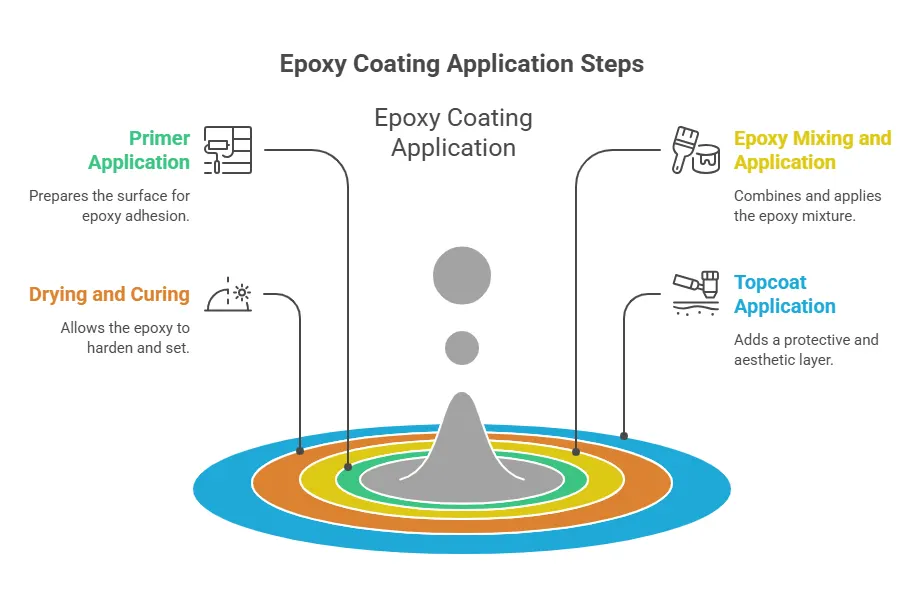
Primer Application
After the concrete surface has been properly prepared, a primer coat is applied to improve adhesion between the concrete and the epoxy coating.
The primer helps to:
- Seal porous concrete surfaces
- Improve bonding strength
- Reduce air bubbles and surface defects
- Enhance the durability of the epoxy system
The primer is usually applied using rollers or brushes and allowed to dry before the next layer is added.
Mixing and Applying Epoxy Coating
Epoxy coating is generally supplied in two components:
- Epoxy resin
- Hardener
These components must be mixed in the correct ratio to ensure proper chemical curing and coating performance.
Once mixed, the epoxy is applied evenly across the surface using:
- Rollers
- Brushes
- Squeegees
- Spray equipment (for larger areas)
Depending on the project requirements, multiple coats may be applied to achieve the desired thickness, durability, and finish.
Drying and Curing Process
After application, the epoxy coating must undergo a drying and curing process. During this stage, the chemical reaction between the resin and hardener forms a hard and durable surface.
Curing time depends on factors such as:
- Temperature
- Humidity
- Type of epoxy system used
Typically, the floor becomes touch-dry within a few hours, but full curing may take 24 to 72 hours or more before heavy traffic or machinery use is allowed.
Proper curing is essential for achieving maximum:
- Strength
- Adhesion
- Chemical resistance
- Long-term durability
Final Topcoat Application
In many epoxy flooring systems, a final topcoat is applied after the epoxy layers have cured. The topcoat provides additional protection and enhances the floor’s appearance.
Benefits of a topcoat include:
- Increased chemical and abrasion resistance
- Improved UV protection
- Enhanced gloss and finish
- Better long-term durability
Topcoats can also include anti-slip additives for improved safety in industrial and commercial environments.
By following the correct application process, epoxy coating systems can deliver a strong, seamless, and long-lasting protective surface for concrete floors in industrial, commercial, and residential settings.
Maintenance Tips for Epoxy-Coated Concrete Floors
Epoxy-coated concrete floors are known for their durability, smooth finish, and low maintenance requirements. However, regular care is important to maintain their appearance, performance, and long-term protection. Proper maintenance helps prevent surface damage and ensures that the flooring continues to perform effectively in industrial, commercial, and residential environments.
Below are some essential maintenance tips for epoxy-coated concrete floors.
Routine Cleaning Methods
Regular cleaning helps maintain the clean and glossy appearance of epoxy-coated floors while preventing dirt buildup and surface wear.
Recommended cleaning practices include:
- Sweeping or dust mopping to remove loose dirt and debris
- Using soft mops and mild cleaning solutions for routine cleaning
- Promptly cleaning spills such as oil, chemicals, or liquids
- Avoiding abrasive cleaning tools that may damage the surface
Because epoxy floors are non-porous and seamless, dirt and stains remain on the surface, making cleaning easier compared to untreated concrete.
Preventing Scratches and Impact Damage
Although epoxy coating is highly durable, preventive measures can help protect the surface from scratches, dents, and impact damage.
Useful preventive practices include:
- Using protective pads under heavy machinery and furniture
- Avoiding dragging sharp or heavy objects across the floor
- Installing rubber wheels on carts and equipment
- Placing mats in high-traffic areas to reduce debris and abrasion
These steps help preserve the smooth finish and extend the lifespan of the epoxy coating.
Periodic Inspection and Recoating
Routine inspection allows early detection of signs of wear or damage, especially in high-traffic industrial environments.
During inspections, check for:
- Surface scratches or dull areas
- Peeling or minor coating damage
- Areas exposed to heavy impact or chemicals
If needed, a maintenance topcoat or recoating can be applied to restore the floor’s:
- Gloss and appearance
- Protective performance
- Chemical and abrasion resistance
Periodic maintenance helps ensure that epoxy-coated concrete floors continue to provide long-lasting durability and reliable protection.
With proper cleaning, preventive care, and timely maintenance, epoxy-coated concrete floors can remain strong, attractive, and functional for many years.
Common Problems and Solutions
Although epoxy-coated concrete floors are highly durable and long-lasting, improper installation, poor surface preparation, or harsh operating conditions can sometimes lead to performance issues. Understanding these common problems and their solutions helps maintain the quality and lifespan of the flooring system.
Peeling or Bubbling
Peeling or bubbling is one of the most common issues in epoxy flooring systems. This usually occurs when the coating loses adhesion to the concrete surface.
Common Causes:
- Poor surface preparation
- Moisture trapped in the concrete
- Dust, grease, or contaminants on the floor
- Incorrect mixing or application process
Solutions:
- Properly clean and prepare the concrete before application
- Conduct moisture testing before coating
- Use the correct primer and application techniques
- Remove damaged coating and reapply if necessary
Proper installation is essential to prevent peeling and bubbling issues.
Poor Adhesion Issues
Poor adhesion occurs when the epoxy coating does not bond correctly with the concrete surface. This can lead to coating failure and reduced durability.
Common Causes:
- Smooth or untreated concrete surface
- Presence of oil, dirt, or moisture
- Inadequate grinding or surface profiling
- Applying epoxy on uncured concrete
Solutions:
- Mechanically prepare the surface using grinding or shot blasting
- Ensure the concrete is clean and dry
- Use high-quality primers for stronger bonding
- Allow new concrete to cure fully before coating application
Strong adhesion is critical for achieving long-term epoxy floor performance.
Surface Discoloration
Over time, epoxy-coated floors may experience discoloration or fading, especially in areas exposed to sunlight, chemicals, or high temperatures.
Common Causes:
- UV exposure
- Chemical spills or harsh cleaning agents
- Excessive heat exposure
- Aging of the coating system
Solutions:
- Use UV-resistant topcoats for outdoor or sun-exposed areas
- Clean chemical spills immediately
- Apply heat-resistant or chemical-resistant epoxy systems where required
- Recoat faded areas when necessary
Proper product selection helps minimize discoloration issues.
Cracks and Wear Over Time
Heavy traffic, machinery movement, and impact can eventually cause cracks or wear in epoxy-coated concrete floors.
Common Causes:
- Structural movement in the concrete
- Heavy impact or excessive load
- Lack of maintenance
- Continuous abrasion in high-traffic areas
Solutions:
- Repair concrete cracks before epoxy application
- Use thicker industrial-grade epoxy systems for heavy-duty environments
- Perform regular inspections and maintenance
- Apply maintenance topcoats or recoating when needed
Routine care and timely repairs help extend the lifespan of epoxy-coated floors.
Frequently Asked Questions
How Long Does Epoxy Coating Last on Concrete?
Epoxy coating can last anywhere from 10 to 20 years or more depending on factors such as:
- Quality of installation
- Surface preparation
- Traffic and usage conditions
- Maintenance practices
In industrial environments with heavy machinery and constant traffic, regular maintenance and occasional recoating can help extend the lifespan of the epoxy floor.
Can Epoxy Be Applied on Old Concrete Floors?
Yes, epoxy coating can be applied on old concrete floors as long as the surface is properly prepared. Before application, the concrete should be:
- Cleaned thoroughly
- Repaired for cracks or damage
- Free from moisture, oil, and contaminants
- Mechanically prepared for better adhesion
Proper preparation ensures that the epoxy bonds effectively with the existing concrete surface.
Is Epoxy Coating Waterproof?
Epoxy coating provides excellent resistance to water and moisture penetration because it creates a seamless and non-porous surface over the concrete.
While epoxy floors are highly water-resistant, proper installation is important to achieve effective moisture protection. In areas with excessive moisture or hydrostatic pressure, additional moisture-control systems may be required.
Is Epoxy Coating Suitable for Industrial Use?
Yes, epoxy coating is widely used in industrial environments because of its:
- High durability and strength
- Resistance to chemicals and abrasion
- Ability to withstand heavy traffic and machinery
- Easy maintenance and cleaning
Industries such as manufacturing, warehousing, automotive, pharmaceuticals, and food processing commonly use epoxy-coated concrete floors for long-lasting performance and protection.
Conclusion – Why Epoxy Coating Is the Best Protection for Concrete
Epoxy coating has become one of the most reliable and effective solutions for protecting concrete surfaces in industrial, commercial, and residential environments. By creating a strong, seamless, and durable protective layer, epoxy enhances the strength, appearance, and lifespan of concrete floors while reducing maintenance requirements.
Summary of Key Benefits
Epoxy coating offers several important advantages that make it a preferred flooring solution:
- Enhanced durability and resistance to heavy traffic
- Protection against chemicals, stains, and moisture
- Improved safety with anti-slip options
- Easy cleaning and low maintenance
- Attractive glossy and decorative finishes
- Long-lasting surface protection
These benefits help improve both the functionality and appearance of concrete floors.
Long-Term Durability and Performance
One of the biggest advantages of epoxy coating is its ability to provide long-term durability and consistent performance. Properly installed epoxy systems can withstand:
- Heavy machinery and vehicle traffic
- Industrial wear and abrasion
- Chemical exposure and moisture
- Daily operational stress
This makes epoxy-coated concrete an excellent investment for facilities that require reliable and cost-effective flooring protection.
Choosing the Right Epoxy Coating System
Selecting the right epoxy coating system is essential for achieving the best results. Factors such as:
- Type of environment
- Traffic levels
- Chemical exposure
- Safety requirements
- Desired finish and appearance
should all be considered before installation.
Choosing a high-quality epoxy system and ensuring proper surface preparation and application will maximize the coating’s performance, durability, and lifespan.