

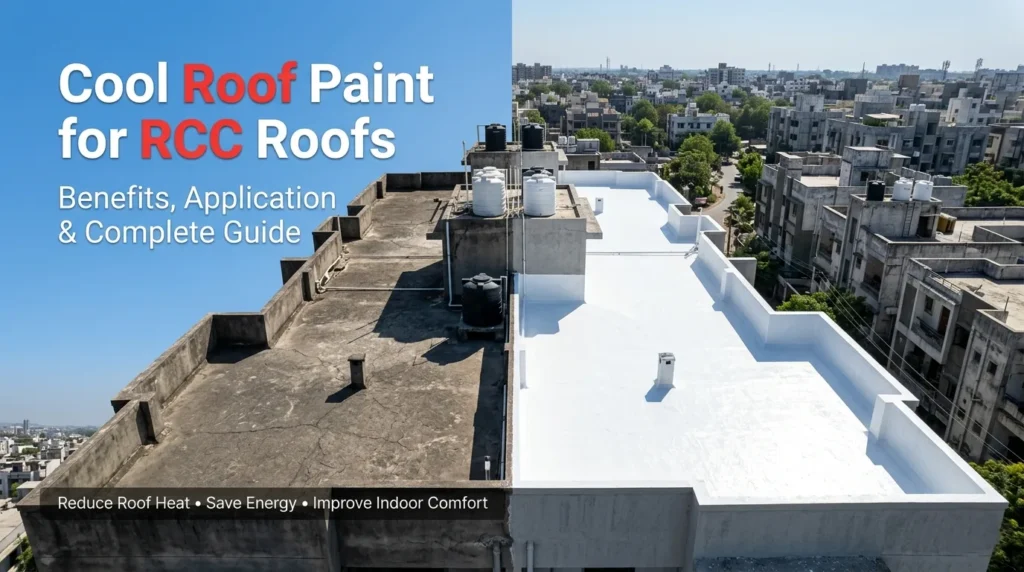
RCC (Reinforced Cement Concrete) roofs are commonly used in residential, commercial, and industrial buildings due to their strength and durability. However, concrete surfaces absorb and retain a large amount of heat, especially during hot summer months. This increases indoor temperatures, reduces comfort, and leads to higher energy consumption for cooling.
Cool Roof Paint is an effective solution designed to reduce heat absorption and improve thermal performance on RCC roofs. By reflecting sunlight and releasing absorbed heat efficiently, it helps maintain cooler indoor environments while also protecting the roof surface from weather damage and thermal stress.
Introduction to Cool Roof Paint for RCC Roofs
What is Cool Roof Paint
Cool Roof Paint is a specially formulated reflective coating designed to reduce heat absorption on roof surfaces. It reflects a large portion of solar radiation and releases absorbed heat efficiently, helping maintain lower roof and indoor temperatures.
Why RCC Roofs Absorb Heat
RCC roofs are made of concrete, which naturally absorbs and stores heat for long periods. During hot weather, these roofs become extremely hot and transfer heat inside the building, making indoor spaces uncomfortable and increasing cooling requirements.
Importance of Roof Cooling Solutions
Roof cooling solutions like Cool Roof Paint are essential for improving indoor comfort and reducing energy consumption. They help minimize heat buildup, lower electricity costs, and protect RCC roofs from thermal stress, cracks, and weather damage over time.
How Cool Roof Paint Works on RCC Roofs
Solar Reflectance Technology
Cool Roof Paint uses advanced reflective pigments that bounce back a large portion of sunlight and solar radiation. This reduces the amount of heat absorbed by the RCC roof surface, keeping it significantly cooler.
Heat Reduction Mechanism
By reflecting solar energy, Cool Roof Paint minimizes heat buildup on concrete roofs. This lowers heat transfer into the building and helps maintain a more comfortable indoor temperature.
Thermal Emittance Explained
Thermal emittance refers to the coating’s ability to release absorbed heat back into the atmosphere. High thermal emittance prevents heat retention on the roof surface, improving the overall cooling performance.
Surface Temperature Control
The combination of high solar reflectance and thermal emittance helps control roof surface temperature even under direct sunlight. This reduces indoor heat, improves comfort, and decreases dependence on cooling systems.
Key Benefits of Cool Roof Paint for RCC Roofs
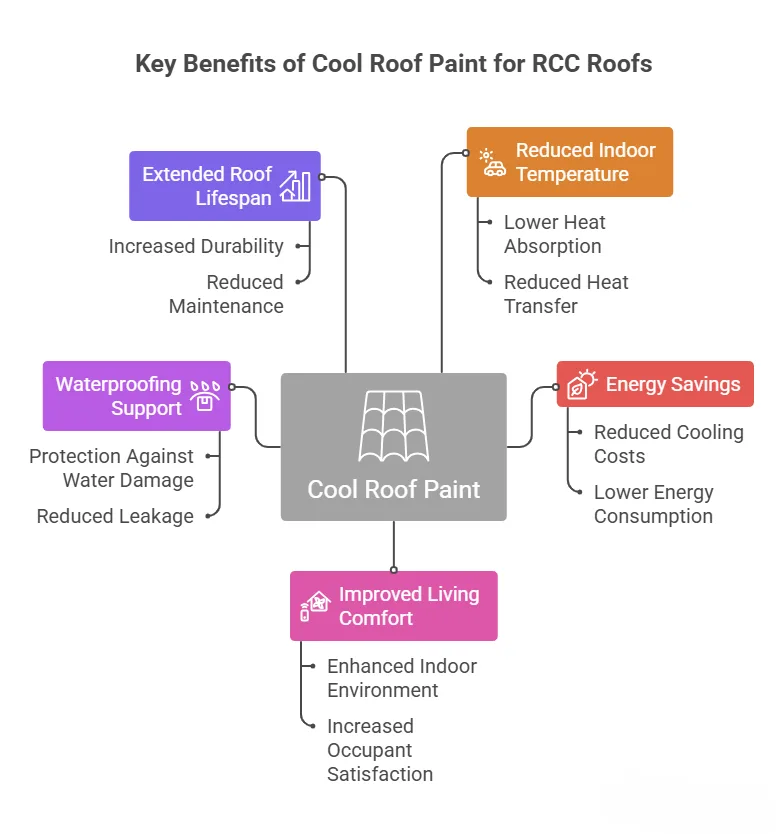
Reduced Indoor Temperature
Cool Roof Paint significantly lowers roof surface temperature by reflecting sunlight and reducing heat absorption. This helps keep indoor spaces cooler, especially during hot summer months.
Energy Savings
With reduced heat entering the building, the need for air conditioners and cooling systems decreases. This results in lower electricity consumption and noticeable savings on energy bills.
Improved Living Comfort
By maintaining a cooler indoor environment, Cool Roof Paint enhances comfort for residents, employees, and occupants. Rooms remain more pleasant and usable even during peak daytime heat.
Waterproofing Support
Many Cool Roof Coatings also provide waterproofing benefits by creating a protective layer over the RCC surface. This helps reduce water seepage, moisture damage, and roof deterioration.
Extended Roof Lifespan
Cool Roof Paint protects RCC roofs from UV rays, thermal expansion, and weather exposure. By reducing stress on the concrete surface, it helps increase the overall lifespan of the roof.
Why RCC Roofs Need Cool Roof Coatings
Concrete Heat Retention
RCC roofs absorb and store a large amount of heat during the day due to the thermal properties of concrete. This retained heat continues to radiate inside the building even after sunset, making indoor spaces uncomfortable.
Cracks Due to Thermal Expansion
Continuous heating and cooling cycles cause concrete surfaces to expand and contract. Over time, this thermal movement can lead to cracks, weakening the roof structure and increasing the risk of water seepage.
High Indoor Heat in Summer
During summer, RCC roofs become extremely hot under direct sunlight. The absorbed heat transfers into the building, raising indoor temperatures and reducing comfort levels for occupants.
Rising Cooling Costs
Higher indoor temperatures increase dependence on fans and air conditioning systems. This leads to increased electricity consumption and higher cooling expenses, especially in regions with long summers and extreme heat.
Surface Preparation for RCC Roofs
Cleaning the Surface
Before applying Cool Roof Paint, the RCC roof must be thoroughly cleaned to remove dust, dirt, oil, algae, and loose particles. A clean surface ensures proper adhesion and improves coating performance.
Repairing Cracks & Damage
Inspect the roof for cracks, holes, or damaged areas and repair them using suitable fillers or repair compounds. Addressing surface defects before coating helps prevent water leakage and improves durability.
Moisture Inspection
Check the roof for moisture or dampness before application. Applying Cool Roof Paint on a wet surface can affect adhesion and coating performance. Ensure the roof is completely dry before starting the coating process.
Primer Application
Applying a suitable primer improves bonding between the RCC surface and the Cool Roof Paint. It enhances durability, increases coating life, and provides a stable base for better performance.
Step-by-Step Application Process

Tools and Materials Required
Before starting the application, gather all necessary materials such as Cool Roof Paint, primer, rollers, brushes, spray equipment, mixing tools, and safety gear like gloves and masks. Using proper tools ensures a smooth and uniform coating finish.
Mixing Instructions
Stir the Cool Roof Paint thoroughly before use to achieve a consistent texture and uniform distribution of reflective pigments. If dilution is required, follow the manufacturer’s recommended guidelines for the best results.
Application Methods
Cool Roof Paint can be applied using a brush, roller, or spray machine depending on the roof size and project requirements. For large RCC roofs, spray application is commonly preferred for faster and more even coverage.
Number of Coats Required
Typically, two or more coats are recommended for effective heat reflection and long-lasting performance. Applying multiple coats ensures proper thickness, improved durability, and better waterproofing support.
Drying and Curing Time
Allow adequate drying time between coats as specified by the product manufacturer. Proper curing is essential to achieve maximum adhesion, durability, and heat-resistant performance on RCC surfaces.
Types of Cool Roof Coatings for RCC Roofs
Acrylic Cool Roof Coatings
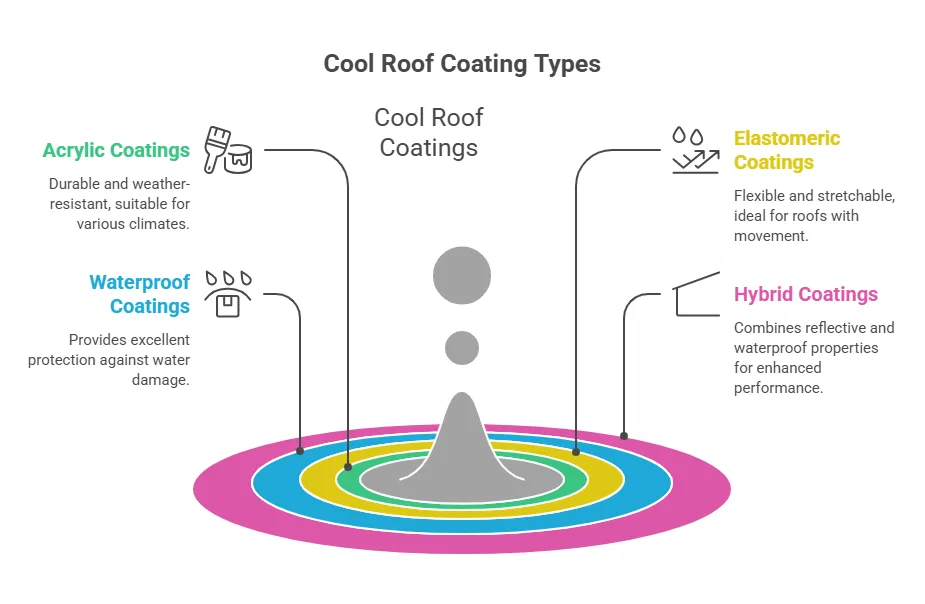
Acrylic cool roof coatings are water-based and widely used for RCC roofs due to their high solar reflectivity and affordability. They provide good UV resistance and help reduce roof surface temperature effectively.
Elastomeric Roof Coatings
Elastomeric coatings are flexible and capable of expanding and contracting with temperature changes. They help bridge minor cracks in RCC roofs while providing excellent heat reduction and waterproofing performance.
Waterproof Cool Roof Coatings
These coatings combine heat-reflective properties with waterproofing capabilities. They protect RCC roofs from water seepage, moisture damage, and heat absorption, making them ideal for areas with heavy rainfall.
Hybrid Reflective Coatings
Hybrid coatings combine the benefits of different coating technologies such as acrylic, silicone, and elastomeric materials. They offer improved durability, enhanced reflectivity, better adhesion, and long-lasting protection for RCC roofs.
Applications of Cool Roof Paint on RCC Roofs
Residential Buildings
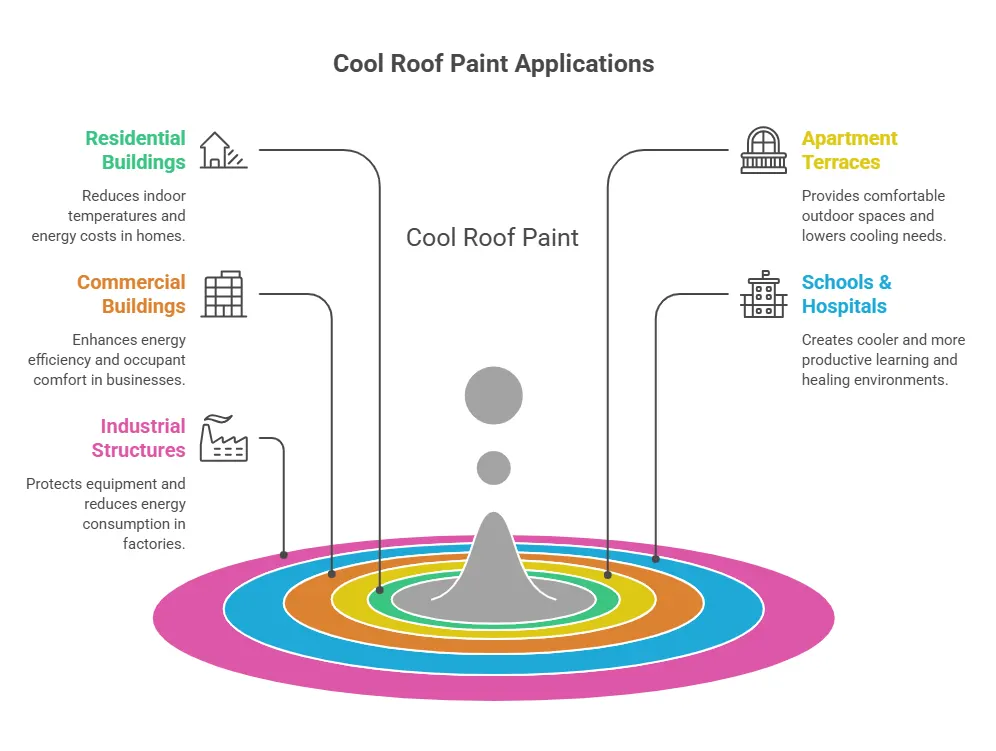
Cool Roof Paint is widely used on residential RCC roofs to reduce indoor heat and improve living comfort. It helps homeowners maintain cooler rooms while lowering electricity consumption during summer.
Apartment Terraces
Apartment terraces absorb large amounts of heat throughout the day, especially affecting top-floor residents. Applying Cool Roof Paint helps reduce terrace temperature and improves indoor comfort for occupants.
Commercial Buildings
Offices, shopping complexes, and commercial facilities use Cool Roof Paint to maintain comfortable indoor environments and reduce cooling costs. It also supports energy-efficient building management.
Schools & Hospitals
Educational institutions and healthcare facilities benefit from reduced indoor temperatures and improved comfort. Cool Roof Paint helps create a better environment for students, patients, and staff.
Industrial RCC Structures
Industrial buildings with RCC roofs often experience high heat buildup. Cool Roof Paint helps lower roof temperature, improve working conditions, and reduce the energy load on cooling systems.
Maintenance Tips for Long-Term Performance
Regular Cleaning
Clean the RCC roof periodically to remove dust, dirt, algae, and debris that can reduce the reflectivity of the coating. Regular cleaning helps maintain cooling efficiency and extends the life of the paint.
Inspection for Cracks
Inspect the roof regularly for cracks, surface damage, or coating wear. Early identification and repair of cracks prevent water seepage and help maintain the protective performance of the coating.
Recoating Guidelines
Over time, exposure to sunlight and weather may reduce the effectiveness of the coating. Follow the recommended recoating schedule based on the product type and environmental conditions to maintain optimal performance.
Waterproofing Maintenance
If the coating also provides waterproofing benefits, ensure regular inspection for leakage or moisture-related issues. Prompt repairs and maintenance help preserve both waterproofing and heat-reflective properties.
Common Problems & Solutions
Peeling or Cracking
Problem: The coating begins to peel, crack, or separate from the RCC surface.
Cause: Poor surface preparation, moisture presence, or improper application.
Solution: Clean and repair the surface properly before application, use a suitable primer, and apply the coating under recommended conditions.
Water Leakage
Problem: Water seepage or dampness appears after rainfall.
Cause: Existing roof cracks, insufficient coating thickness, or damaged waterproof layer.
Solution: Repair cracks thoroughly, apply proper waterproofing treatment if required, and maintain the recommended coating thickness.
Loss of Reflectivity
Problem: The roof absorbs more heat over time due to reduced reflectivity.
Cause: Dust accumulation, pollution, and coating degradation from UV exposure.
Solution: Clean the roof regularly and recoat when reflectivity starts to decline to maintain cooling efficiency.
Uneven Coating Issues
Problem: The coating surface appears patchy or inconsistent.
Cause: Improper mixing, uneven application, or incorrect use of tools.
Solution: Mix the paint thoroughly and apply uniformly using suitable rollers, brushes, or spray equipment to achieve a smooth finish.
Why Cool Roof Paint is Ideal for Indian Climate
Extreme Summer Temperatures
India experiences intense summer heat in many regions, causing RCC roofs to absorb excessive thermal energy. Cool Roof Paint helps reduce roof surface temperature and keeps indoor spaces cooler, even during peak summer conditions.
Energy Efficiency Needs
With rising electricity consumption and increased use of cooling systems, energy efficiency has become essential. Cool Roof Paint reduces heat transfer into buildings, lowering dependence on air conditioning and helping save energy costs.
Urban Heat Island Reduction
Cities with dense construction and concrete surfaces often experience the urban heat island effect, where temperatures remain significantly higher than surrounding areas. Reflective roof coatings help reduce overall heat buildup and contribute to cooler urban environments.
Sustainable Building Solution
Cool Roof Paint supports sustainable construction by improving energy efficiency and reducing environmental impact. It is an eco-friendly solution that promotes comfortable living spaces while contributing to greener and more efficient buildings.
Conclusion – Is Cool Roof Paint Right for RCC Roofs?
Summary of Key Benefits
Cool Roof Paint provides effective heat reduction, improved indoor comfort, energy savings, and additional roof protection for RCC structures. It helps lower roof surface temperature while supporting waterproofing and extending roof life.
Long-Term Cost Savings
By reducing dependence on cooling systems and minimizing maintenance needs, Cool Roof Paint offers significant long-term financial benefits. Lower electricity bills and reduced roof repair costs make it a cost-effective investment.
Smart Solution for Modern Buildings
With increasing temperatures and growing demand for energy-efficient construction, Cool Roof Paint has become a smart solution for modern residential, commercial, and industrial buildings. It combines performance, sustainability, and durability for long-lasting roof protection.