

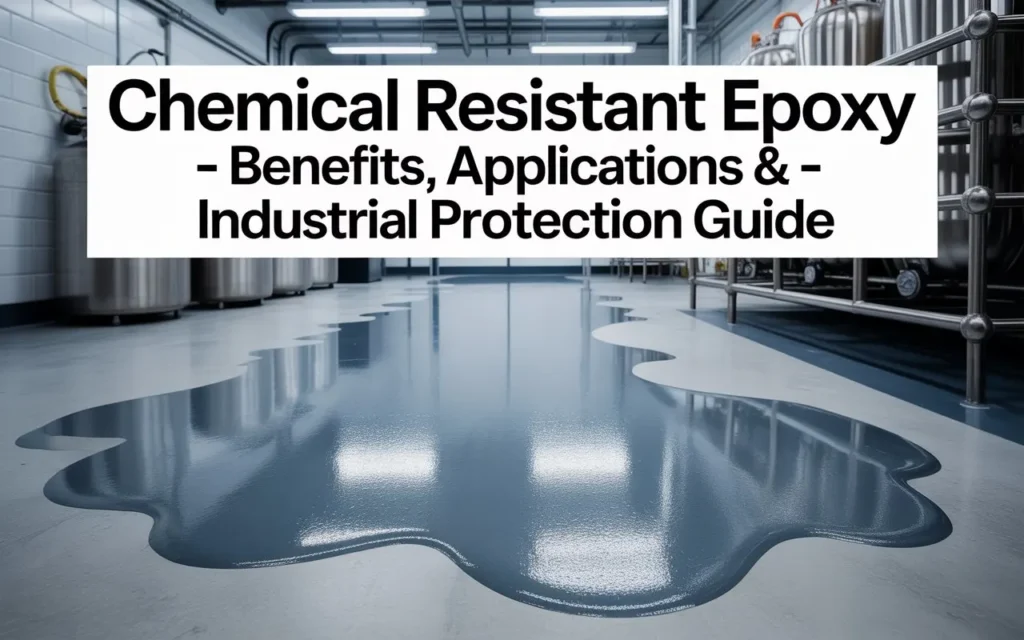
Industrial environments are often exposed to harsh chemicals, solvents, acids, oils, and corrosive substances that can damage concrete and metal surfaces over time. Without proper protection, these surfaces may experience corrosion, staining, surface degradation, and structural weakening, leading to costly repairs and operational downtime. To prevent such damage, many industries rely on chemical resistant epoxy coatings for long-lasting surface protection.
Chemical resistant epoxy is a high-performance coating system specially designed to withstand exposure to aggressive chemicals while maintaining its strength, adhesion, and durability. When applied to floors, walls, tanks, pipelines, or industrial equipment, it forms a seamless and non-porous protective barrier that helps prevent chemical penetration and corrosion.
One of the major advantages of chemical resistant epoxy is its ability to perform in demanding industrial environments where ordinary coatings may fail. These coatings provide excellent resistance to:
- Acids and alkalis
- Solvents and oils
- Moisture and corrosion
- Abrasion and heavy traffic
Because of these properties, chemical resistant epoxy is widely used in industries such as:
- Chemical manufacturing plants
- Pharmaceutical facilities
- Food processing units
- Automotive workshops
- Warehouses and industrial flooring systems
In addition to protection, chemical resistant epoxy also improves workplace hygiene and safety by creating a smooth, easy-to-clean surface that resists contamination and surface wear.
With its combination of durability, chemical resistance, and low maintenance, chemical resistant epoxy has become an essential solution for modern industrial protection. This guide explores its benefits, applications, coating types, installation process, and maintenance practices to help industries choose the right protective coating system for long-term performance.
What Is Chemical Resistant Epoxy?
Chemical resistant epoxy is a specially formulated protective coating designed to withstand exposure to chemicals, solvents, acids, alkalis, oils, and corrosive substances. It creates a strong and durable barrier over concrete, metal, and industrial surfaces, helping protect them from chemical damage and surface deterioration.
Unlike standard coatings, chemical resistant epoxy is engineered to maintain its strength, adhesion, and protective performance even in harsh industrial environments where chemical exposure is frequent.
Understanding Chemical Resistant Epoxy Coatings
Chemical resistant epoxy coatings are high-performance systems made by combining:
- Epoxy resin
- Hardener
- Specialized chemical-resistant additives
When mixed and applied, these components chemically react to form a hard, seamless, and non-porous surface.
These coatings are designed to resist:
- Chemical spills and splashes
- Corrosion and oxidation
- Moisture penetration
- Abrasion and heavy industrial wear
Because of their durability and resistance properties, they are widely used in industrial facilities that require long-term surface protection.
How Chemical Resistant Epoxy Works
Chemical resistant epoxy works by creating a protective barrier between the surface and harmful chemicals. Once cured, the coating forms a dense and non-absorbent layer that prevents chemicals from penetrating the substrate.
This protective layer helps:
- Reduce corrosion and chemical attack
- Prevent staining and surface degradation
- Protect concrete and metal from structural damage
- Improve resistance to moisture and environmental exposure
Its strong adhesion ensures that the coating remains firmly bonded to the surface even under demanding operating conditions.
Importance of Chemical Resistance in Industrial Environments
In industrial environments, surfaces are regularly exposed to chemicals that can damage untreated concrete and metal. Without proper protection, this exposure may lead to:
- Surface corrosion
- Structural weakening
- Frequent maintenance and repairs
- Reduced equipment lifespan
- Safety hazards in the workplace
Chemical resistant epoxy plays a critical role in protecting industrial infrastructure and ensuring safe operations in environments such as:
- Chemical processing plants
- Pharmaceutical facilities
- Food processing industries
- Automotive workshops
- Warehouses and manufacturing units
By providing durable protection against aggressive substances, chemical resistant epoxy helps industries improve operational efficiency, safety, and long-term cost savings.
Key Features of Chemical Resistant Epoxy
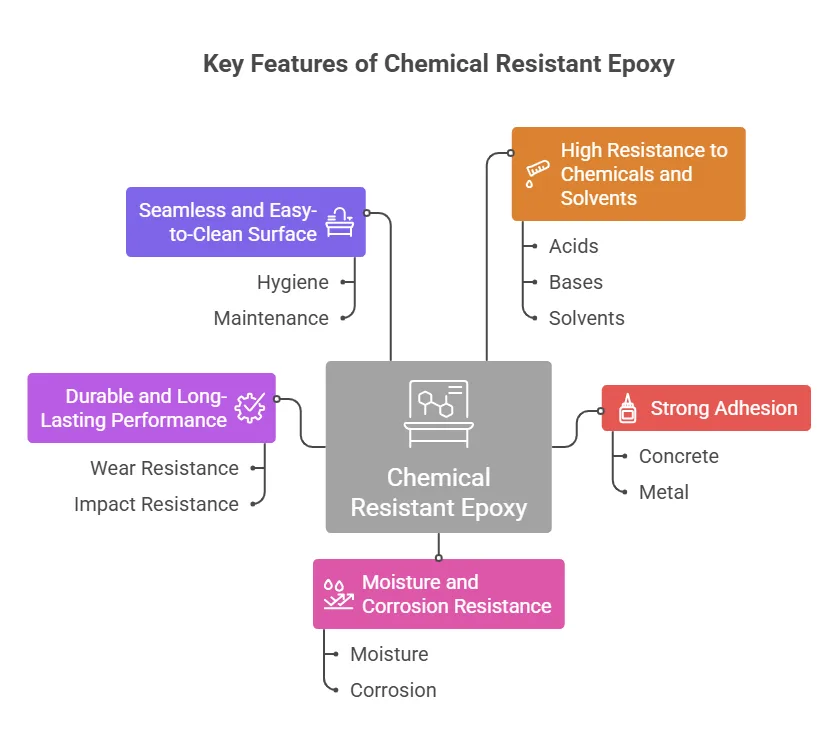
Chemical resistant epoxy is widely used in industrial environments because of its ability to provide strong surface protection, durability, and resistance to harsh conditions. Its advanced formulation helps protect concrete and metal surfaces from chemical damage while maintaining long-term performance.
Below are some of the key features that make chemical resistant epoxy an ideal industrial coating solution.
High Resistance to Chemicals and Solvents
One of the most important features of chemical resistant epoxy is its ability to withstand exposure to:
- Acids and alkalis
- Industrial chemicals
- Solvents and oils
- Cleaning agents and corrosive liquids
The coating forms a non-porous barrier that prevents chemicals from penetrating the surface, reducing the risk of damage, staining, and corrosion.
Strong Adhesion to Concrete and Metal
Chemical resistant epoxy provides excellent adhesion to a variety of substrates, especially:
- Concrete floors and walls
- Metal tanks and pipelines
- Industrial machinery and structures
Proper surface preparation allows the epoxy to bond firmly with the substrate, creating a durable and long-lasting protective layer that resists peeling and delamination.
Moisture and Corrosion Resistance
Moisture and chemical exposure can lead to corrosion and deterioration of untreated surfaces. Chemical resistant epoxy helps prevent:
- Water penetration
- Surface rust and oxidation
- Corrosion of metal structures
- Moisture-related concrete damage
This makes it highly suitable for industrial environments exposed to humidity, spills, and aggressive chemicals.
Durable and Long-Lasting Performance
Chemical resistant epoxy coatings are designed for demanding industrial conditions where surfaces experience:
- Heavy traffic and abrasion
- Continuous chemical exposure
- Mechanical stress and impact
The coating maintains its strength and protective properties over time, helping extend the lifespan of floors, equipment, and structures while reducing maintenance needs.
Seamless and Easy-to-Clean Surface
Once cured, chemical resistant epoxy creates a smooth and seamless surface that is easy to maintain.
Benefits of the seamless finish include:
- Reduced dirt and chemical buildup
- Easier cleaning and sanitation
- Improved hygiene in industrial facilities
- Prevention of bacterial and moisture accumulation
This feature is especially valuable in industries such as pharmaceuticals, food processing, and manufacturing where cleanliness is essential.
These key features make chemical resistant epoxy a reliable and cost-effective solution for protecting industrial surfaces from chemicals, corrosion, and daily operational wear.
Benefits of Chemical Resistant Epoxy
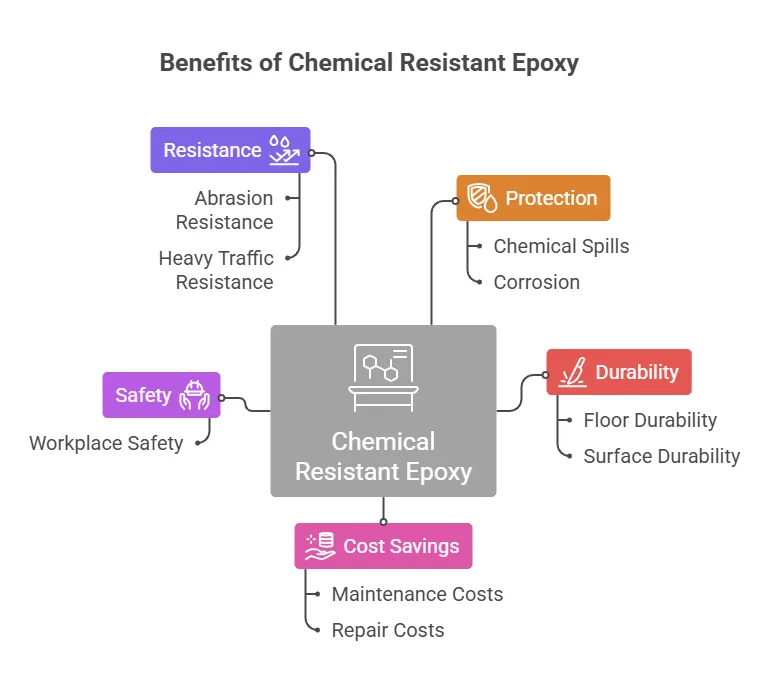
Chemical resistant epoxy offers a wide range of advantages for industrial and commercial environments where surfaces are exposed to chemicals, moisture, heavy traffic, and operational stress. By creating a durable and protective barrier, this coating system helps improve the performance, safety, and lifespan of floors and industrial structures.
Below are some of the major benefits of chemical resistant epoxy.
Protection Against Chemical Spills and Corrosion
One of the primary benefits of chemical resistant epoxy is its ability to protect surfaces from:
- Chemical spills and splashes
- Acids and alkalis
- Oils and solvents
- Corrosion and oxidation
The non-porous epoxy layer prevents chemicals from penetrating the surface, reducing the risk of damage and structural deterioration. This makes it ideal for industries where chemical exposure is common.
Enhanced Floor and Surface Durability
Chemical resistant epoxy significantly improves the durability of concrete and metal surfaces. It creates a hard protective coating that can withstand:
- Heavy machinery and equipment
- Continuous industrial operations
- Mechanical impact and wear
- Harsh environmental conditions
This enhanced durability helps extend the service life of floors, tanks, pipelines, and industrial structures.
Reduced Maintenance and Repair Costs
Without protective coatings, industrial surfaces may require frequent repairs due to chemical damage, corrosion, or surface wear.
Chemical resistant epoxy helps reduce:
- Maintenance frequency
- Repair and replacement expenses
- Operational downtime caused by floor damage
Its long-lasting performance makes it a cost-effective solution for industrial facilities.
Improved Workplace Safety
Chemical resistant epoxy contributes to a safer working environment by creating a smooth and durable surface that can include:
- Anti-slip finishes
- Safety markings and color-coded zones
- Dust-free and easy-to-clean flooring
By reducing chemical damage and surface deterioration, the coating also minimizes workplace hazards caused by cracks, spills, or uneven flooring.
Resistance to Abrasion and Heavy Traffic
Industrial floors are often exposed to constant movement from:
- Forklifts and vehicles
- Heavy foot traffic
- Machinery and equipment
Chemical resistant epoxy offers strong resistance to abrasion and wear, helping the surface maintain its integrity and appearance even in high-traffic industrial environments.
Overall, chemical resistant epoxy provides a combination of chemical protection, durability, safety, and long-term cost savings, making it an essential solution for modern industrial applications.
Common Applications of Chemical Resistant Epoxy
Chemical resistant epoxy is widely used in industries where surfaces are regularly exposed to chemicals, moisture, abrasion, and heavy operational activity. Its ability to provide long-lasting protection against corrosion and chemical damage makes it suitable for a wide range of industrial and commercial applications.
Below are some of the most common applications of chemical resistant epoxy.
Chemical Manufacturing Plants
Chemical manufacturing facilities handle aggressive substances such as:
- Acids
- Alkalis
- Solvents
- Industrial chemicals
Chemical resistant epoxy is used on floors, walls, and containment areas to protect surfaces from chemical spills, corrosion, and structural damage. Its seamless surface also helps improve workplace safety and cleanliness.
Pharmaceutical and Laboratory Facilities
Pharmaceutical plants and laboratories require hygienic and chemical-resistant surfaces that can withstand frequent cleaning and exposure to various substances.
Chemical resistant epoxy provides:
- Easy-to-clean seamless flooring
- Resistance to chemicals and contamination
- Durable and dust-free surfaces
This makes it ideal for clean rooms, testing labs, and pharmaceutical production areas.
Food Processing and Industrial Kitchens
Food processing facilities and industrial kitchens are exposed to:
- Oils and grease
- Cleaning chemicals
- Moisture and water spills
- Heavy operational traffic
Chemical resistant epoxy helps protect floors from stains, chemical attack, and moisture damage while maintaining hygienic conditions. Anti-slip finishes can also be added to improve worker safety.
Automotive Workshops and Service Stations
Automotive service areas regularly experience exposure to:
- Fuel and oil spills
- Lubricants and solvents
- Heavy vehicle movement
Chemical resistant epoxy protects concrete floors from chemical staining, abrasion, and surface deterioration while providing a durable and easy-to-maintain working surface.
Warehouses and Industrial Flooring
Warehouses and industrial facilities require flooring systems capable of handling:
- Forklift traffic
- Heavy machinery
- Abrasion and impact
- Industrial chemicals
Chemical resistant epoxy flooring improves durability and protects concrete surfaces from long-term wear and operational damage.
Metal Tanks, Pipelines, and Equipment
Metal structures exposed to chemicals and moisture are vulnerable to corrosion and surface degradation.
Chemical resistant epoxy coatings are widely used on:
- Storage tanks
- Pipelines
- Industrial machinery
- Processing equipment
The coating forms a protective barrier that helps prevent oxidation, corrosion, and chemical attack, extending the lifespan of industrial assets.
These applications highlight why chemical resistant epoxy is considered an essential protective coating for industries that require durability, chemical protection, and long-term surface performance.
Types of Chemical Resistant Epoxy Coatings
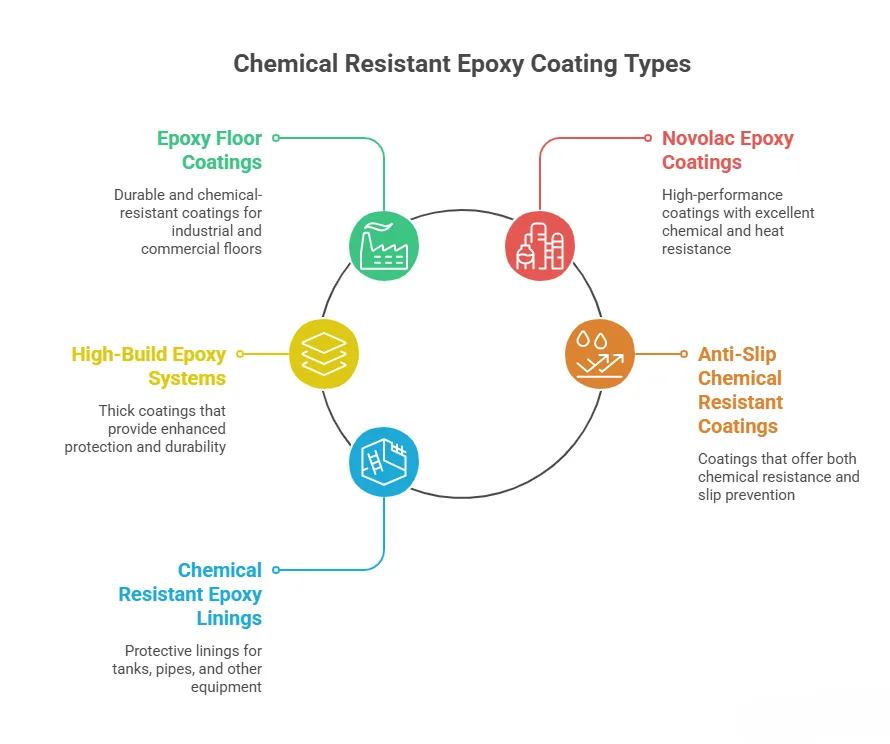
Different industrial environments require different types of chemical resistant epoxy systems depending on factors such as chemical exposure, traffic conditions, surface type, and durability requirements. Each coating system is designed to provide specific performance benefits for industrial protection.
Below are some of the most commonly used types of chemical resistant epoxy coatings.
Epoxy Floor Coatings
Epoxy floor coatings are widely used to protect concrete floors in industrial and commercial facilities. These coatings create a durable and seamless surface that resists:
- Chemical spills
- Abrasion and wear
- Heavy traffic and machinery
- Moisture and stains
They are commonly applied in warehouses, manufacturing plants, laboratories, and industrial workshops.
Novolac Epoxy Coatings
Novolac epoxy coatings are advanced epoxy systems specially formulated for environments exposed to highly aggressive chemicals and solvents.
These coatings offer superior resistance to:
- Strong acids and alkalis
- Harsh solvents
- Elevated temperatures
- Chemical corrosion
Because of their high chemical resistance, novolac epoxy coatings are commonly used in:
- Chemical processing plants
- Refineries
- Tank linings
- Industrial containment areas
High-Build Epoxy Systems
High-build epoxy systems are thicker coating systems designed to provide enhanced protection and durability in heavy-duty environments.
Key advantages include:
- Increased coating thickness
- Better impact and abrasion resistance
- Improved chemical protection
- Long-lasting performance under industrial stress
These systems are ideal for areas exposed to heavy machinery, forklift traffic, and continuous operations.
Anti-Slip Chemical Resistant Coatings
Anti-slip chemical resistant coatings are formulated with textured additives or aggregates to improve traction and workplace safety.
These coatings help reduce the risk of slips and falls in environments exposed to:
- Chemicals and liquids
- Water and moisture
- Oils and grease
Common applications include industrial kitchens, chemical plants, pharmaceutical facilities, and automotive workshops.
Chemical Resistant Epoxy Linings
Chemical resistant epoxy linings are specialized protective systems used inside structures and equipment that store or transport chemicals.
These linings are commonly applied to:
- Storage tanks
- Pipelines
- Chemical containment systems
- Industrial processing equipment
The lining creates a strong protective barrier that prevents corrosion, leakage, and chemical attack, helping extend the lifespan of industrial assets.
Choosing the right type of chemical resistant epoxy coating depends on the level of chemical exposure, operational conditions, and performance requirements. Proper selection ensures maximum durability, safety, and long-term industrial protection.
Chemical Resistant Epoxy vs Standard Epoxy
When selecting an epoxy coating system for industrial use, it is important to understand the difference between chemical resistant epoxy and standard epoxy. While both coatings provide surface protection and durability, their performance varies significantly in environments exposed to aggressive chemicals and harsh industrial conditions.
Below is a comparison between chemical resistant epoxy and standard epoxy coatings.
Chemical Resistance Comparison
Standard epoxy coatings provide basic protection against mild chemicals and general industrial exposure. However, prolonged contact with strong acids, solvents, or corrosive substances can cause the coating to:
- Soften or degrade
- Lose adhesion
- Develop stains or surface damage
Chemical resistant epoxy is specifically formulated to withstand exposure to:
- Strong acids and alkalis
- Solvents and oils
- Industrial cleaning chemicals
- Corrosive substances
Its advanced formulation creates a more durable barrier that protects surfaces from chemical attack.
Durability Under Harsh Environments
Standard epoxy performs well in moderate industrial conditions but may deteriorate faster in environments involving:
- Continuous chemical exposure
- High moisture levels
- Heavy abrasion and impact
Chemical resistant epoxy is designed for harsh industrial environments and offers superior resistance to:
- Corrosion and oxidation
- Moisture penetration
- Heavy traffic and mechanical wear
- Surface degradation caused by chemicals
This makes it more suitable for demanding industrial applications.
Performance and Lifespan Differences
In normal commercial environments, standard epoxy can provide reliable performance for many years. However, in chemically aggressive environments, its lifespan may be reduced due to coating failure or surface damage.
Chemical resistant epoxy provides:
- Longer-lasting protection
- Better adhesion under harsh conditions
- Improved resistance to chemical spills and abrasion
- Reduced risk of cracking, peeling, or corrosion
As a result, it generally delivers better long-term performance in industrial settings.
Cost and Maintenance Comparison
Standard epoxy coatings are usually more affordable initially and suitable for general-purpose flooring applications.
Chemical resistant epoxy may involve a higher upfront cost because of its advanced protective properties. However, it often reduces long-term expenses by:
- Lowering maintenance requirements
- Minimizing repair and replacement costs
- Reducing downtime caused by surface damage
For industries exposed to chemicals and heavy operational stress, chemical resistant epoxy is often the more cost-effective solution over time.
Overall, while standard epoxy is suitable for basic industrial and commercial use, chemical resistant epoxy offers superior protection, durability, and long-term reliability in environments exposed to aggressive chemicals and harsh operating conditions.
Surface Preparation for Chemical Resistant Epoxy
Proper surface preparation is essential for achieving strong adhesion, durability, and long-term performance of chemical resistant epoxy coatings. Even high-quality epoxy systems may fail if the substrate is not correctly prepared before application. A properly prepared surface helps the coating bond effectively and perform reliably in harsh industrial environments.
Below are the key steps involved in preparing surfaces for chemical resistant epoxy application.
Cleaning and Degreasing
The first step in surface preparation is removing all contaminants that may interfere with coating adhesion.
This includes cleaning away:
- Dust and dirt
- Oil and grease
- Chemical residues
- Old paint or loose coatings
Industrial degreasers and cleaning solutions are commonly used to ensure the surface is completely clean and free from contamination.
Proper cleaning helps prevent issues such as:
- Poor adhesion
- Peeling or blistering
- Surface defects in the coating
Surface Profiling and Repair
After cleaning, the surface must be mechanically prepared to create a rough profile that improves epoxy bonding.
Common preparation methods include:
- Grinding
- Shot blasting
- Sandblasting
These techniques remove weak surface layers and create a textured surface for better adhesion.
At this stage, any surface defects should also be repaired, including:
- Cracks and holes
- Uneven concrete sections
- Damaged or corroded areas
Repairing these defects ensures a smooth and durable coating application.
Priming Before Epoxy Application
Once the surface is cleaned and prepared, a primer coat is applied before the main epoxy coating.
The primer helps:
- Improve adhesion between the substrate and epoxy
- Seal porous concrete surfaces
- Reduce air bubbles and pinholes
- Enhance coating durability and uniformity
Using the correct primer is especially important in environments exposed to chemicals, moisture, and heavy industrial use.
Proper surface preparation is one of the most critical factors in ensuring that chemical resistant epoxy coatings provide maximum protection, durability, and long-term industrial performance.
Application Process of Chemical Resistant Epoxy
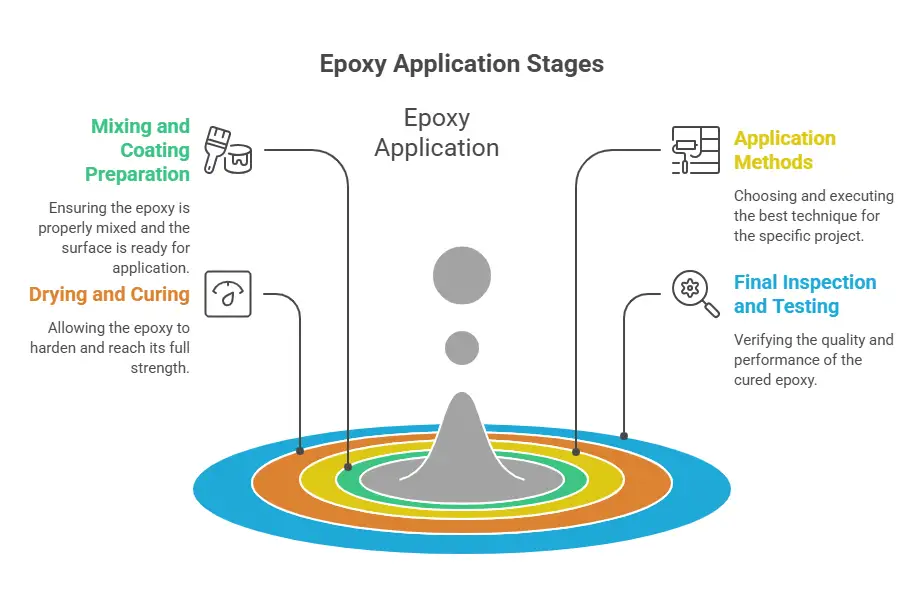
The performance and durability of chemical resistant epoxy depend heavily on the correct application process. Proper installation ensures strong adhesion, uniform coating thickness, and maximum resistance to chemicals, moisture, and industrial wear. Each stage of the application process plays a vital role in achieving long-lasting protection.
Below are the key steps involved in applying chemical resistant epoxy coatings.
Mixing and Coating Preparation
Chemical resistant epoxy is usually supplied as a two-component system consisting of:
- Epoxy resin
- Hardener
These components must be mixed in the correct ratio according to manufacturer specifications. Proper mixing ensures the chemical reaction occurs correctly, allowing the coating to achieve its intended strength and resistance properties.
During preparation, it is important to:
- Mix thoroughly for a uniform consistency
- Avoid incorrect mixing ratios
- Prepare only the required quantity within the working time
Improper mixing can lead to weak curing, poor adhesion, and reduced chemical resistance.
Application Methods and Techniques
Once mixed, the epoxy coating is applied to the prepared surface using suitable application methods based on the project requirements.
Common application techniques include:
- Rollers and brushes for smaller areas
- Squeegees for floor coatings
- Spray equipment for large industrial surfaces
Multiple coats may be applied to achieve the required thickness and performance level.
Proper application techniques help ensure:
- Uniform coating thickness
- Smooth and seamless finish
- Strong adhesion to the substrate
- Maximum chemical protection
In some environments, anti-slip aggregates or specialized topcoats may also be added.
Drying and Curing Process
After application, the epoxy coating must undergo a proper drying and curing process. During curing, the epoxy hardens and develops its full chemical and mechanical resistance.
Curing time depends on factors such as:
- Temperature
- Humidity
- Ventilation conditions
- Type of epoxy system used
The coated surface should be protected from traffic, chemicals, and moisture until full curing is completed.
Proper curing is essential for achieving:
- Maximum chemical resistance
- Long-term durability
- Strong adhesion and surface hardness
Final Inspection and Testing
Once the coating has fully cured, a final inspection is carried out to ensure the coating system meets performance requirements.
The inspection process may include checking for:
- Uniform coating thickness
- Surface smoothness and finish
- Proper adhesion
- Absence of bubbles, pinholes, or defects
In critical industrial environments, additional performance testing may be conducted to verify the coating’s resistance to chemicals and operational stress.
By following the correct application process, chemical resistant epoxy coatings can provide reliable, long-lasting protection for industrial floors, equipment, and structures exposed to harsh chemical environments.
Maintenance Tips for Chemical Resistant Epoxy Coatings
Chemical resistant epoxy coatings are designed to provide long-lasting protection in demanding industrial environments. However, regular maintenance is important to preserve their chemical resistance, durability, and appearance over time. Proper care helps prevent premature damage and ensures reliable coating performance in areas exposed to chemicals, heavy traffic, and operational stress.
Below are some essential maintenance tips for chemical resistant epoxy coatings.
Regular Cleaning Practices
Routine cleaning helps maintain the coating’s protective properties and prevents buildup of chemicals, dirt, and industrial residues.
Recommended cleaning practices include:
- Sweeping or vacuuming loose debris regularly
- Cleaning spills immediately to prevent prolonged chemical exposure
- Using mild industrial cleaners compatible with epoxy coatings
- Avoiding highly abrasive cleaning tools that may scratch the surface
Keeping the surface clean also helps maintain hygiene and improves workplace safety.
Inspection for Wear and Damage
Periodic inspections are important for identifying early signs of coating damage before they become serious problems.
During inspections, check for:
- Scratches and surface abrasion
- Peeling, blistering, or delamination
- Chemical stains or discoloration
- Cracks or worn-out areas in high-traffic zones
Regular inspections help ensure that damaged areas are repaired promptly, preventing further deterioration and costly repairs.
Recoating and Repair Guidelines
Over time, areas exposed to continuous chemical attack, heavy traffic, or abrasion may require maintenance recoating or repairs.
Important recoating and repair practices include:
- Repairing damaged areas immediately to prevent chemical penetration
- Properly cleaning and preparing surfaces before recoating
- Following recommended recoating intervals based on operational conditions
- Using compatible epoxy systems for repairs and maintenance
Timely recoating helps restore the coating’s:
- Chemical resistance
- Surface durability
- Protective performance
- Appearance and finish
By following proper maintenance practices, industries can maximize the lifespan, reliability, and protective performance of chemical resistant epoxy coatings in harsh industrial environments.
Common Problems and Solutions
Although chemical resistant epoxy coatings are highly durable and designed for harsh industrial environments, certain issues can still occur due to improper application, heavy operational stress, or inadequate maintenance. Identifying these problems early and applying the right solutions helps maintain the coating’s performance and extend its lifespan.
Peeling or Delamination
Peeling or delamination occurs when the epoxy coating separates from the substrate surface. This is one of the most common coating failures in industrial flooring systems.
Common Causes:
- Poor surface preparation
- Moisture trapped in the substrate
- Oil, grease, or contaminants on the surface
- Incorrect mixing or application methods
Solutions:
- Properly clean and mechanically prepare the surface before application
- Conduct moisture testing before coating
- Use suitable primers for strong adhesion
- Remove damaged coating areas and reapply the system correctly
Good preparation and proper installation are essential for preventing delamination issues.
Chemical Staining Issues
In some environments, prolonged exposure to aggressive chemicals can cause staining or discoloration of the epoxy surface.
Common Causes:
- Strong chemical spills left unattended
- Use of incompatible cleaning agents
- Continuous exposure to corrosive substances
- Insufficient chemical resistance for the application
Solutions:
- Clean chemical spills immediately
- Use coatings specifically designed for the chemicals present
- Apply protective topcoats when necessary
- Follow recommended cleaning procedures
Selecting the right chemical resistant epoxy system helps reduce staining problems.
Surface Cracks and Abrasion
Industrial floors exposed to heavy traffic and machinery may develop surface wear, scratches, or cracks over time.
Common Causes:
- Heavy mechanical impact
- Continuous abrasion from forklifts or equipment
- Structural movement in concrete substrates
- Insufficient coating thickness
Solutions:
- Use high-build or heavy-duty epoxy systems for demanding environments
- Repair concrete cracks before coating application
- Perform regular inspections and maintenance
- Apply maintenance topcoats or recoating when needed
Proper coating selection and maintenance help improve long-term durability.
Poor Adhesion Problems
Poor adhesion occurs when the epoxy coating does not bond properly with the substrate, reducing its protective performance.
Common Causes:
- Inadequate surface profiling
- Presence of moisture or contaminants
- Applying epoxy on uncured concrete
- Incorrect primer usage
Solutions:
- Prepare the surface using grinding or shot blasting
- Ensure the substrate is clean and dry
- Use appropriate primers for the substrate type
- Allow concrete surfaces to cure fully before application
Strong adhesion is critical for ensuring the durability and effectiveness of chemical resistant epoxy coatings.
By understanding these common problems and applying the correct solutions, industries can maintain the performance, durability, and chemical resistance of epoxy coating systems for long-term industrial protection.
Frequently Asked Questions
What Chemicals Can Epoxy Resist?
Chemical resistant epoxy coatings are designed to withstand exposure to a wide range of industrial chemicals, including:
- Acids and alkalis
- Oils and grease
- Solvents and fuels
- Cleaning agents and detergents
- Industrial chemicals and corrosive liquids
The level of resistance depends on the specific epoxy formulation and the concentration of the chemicals involved. Specialized systems such as novolac epoxy provide enhanced resistance to highly aggressive chemicals.
Is Chemical Resistant Epoxy Suitable for Industrial Floors?
Yes, chemical resistant epoxy is widely used for industrial flooring because it offers:
- Strong chemical resistance
- High durability under heavy traffic
- Protection against abrasion and impact
- Easy maintenance and cleaning
- Seamless and hygienic surfaces
It is commonly installed in factories, warehouses, pharmaceutical facilities, chemical plants, food processing units, and automotive workshops.
How Long Does Chemical Resistant Epoxy Last?
The lifespan of chemical resistant epoxy depends on factors such as:
- Quality of surface preparation
- Type of epoxy system used
- Level of chemical exposure
- Traffic and operational conditions
- Maintenance practices
With proper installation and regular maintenance, chemical resistant epoxy coatings can typically last 10 to 20 years or more in industrial environments.
Can Epoxy Resist Acids and Solvents?
Yes, many chemical resistant epoxy systems are specifically formulated to resist acids, solvents, and corrosive chemicals. However, resistance levels vary depending on:
- The type of acid or solvent
- Chemical concentration
- Exposure duration
- Operating temperature
For highly aggressive chemical environments, advanced systems such as novolac epoxy coatings are often recommended because they provide superior chemical resistance.
Conclusion – Why Chemical Resistant Epoxy Is Essential for Industrial Protection
Chemical resistant epoxy has become an essential protective solution for industries that operate in environments exposed to chemicals, solvents, moisture, abrasion, and heavy operational stress. By creating a strong and durable protective barrier, these coatings help protect concrete and metal surfaces from corrosion, chemical damage, and long-term deterioration.
Summary of Key Benefits
Chemical resistant epoxy offers several important advantages that improve industrial surface performance and durability, including:
- Excellent resistance to chemicals and solvents
- Protection against corrosion and moisture damage
- Enhanced durability under heavy traffic and industrial use
- Seamless and easy-to-clean surfaces
- Improved workplace safety with anti-slip options
- Reduced maintenance and repair requirements
These benefits make chemical resistant epoxy a reliable solution for demanding industrial applications.
Long-Term Industrial Advantages
One of the biggest advantages of chemical resistant epoxy is its ability to deliver long-term protection and cost savings. By reducing surface damage and maintenance needs, it helps industries:
- Extend the lifespan of floors, tanks, and equipment
- Minimize operational downtime
- Lower repair and replacement costs
- Maintain cleaner and safer working environments
Its long-lasting performance makes it a cost-effective investment for industrial facilities.
Choosing the Right Epoxy Coating System
Selecting the correct chemical resistant epoxy system is essential for achieving the best results. Factors such as:
- Type of chemicals involved
- Exposure conditions
- Temperature and moisture levels
- Traffic and mechanical stress
- Required coating thickness and finish
should all be carefully evaluated before installation.
Proper surface preparation, application, and maintenance are equally important to ensure maximum durability and coating performance.