

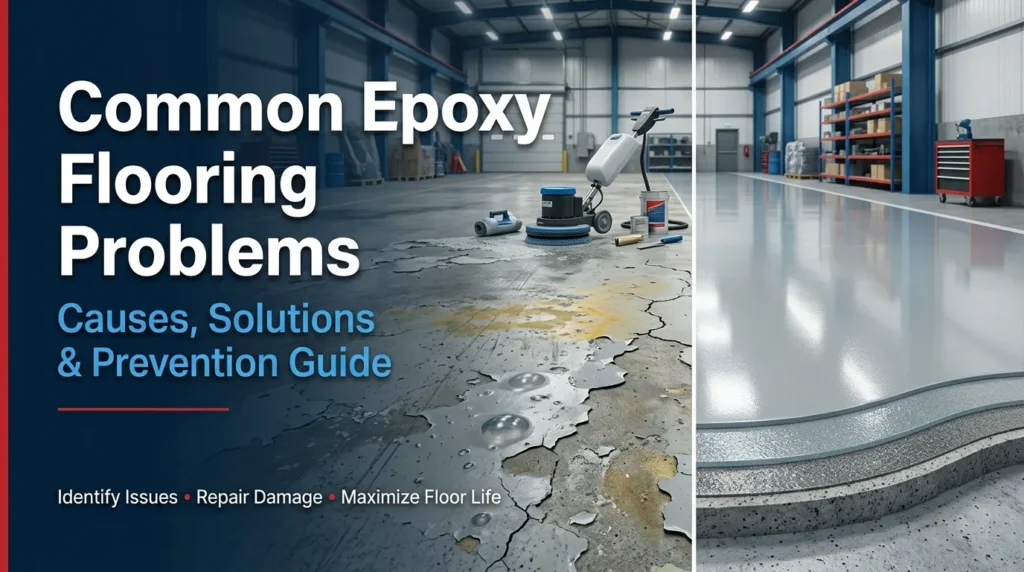
Epoxy flooring is one of the most popular flooring solutions for industrial, commercial, and institutional facilities because of its exceptional durability, chemical resistance, seamless finish, and low maintenance requirements. From manufacturing plants and warehouses to hospitals, pharmaceutical facilities, and parking garages, epoxy floors provide a strong and attractive surface that can withstand heavy traffic and demanding operating conditions.
However, like any flooring system, epoxy floors can develop problems if they are improperly installed, exposed to excessive moisture, subjected to harsh conditions, or not maintained correctly. Issues such as peeling, bubbling, cracking, discoloration, and poor adhesion can affect both the appearance and performance of the flooring system, leading to costly repairs and operational downtime.
Most epoxy flooring problems are preventable and often result from factors such as:
- Inadequate surface preparation
- Incorrect mixing ratios
- Moisture trapped in the concrete substrate
- Improper application techniques
- Heavy mechanical wear or chemical exposure
- Lack of routine maintenance
Understanding the causes of these common issues is the first step toward selecting the right repair method and preventing future failures. With proper installation practices, high-quality epoxy materials, and regular maintenance, epoxy flooring can deliver reliable performance and a service life of 10 to 20 years or more.
Introduction to Epoxy Flooring Problems
Epoxy flooring is known for its strength, durability, chemical resistance, and seamless finish, making it one of the most preferred flooring solutions for industrial, commercial, and institutional spaces. However, even the highest-quality epoxy flooring systems can experience issues if they are exposed to improper installation practices, harsh environmental conditions, or inadequate maintenance.
Problems such as peeling, bubbling, cracking, discoloration, and poor adhesion can reduce the lifespan and performance of an epoxy floor, leading to increased repair costs and operational disruptions. Understanding why these issues occur and how they can be prevented is essential for maintaining a safe, durable, and long-lasting flooring system.
By identifying potential problems early and following proper installation and maintenance practices, businesses can maximize the performance and value of their epoxy flooring investment.
Why Epoxy Flooring Is Widely Used
Epoxy flooring is widely chosen because it provides a combination of durability, functionality, and aesthetic appeal that traditional concrete floors cannot match.
Some of the key reasons for its popularity include:
- Exceptional resistance to chemicals, oils, and stains
- High durability under heavy traffic and machinery
- Seamless and dust-free surface
- Easy cleaning and low maintenance
- Moisture and abrasion resistance
- Attractive finishes with customizable colors and textures
These benefits make epoxy flooring an ideal solution for manufacturing plants, warehouses, pharmaceutical facilities, hospitals, food processing units, automotive workshops, and commercial buildings.
Common Reasons Epoxy Floors Develop Issues
Although epoxy flooring is designed for long-term performance, several factors can contribute to flooring failures if proper precautions are not taken.
The most common causes include:
- Poor surface preparation before coating application
- Excess moisture in the concrete substrate
- Incorrect resin-to-hardener mixing ratios
- Improper application techniques or coating thickness
- Inadequate curing time before use
- Heavy mechanical impact and continuous abrasion
- Exposure to extreme temperatures or aggressive chemicals
These issues can result in defects such as peeling, delamination, bubbling, cracking, and premature wear, reducing the effectiveness of the flooring system.
Importance of Proper Installation and Maintenance
The longevity and performance of an epoxy floor depend heavily on correct installation and routine maintenance. A professionally installed epoxy system with proper surface preparation and curing will provide years of reliable service, even in demanding industrial environments.
Best practices include:
- Thorough cleaning and mechanical surface preparation
- Moisture testing before application
- Using high-quality epoxy materials
- Following manufacturer-recommended mixing and application procedures
- Allowing sufficient curing time before traffic or chemical exposure
- Performing regular inspections and routine cleaning
Preventive maintenance helps identify minor issues before they become major problems, reducing repair costs and extending the lifespan of the flooring system.
Understanding the fundamentals of epoxy flooring problems allows facility owners and managers to make informed decisions about installation, maintenance, and repairs, ensuring their floors remain durable, safe, and high-performing for years to come.
Understanding Epoxy Flooring Systems
Epoxy flooring systems are engineered protective coatings that combine epoxy resin and hardener to create a strong, seamless, and highly durable surface. Once cured, the coating forms a rigid, non-porous layer that bonds firmly to concrete, providing excellent resistance to chemicals, abrasion, moisture, and heavy traffic.
Because of their superior performance, epoxy flooring systems are widely used in industrial plants, warehouses, pharmaceutical facilities, food processing units, hospitals, automotive workshops, and commercial buildings. However, the quality and lifespan of an epoxy floor depend on proper installation, environmental conditions, and ongoing maintenance.
Understanding how epoxy flooring works and the factors that influence its performance helps prevent common flooring problems and ensures long-term durability.
What Is Epoxy Flooring?
Epoxy flooring is a resin-based coating system that is applied over concrete surfaces to create a protective and decorative finish. It consists of two primary components:
- Epoxy resin
- Hardener (curing agent)
When these components are mixed, they undergo a chemical reaction that forms a hard, durable, and chemically resistant surface.
Key characteristics of epoxy flooring include:
- Seamless and non-porous finish
- High resistance to chemicals, oils, and stains
- Excellent adhesion to concrete
- Superior abrasion and impact resistance
- Easy maintenance and cleaning
- Long service life with proper care
These properties make epoxy flooring an ideal solution for areas that require strength, hygiene, and long-term performance.
How Epoxy Flooring Works
Epoxy flooring works by chemically bonding to a properly prepared concrete substrate, creating a continuous protective layer that shields the surface from damage.
The installation process generally involves:
- Surface Preparation – Cleaning, grinding, and repairing the concrete to ensure proper adhesion.
- Primer Application – Sealing the substrate and improving the bond between concrete and epoxy.
- Epoxy Coating Application – Applying one or more epoxy layers to achieve the desired thickness and performance.
- Topcoat Application (Optional) – Adding UV resistance, chemical protection, or anti-slip properties.
- Curing Process – Allowing the epoxy to fully harden and develop its mechanical and chemical resistance.
Once cured, the epoxy forms a durable barrier that:
- Protects concrete from moisture and chemical penetration
- Resists heavy loads and continuous traffic
- Reduces dust generation
- Improves floor appearance and cleanliness
This protective system significantly extends the lifespan of concrete flooring while reducing maintenance requirements.
Factors That Affect Epoxy Floor Performance
Several factors determine how well an epoxy flooring system performs over time. Proper attention to these elements can prevent common issues such as peeling, bubbling, cracking, and premature wear.
Surface Preparation
A clean, dry, and properly profiled concrete surface is essential for strong adhesion. Inadequate preparation is one of the leading causes of epoxy flooring failure.
Moisture Content
Excess moisture within the concrete can create vapor pressure beneath the coating, leading to blistering, bubbling, and delamination. Moisture testing should always be performed before installation.
Mixing and Application
Using incorrect resin-to-hardener ratios or improper application techniques can result in weak curing, uneven finishes, and reduced durability. Following manufacturer specifications is critical for achieving optimal performance.
Environmental Conditions
Temperature, humidity, and ventilation during installation and curing significantly impact the quality of the finished floor. Extreme conditions can affect adhesion, curing speed, and overall coating performance.
Traffic and Chemical Exposure
Heavy machinery, forklift traffic, impact loads, and exposure to aggressive chemicals can accelerate wear if the flooring system is not designed for the intended application. Selecting the appropriate epoxy system for the operating environment ensures better long-term performance.
Routine Maintenance
Regular cleaning, prompt spill removal, and periodic inspections help preserve the coating’s appearance and protective properties while extending its service life.
A well-designed and properly installed epoxy flooring system provides exceptional durability, chemical resistance, and long-term value. Understanding how these systems work and the factors that influence their performance is essential for preventing common epoxy flooring problems and maintaining a safe, reliable, and high-performing floor.
Most Common Epoxy Flooring Problems
Epoxy flooring is designed to deliver exceptional durability, chemical resistance, and long-term performance. However, factors such as poor surface preparation, improper installation, moisture intrusion, heavy traffic, and environmental conditions can lead to various flooring issues over time. Identifying these problems early and understanding their causes can help prevent costly repairs and extend the lifespan of the flooring system.
Below are the most common epoxy flooring problems encountered in industrial and commercial facilities.
Peeling and Delamination
Peeling and delamination occur when the epoxy coating loses its bond with the concrete substrate, causing sections of the floor to lift or separate.
Common Causes:
- Poor surface preparation
- Dust, oil, or grease contamination
- Excess moisture in concrete
- Improper primer application
- Incorrect epoxy mixing ratios
Impact:
- Reduced floor durability
- Increased maintenance costs
- Exposure of concrete to chemicals and moisture
- Premature coating failure
Proper surface preparation and moisture testing are essential to prevent peeling and delamination.
Bubbling and Blistering
Bubbles or blisters appear when air, moisture, or vapor becomes trapped beneath the epoxy coating during or after installation.
Common Causes:
- Moisture vapor pressure from concrete
- Applying epoxy over damp surfaces
- High temperatures during application
- Rapid curing or improper mixing
Impact:
- Uneven floor appearance
- Weak coating adhesion
- Reduced chemical and moisture resistance
- Potential coating failure
Moisture control and correct application techniques significantly reduce the risk of bubbling.
Cracking and Chipping
Cracks and chips can develop when the epoxy floor is exposed to excessive impact, structural movement, or heavy operational loads.
Common Causes:
- Concrete substrate movement
- Heavy machinery impact
- Insufficient coating thickness
- Poor-quality installation
Impact:
- Surface deterioration
- Increased wear and tear
- Moisture penetration
- Higher repair costs
Using the appropriate epoxy system for the intended load conditions helps minimize cracking and chipping.
Yellowing and Discoloration
Over time, epoxy flooring may lose its original color or develop a yellow tint, particularly in areas exposed to sunlight or harsh environmental conditions.
Common Causes:
- UV exposure
- High temperatures
- Chemical spills
- Aging of the epoxy coating
Impact:
- Reduced aesthetic appeal
- Uneven floor appearance
- Surface fading
UV-resistant topcoats and prompt cleaning of chemical spills help preserve the floor’s appearance.
Uneven or Rough Surface Finish
A rough, wavy, or inconsistent finish can affect both the appearance and functionality of an epoxy floor.
Common Causes:
- Improper surface leveling
- Incorrect application techniques
- Poor mixing of epoxy components
- Dust or debris contamination during installation
Impact:
- Difficult cleaning and maintenance
- Reduced aesthetic quality
- Potential safety hazards
Professional installation and proper surface preparation ensure a smooth and uniform finish.
Slippery Floors When Wet
Although epoxy flooring is easy to clean, its smooth surface can become slippery when exposed to water, oils, or chemical spills.
Common Causes:
- High-gloss finishes
- Water accumulation
- Oil or grease contamination
- Lack of anti-slip additives
Impact:
- Increased risk of slips and falls
- Workplace safety concerns
- Potential operational disruptions
Adding anti-slip aggregates or textured topcoats improves traction and enhances workplace safety.
Scratches and Abrasion Marks
Continuous movement of forklifts, pallets, machinery, and heavy equipment can gradually create scratches and abrasion marks on epoxy flooring.
Common Causes:
- Heavy vehicle traffic
- Dragging equipment across the floor
- Abrasive debris and dirt
- Inadequate maintenance
Impact:
- Loss of glossy finish
- Surface wear and reduced appearance
- Gradual reduction in protective performance
Regular cleaning, protective floor pads, and periodic maintenance coatings help minimize scratches and extend the floor’s lifespan.
Understanding these common epoxy flooring problems enables facility owners and managers to take proactive measures to prevent failures, reduce maintenance costs, and maintain a durable, safe, and high-performing flooring system for industrial and commercial applications.
What Causes Epoxy Flooring Failures?
Epoxy flooring is known for its durability and long service life, but its performance depends heavily on proper surface preparation, correct installation techniques, and suitable environmental conditions. When any of these factors are overlooked, the flooring system may experience problems such as peeling, bubbling, cracking, poor adhesion, or premature wear.
Understanding the common causes of epoxy flooring failures helps facility owners and contractors prevent costly repairs and maximize the lifespan of their flooring investment.
Poor Surface Preparation
Poor surface preparation is one of the leading causes of epoxy flooring failure. For epoxy to bond effectively, the concrete substrate must be clean, dry, and properly profiled.
Common surface preparation mistakes include:
- Leaving dust, dirt, or debris on the surface
- Failure to remove oil, grease, or chemical contaminants
- Applying epoxy over old paint or loose coatings
- Inadequate grinding or shot blasting
- Ignoring cracks and surface imperfections
Effects of Poor Surface Preparation
- Peeling and delamination
- Weak adhesion to concrete
- Uneven coating thickness
- Reduced durability and lifespan
Proper cleaning and mechanical preparation create a strong foundation for long-lasting epoxy flooring performance.
Moisture in the Concrete Substrate
Excess moisture trapped within concrete is another major cause of epoxy flooring problems. Moisture vapor can build pressure beneath the coating, causing it to separate from the substrate.
Common sources of moisture include:
- Newly poured concrete that has not fully cured
- High groundwater levels
- Poor moisture barriers
- Humid environmental conditions
Problems Caused by Moisture
- Bubbling and blistering
- Delamination
- White spots or cloudy appearance
- Loss of adhesion
Performing moisture testing before installation and using appropriate moisture-control primers can significantly reduce the risk of flooring failure.
Incorrect Mixing Ratios
Epoxy flooring systems consist of two components—epoxy resin and hardener—that must be mixed in precise proportions. Incorrect mixing disrupts the chemical reaction required for proper curing.
Common mixing errors include:
- Adding too much or too little hardener
- Incomplete mixing of components
- Exceeding the recommended working time
- Mixing large batches that begin curing before application
Effects of Incorrect Mixing
- Soft or sticky surfaces
- Poor chemical resistance
- Reduced mechanical strength
- Uneven curing and coating defects
Following manufacturer-recommended mixing ratios and procedures is essential for achieving maximum coating performance.
Improper Application Techniques
Even high-quality epoxy materials can fail if they are not applied correctly. Professional installation techniques help ensure uniform thickness, proper adhesion, and a smooth finish.
Common application mistakes include:
- Applying epoxy too thin or too thick
- Skipping primer application
- Applying multiple coats before proper curing
- Using unsuitable application tools
- Trapping air during roller or squeegee application
Common Results
- Uneven surface finish
- Pinholes and bubbles
- Premature wear
- Cracking and peeling
Proper application methods ensure the coating develops its full protective and mechanical properties.
Environmental Conditions During Installation
Temperature, humidity, and ventilation have a significant impact on epoxy curing and overall flooring quality. Installing epoxy under unsuitable environmental conditions can compromise its performance.
Key environmental factors include:
- High humidity levels
- Low or excessively high temperatures
- Poor air circulation
- Direct sunlight during application
- Rapid temperature fluctuations
Potential Problems
- Slow or incomplete curing
- Bubbling and surface defects
- Reduced adhesion
- Gloss variations and discoloration
Maintaining the recommended environmental conditions throughout installation and curing helps ensure a durable, long-lasting epoxy flooring system.
How to Fix Common Epoxy Flooring Problems
Even the most durable epoxy flooring systems can develop issues over time due to heavy traffic, chemical exposure, moisture, or improper installation. Fortunately, many common epoxy flooring problems can be repaired without replacing the entire floor. Early identification and timely repairs help restore the floor’s performance, improve its appearance, and extend its service life.
Using the correct repair techniques and high-quality epoxy materials ensures long-lasting results while minimizing downtime and maintenance costs.
Repairing Peeling and Delamination
Peeling and delamination occur when the epoxy coating loses its bond with the concrete surface, causing sections of the coating to lift or separate.
Repair Process
- Remove all loose or damaged epoxy using grinding or mechanical abrasion.
- Clean the exposed concrete thoroughly to eliminate dust, oil, grease, and contaminants.
- Repair any cracks or surface defects before recoating.
- Perform moisture testing to identify any underlying moisture issues.
- Apply an epoxy primer to improve adhesion.
- Reapply the appropriate epoxy coating system and allow it to cure completely.
Prevention Tips
- Ensure proper surface preparation before installation.
- Test concrete for moisture content.
- Use high-quality primers and epoxy materials.
- Follow recommended curing times before putting the floor into service.
Fixing Bubbles and Pinholes
Bubbles, blisters, and pinholes are usually caused by trapped air, moisture vapor, or improper application techniques. These defects can weaken the coating and affect its appearance.
Repair Process
- Sand or grind the affected area until a smooth surface is achieved.
- Remove all dust and debris.
- Fill pinholes or voids with epoxy filler or repair compound.
- Apply a fresh coat of epoxy over the repaired area.
- Allow adequate curing under recommended temperature and humidity conditions.
Prevention Tips
- Apply epoxy only on dry, properly prepared concrete.
- Use moisture-control primers when necessary.
- Mix epoxy components correctly.
- Avoid application during extremely hot or humid conditions.
Restoring Cracked or Damaged Areas
Cracks, chips, and impact damage can expose the concrete substrate and reduce the protective performance of the epoxy flooring system.
Repair Process
- Inspect the damaged area to determine the extent of the problem.
- Remove loose coating and damaged concrete particles.
- Clean the surface thoroughly.
- Fill cracks and chips with an epoxy crack repair compound.
- Sand the repaired area until level with the surrounding floor.
- Apply primer and matching epoxy coating.
- Finish with a protective topcoat if required.
Prevention Tips
- Repair concrete cracks before epoxy installation.
- Use high-build epoxy systems in heavy-duty areas.
- Protect floors from excessive impact and mechanical abuse.
- Conduct regular inspections to identify early signs of damage.
Recoating Faded or Worn Surfaces
Over time, continuous traffic, UV exposure, chemicals, and abrasion can cause epoxy flooring to lose its gloss and protective properties. Recoating restores both the appearance and performance of the floor.
Recoating Process
- Clean the floor thoroughly to remove dirt, oil, and contaminants.
- Mechanically abrade the existing surface to improve adhesion.
- Repair minor scratches, chips, and imperfections.
- Apply a new epoxy topcoat or protective finish.
- Allow the coating to cure fully before resuming operations.
Benefits of Recoating
- Restores gloss and color
- Improves chemical and abrasion resistance
- Extends the lifespan of the flooring system
- Reduces long-term maintenance costs
- Enhances the overall appearance of industrial and commercial spaces
Proper repair techniques and preventive maintenance can significantly extend the life of an epoxy flooring system. By addressing issues such as peeling, bubbling, cracking, and surface wear at an early stage, businesses can maintain a safe, durable, and high-performing floor while avoiding costly replacements and minimizing operational downtime.
How to Prevent Epoxy Flooring Problems
Preventing epoxy flooring problems is far more cost-effective than repairing or replacing damaged floors. A properly installed and well-maintained epoxy flooring system can provide 10 to 20 years or more of reliable performance, even in demanding industrial and commercial environments.
Most common issues such as peeling, bubbling, cracking, and premature wear can be avoided by following best practices before, during, and after installation. Proper surface preparation, moisture control, high-quality materials, adequate curing, and routine maintenance all contribute to a durable and long-lasting epoxy floor.
Proper Concrete Preparation
The foundation of a successful epoxy flooring system is proper concrete preparation. Epoxy coatings require a clean, dry, and mechanically profiled surface to achieve maximum adhesion and long-term durability.
Essential preparation steps include:
- Removing dust, dirt, oil, grease, and existing coatings
- Repairing cracks, holes, and surface imperfections
- Grinding or shot blasting the concrete to create a suitable profile
- Ensuring the surface is level and structurally sound
Proper preparation improves coating adhesion and significantly reduces the risk of:
- Peeling and delamination
- Uneven finishes
- Poor bonding
- Premature coating failure
Investing time in surface preparation helps ensure a stronger and more reliable epoxy flooring system.
Moisture Testing Before Installation
Excess moisture trapped within concrete is one of the leading causes of epoxy flooring failures. Moisture vapor can build pressure beneath the coating, resulting in bubbling, blistering, and loss of adhesion.
Before applying epoxy, contractors should perform moisture testing using appropriate methods such as:
- Relative humidity (RH) testing
- Calcium chloride testing
- Moisture meter evaluation
If high moisture levels are detected, suitable moisture mitigation systems or epoxy moisture barriers should be installed before coating application.
Benefits of moisture testing include:
- Improved coating adhesion
- Prevention of bubbling and blistering
- Reduced delamination risks
- Longer flooring lifespan
Moisture testing is a critical step that should never be overlooked.
Using High-Quality Epoxy Systems
The quality of the epoxy material directly affects the performance, durability, and longevity of the flooring system.
High-quality epoxy systems provide:
- Superior chemical resistance
- Excellent adhesion to concrete
- High abrasion and impact resistance
- Better moisture protection
- Enhanced gloss and appearance retention
Selecting the appropriate epoxy system based on the application is equally important:
- Self-leveling epoxy for seamless flooring
- High-build epoxy for heavy industrial traffic
- Chemical resistant epoxy for aggressive environments
- Anti-slip epoxy for wet or safety-sensitive areas
Using premium materials reduces maintenance costs and minimizes the likelihood of premature flooring problems.
Following Recommended Curing Times
Even a perfectly installed epoxy floor can fail if it is subjected to traffic or chemical exposure before it has fully cured.
During curing, the epoxy undergoes a chemical reaction that develops its:
- Mechanical strength
- Chemical resistance
- Surface hardness
- Adhesion properties
Premature use of the floor may result in:
- Surface scratches
- Tire marks
- Indentations
- Reduced durability
- Adhesion failure
While curing times vary depending on the product and environmental conditions, it is essential to follow the manufacturer’s recommendations before allowing:
- Foot traffic
- Forklift movement
- Heavy machinery operation
- Chemical exposure
Patience during the curing process helps maximize the performance and lifespan of the epoxy flooring system.
Regular Maintenance and Inspections
Routine maintenance is essential for preserving the appearance and protective properties of epoxy flooring. Regular inspections also help identify minor issues before they develop into costly repairs.
A preventive maintenance program should include:
- Daily sweeping and dust removal
- Prompt cleaning of chemical and oil spills
- Wet mopping with non-abrasive cleaners
- Inspection for scratches, cracks, or coating wear
- Protection against dragging heavy equipment
- Periodic recoating in high-traffic areas
Benefits of regular maintenance include:
- Extended floor lifespan
- Improved workplace safety
- Consistent chemical resistance
- Lower repair and replacement costs
- Enhanced appearance and cleanliness
By focusing on proper concrete preparation, moisture testing, high-quality epoxy systems, recommended curing times, and routine maintenance, businesses can prevent the majority of common epoxy flooring problems. A proactive approach not only protects the flooring investment but also ensures a safe, durable, and high-performing surface that continues to meet the demands of industrial and commercial operations for many years.
Common Epoxy Flooring Problems in Different Industries
Different industries place unique demands on epoxy flooring systems. Factors such as heavy machinery, chemical exposure, moisture, constant foot traffic, and strict hygiene requirements can lead to specific flooring issues if the wrong epoxy system is selected or if proper maintenance is neglected. Understanding these industry-specific challenges helps businesses choose the right flooring solution and implement effective preventive measures.
Manufacturing Plants and Factories
Manufacturing facilities operate under demanding conditions where epoxy floors are exposed to heavy equipment, continuous traffic, chemical spills, and mechanical impact.
Common Problems
- Surface scratches and abrasion from machinery
- Cracking and chipping due to heavy loads
- Chemical stains and corrosion
- Peeling caused by poor adhesion or improper installation
- Oil and grease contamination affecting floor appearance
Prevention Tips
- Install high-build industrial epoxy flooring systems
- Use chemical resistant epoxy coatings in production areas
- Perform regular inspections and maintenance
- Clean spills immediately to prevent surface damage
- Apply protective topcoats in high-traffic zones
Proper flooring selection helps maintain operational efficiency while reducing downtime and repair costs.
Warehouses and Logistics Centers
Warehouse floors experience constant movement from forklifts, pallet trucks, and heavy storage equipment, making durability a critical requirement.
Common Problems
- Tire marks and abrasion
- Surface wear in loading and unloading areas
- Cracking from repeated heavy loads
- Delamination caused by poor concrete preparation
- Dust generation from damaged coating areas
Prevention Tips
- Use high-build or self-leveling epoxy systems designed for heavy traffic
- Protect floors with periodic maintenance coatings
- Avoid dragging pallets and equipment across the surface
- Schedule routine inspections for early damage detection
Well-maintained epoxy flooring improves safety and extends the service life of warehouse floors.
Pharmaceutical and Healthcare Facilities
Hospitals, laboratories, and pharmaceutical manufacturing plants require seamless, hygienic flooring that can withstand frequent cleaning and chemical exposure.
Common Problems
- Surface discoloration from disinfectants
- Scratches caused by medical equipment
- Peeling around expansion joints
- Loss of gloss due to continuous cleaning
- Moisture-related coating defects
Prevention Tips
- Install seamless self-leveling epoxy flooring
- Use high-quality chemical resistant topcoats
- Follow approved cleaning procedures with non-abrasive products
- Conduct routine inspections for coating wear and damage
Maintaining a smooth and intact epoxy surface supports hygiene standards and simplifies facility maintenance.
Food Processing Units
Food processing facilities operate in environments with constant moisture, cleaning chemicals, oils, and temperature fluctuations, creating unique challenges for epoxy flooring.
Common Problems
- Slippery surfaces caused by water and grease
- Bubbling due to moisture vapor
- Chemical degradation from cleaning agents
- Surface wear from heavy equipment movement
- Cracks caused by thermal expansion and contraction
Prevention Tips
- Install anti-slip chemical resistant epoxy flooring
- Ensure proper moisture testing before installation
- Clean spills immediately to prevent contamination
- Schedule periodic recoating in high-use areas
- Use food-grade epoxy systems designed for hygienic environments
These practices help maintain safe, durable, and easy-to-clean flooring.
Commercial Garages and Parking Areas
Garages and parking structures are exposed to vehicle traffic, fuel spills, oil leaks, tire friction, and changing weather conditions, all of which can affect epoxy floor performance.
Common Problems
- Tire marks and abrasion
- Oil and fuel stains
- Surface peeling from moisture intrusion
- Cracking due to vehicle loads
- Fading and yellowing from UV exposure
Prevention Tips
- Use automotive-grade epoxy coatings with high abrasion resistance
- Apply UV-resistant protective topcoats
- Install anti-slip finishes in ramps and entry areas
- Perform routine cleaning to remove oil and chemical residues
- Repair minor damage before it spreads
A properly maintained epoxy flooring system enhances durability, improves safety, and maintains a professional appearance in commercial parking and automotive facilities.
By recognizing the common epoxy flooring problems specific to different industries, businesses can select the most suitable epoxy system and implement proactive maintenance strategies. This approach minimizes repairs, extends flooring lifespan, improves workplace safety, and ensures reliable performance in even the most demanding industrial and commercial environments.
Professional Repair vs Complete Replacement
When epoxy flooring begins to show signs of wear or damage, facility owners often face an important decision: repair the existing floor or replace the entire epoxy system. The right choice depends on the extent of the damage, the condition of the concrete substrate, and the long-term performance requirements of the facility.
Minor defects can usually be repaired quickly and cost-effectively, while widespread failures may require complete replacement to restore the floor’s durability, safety, and appearance. Evaluating the condition of the flooring system helps minimize downtime and maximize the return on investment.
When Repairs Are Sufficient
Professional epoxy floor repairs are an effective solution when the damage is localized and the underlying concrete remains structurally sound.
Repairs are typically sufficient for:
- Minor peeling or delamination in small areas
- Surface scratches and abrasion marks
- Small cracks and chips
- Bubbling or pinholes affecting limited sections
- Faded or worn topcoats
- Chemical stains without substrate damage
Benefits of Professional Repairs
- Lower repair costs compared to replacement
- Minimal disruption to daily operations
- Faster project completion
- Restoration of protective performance
- Extended lifespan of the existing epoxy floor
Common repair methods include surface grinding, crack filling, spot recoating, and applying a new epoxy topcoat to restore durability and appearance.
For facilities with isolated damage, professional repairs can significantly extend the life of the flooring system without the expense of a full replacement.
Signs That Full Replacement Is Needed
In some situations, repairing isolated areas is only a temporary solution. If the epoxy flooring system has experienced widespread failure or the concrete substrate has been compromised, complete replacement is often the most practical option.
Signs that indicate replacement may be necessary include:
- Extensive peeling or delamination across large areas
- Multiple cracks and structural damage
- Severe bubbling caused by ongoing moisture issues
- Widespread chemical deterioration
- Significant surface wear exposing the concrete
- Repeated repair failures in the same locations
- Aging epoxy flooring that has reached the end of its service life
Complete replacement typically involves:
- Removing the existing epoxy coating.
- Repairing and preparing the concrete substrate.
- Performing moisture testing.
- Applying a new primer, epoxy system, and protective topcoat.
- Allowing proper curing before returning the floor to service.
Although replacement requires a larger initial investment, it provides a completely renewed flooring system designed for long-term performance.
Cost Comparison and Long-Term Value
The decision between repair and replacement should consider both immediate costs and long-term value.
| Factor | Professional Repair | Complete Replacement |
| Initial Cost | Lower | Higher |
| Installation Time | Shorter | Longer |
| Operational Downtime | Minimal | Moderate |
| Best For | Localized damage | Extensive flooring failure |
| Expected Lifespan Extension | Several years | 10–20+ years with proper maintenance |
| Long-Term Maintenance | May require periodic repairs | Lower maintenance when properly installed |
Long-Term Considerations
Professional Repair is ideal when:
- Damage is limited to small areas.
- The concrete substrate remains in good condition.
- Budget constraints require a cost-effective solution.
- Quick restoration is necessary to minimize downtime.
Complete Replacement is recommended when:
- The flooring system has widespread failure.
- Moisture or structural issues continue to cause recurring problems.
- The facility requires upgraded performance, chemical resistance, or safety features.
- Long-term reliability is a higher priority than short-term savings.
Choosing between professional repair and complete replacement requires a careful assessment of the flooring condition, operational requirements, and lifecycle costs. While repairs can effectively restore localized damage, a full replacement offers a new, high-performance epoxy flooring system that delivers enhanced durability, improved safety, reduced maintenance, and long-term value for industrial and commercial facilities.
Maintenance Tips to Extend Epoxy Floor Life
Proper maintenance is essential for maximizing the performance and lifespan of an epoxy flooring system. Although epoxy floors are known for their durability, chemical resistance, and low maintenance requirements, regular care helps preserve their appearance, prevent premature wear, and reduce repair costs.
A well-maintained epoxy floor can provide 10 to 20 years or more of reliable service, even in demanding industrial and commercial environments. Implementing a proactive maintenance program ensures that the flooring continues to deliver optimal safety, cleanliness, and long-term value.
Daily Cleaning Practices
Routine cleaning is the simplest and most effective way to keep epoxy flooring in excellent condition. Removing dirt, dust, and debris prevents abrasive particles from scratching the surface and helps maintain its glossy finish.
Recommended Daily Maintenance
- Sweep or dust mop the floor to remove loose dirt and debris.
- Use a soft microfiber mop or automatic scrubber for larger areas.
- Clean spills immediately to prevent staining or chemical damage.
- Wash the floor with a pH-neutral, non-abrasive cleaner.
- Rinse thoroughly to remove any cleaning residue.
Best Practices
- Place entrance mats in high-traffic areas to reduce dirt accumulation.
- Use soft-bristle brushes instead of abrasive cleaning tools.
- Avoid harsh acidic or solvent-based cleaners unless recommended for epoxy surfaces.
- Regularly remove oil, grease, and chemical residues from industrial floors.
Consistent daily cleaning helps preserve both the appearance and protective properties of the epoxy coating.
Preventing Chemical and Impact Damage
Industrial and commercial epoxy floors are frequently exposed to chemicals, heavy machinery, and continuous traffic. Taking preventive measures can significantly reduce the risk of surface damage and extend the coating’s lifespan.
Protect Against Chemical Exposure
- Clean chemical spills immediately.
- Use protective mats beneath chemical storage containers.
- Store corrosive materials in designated containment areas.
- Select chemical resistant epoxy systems for aggressive environments.
Minimize Impact and Abrasion
- Install protective pads under heavy equipment.
- Avoid dragging pallets, machinery, or metal objects across the floor.
- Use polyurethane or rubber wheels on carts and forklifts whenever possible.
- Maintain forklift tires to reduce excessive surface wear.
Improve Workplace Safety
- Apply anti-slip topcoats in wet or high-risk areas.
- Keep floors free from standing water and oil spills.
- Clearly mark traffic lanes and equipment movement zones.
These preventive measures help maintain the structural integrity and appearance of epoxy flooring while reducing repair costs.
Periodic Inspections and Recoating
Regular inspections allow facility managers to identify minor issues before they develop into major flooring failures. A scheduled maintenance program helps preserve the protective performance of the epoxy coating and extends its service life.
Inspection Checklist
- Check for peeling or delamination.
- Inspect for cracks, chips, or impact damage.
- Look for bubbling, blistering, or moisture-related defects.
- Identify areas of excessive wear or loss of gloss.
- Examine expansion joints and floor transitions.
Recoating Guidelines
When signs of wear become noticeable, applying a new protective topcoat can restore the floor’s performance without requiring complete replacement.
Benefits of periodic recoating include:
- Restored gloss and professional appearance
- Improved chemical and abrasion resistance
- Enhanced moisture protection
- Extended flooring lifespan
- Lower long-term maintenance costs
High-traffic industrial facilities may benefit from recoating every few years, while lighter commercial applications often require less frequent maintenance.
A proactive maintenance strategy combining daily cleaning, damage prevention, and periodic inspections is the key to maximizing the lifespan of epoxy flooring. By following these best practices, businesses can maintain safe, durable, and visually appealing floors while minimizing downtime, reducing repair expenses, and protecting their long-term flooring investment.
Frequently Asked Questions
Why Is My Epoxy Floor Peeling?
Epoxy flooring typically peels when the coating loses its bond with the concrete substrate. The most common causes include poor surface preparation, excess moisture in the concrete, contamination from oil or grease, incorrect mixing ratios, or improper application techniques.
To prevent peeling:
- Ensure the concrete is clean, dry, and properly profiled before application.
- Perform moisture testing before installation.
- Use a suitable epoxy primer for better adhesion.
- Follow the manufacturer’s mixing and curing recommendations.
If peeling is limited to a small area, professional repairs and recoating can usually restore the floor without requiring a complete replacement.
Can Damaged Epoxy Flooring Be Repaired?
Yes, most epoxy flooring damage can be repaired, depending on the severity of the problem. Minor issues such as scratches, chips, bubbling, or localized peeling can often be fixed without replacing the entire flooring system.
Common repair methods include:
- Grinding and removing damaged coating
- Filling cracks and chips with epoxy repair compounds
- Repairing bubbles and pinholes
- Applying a new epoxy topcoat to restore protection and appearance
However, if the floor has widespread delamination, severe moisture damage, or structural concrete issues, a complete epoxy flooring replacement may be the most effective long-term solution.
How Long Should Epoxy Flooring Last?
The lifespan of epoxy flooring depends on the quality of installation, the type of epoxy system, traffic levels, and maintenance practices.
Typical service life includes:
- Commercial spaces: 8–15 years
- Industrial facilities: 10–20 years
- Light-duty residential garages: 10–20 years or more
Regular cleaning, prompt spill removal, periodic inspections, and recoating high-traffic areas can significantly extend the life of an epoxy floor.
Choosing a high-quality epoxy system designed for the intended application also helps maximize durability and reduce long-term maintenance costs.
How Can I Prevent Bubbles and Cracks in Epoxy Flooring?
Bubbles and cracks are among the most common epoxy flooring problems, but they can usually be prevented by following proper installation and maintenance practices.
To Prevent Bubbles:
- Test the concrete for moisture before installation.
- Apply epoxy only to dry and properly prepared surfaces.
- Use moisture-control primers when necessary.
- Mix epoxy components according to manufacturer specifications.
- Avoid application during extreme temperatures or high humidity.
To Prevent Cracks:
- Repair existing concrete cracks before applying epoxy.
- Use the appropriate epoxy system for expected traffic and load conditions.
- Avoid dropping heavy objects or dragging equipment across the floor.
- Conduct routine inspections and repair minor damage promptly.
By ensuring proper surface preparation, professional installation, and regular maintenance, epoxy flooring can remain strong, seamless, and problem-free for many years, providing reliable performance in industrial, commercial, and residential environments.
Conclusion – Keeping Epoxy Floors Durable and Problem-Free
Epoxy flooring is one of the most reliable and cost-effective flooring solutions for industrial, commercial, and institutional environments. Its exceptional durability, chemical resistance, seamless finish, and low maintenance requirements make it an ideal choice for facilities that demand high-performance surfaces. However, like any flooring system, epoxy floors require proper installation, routine maintenance, and timely repairs to deliver their full lifespan and performance benefits.
Understanding the most common epoxy flooring problems and implementing preventive measures can significantly reduce downtime, maintenance expenses, and the need for premature replacement.
Summary of Common Epoxy Flooring Issues
Several factors can affect the performance of an epoxy flooring system if not addressed properly. The most common issues include:
- Peeling and delamination caused by poor adhesion or moisture
- Bubbling and blistering due to trapped air or vapor pressure
- Cracking and chipping from heavy impact or substrate movement
- Yellowing and discoloration from UV exposure or chemical contact
- Uneven surface finishes resulting from improper application
- Slippery conditions in wet environments
- Scratches and abrasion marks caused by continuous traffic
Most of these problems are preventable through proper surface preparation, moisture control, professional installation, and regular maintenance.
Best Practices for Long-Term Performance
Maintaining epoxy flooring requires a proactive approach that focuses on prevention rather than costly repairs.
For optimal long-term performance:
- Prepare concrete surfaces thoroughly before installation.
- Conduct moisture testing to prevent adhesion failures.
- Use high-quality epoxy systems designed for the intended application.
- Follow manufacturer-recommended mixing, application, and curing procedures.
- Clean floors regularly using non-abrasive, pH-neutral cleaners.
- Remove chemical spills promptly to prevent staining or surface damage.
- Inspect the flooring periodically for signs of wear, cracks, or delamination.
- Recoat high-traffic areas when necessary to restore protection and appearance.
These best practices help preserve the floor’s durability, chemical resistance, and professional appearance while extending its service life.
Choosing Professional Epoxy Flooring Solutions
The quality of an epoxy flooring system depends not only on the materials used but also on the expertise of the installation team. Professional epoxy flooring contractors have the knowledge, equipment, and experience to ensure proper surface preparation, correct application techniques, and optimal curing conditions.
Professional solutions offer several advantages:
- Superior adhesion and long-lasting performance
- Customized flooring systems for specific industry requirements
- Enhanced chemical, abrasion, and impact resistance
- Reduced maintenance and repair costs
- Compliance with industrial safety and performance standards
Whether for manufacturing plants, warehouses, pharmaceutical facilities, food processing units, or commercial buildings, investing in a professionally installed epoxy flooring system provides long-term value and dependable protection.