

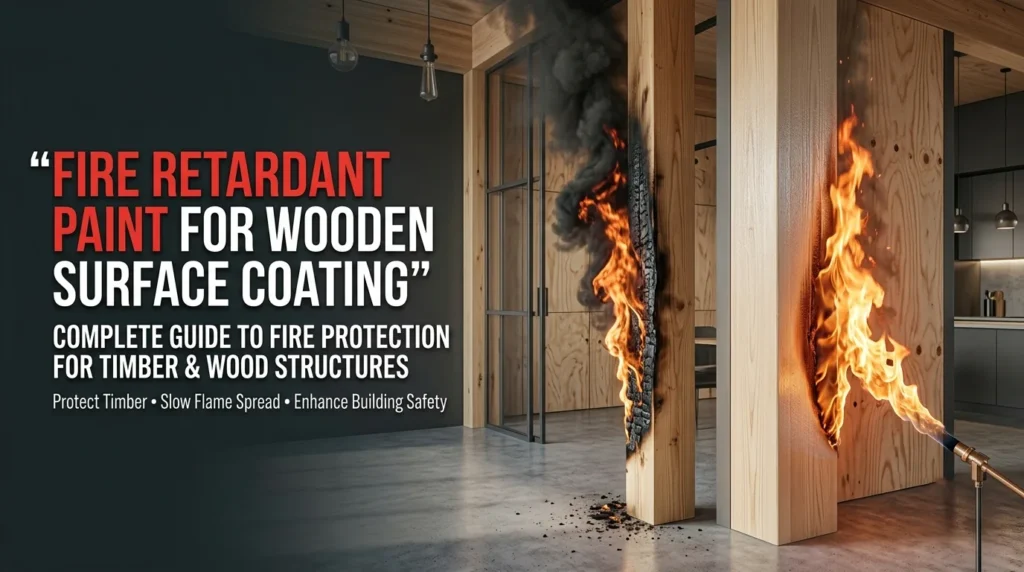
Wood is one of the most versatile and aesthetically appealing construction materials used in residential, commercial, and industrial projects. From fire doors and wall panels to ceilings and decorative joinery, timber adds warmth, strength, and architectural value to modern buildings. However, wood is also a combustible material that can contribute to rapid fire spread if left unprotected.
Fire retardant paint for wooden surface coating is specifically designed to enhance the fire resistance of timber without compromising its appearance or functionality. These specialized coatings slow flame spread, reduce heat transfer, and create a protective barrier that delays ignition and minimizes fire damage. As a result, they play a crucial role in passive fire protection systems for buildings and infrastructure.
Whether applied to structural timber, fire doors, interior wood panels, or decorative architectural elements, fire retardant paint helps improve occupant safety, protect valuable assets, and support compliance with fire safety regulations.
In this comprehensive guide, you’ll learn:
- What fire retardant paint is and how it works on wooden surfaces
- Different types of fire protection coatings for timber
- Common applications across commercial and industrial sectors
- Benefits of fire retardant paint for wood structures
- Best practices for application and maintenance
- Fire testing standards and certification requirements
- How to choose the right fire retardant coating for your project
Introduction to Fire Retardant Paint for Wooden Surfaces
Wood is a timeless construction material valued for its natural beauty, versatility, and strength. It is widely used in residential homes, commercial buildings, hotels, schools, hospitals, and industrial facilities for applications such as fire doors, wall panels, ceilings, partitions, and decorative architectural elements. However, despite its many advantages, wood is a combustible material that can accelerate the spread of fire if it is not properly protected.
Fire retardant paint for wooden surfaces is a specialized protective coating designed to improve the fire performance of timber by slowing flame spread, reducing heat transfer, and delaying ignition. Unlike conventional decorative paints, fire retardant coatings react when exposed to high temperatures, creating a protective barrier that helps preserve the integrity of wooden structures during a fire.
As fire safety regulations become more stringent and sustainable timber construction continues to grow, the demand for fire-safe wood coatings has increased significantly. These coatings provide an effective passive fire protection solution that enhances occupant safety, protects valuable assets, and helps buildings comply with modern fire safety standards.
Whether used on structural timber, fire doors, interior panels, or decorative wood finishes, fire retardant paint offers long-term protection while maintaining the aesthetic appeal of natural wood surfaces.
What is Fire Retardant Paint for Wood?
Fire retardant paint for wood is a specially formulated coating that reduces the flammability of timber and slows the spread of fire across wooden surfaces. It contains fire-resistant additives and intumescent compounds that activate when exposed to heat, forming an insulating protective layer.
Unlike ordinary paints that provide only decorative protection, fire retardant coatings are engineered to improve the fire performance of wood by:
- Slowing flame propagation
- Delaying ignition
- Reducing heat transfer
- Minimizing smoke generation
- Protecting structural integrity
These coatings can be applied to various wooden substrates, including:
- Fire doors
- Timber wall panels
- Wooden ceilings
- Decorative cladding
- Furniture
- Structural timber
- Interior joinery
Available in both clear and pigmented finishes, fire retardant paint allows architects and designers to achieve enhanced fire safety without compromising the natural appearance of wood.
Why Fire Protection is Essential for Wooden Structures
Wood is widely appreciated for its strength, sustainability, and aesthetic qualities, but it remains a combustible building material that can contribute to rapid fire growth if left unprotected.
When exposed to high temperatures, wood can:
- Ignite quickly
- Spread flames across surfaces
- Produce significant heat
- Lose structural strength over time
- Increase the risk of building damage
Applying fire retardant paint helps minimize these risks by creating a protective barrier that delays combustion and slows the transfer of heat.
The benefits of fire protection for wooden structures include:
- Improved occupant safety
- Extended evacuation time
- Reduced property damage
- Enhanced structural stability
- Better fire compartmentation
- Compliance with fire safety regulations
Fire retardant coatings are particularly important in buildings with high occupant density, such as:
- Commercial offices
- Hotels
- Hospitals
- Schools
- Shopping centers
- Auditoriums
- Public buildings
By enhancing the fire resistance of timber components, these coatings play a vital role in comprehensive passive fire protection systems.
Growing Demand for Fire-Safe Wood Coatings
The increasing use of timber in modern architecture and sustainable construction has led to a growing demand for advanced fire-safe wood coatings.
Several factors are driving this trend:
Stricter Fire Safety Regulations
Building codes and fire safety standards increasingly require the use of certified fire protection systems for timber structures and interior wood finishes, especially in commercial and public buildings.
Sustainable Construction Practices
As architects and developers embrace sustainable materials such as engineered timber and mass timber construction, fire retardant coatings have become essential for balancing environmental benefits with fire safety requirements.
Increased Focus on Occupant Safety
Property owners and facility managers are investing in passive fire protection solutions that improve evacuation time and reduce fire-related risks without affecting building aesthetics.
Expansion of Commercial and Industrial Infrastructure
Growing investments in:
- Office complexes
- Hotels
- Educational institutions
- Healthcare facilities
- Industrial buildings
- Public infrastructure
have increased the demand for reliable fire retardant coatings that protect timber surfaces while supporting long-term durability and regulatory compliance.
Preservation of Architectural Design
Modern fire retardant coatings are available in clear and decorative finishes, allowing designers to retain the natural beauty of wood while significantly enhancing its fire performance.
As the construction industry continues to prioritize safety, sustainability, and compliance, fire retardant paint for wooden surfaces remains one of the most effective solutions for protecting timber structures and decorative wood elements against the devastating effects of fire.
Understanding Fire Retardant Paint Technology
Fire retardant paint technology is an advanced passive fire protection solution designed to improve the fire performance of wooden surfaces and timber structures. Unlike conventional decorative coatings, fire retardant paints are formulated with specialized compounds that react to high temperatures, helping to slow flame spread, reduce heat transfer, and delay the ignition of wood.
Wood is a naturally combustible material that can contribute to rapid fire growth if left unprotected. Fire retardant paint enhances the fire resistance of timber by creating a protective barrier that limits combustion and provides valuable additional time for occupants to evacuate and emergency responders to control the fire.
Today, fire retardant coatings are widely used on fire doors, timber wall panels, wooden ceilings, decorative joinery, and structural wood in commercial, industrial, and public buildings. Their ability to combine fire safety with aesthetic finishes makes them an essential component of modern building design.
How Fire Retardant Paint Works on Wood
Fire retardant paint is engineered to modify the way wood reacts when exposed to fire. Instead of allowing flames to spread rapidly across the surface, the coating activates under high temperatures and creates a protective layer that slows the combustion process.
The fire protection process generally follows these stages:
- Exposure to heat and flames
- Activation of fire-retardant chemicals
- Formation of a protective insulating layer
- Reduction of oxygen supply to the wood
- Slower heat penetration into the substrate
This reaction helps:
- Delay wood ignition
- Reduce flame propagation
- Minimize heat transfer
- Lower smoke production
- Improve overall fire resistance
Because the coating works as part of a passive fire protection system, it provides continuous protection without requiring external activation or electrical systems.
Heat Reaction and Protective Barrier Formation
One of the key features of fire retardant paint is its ability to react when exposed to elevated temperatures.
As the surrounding temperature rises, the specialized ingredients within the coating begin a controlled chemical reaction that creates an insulating barrier between the fire and the wooden surface.
For intumescent fire retardant coatings, this process includes:
- Activation of fire-resistant compounds
- Expansion of the coating layer
- Formation of a carbon-rich insulating char
- Protection of the underlying timber
The protective barrier performs several important functions:
- Reduces direct flame contact
- Slows heat transfer
- Delays combustion
- Protects structural integrity
- Minimizes fire damage
This insulating layer can expand several times its original thickness, providing effective thermal insulation and significantly improving the fire performance of wooden structures.
Flame Spread Reduction Mechanism
One of the primary objectives of fire retardant paint is to reduce the speed at which flames spread across wooden surfaces.
Untreated timber can allow fire to travel quickly from one area to another, increasing the risk of structural damage and reducing available evacuation time. Fire retardant coatings interrupt this process by changing the combustion characteristics of the wood.
The flame spread reduction mechanism works by:
- Limiting oxygen available for combustion
- Reducing heat release
- Creating a protective surface barrier
- Slowing ignition of adjacent areas
- Delaying continuous burning
The result is:
- Slower fire development
- Improved fire compartmentation
- Better protection of escape routes
- Reduced property damage
- Increased time for emergency response
This technology is particularly valuable for large wooden surfaces such as wall panels, ceilings, fire doors, and architectural timber elements used in commercial and public buildings.
Passive Fire Protection for Timber Surfaces
Fire retardant paint is an integral part of passive fire protection systems, which are designed to limit the spread of fire without requiring mechanical or electrical activation.
Unlike active fire protection systems such as sprinklers or fire alarms, passive fire protection works continuously and immediately when exposed to heat.
For timber surfaces, fire retardant paint provides protection by:
- Delaying ignition
- Slowing flame spread
- Reducing heat transfer
- Protecting structural wood components
- Supporting fire compartmentation
Common timber applications include:
- Fire doors and door frames
- Wooden wall panels
- Decorative cladding
- Timber ceilings
- Interior joinery
- Structural timber members
- Architectural wood finishes
Key benefits of passive fire protection for timber surfaces include:
- Enhanced occupant safety
- Increased evacuation time
- Reduced structural damage
- Improved building fire performance
- Support for fire safety regulations and building codes
By combining advanced fire-retardant chemistry with durable protective coatings, fire retardant paint provides an effective and reliable solution for safeguarding wooden surfaces while preserving their natural appearance and long-term performance.
Why Wooden Surfaces Need Fire Retardant Coatings
Wood is one of the most widely used construction and decorative materials due to its strength, versatility, and natural aesthetic appeal. It is commonly found in fire doors, wall panels, ceilings, flooring, partitions, furniture, and structural timber applications. Despite these advantages, wood is inherently combustible and can contribute to the rapid spread of fire if left unprotected.
Fire retardant coatings provide an effective passive fire protection solution by enhancing the fire performance of wooden surfaces. These specialized coatings slow flame spread, reduce heat transfer, delay ignition, and create a protective barrier that helps preserve the integrity of timber during fire exposure.
By applying fire retardant paint to wooden structures and decorative elements, building owners can improve occupant safety, reduce fire damage, and comply with modern fire safety regulations while maintaining the natural beauty of wood.
Fire Risks Associated with Wood
Wood is an organic material that burns when exposed to sufficient heat and oxygen. During a fire, untreated timber can ignite quickly and allow flames to spread across large surface areas, increasing the risk of structural damage and property loss.
Common fire risks associated with wooden surfaces include:
- Rapid ignition under high temperatures
- Fast flame spread across walls and ceilings
- Heat generation that accelerates fire growth
- Structural weakening due to prolonged burning
- Increased smoke production and property damage
Wood is extensively used in:
- Fire doors
- Interior wall panels
- Ceiling systems
- Decorative cladding
- Furniture and joinery
- Structural timber frameworks
Without proper fire protection, these components can significantly contribute to the progression of a fire.
Fire retardant paint minimizes these risks by slowing combustion and creating a protective layer that delays the ignition of wooden surfaces.
Improving Fire Resistance Without Changing Appearance
One of the biggest advantages of modern fire retardant coatings is their ability to improve fire performance while preserving the natural appearance of wood.
Many fire retardant systems are available in:
- Clear transparent finishes
- Matte coatings
- Satin finishes
- Decorative pigmented coatings
These coatings allow architects and designers to retain the natural grain, texture, and visual appeal of timber while providing enhanced fire protection.
Benefits include:
- Preserving architectural aesthetics
- Protecting decorative wood finishes
- Maintaining natural timber appearance
- Enhancing fire safety without major design changes
- Suitable for both modern and heritage buildings
This makes fire retardant paint an ideal solution for:
- Luxury hotels
- Corporate offices
- Educational institutions
- Healthcare facilities
- Auditoriums
- Residential and commercial interiors
By combining aesthetics with advanced fire protection technology, fire retardant coatings offer a practical solution for contemporary building design.
Protecting Structural and Decorative Wood
Wood is used for both structural support and decorative applications, making comprehensive fire protection essential throughout a building.
Structural Timber Protection
Fire retardant paint helps protect:
- Timber beams
- Roof trusses
- Load-bearing wood structures
- Engineered wood products
- Timber framing systems
The coating slows heat penetration and delays structural weakening, allowing timber components to maintain their integrity for a longer period during fire exposure.
Decorative Wood Protection
Decorative applications include:
- Wall panels
- Wooden ceilings
- Fire doors
- Interior cladding
- Architectural joinery
- Reception areas
- Luxury wood finishes
Fire retardant coatings reduce flame spread while preserving the appearance and functionality of these architectural elements.
By protecting both structural and decorative timber, fire retardant paint contributes to safer buildings and reduces the potential for extensive fire damage.
Extending Evacuation Time During Fire Emergencies
One of the primary objectives of passive fire protection is to provide occupants with additional time to evacuate safely during a fire.
Fire retardant paint helps achieve this by:
- Delaying ignition of wooden surfaces
- Slowing flame propagation
- Reducing heat transfer
- Limiting fire growth
- Supporting fire compartmentation
These protective properties help keep escape routes safer for longer periods and provide emergency responders with valuable additional time to control the fire.
Buildings where extended evacuation time is particularly important include:
- Hotels
- Hospitals
- Schools and universities
- Office complexes
- Shopping malls
- Public buildings
- Auditoriums and convention centers
The benefits of increased evacuation time include:
- Improved occupant safety
- Reduced panic during emergencies
- Better accessibility for rescue operations
- Lower risk of injuries and fatalities
- Enhanced overall fire resilience
As timber construction continues to grow in popularity, fire retardant coatings have become an essential component of modern passive fire protection strategies. By reducing fire risks, preserving the natural beauty of wood, protecting structural and decorative elements, and extending evacuation time, fire retardant paint provides a reliable and long-lasting solution for safer timber buildings and architectural wood applications.
Types of Fire Retardant Coatings for Wooden Surfaces
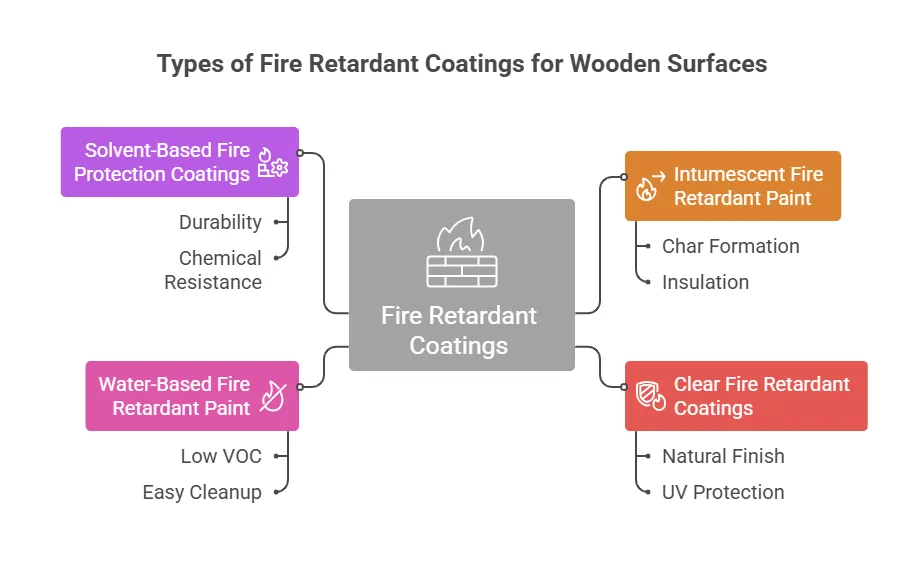
Fire retardant coatings for wooden surfaces are available in a variety of formulations designed to meet different fire protection requirements, aesthetic preferences, and environmental conditions. Whether the objective is to preserve the natural appearance of timber, protect structural wood elements, or provide long-lasting fire resistance in commercial and industrial environments, selecting the appropriate coating system is essential.
Modern fire retardant coatings not only reduce flame spread and heat transfer but also enhance the durability and safety of wooden surfaces without significantly altering their appearance. Understanding the different types of fire retardant coatings helps architects, contractors, and building owners choose the most effective solution for their specific applications.
Intumescent Fire Retardant Paint
Intumescent fire retardant paint is one of the most advanced and widely used fire protection coatings for wooden surfaces. It is specifically engineered to react when exposed to high temperatures by expanding into a thick insulating char layer.
This expansion process creates a protective barrier between the fire and the wood, significantly reducing heat transfer and delaying ignition.
How It Works
When exposed to temperatures typically above 200°C:
- Fire-retardant chemicals activate
- The coating expands multiple times its original thickness
- A carbon-rich insulating char is formed
- Heat penetration into the wood is significantly reduced
Key Benefits
- Excellent fire resistance performance
- Delays ignition and combustion
- Slows flame spread
- Reduces heat transfer
- Improves structural fire protection
- Supports passive fire safety systems
Common Applications
Intumescent coatings are commonly used on:
- Fire doors
- Timber beams
- Wooden wall panels
- Decorative ceilings
- Structural timber
- Commercial interiors
- Public buildings
These coatings are ideal for projects requiring certified fire resistance ratings and enhanced occupant safety.
Clear Fire Retardant Coatings for Natural Wood Finish
Many architectural projects require fire protection without hiding the natural beauty of wood. Clear fire retardant coatings provide an effective solution by maintaining the visible grain and texture of timber while improving its fire performance.
Unlike opaque paints, these transparent coatings preserve the original appearance of the wood and are particularly popular in premium interior designs.
Advantages
- Maintains natural wood aesthetics
- Preserves grain and texture
- Provides fire protection without altering design
- Suitable for decorative applications
- Compatible with high-end architectural finishes
Typical Applications
Clear fire retardant coatings are widely used for:
- Decorative wall panels
- Luxury hotel interiors
- Wooden ceilings
- Auditoriums
- Museums
- Heritage buildings
- Architectural joinery
- Premium residential projects
These coatings combine fire safety with elegant design, making them a preferred choice for visible timber surfaces.
Water-Based Fire Retardant Paint
Water-based fire retardant paint has become increasingly popular due to its environmental benefits, ease of application, and low odor. These coatings are formulated using water as the primary carrier, making them suitable for interior applications where indoor air quality is an important consideration.
Features
Water-based fire retardant coatings offer:
- Low VOC emissions
- Fast drying times
- Minimal odor during application
- Easy cleanup with water
- Excellent adhesion to wooden surfaces
- Smooth decorative finishes
Benefits
They provide:
- Improved occupant comfort during application
- Environmentally friendly performance
- Reduced maintenance requirements
- Consistent fire protection
- Excellent compatibility with interior timber finishes
Common Applications
Water-based systems are ideal for:
- Schools
- Hospitals
- Office buildings
- Hotels
- Residential interiors
- Commercial spaces
- Fire doors
- Interior timber partitions
Their combination of safety, performance, and sustainability makes them one of the most widely specified fire retardant coating systems for indoor wooden surfaces.
Solvent-Based Fire Protection Coatings
Solvent-based fire retardant coatings are designed for demanding environments where enhanced durability and resistance to moisture, chemicals, or harsh conditions are required.
These coatings typically provide stronger resistance to environmental exposure and are suitable for both interior and exterior timber applications.
Characteristics
Solvent-based systems offer:
- High durability
- Excellent adhesion
- Superior moisture resistance
- Enhanced weather performance
- Improved chemical resistance
- Long service life
Advantages
These coatings perform well in environments exposed to:
- High humidity
- Temperature fluctuations
- Industrial pollutants
- Mechanical wear
- Exterior weather conditions
Typical Applications
Solvent-based fire protection coatings are commonly applied to:
- Exterior timber structures
- Industrial facilities
- Warehouses
- Utility buildings
- Timber cladding
- Loading areas
- Manufacturing plants
- Infrastructure projects
They are particularly suitable where long-term durability and environmental resistance are as important as fire protection.
Selecting the right fire retardant coating for wooden surfaces depends on the project’s fire resistance requirements, environmental conditions, and aesthetic goals. Intumescent coatings provide advanced structural fire protection, clear coatings preserve the natural beauty of timber, water-based systems offer sustainable interior solutions, and solvent-based coatings deliver exceptional durability for demanding applications. By choosing the appropriate coating system, building owners and designers can achieve long-lasting fire safety while maintaining the functionality and appearance of wooden structures.
Applications of Fire Retardant Paint on Wooden Surfaces
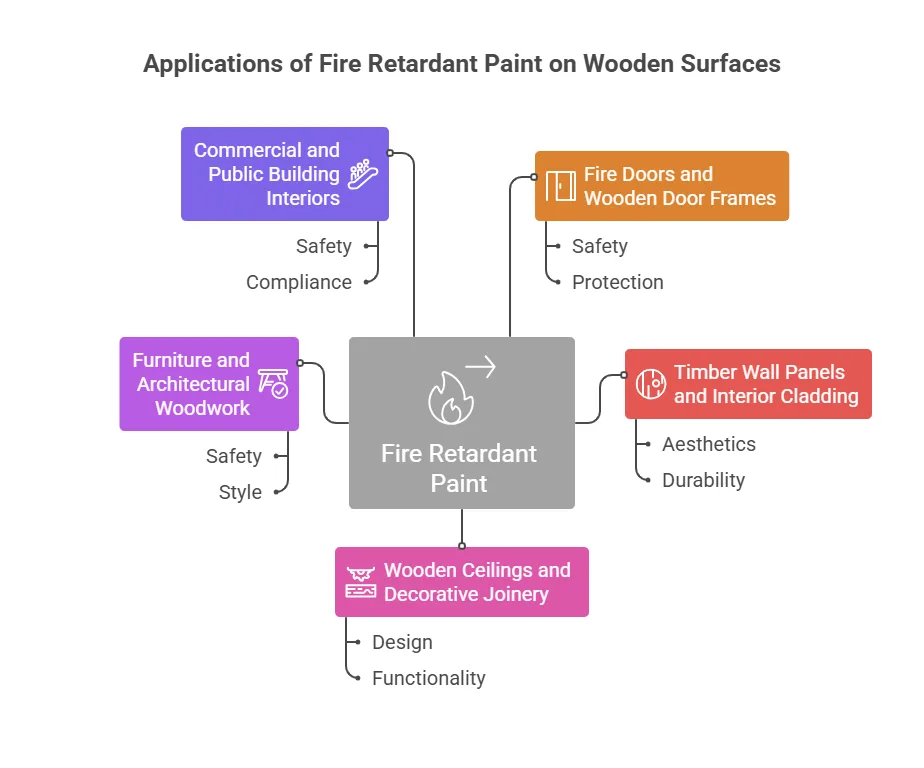
Fire retardant paint is widely used to enhance the fire safety of wooden surfaces in residential, commercial, industrial, and public buildings. These specialized coatings help reduce flame spread, delay ignition, and minimize heat transfer, providing valuable additional time for evacuation and emergency response during a fire.
Modern fire retardant coatings are designed to protect both structural and decorative timber while preserving the natural beauty and functionality of wood. Whether applied to fire doors, wall panels, ceilings, furniture, or architectural woodwork, these coatings play a vital role in passive fire protection systems and help buildings comply with fire safety regulations.
From commercial offices and hotels to hospitals and educational institutions, fire retardant paint is an essential solution for improving the fire performance of wooden structures and interior finishes.
Fire Doors and Wooden Door Frames
Fire doors are one of the most critical components of a building’s passive fire protection system. They are designed to compartmentalize fire and smoke, allowing occupants to evacuate safely while limiting the spread of fire to adjacent areas.
Applying fire retardant paint to fire doors and wooden door frames helps:
- Reduce flame spread
- Delay ignition of timber surfaces
- Improve fire resistance performance
- Protect door assemblies during fire exposure
- Enhance compartmentation effectiveness
Common applications include:
- Commercial office buildings
- Hotels and resorts
- Hospitals and healthcare facilities
- Educational institutions
- Shopping malls
- Public buildings
Benefits include:
- Increased evacuation time
- Improved occupant safety
- Reduced fire damage
- Compliance with fire safety requirements
Properly coated fire doors contribute significantly to overall building fire protection and emergency preparedness.
Timber Wall Panels and Interior Cladding
Timber wall panels and decorative cladding are increasingly popular in modern architecture due to their warm appearance and sustainable design benefits. However, these large wooden surfaces can contribute to rapid fire spread if left untreated.
Fire retardant paint enhances the fire performance of timber panels by:
- Slowing flame propagation
- Reducing heat release
- Delaying ignition
- Improving fire compartmentation
- Protecting decorative finishes
Typical applications include:
- Reception areas
- Conference rooms
- Hotel lobbies
- Auditoriums
- Educational facilities
- Corporate offices
These coatings allow architects to retain the natural beauty of timber while significantly improving fire safety throughout the building.
Wooden Ceilings and Decorative Joinery
Wooden ceilings and decorative joinery add elegance and architectural character to interior spaces but require appropriate fire protection due to their elevated position and extensive surface area.
Fire retardant paint is commonly applied to:
- Timber ceiling systems
- Decorative beams
- Coffered ceilings
- Wooden moldings
- Custom joinery
- Feature walls
- Interior trim
Key advantages include:
- Reduced flame spread across ceiling surfaces
- Lower heat transfer
- Protection of decorative wood elements
- Enhanced fire safety without compromising design
Many fire retardant coatings are available in clear or low-sheen finishes, preserving the natural grain and appearance of premium timber while providing reliable fire protection.
Furniture and Architectural Woodwork
Wooden furniture and architectural woodwork are valuable interior elements that benefit from additional fire protection, especially in commercial and public environments.
Fire retardant coatings can be applied to:
- Built-in cabinets
- Wooden partitions
- Library shelving
- Conference tables
- Reception counters
- Display units
- Decorative furniture
- Custom architectural installations
Benefits include:
- Delayed ignition
- Reduced flame spread
- Protection of valuable interior assets
- Improved fire safety in occupied spaces
- Extended service life of wooden components
These coatings are particularly valuable in high-occupancy buildings where furniture and wood finishes contribute significantly to the overall interior design.
Commercial and Public Building Interiors
Commercial and public buildings often incorporate extensive timber finishes to create attractive, welcoming environments. At the same time, these facilities must meet strict fire safety regulations and protect large numbers of occupants.
Fire retardant paint is widely used in:
Commercial Buildings
- Office interiors
- Conference rooms
- Executive suites
- Reception areas
- Retail spaces
Hospitality Projects
- Hotels
- Resorts
- Restaurants
- Banquet halls
- Convention centers
Healthcare Facilities
- Hospitals
- Clinics
- Patient rooms
- Waiting areas
Educational Institutions
- Schools
- Universities
- Libraries
- Auditoriums
- Lecture halls
Public Buildings
- Museums
- Government offices
- Airports
- Railway stations
- Cultural centers
Key benefits include:
- Improved occupant safety
- Enhanced passive fire protection
- Reduced fire spread
- Compliance with building codes
- Preservation of architectural aesthetics
- Long-term protection of timber finishes
By integrating fire retardant paint into commercial and public building interiors, designers and facility managers can achieve the perfect balance between safety, durability, and visual appeal.
Fire retardant paint continues to be one of the most effective solutions for protecting wooden surfaces across a wide range of applications. From fire doors and timber wall panels to decorative ceilings, furniture, and public interiors, these advanced coatings enhance fire resistance while preserving the natural beauty and functionality of wood, making them an essential component of modern passive fire protection systems.
Benefits of Fire Retardant Paint for Wooden Surface Coating
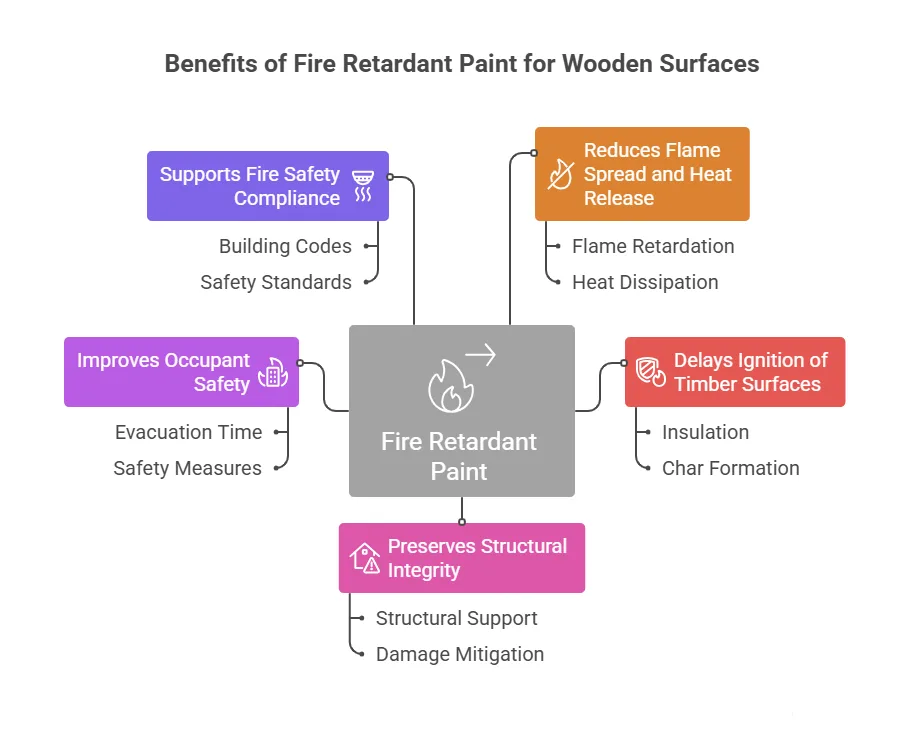
Fire retardant paint is an essential protective solution for wooden surfaces used in residential, commercial, industrial, and public buildings. While wood offers exceptional strength, sustainability, and aesthetic appeal, it is also a combustible material that can contribute to rapid fire spread when left unprotected.
Fire retardant paint enhances the fire performance of timber by slowing flame propagation, reducing heat transfer, delaying ignition, and creating a protective barrier that minimizes fire damage. These coatings are a key component of passive fire protection systems, providing continuous protection without requiring activation by alarms or sprinklers.
From fire doors and wall panels to structural timber and decorative woodwork, fire retardant coatings improve building safety while preserving the natural appearance and functionality of wooden surfaces.
Reduces Flame Spread and Heat Release
One of the primary advantages of fire retardant paint is its ability to slow the spread of flames across wooden surfaces. Untreated wood can ignite quickly and allow fire to move rapidly throughout a building, increasing the risk of structural damage and occupant injury.
Fire retardant paint changes the combustion behavior of timber by creating a protective layer that limits the fire’s ability to spread.
Key Benefits
- Slows flame propagation across wood surfaces
- Reduces heat release during combustion
- Delays the growth of fire
- Limits damage to surrounding areas
- Improves fire compartmentation
Common Applications
This benefit is especially valuable for:
- Fire doors
- Wooden wall panels
- Interior cladding
- Timber ceilings
- Decorative joinery
- Public building interiors
By reducing flame spread and heat release, fire retardant coatings help control fire development and improve the overall fire performance of wooden structures.
Delays Ignition of Timber Surfaces
Fire retardant paint significantly increases the time required for wood to ignite when exposed to heat or flames.
When high temperatures are encountered, specialized fire-retardant compounds activate and create an insulating barrier that protects the timber beneath.
Advantages
- Delays combustion of wood
- Reduces the likelihood of flashover
- Slows fire progression
- Protects exposed timber surfaces
- Improves emergency response opportunities
This additional protection is particularly important in buildings with extensive timber interiors, where delaying ignition can prevent a localized fire from becoming a major incident.
Applications include:
- Hotels
- Schools
- Hospitals
- Office buildings
- Shopping centers
- Residential developments
Delaying ignition provides valuable time for occupants to react and evacuate safely.
Preserves Structural Integrity During Fire
Wood loses strength as it burns, which can compromise the stability of structural and architectural elements during a fire.
Fire retardant paint helps preserve structural integrity by reducing heat penetration and slowing the combustion process.
Structural Benefits
The coating helps protect:
- Timber beams
- Roof trusses
- Structural framing
- Wooden partitions
- Fire-rated doors
- Engineered timber systems
By slowing heat transfer, fire retardant paint:
- Delays structural weakening
- Reduces charring rates
- Maintains load-bearing capacity for longer periods
- Minimizes fire-related structural damage
This protection is especially important in modern timber construction, where structural safety is critical to building performance.
Improves Occupant Safety and Evacuation Time
The primary objective of any fire protection system is to protect human life. Fire retardant paint contributes directly to occupant safety by slowing fire growth and providing additional time for evacuation.
Safety Benefits
Fire retardant coatings help:
- Delay flame spread
- Reduce heat exposure
- Protect escape routes
- Improve fire compartmentation
- Increase emergency response time
Additional evacuation time is particularly valuable in high-occupancy buildings such as:
- Hotels
- Hospitals
- Schools
- Shopping malls
- Office complexes
- Auditoriums
- Government buildings
By slowing the progression of fire, these coatings create safer conditions for occupants and emergency responders, reducing the risk of injuries and fatalities.
Supports Fire Safety Compliance
Modern construction projects must meet increasingly stringent fire safety regulations and building code requirements. Fire retardant paint helps architects, contractors, and building owners achieve these standards while enhancing overall building protection.
Compliance Advantages
Certified fire retardant coating systems support:
- Passive fire protection strategies
- Building code compliance
- Fire safety regulations
- Risk management programs
- Insurance requirements
- Project specification standards
Properly tested coatings are often evaluated according to recognized fire testing standards, including:
- ASTM fire testing standards
- BS fire protection standards
- IS fire safety standards
Using certified fire retardant paint provides:
- Verified fire performance
- Reliable long-term protection
- Simplified inspection and approval processes
- Greater confidence in building safety
Fire retardant paint for wooden surface coating offers a comprehensive fire protection solution that combines safety, durability, and aesthetics. By reducing flame spread and heat release, delaying timber ignition, preserving structural integrity, improving occupant safety, and supporting fire safety compliance, these advanced coatings provide long-lasting passive fire protection for timber structures and decorative wood applications. Whether used in commercial buildings, public facilities, or industrial projects, fire retardant paint is an essential investment in protecting lives, property, and valuable wooden assets.
Fire Retardant Paint vs Traditional Wood Coatings
Wooden surfaces require protective coatings to enhance their appearance and extend their lifespan. Traditional wood coatings such as enamel paints, polyurethane finishes, varnishes, stains, and sealers are primarily designed to provide decorative appeal and resistance against moisture, scratches, and weathering. However, they offer little or no protection against fire.
Fire retardant paint goes beyond conventional surface protection by incorporating advanced fire-resistant technology that slows flame spread, reduces heat transfer, and delays the ignition of timber. This makes it an essential component of passive fire protection systems for commercial buildings, public facilities, industrial structures, and modern timber construction.
Understanding the differences between fire retardant paint and traditional wood coatings helps architects, contractors, and property owners select the right solution for both aesthetics and fire safety.
Fire Protection Performance
The most significant difference between fire retardant paint and traditional wood coatings is their performance during a fire.
Traditional coatings are designed for decoration and surface protection but may burn, melt, or contribute to flame spread when exposed to high temperatures.
Fire retardant paint is specifically formulated to react to heat by creating a protective barrier that slows combustion and protects the underlying wood.
Fire Retardant Paint
- Slows flame spread across wooden surfaces
- Delays ignition of timber
- Reduces heat transfer
- Forms an insulating protective layer
- Improves fire resistance performance
- Supports passive fire protection systems
Traditional Wood Coatings
- Primarily decorative and protective
- Limited or no fire resistance
- May accelerate fire spread
- Do not create thermal insulation
- Not designed for fire safety applications
For projects where fire safety is a priority, fire retardant paint provides significantly greater protection than conventional wood coatings.
Decorative Finish and Aesthetic Appeal
Modern fire retardant paints are available in a variety of finishes that combine fire protection with architectural aesthetics.
Unlike earlier generations of fireproof coatings, today’s products can preserve the natural beauty of timber while providing enhanced fire performance.
Fire Retardant Paint Options
- Clear transparent finishes
- Matte finishes
- Satin finishes
- Semi-gloss coatings
- Decorative pigmented colors
These coatings allow the natural grain and texture of wood to remain visible while improving fire resistance.
Traditional Wood Coatings
Traditional wood finishes offer:
- Rich color enhancement
- High-gloss appearance
- Natural wood highlighting
- Decorative customization
Although traditional coatings may provide a wider range of decorative effects, they do not contribute to fire safety.
Modern fire retardant coatings successfully combine aesthetic appeal with advanced passive fire protection, making them ideal for premium architectural applications.
Durability and Maintenance
Both fire retardant paint and traditional wood coatings are designed to protect wooden surfaces, but their maintenance requirements and long-term performance differ depending on the application and environmental conditions.
Fire Retardant Paint
When properly applied and maintained, fire retardant coatings provide:
- Long-lasting fire protection
- Excellent adhesion
- Good resistance to surface wear
- Protection against heat-related damage
- Reliable performance for many years
Routine maintenance typically includes:
- Visual inspections
- Checking for cracks or peeling
- Repairing damaged areas
- Recoating when recommended by the manufacturer
Traditional Wood Coatings
Traditional coatings primarily protect against:
- Moisture
- UV exposure
- Abrasion
- Everyday wear
However, they may require:
- More frequent refinishing
- Regular polishing
- Surface repairs
- Reapplication due to fading or weathering
For commercial and public buildings where fire protection is essential, fire retardant paint offers both durability and enhanced safety performance.
Long-Term Safety Benefits
The greatest advantage of fire retardant paint over traditional wood coatings is its contribution to long-term building safety.
Rather than serving only as a decorative finish, fire retardant paint becomes an active part of a building’s passive fire protection strategy.
Long-Term Benefits of Fire Retardant Paint
- Reduces flame spread
- Delays timber ignition
- Slows heat transfer
- Preserves structural integrity
- Improves evacuation time
- Protects valuable wooden assets
- Supports fire safety compliance
- Enhances overall building resilience
These benefits are particularly important in:
- Hotels
- Hospitals
- Schools
- Office buildings
- Shopping malls
- Auditoriums
- Industrial facilities
- Public infrastructure
Traditional Wood Coatings
While traditional coatings enhance appearance and provide surface protection, they generally do not:
- Improve fire resistance
- Delay structural failure
- Reduce flame spread
- Support passive fire protection systems
As fire safety regulations become increasingly stringent, fire retardant paint has become the preferred choice for protecting timber structures and decorative wood finishes.
Comparison Table
| Feature | Fire Retardant Paint | Traditional Wood Coatings |
| Fire Protection | ✔ Excellent | ✖ Minimal or None |
| Flame Spread Reduction | ✔ Yes | ✖ No |
| Heat Transfer Reduction | ✔ Yes | ✖ No |
| Delays Timber Ignition | ✔ Yes | ✖ No |
| Decorative Finish | ✔ Clear & Pigmented Options | ✔ Wide Variety |
| Preserves Natural Wood Appearance | ✔ Available in Clear Finish | ✔ Yes |
| Structural Fire Protection | ✔ Yes | ✖ No |
| Building Code Support | ✔ Yes | ✖ Not Applicable |
| Long-Term Occupant Safety | ✔ High | ✖ Limited |
By combining advanced fire protection technology with attractive finishes and long-lasting durability, fire retardant paint offers a superior solution for wooden surface coating. It not only preserves the beauty of timber but also provides essential passive fire protection that enhances occupant safety, protects valuable assets, and supports compliance with modern fire safety standards.
How to Choose the Right Fire Retardant Paint for Wood
Selecting the right fire retardant paint for wooden surfaces is essential for achieving effective passive fire protection while maintaining the durability and appearance of timber. Different wood species, environmental conditions, fire resistance requirements, and aesthetic preferences all influence the performance of a fire protection coating.
A properly selected and certified fire retardant paint not only slows flame spread and delays ignition but also helps preserve structural integrity, improve occupant safety, and support compliance with fire safety regulations.
Before choosing a coating system, it is important to evaluate the type of wood, the intended application, required fire rating, environmental exposure, and relevant certification standards.
Surface Type and Wood Species Compatibility
Not all wooden surfaces have the same characteristics. Different wood species vary in density, porosity, moisture content, and natural resin levels, all of which can affect coating adhesion and fire protection performance.
Common Wooden Surfaces
Fire retardant paint can be applied to:
- Fire doors
- Timber wall panels
- Wooden ceilings
- Decorative cladding
- Structural timber
- Furniture
- Interior joinery
- Engineered wood products
Wood Species Considerations
Softwoods
Examples include:
- Pine
- Cedar
- Spruce
Characteristics:
- More porous
- Absorb coatings more readily
- May require additional primer for uniform coverage
Hardwoods
Examples include:
- Oak
- Teak
- Maple
Characteristics:
- Higher density
- Lower absorption
- May require specialized surface preparation for optimal adhesion
Selection Tips
Choose a fire retardant coating that:
- Is specifically approved for timber applications
- Offers excellent adhesion to the selected wood species
- Is compatible with existing primers or finishes
- Maintains long-term durability without compromising fire performance
Proper compatibility ensures consistent protection and longer coating life.
Required Fire Resistance Rating
Every building project has unique fire protection requirements based on occupancy type, building codes, and structural design.
Fire retardant paint should be selected according to the required fire resistance rating specified for the project.
Common Fire Ratings
- 30 Minutes
- 60 Minutes
- 90 Minutes
- 120 Minutes
- 180 Minutes (special applications)
Factors Influencing Fire Rating Selection
- Building occupancy
- Type of wooden structure
- Fire safety regulations
- Location of timber components
- Risk assessment
- Insurance requirements
Typical Applications
| Fire Rating | Common Applications |
| 30 Minutes | Residential interiors |
| 60 Minutes | Commercial offices and schools |
| 90 Minutes | Hotels and healthcare facilities |
| 120 Minutes | Industrial and public infrastructure |
| 180 Minutes | High-risk industrial environments |
Selecting a coating with the appropriate tested fire rating ensures the required level of protection during a fire emergency.
Interior vs Exterior Wooden Applications
Environmental conditions have a significant impact on coating performance. Fire retardant paint designed for interior use may not provide adequate protection in outdoor environments.
Interior Applications
Suitable for:
- Fire doors
- Wooden partitions
- Wall panels
- Ceilings
- Decorative woodwork
- Office interiors
Interior coatings typically provide:
- Low VOC formulations
- Smooth decorative finishes
- Excellent adhesion
- Fast drying
- Minimal odor
Exterior Applications
Used for:
- Timber cladding
- Exterior structures
- Wooden facades
- Utility buildings
- Industrial timber components
Exterior fire retardant coatings should offer:
- UV resistance
- Moisture protection
- Weather durability
- Temperature stability
- Long-term performance
Many exterior systems also require protective topcoats to maintain both durability and fire protection performance.
Selecting an environment-specific coating ensures maximum service life and reliable fire resistance.
Clear vs Opaque Fire Retardant Coatings
Aesthetic requirements often influence the choice between clear and opaque fire retardant coatings.
Clear Fire Retardant Coatings
These coatings preserve the natural appearance of timber while providing enhanced fire protection.
Advantages include:
- Maintains wood grain visibility
- Preserves natural texture
- Ideal for decorative applications
- Suitable for premium architectural finishes
Common applications:
- Luxury hotels
- Museums
- Auditoriums
- Corporate offices
- Decorative wall panels
- Heritage buildings
Opaque Fire Retardant Coatings
Opaque systems provide both decorative color and fire protection.
Benefits include:
- Wide color selection
- Uniform finish
- Excellent surface coverage
- Additional weather protection
- Ability to hide surface imperfections
Typical applications:
- Commercial buildings
- Schools
- Hospitals
- Warehouses
- Industrial facilities
- Public infrastructure
The choice depends on whether maintaining the natural wood appearance or achieving a specific architectural finish is the project’s priority.
Fire Testing and Certification Standards
Fire retardant paint should always be selected based on recognized fire testing and certification standards rather than appearance or cost alone.
Certified products provide documented evidence of their performance under controlled fire conditions.
Important Fire Performance Characteristics
Certified coatings are evaluated for:
- Flame spread
- Heat transfer
- Fire resistance
- Smoke development
- Adhesion
- Durability
Common Fire Testing Standards
International and regional standards commonly referenced include:
- ASTM Fire Testing Standards
- BS Fire Protection Standards
- IS Fire Safety Standards
What to Verify Before Selection
Ensure the coating system includes:
- Fire test reports
- Product certification
- Technical data sheets
- Application guidelines
- Dry film thickness requirements
- Approved primer and topcoat systems
Benefits of Certified Fire Retardant Paint
- Verified fire performance
- Reliable passive fire protection
- Improved building safety
- Compliance with fire regulations
- Greater confidence during inspections
- Long-term structural and occupant protection
Choosing the right fire retardant paint for wood requires careful consideration of surface compatibility, required fire resistance rating, environmental exposure, finish preferences, and certified fire performance. By selecting a tested and approved coating system that matches the project’s specific requirements, building owners, architects, and contractors can achieve durable fire protection while preserving the beauty and functionality of wooden surfaces for years to come.
Application Process for Wooden Surface Fire Retardant Paint
The performance of fire retardant paint on wooden surfaces depends not only on the quality of the coating but also on proper application techniques. Even a certified fire retardant coating may fail to provide its intended fire resistance if the surface is poorly prepared, the wrong primer is used, or the coating is applied at an incorrect thickness.
A systematic application process ensures excellent adhesion, consistent coverage, long-term durability, and reliable fire protection. From fire doors and timber wall panels to wooden ceilings and decorative joinery, following manufacturer-recommended procedures is essential for achieving optimal results.
Proper application also helps maintain the natural appearance of wood while ensuring compliance with fire safety standards and project specifications.
Surface Preparation and Cleaning
Surface preparation is the foundation of a successful fire retardant coating system. Wooden surfaces must be clean, dry, and free from contaminants that could interfere with adhesion.
Preparation Steps
Before application:
- Remove dust and dirt
- Eliminate grease and oil stains
- Sand rough or uneven areas
- Repair cracks and damaged wood
- Remove loose paint or old coatings
- Ensure the surface is completely dry
Moisture Control
Excess moisture in timber can affect coating performance and curing.
Recommended practices include:
- Checking wood moisture content
- Avoiding application on damp surfaces
- Allowing newly installed timber to stabilize
- Protecting surfaces from rain or condensation
Benefits of Proper Surface Preparation
- Improved coating adhesion
- Uniform finish
- Enhanced fire protection performance
- Reduced risk of peeling or blistering
- Longer service life
Proper preparation creates an ideal foundation for the fire retardant coating system and maximizes its effectiveness.
Primer Selection and Compatibility
Selecting the correct primer is essential for ensuring strong adhesion and long-term durability of the fire retardant paint system.
Primers improve the bond between the wooden substrate and the fire protection coating while sealing porous timber surfaces.
Functions of a Primer
A suitable primer helps:
- Improve adhesion
- Seal wood pores
- Reduce coating absorption
- Create a uniform application surface
- Enhance overall coating durability
Primer Selection Considerations
Choose a primer based on:
- Wood species
- Interior or exterior use
- Existing coatings
- Moisture exposure
- Manufacturer recommendations
Compatibility Matters
Using incompatible primers can result in:
- Poor adhesion
- Cracking
- Delamination
- Reduced fire performance
- Premature coating failure
For optimal results, always use primer systems that have been tested and approved with the selected fire retardant paint.
Spray, Brush, and Roller Application Methods
Fire retardant paint can be applied using different methods depending on the project size, surface geometry, and finish requirements.
Spray Application
Spray application is commonly used for:
- Large timber panels
- Fire doors
- Commercial interiors
- Industrial projects
Advantages include:
- Fast application
- Uniform coating thickness
- Smooth finish
- Excellent productivity
Brush Application
Brush application is ideal for:
- Small repairs
- Corners and edges
- Decorative woodwork
- Detailed architectural elements
Benefits include:
- Better control
- Precision coating
- Minimal overspray
Roller Application
Rollers are commonly used for:
- Flat wooden surfaces
- Wall panels
- Interior cladding
- Large decorative sections
Advantages include:
- Easy application
- Consistent coverage
- Cost-effective installation
Best Practices
Regardless of the application method:
- Stir the coating thoroughly
- Apply recommended coat thickness
- Maintain consistent coverage
- Follow manufacturer’s application intervals
- Avoid excessive film build-up
Proper application techniques ensure uniform fire protection across the entire wooden surface.
Drying and Curing Requirements
Drying and curing are critical stages that determine the final performance of the fire retardant coating.
While drying refers to surface moisture evaporation, curing involves the complete development of the coating’s protective properties.
Factors Affecting Drying
Drying time depends on:
- Ambient temperature
- Relative humidity
- Ventilation
- Coating thickness
- Application method
Best Practices
To achieve proper curing:
- Maintain recommended environmental conditions
- Avoid exposure to moisture during curing
- Protect coated surfaces from physical damage
- Allow sufficient time between coats
- Follow manufacturer-recommended curing schedules
Benefits of Proper Curing
Correct curing ensures:
- Maximum adhesion
- Full fire protection performance
- Improved durability
- Better surface finish
- Long-term coating stability
Premature use or exposure before complete curing may reduce the effectiveness of the fire retardant system.
Dry Film Thickness and Quality Inspection
Dry Film Thickness (DFT) is one of the most important factors influencing the fire resistance of a coating system. Fire retardant paints are tested and certified at specific thicknesses to achieve designated fire ratings.
Why Dry Film Thickness Matters
Correct DFT helps:
- Achieve certified fire resistance ratings
- Ensure consistent insulation performance
- Reduce heat transfer
- Maintain structural protection
- Comply with project specifications
Typical Quality Inspection Procedures
Inspection may include:
- Visual examination
- Dry film thickness measurement
- Adhesion testing
- Surface finish evaluation
- Coverage verification
- Defect identification
Common Issues Identified During Inspection
- Insufficient coating thickness
- Uneven application
- Pinholes
- Runs or sags
- Poor adhesion
- Surface contamination
Benefits of Quality Control
Regular inspection ensures:
- Reliable fire protection performance
- Compliance with fire safety standards
- Long-term durability
- Reduced maintenance costs
- Greater confidence in building safety
Following a systematic application process—from thorough surface preparation and compatible primer selection to proper application, curing, and dry film thickness inspection—ensures that fire retardant paint delivers its maximum protective performance on wooden surfaces. A professionally applied and properly maintained coating system not only enhances passive fire protection but also preserves the beauty, durability, and structural integrity of timber for years to come.
Maintenance and Long-Term Performance
Fire retardant paint is designed to provide long-lasting passive fire protection for wooden surfaces, but its effectiveness depends on regular maintenance and periodic inspections. Over time, environmental exposure, mechanical damage, moisture, and everyday wear can affect the coating’s integrity and reduce its fire protection performance.
A well-maintained fire retardant coating system continues to slow flame spread, reduce heat transfer, and protect timber structures throughout its service life. Routine inspections and timely repairs help ensure that fire doors, wall panels, ceilings, decorative woodwork, and structural timber remain compliant with fire safety requirements.
Implementing a preventive maintenance program not only extends the lifespan of the coating but also minimizes repair costs and enhances the overall safety of buildings and occupants.
Routine Inspection of Coated Wooden Surfaces
Regular inspection is essential to verify that fire retardant coatings remain intact and continue to provide the required level of fire protection.
Routine inspections should focus on identifying any visible damage or deterioration before it affects the coating’s performance.
Areas to Inspect
Common inspection locations include:
- Fire doors and door frames
- Timber wall panels
- Wooden ceilings
- Interior cladding
- Decorative joinery
- Structural timber components
- Staircases and escape routes
Inspection Checklist
Look for:
- Cracks or surface splits
- Peeling or flaking paint
- Blistering
- Discoloration
- Moisture damage
- Scratches or impact marks
- Delamination from the wood surface
Inspection Frequency
The frequency of inspections depends on the environment:
| Application | Recommended Inspection |
| Residential Interiors | Every 12–24 months |
| Commercial Buildings | Every 12 months |
| Hotels & Public Buildings | Every 6–12 months |
| Industrial Facilities | Every 6 months |
| High-Traffic Areas | More frequent inspections |
Routine inspections help identify potential issues early, reducing the likelihood of costly repairs or compromised fire protection.
Recoating Guidelines
Over time, fire retardant coatings may require recoating to maintain their protective properties and appearance.
Recoating should be performed whenever the existing coating shows signs of deterioration or when recommended by the manufacturer.
Recoating May Be Required When:
- Surface wear becomes visible
- Coating thickness is reduced
- Mechanical damage occurs
- Moisture penetration is detected
- Major repairs are completed
- Renovation projects expose coated timber
Recoating Process
A typical recoating procedure includes:
- Cleaning the surface
- Removing loose or damaged coating
- Sanding rough areas
- Repairing substrate defects
- Applying compatible primer (if required)
- Applying fire retardant paint according to specifications
Best Practices
- Use manufacturer-approved products
- Follow recommended coating thickness
- Maintain proper drying and curing conditions
- Verify compatibility with existing coatings
Proper recoating restores fire protection performance and extends the service life of wooden surfaces.
Identifying Coating Damage or Wear
Early identification of coating damage is critical for maintaining effective passive fire protection.
Even small defects can allow heat and flames to reach the wooden substrate, reducing the coating’s ability to perform during a fire.
Common Signs of Damage
Visual indicators include:
- Peeling or flaking paint
- Cracks and surface splitting
- Blistering
- Chalking
- Fading or discoloration
- Soft or damaged wood beneath the coating
- Impact or abrasion marks
Causes of Coating Failure
Damage may result from:
- Mechanical impacts
- Moisture exposure
- UV radiation
- Improper application
- Excessive humidity
- Thermal movement of timber
- Poor surface preparation
When Repairs Are Necessary
Repairs should be carried out immediately if:
- The substrate becomes exposed
- Large sections of coating are damaged
- Fire doors show coating failure
- Structural timber exhibits visible deterioration
- Moisture causes coating delamination
Prompt repairs help preserve fire resistance and prevent further deterioration.
Factors Affecting Service Life
The lifespan of fire retardant paint depends on several environmental, structural, and application-related factors.
Understanding these factors helps maximize coating performance and reduce long-term maintenance costs.
Environmental Conditions
Service life can be affected by:
- Temperature fluctuations
- High humidity
- Water exposure
- UV radiation
- Indoor air quality
- Industrial pollutants
Exterior timber applications generally experience greater wear than interior installations.
Surface Preparation
Proper preparation significantly improves:
- Adhesion
- Durability
- Coating consistency
- Long-term fire protection
Poor preparation often leads to premature coating failure.
Application Quality
Professional application ensures:
- Uniform coverage
- Correct dry film thickness
- Proper curing
- Reliable fire resistance performance
Incorrect application methods may reduce the coating’s effectiveness.
Mechanical Wear
High-traffic areas experience increased abrasion and impact damage, including:
- Fire doors
- Corridors
- Staircases
- Public building interiors
- Commercial facilities
These areas may require more frequent inspections and maintenance.
Maintenance Program
A proactive maintenance plan offers several long-term benefits:
- Extended coating lifespan
- Consistent fire protection performance
- Reduced repair costs
- Improved building safety
- Better regulatory compliance
- Protection of valuable timber assets
Fire Safety Standards and Certifications
Fire retardant paint for wooden surfaces is only effective when it has been tested and certified according to recognized fire safety standards. These standards evaluate the coating’s ability to reduce flame spread, delay ignition, minimize heat transfer, and protect timber during fire exposure.
For architects, contractors, building owners, and facility managers, selecting a certified fire retardant coating is essential for ensuring reliable passive fire protection and compliance with building regulations. Independent fire testing verifies that the coating performs as intended under controlled fire conditions and meets the required fire resistance ratings.
Whether used on fire doors, timber wall panels, ceilings, decorative joinery, or structural wood, certified fire retardant paint provides documented proof of performance, long-term reliability, and enhanced occupant safety.
ASTM Fire Testing Standards
ASTM (American Society for Testing and Materials) standards are among the most widely recognized fire testing methods used to evaluate fire retardant coatings and building materials worldwide.
These standards assess how a coating behaves under fire conditions and measure critical performance characteristics such as flame spread, smoke development, and fire resistance.
Common ASTM Fire Tests
ASTM E84 – Surface Burning Characteristics
This test evaluates:
- Flame Spread Index (FSI)
- Smoke Developed Index (SDI)
- Surface burning performance
- Fire propagation behavior
It is commonly used for:
- Timber wall panels
- Wooden ceilings
- Decorative wood finishes
- Interior cladding
ASTM E119 – Fire Tests of Building Construction Materials
This standard measures:
- Fire resistance performance
- Structural stability
- Heat transfer characteristics
- Duration of fire protection
It is widely used for:
- Fire-rated doors
- Structural timber
- Passive fire protection systems
Benefits of ASTM-Tested Fire Retardant Paint
- Verified fire performance
- Reliable passive fire protection
- International recognition
- Improved building safety
- Support for project specifications
Using ASTM-tested coatings provides confidence that the product has been independently evaluated under standardized fire conditions.
BS Fire Protection Standards
British Standards (BS) establish comprehensive requirements for fire safety and passive fire protection in buildings and infrastructure projects.
BS fire standards are widely referenced in commercial, industrial, and public construction projects around the world.
Common BS Standards
BS 476
This standard evaluates:
- Fire resistance of building elements
- Surface spread of flame
- Fire performance of timber products
- Structural fire protection
BS EN Fire Standards
These standards assess:
- Fire resistance ratings
- Heat insulation performance
- Structural integrity during fire
- Reaction to fire
Applications
BS-certified fire retardant coatings are commonly specified for:
- Hotels
- Hospitals
- Schools
- Commercial offices
- Shopping centers
- Public buildings
- Industrial facilities
Advantages
BS-tested coatings offer:
- Proven fire resistance
- Consistent product performance
- Improved occupant safety
- Enhanced structural protection
- Compliance with international fire safety requirements
These standards help ensure that timber surfaces maintain their fire protection performance throughout their intended service life.
IS Fire Safety Standards
In India, fire retardant coatings are often specified according to Indian fire safety standards and building regulations that promote safe construction practices and passive fire protection.
IS standards provide guidance for evaluating the fire performance of building materials and protective coating systems used in commercial and industrial projects.
Areas Covered by IS Standards
Indian fire safety standards address:
- Fire resistance of building materials
- Surface flame spread characteristics
- Passive fire protection systems
- Construction safety requirements
- Building fire performance
Typical Applications
IS-compliant fire retardant coatings are widely used in:
- Office buildings
- Hotels
- Hospitals
- Educational institutions
- Warehouses
- Manufacturing plants
- Government buildings
- Infrastructure projects
Benefits
Selecting coatings that comply with applicable IS standards helps achieve:
- Improved fire safety
- Better regulatory compliance
- Reliable passive fire protection
- Long-term structural safety
- Enhanced project quality
These standards support safer construction practices while protecting occupants and valuable assets.
Fire Resistance Certification Requirements
Fire retardant paint should always be selected based on certified fire performance rather than appearance or cost alone. Independent certification confirms that the coating has been tested and approved for its intended application.
Certification Typically Verifies
- Fire resistance rating
- Flame spread performance
- Heat transfer reduction
- Approved substrates
- Coating thickness requirements
- System compatibility
- Application procedures
Common Fire Resistance Ratings
Certified fire retardant coatings are available with ratings such as:
- 30 Minutes – Residential and light commercial applications
- 60 Minutes – Offices, schools, and public buildings
- 90 Minutes – Hotels and healthcare facilities
- 120 Minutes – Industrial and high-occupancy buildings
- 180 Minutes – Specialized industrial and infrastructure projects
Documentation to Review
Before selecting a fire retardant coating, verify that it includes:
- Fire test reports
- Product certification
- Technical data sheets
- Application guidelines
- Dry film thickness recommendations
- Approved primer and topcoat systems
Benefits of Certified Fire Retardant Paint
Using certified coating systems provides numerous advantages:
- Verified fire protection performance
- Consistent product quality
- Improved occupant safety
- Enhanced structural protection
- Compliance with fire safety regulations
- Easier project approvals and inspections
- Greater confidence in long-term performance
Common Applications Across Industries
Fire retardant paint for wooden surfaces is widely used across various industries where fire safety, occupant protection, and regulatory compliance are essential. From luxury hotels and educational institutions to healthcare facilities, corporate offices, and public entertainment venues, these specialized coatings enhance the fire performance of timber while preserving its natural beauty and architectural appeal.
By slowing flame spread, delaying ignition, and reducing heat transfer, fire retardant paint forms an integral part of passive fire protection systems. It helps protect valuable wooden assets, extends evacuation time during emergencies, and supports compliance with national and international fire safety standards.
As modern construction increasingly incorporates timber for sustainable and aesthetic design, fire retardant coatings have become an indispensable solution for creating safer and more resilient buildings across multiple sectors.
Hotels and Hospitality Interiors
Hotels and hospitality spaces often feature extensive wooden finishes to create warm, elegant, and inviting environments. Wooden wall panels, decorative ceilings, fire doors, furniture, and reception areas all require enhanced fire protection due to the high occupancy and continuous public use of these facilities.
Common Applications
Fire retardant paint is used on:
- Fire-rated wooden doors
- Reception counters
- Timber wall panels
- Decorative ceiling systems
- Banquet halls
- Guest room interiors
- Wooden partitions
- Luxury furniture
Key Benefits
- Reduces flame spread across interior surfaces
- Improves guest safety
- Extends evacuation time
- Protects valuable interior finishes
- Supports hospitality fire safety requirements
- Maintains premium architectural aesthetics
By combining safety with elegant finishes, fire retardant coatings help hotels achieve both design excellence and regulatory compliance.
Schools and Educational Institutions
Educational facilities accommodate large numbers of students, teachers, and staff every day, making fire safety a critical design consideration. Fire retardant paint helps create safer learning environments by enhancing the fire resistance of wooden building components.
Typical Applications
- Classroom doors
- Library shelving
- Auditorium wall panels
- Wooden ceilings
- Laboratory partitions
- Administrative offices
- Corridors and escape routes
- Educational furniture
Advantages
- Delays ignition of timber surfaces
- Reduces flame propagation
- Improves evacuation safety
- Protects educational infrastructure
- Supports building fire regulations
- Minimizes fire-related property damage
These coatings contribute to safer educational environments while preserving the durability and appearance of wooden interiors.
Hospitals and Healthcare Facilities
Hospitals and healthcare buildings require advanced fire protection because occupants may have limited mobility and evacuation procedures can be complex. Fire retardant paint plays a vital role in protecting timber surfaces and maintaining safe escape routes.
Common Applications
Fire retardant coatings are applied to:
- Fire doors
- Wooden wall cladding
- Patient room interiors
- Waiting areas
- Reception counters
- Nurse stations
- Administrative offices
- Corridor partitions
Benefits
- Slows fire development
- Extends evacuation time for patients and staff
- Protects critical healthcare infrastructure
- Supports passive fire protection strategies
- Reduces smoke and flame spread
- Enhances overall building safety
The use of certified fire retardant coatings helps healthcare facilities maintain high safety standards while creating comfortable and welcoming environments.
Offices and Commercial Buildings
Modern office buildings frequently incorporate timber finishes to achieve contemporary and sustainable interior designs. Fire retardant paint enables businesses to enjoy the visual appeal of wood while meeting fire safety requirements.
Typical Applications
- Executive offices
- Conference rooms
- Reception areas
- Wooden partitions
- Wall panels
- Fire doors
- Ceiling systems
- Corporate furniture
Key Advantages
- Improves occupant safety
- Protects business assets
- Reduces fire spread
- Supports business continuity
- Maintains architectural aesthetics
- Assists with fire safety compliance
These coatings help create attractive workspaces while enhancing the overall resilience of commercial buildings.
Auditoriums, Theaters, and Public Spaces
Auditoriums, theaters, convention centers, museums, and other public venues often feature extensive decorative woodwork and accommodate large crowds, making fire protection a top priority.
Common Applications
Fire retardant paint is widely used on:
- Stage structures
- Wooden wall panels
- Acoustic timber cladding
- Decorative ceilings
- Seating components
- Fire doors
- Corridors
- Public gathering areas
Benefits
- Reduces flame spread across large timber surfaces
- Improves fire compartmentation
- Provides additional evacuation time
- Protects valuable architectural woodwork
- Supports emergency response efforts
- Helps meet public building fire safety standards
These coatings preserve the beauty of architectural timber while delivering reliable passive fire protection for high-occupancy environments.
Why Fire Retardant Paint Is Essential Across Industries
Regardless of the application, fire retardant paint provides significant long-term advantages for wooden surfaces:
- Reduces flame spread and heat transfer
- Delays ignition of timber components
- Preserves structural integrity during fire exposure
- Improves occupant safety and evacuation time
- Protects valuable wooden assets and interiors
- Supports compliance with ASTM, BS, and IS fire safety standards
- Maintains the natural appearance and aesthetic appeal of wood
- Enhances the overall passive fire protection strategy of buildings
From hotels and schools to hospitals, offices, auditoriums, and other public spaces, fire retardant paint has become an essential solution for safeguarding wooden surfaces while combining safety, durability, and architectural excellence.
Frequently Asked Questions About Fire Retardant Paint for Wooden Surfaces
Fire retardant paint is increasingly used to protect timber structures, fire doors, decorative woodwork, and interior wooden finishes in residential, commercial, and industrial buildings. Below are answers to some of the most frequently asked questions about its applications, performance, and maintenance.
Can fire retardant paint be applied to all types of wood?
Yes, fire retardant paint can be applied to most types of wood, including both hardwoods and softwoods, provided the surface is properly prepared and the coating is compatible with the substrate.
Suitable Wood Types
Fire retardant paint is commonly used on:
- Solid timber
- Plywood
- MDF (Medium Density Fiberboard)
- Particle board
- Veneered panels
- Engineered wood products
- Fire doors
- Decorative wall panels
Before Application
For the best performance:
- Clean and dry the surface thoroughly
- Remove dust, grease, and loose coatings
- Sand rough areas if necessary
- Apply a compatible primer when recommended
- Follow the manufacturer’s application guidelines
Always verify that the selected fire retardant coating is approved for the specific wood species and intended application.
Does fire retardant paint change the natural appearance of wood?
Not necessarily. Modern fire retardant coatings are available in both clear and pigmented finishes, allowing designers and property owners to choose the appearance that best suits their project.
Clear Fire Retardant Coatings
Clear coatings:
- Preserve the natural wood grain
- Maintain the original texture
- Provide transparent protection
- Are ideal for decorative timber and premium interiors
Opaque Fire Retardant Paints
Opaque systems:
- Offer a wide range of colors
- Provide a uniform decorative finish
- Hide surface imperfections
- Deliver the same fire protection benefits
This flexibility allows architects to achieve high fire safety standards without compromising the aesthetic appeal of wooden surfaces.
How long does fire retardant paint last on wooden surfaces?
The service life of fire retardant paint depends on several factors, including product quality, application method, environmental conditions, and maintenance practices.
Factors Affecting Durability
- Interior or exterior exposure
- Moisture and humidity levels
- UV exposure
- Mechanical wear
- Surface preparation quality
- Coating thickness
- Regular maintenance
Typical Performance
When properly applied and maintained, fire retardant paint can provide reliable protection for many years.
To maximize service life:
- Conduct routine inspections
- Repair damaged areas promptly
- Recoat when recommended by the manufacturer
- Keep surfaces clean and dry
A preventive maintenance program helps ensure consistent fire protection and long-term coating performance.
Can fire retardant paint be used on exterior timber?
Yes, but it is important to select a fire retardant paint specifically designed and certified for exterior applications.
Exterior wooden structures are exposed to:
- Rain and moisture
- UV radiation
- Temperature fluctuations
- Humidity
- Environmental pollutants
Exterior Applications Include
- Timber cladding
- Exterior staircases
- Pergolas
- Wooden facades
- Utility structures
- Industrial timber components
Additional Protection
Many exterior fire retardant coating systems require:
- Compatible primers
- Weather-resistant topcoats
- Periodic inspections
- Scheduled maintenance
Using an exterior-rated fire retardant coating system ensures long-term durability and reliable fire protection under demanding environmental conditions.
Is fire retardant paint suitable for fire doors and decorative wood panels?
Yes. Fire retardant paint is widely used on fire doors, door frames, decorative panels, and architectural woodwork to improve fire performance while maintaining an attractive finish.
Common Applications
Fire retardant coatings are ideal for:
- Fire-rated wooden doors
- Timber wall panels
- Decorative cladding
- Wooden ceilings
- Interior joinery
- Reception areas
- Hotel interiors
- Office partitions
Benefits
Applying fire retardant paint helps:
- Reduce flame spread
- Delay ignition of timber surfaces
- Improve passive fire protection
- Extend evacuation time
- Protect valuable wooden assets
- Maintain the natural beauty of wood
- Support compliance with fire safety standards
When applied according to manufacturer specifications and combined with the appropriate coating system, fire retardant paint provides an effective and long-lasting fire protection solution for both functional and decorative wooden surfaces.
Conclusion – Protecting Wooden Surfaces with Fire Retardant Paint
Wood remains one of the most versatile and visually appealing construction materials, widely used in fire doors, wall panels, ceilings, structural timber, furniture, and architectural joinery. However, its combustible nature makes effective fire protection essential for ensuring the safety of occupants, preserving valuable assets, and minimizing fire-related damage.
Fire retardant paint provides a reliable passive fire protection solution by reducing flame spread, delaying ignition, and slowing heat transfer to wooden surfaces. Whether used in commercial buildings, hotels, hospitals, educational institutions, or industrial facilities, these specialized coatings enhance the fire performance of timber while maintaining its natural beauty and functionality.
By selecting a certified fire retardant coating system and following proper application and maintenance practices, building owners and designers can achieve long-term fire safety, regulatory compliance, and sustainable protection for wooden structures.
Importance of Passive Fire Protection for Timber Structures
Passive fire protection plays a critical role in modern building design by providing continuous fire resistance without requiring manual activation or external power sources.
Fire retardant paint strengthens this protection by:
- Slowing the spread of flames across wooden surfaces
- Reducing heat transfer to structural timber
- Delaying ignition during fire exposure
- Supporting fire compartmentation
- Increasing evacuation time for occupants
From fire-rated doors and timber partitions to decorative wall panels and structural wood elements, passive fire protection helps create safer buildings while minimizing the impact of fire emergencies.
As timber construction continues to grow in popularity, fire retardant coatings have become an essential component of comprehensive fire safety strategies.
Benefits of Fire Retardant Wood Coatings
Fire retardant wood coatings offer far more than decorative protection. They provide advanced fire performance while preserving the appearance and durability of timber surfaces.
Key Benefits
- Reduces flame spread across wooden surfaces
- Delays ignition of timber components
- Lowers heat transfer during fire exposure
- Preserves structural integrity for longer periods
- Improves occupant safety and evacuation time
- Protects valuable interior finishes and architectural woodwork
- Supports compliance with fire safety regulations
- Available in both clear and decorative finishes
These coatings are suitable for a wide range of applications, including:
- Fire doors
- Wooden ceilings
- Timber wall panels
- Decorative joinery
- Furniture
- Commercial interiors
- Public buildings
- Industrial timber structures
Their combination of safety, durability, and aesthetics makes them an ideal solution for modern construction and renovation projects.
Long-Term Safety and Asset Protection
Investing in fire retardant paint is an investment in the long-term protection of people, property, and infrastructure.
Properly applied and maintained fire retardant coatings help:
- Minimize fire-related structural damage
- Extend the service life of wooden components
- Reduce maintenance and replacement costs
- Protect valuable architectural finishes
- Improve business continuity after fire incidents
- Support insurance and risk management strategies
Routine inspections, timely repairs, and scheduled recoating ensure that the fire protection system continues to perform effectively throughout its service life.
By maintaining the integrity of timber structures and decorative woodwork, fire retardant paint contributes to safer, more resilient buildings for years to come.
Choosing Certified Fire Retardant Paint Systems for Wooden Surfaces
The effectiveness of any fire protection system depends on selecting products that have been independently tested and certified for their intended applications.
When choosing a fire retardant paint for wood, consider:
- Compatibility with the wood species
- Required fire resistance rating
- Interior or exterior exposure conditions
- Clear or opaque finish requirements
- Approved primer and topcoat systems
- Compliance with recognized fire testing standards
Certified fire retardant coatings provide:
- Verified fire performance
- Consistent quality
- Reliable passive fire protection
- Long-term durability
- Compliance with ASTM, BS, and IS fire safety standards
- Greater confidence for architects, contractors, and building owners
Final Thoughts
Fire retardant paint is an essential protective solution for wooden surfaces in today’s safety-conscious construction industry. By combining advanced fire protection technology with aesthetic versatility and long-lasting durability, these coatings help safeguard timber structures, protect occupants, and preserve valuable assets.
Whether applied to fire doors, structural timber, decorative wall panels, or commercial interiors, choosing a certified fire retardant paint system ensures enhanced passive fire protection and long-term peace of mind. Investing in the right fire retardant wood coating today is a proactive step toward creating safer, more resilient, and code-compliant buildings for the future.