

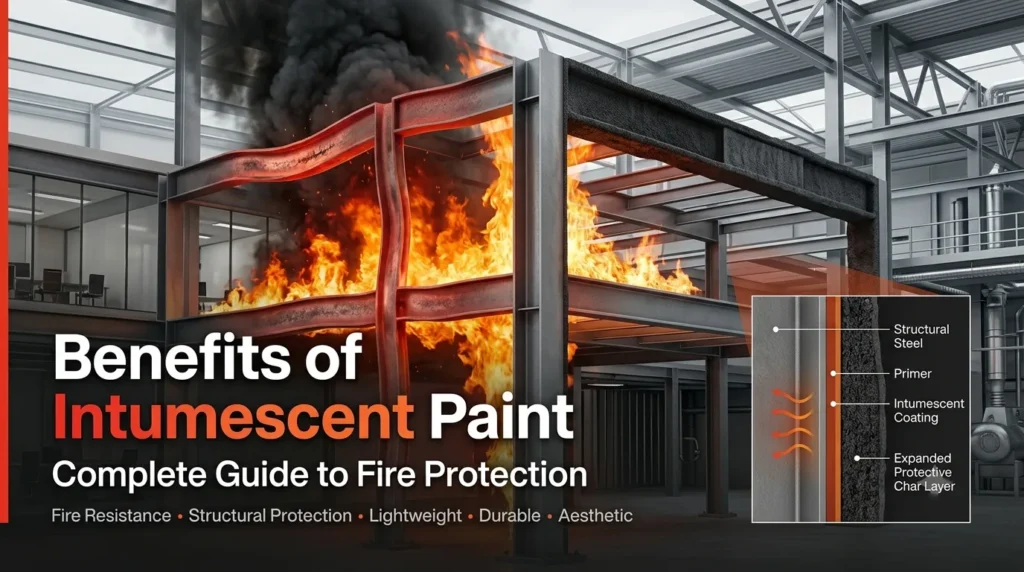
Intumescent paint is a specialized passive fire protection coating designed to help protect structural elements from the effects of fire. Its major advantage is that it remains relatively thin during normal conditions but reacts to high temperatures by expanding and forming an insulating char layer. This protective layer slows heat transfer to the underlying material, helping structural steel retain its strength for a specified period during a fire.
The benefits of intumescent paint extend beyond fire resistance. It provides a lightweight, space-efficient, and aesthetically suitable fire protection solution for modern commercial and industrial structures. Unlike bulky fireproofing systems, intumescent coatings can maintain the appearance of exposed steel while providing the required level of passive fire protection when used as part of an approved coating system.
For industrial plants, warehouses, commercial buildings, power facilities, and other structures where structural fire protection is important, selecting the right intumescent coating can contribute to improved building safety and long-term asset protection. Its performance depends on factors such as the required fire rating, steel section factor, coating thickness, environmental exposure, and correct application.
Introduction to Intumescent Paint
Intumescent paint is a specialized passive fire protection coating designed to protect structural materials from the effects of high temperatures during a fire. Its unique ability to expand and form an insulating char layer makes it an important solution for structural fire protection, particularly for steel beams, columns, and other load-bearing elements. Unlike conventional coatings, intumescent paint is engineered to react to heat and provide thermal insulation when it is most needed.
For commercial buildings, industrial plants, warehouses, power facilities, and other structures, passive fire protection can help delay the temperature rise of structural elements and maintain their stability for a specified fire-resistance period. The benefits of intumescent paint include effective fire protection, lightweight application, space efficiency, architectural flexibility, and long-term durability when the coating system is correctly specified and maintained.
What Is Intumescent Paint?
Intumescent paint is a fire protection coating that expands when exposed to high temperatures and forms a thick insulating char layer. Under normal conditions, the coating remains relatively thin and can provide a smooth finish over the protected substrate. During a fire, heat activates the coating’s chemical components, causing it to swell and create a protective barrier.
This char layer reduces the rate at which heat reaches the underlying material. For structural steel, this is particularly important because increasing temperatures can reduce the steel’s mechanical strength. By slowing the temperature rise, an approved intumescent coating system can help structural members retain their load-bearing capacity for the required fire-resistance period.
The performance of an intumescent coating depends on the specific product formulation, required fire rating, steel section factor, Dry Film Thickness (DFT), substrate condition, and application method.
How Intumescent Paint Provides Fire Protection
Intumescent paint provides fire protection through a controlled heat-activated expansion process. When exposed to elevated temperatures, the coating undergoes a chemical reaction and expands several times its original thickness. It forms a carbon-rich, insulating char that acts as a thermal barrier between the fire and the protected substrate.
The process can be understood in four basic stages:
- Heat exposure: The coating is exposed to increasing temperatures during a fire.
- Activation: The chemical components within the coating begin to react.
- Expansion: The coating swells and produces an insulating char layer.
- Heat insulation: The char slows heat transfer to the protected structural element.
For structural steel, this protection helps delay the rise in steel temperature and can provide valuable additional time for evacuation and emergency response. The actual protection period depends on the tested and approved coating system and its specified application thickness.
Why Intumescent Coatings Are Used for Structural Fire Protection
Structural steel is strong and widely used in modern construction, but its mechanical properties can deteriorate significantly when exposed to high temperatures. If unprotected steel reaches critical temperatures during a severe fire, beams and columns may deform or lose their load-bearing capacity.
Intumescent coatings provide a practical way to protect these structural elements without significantly increasing their weight or changing their dimensions. This makes them particularly useful where exposed structural steel, architectural appearance, and fire safety must be considered together.
Intumescent coatings are commonly used for:
- Structural steel beams and columns
- Commercial and high-rise buildings
- Industrial plants and warehouses
- Power generation facilities
- Oil and gas installations
- Hospitals and public buildings
- Airports and transportation infrastructure
When correctly selected, applied, inspected, and maintained, an intumescent coating system can contribute significantly to a building’s passive fire protection strategy while preserving the appearance of exposed structural steel.
Key Benefits of Intumescent Paint
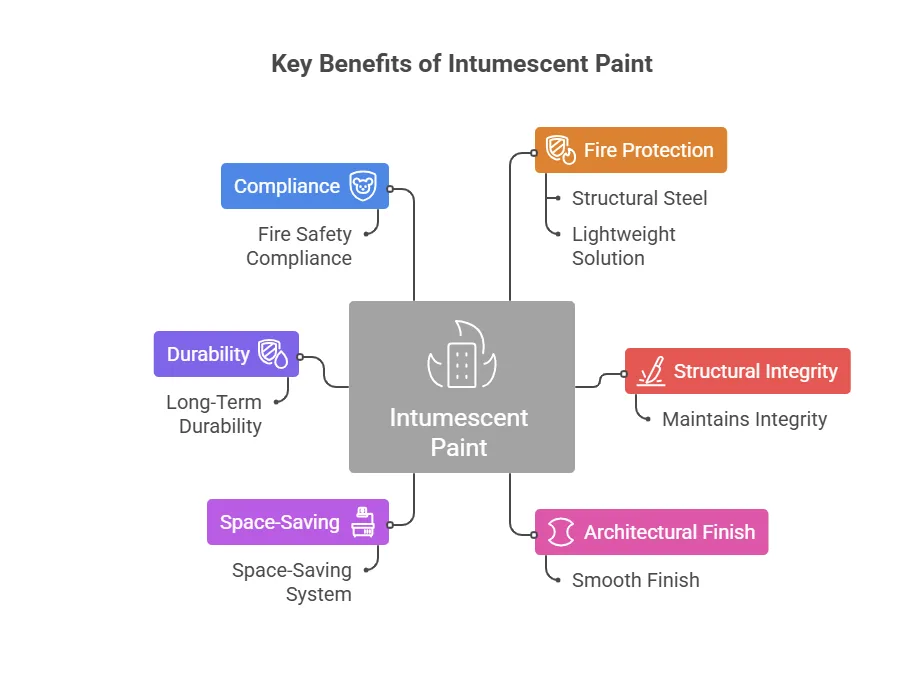
Intumescent paint provides an effective passive fire protection solution for structural and building components. Its primary benefit is its ability to react to high temperatures and form an insulating protective layer that slows heat transfer. This helps protect critical structural elements and provides valuable time for evacuation and emergency response.
Fire Protection for Structural Steel
One of the major benefits of intumescent paint is its ability to provide fire protection for structural steel. When exposed to high temperatures, the coating expands and forms an insulating char layer that reduces heat transfer to the steel.
This helps protect structural elements such as beams, columns, and other load-bearing members during fire exposure. Intumescent coatings are commonly used in commercial buildings, industrial plants, warehouses, and infrastructure projects where structural fire protection is required.
Lightweight Fire Protection Solution
Intumescent paint provides fire protection through a relatively thin coating system, making it a lightweight alternative to some bulky fireproofing methods. It can protect structural steel without significantly increasing the overall weight of the structure.
This makes intumescent coatings suitable for modern construction projects where fire protection, structural efficiency, and architectural design need to be considered together.
Maintains Structural Integrity During Fire
Structural steel can lose strength as its temperature increases during a fire. Intumescent paint helps slow this temperature increase by forming an insulating char layer around the protected steel.
By delaying heat transfer, the coating can help structural members maintain their load-bearing capacity for the specified fire-resistance period. This provides additional time for evacuation, emergency response, and fire control.
Smooth Architectural Finish
Intumescent paint can combine fire protection with an attractive architectural appearance. Unlike bulky fireproofing systems, suitable intumescent coatings can provide a relatively smooth finish that allows structural steel to remain visible.
This makes the coating particularly useful in offices, hotels, shopping centers, public buildings, and other projects where exposed structural steel forms part of the architectural design.
Space-Saving Coating System
Another important benefit of intumescent paint is its space-saving design. The coating can provide passive fire protection without significantly changing the dimensions of the protected steel members.
This is useful in projects where available space, structural clearances, and architectural details are important. The required coating thickness should always be determined according to the required fire rating, steel section factor, and approved coating system.
Long-Term Durability
When correctly specified, applied, inspected, and maintained, an intumescent coating system can provide long-term fire protection. Proper surface preparation, compatible primers and topcoats, correct application, and regular inspection all contribute to coating durability.
Maintenance requirements depend on the coating system and environmental exposure. Periodic inspection can help identify damage, deterioration, or areas requiring repair.
Supports Fire Safety Compliance
Intumescent paint can support a building’s passive fire protection strategy and help meet applicable fire safety requirements when used as part of a tested and approved coating system.
Fire performance depends on the complete coating system, including the substrate, primer, intumescent coating, required Dry Film Thickness (DFT), and protective topcoat where applicable. Following the manufacturer’s technical specifications is essential for achieving the intended fire-resistance performance.
Benefits for Industrial and Commercial Buildings
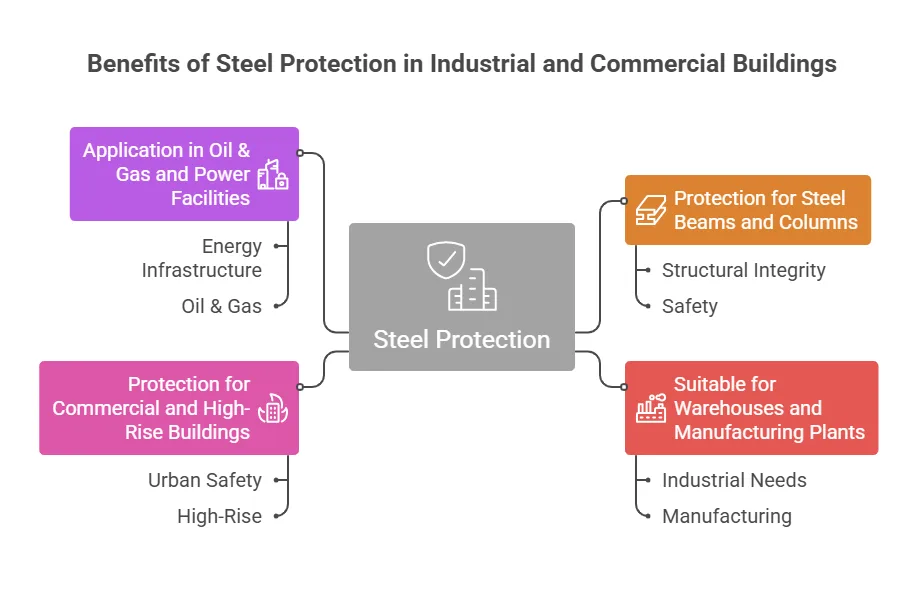
Intumescent paint provides passive fire protection for a wide range of industrial and commercial structures where structural steel is an important part of the building system. By expanding during fire exposure and forming an insulating char layer, the coating helps slow the temperature rise of protected steel. This makes it suitable for buildings where structural stability, occupant safety, and fire protection requirements are important.
Protection for Steel Beams and Columns
Steel beams and columns are critical load-bearing components in many commercial and industrial buildings. During a fire, prolonged exposure to high temperatures can reduce the strength and load-bearing capacity of structural steel.
Intumescent paint helps protect these members by forming an insulating char layer when exposed to heat. This layer slows heat transfer and helps maintain the required structural performance for the specified fire-resistance period.
The coating can be applied to different structural steel profiles, provided the complete coating system is correctly specified according to the required fire rating, steel section factor, and Dry Film Thickness (DFT).
Suitable for Warehouses and Manufacturing Plants
Warehouses and manufacturing plants often contain large steel frameworks, storage areas, production equipment, and other critical assets. Fire protection of the structural framework can therefore be an important part of the overall passive fire protection strategy.
Intumescent coatings can be used on steel beams, columns, supports, and other structural members in these facilities. The coating provides fire protection while maintaining a relatively low-profile finish, making it suitable for large industrial structures.
Typical applications include:
- Manufacturing plants
- Industrial warehouses
- Distribution centers
- Production facilities
- Storage buildings
- Processing facilities
The appropriate coating system should be selected according to the building environment, required fire rating, and exposure conditions.
Protection for Commercial and High-Rise Buildings
Commercial and high-rise buildings frequently use structural steel because of its strength, flexibility, and construction efficiency. Protecting these structural elements is essential to help maintain building stability during a fire.
Intumescent paint is particularly useful where structural steel is exposed and forms part of the architectural design. It can provide passive fire protection while maintaining a smooth and visually acceptable surface.
Common applications include:
- Office buildings
- Shopping centers
- Hotels
- High-rise buildings
- Commercial complexes
- Mixed-use developments
For these projects, the coating system should be selected based on the required fire-resistance period and the applicable building and fire safety requirements.
Application in Oil & Gas and Power Facilities
Oil and gas facilities and power plants can present demanding fire protection environments because of their industrial processes, equipment, and operating conditions. Structural steel in these facilities may require specialized passive fire protection systems designed for the expected exposure.
Depending on the project requirements, suitable intumescent coating systems can be used to protect structural steel while also providing resistance to environmental exposure when properly specified with compatible primers and topcoats.
Applications may include:
- Refineries
- Petrochemical facilities
- Oil and gas processing plants
- Power generation facilities
- Utility structures
- Industrial energy facilities
For harsh industrial environments, coating selection should consider fire exposure, corrosion risk, moisture, chemicals, temperature, and maintenance requirements. A complete tested coating system should be selected rather than choosing the intumescent coating alone.
Intumescent Paint vs Traditional Fireproofing
Intumescent paint and traditional fireproofing systems both aim to protect structural elements during fire exposure, but they differ significantly in application, thickness, weight, and appearance. Intumescent coatings provide a relatively thin, reactive layer that expands when heated, while traditional cementitious fireproofing generally relies on a thicker protective layer that provides thermal insulation.
The right choice depends on the required fire rating, structural design, environmental exposure, project specifications, and architectural requirements.
Intumescent Coating vs Cementitious Fireproofing
Intumescent coating reacts to high temperatures and expands to form an insulating char layer around the protected steel. This char slows heat transfer and helps maintain the temperature of the structural member below its critical temperature for the specified fire-resistance period.
Cementitious fireproofing protects steel through a relatively thick, insulating layer that reduces heat transfer during fire exposure. It is commonly used where a robust, economical fire protection system is required, particularly in industrial and large-scale construction applications.
| Feature | Intumescent Coating | Cementitious Fireproofing |
| Protection mechanism | Expands and forms insulating char | Provides thermal insulation |
| Coating thickness | Generally thinner | Generally thicker |
| Weight addition | Relatively low | Generally higher |
| Appearance | Smooth architectural finish possible | More textured/bulky finish |
| Exposed steel | Highly suitable | May require additional finishing |
| Architectural flexibility | High | More limited |
| Application | Spray, brush, or roller depending on system | Commonly spray-applied |
| Typical use | Commercial, architectural, and industrial steel | Industrial and large structural applications |
Weight and Thickness Comparison
One of the major advantages of intumescent paint is its relatively low profile and lightweight nature. The coating is applied at a specified thickness and expands significantly when exposed to fire. This allows structural steel to retain much of its original profile while receiving passive fire protection.
Traditional cementitious fireproofing normally requires a substantially thicker protective layer. This can increase the overall dimensions and weight of the protected structural member.
The difference can be particularly important in projects where:
- Structural weight must be minimized
- Available space is limited
- Steel profiles need to remain visible
- Architectural details must be preserved
- Additional structural loading needs to be controlled
The actual required thickness of either system depends on the fire rating, substrate, design requirements, and tested system. Therefore, thickness should always be determined from the applicable technical specification rather than assumed from the coating type alone.
Appearance and Architectural Flexibility
Architectural appearance is one of the strongest advantages of intumescent coatings. Once applied and properly finished, an intumescent system can provide a smooth surface that allows exposed structural steel to remain part of the building’s visual design.
This makes intumescent paint particularly suitable for offices, hotels, shopping centers, airports, public buildings, and modern commercial structures where exposed steel is an architectural feature.
Cementitious fireproofing generally produces a thicker and more textured surface. While it can provide effective fire protection, it may require additional finishing if a decorative appearance is desired.
For projects where fire protection and architectural aesthetics must work together, intumescent paint can offer greater design flexibility.
Factors Affecting Intumescent Paint Performance
The performance of intumescent paint depends on more than the coating itself. The required fire rating, steel section factor, Dry Film Thickness (DFT), environmental exposure, and compatibility of the primer and topcoat all influence how effectively the complete coating system performs. Correct specification and application are therefore essential for achieving the intended passive fire protection performance.
Required Fire Rating
The required fire rating determines how long the structural element must withstand fire exposure under the applicable test conditions. Common requirements may include 30, 60, 90, 120, or 180 minutes, depending on the building design, occupancy, regulations, and project specifications.
A higher fire-resistance requirement generally requires a coating system specifically tested and approved for that duration. The required coating thickness should not be estimated simply from the fire rating; it must be determined using the manufacturer’s approved system and relevant technical data.
Steel Section Factor
The steel section factor is a critical parameter when specifying intumescent paint for structural steel. It relates the exposed surface area of a steel member to its cross-sectional area and influences how quickly the steel heats during a fire.
Steel members with a higher section factor generally heat more rapidly and may require a greater intumescent coating thickness to achieve the specified fire rating. Accurate section-factor determination is therefore important for correct coating specification and material estimation.
Dry Film Thickness (DFT)
Dry Film Thickness (DFT) is the thickness of the cured intumescent coating and is one of the most important application controls. The required DFT depends on the fire rating, steel section factor, coating system, and manufacturer’s tested specifications.
Insufficient DFT can reduce the intended level of fire protection, while uncontrolled excessive application may create curing, cracking, or other coating-performance issues. DFT should therefore be measured using suitable calibrated equipment during inspection.
Environmental Exposure
The environment surrounding the protected steel can significantly affect coating durability and long-term performance. Factors such as humidity, moisture, UV exposure, chemicals, temperature variation, corrosion, and industrial pollutants should be considered before selecting the coating system.
Interior dry environments may require a different system from exterior or aggressive industrial environments. Where necessary, a compatible protective topcoat can provide additional resistance against weathering and environmental exposure.
Primer and Topcoat Compatibility
An intumescent coating normally forms part of a complete coating system that may include a primer, intumescent layer, and protective topcoat. Compatibility between these layers is essential for adhesion, curing, durability, and fire performance.
Using an incompatible primer or topcoat can negatively affect the performance of the complete system. Therefore, only manufacturer-approved or tested coating combinations should be specified and applied.
How to Maximize the Benefits of Intumescent Paint
The performance and durability of an intumescent coating depend heavily on correct preparation, application, inspection, and maintenance. A high-quality product can only deliver its intended fire protection when it is applied as part of the correct coating system and according to the specified technical requirements. Proper surface preparation, accurate DFT control, compatible coating layers, and regular inspection are therefore essential for maximizing the benefits of intumescent paint.
Proper Surface Preparation
Surface preparation is the foundation of a reliable intumescent coating system. Before application, the steel substrate should be clean, dry, and free from rust, oil, grease, dust, mill scale, and other contaminants that could affect adhesion.
Proper preparation helps the coating bond effectively to the substrate and reduces the risk of peeling, blistering, or premature coating failure. The required preparation method should follow the project specification and the coating manufacturer’s recommendations.
Key practices include:
- Remove rust and loose material.
- Eliminate oil, grease, and surface contaminants.
- Ensure the substrate is clean and dry.
- Repair damaged or defective areas before coating.
- Follow the specified surface preparation standard.
Correct Application and DFT
Correct application is essential for achieving the required fire-resistance performance. Intumescent paint should be applied using the recommended method and in the specified number of coats.
Dry Film Thickness (DFT) must be controlled carefully because the required coating thickness depends on factors such as the fire rating, steel section factor, and approved coating system.
Regular DFT measurements help confirm that the applied coating meets the specified requirements. Applying insufficient material can compromise fire protection, while uncontrolled excessive thickness may create curing or coating defects.
Using an Approved Coating System
Intumescent paint is normally part of a complete coating system that may include a primer, intumescent coating, and protective topcoat. These components must be compatible with one another and suitable for the intended environment.
Using an approved system helps ensure proper adhesion, curing, durability, and fire performance. Substituting an unapproved primer or topcoat can affect the performance of the complete system.
Before application, verify:
- Primer compatibility
- Intumescent coating specification
- Topcoat compatibility
- Required DFT
- Application conditions
- Manufacturer’s technical requirements
Regular Inspection and Maintenance
Regular inspection helps identify damage, deterioration, cracking, moisture-related problems, or other defects that could affect the coating system. Early identification allows damaged areas to be repaired before they become more serious.
Maintenance requirements depend on the coating type, environmental exposure, and project conditions. Protective topcoats should also be maintained where they form part of the approved system.
A good maintenance program should include:
- Periodic visual inspection
- DFT and coating-condition checks where required
- Identification of mechanical damage
- Prompt repair of damaged areas
- Maintenance of protective topcoats
- Documentation of inspection and repair activities
Frequently Asked Questions (FAQs)
What are the main benefits of intumescent paint?
The main benefits of intumescent paint include passive fire protection, structural steel protection, lightweight application, space efficiency, and an attractive architectural finish. When exposed to high temperatures, the coating expands and forms an insulating char layer that slows heat transfer to the protected structure. It can also provide long-term protection when correctly specified, applied, inspected, and maintained.
Is intumescent paint suitable for structural steel?
Yes. Intumescent paint is widely used for structural steel beams, columns, and other load-bearing members. During a fire, the coating expands and forms an insulating barrier around the steel, helping slow its temperature rise and maintain structural performance for the specified fire-resistance period.
Is intumescent paint lightweight?
Yes. Intumescent paint is generally considered a lightweight and low-profile fire protection solution compared with many traditional fireproofing systems. It can provide the required fire protection without significantly increasing structural weight or changing the dimensions of steel members.
Can intumescent paint be used outdoors?
Yes, but the coating system must be specifically suitable for the intended outdoor environment. Exterior applications may require an appropriate intumescent formulation together with a compatible protective topcoat to provide resistance to moisture, UV exposure, weathering, and other environmental conditions. Always follow the manufacturer’s approved system for exterior use.
How long does intumescent paint provide fire protection?
The fire-protection period depends on the approved coating system, required fire rating, steel section factor, and specified Dry Film Thickness (DFT). Intumescent systems may be designed for different fire-resistance periods, such as 30, 60, 90, 120, or 180 minutes, depending on the tested system and project requirements.
Conclusion
Intumescent paint is a practical passive fire protection solution that helps protect structural steel and other critical building elements during fire exposure. Its ability to expand and form an insulating char layer helps slow heat transfer, supporting structural stability for the specified fire-resistance period. When correctly specified and applied, it can combine fire protection with a lightweight, space-efficient, and aesthetically suitable coating system.
Why Choose Intumescent Paint for Passive Fire Protection
Intumescent paint provides an effective way to protect structural steel without significantly changing its original appearance or adding excessive weight. During a fire, the coating reacts to heat and forms a protective char layer that helps delay the temperature rise of the steel.
This makes intumescent coatings suitable for commercial buildings, industrial plants, warehouses, high-rise structures, power facilities, oil and gas installations, and public infrastructure where passive fire protection is required.
Selecting the Right Coating System
Choosing the right intumescent coating requires consideration of the required fire rating, steel section factor, Dry Film Thickness (DFT), environmental exposure, substrate condition, and primer and topcoat compatibility.
The coating should be selected as part of an approved and tested system rather than as an individual product. Following the manufacturer’s technical specifications and application requirements is essential for achieving the intended fire-protection performance.
Improving Long-Term Structural Fire Safety
Long-term performance depends on more than the initial application. Proper surface preparation, accurate DFT control, compatible primers and topcoats, correct application, regular inspection, and timely maintenance all contribute to reliable fire protection.
By selecting an appropriate intumescent coating system and maintaining it throughout its service life, building owners, engineers, and contractors can strengthen their passive fire protection strategy and improve long-term structural fire safety.