

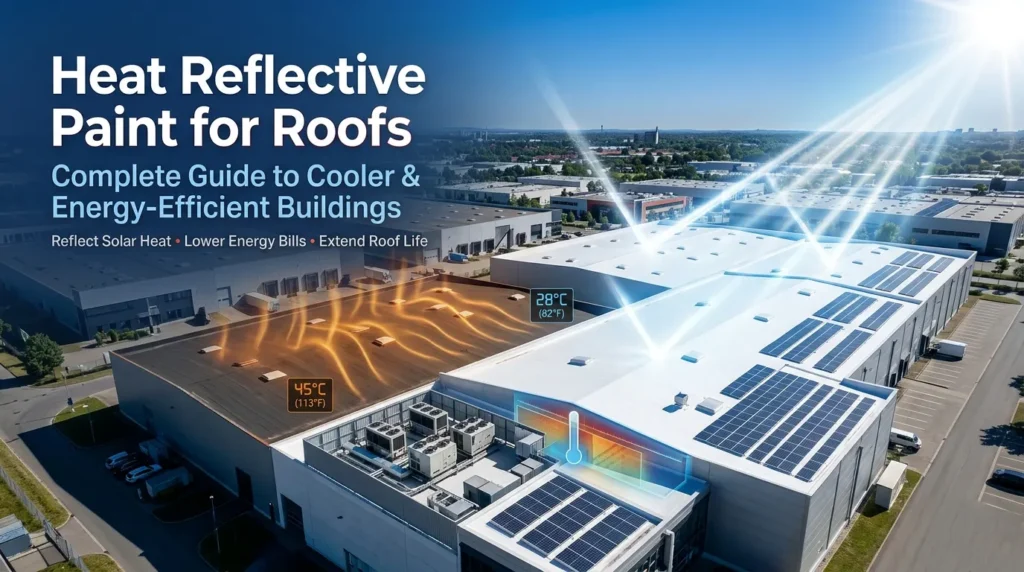
As global temperatures continue to rise, roofs have become one of the biggest sources of heat gain in residential, commercial, and industrial buildings. Constant exposure to direct sunlight causes conventional roofs to absorb large amounts of solar radiation, increasing indoor temperatures and forcing air conditioning systems to work harder. The result is higher electricity bills, reduced indoor comfort, and increased energy consumption.
Heat reflective paint for roofs offers a smart and cost-effective solution to this challenge. Engineered with advanced reflective pigments and thermal-control technology, these specialized coatings reflect a significant portion of the sun’s ultraviolet (UV) and infrared (IR) rays instead of allowing them to be absorbed by the roof surface. This helps reduce roof temperatures, minimize heat transfer into the building, and create a naturally cooler indoor environment.
Whether applied to RCC roofs, metal roofs, industrial sheds, warehouses, or commercial buildings, heat reflective roof paint delivers multiple long-term benefits. In addition to reducing cooling costs, it protects roofs from UV damage, extends roof lifespan, improves HVAC efficiency, and supports sustainable building practices. As energy-efficient construction becomes increasingly important, reflective roof coatings have emerged as a practical solution for improving thermal performance without the expense of replacing an entire roofing system.
If you’re wondering whether heat reflective paint really works, which roof types benefit the most, or how much energy it can save, this comprehensive guide answers those questions and more. You’ll learn how heat reflective roof coatings work, their key advantages, best applications, selection criteria, and maintenance tips to help you choose the right solution for a cooler, more energy-efficient building.
Introduction – Why Roof Heat Protection Matters
Rising Roof Temperatures and Their Impact
Roofs are the first line of defense against the sun’s intense heat, yet they also absorb the highest amount of solar radiation. During peak summer months, conventional roofs made of concrete or metal can reach extremely high surface temperatures, causing heat to transfer directly into the building. This leads to warmer indoor spaces, uncomfortable living and working conditions, and increased stress on cooling systems. Prolonged exposure to high temperatures can also accelerate roof deterioration, resulting in cracks, fading, and reduced structural durability.
Increasing Energy Costs and Cooling Demand
As temperatures continue to rise, the demand for air conditioning and mechanical cooling systems has increased significantly across residential, commercial, and industrial buildings. Cooling equipment often accounts for a major share of electricity consumption, leading to higher monthly utility bills and greater operational costs. Building owners are increasingly looking for cost-effective solutions that reduce heat gain without sacrificing comfort. Heat reflective roof paint addresses this challenge by lowering roof temperatures naturally, helping reduce the workload on HVAC systems and improving overall energy efficiency.
Why Heat Reflective Roof Coatings Are Gaining Popularity
Heat reflective roof coatings have become a preferred solution for modern buildings because they combine energy savings, roof protection, and sustainability in a single application. Formulated with advanced reflective pigments, these coatings reflect ultraviolet (UV) and infrared (IR) rays, preventing excessive heat absorption and reducing indoor temperatures. They can be applied to RCC roofs, metal roofs, industrial sheds, warehouses, and commercial buildings without requiring complete roof replacement.
In addition to lowering cooling costs, heat reflective coatings provide UV resistance, minimize thermal stress, extend roof lifespan, and contribute to environmentally responsible building practices. Their affordability, ease of application, and long-term performance have made them one of the most effective roof cooling solutions for property owners seeking greater comfort and improved energy efficiency.
What Is Heat Reflective Paint for Roofs?
Basic Definition
Heat reflective paint for roofs is a specialized protective coating designed to minimise heat absorption by reflecting a significant portion of the sun’s solar radiation away from the roof surface. Unlike conventional roof paints that primarily provide color and weather protection, heat reflective coatings are engineered with advanced reflective pigments and thermal-control technology to keep roofs cooler.
Also known as cool roof paint, solar reflective roof coating, or energy-saving roof paint, these coatings are widely used on RCC roofs, metal roofs, industrial sheds, warehouses, commercial buildings, and residential properties. Their primary purpose is to reduce roof temperatures, improve indoor comfort, and lower energy consumption by decreasing the need for air conditioning.
How Heat Reflective Roof Paint Works
Heat reflective roof paint works by creating a high-performance barrier that reflects ultraviolet (UV), visible, and infrared (IR) rays instead of allowing them to penetrate and heat the roof surface. Traditional roofs absorb a large amount of solar energy, causing temperatures to rise significantly and transferring heat into the building.
When a heat reflective coating is applied, a large percentage of this solar radiation is reflected back into the atmosphere. Any remaining absorbed heat is quickly released through the coating’s thermal emittance properties, preventing excessive heat buildup.
This process provides several performance advantages:
- Reduces roof surface temperatures during peak sunlight hours
- Minimizes heat transfer into the building
- Lowers indoor temperatures naturally
- Reduces the workload on HVAC and air conditioning systems
- Improves overall building energy efficiency
As a result, buildings remain cooler and consume less electricity for cooling, making heat reflective paint an effective passive cooling solution.
Solar Reflectance and Thermal Emittance Explained
The performance of heat reflective roof paint depends on two important scientific properties: solar reflectance and thermal emittance.
Solar Reflectance is the ability of a roof coating to reflect incoming sunlight rather than absorb it. Coatings with high solar reflectance keep roof surfaces significantly cooler by bouncing solar energy away from the building.
Thermal Emittance refers to the coating’s ability to release any absorbed heat back into the atmosphere. A high thermal emittance value prevents heat from accumulating within the roof structure and helps maintain lower surface temperatures throughout the day.
Many premium heat reflective coatings are also evaluated using the Solar Reflectance Index (SRI), which combines solar reflectance and thermal emittance into a single performance rating. Higher SRI values generally indicate better cooling performance, improved energy efficiency, and greater long-term savings.
Difference Between Regular Roof Paint and Heat Reflective Paint
Although both products protect roof surfaces, their functionality and performance differ significantly.
| Feature | Heat Reflective Paint | Regular Roof Paint |
| Primary Purpose | Reduce heat absorption and improve energy efficiency | Decorative finish and basic weather protection |
| Solar Reflectance | High | Low to Moderate |
| Thermal Emittance | High | Standard |
| Roof Surface Temperature | Significantly lower | Higher under direct sunlight |
| Indoor Comfort | Helps keep buildings cooler | Limited impact on indoor temperature |
| Energy Savings | Reduces cooling load and electricity consumption | Minimal energy-saving benefits |
| Best Applications | RCC roofs, metal roofs, industrial sheds, warehouses, commercial and residential buildings | General exterior roof finishing |
For buildings located in hot climates, heat reflective paint offers a clear advantage by combining roof protection with thermal management. It not only enhances roof durability but also delivers measurable reductions in indoor heat gain, cooling costs, and overall energy consumption, making it a smart investment for long-term building performance.
How Heat Reflective Paint Reduces Roof Temperature
Reflecting Solar Radiation
Heat reflective paint is specifically formulated to reflect a large percentage of the sun’s solar radiation before it can be absorbed by the roof surface. Advanced reflective pigments in the coating bounce back ultraviolet (UV), visible, and infrared (IR) rays, which are the primary sources of solar heat. Unlike conventional roof paints that absorb sunlight and convert it into heat, heat reflective coatings minimize solar heat gain, keeping the roof significantly cooler throughout the day. This passive cooling mechanism helps improve the overall thermal performance of the building without consuming additional energy.
Reducing Heat Absorption
Traditional roofing materials such as concrete, metal, and asbestos sheets absorb a substantial amount of heat when exposed to direct sunlight. This absorbed heat increases roof surface temperatures and gradually transfers warmth into the building interior. Heat reflective paint creates a high-reflectance protective layer that reduces the amount of solar energy absorbed by the roof. By minimizing heat accumulation, the coating prevents excessive temperature buildup and helps maintain a cooler roof even during peak summer conditions.
Lowering Heat Transfer into Buildings
A cooler roof naturally results in less heat entering the building. Heat reflective paint acts as a thermal barrier by reducing the amount of heat transferred from the roof to the interior spaces below. This is particularly beneficial for residential homes, commercial buildings, warehouses, factories, and industrial sheds where large roof areas are continuously exposed to sunlight. Lower heat transfer reduces the workload on air conditioning and ventilation systems, leading to improved energy efficiency and lower electricity consumption.
Improving Indoor Thermal Comfort
By reducing roof temperatures and minimizing heat gain, heat reflective paint helps create a more comfortable indoor environment. Rooms remain cooler for longer periods, reducing the need for continuous air conditioning and mechanical cooling. Occupants experience improved thermal comfort, especially in top-floor apartments, industrial facilities, and commercial buildings where roof heat is often most noticeable. In addition to lowering cooling costs, a cooler indoor environment enhances productivity, supports occupant well-being, and contributes to sustainable, energy-efficient building performance.
Key Benefits of Heat Reflective Paint for Roofs
Lower Roof Surface Temperature
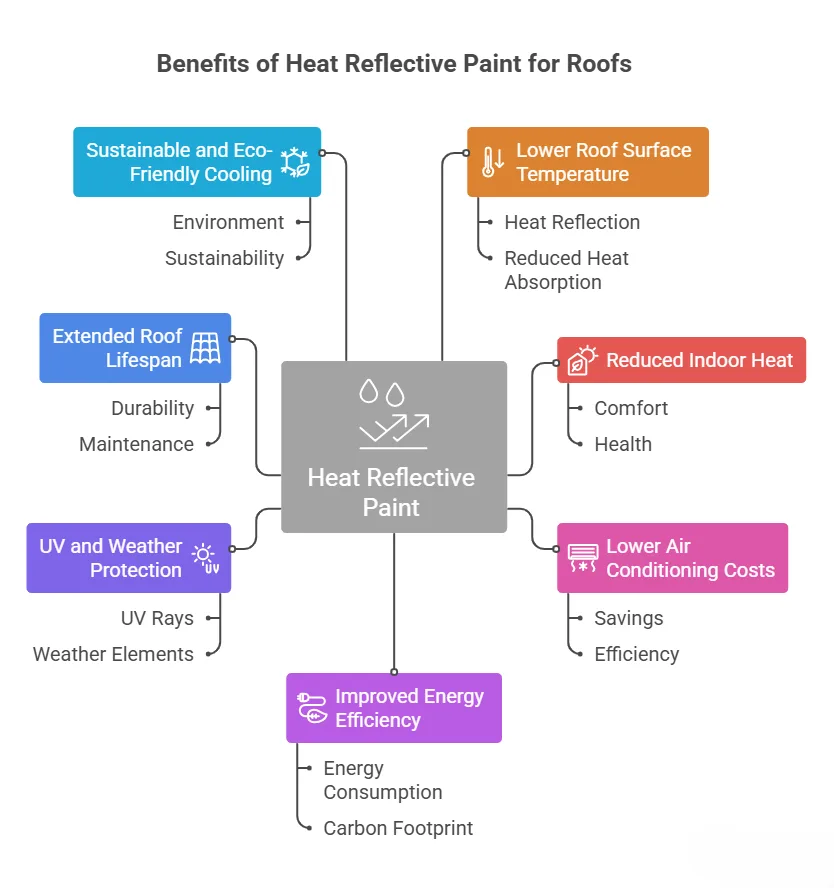
One of the most significant advantages of heat reflective paint is its ability to reduce roof surface temperatures by reflecting a large portion of incoming solar radiation. Traditional concrete and metal roofs absorb heat throughout the day, becoming extremely hot and transferring that heat into the building. Heat reflective roof coatings minimize this heat absorption, keeping the roof surface considerably cooler even during peak summer conditions. Lower roof temperatures also reduce thermal stress and improve the overall performance of the roofing system.
Reduced Indoor Heat
When a roof absorbs less solar energy, less heat enters the building through conduction. Heat reflective paint creates a thermal barrier that helps maintain cooler indoor temperatures without relying solely on mechanical cooling systems. Homes, offices, warehouses, factories, and commercial buildings benefit from improved thermal comfort, making indoor spaces more pleasant for occupants while reducing the effects of excessive outdoor heat.
Lower Air Conditioning Costs
Air conditioning systems consume a significant portion of electricity in buildings located in hot climates. By reducing roof heat gain, heat reflective paint decreases the workload on HVAC systems and allows them to operate more efficiently. This results in lower electricity consumption, reduced peak cooling demand, and noticeable savings on monthly utility bills. Over the lifespan of the coating, these energy savings can provide an excellent return on investment for residential, commercial, and industrial property owners.
Improved Energy Efficiency
Heat reflective roof coatings enhance the overall energy efficiency of a building by minimizing solar heat absorption and reducing indoor cooling requirements. Buildings with cooler roofs require less energy to maintain comfortable temperatures, helping lower operational costs and improve HVAC performance. These coatings are widely used in energy-efficient construction projects and green building initiatives because they contribute to sustainable building design while reducing overall energy consumption.
UV and Weather Protection
In addition to reflecting heat, heat reflective paint provides a protective barrier against ultraviolet (UV) radiation, rain, humidity, dust, and other environmental conditions. Continuous exposure to sunlight can cause roof surfaces to fade, crack, and deteriorate over time. Reflective coatings help preserve the roof by minimizing UV damage and protecting it from harsh weather, reducing the need for frequent repairs and maintenance.
Extended Roof Lifespan
High roof temperatures and repeated heating and cooling cycles accelerate material aging and structural wear. Heat reflective paint reduces thermal expansion and contraction by maintaining lower surface temperatures, helping prevent cracks, peeling, and surface degradation. This protection extends the lifespan of RCC roofs, metal roofs, and other roofing materials, reducing long-term maintenance costs and delaying expensive roof replacement projects.
Sustainable and Eco-Friendly Cooling
Heat reflective paint offers a passive cooling solution that lowers energy consumption without increasing electricity usage. By reducing dependence on air conditioning systems, it helps decrease greenhouse gas emissions and supports environmentally responsible building practices. Reflective roof coatings also help mitigate the urban heat island effect by reducing heat accumulation on building surfaces, making cities more energy-efficient and sustainable. For property owners seeking an economical and environmentally friendly way to improve building performance, heat reflective paint is a smart long-term investment.
Best Roof Types for Heat Reflective Paint
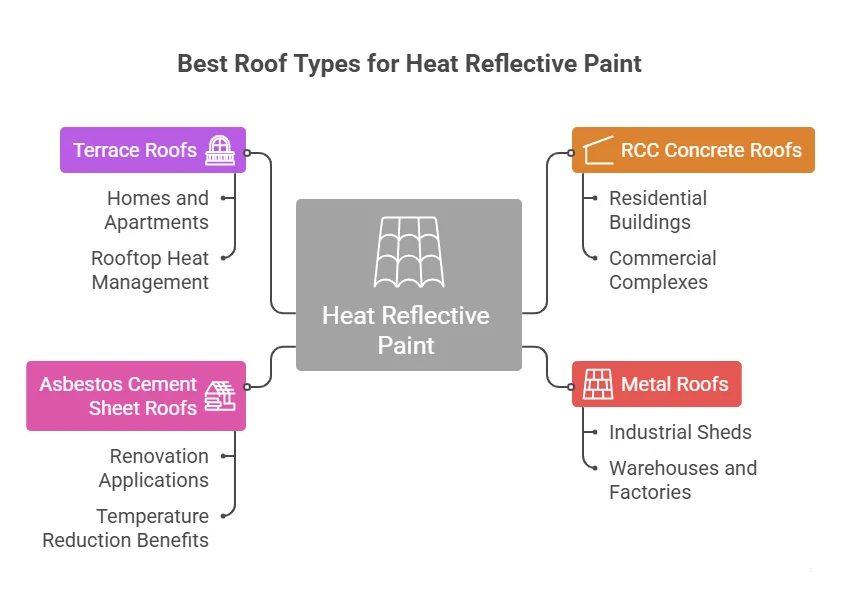
Heat reflective paint is designed to improve the thermal performance of various roofing materials by reducing solar heat absorption and lowering roof surface temperatures. Choosing the right roof type for reflective coating ensures maximum energy savings, enhanced durability, and improved indoor comfort. From residential homes to industrial facilities, heat reflective roof paint is a versatile solution that delivers long-term cooling benefits.
RCC Concrete Roofs
RCC (Reinforced Cement Concrete) roofs are among the most common roof types used in residential and commercial buildings. Due to their high thermal mass, concrete roofs absorb and store significant amounts of heat during the day, causing indoor temperatures to remain high even after sunset. Applying heat reflective paint helps reduce heat absorption, improve thermal performance, and create a cooler indoor environment.
Residential Buildings
Residential homes with RCC roofs benefit greatly from heat reflective coatings. The paint reflects a large portion of solar radiation, helping reduce indoor temperatures and lowering the need for continuous air conditioning. Homeowners can enjoy improved comfort, lower electricity bills, and better protection against roof deterioration caused by prolonged UV exposure.
Commercial Complexes
Commercial buildings such as offices, shopping centers, educational institutions, and hospitals often have large concrete roof areas exposed to direct sunlight. Heat reflective paint helps minimize heat transfer into the building, reducing cooling costs and improving energy efficiency. This makes it an ideal solution for businesses looking to lower operational expenses while maintaining a comfortable indoor environment.
Metal Roofs
Metal roofs are widely used in industrial, commercial, and agricultural buildings because of their strength and durability. However, they heat up quickly under direct sunlight and can significantly increase indoor temperatures. Heat reflective roof paint reduces this heat buildup by reflecting solar radiation away from the metal surface.
Industrial Sheds
Industrial sheds often have extensive metal roofing that absorbs large amounts of heat throughout the day. Applying heat reflective paint helps lower roof temperatures, improve worker comfort, and reduce the load on ventilation and cooling systems. Cooler working conditions can also contribute to higher productivity and improved operational efficiency.
Warehouses and Factories
Warehouses and manufacturing facilities require stable indoor temperatures to protect equipment, raw materials, and finished products. Heat reflective paint reduces heat gain through metal roofs, helping maintain a more controlled environment while lowering electricity consumption and cooling costs. The coating also provides additional protection against UV exposure and weather-related wear.
Asbestos Cement Sheet Roofs
Many older industrial and commercial buildings still use asbestos cement sheet roofing. These roofs tend to absorb significant heat and can make indoor spaces extremely uncomfortable during hot weather. Heat reflective paint offers an effective renovation solution that improves thermal performance without replacing the existing roof.
Renovation Applications
Applying heat reflective paint is a practical way to upgrade aging asbestos cement sheet roofs. The coating restores the roof’s protective surface while enhancing its ability to reflect solar radiation. This approach is often more economical than complete roof replacement and provides immediate cooling benefits.
Temperature Reduction Benefits
Heat reflective coatings help lower the surface temperature of asbestos cement sheet roofs, reducing heat transfer into the building. The result is improved occupant comfort, lower cooling requirements, and better overall energy efficiency. This makes reflective paint an excellent option for extending the functional life of older roofing systems.
Terrace Roofs
Open terrace roofs receive direct sunlight throughout the day and are one of the largest contributors to indoor heat gain in residential and commercial buildings. Heat reflective paint transforms these exposed surfaces into energy-efficient cool roofs that help maintain comfortable indoor temperatures.
Homes and Apartments
Apartments, villas, and independent homes with terrace roofs can experience significant reductions in indoor heat after applying heat reflective paint. The coating minimizes heat absorption, creating cooler living spaces while reducing dependence on air conditioning systems. Homeowners benefit from lower energy bills and enhanced year-round comfort.
Rooftop Heat Management
Effective rooftop heat management is essential for improving building performance and energy efficiency. Heat reflective paint reduces thermal stress on terrace surfaces, protects against UV damage, and helps maintain lower roof temperatures throughout the day. Combined with proper waterproofing and regular maintenance, reflective roof coatings provide a durable, cost-effective solution for long-term roof cooling and sustainable building operation.
Applications Across Different Buildings
Residential Homes
Heat reflective paint is an excellent solution for residential homes, especially in regions with hot climates and prolonged summer seasons. RCC terraces, concrete roofs, and exterior walls absorb significant amounts of solar heat, making indoor spaces uncomfortable and increasing air conditioning costs. Applying heat reflective paint helps lower roof surface temperatures, reduce indoor heat gain, and create a cooler living environment. Homeowners also benefit from lower electricity bills, improved energy efficiency, and enhanced roof protection against UV radiation and weathering.
Commercial Buildings
Office complexes, shopping malls, hotels, retail stores, and commercial establishments often have large roof areas exposed to direct sunlight throughout the day. Heat reflective roof coatings reduce heat absorption and minimize the cooling load on HVAC systems, helping businesses lower operational expenses and improve occupant comfort. By maintaining stable indoor temperatures, reflective coatings also contribute to better workplace productivity while supporting energy-efficient and sustainable building practices.
Industrial Facilities
Factories, manufacturing plants, processing units, and industrial sheds frequently operate under high-temperature conditions where excessive roof heat can affect employee comfort and equipment performance. Heat reflective paint helps reduce roof temperatures on metal and RCC structures, creating cooler working environments and reducing dependence on mechanical ventilation and air conditioning systems. The result is lower energy consumption, improved operational efficiency, and long-term savings on cooling costs and roof maintenance.
Warehouses and Storage Units
Warehouses and storage facilities require effective temperature control to protect inventory, machinery, and sensitive materials from excessive heat. Large metal roofs can rapidly absorb solar radiation, increasing indoor temperatures and affecting storage conditions. Heat reflective paint minimizes heat transfer, helping maintain a more stable internal environment while reducing cooling expenses. This makes reflective coatings an ideal solution for logistics centers, distribution hubs, and industrial storage facilities seeking improved energy efficiency.
Schools, Hospitals, and Public Buildings
Educational institutions, healthcare facilities, government offices, and other public buildings must provide comfortable indoor environments for students, patients, staff, and visitors. Heat reflective roof coatings help reduce indoor temperatures, improve occupant comfort, and lower electricity consumption without major infrastructure changes. By decreasing cooling requirements and extending roof life, these coatings offer a cost-effective and sustainable solution for public infrastructure projects while supporting long-term energy conservation goals.
Heat Reflective Paint vs Traditional Roof Coatings
Heat Reduction Performance
The primary difference between heat reflective paint and traditional roof coatings is their ability to manage solar heat. Conventional roof paints are designed mainly for decoration, waterproofing, and basic surface protection, but they absorb a significant amount of sunlight, causing roof temperatures to rise. Heat reflective paint, however, is formulated with advanced reflective pigments that bounce ultraviolet (UV) and infrared (IR) rays away from the surface.
As a result, roofs coated with heat reflective paint remain significantly cooler than those coated with standard paints. Lower roof temperatures reduce heat transfer into the building, creating a more comfortable indoor environment while minimizing thermal stress on the roof structure.
Energy Savings Comparison
Traditional roof coatings provide minimal contribution to energy efficiency because they are not engineered to reduce solar heat gain. Buildings coated with conventional paint often rely heavily on air conditioning systems to maintain comfortable indoor temperatures, leading to higher electricity consumption.
Heat reflective paint offers a passive cooling solution by reducing heat absorption at the source. By lowering roof surface temperatures and decreasing indoor heat gain, it reduces the workload on HVAC systems and helps lower electricity bills. For residential homes, commercial buildings, warehouses, and industrial facilities, this can result in significant long-term energy savings while improving overall building performance.
| Feature | Heat Reflective Paint | Traditional Roof Coating |
| Solar Heat Reflection | High | Low |
| Roof Surface Temperature | Significantly Lower | Higher |
| Indoor Cooling Performance | Excellent | Limited |
| Energy Efficiency | High | Standard |
| Air Conditioning Load | Reduced | Higher |
Durability and Maintenance
Heat reflective paints are developed to withstand prolonged exposure to sunlight, UV radiation, rain, and changing weather conditions. Many premium reflective coatings also offer excellent resistance to fading, chalking, and thermal degradation, helping maintain their performance for years.
Traditional roof coatings may lose color, crack, or deteriorate more quickly under continuous heat exposure, requiring more frequent maintenance and repainting. Heat reflective coatings not only provide superior thermal protection but also help extend roof life by reducing thermal expansion and contraction, minimizing the risk of surface damage and leaks.
Cost and Return on Investment
While heat reflective paint may have a slightly higher initial cost than standard roof paint, it delivers considerably greater long-term value. The investment is offset by lower electricity bills, reduced air conditioning costs, decreased maintenance expenses, and longer roof lifespan.
Traditional roof coatings generally have a lower purchase price but offer limited energy-saving benefits, resulting in higher operating costs over time. Heat reflective paint provides a faster return on investment by combining energy efficiency, roof protection, and improved indoor comfort in a single solution.
For property owners seeking a cost-effective way to reduce heat gain and enhance building performance, heat reflective paint is a smarter long-term investment than conventional roof coatings.
How to Choose the Best Heat Reflective Paint for Roofs
Based on Roof Material
Selecting the right heat reflective paint starts with identifying your roof material. Different substrates require coatings with specific adhesion, flexibility, and weather-resistance properties for optimal performance.
- RCC (Concrete) Roofs: Choose acrylic or elastomeric heat reflective coatings that provide excellent adhesion, crack-bridging capability, and long-lasting thermal protection.
- Metal Roofs: Select coatings with superior UV resistance, corrosion protection, and high solar reflectance to minimize heat buildup and extend roof life.
- Asbestos Cement Sheets: Use lightweight, weather-resistant reflective coatings that reduce surface temperatures while protecting the sheets from environmental damage.
- Terrace Roofs: Opt for coatings that combine heat reflection with waterproofing to improve comfort and prevent water ingress.
Matching the coating to the roof material ensures maximum cooling performance, durability, and energy savings.
Based on Climate Conditions
Climate plays a major role in determining the effectiveness of heat reflective roof paint.
- Hot and Dry Regions: High solar reflectance coatings are ideal for reflecting intense sunlight and maintaining cooler roof surfaces.
- Hot and Humid Areas: Choose coatings that offer excellent moisture resistance, anti-fungal properties, and UV stability for long-term performance.
- Coastal Environments: Roof coatings should provide additional resistance against salt spray, humidity, and corrosion.
- Regions with Heavy Rainfall: Waterproof elastomeric reflective coatings help protect roofs while reducing heat absorption.
Selecting a coating designed for local weather conditions ensures reliable performance throughout the year.
Solar Reflectance Index (SRI) Considerations
The Solar Reflectance Index (SRI) is one of the most important performance indicators when choosing heat reflective paint. SRI measures a surface’s ability to reflect solar radiation and release absorbed heat.
- Higher SRI values indicate better heat-reflecting capability.
- Roofs with high-SRI coatings remain significantly cooler than conventional painted surfaces.
- Improved SRI performance reduces indoor heat gain, lowers HVAC energy consumption, and enhances occupant comfort.
For residential, commercial, and industrial buildings, selecting a coating with a high SRI rating can maximize energy efficiency and long-term cooling benefits.
Waterproofing and UV Resistance
The best heat reflective roof paints do more than reduce heat—they also protect the roof from environmental damage.
Quality coatings should provide:
- Excellent waterproofing performance to prevent leaks and moisture penetration.
- Strong UV resistance to minimize fading, chalking, and coating degradation.
- Protection against thermal expansion and contraction caused by daily temperature fluctuations.
- Resistance to dust, pollution, and harsh weather conditions.
A coating that combines heat reflection with waterproofing and UV protection delivers comprehensive roof protection and reduces future maintenance costs.
Durability and Warranty Factors
Long-term performance is a critical consideration when investing in heat reflective paint. High-quality coatings maintain their reflective properties and protective performance for many years when properly applied and maintained.
Before selecting a product, consider:
- Expected service life under local climate conditions.
- Resistance to peeling, cracking, and weathering.
- Ease of maintenance and recoating.
- Manufacturer certifications and product testing standards.
- Available product warranty and technical support.
Choosing a durable, high-performance heat reflective paint with a reliable warranty ensures lower lifecycle costs, consistent energy savings, extended roof life, and a better return on investment for residential, commercial, and industrial properties.
Roof Preparation and Application Process
Surface Cleaning and Repair
Proper roof preparation is essential for achieving the best performance and long-lasting durability of heat reflective paint. Before application, the roof surface should be thoroughly cleaned to remove dust, dirt, grease, algae, loose particles, and any existing flaking paint. High-pressure water cleaning or mechanical cleaning methods may be used depending on the roof condition.
Any cracks, holes, leaks, or damaged areas should be repaired before coating begins. A smooth, clean, and dry surface ensures better adhesion of the reflective coating and maximizes its heat-reducing performance. Investing time in surface preparation helps prevent premature coating failure and extends the service life of the roof.
Primer Selection
Choosing the correct primer is an important step in creating a durable roof coating system. The primer enhances adhesion between the roof substrate and the heat reflective paint while providing additional protection against moisture and weathering.
- RCC Roofs: Acrylic or masonry primers improve bonding and seal porous concrete surfaces.
- Metal Roofs: Anti-corrosive or epoxy primers help prevent rust and increase coating durability.
- Previously Painted Roofs: Compatibility testing and suitable bonding primers ensure proper adhesion.
- Industrial Roofs: Specialized primers may be required for high-performance coating systems.
Using the recommended primer not only improves coating performance but also increases the overall lifespan of the reflective paint system.
Application Methods
Heat reflective paint can be applied using different methods depending on the project size and roof type.
- Roller Application: Ideal for residential terraces and small commercial roofs, providing uniform coverage.
- Brush Application: Suitable for edges, corners, joints, and touch-up work.
- Airless Spray Application: Recommended for large industrial sheds, warehouses, factories, and commercial buildings where fast and consistent application is required.
For the best results, apply the coating in multiple thin coats rather than one thick layer. Follow the manufacturer’s recommended spreading rate and allow each coat to dry completely before applying the next. Application should be carried out during dry weather and moderate temperatures to ensure proper curing and maximum reflectivity.
Drying and Curing Time
Drying and curing times vary depending on the coating formulation, ambient temperature, humidity, and ventilation conditions.
- Surface dry: Typically within a few hours under normal conditions.
- Recoat interval: Follow the manufacturer’s recommended drying time before applying additional coats.
- Full curing: Usually takes several days, during which the coating develops its maximum adhesion, durability, and reflective performance.
Avoid foot traffic, water exposure, and heavy loads until the coating has fully cured. Proper curing ensures optimal heat reflection, weather resistance, and long-term performance.
Maintenance Best Practices
Regular maintenance helps preserve the effectiveness of heat reflective roof paint and ensures consistent energy-saving benefits.
- Inspect the roof at least once or twice a year for signs of wear, cracks, or coating damage.
- Clean accumulated dust, leaves, and debris to maintain high solar reflectance.
- Repair damaged areas promptly to prevent water penetration and coating deterioration.
- Recoat the roof when recommended by the manufacturer or when reflectivity begins to decline.
- Schedule preventive maintenance after heavy rainfall, storms, or extreme weather conditions.
With proper preparation, correct application, and routine maintenance, a high-quality heat reflective roof coating can provide years of reliable performance, reducing roof temperatures, lowering cooling costs, improving energy efficiency, and extending the life of residential, commercial, and industrial roofing systems.
Energy Savings and Return on Investment
Reduced Electricity Bills
One of the biggest advantages of heat reflective paint for roofs is its ability to reduce electricity consumption. By reflecting a large percentage of solar radiation, the coating prevents excessive heat from entering the building, keeping indoor spaces naturally cooler. This reduces the need for continuous air conditioning, resulting in lower monthly electricity bills. For residential homes, commercial offices, warehouses, and industrial facilities, these energy savings can accumulate significantly over time, making heat reflective paint a practical investment.
Lower HVAC Operating Costs
Heat reflective roof coatings help improve the efficiency of HVAC (Heating, Ventilation, and Air Conditioning) systems by reducing the overall cooling load. When roofs absorb less heat, air conditioning units operate for shorter durations and at lower capacities to maintain comfortable indoor temperatures. This not only reduces energy consumption but also minimizes wear and tear on HVAC equipment, leading to fewer repairs, lower maintenance expenses, and a longer operational lifespan for cooling systems.
Long-Term Roof Protection
Beyond energy savings, heat reflective paint provides excellent long-term protection for roofing materials. Constant exposure to sunlight, ultraviolet (UV) rays, and extreme temperatures can cause roofs to crack, fade, and deteriorate over time. Reflective coatings act as a protective barrier that reduces thermal stress and shields the roof from weather-related damage. This helps extend the roof’s service life, lowers maintenance requirements, and delays the need for costly roof replacement projects.
Cost Recovery Through Energy Savings
Although heat reflective paint requires an initial investment for materials and application, the long-term financial benefits often outweigh the upfront cost. Reduced electricity bills, improved HVAC efficiency, lower maintenance expenses, and extended roof lifespan all contribute to a strong return on investment (ROI). For buildings located in hot climates, many property owners recover a significant portion of their investment through energy savings over the coating’s service life. Combined with improved indoor comfort and enhanced building performance, heat reflective roof paint delivers lasting value while supporting energy-efficient and sustainable construction practices.
Common Mistakes to Avoid
Poor Surface Preparation
Proper surface preparation is the foundation of a successful heat reflective roof coating application. Applying reflective paint over dusty, oily, damp, or damaged surfaces can lead to poor adhesion, peeling, blistering, and reduced thermal performance. Before application, the roof should be thoroughly cleaned, loose particles removed, cracks repaired, and any existing damaged coating treated appropriately. Investing time in surface preparation ensures maximum reflectivity, longer coating life, and consistent energy-saving performance.
Choosing Low-Quality Reflective Paint
Not all reflective paints provide the same level of heat reduction and durability. Low-quality products may contain inferior pigments, offer lower solar reflectance, and deteriorate quickly under continuous UV exposure. Selecting a high-performance heat reflective paint with excellent solar reflectance, thermal emittance, weather resistance, and UV stability is essential for achieving long-term cooling benefits. Choosing a trusted manufacturer and reviewing technical specifications can help maximize return on investment.
Ignoring Weather Conditions During Application
Weather conditions have a significant impact on coating performance. Applying heat reflective paint during rain, high humidity, extreme heat, or dusty conditions can affect curing, adhesion, and finish quality. The coating should be applied only under the manufacturer’s recommended temperature and humidity conditions to ensure proper drying and film formation. Planning the application during favorable weather helps achieve a smooth, durable, and long-lasting reflective surface.
Skipping Regular Roof Maintenance
Even the best heat reflective roof coating requires periodic maintenance to maintain its performance. Dirt, dust, algae, leaves, and other contaminants can reduce the coating’s solar reflectance over time, limiting its cooling effectiveness. Regular roof inspections, cleaning, and prompt repair of any cracks or damaged areas help preserve the coating’s reflective properties and extend its service life. Routine maintenance ensures consistent energy savings, improved roof protection, and optimal thermal performance for years to come.
Frequently Asked Questions
Does Heat Reflective Paint Really Reduce Roof Temperature?
Yes. Heat reflective paint is specifically designed to reduce roof surface temperatures by reflecting a significant portion of the sun’s ultraviolet (UV) and infrared (IR) radiation. Unlike conventional roof paints that absorb heat, reflective coatings minimize heat gain and reduce the amount of thermal energy transferred into the building. This helps create cooler indoor spaces, improves occupant comfort, and lowers the demand for air conditioning, making it an effective solution for residential, commercial, and industrial roofs.
Can Heat Reflective Paint Be Applied on Existing Roofs?
Absolutely. One of the biggest advantages of heat reflective paint is its ability to be applied on existing roofs without requiring complete roof replacement. It is compatible with RCC roofs, metal roofs, asbestos cement sheets, terrace roofs, and many other roof surfaces, provided they are properly cleaned and prepared. This makes it a cost-effective option for roof renovation projects and energy-efficiency upgrades while extending the service life of the existing roof.
Is Heat Reflective Roof Paint Waterproof?
Many premium heat reflective roof coatings are formulated with waterproofing properties that help protect roofs from rainwater penetration, moisture damage, and weathering. While the primary function of heat reflective paint is to reduce solar heat absorption, high-quality products also provide resistance against UV rays, humidity, and water infiltration. For projects requiring complete waterproofing protection, selecting a reflective coating specifically designed with waterproofing capabilities is recommended.
How Long Does Heat Reflective Paint Last on Roofs?
The lifespan of heat reflective paint depends on factors such as coating quality, roof condition, climate, surface preparation, and maintenance practices. High-performance reflective coatings can deliver reliable thermal performance for many years when applied according to manufacturer recommendations. Regular cleaning, periodic inspections, and timely maintenance help preserve solar reflectance, maintain cooling efficiency, and maximize the overall service life of the coating.
Which Roof Material Benefits the Most from Heat Reflective Paint?
Heat reflective paint provides excellent performance on a wide range of roof materials, including RCC concrete roofs, metal roofs, asbestos cement sheets, and terrace roofs. Metal roofs and RCC roofs often experience the greatest improvement because they absorb significant amounts of solar heat during the day. Industrial sheds, warehouses, commercial buildings, and residential homes with large exposed roof areas can all benefit from lower roof temperatures, improved indoor comfort, reduced cooling costs, and enhanced energy efficiency after applying heat reflective roof coatings.
Conclusion – Why Heat Reflective Paint Is the Smart Choice for Roof Cooling
Summary of Key Benefits
Heat reflective paint is an innovative roof cooling solution that helps reduce solar heat absorption, lower roof surface temperatures, and improve indoor comfort. By reflecting a significant portion of ultraviolet (UV) and infrared (IR) radiation, these specialized coatings minimize heat transfer into buildings, reducing the need for excessive air conditioning. Whether used on RCC roofs, metal roofs, industrial sheds, warehouses, or commercial buildings, heat reflective paint delivers multiple benefits, including lower electricity bills, improved energy efficiency, UV protection, and extended roof life.
Choosing the Right Roof Coating
Selecting the right heat reflective roof paint depends on several factors, including roof material, climate conditions, coating quality, and long-term performance requirements. High-quality coatings with excellent solar reflectance, thermal emittance, and weather resistance provide the best results and long-lasting protection. Proper surface preparation and professional application are equally important to maximize cooling performance and durability. Investing in a premium reflective coating ensures consistent thermal protection and greater value over the life of the roof.
Long-Term Energy Savings and Building Protection
Heat reflective paint is more than just a roof coating—it is a long-term investment in energy efficiency, sustainability, and building durability. By reducing heat gain and lowering cooling loads, it helps decrease electricity consumption and operational costs while creating a more comfortable indoor environment. In addition, its ability to protect roofs from UV damage, thermal stress, and weathering reduces maintenance requirements and extends the lifespan of the building envelope.
As energy costs continue to rise and sustainable construction becomes increasingly important, heat reflective roof coatings offer a practical, affordable, and environmentally responsible solution for modern buildings. Whether for residential homes, commercial properties, or industrial facilities, choosing a high-performance heat reflective paint is a smart step toward achieving cooler interiors, lower energy bills, and long-lasting roof protection.