

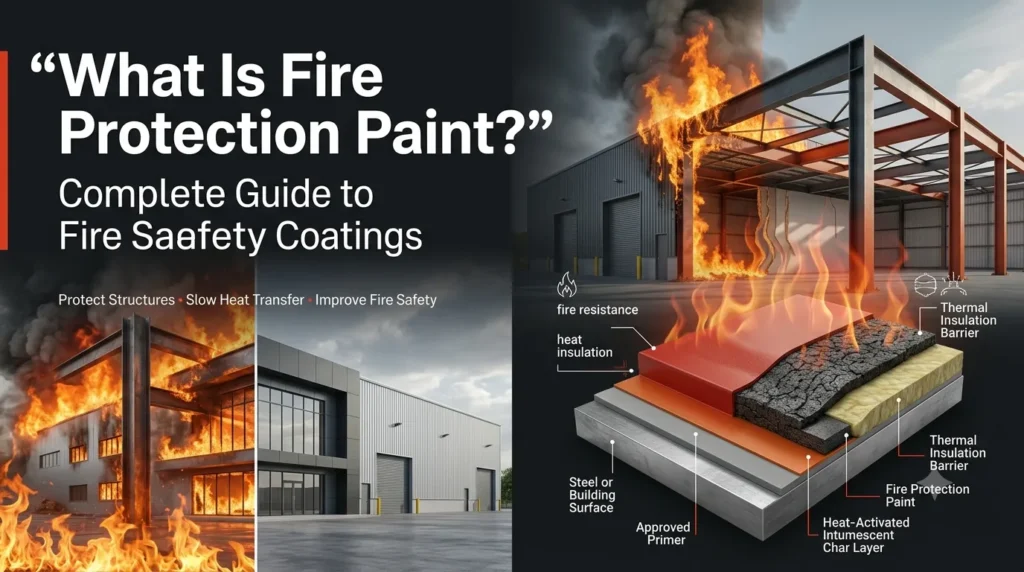
Fire protection paint is a specialized protective coating designed to help reduce the impact of fire and high temperatures on building materials and structural surfaces. It is commonly used on structural steel, metal, wood, walls, gypsum boards, and other construction materials to improve fire safety and support passive fire protection.
Unlike ordinary decorative paint, fire protection paint is formulated to provide a specific level of fire resistance when applied according to an approved coating system. Depending on the product type, it may help slow heat transfer, reduce flame spread, delay structural damage, or form an insulating protective barrier during a fire.
One of the most widely used fire protection technologies is the intumescent coating system. When exposed to high temperatures, an intumescent coating expands and forms a thick, insulating char layer. This layer helps reduce the rate at which heat reaches the underlying material. For steel structures, this can help delay the temperature rise that may cause steel to lose strength and structural stability.
Fire protection paint is an important part of a passive fire protection system. Passive fire protection works continuously without requiring manual activation. It complements other fire safety measures, such as fire alarms, sprinklers, fire extinguishers, smoke-control systems, and emergency evacuation plans.
The performance of fire protection paint depends on several factors, including the surface material, required fire rating, coating thickness, surface preparation, primer compatibility, application method, environmental conditions, and maintenance requirements. Therefore, the coating should be selected based on the project’s fire-protection needs and applied according to the relevant technical specifications.
Fire protection coatings are used in many environments, including factories, warehouses, industrial plants, commercial buildings, power facilities, chemical plants, and infrastructure projects. They may be applied to steel columns, beams, structural members, walls, timber, cable systems, and other surfaces that require additional fire protection.
In simple terms, fire protection paint does not usually prevent a fire from starting or completely stop a fire. Its primary purpose is to help delay the effects of heat and fire on protected materials, supporting structural safety and providing additional time for evacuation and emergency response.
By selecting the correct coating system and maintaining it properly, building owners, contractors, engineers, and industrial facilities can improve fire safety and help protect important structures and assets.
Introduction to Fire Protection Paint
Fire protection paint is a specialized coating designed to help protect building materials and structural surfaces from the effects of fire and high temperatures. It is commonly used in factories, warehouses, commercial buildings, industrial plants, and infrastructure projects.
What Is Fire Protection Paint?
Fire protection paint is a protective coating that helps delay heat transfer and reduce fire-related damage to the surface underneath. Depending on the coating type, it may form an insulating barrier when exposed to high temperatures.
Key Benefits:
- Helps protect steel, metal, wood, walls, and gypsum boards
- Supports passive fire protection systems
- Helps delay heat-related structural damage
- Improves overall building and industrial fire safety
Why Is Fire Protection Paint Important?
Fire protection paint is important because high temperatures can weaken structural materials and increase the risk of damage during a fire. A properly selected coating system can help provide additional protection for critical building components.
Why It Matters:
- Helps improve structural fire resistance
- Supports fire-safety planning
- Helps protect industrial assets
- Provides additional time for evacuation and emergency response
- Supports long-term building safety
How Does Fire Protection Paint Improve Fire Safety?
Some fire protection paints, especially intumescent coatings, expand when exposed to high temperatures. The expanded coating forms an insulating char layer that helps slow the transfer of heat to the protected surface.
How It Helps:
- Creates a protective heat-resistant barrier
- Slows the rise in surface temperature
- Helps delay structural weakening
- Supports passive fire protection
- Helps improve fire safety performance
What Is Fire Protection Paint?
Fire protection paint is a specialized coating designed to help protect building materials and structural surfaces from the effects of fire and high temperatures. It is commonly applied to steel, metal, wood, walls, gypsum boards, and other construction materials.
Definition and Purpose
Fire protection paint is a protective coating that helps reduce heat transfer and delay fire-related damage to the surface underneath. Its main purpose is to improve the fire resistance of building components and support overall fire safety.
Key Points:
- Helps protect structural materials from high temperatures
- Supports fire-resistance performance
- Reduces the impact of heat on protected surfaces
- Used in industrial, commercial, and construction projects
How Fire Protection Paint Protects Building Materials
Some fire protection paints, especially intumescent coatings, react to high temperatures by expanding and forming an insulating protective layer. This layer helps slow the transfer of heat to the underlying material.
How It Protects:
- Forms a heat-insulating barrier
- Slows the temperature rise of the protected surface
- Helps delay structural weakening
- Reduces fire-related damage
- Supports structural stability for the specified fire-resistance period
Fire Protection Paint and Passive Fire Protection
Fire protection paint is an important part of a passive fire protection system. Passive fire protection works continuously without requiring manual activation and helps limit the effects of fire on buildings and structures.
Role in Passive Fire Protection:
- Helps protect structural steel and building components
- Supports fire compartmentation and structural safety
- Works alongside fire doors, fire-rated walls, and fireproof coatings
- Complements active systems such as alarms and sprinklers
- Helps provide additional time for evacuation and emergency response
How Does Fire Protection Paint Work?
Fire protection paint works by creating a protective barrier that helps reduce the effect of high temperatures on the surface underneath. When exposed to fire, some coatings react and form an insulating layer that slows heat transfer and helps delay damage to structural materials.
What Happens When the Coating Is Exposed to Heat?
When fire protection paint is exposed to high temperatures, its protective components begin to react. The response depends on the coating type and formulation. Intumescent coatings are designed to expand when exposed to heat.
Key Points:
- The coating reacts to high temperatures
- The protective layer begins to change
- Heat transfer to the substrate is reduced
- The underlying material receives additional thermal protection
How Intumescent Paint Expands
Intumescent paint expands when exposed to high heat and forms a thick, foam-like char layer. This expansion increases the coating’s thickness and creates a protective barrier between the fire and the surface.
How the Process Works:
- Heat activates the intumescent coating
- The coating expands in thickness
- A protective char layer is formed
- The char helps insulate the underlying material
Formation of an Insulating Protective Layer
The expanded char layer acts as an insulating barrier. It helps reduce the rate at which heat reaches the protected surface, especially on structural steel and other building materials.
Benefits of the Protective Layer:
- Reduces direct heat exposure
- Slows the temperature rise of the substrate
- Helps delay structural weakening
- Supports fire-resistance performance
How Fire Protection Paint Slows Heat Transfer
Fire protection paint slows heat transfer by creating a thermal barrier between the fire and the protected material. The insulating layer reduces the speed at which heat reaches the substrate.
Key Benefits:
- Helps protect structural steel from rapid heating
- Delays heat-related damage
- Supports structural stability during a fire
- Provides additional time for evacuation and emergency response
What Are the Types of Fire Protection Paint?
Fire protection coatings are available in different formulations to protect specific materials and meet different fire-safety requirements. The right coating depends on the surface type, required fire rating, environmental conditions, and approved application system.
Intumescent Fire Protection Paint
Intumescent fire protection paint expands when exposed to high temperatures and forms a thick insulating char layer. This protective layer helps slow heat transfer to the underlying material.
Key Benefits:
- Expands during fire exposure
- Forms an insulating protective barrier
- Commonly used on structural steel
- Helps delay heat-related structural weakening
- Provides a smooth and decorative finish in many applications
Fire Retardant Paint
Fire retardant paint is designed to reduce flame spread and slow the burning process on suitable surfaces. It is commonly used on materials such as wood, walls, fabrics, and selected construction surfaces.
Key Benefits:
- Helps reduce flame spread
- Delays surface ignition
- Supports fire-safety requirements
- Suitable for different building materials
- Available for industrial and commercial applications
Cementitious Fireproof Coatings
Cementitious fireproof coatings are thick, cement-based materials applied to structural components to provide thermal insulation during a fire. They are commonly used where a durable, high-build fireproofing system is required.
Key Benefits:
- Provides thick thermal protection
- Commonly used for structural steel
- Suitable for industrial environments
- Can provide fire resistance for extended periods
- Used in large commercial and industrial projects
Water-Based Fire Protection Paint
Water-based fire protection paint uses water as the primary carrier and is commonly selected for indoor applications. It may offer lower odour and easier cleaning during application.
Key Benefits:
- Lower odour during application
- Easy equipment cleaning
- Suitable for many indoor environments
- Can provide a smooth finish
- Available in different fire-protection systems
Solvent-Based Fire Protection Paint
Solvent-based fire protection paint uses organic solvents as the coating carrier and may be selected for specific environmental or application conditions. Its suitability depends on the product formulation and project requirements.
Key Benefits:
- Suitable for selected industrial applications
- May provide good application performance in specific conditions
- Can be used where the approved coating system requires it
- Available for different surface and exposure requirements
- Requires proper ventilation and safe handling during application
Where Is Fire Protection Paint Used?
Fire protection paint is used on different building materials and structural surfaces to help reduce the effects of fire and high temperatures. The suitable coating depends on the surface material, required fire rating, environmental conditions, and approved fire-protection system.
Fire Protection Paint for Structural Steel
Structural steel is widely used in industrial and commercial buildings. During a fire, high temperatures can reduce steel strength and affect structural stability. Fire protection paint helps slow the temperature rise of steel members.
Common Applications:
- Steel columns
- Steel beams
- Structural frames
- Industrial sheds
- Steel supports
Key Benefits:
- Helps delay heat exposure
- Supports structural fire resistance
- Helps maintain structural stability
- Supports passive fire protection
Fire Protection Paint for Metal Surfaces
Fire protection coatings can be applied to selected metal surfaces where additional fire resistance is required. The coating system should be compatible with the substrate and any existing primer or protective coating.
Common Applications:
- Metal structures
- Equipment supports
- Metal panels
- Steel components
- Industrial installations
Key Benefits:
- Helps reduce heat transfer
- Supports fire-safety performance
- Provides additional protection for critical metal components
- Can be used as part of a complete coating system
Fire Protection Paint for Wood and Timber
Wood and timber are combustible materials. Fire retardant coatings can help reduce flame spread and delay surface burning when applied according to the approved system.
Common Applications:
- Wooden doors
- Timber panels
- Interior woodwork
- Decorative wooden surfaces
- Commercial and public buildings
Key Benefits:
- Helps reduce flame spread
- Delays surface ignition
- Supports fire-safety requirements
- Helps improve the fire performance of treated wood
Fire Protection Paint for Walls and Gypsum Boards
Fire protection paint can be used on walls and gypsum boards where the selected coating system is designed and tested for those surfaces.
Common Applications:
- Interior walls
- Gypsum board partitions
- Fire-rated wall systems
- Commercial interiors
- Industrial buildings
Key Benefits:
- Helps improve surface fire performance
- Supports passive fire protection
- Helps reduce fire-related surface damage
- Can be integrated into approved wall systems
Fire Protection Paint for Industrial Buildings
Industrial facilities often contain structural steel, machinery, electrical systems, and valuable assets. Fire protection paint can be used as part of a wider fire-safety strategy.
Common Applications:
- Manufacturing plants
- Chemical facilities
- Power plants
- Engineering workshops
- Process industries
Key Benefits:
- Helps protect critical structures
- Supports industrial fire-safety planning
- Reduces the risk of heat-related structural damage
- Supports long-term asset protection
Fire Protection Paint for Warehouses and Commercial Facilities
Warehouses and commercial buildings may contain large storage areas, steel structures, and high-value equipment. Fire protection coatings can help improve the fire resistance of selected building components.
Common Applications:
- Warehouses
- Storage facilities
- Shopping centres
- Office buildings
- Commercial complexes
Key Benefits:
- Helps protect structural components
- Supports building fire-safety systems
- Helps delay heat-related damage
- Provides additional time for evacuation and emergency response
What Are the Benefits of Fire Protection Paint?
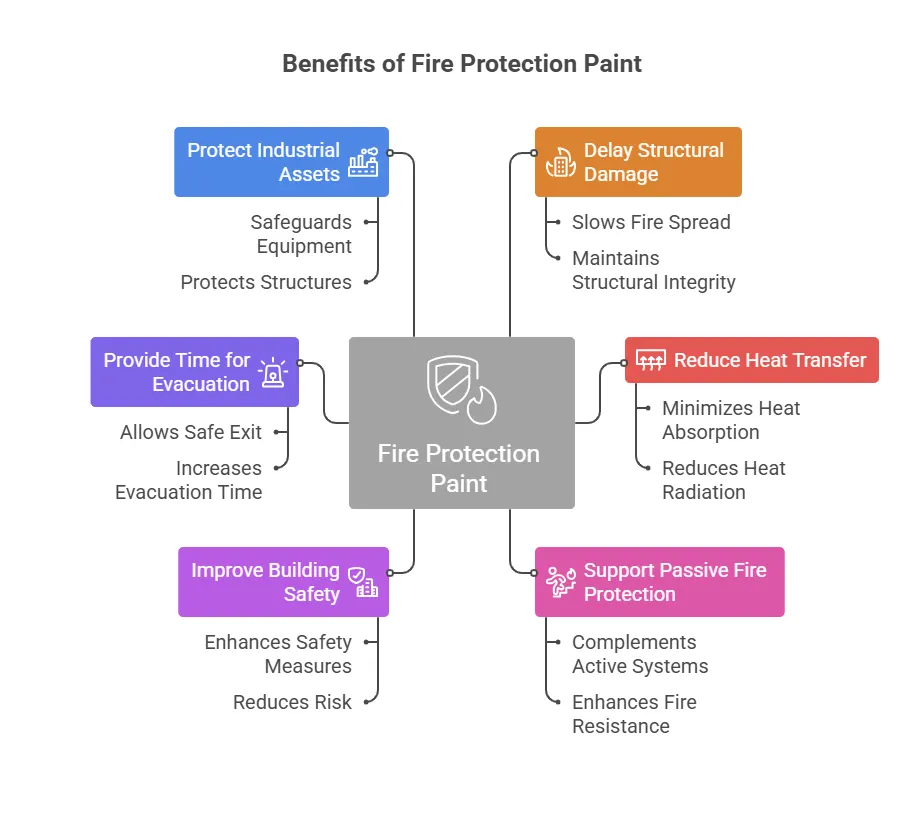
Fire protection paint provides an additional layer of protection for building materials and structural surfaces during a fire. When selected and applied as part of an approved coating system, it can help reduce heat exposure, delay structural damage, and support overall fire safety.
Helps Delay Structural Damage
High temperatures can weaken structural materials, especially steel. Fire protection paint helps delay the rise in surface temperature and may reduce the speed of heat-related damage.
Key Benefits:
- Helps protect structural steel and metal
- Delays heat-related weakening
- Supports structural stability
- Reduces the risk of early structural damage
Reduces Heat Transfer
Some fire protection coatings form an insulating barrier when exposed to high temperatures. This barrier helps slow the transfer of heat to the underlying material.
Key Benefits:
- Creates a protective thermal layer
- Slows the temperature rise of the substrate
- Reduces direct heat exposure
- Helps protect critical building components
Supports Passive Fire Protection
Fire protection paint is an important part of a passive fire protection system. It provides continuous protection without requiring manual operation or activation.
Key Benefits:
- Works continuously after proper application
- Supports structural fire resistance
- Complements fire-rated walls and fire doors
- Works alongside active systems such as alarms and sprinklers
Helps Improve Building Safety
Fire protection paint can improve the fire performance of selected building materials and structural components. It supports a safer environment for occupants, workers, and valuable assets.
Key Benefits:
- Supports fire-safety planning
- Helps protect important building components
- Improves overall structural fire protection
- Supports safer industrial and commercial facilities
Provides Additional Time for Evacuation
By slowing heat transfer and delaying structural damage, fire protection paint may help provide additional time for safe evacuation and emergency response.
Key Benefits:
- Supports safer evacuation routes
- Helps delay heat-related structural failure
- Provides more time for emergency services
- Supports emergency preparedness
Protects Industrial Assets and Structures
Industrial facilities often contain valuable equipment, machinery, steel structures, and critical infrastructure. Fire protection coatings can help reduce fire-related damage to selected protected surfaces.
Key Benefits:
- Helps protect industrial structures
- Supports asset-protection strategies
- Reduces the impact of heat on critical components
- Supports long-term facility safety
Why Is Fire Protection Paint Important for Steel Structures?
Steel is strong and durable under normal conditions, but high temperatures can reduce its strength and stiffness during a fire. Fire protection paint helps slow the temperature increase of steel members and supports structural stability for the required fire-resistance period.
How High Temperatures Affect Steel
When exposed to intense heat, steel can lose strength and become less rigid. This may cause structural members to bend, deform, or lose their load-bearing capacity.
Key Points:
- High temperatures can reduce steel strength
- Steel may lose stiffness during prolonged fire exposure
- Structural members may bend or deform
- Fire protection helps delay rapid temperature increase
Fire Protection for Steel Columns
Steel columns support the weight of floors, roofs, and other structural components. Fire protection paint helps reduce direct heat exposure and supports the fire performance of steel columns.
Common Applications:
- Industrial steel columns
- Factory structures
- Warehouse support columns
- Commercial building frames
Key Benefits:
- Helps delay heat-related weakening
- Supports structural stability
- Helps protect load-bearing components
- Supports the required fire-resistance rating
Fire Protection for Steel Beams
Steel beams carry loads across floors and roofs. During a fire, excessive heat may reduce their strength and cause bending or deformation. A suitable fire protection coating helps slow heat transfer to the beam.
Common Applications:
- Roof beams
- Floor-support beams
- Industrial structural beams
- Commercial building frameworks
Key Benefits:
- Helps reduce rapid heating
- Delays heat-related deformation
- Supports load-bearing performance
- Improves structural fire protection
Importance of Approved Coating Thickness
The performance of fire protection paint depends on applying the correct dry film thickness (DFT). The required thickness is determined by factors such as the steel section, fire rating, coating system, and project requirements.
Why Correct Thickness Matters:
- Helps achieve the required fire-resistance performance
- Provides the intended level of thermal protection
- Supports coating-system compliance
- Helps maintain consistent protection across the structure
Fire Protection Paint vs Fire Retardant Paint
Fire protection paint and fire retardant paint both support fire safety, but they may serve different purposes. Fire protection paint is generally used to help protect structural materials from high temperatures, while fire retardant paint is designed to help reduce flame spread and slow surface burning.
What Is the Difference?
Fire protection paint focuses on reducing heat transfer and helping protect structural components during fire exposure. Fire retardant paint is commonly used to reduce flame spread and delay the burning of suitable surfaces.
| Feature | Fire Protection Paint | Fire Retardant Paint |
| Main purpose | Helps protect materials from heat | Helps reduce flame spread |
| Common use | Steel and structural components | Wood, walls, fabrics, and selected surfaces |
| Protection method | Forms an insulating barrier | Reduces surface burning |
| Fire safety role | Supports structural fire protection | Supports flame-spread control |
How Each Coating Works
Fire protection coatings, such as intumescent paint, may expand when exposed to high temperatures. The expanded coating forms an insulating char layer that helps slow heat transfer to the underlying material.
Fire retardant paint is formulated to reduce the rate of flame spread and help delay ignition or surface burning. Its performance depends on the coating type, surface material, and tested application system.
Key Points:
- Fire protection paint helps reduce heat exposure
- Intumescent coatings can form an insulating char layer
- Fire retardant paint helps control flame spread
- Both coatings support passive fire protection
Surface Compatibility
The correct coating should be selected according to the surface material and intended application.
Fire Protection Paint May Be Used On:
- Structural steel
- Steel columns and beams
- Metal structures
- Industrial building components
Fire Retardant Paint May Be Used On:
- Wood and timber
- Walls and gypsum boards
- Fabrics and selected materials
- Interior building surfaces
Surface preparation, primer compatibility, coating thickness, and environmental conditions should be checked before application.
Choosing the Right Fire Safety Coating
The right fire safety coating depends on the project’s fire-protection requirements. Consider the surface type, required fire rating, exposure conditions, and approved coating system.
Selection Checklist:
- Identify the surface material
- Determine the required fire-resistance rating
- Check the tested coating system
- Confirm the required coating thickness
- Consider indoor or outdoor exposure
- Follow the manufacturer’s technical guidelines
How to Choose the Right Fire Protection Paint
Choosing the right fire protection paint depends on the surface material, required fire rating, environmental exposure, and approved coating system. A properly selected coating helps provide the intended fire-protection performance and long-term durability.
Identify the Surface Material
Different materials require different fire protection systems. The coating should be compatible with the surface and its intended use.
Common Surface Materials:
- Structural steel
- Metal and steel structures
- Wood and timber
- Walls and gypsum boards
- Concrete and selected building materials
Key Point: Always select a coating designed and tested for the specific substrate.
Determine the Required Fire Rating
The required fire rating depends on the building design, structural requirements, and applicable fire-safety standards. Fire ratings may be specified in minutes or hours.
Consider:
- Required fire-resistance period
- Type of structural element
- Building occupancy and use
- Project specifications
- Applicable fire-safety requirements
Key Point: The required rating should be confirmed before selecting the coating system.
Consider Indoor or Outdoor Exposure
Indoor and outdoor environments may require different coating properties. Outdoor applications may need additional protection against weather, moisture, UV exposure, and temperature changes.
Indoor Considerations:
- Low-odour requirements
- Interior finish appearance
- Ventilation conditions
Outdoor Considerations:
- UV resistance
- Moisture protection
- Weather durability
- Protective topcoat compatibility
Check Environmental Conditions
Environmental conditions can affect coating performance and service life. Consider the operating environment before selecting a fire protection coating.
Important Factors:
- High humidity
- Moisture and water exposure
- Chemical exposure
- Corrosive environments
- Temperature variations
- Dust and industrial contamination
Review Tested and Approved Coating Systems
Fire protection paint should be selected as part of a tested and approved system. The complete system may include a primer, fire protection coating, and topcoat.
Check:
- Fire-test reports
- Product technical data sheets
- Approved application methods
- Compatible primer and topcoat systems
- Required dry film thickness
- Project or regulatory requirements
Check Coating Thickness Requirements
The required coating thickness is important for achieving the intended fire-resistance performance. The specified dry film thickness (DFT) may vary based on the steel section, fire rating, coating type, and tested system.
Why Thickness Matters:
- Supports the required fire rating
- Helps provide consistent thermal protection
- Reduces the risk of insufficient coating performance
- Supports quality control and inspection
How Is Fire Protection Paint Applied?
Fire protection paint should be applied according to the manufacturer’s technical guidelines, approved coating system, and project specifications. Proper surface preparation, correct application, and thickness control are important for achieving the intended fire-protection performance.
Surface Preparation
The surface should be clean, dry, and free from dust, oil, grease, rust, loose paint, and other contaminants. Proper surface preparation helps improve coating adhesion and long-term performance.
Key Steps:
- Remove rust, dirt, oil, and loose material
- Clean and prepare the surface
- Repair damaged or defective areas
- Ensure the surface is dry before coating
- Follow the required surface-preparation standard
Primer Selection
A compatible primer may be required to improve adhesion and protect the substrate from corrosion. The primer should be approved for use with the selected fire protection coating.
Important Checks:
- Confirm primer compatibility
- Select a primer suitable for the surface
- Check corrosion-protection requirements
- Follow the recommended primer thickness
- Allow the primer to dry or cure properly
Brush, Roller, Spray, or Specialized Application
Fire protection paint may be applied using different methods depending on the product, surface, and project requirements.
Common Application Methods:
- Brush: Suitable for small areas, edges, and repairs
- Roller: Useful for accessible flat surfaces
- Airless spray: Suitable for large areas and faster application
- Specialized equipment: May be required for high-build or cementitious coatings
The recommended application method should always follow the product technical data sheet.
Dry Film Thickness Control
The required dry film thickness (DFT) is important for achieving the intended fire-resistance performance. Thickness should be checked during and after application.
Why DFT Control Matters:
- Helps achieve the specified fire rating
- Provides consistent protection
- Reduces the risk of under-application
- Supports coating quality control
- Helps verify compliance with project requirements
Curing and Final Inspection
After application, the coating should be allowed to dry and cure according to the product requirements. A final inspection should confirm that the coating is properly applied and free from visible defects.
Final Inspection Checks:
- Coating thickness
- Surface coverage
- Adhesion and coating condition
- Cracks, pinholes, or damaged areas
- Proper drying and curing
- Compliance with the approved coating system
How to Maintain Fire Protection Paint
Regular maintenance helps keep fire protection paint in good condition and supports its long-term performance. The coating should be inspected periodically for damage, cracking, coating loss, or environmental wear. Maintenance should follow the approved coating system and manufacturer’s recommendations.
Regular Visual Inspection
Visual inspections help identify early signs of coating damage before the affected area becomes larger.
Inspection Points:
- Check for visible cracks or peeling
- Look for blistering or flaking
- Inspect exposed edges and joints
- Check areas exposed to moisture or impact
- Review the overall condition of the coating
Checking for Cracks, Damage, and Coating Loss
Fire protection coatings may be damaged by impact, vibration, moisture, corrosion, or maintenance work. Damaged areas may reduce the continuity of the protective coating.
Check For:
- Cracks and surface damage
- Chipping or peeling
- Scratches and impact marks
- Missing or worn coating
- Exposed substrate or steel
- Signs of corrosion beneath the coating
Repairing Damaged Areas
Damaged areas should be repaired using compatible materials and approved repair procedures. The affected surface may need cleaning and preparation before the coating is reapplied.
Basic Repair Steps:
- Identify and mark the damaged area
- Remove loose or defective coating
- Clean and prepare the surface
- Repair the primer if required
- Reapply the approved fire protection coating
- Check the required dry film thickness
Maintaining Long-Term Fire Protection Performance
Long-term performance depends on proper application, regular inspection, timely repairs, and protection from unsuitable environmental exposure.
Maintenance Best Practices:
- Follow a planned inspection schedule
- Keep maintenance and repair records
- Repair damaged areas promptly
- Avoid using incompatible coatings
- Check coating thickness when required
- Follow the manufacturer’s maintenance guidelines
Common Mistakes to Avoid
Proper selection, application, inspection, and maintenance are important for achieving the intended performance of fire protection paint. Avoiding common mistakes can help improve coating durability and support long-term fire safety.
Using the Wrong Coating for the Surface
Different surfaces require different fire protection systems. A coating designed for steel may not be suitable for wood, gypsum boards, or other materials.
Avoid These Mistakes:
- Applying a coating to an unsuitable surface
- Using a product without checking substrate compatibility
- Ignoring indoor or outdoor exposure conditions
- Selecting a coating without confirming the required fire rating
Best Practice: Choose a fire protection coating that is designed and tested for the specific surface and application.
Ignoring Required Coating Thickness
The required dry film thickness (DFT) is important for achieving the intended fire-protection performance. Applying too little coating may affect the performance of the approved system.
Common Problems:
- Uneven coating thickness
- Under-application of the coating
- Skipping thickness measurements
- Applying the coating beyond recommended limits
Best Practice: Measure and record the coating thickness according to the product technical data sheet and project specifications.
Poor Surface Preparation
Poor surface preparation can reduce coating adhesion and lead to peeling, cracking, or early coating failure.
Common Issues:
- Dust, oil, grease, or rust on the surface
- Loose or damaged existing coatings
- Moisture on the substrate
- Inadequate surface cleaning
Best Practice: Ensure the surface is clean, dry, properly prepared, and free from contaminants before application.
Using an Incompatible Primer
An unsuitable primer may affect adhesion and the performance of the fire protection coating. The primer should be compatible with both the substrate and the selected fire protection system.
Check Before Application:
- Primer and fire protection coating compatibility
- Required primer type
- Recommended primer thickness
- Primer drying or curing time
- Corrosion-protection requirements
Best Practice: Use only an approved primer system recommended for the selected fire protection coating.
Skipping Inspection and Maintenance
Fire protection coatings may be affected by impact, moisture, corrosion, vibration, or environmental exposure. Without regular inspection, damage may remain unnoticed.
Maintenance Risks:
- Cracks or coating loss
- Peeling and surface damage
- Exposed steel or substrate
- Reduced continuity of the protective coating
Best Practice: Conduct regular inspections, repair damaged areas promptly, and maintain records of coating condition and repairs.
Frequently Asked Questions About Fire Protection Paint
What Is Fire Protection Paint Used For?
Fire protection paint is used to help protect steel, metal, wood, walls, gypsum boards, and other building materials from the effects of fire and high temperatures. It supports passive fire protection and helps delay heat-related damage.
How Does Fire Protection Paint Work?
Some fire protection paints, especially intumescent coatings, expand when exposed to high temperatures. The coating forms an insulating char layer that helps slow heat transfer to the underlying material.
Is Fire Protection Paint the Same as Fire Retardant Paint?
No. Fire protection paint generally focuses on reducing heat transfer and protecting structural materials, while fire retardant paint is designed to help reduce flame spread and slow surface burning. The correct coating depends on the surface and fire-safety requirement.
Can Fire Protection Paint Be Applied to Steel?
Yes. Fire protection paint is commonly applied to structural steel, columns, beams, and steel frameworks. It helps slow the temperature rise of steel during a fire and supports structural fire resistance.
Can Fire Protection Paint Be Used on Wood?
Yes, but the coating must be specifically designed and approved for wood or timber. Fire retardant coatings can help reduce flame spread and improve the fire performance of suitable wooden surfaces.
Does Fire Protection Paint Prevent Fire Completely?
No. Fire protection paint does not usually prevent a fire from starting or completely stop a fire. Its main purpose is to help reduce heat transfer, delay damage, and support the fire resistance of protected materials.
How Long Does Fire Protection Paint Last?
The service life depends on the coating type, application quality, environmental exposure, surface condition, and maintenance. Regular inspection and timely repair can help maintain long-term performance.
How Is Fire Protection Paint Applied?
Fire protection paint is generally applied after proper surface preparation. Depending on the product, it may be applied using a brush, roller, airless spray, or specialized equipment. The required coating thickness and curing conditions should follow the technical data sheet.
What Thickness Is Required for Fire Protection Paint?
The required dry film thickness (DFT) depends on the coating system, surface type, steel section, required fire rating, and approved test data. The specified thickness should be followed and verified during application.
Can Fire Protection Paint Be Used Outdoors?
Yes, some fire protection coating systems are suitable for outdoor use. Outdoor applications may require compatible protective topcoats to provide resistance against moisture, UV exposure, weather, and environmental conditions.
Conclusion – Choosing the Right Fire Protection Paint
Choosing the right fire protection paint is important for improving the fire resistance of building materials and supporting long-term safety. The coating should be selected based on the surface type, required fire rating, environmental conditions, and approved application system.
Match the Coating to the Surface
Different materials require different fire protection coatings. A coating suitable for structural steel may not be suitable for wood, walls, or gypsum boards.
Key Considerations:
- Identify the surface material
- Check coating compatibility
- Select a coating designed for the intended application
- Consider indoor or outdoor exposure
Select the Required Fire Rating
The required fire rating should be determined according to the building design, project specifications, and applicable fire-safety requirements.
Important Factors:
- Required fire-resistance period
- Type of structural element
- Building use and occupancy
- Project and regulatory requirements
- Approved fire-test performance
Follow the Approved Application System
Fire protection performance depends on proper application. The complete coating system may include surface preparation, primer, fire protection coating, and a compatible topcoat.
Application Requirements:
- Prepare the surface correctly
- Use compatible coating materials
- Apply the specified dry film thickness
- Follow recommended drying and curing conditions
- Complete inspection and quality checks
Improve Long-Term Fire Safety
Regular inspection and maintenance help keep the coating in good condition. Damaged or worn areas should be repaired using approved materials and procedures.
Long-Term Best Practices:
- Conduct periodic coating inspections
- Check for cracks, peeling, or coating loss
- Repair damaged areas promptly
- Maintain inspection and repair records
- Follow the manufacturer’s maintenance guidelines