

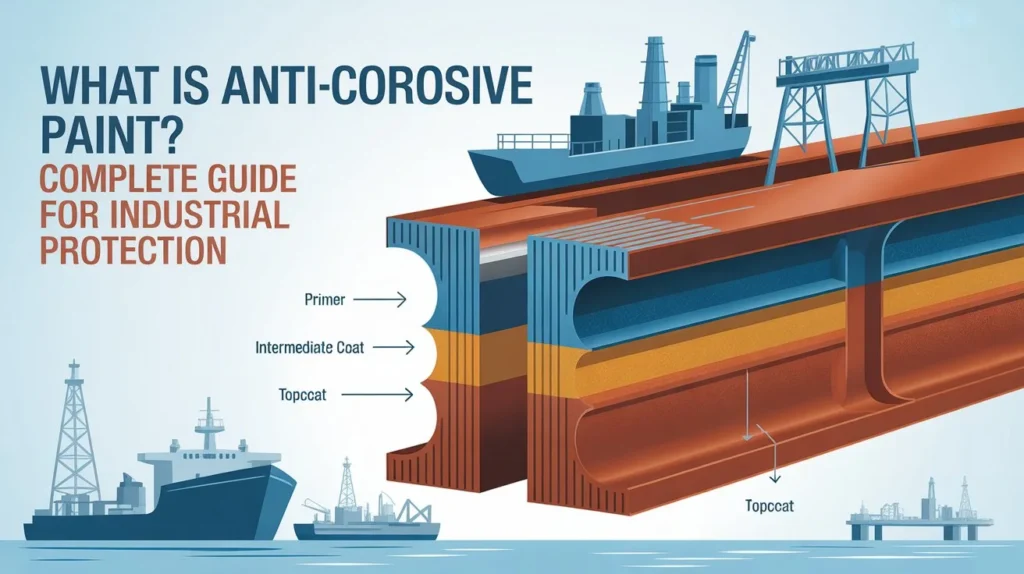
Anti-corrosive paint is a protective coating applied to metal surfaces to prevent rust and deterioration caused by exposure to moisture, oxygen, chemicals, and harsh environmental conditions. It acts as a shield, ensuring that metal structures maintain their strength, appearance, and performance over time, especially in demanding industrial environments.
Corrosion occurs when metals react with elements like water and air, leading to oxidation and the formation of rust. This process can weaken structures, damage machinery, and increase maintenance costs. Anti-corrosive paints are specially designed to slow down or completely prevent this reaction, making them essential for industries such as construction, oil & gas, marine, and manufacturing.
These coatings work through different protection mechanisms, including barrier protection, which blocks external elements, and inhibitive or zinc-rich formulations that actively resist corrosion. Depending on the application, different types such as epoxy, polyurethane, and zinc-based coatings are used to provide varying levels of durability and resistance.
Using anti-corrosive paint not only extends the lifespan of metal assets but also reduces repair expenses and improves safety. For industrial businesses, investing in high-quality anti-corrosive coatings is a cost-effective solution to ensure long-term protection and reliable performance.
Introduction to Anti-Corrosive Paint
Anti-corrosive paint is a specialized coating formulated to protect metal surfaces from rust, oxidation, and environmental damage. It is widely used in industrial and commercial applications where metals are exposed to moisture, chemicals, and extreme weather conditions. By forming a protective layer, this paint helps prevent direct contact between the metal surface and corrosive elements.
In industries such as construction, manufacturing, marine, and oil & gas, corrosion can lead to serious structural damage and costly repairs. Anti-corrosive coatings play a critical role in maintaining the strength and durability of metal structures, machinery, and equipment over time.
These paints are designed with advanced resins and anti-corrosive pigments that not only protect but also enhance the lifespan of the coated surface. As a result, they are considered an essential solution for ensuring long-term performance and reducing maintenance costs in industrial environments.
What is Corrosion and Why Does it Occur?
Definition of Corrosion
Corrosion is a natural chemical or electrochemical process in which metals gradually deteriorate due to reactions with their environment. When metals come into contact with oxygen, moisture, or other reactive substances, they form oxides or similar compounds, commonly known as rust. This process weakens the metal and affects its performance over time.
Common Causes of Corrosion
Corrosion occurs due to several environmental and chemical factors. The most common causes include exposure to moisture and humidity, which accelerates oxidation, and continuous contact with oxygen in the air. Industrial chemicals, pollutants, and acids further speed up the corrosion process. In coastal areas, salt-laden air is highly corrosive and can significantly damage metal surfaces if left unprotected.
Effects of Corrosion on Metal Structures
Corrosion can have serious consequences on metal structures and equipment. It leads to loss of strength and structural integrity, making materials more prone to failure. Over time, it increases maintenance and repair costs, reduces the lifespan of assets, and can even create safety hazards in industrial environments. Proper protection, such as anti-corrosive coatings, is essential to prevent these issues.
How Anti-Corrosive Paint Works
Barrier Protection Mechanism
Anti-corrosive paint forms a continuous protective layer over the metal surface, acting as a barrier against moisture, oxygen, and chemicals. By preventing direct contact between the metal and environmental elements, it significantly reduces the chances of oxidation and rust formation.
Inhibitive Protection
These coatings often contain special anti-corrosive pigments such as zinc phosphate or other inhibitors. These compounds chemically react with the metal surface to slow down or stop the corrosion process, providing an added layer of protection beyond just a physical barrier.
Sacrificial Protection
In some coatings, especially zinc-rich paints, the protective layer sacrifices itself to protect the underlying metal. The zinc corrodes first instead of the base metal, thereby preventing rust formation on the actual surface. This method is highly effective for steel structures exposed to harsh environments.
Types of Anti-Corrosive Paint
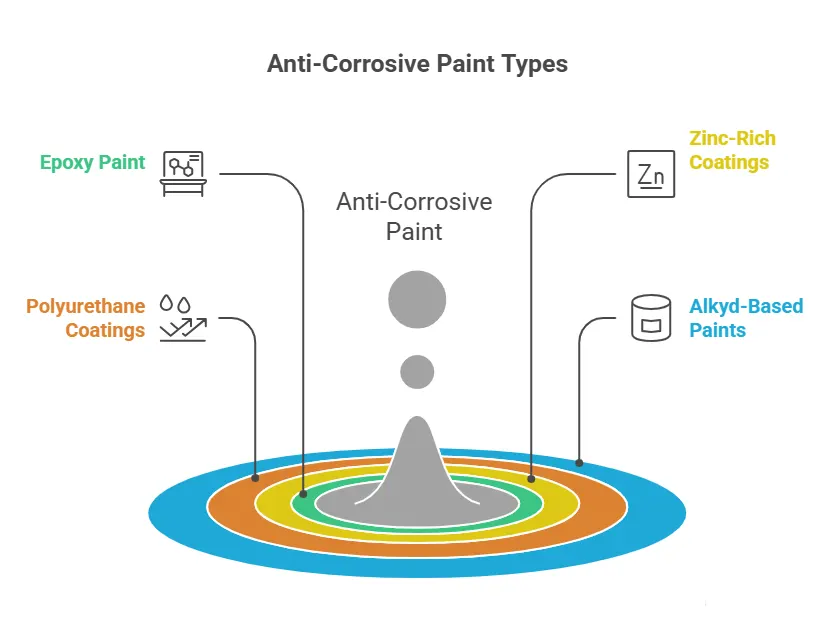
Epoxy Anti-Corrosive Paint
Epoxy coatings are one of the most widely used anti-corrosive paints in industrial applications. They offer excellent adhesion, strong chemical resistance, and high durability, making them ideal for harsh environments such as factories, pipelines, and marine structures. Epoxy paints are commonly used as primers or intermediate coats for long-term protection.
Zinc-Rich Coatings
Zinc-rich coatings provide superior protection through sacrificial action. These coatings contain a high percentage of zinc, which corrodes in place of the base metal, preventing rust formation. They are highly effective for protecting steel structures like bridges, tanks, and heavy equipment exposed to extreme conditions.
Polyurethane Coatings
Polyurethane coatings are typically used as topcoats due to their excellent UV resistance and weather durability. They provide a smooth, glossy finish while protecting underlying layers from sunlight, abrasion, and environmental damage. These coatings are ideal for outdoor applications where appearance and long-term performance are important.
Alkyd-Based Paints
Alkyd-based anti-corrosive paints are a cost-effective solution for mild to moderate environments. They offer decent protection against moisture and atmospheric corrosion and are commonly used for general-purpose applications such as light machinery and indoor metal surfaces.
Key Features and Benefits
Long-Term Protection
Anti-corrosive paints provide a strong protective layer that prevents rust and degradation over extended periods. This ensures that metal surfaces remain intact and functional even when exposed to challenging environmental conditions.
Cost Savings on Maintenance
By reducing the rate of corrosion, these coatings significantly lower the need for frequent repairs, replacements, and maintenance. This results in substantial cost savings for industries over the lifespan of the equipment or structure.
Resistance to Harsh Environments
Anti-corrosive coatings are designed to withstand extreme conditions such as high humidity, chemical exposure, salt-laden air, and temperature fluctuations. This makes them ideal for industrial, marine, and coastal applications.
Improved Durability and Lifespan
With enhanced resistance to wear, weather, and corrosion, these paints extend the overall lifespan of metal assets. This not only improves performance but also ensures long-term reliability and safety in industrial operations.
Applications of Anti-Corrosive Paint
Industrial Machinery
Anti-corrosive paint is widely used on industrial machinery to protect metal components from rust caused by moisture, chemicals, and continuous operation. It helps maintain performance, reduces downtime, and extends the life of equipment.
Oil & Gas Industry
In the oil and gas sector, pipelines, storage tanks, and processing equipment are constantly exposed to harsh chemicals and extreme conditions. Anti-corrosive coatings play a critical role in preventing corrosion, ensuring safety, and minimizing maintenance costs.
Marine and Offshore Structures
Marine environments are highly corrosive due to constant exposure to saltwater and humidity. Anti-corrosive paints are essential for ships, offshore platforms, and coastal structures to prevent rapid deterioration and structural damage.
Bridges and Steel Structures
Steel bridges, towers, and structural frameworks require long-term protection against environmental exposure. Anti-corrosive coatings help maintain structural integrity, prevent rusting, and ensure durability over many years.
Automotive Industry
In the automotive sector, anti-corrosive paints are used to protect vehicle parts such as chassis and underbody components from rust caused by water, dirt, and road salts. This improves vehicle lifespan and reliability.
How to Choose the Right Anti-Corrosive Paint
Type of Surface
The choice of anti-corrosive paint depends on the material you are coating, such as steel, iron, aluminum, or galvanized surfaces. Each surface requires specific primers and coatings to ensure proper adhesion and effective protection.
Environmental Conditions
Consider the environment where the coating will be applied. Areas with high humidity, coastal exposure, or outdoor conditions require more durable and weather-resistant coatings, while indoor environments may need less intensive protection.
Chemical and Heat Exposure
If the surface is exposed to chemicals, acids, or high temperatures, it is important to select coatings that offer resistance to these conditions. Epoxy and heat-resistant coatings are commonly used in such demanding industrial applications.
Budget and Maintenance Needs
Balancing cost with performance is essential. While high-performance coatings may have a higher initial cost, they offer longer service life and reduced maintenance expenses, making them more cost-effective in the long run.
Application Process of Anti-Corrosive Paint
Surface Preparation
Proper surface preparation is critical for effective coating performance. The metal surface must be cleaned thoroughly to remove dust, grease, oil, rust, and old paint. Methods such as wire brushing, sanding, or sandblasting are commonly used to ensure a clean and rough surface for better adhesion.
Primer Application
After preparation, a suitable anti-corrosive primer is applied to the surface. Primers enhance adhesion and provide the first layer of protection against corrosion. Zinc-rich or epoxy primers are often used depending on the application and environmental conditions.
Topcoat Application
Once the primer is dry, the topcoat is applied to provide additional protection and desired finish. This layer improves resistance to weather, chemicals, and UV exposure while also enhancing the appearance of the surface.
Drying and Curing
Proper drying and curing time is essential to achieve maximum performance of the coating system. The painted surface should be allowed to dry under recommended conditions to ensure strong bonding, durability, and long-lasting corrosion resistance.
Maintenance Tips for Long-Lasting Protection
Regular Inspection
Conduct routine inspections to identify early signs of damage such as scratches, cracks, or rust spots. Detecting issues at an early stage helps prevent further corrosion and allows for timely repairs, ensuring the coating remains effective.
Cleaning and Upkeep
Keep coated surfaces clean by removing dust, dirt, oil, and chemical residues. Regular cleaning prevents contaminants from weakening the protective layer and helps maintain the performance and appearance of the coating.
Recoating Guidelines
Over time, protective coatings may wear down due to environmental exposure. Recoating at recommended intervals ensures continuous protection against corrosion. Always follow proper surface preparation before applying a new coat to achieve optimal results.
Common Problems and Solutions
Peeling or Flaking
Peeling or flaking usually occurs due to poor surface preparation, contamination, or improper application. If the surface is not cleaned properly before painting, the coating may not bond well. To fix this, remove the damaged coating, clean and prepare the surface thoroughly, and reapply the paint using the correct method.
Rust Reappearance
Rust may reappear if the coating is too thin, damaged, or applied over an already corroded surface. In such cases, the underlying rust continues to spread. The solution is to completely remove existing rust through mechanical or chemical methods, apply a suitable anti-corrosive primer, and then recoat with a high-quality paint system.
Poor Adhesion
Poor adhesion happens when the paint fails to stick properly to the surface, often due to moisture, oil, or incompatible coatings. To avoid this issue, ensure the surface is dry, clean, and properly prepared. Using the right primer and following recommended application guidelines will significantly improve adhesion and coating performance.
Conclusion – Why Anti-Corrosive Paint is Essential
Summary of Benefits
Anti-corrosive paint plays a crucial role in protecting metal surfaces from rust, environmental damage, and chemical exposure. It enhances durability, reduces maintenance costs, and ensures long-term performance of industrial assets.
Industrial Importance
In industries such as construction, oil & gas, marine, and manufacturing, corrosion can lead to serious safety risks and financial losses. Using high-quality anti-corrosive coatings helps maintain structural integrity, improve reliability, and extend the lifespan of equipment and infrastructure.
Choosing the Right Coating
Selecting the right anti-corrosive paint depends on factors like surface type, environmental conditions, and exposure levels. Investing in the correct coating system ensures maximum protection, efficiency, and cost-effectiveness over time.