

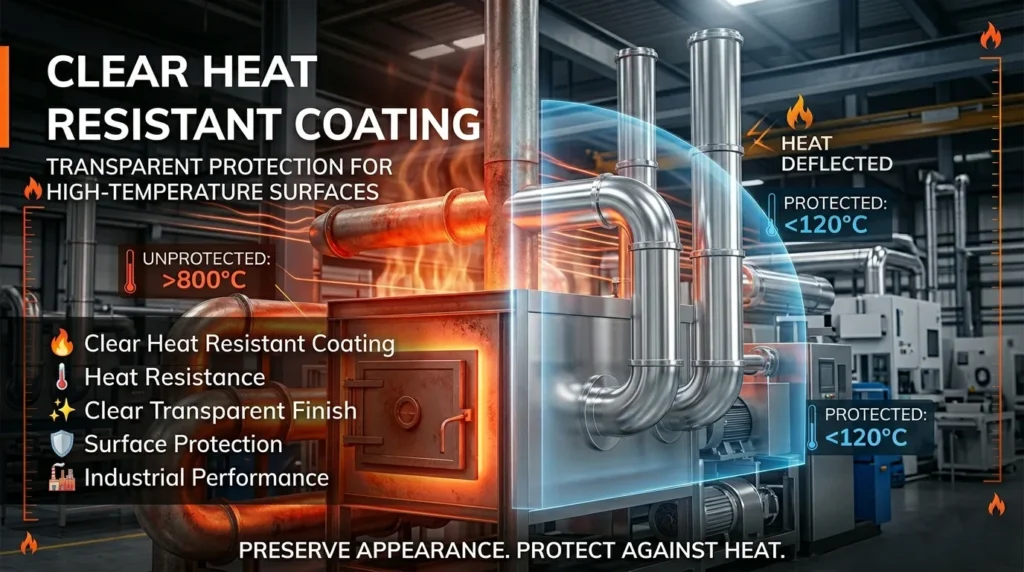
A Clear Heat Resistant Coating is an advanced transparent protective coating designed to withstand high temperatures while preserving the original appearance of the surface. Unlike conventional heat resistant paints that add color, clear coatings provide thermal protection without hiding the natural finish of metal, stainless steel, aluminum, or other substrates. This makes them an ideal choice for applications where both aesthetics and heat resistance are important.
High-temperature environments can cause oxidation, corrosion, discoloration, and surface degradation over time. A clear heat resistant coating forms a durable protective barrier that helps shield surfaces from thermal stress while maintaining their visual appeal. These coatings are commonly used on industrial equipment, exhaust systems, chimneys, boilers, furnaces, decorative metal structures, and engineering components exposed to elevated temperatures.
By combining transparency with thermal protection, clear heat resistant coatings offer a practical solution for extending equipment life, reducing maintenance requirements, and improving long-term performance. Whether used in industrial facilities, manufacturing plants, automotive applications, or commercial buildings, they provide reliable protection against heat-related damage while preserving the surface’s original look and finish. 🔥
Introduction to Clear Heat Resistant Coatings
Clear heat resistant coatings provide an effective way to protect surfaces exposed to elevated temperatures while maintaining their original appearance. Unlike conventional heat resistant paints that add color or alter the surface finish, these transparent coatings offer thermal protection without compromising aesthetics. They are widely used in industrial, commercial, and engineering applications where both performance and visual appeal are important.
What is a Clear Heat Resistant Coating?
A clear heat resistant coating is a transparent protective layer specially formulated to withstand high temperatures. It is designed to protect metal and other heat-exposed surfaces from thermal degradation, oxidation, corrosion, and discoloration. Because the coating is transparent, it preserves the natural appearance, texture, and finish of the substrate while providing reliable high-temperature protection.
Why Transparent Heat Protection is Important
In many applications, maintaining the original look of a surface is just as important as protecting it from heat. Transparent heat resistant coatings allow manufacturers, engineers, and facility owners to safeguard valuable equipment and decorative metal surfaces without hiding their appearance. This is particularly beneficial for stainless steel, aluminum, architectural metalwork, and premium industrial components where aesthetics matter.
Industries That Benefit from Clear High-Temperature Coatings
Clear heat resistant coatings are used across a wide range of industries. Manufacturing facilities apply them to machinery and equipment exposed to heat, while power plants and refineries use them to protect high-temperature systems. They are also popular in automotive applications, exhaust systems, chimneys, boilers, furnaces, and decorative metal structures that require both heat resistance and a clean, professional appearance. By combining transparency with thermal protection, these coatings deliver long-lasting performance in demanding environments. 🔥
What is a Clear Heat Resistant Coating?
A clear heat resistant coating is a specialized transparent protective coating designed to withstand elevated temperatures while preserving the original appearance of the surface. Unlike conventional colored coatings, it provides thermal protection without altering the natural finish, texture, or color of the substrate. These coatings are commonly used on metal surfaces, industrial equipment, and decorative structures that require both heat resistance and aesthetic appeal.
Definition and Composition
Clear heat resistant coatings are formulated using high-performance resins, silicone polymers, and heat-stable additives that can endure extreme temperatures. These advanced ingredients create a transparent protective film that adheres strongly to the surface and maintains its performance under continuous or intermittent heat exposure. Depending on the formulation, these coatings can resist temperatures ranging from 200°C to over 800°C.
How Clear Heat Resistant Coatings Work
Clear heat resistant coatings work by forming a durable barrier between the surface and the surrounding environment. This protective layer helps reduce the effects of thermal stress, oxidation, corrosion, and discoloration caused by high temperatures. The coating remains stable during heating and cooling cycles, ensuring long-term protection without peeling, cracking, or losing transparency.
Difference Between Clear and Pigmented Heat Resistant Coatings
The primary difference between clear and pigmented heat resistant coatings is appearance. Clear coatings provide thermal protection while allowing the original surface finish to remain visible. Pigmented heat resistant coatings contain color pigments that change the appearance of the substrate and are often used where aesthetics are less important than visibility or branding. Both types offer heat resistance, but clear coatings are preferred when preserving the natural look of metal, stainless steel, aluminum, or decorative surfaces is a priority. 🔥
Key Benefits of Clear Heat Resistant Coating
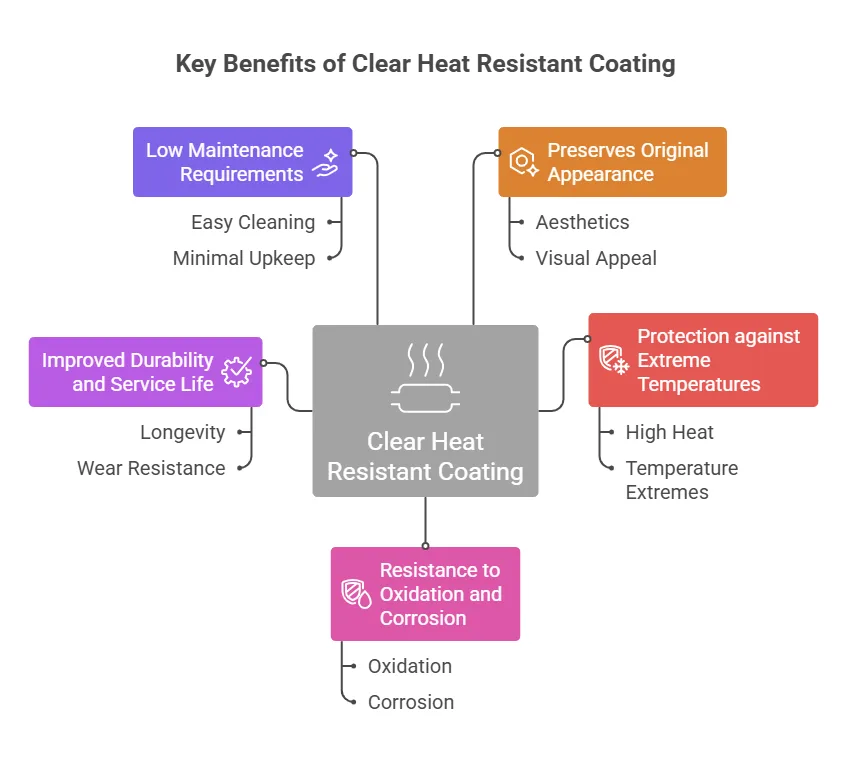
Clear heat resistant coatings offer a unique combination of thermal protection and visual transparency. They are designed to safeguard surfaces exposed to high temperatures while maintaining their original appearance. This makes them an ideal solution for industrial equipment, architectural metalwork, and decorative surfaces that require both performance and aesthetics.
Preserves the Original Appearance of Surfaces
One of the biggest advantages of a clear heat resistant coating is its ability to protect surfaces without altering their natural look. Unlike colored coatings, it maintains the original finish, texture, and appearance of metals such as stainless steel, aluminum, and polished steel, making it suitable for applications where aesthetics are important.
Protection Against Extreme Temperatures
Clear heat resistant coatings are formulated to withstand elevated temperatures and thermal cycling. They create a protective barrier that helps prevent heat-related damage such as cracking, peeling, discoloration, and surface degradation, ensuring reliable performance in demanding environments.
Resistance to Oxidation and Corrosion
High temperatures can accelerate oxidation and corrosion, especially on metal surfaces. A clear heat resistant coating helps shield the substrate from moisture, oxygen, and other environmental factors, reducing the risk of rust formation and extending the life of the protected surface.
Improved Durability and Service Life
By protecting against heat, oxidation, and environmental wear, clear heat resistant coatings significantly enhance the durability of equipment and structures. This added protection helps maintain performance and extends the service life of valuable assets operating in high-temperature conditions.
Low Maintenance Requirements
Surfaces coated with a clear heat resistant coating require less frequent maintenance and repair. The coating minimizes heat-related deterioration and corrosion, reducing downtime and maintenance costs while helping equipment and structures remain in optimal condition for longer periods. 🔥
Applications of Clear Heat Resistant Coating
Clear heat resistant coatings are widely used in environments where surfaces are exposed to elevated temperatures but must retain their original appearance. These transparent coatings provide reliable thermal protection, resistance to oxidation, and long-term durability without covering the natural finish of the substrate.
Metal Structures and Fabricated Components
Metal structures and fabricated components often face heat exposure during operation or manufacturing processes. A clear heat resistant coating protects steel, aluminum, and stainless steel surfaces from thermal degradation, corrosion, and discoloration while preserving their original appearance and finish.
Industrial Machinery and Equipment
Industrial machinery operates under demanding conditions where high temperatures can damage exposed surfaces. Clear heat resistant coatings help protect machinery components from heat-related wear, oxidation, and corrosion, extending equipment life and reducing maintenance requirements.
Exhaust Systems and Chimneys
Exhaust systems and chimneys are continuously exposed to hot gases and fluctuating temperatures. Applying a clear heat resistant coating helps maintain surface integrity, prevents oxidation, and protects against heat-induced deterioration while retaining a clean and professional appearance.
Boilers, Furnaces, and Heat Exchangers
Boilers, furnaces, and heat exchangers operate at elevated temperatures and require durable thermal protection. Clear heat resistant coatings provide an effective barrier against heat stress, scaling, and corrosion, helping improve equipment longevity and operational efficiency.
Decorative Metal Surfaces Requiring Transparent Protection
Architectural metalwork, decorative railings, sculptures, and premium metal finishes often require protection without changing their visual appeal. A clear heat resistant coating preserves the natural beauty of these surfaces while providing resistance to heat, oxidation, and environmental exposure, making it an ideal solution for both functional and decorative applications. 🔥
How Clear Heat Resistant Coatings Protect Surfaces
Clear heat resistant coatings are engineered to provide effective thermal protection while maintaining the natural appearance of the underlying surface. They create a transparent protective layer that helps shield materials from heat-related damage, oxidation, and environmental exposure. This combination of performance and aesthetics makes them a valuable solution for industrial, commercial, and decorative applications.
Thermal Barrier Properties
Clear heat resistant coatings act as a protective thermal barrier between the surface and high-temperature environments. The coating helps reduce the direct impact of heat on the substrate, minimizing thermal stress that can lead to cracking, warping, peeling, or surface degradation. By maintaining stability during repeated heating and cooling cycles, the coating enhances the overall performance and lifespan of the protected surface.
Prevention of Oxidation at High Temperatures
When metals are exposed to elevated temperatures, oxidation can occur rapidly, leading to discoloration, corrosion, and material deterioration. Clear heat resistant coatings help prevent oxidation by creating a protective seal that limits contact between the surface and oxygen, moisture, and other environmental contaminants. This protection is particularly important for steel, stainless steel, aluminum, and other metal components operating in high-temperature conditions.
Surface Protection Without Altering Aesthetics
One of the key advantages of clear heat resistant coatings is their ability to protect surfaces without changing their original appearance. Unlike pigmented coatings, transparent formulations preserve the natural color, texture, and finish of the substrate. This makes them ideal for architectural metalwork, decorative structures, premium equipment, and exposed metal surfaces where maintaining visual appeal is just as important as ensuring thermal protection. 🔥
Choosing the Right Clear Heat Resistant Coating
Selecting the right clear heat resistant coating is essential for achieving optimal protection and long-term performance. Factors such as operating temperature, environmental conditions, surface type, and durability requirements should be carefully evaluated before choosing a coating system. The right product will provide reliable thermal protection while preserving the appearance of the substrate.
Temperature Resistance Requirements
The first consideration is the maximum temperature the surface will encounter during operation. Clear heat resistant coatings are available in different temperature ratings, ranging from moderate heat exposure to extreme industrial conditions. Choosing a coating with a temperature resistance level that exceeds the expected operating temperature helps ensure consistent performance and protection.
Indoor vs Outdoor Exposure
Environmental conditions play a significant role in coating performance. Indoor applications primarily require protection from heat and oxidation, while outdoor applications must also withstand moisture, UV exposure, temperature fluctuations, and weathering. Selecting a coating specifically designed for the intended environment helps maximize durability and service life.
Surface Compatibility Considerations
Different substrates may require different coating formulations. Clear heat resistant coatings are commonly applied to steel, stainless steel, aluminum, cast iron, and other metal surfaces. Ensuring compatibility between the coating and the substrate promotes strong adhesion, effective protection, and long-term reliability.
Long-Term Performance Expectations
When choosing a clear heat resistant coating, it is important to consider factors such as durability, maintenance requirements, and expected service life. High-quality coatings provide long-lasting resistance to heat, oxidation, corrosion, and environmental wear, helping reduce maintenance costs and extend the lifespan of valuable equipment and structures. Investing in a reliable coating solution ensures sustained protection and performance in demanding high-temperature environments. 🔥
Application Guidelines for Clear Heat Resistant Coating
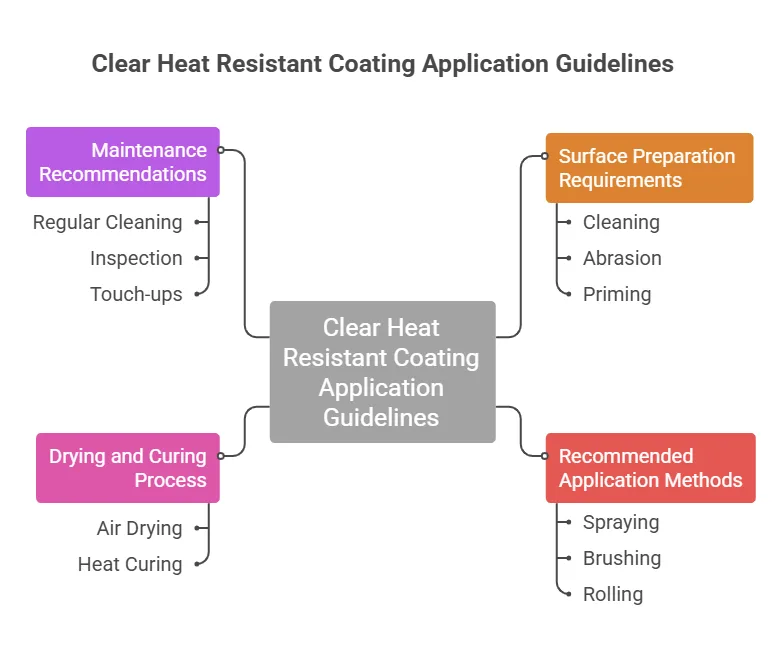
Proper application is essential to ensure that a clear heat resistant coating delivers maximum thermal protection, durability, and transparency. Following the correct preparation, application, and curing procedures helps achieve a long-lasting finish and optimal performance in high-temperature environments.
Surface Preparation Requirements
Surface preparation is the foundation of a successful coating application. The substrate should be clean, dry, and free from dust, grease, oil, rust, oxidation, and any loose contaminants. Metal surfaces may require mechanical cleaning, sanding, or abrasive blasting to create a suitable profile for adhesion. Proper preparation ensures the coating bonds effectively and performs reliably under heat exposure.
Recommended Application Methods
Clear heat resistant coatings can typically be applied using spray equipment, brushes, or rollers, depending on the project requirements and surface geometry. Spray application is often preferred for achieving a smooth, uniform, and transparent finish. The coating should be applied in thin, even layers according to the manufacturer’s recommended film thickness to ensure proper heat resistance and appearance.
Drying and Curing Process
After application, the coating must be allowed to dry and cure correctly to develop its full protective properties. Some clear heat resistant coatings air dry at ambient temperatures, while others require controlled heating or gradual temperature exposure for complete curing. Following the recommended drying and curing schedule helps maximize adhesion, transparency, and heat resistance.
Maintenance Recommendations
Regular inspection and maintenance help extend the service life of the coating. Surfaces should be checked periodically for signs of mechanical damage, wear, or environmental exposure. Keeping coated surfaces clean and addressing any damaged areas promptly helps maintain both appearance and thermal protection. With proper maintenance, a clear heat resistant coating can provide long-term performance and reduce the need for frequent repairs or recoating. 🔥
Common Industries Using Clear Heat Resistant Coatings
Clear heat resistant coatings are used across a variety of industries where equipment, structures, and components are exposed to elevated temperatures. Their ability to provide thermal protection while maintaining the original appearance of surfaces makes them a valuable solution for both functional and aesthetic applications.
Manufacturing and Engineering
Manufacturing plants and engineering facilities frequently use clear heat resistant coatings on machinery, fabricated metal components, processing equipment, and production systems. These coatings help protect surfaces from heat-related damage, oxidation, and corrosion while extending equipment lifespan and reducing maintenance requirements.
Automotive Sector
In the automotive industry, clear heat resistant coatings are applied to exhaust systems, engine components, performance parts, and decorative metal finishes. They help protect surfaces from high operating temperatures while preserving the original appearance of metal parts, making them ideal for both functional and aesthetic applications.
Power Generation Facilities
Power plants and energy production facilities operate equipment that is continuously exposed to high temperatures. Clear heat resistant coatings are commonly used on turbines, heat exchangers, pipelines, exhaust systems, and other critical infrastructure to enhance thermal protection, improve durability, and minimize corrosion.
Oil and Gas Industries
The oil and gas sector relies on equipment that must perform reliably in harsh operating conditions. Clear heat resistant coatings are applied to pipelines, storage tanks, processing equipment, valves, and structural components exposed to heat and corrosive environments. These coatings help extend asset life, reduce maintenance costs, and maintain the integrity of critical systems while preserving surface appearance. 🔥
FAQs About Clear Heat Resistant Coating
What Temperature Can a Clear Heat Resistant Coating Withstand?
The temperature resistance of a clear heat resistant coating depends on its formulation. Standard coatings may withstand temperatures of around 200°C to 400°C, while specialized industrial-grade coatings can resist temperatures of 600°C, 800°C, or even higher. Always select a coating that matches the expected operating conditions.
Can Clear Heat Resistant Coatings Be Used Outdoors?
Yes, many clear heat resistant coatings are designed for both indoor and outdoor applications. They provide protection against high temperatures while also resisting moisture, weathering, UV exposure, and corrosion, making them suitable for exterior industrial and architectural surfaces.
Does a Transparent Coating Affect the Appearance of Metal?
No, one of the main advantages of a clear heat resistant coating is that it preserves the natural appearance of the metal. The transparent finish allows the original color, texture, and surface characteristics to remain visible while providing thermal and corrosion protection.
Is Clear Heat Resistant Coating Suitable for Industrial Equipment?
Yes, clear heat resistant coatings are widely used on industrial machinery, exhaust systems, boilers, furnaces, heat exchangers, pipelines, and fabricated metal components. They help protect equipment from heat-related damage, oxidation, and corrosion while maintaining a clean and professional appearance.
How Long Does a Clear Heat Resistant Coating Last?
The lifespan of a clear heat resistant coating depends on factors such as operating temperature, environmental conditions, surface preparation, and application quality. With proper application and maintenance, a high-quality coating can provide many years of reliable protection, reducing maintenance costs and extending the life of the coated surface. 🔥
Conclusion – Why Clear Heat Resistant Coating Is a Smart Choice
Clear heat resistant coatings offer an effective solution for protecting surfaces exposed to high temperatures while preserving their original appearance. By combining thermal resistance, corrosion protection, and transparency, these coatings provide reliable performance across a wide range of industrial, commercial, and architectural applications.
Summary of Key Benefits
Clear heat resistant coatings protect surfaces from extreme temperatures, oxidation, corrosion, and thermal degradation without altering their natural finish. They help maintain the appearance of metal structures and equipment while improving durability, reducing wear, and extending service life.
Importance of Transparent Thermal Protection
In many applications, maintaining the original look of a surface is just as important as protecting it from heat. Clear heat resistant coatings provide transparent thermal protection that preserves the color, texture, and finish of the substrate, making them ideal for decorative metalwork, premium equipment, and exposed architectural elements.
Long-Term Durability and Cost-Saving Advantages
By reducing heat-related damage, corrosion, and maintenance requirements, clear heat resistant coatings contribute to lower operating costs and improved asset longevity. Their ability to provide long-term protection while maintaining aesthetic appeal makes them a smart investment for industries and facilities seeking both performance and visual excellence. With the right coating system and proper application, businesses can achieve enhanced durability, reduced downtime, and lasting value from their high-temperature assets. 🔥