

Thermoplastic road marking paint is a durable solution for creating clear, long-lasting, and highly visible road markings. It is widely suitable for highways, urban roads, intersections, parking areas, industrial facilities, warehouses, and other locations where reliable traffic guidance is required.
In Vadodara, industries, commercial facilities, warehouses, and busy road networks require road markings that can withstand regular vehicle movement, abrasion, weather exposure, and continuous use. Thermoplastic road marking systems can help provide durable lane lines, directional arrows, pedestrian crossings, parking markings, and other traffic-control markings.
Unlike conventional liquid road paints, thermoplastic material is heated before application and becomes solid again as it cools. When combined with reflective glass beads, it can also provide improved nighttime visibility under vehicle headlights.
Choosing the right thermoplastic road marking paint depends on factors such as traffic volume, road surface, environmental conditions, required visibility, marking design, durability, and maintenance requirements. Proper surface preparation and professional application are equally important for achieving consistent and long-lasting road marking performance in Vadodara.
Introduction to Thermoplastic Road Marking Paint in Vadodara
Road markings play an important role in maintaining traffic organization, road safety, and clear vehicle guidance. In a growing industrial city like Vadodara, roads, industrial areas, warehouses, commercial properties, and parking facilities require markings that can remain visible and functional under regular traffic and environmental exposure.
What Is Thermoplastic Road Marking Paint?
Thermoplastic road marking paint is a heat-applied road marking material that is heated before application and becomes solid as it cools. It forms a durable marking layer on suitable road surfaces and can be used for lane lines, edge lines, arrows, pedestrian crossings, parking markings, and other traffic-control applications.
When combined with reflective glass beads, thermoplastic markings can provide improved nighttime visibility, helping drivers identify important road markings under vehicle headlights.
Why Road Markings Are Important in Vadodara
Vadodara has a combination of urban roads, industrial areas, manufacturing facilities, commercial zones, and transportation routes, making clear road markings important for organized movement. Proper markings help guide vehicles, separate traffic lanes, identify pedestrian areas, organize parking, and improve visibility at important road sections.
For industrial premises, road markings can also help define vehicle routes, loading areas, parking zones, and pedestrian pathways, supporting safer and more organized movement within the facility.
Growing Need for Durable Road Marking Solutions
Frequent traffic, vehicle movement, weather exposure, dust, and surface abrasion can gradually affect road markings. This creates a need for durable marking systems that can maintain their visibility and performance for longer periods.
Thermoplastic road marking paint is often considered for such applications because it forms a hard marking layer after cooling and can provide good resistance to regular traffic wear when properly selected and applied.
Where Thermoplastic Road Markings Are Commonly Used
Thermoplastic road markings can be used across a wide range of applications in and around Vadodara, including highways, urban roads, intersections, parking areas, industrial facilities, warehouses, commercial properties, and logistics areas.
They can be used for lane markings, directional arrows, pedestrian crossings, parking bays, edge lines, traffic symbols, and other markings where clear and durable road guidance is required.
Why Choose Thermoplastic Road Marking Paint in Vadodara?
Thermoplastic road marking paint is a practical choice for locations where durability, visibility, and resistance to regular traffic wear are important. For roads, industrial facilities, parking areas, and commercial spaces in Vadodara, the right thermoplastic system can provide reliable long-term marking performance.
Suitable for High-Traffic Roads
Roads with continuous vehicle movement require markings that can withstand regular tyre friction and surface abrasion. Thermoplastic road marking paint forms a durable layer after cooling, making it suitable for highways, busy roads, intersections, and other high-traffic areas.
Better Durability and Abrasion Resistance
Thermoplastic markings are designed to withstand regular traffic wear and abrasion. Their hard surface helps markings remain functional for longer periods when the material is properly selected and applied according to site conditions.
Improved Daytime and Nighttime Visibility
Clear road markings help drivers identify lanes, traffic directions, crossings, and other road features. When thermoplastic markings are combined with reflective glass beads, they can also improve nighttime visibility by reflecting vehicle headlights toward approaching drivers.
Faster Setting and Reduced Traffic Disruption
Thermoplastic material is heated before application and sets as it cools. This allows the marking to become firm relatively quickly after application, which can help reduce the time required before the marked area is reopened to traffic.
Suitable for Industrial and Commercial Areas
Vadodara has numerous industrial, manufacturing, warehouse, logistics, and commercial facilities where organized vehicle and pedestrian movement is important. Thermoplastic road marking systems can be used for internal traffic routes, parking areas, pedestrian crossings, directional markings, loading zones, and safety markings, depending on the surface and project requirements.
Types of Thermoplastic Road Marking Systems
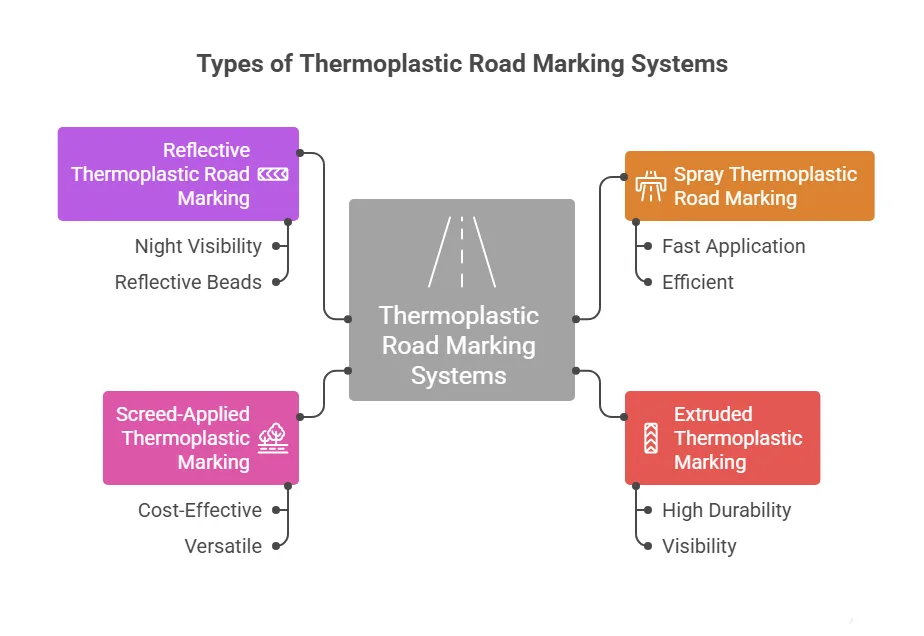
Thermoplastic road marking systems can be applied using different methods depending on the road surface, marking design, required thickness, traffic conditions, and project requirements. Understanding these systems helps in selecting a suitable solution for roads and industrial areas in Vadodara.
Spray Thermoplastic Road Marking
Spray thermoplastic is applied as a heated material through specialized spraying equipment. It can provide uniform coverage and consistent marking thickness and is suitable for applications such as lane lines, edge lines, and other standard road markings where efficient application is required.
Extruded Thermoplastic Marking
Extruded thermoplastic is applied through equipment that forms the heated material into a controlled line or profile. This method can produce a durable and relatively thick marking layer, making it suitable for roads exposed to regular traffic and abrasion. It can be used for lane markings, arrows, symbols, and other permanent markings.
Screed-Applied Thermoplastic Marking
Screed application involves spreading the heated thermoplastic material over the prepared road surface using a screed or similar application system. This method allows controlled application thickness and can be suitable where a durable marking profile is required.
Reflective Thermoplastic Road Marking
Reflective thermoplastic road marking incorporates reflective glass beads to improve visibility in low-light and nighttime conditions. Vehicle headlights illuminate the beads, helping reflect light toward approaching drivers. This system is particularly useful for highways, intersections, lane markings, pedestrian crossings, and other areas where nighttime visibility is important.
Applications of Thermoplastic Road Marking Paint in Vadodara

Thermoplastic road marking paint can be used across a wide range of transportation, industrial, commercial, and logistics environments in Vadodara. Its durability and visibility make it suitable for locations where clear and long-lasting markings are required.
Highways and Major Roads
Highways and major roads experience continuous vehicle movement and require durable markings for effective traffic guidance. Thermoplastic road marking paint can be used for lane lines, edge lines, directional arrows, pedestrian crossings, and other road markings.
Urban Roads and Intersections
Clear markings are important at busy urban roads and intersections to help organize vehicle and pedestrian movement. Thermoplastic markings can be used for lane separation, stop lines, turning arrows, crossings, and traffic-control markings.
Industrial Estates and Manufacturing Facilities
Industrial areas require organized movement of vehicles, equipment, and pedestrians. Thermoplastic road marking systems can be used for internal traffic routes, vehicle lanes, loading areas, parking zones, pedestrian pathways, and safety markings.
Parking Lots and Commercial Properties
Parking facilities benefit from clearly defined spaces and traffic routes. Thermoplastic markings can be used for parking bays, directional arrows, pedestrian walkways, entry and exit routes, and designated vehicle areas.
Warehouses and Logistics Facilities
Warehouses and logistics facilities often experience frequent movement of trucks, forklifts, and other vehicles. Suitable road marking systems can help define vehicle routes, loading and unloading areas, parking zones, pedestrian pathways, and operational areas.
Airports and Transportation Areas
Transportation facilities require clear markings to organize vehicle and service movement. Thermoplastic road marking systems may be suitable for service roads, parking areas, access routes, and selected traffic markings, depending on the surface, operational requirements, and applicable standards.
Key Features of Thermoplastic Road Marking Paint
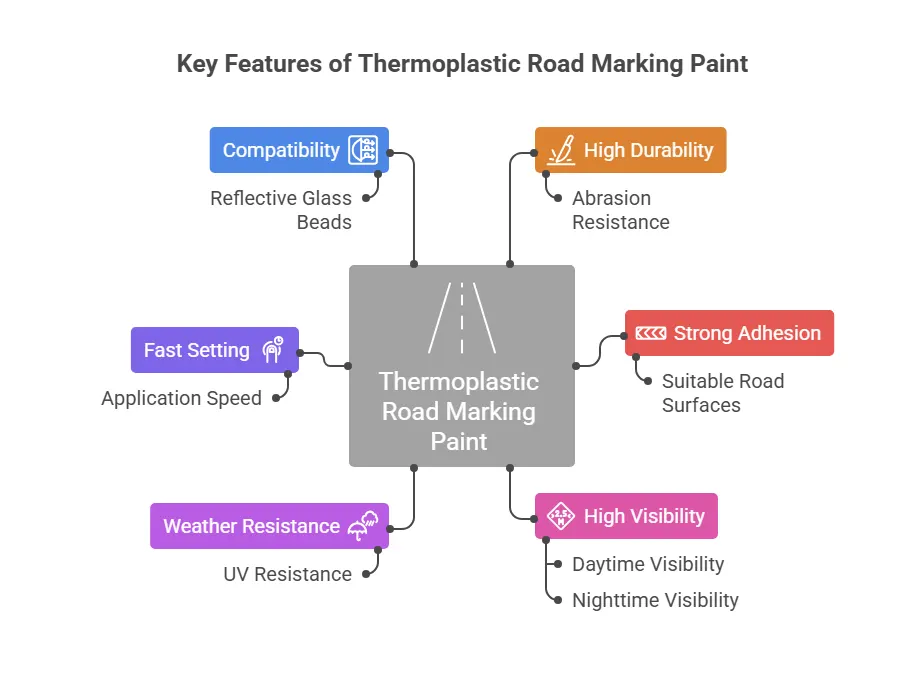
Thermoplastic road marking paint is designed for applications where durability, visibility, adhesion, and reliable outdoor performance are important. These features make it suitable for roads, industrial areas, parking facilities, and other traffic-marking applications in Vadodara.
High Durability and Abrasion Resistance
Thermoplastic road markings form a hard and durable layer after cooling. This helps them withstand regular vehicle movement, tyre friction, and surface abrasion, making them suitable for roads and other areas exposed to frequent traffic.
Strong Adhesion to Suitable Road Surfaces
When applied correctly to a properly prepared surface, thermoplastic material can provide strong adhesion to suitable asphalt and concrete surfaces. Cleaning and preparing the surface before application helps improve bonding and reduces the risk of premature damage.
High Visibility During Day and Night
Thermoplastic markings provide clear daytime definition for lane lines, arrows, crossings, symbols, and other traffic markings. When combined with reflective glass beads, they can also provide improved nighttime visibility under vehicle headlights.
Weather and UV Resistance
Road markings are exposed to sunlight, rain, temperature changes, dust, and other environmental conditions. Thermoplastic road marking systems are designed to provide good resistance to outdoor weathering and UV exposure, helping maintain marking performance over time.
Fast Setting After Application
Thermoplastic material is heated before application and solidifies as it cools. This rapid setting process can reduce the waiting period before the marked area is ready for use, helping minimize traffic disruption during road marking work.
Compatibility with Reflective Glass Beads
Thermoplastic road marking systems can be used with reflective glass beads to enhance nighttime visibility. The beads interact with vehicle headlights and reflect light toward approaching drivers, making important road markings easier to identify in low-light conditions.
Benefits of Thermoplastic Road Marking Paint

Thermoplastic road marking paint offers several practical benefits for roads, industrial facilities, parking areas, and commercial spaces in Vadodara. Its combination of durability, visibility, traffic resistance, and long-term performance makes it suitable for demanding road marking applications.
Long-Lasting Road Markings
Thermoplastic markings form a durable layer after cooling, helping them withstand regular vehicle movement and surface abrasion. This allows lane lines, arrows, crossings, parking markings, and other traffic markings to remain functional for longer periods when properly applied.
Improved Nighttime Road Visibility
When combined with reflective glass beads, thermoplastic markings can provide improved nighttime visibility. The beads reflect vehicle headlights toward approaching drivers, making lane lines, road symbols, crossings, and other important markings easier to identify in low-light conditions.
Better Resistance to Heavy Traffic
High-traffic roads are exposed to continuous tyre friction and mechanical wear. Thermoplastic road marking systems provide good abrasion and traffic resistance, making them suitable for highways, busy urban roads, industrial areas, and other locations with frequent vehicle movement.
Reduced Frequency of Re-Marking
The durability of thermoplastic markings can help reduce the need for frequent re-marking and maintenance. Fewer marking interventions can also help minimize traffic disruption, particularly on busy roads and operational industrial premises.
Cost-Effective Long-Term Performance
Thermoplastic road marking may provide good long-term value through its durability, reduced maintenance frequency, and consistent visibility. While the initial cost depends on the selected system and project conditions, evaluating service life and maintenance requirements can help determine its overall cost-effectiveness.
Thermoplastic Road Marking Application Process
Proper application is essential for achieving durable, uniform, and highly visible thermoplastic road markings. The process generally includes surface preparation, accurate layout, controlled heating, machine application, reflective bead application, and final inspection.
Surface Cleaning and Preparation
The road surface should be clean, dry, and free from dust, loose particles, oil, grease, and other contaminants. Proper preparation helps the thermoplastic material bond effectively with the road surface and reduces the risk of premature peeling or damage.
Road Marking Layout and Measurement
Before application, the required marking pattern is measured and laid out according to the project requirements. Lane lines, edge lines, arrows, symbols, pedestrian crossings, and parking markings should be positioned accurately to maintain consistent alignment, spacing, and dimensions.
Heating the Thermoplastic Material
Thermoplastic material is heated in suitable equipment until it reaches the required working condition. Controlled and uniform heating is important to ensure that the material flows properly during application and produces a consistent marking layer.
Machine-Based Application
The heated material is applied using a suitable thermoplastic road marking machine. The equipment helps control the marking width, thickness, and application pattern, allowing consistent lines and symbols to be produced across the prepared road surface.
Application of Reflective Glass Beads
For reflective road marking systems, glass beads are applied to the thermoplastic surface during or immediately after application, depending on the selected system. Proper bead placement helps improve retroreflectivity and nighttime visibility.
Cooling and Quality Inspection
After application, the thermoplastic material cools and solidifies to form the finished marking. The completed markings should then be inspected for alignment, thickness, consistency, adhesion, surface finish, and visibility. Any required corrections should be completed before the marked area is reopened for normal use.
Thermoplastic Road Marking Paint for Industrial Areas in Vadodara
Industrial facilities in Vadodara require clear and durable markings to manage the movement of vehicles, equipment, materials, and pedestrians. Thermoplastic road marking systems can help organize internal traffic routes, parking areas, loading zones, and safety pathways where regular vehicle movement and surface wear are expected.
Road Safety in Manufacturing Facilities
Manufacturing facilities often have continuous movement of trucks, forklifts, machinery, and workers. Clearly visible road markings can help define vehicle routes, pedestrian zones, loading areas, and restricted sections, supporting better traffic organization within the facility.
Traffic Routes Inside Industrial Premises
Dedicated traffic routes help control the movement of industrial vehicles and reduce confusion between different operating areas. Thermoplastic markings can be used for internal roads, directional arrows, lane separation, turning areas, and designated movement paths.
Parking and Vehicle Movement Areas
Industrial premises may require clearly identified parking and vehicle staging areas. Road markings can define parking bays, truck movement areas, loading and unloading zones, entry and exit routes, and designated vehicle spaces, helping improve site organization.
Pedestrian and Safety Markings
Separating pedestrian movement from vehicle traffic is important in busy industrial environments. Suitable markings can identify walkways, pedestrian crossings, safety zones, equipment areas, and other designated pathways, making movement easier to understand for employees and visitors.
Warehouse and Logistics Traffic Management
Warehouses and logistics facilities experience frequent movement of trucks, forklifts, and material-handling equipment. Thermoplastic road marking systems can help define vehicle lanes, loading areas, parking zones, pedestrian pathways, and operational routes, supporting a more organized and efficient workplace.
How to Choose the Right Thermoplastic Road Marking Paint in Vadodara
Selecting the right thermoplastic road marking paint depends on the road conditions, traffic requirements, visibility needs, and expected service life. For projects in Vadodara, evaluating these factors before application can help achieve durable and reliable road markings.
Traffic Volume and Road Conditions
The amount and type of traffic should be considered before selecting a thermoplastic road marking system. High-traffic roads, industrial premises, and logistics areas may require markings with good durability and abrasion resistance to withstand frequent vehicle movement.
Asphalt or Concrete Surface
The existing road surface can influence material selection and application requirements. Thermoplastic markings can be applied to suitable asphalt and concrete surfaces when the surface is properly prepared. Cleaning, drying, and removing contaminants are important for achieving good adhesion.
Local Climate and Environmental Exposure
Road markings are exposed to sunlight, rain, dust, temperature changes, and regular outdoor conditions. Selecting a suitable thermoplastic system with good weather and UV resistance can help maintain marking performance under the environmental conditions experienced in Vadodara.
Required Visibility and Reflectivity
The required level of daytime and nighttime visibility should be considered when choosing the marking system. Reflective glass beads can be incorporated with thermoplastic markings to improve retroreflectivity under vehicle headlights, particularly for highways, intersections, industrial roads, and other low-light areas.
Expected Service Life and Maintenance Needs
Consider how long the markings are expected to remain functional and how frequently maintenance can be carried out. A durable thermoplastic system can help reduce the frequency of re-marking in areas exposed to regular traffic and abrasion, potentially improving long-term maintenance efficiency.
Manufacturer, Supplier, and Application Support
Choosing a reliable manufacturer or supplier is important for consistent product quality and technical guidance. For projects in Vadodara, local technical support can also help with product selection, surface preparation, application methods, project coordination, and maintenance requirements. Working with a manufacturer and service provider with suitable application experience can help ensure that the selected thermoplastic road marking system is appropriate for the specific site conditions.
Thermoplastic Road Marking Paint vs Conventional Road Paint
Thermoplastic road marking paint and conventional road paint differ in their application method, durability, visibility, and maintenance requirements. Understanding these differences can help businesses, contractors, and road authorities select a suitable marking system for roads and industrial areas in Vadodara.
Durability Comparison
Thermoplastic road markings form a hard layer after cooling, providing good resistance to regular traffic, tyre friction, and abrasion. Conventional road paints are generally applied as liquid coatings and may require more frequent maintenance in areas exposed to heavy traffic and wear.
Visibility and Reflectivity
Both systems can provide clear daytime road markings when properly applied. Thermoplastic markings can be combined with reflective glass beads to improve nighttime visibility under vehicle headlights. Reflective performance depends on the marking system, bead application, surface condition, and maintenance.
Application and Setting Time
Conventional road paint is generally applied in liquid form, while thermoplastic material must be heated before application. Thermoplastic markings solidify as they cool, allowing the marked surface to become ready for use relatively quickly. The actual application and reopening time depends on the material, equipment, weather, surface conditions, and project requirements.
Maintenance Requirements
The maintenance frequency of road markings depends on traffic volume, surface condition, weather exposure, application quality, and the selected material. Thermoplastic markings can offer good resistance to wear and may reduce the frequency of re-marking in demanding applications when properly installed.
Long-Term Cost Considerations
The initial cost of thermoplastic road marking may be higher than some conventional road paints, depending on the system and project requirements. However, durability, service life, maintenance frequency, visibility, and traffic disruption should all be considered when evaluating the overall long-term cost of a road marking system.
Maintenance of Thermoplastic Road Markings
Regular maintenance helps preserve the visibility, appearance, and functional performance of thermoplastic road markings. Roads and industrial areas in Vadodara can experience traffic movement, dust, weather exposure, and surface wear, making periodic inspection and maintenance important.
Routine Inspection
Road markings should be inspected regularly for signs of fading, cracking, peeling, abrasion, or physical damage. Particular attention should be given to high-traffic areas, intersections, industrial routes, parking zones, and locations where vehicle movement is frequent.
Cleaning and Surface Maintenance
Dust, dirt, oil, mud, and other contaminants can affect the appearance and visibility of road markings. Regular cleaning of the marked surface can help maintain clear markings and identify areas where wear or damage requires attention.
Reflectivity Monitoring
For markings designed with reflective glass beads, nighttime visibility should be monitored periodically. Loss of reflectivity can occur due to surface wear, contamination, or bead loss. Monitoring helps determine when maintenance or re-marking may be required.
Repair and Re-Marking
Damaged or worn sections should be repaired or re-marked when they no longer provide adequate visibility or traffic guidance. Before reapplication, the surface should be properly cleaned and prepared to support good adhesion and consistent marking performance.
When to Replace Worn Markings
Thermoplastic road markings should be considered for replacement when they become significantly faded, heavily worn, damaged, or difficult to identify. Replacement requirements depend on traffic volume, surface conditions, environmental exposure, marking quality, and the level of visibility required for the application.
Why Choose a Thermoplastic Road Marking Paint Manufacturer in Vadodara?
Choosing a local thermoplastic road marking paint manufacturer in Vadodara can offer practical advantages for road, industrial, commercial, and infrastructure projects. Local availability, technical guidance, and application support can help simplify product selection and project execution.
Local Technical Support
Working with a local manufacturer can make it easier to discuss site conditions, road surfaces, traffic requirements, marking designs, and application methods. Technical support can help identify a suitable thermoplastic road marking system based on the specific project requirements.
Faster Project Coordination and Supply
A manufacturer located in Vadodara can provide easier coordination for local projects and may help streamline product supply and project communication. This can be useful when road marking materials are required for industrial facilities, commercial properties, warehouses, or other local applications.
Understanding of Industrial Applications
Industrial areas have specific requirements for vehicle routes, parking areas, loading zones, pedestrian pathways, and internal traffic management. A manufacturer with experience in industrial applications can better understand these requirements and recommend suitable marking solutions.
Product Selection and Application Guidance
Different road surfaces, traffic conditions, marking designs, and visibility requirements may require different application approaches. A reliable manufacturer can provide guidance on product selection, surface preparation, application methods, reflective glass beads, and maintenance considerations.
Manufacturer and Service-Provider Advantages
Working with a manufacturer and service provider can provide a more integrated approach to road marking projects. It can help coordinate product supply, technical assistance, application support, and project requirements through a single point of contact, helping improve overall project coordination and execution.
Frequently Asked Questions About Thermoplastic Road Marking Paint in Vadodara
What Is Thermoplastic Road Marking Paint?
Thermoplastic road marking paint is a heat-applied road marking material that is heated before application and solidifies as it cools. It is used for lane lines, edge lines, arrows, pedestrian crossings, parking markings, and other traffic-control markings.
How Long Does Thermoplastic Road Marking Last?
The service life of thermoplastic road marking depends on factors such as traffic volume, road surface, application quality, weather exposure, marking thickness, and maintenance. Properly selected and applied thermoplastic markings can provide durable performance compared with many conventional road marking paints.
Is Thermoplastic Road Marking Suitable for Highways?
Yes, thermoplastic road marking can be suitable for highways because it provides good durability, abrasion resistance, and visibility. Reflective glass beads can also be incorporated to improve nighttime visibility under vehicle headlights.
Can Thermoplastic Paint Be Used on Industrial Roads?
Yes. Thermoplastic road marking systems can be used on suitable industrial roads and internal facility routes. They can help define vehicle lanes, directional routes, parking areas, loading zones, pedestrian pathways, and other traffic-control areas.
How Does Thermoplastic Road Marking Improve Nighttime Visibility?
Thermoplastic markings can be combined with reflective glass beads. When vehicle headlights strike the beads, they reflect light back toward approaching drivers, helping make important road markings more visible during nighttime and low-light conditions.
What Are Reflective Glass Beads Used For?
Reflective glass beads are used to improve the retroreflectivity of road markings. They are applied to the thermoplastic marking during or immediately after application, depending on the selected system, helping reflect vehicle headlights toward drivers.
How Is Thermoplastic Road Marking Applied?
The general process includes cleaning and preparing the road surface, measuring and laying out the marking pattern, heating the thermoplastic material, applying it using suitable equipment, adding reflective glass beads where required, and allowing the marking to cool and solidify before final inspection.
How Do I Choose a Thermoplastic Road Marking Paint Supplier in Vadodara?
Consider the supplier’s product quality, technical support, application experience, supply capability, and understanding of your site requirements. For projects in Vadodara, working with a local manufacturer and service provider can also make technical coordination, material supply, and application support easier.
Conclusion – Choosing Thermoplastic Road Marking Paint in Vadodara
Thermoplastic road marking paint is a practical solution for creating durable, visible, and organized road markings across highways, urban roads, industrial areas, parking facilities, and logistics locations in Vadodara. Selecting the right system and applying it correctly can help improve long-term marking performance.
Importance of Durable Road Markings
Durable road markings help maintain clear lane guidance, traffic organization, parking identification, pedestrian movement, and directional control. Thermoplastic markings can provide good resistance to regular traffic wear when properly selected and applied.
Benefits for Safety and Traffic Management
Clear and visible markings help drivers, pedestrians, and industrial vehicle operators understand designated routes and movement areas. Reflective thermoplastic markings can further improve nighttime visibility, supporting safer traffic management in suitable applications.
Choosing the Right Product and Application System
The right thermoplastic system should be selected based on traffic volume, road surface, environmental exposure, visibility requirements, expected service life, and maintenance needs. Proper surface preparation, controlled application, and reflective glass bead placement are also important for achieving consistent results.
Working with a Reliable Local Manufacturer and Service Provider
For projects in Vadodara, working with a reliable local manufacturer and service provider can simplify product selection, technical coordination, material supply, and application support. A suitable partner can help evaluate site requirements and provide a road marking solution aligned with the project’s performance and safety needs.