

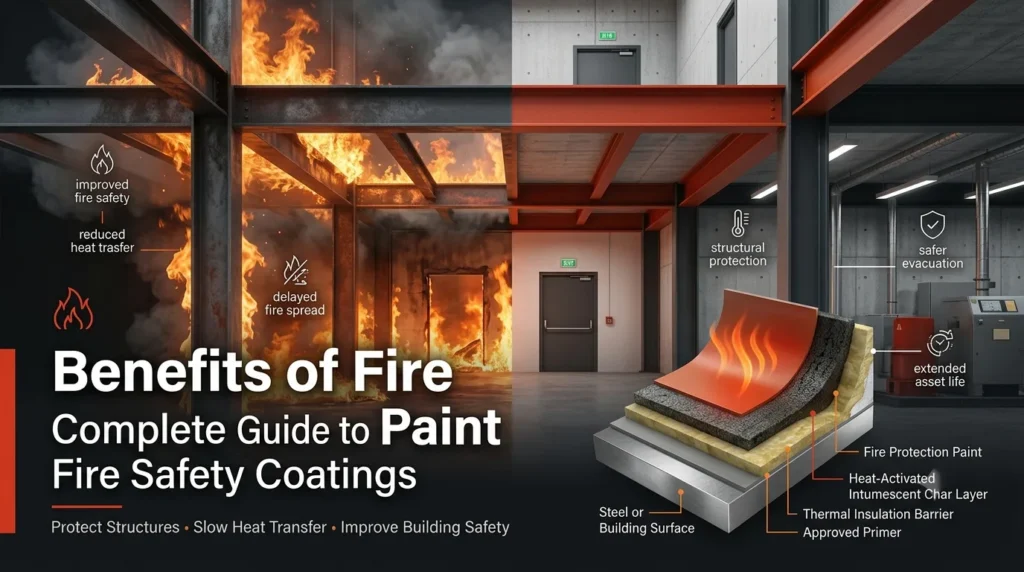
Fire protection paint is a specialized coating designed to help protect building materials, structural components, and industrial surfaces from the effects of fire and high temperatures. It is commonly used on structural steel, metal, wood, walls, gypsum boards, and other construction materials to improve fire safety and support passive fire protection.
The main benefits of fire protection paint include slowing heat transfer, delaying structural damage, improving building safety, protecting industrial assets, and providing additional time for evacuation and emergency response. Depending on the coating type, fire protection paint may form an insulating barrier when exposed to high temperatures, helping reduce the rate at which heat reaches the underlying material.
For example, intumescent fire protection coatings expand when exposed to high heat and create a thick, insulating char layer. This protective layer helps delay the temperature rise of structural steel and other protected surfaces. Since steel can lose strength and stiffness at elevated temperatures, a properly selected fire protection coating can support structural stability for the required fire-resistance period.
Fire protection paint is an important part of a passive fire protection system. Unlike active fire-safety systems, such as alarms and sprinklers, passive fire protection works continuously without requiring manual activation. Fire protection coatings can work alongside fire-rated doors, walls, compartmentation systems, alarms, sprinklers, and emergency-response measures to support a complete fire-safety strategy.
These coatings are widely used in factories, warehouses, manufacturing plants, commercial buildings, power facilities, chemical industries, and other high-risk environments. They can help protect critical structural components and reduce the impact of fire-related heat on valuable infrastructure.
However, fire protection paint does not usually prevent a fire from starting or completely stop a fire. Its purpose is to delay heat-related damage and improve the fire resistance of protected materials. The actual performance depends on factors such as the surface material, required fire rating, coating thickness, surface preparation, application quality, environmental exposure, and maintenance.
To achieve the intended protection, the coating should be selected as part of a tested and approved system and applied according to the manufacturer’s technical recommendations and project requirements. Regular inspection and timely repair also help maintain long-term coating performance.
This guide explains the major benefits of fire protection paint, how it supports building and industrial safety, where it is used, and how to select the right coating system for different applications.
Introduction to Fire Protection Paint Benefits
Fire protection paint is a specialized coating designed to help protect building materials and structural surfaces from the effects of fire and high temperatures. It can help reduce heat transfer, delay structural damage, and support safer buildings and industrial facilities.
What Is Fire Protection Paint?
Fire protection paint is a protective coating that helps improve the fire resistance of selected surfaces and building materials. Depending on the coating type, it may form an insulating barrier when exposed to high temperatures.
Key Benefits:
- Helps protect steel, metal, wood, walls, and gypsum boards
- Reduces the effect of high temperatures
- Supports passive fire protection
- Helps delay fire-related surface damage
Why Are Fire Protection Coatings Important?
Fire protection coatings are important because high temperatures can weaken structural materials and increase the risk of building damage. A properly selected coating system can help protect critical components and improve overall fire safety.
Why They Matter:
- Helps delay structural weakening
- Supports fire-resistance performance
- Protects important building components
- Helps reduce fire-related damage
- Supports safer industrial and commercial facilities
How Does Fire Protection Paint Improve Building Safety?
Fire protection paint improves building safety by helping slow heat transfer and delay damage to protected materials. Some coatings, such as intumescent fire protection paint, expand when exposed to high temperatures and form an insulating protective layer.
How It Improves Safety:
- Helps reduce heat exposure to structural materials
- Supports structural stability during fire exposure
- Provides additional time for evacuation
- Supports emergency-response operations
- Works with other passive and active fire-safety systems
Helps Delay Structural Damage
Fire protection paint helps reduce the impact of high temperatures on building materials and structural components. When properly selected and applied, it can slow heat transfer and help delay fire-related damage.
Protection Against High Temperatures
During a fire, structural materials are exposed to intense heat. Fire protection coatings create a protective barrier that helps reduce the rate at which heat reaches the underlying surface.
Key Benefits:
- Helps reduce direct heat exposure
- Slows the temperature rise of protected materials
- Provides an additional thermal barrier
- Helps protect critical building components
Reducing Heat-Related Structural Weakening
High temperatures can reduce the strength and stiffness of materials such as structural steel. Fire protection paint helps delay rapid heating and may reduce the risk of early heat-related weakening.
How It Helps:
- Slows heat transfer to the structure
- Helps delay temperature-related strength loss
- Reduces the risk of early deformation
- Supports fire-resistance performance
Supporting Structural Stability
By slowing the temperature increase of protected structural members, fire protection paint can help support structural stability during fire exposure for the specified fire-resistance period.
Key Benefits:
- Helps protect steel columns and beams
- Supports load-bearing structural components
- Helps delay structural damage
- Provides additional time for evacuation and emergency response
Reduces Heat Transfer
Fire protection paint helps reduce the rate at which heat reaches the underlying surface during a fire. Some coatings create an insulating barrier that slows the temperature rise of structural materials and helps delay heat-related damage.
Formation of an Insulating Protective Layer
When exposed to high temperatures, certain fire protection coatings form a protective insulating layer. This layer acts as a barrier between the fire and the protected material.
Key Benefits:
- Creates a thermal protective barrier
- Reduces direct heat exposure
- Helps protect the underlying surface
- Supports fire-resistance performance
How Intumescent Coatings Respond to Heat
Intumescent coatings react to high temperatures by expanding and forming a thick, char-like insulating layer. The expanded layer helps reduce the speed at which heat reaches the substrate.
How It Works:
- Heat activates the coating
- The coating expands in thickness
- A protective char layer is formed
- The char layer helps insulate the surface
Slowing the Temperature Rise of Building Materials
The insulating layer slows the transfer of heat to materials such as structural steel, metal, wood, and other protected surfaces. This can help delay temperature-related weakening and damage.
Key Benefits:
- Slows the temperature rise of the substrate
- Helps delay structural weakening
- Supports the stability of protected components
- Provides additional time for evacuation and emergency response
Supports Passive Fire Protection
Fire protection paint is an important part of a passive fire protection system. It helps protect structural materials by reducing heat transfer and delaying fire-related damage without requiring manual operation during a fire.
What Is Passive Fire Protection?
Passive fire protection refers to building systems and materials designed to contain fire, limit its spread, and protect structural components. These systems remain in place and provide protection as part of the building’s construction.
Common Passive Fire Protection Systems:
- Fire protection paint
- Fire-rated doors
- Fire-resistant walls
- Fire-rated partitions
- Fireproof coatings
- Fire-stopping systems
Continuous Protection Without Manual Activation
Unlike active fire-safety systems, passive fire protection does not depend on manual operation or electrical activation. Fire protection paint remains on the protected surface and responds according to its coating technology when exposed to high temperatures.
Key Benefits:
- Provides continuous protection
- Does not require manual activation
- Helps reduce heat transfer
- Supports structural fire resistance
- Helps delay heat-related damage
Working with Fire Doors, Walls, and Other Systems
Fire protection paint works as part of a complete fire-safety strategy. It can complement other passive and active fire-protection measures.
Works Alongside:
- Fire-rated doors
- Fire-resistant walls
- Fire-rated partitions
- Fire-stopping systems
- Fire alarms
- Sprinkler systems
Key Benefits:
- Supports fire compartmentation
- Helps protect structural components
- Reduces the impact of heat on building materials
- Supports safer evacuation and emergency response
Improves Building and Workplace Safety
Fire protection paint helps improve safety by protecting selected building components from the effects of high temperatures. When used as part of a complete fire-protection system, it can help reduce fire-related risks and support safer workplaces.
Protecting Building Components
Fire protection coatings can help protect important structural and building materials during fire exposure. The correct coating should be selected according to the surface type and required fire rating.
Key Benefits:
- Helps protect structural steel and metal components
- Supports the fire resistance of walls and building surfaces
- Helps delay heat-related damage
- Supports the stability of critical building elements
Supporting Safer Industrial Environments
Factories, warehouses, manufacturing plants, and industrial facilities may contain valuable equipment, combustible materials, and critical infrastructure. Fire protection paint can support safer working conditions by improving the fire performance of selected surfaces.
Common Applications:
- Industrial steel structures
- Manufacturing facilities
- Warehouses and storage areas
- Equipment support structures
- Commercial and industrial buildings
Safety Benefits:
- Supports workplace fire-safety planning
- Helps protect critical infrastructure
- Reduces the impact of heat on structural materials
- Works alongside other fire-safety systems
Reducing Fire-Related Risks
Fire protection paint can help reduce the impact of fire by slowing heat transfer and delaying damage to protected materials. It should be used as part of a complete fire-safety strategy rather than as a standalone solution.
Key Benefits:
- Helps delay structural weakening
- Supports safer evacuation conditions
- Provides additional time for emergency response
- Helps reduce fire-related damage
- Supports long-term building and workplace safety
Provides Additional Time for Evacuation
Fire protection paint can help delay heat-related damage to selected building materials and structural components. By slowing heat transfer, it may support safer evacuation conditions and provide additional time for emergency response during a fire.
Delaying Heat-Related Damage
High temperatures can quickly affect structural materials and building components. Fire protection coatings help reduce the rate of heat transfer and delay temperature-related damage.
Key Benefits:
- Helps slow the temperature rise of protected surfaces
- Delays heat-related structural weakening
- Supports the stability of critical building components
- Helps reduce the impact of fire exposure
Supporting Safe Evacuation Routes
Fire protection paint can support overall building safety by helping protect structural elements around escape routes. It works as part of a complete fire-safety system that includes fire-rated doors, walls, alarms, emergency lighting, and evacuation planning.
Key Benefits:
- Supports safer evacuation conditions
- Helps protect critical structural components
- Works alongside fire-rated barriers
- May help maintain safer escape routes for longer
Assisting Emergency Response Operations
By helping delay heat-related damage, fire protection coatings may provide additional time for emergency teams to assess the situation and carry out response operations.
Key Benefits:
- Supports emergency-response planning
- Helps delay structural damage
- May provide additional operational time
- Supports safer access to protected areas
- Works alongside active fire-protection systems
Protects Steel Structures
Fire protection paint helps protect structural steel from rapid temperature rise during a fire. Since steel can lose strength and stiffness when exposed to high temperatures, a properly selected coating system can help delay heat-related damage and support structural stability.
How Fire Affects Structural Steel
Structural steel is strong and durable under normal conditions, but intense heat can reduce its load-bearing performance. Prolonged fire exposure may cause steel members to bend, deform, or lose stability.
Key Effects of Fire on Steel:
- High temperatures can reduce steel strength
- Steel may lose stiffness during fire exposure
- Columns and beams may bend or deform
- Structural stability may be affected
- Rapid heating can increase the risk of structural damage
Fire Protection for Steel Columns and Beams
Steel columns and beams are important load-bearing components in factories, warehouses, commercial buildings, and industrial structures. Fire protection paint helps slow heat transfer to these structural members.
Common Applications:
- Steel columns
- Structural beams
- Roof-support systems
- Industrial steel frames
- Warehouse structures
Key Benefits:
- Helps delay heat-related weakening
- Supports the protection of load-bearing members
- Reduces the rate of temperature increase
- Helps maintain structural performance during fire exposure
Supporting Structural Fire Resistance
Fire protection coatings can support the required fire-resistance performance when applied as part of a tested and approved system. The coating type and required thickness depend on the steel section, fire rating, project specifications, and application conditions.
Important Factors:
- Correct fire protection coating selection
- Proper surface preparation
- Compatible primer and coating system
- Specified dry film thickness (DFT)
- Correct application and curing
- Regular inspection and maintenance
Helps Protect Industrial Assets
Fire protection paint helps protect important industrial structures, equipment, and infrastructure from the effects of high temperatures. When used as part of a complete fire-safety system, it can help reduce fire-related damage and support safer industrial operations.
Protection for Industrial Buildings
Industrial buildings often contain structural steel, production areas, storage zones, machinery, and critical infrastructure. Fire protection coatings can help protect selected structural components and support overall facility safety.
Common Applications:
- Manufacturing plants
- Factories and workshops
- Warehouses
- Chemical and processing facilities
- Power and utility buildings
Key Benefits:
- Helps protect structural steel and building components
- Delays heat-related structural damage
- Supports industrial fire-safety planning
- Helps improve facility protection
Reducing Damage to Equipment and Infrastructure
High temperatures can damage industrial equipment, support structures, pipelines, cable systems, and other critical infrastructure. Fire protection coatings can help reduce heat exposure to approved and compatible surfaces.
Key Benefits:
- Helps protect critical structural supports
- Reduces the impact of heat on protected surfaces
- Supports the protection of industrial infrastructure
- Helps limit fire-related damage to selected assets
- Supports faster repair and recovery after an incident
Supporting Business Continuity
Fire-related damage can interrupt production, affect operations, and increase repair costs. Fire protection paint can support business continuity by helping protect critical structures and reducing the impact of heat-related damage.
Business Benefits:
- Helps reduce operational disruption
- Supports faster facility recovery
- Helps protect valuable industrial assets
- Supports maintenance and risk-management planning
- Contributes to long-term operational safety
Offers Application Flexibility
Fire protection paint can be applied to different building materials and structural surfaces. Depending on the coating type and project requirements, it may be used in new construction projects as well as for the protection and maintenance of existing buildings.
Suitable for Steel, Metal, Wood, and Walls
Different fire protection coatings are formulated for specific surface materials. The selected coating should be compatible with the substrate and approved for the intended application.
Suitable Applications May Include:
- Structural steel columns and beams
- Metal structures and components
- Wood and timber surfaces
- Walls and gypsum boards
- Industrial and commercial building surfaces
Key Benefits:
- Supports protection across different materials
- Can be selected for specific fire-safety requirements
- Suitable for industrial and commercial applications
- Helps improve the fire performance of approved surfaces
Brush, Roller, and Spray Application
Fire protection paint may be applied using different methods based on the coating type, surface condition, project size, and required coating thickness.
Common Application Methods:
- Brush: Suitable for small areas, edges, joints, and repairs
- Roller: Useful for accessible walls and flat surfaces
- Spray: Suitable for large areas and faster, more uniform application
Application Benefits:
- Flexible application for different project sizes
- Suitable for new surfaces and repair work
- Helps achieve consistent coating coverage
- Supports efficient application on large structures
Use in New Construction and Existing Buildings
Fire protection paint can be incorporated during new construction or applied to suitable existing structures as part of a fire-safety upgrade or maintenance plan.
New Construction Applications:
- Steel frameworks
- Industrial buildings
- Commercial facilities
- Warehouses and manufacturing plants
Existing Building Applications:
- Fire-safety upgrades
- Structural protection improvements
- Coating repair and maintenance
- Renovation and retrofit projects
Supports Fire-Safety Requirements
Fire protection paint can support fire-safety requirements when it is selected, tested, and applied as part of an approved coating system. The required fire rating, coating thickness, and application method should be based on project specifications and applicable requirements.
Selecting the Required Fire Rating
The required fire rating indicates how long a building component or coating system is expected to provide fire-resistance performance under specified test conditions.
Key Factors to Consider:
- Required fire-resistance period
- Type of building or industrial facility
- Structural element being protected
- Project fire-safety specifications
- Applicable building and fire requirements
Important: The required fire rating should be confirmed before selecting the fire protection coating.
Importance of Tested Coating Systems
Fire protection performance depends on the complete coating system, not only the fire protection paint. The system may include surface preparation, primer, fire protection coating, and a compatible topcoat.
Check the Following:
- Fire-test reports
- Product technical data sheets
- Approved surface materials
- Required dry film thickness (DFT)
- Compatible primer and topcoat
- Recommended application method
Key Benefit: A tested coating system provides documented performance for the specified application conditions.
Following Project and Regulatory Requirements
Fire protection coatings should be applied according to approved project specifications, technical documentation, and applicable fire-safety requirements.
Best Practices:
- Follow the approved coating specification
- Use compatible coating materials
- Apply the specified coating thickness
- Maintain application and inspection records
- Complete quality checks after application
- Follow the manufacturer’s technical guidelines
Provides Long-Term Protection
Fire protection paint can provide long-term protection when it is correctly selected, properly applied, and regularly maintained. Surface preparation, routine inspections, and timely repairs help preserve coating performance and support ongoing fire safety.
Importance of Correct Surface Preparation
Proper surface preparation is essential for strong coating adhesion and long-term durability. The surface should be clean, dry, and free from dust, oil, grease, rust, loose paint, and other contaminants.
Key Benefits:
- Improves coating adhesion
- Helps prevent peeling and flaking
- Supports uniform coating coverage
- Reduces the risk of early coating failure
- Helps maintain long-term fire-protection performance
Regular Inspection and Maintenance
Regular inspections help identify coating damage before it affects the continuity of the fire protection system. Inspection frequency should be based on the environment, exposure conditions, and project requirements.
Inspection Points:
- Cracks, peeling, or blistering
- Scratches and impact damage
- Coating loss or exposed surfaces
- Signs of moisture or corrosion
- Damage caused by maintenance activities
- Overall coating condition
Maintenance Benefits:
- Helps maintain coating performance
- Supports long-term fire safety
- Identifies damage at an early stage
- Reduces the need for major repairs
Repairing Damaged Coating Areas
Damaged areas should be repaired using compatible materials and approved repair procedures. The affected surface may need to be cleaned and prepared before the fire protection coating is reapplied.
Basic Repair Steps:
- Identify and mark the damaged area
- Remove loose or defective coating
- Clean and prepare the surface
- Repair the primer if required
- Reapply the approved fire protection coating
- Check the required dry film thickness
- Allow the repaired area to dry or cure properly
How to Choose Fire Protection Paint
Choosing the right fire protection paint depends on the surface material, environmental exposure, required coating thickness, and approved technical documentation. A properly selected coating system helps achieve the intended fire-protection performance and long-term durability.
Identify the Surface Material
Different surfaces require different fire protection coatings. The selected product should be designed and compatible with the material being protected.
Common Surface Materials:
- Structural steel
- Metal surfaces
- Wood and timber
- Walls and gypsum boards
- Concrete and other building materials
Key Point: Always select a fire protection coating that is suitable and tested for the specific surface.
Consider Indoor or Outdoor Exposure
The operating environment can affect coating performance and service life. Indoor and outdoor applications may require different coating systems.
Indoor Considerations:
- Interior environmental conditions
- Appearance and finish requirements
- Ventilation during application
Outdoor Considerations:
- Moisture and rain exposure
- UV exposure
- Temperature changes
- Weather resistance
- Compatible protective topcoats
Key Point: Select a coating system suitable for the expected environmental conditions.
Check Coating Thickness Requirements
The required dry film thickness (DFT) is important for achieving the intended fire-resistance performance. The specified thickness may vary depending on the coating type, surface, fire rating, and approved system.
Why Thickness Matters:
- Supports the required fire-resistance performance
- Helps provide consistent thermal protection
- Reduces the risk of under-application
- Supports quality control during application
Key Point: Measure and verify the coating thickness according to the technical data sheet and project specification.
Review Technical Data and Test Documentation
Before selecting a fire protection coating, review the product’s technical information and supporting test documentation. This helps confirm that the coating system is suitable for the intended application.
Documents to Review:
- Technical Data Sheet (TDS)
- Fire-test reports
- Product application guidelines
- Surface compatibility information
- Required coating thickness
- Approved primer and topcoat details
- Drying and curing requirements
Frequently Asked Questions About Fire Protection Paint Benefits
What Are the Main Benefits of Fire Protection Paint?
Fire protection paint helps reduce heat transfer, delay structural damage, support passive fire protection, and improve building safety. It may also provide additional time for evacuation and emergency response.
Main Benefits:
- Helps delay heat-related structural damage
- Reduces the rate of heat transfer
- Supports passive fire protection
- Helps improve workplace and building safety
- Protects important structures and industrial assets
Does Fire Protection Paint Protect Steel?
Yes. Fire protection paint is commonly used on structural steel, columns, beams, and steel frameworks. It helps slow the temperature rise of steel and may delay heat-related loss of strength and stiffness.
Key Benefits for Steel:
- Helps reduce rapid heating
- Supports structural stability
- Helps delay deformation
- Supports the required fire-resistance performance
Does Fire Protection Paint Reduce Heat Transfer?
Yes. Some fire protection coatings, especially intumescent coatings, expand when exposed to high temperatures and form an insulating char layer. This layer helps slow the transfer of heat to the protected material.
How It Helps:
- Forms a protective thermal barrier
- Slows the temperature rise of the substrate
- Reduces direct heat exposure
- Helps delay heat-related damage
Can Fire Protection Paint Improve Building Safety?
Yes. When properly selected and applied, fire protection paint can improve building safety by helping protect structural components and reducing the effects of high temperatures during a fire.
Safety Benefits:
- Supports passive fire protection
- Helps protect critical building components
- Supports safer evacuation conditions
- Works alongside fire doors, fire-rated walls, alarms, and sprinklers
- Helps support emergency-response operations
How Long Does Fire Protection Paint Last?
The service life of fire protection paint depends on the coating type, surface preparation, application quality, environmental exposure, and maintenance. Regular inspection and timely repairs can help maintain long-term performance.
Factors That Affect Service Life:
- Indoor or outdoor exposure
- Moisture, UV, and weather conditions
- Chemical or industrial exposure
- Coating damage or impact
- Quality of application
- Maintenance practices
Is Fire Protection Paint Suitable for Industrial Buildings?
Yes. Fire protection paint is widely used in factories, warehouses, manufacturing plants, power facilities, chemical plants, and commercial-industrial structures. It can help protect selected structural components and support industrial fire-safety planning.
Common Industrial Applications:
- Structural steel columns and beams
- Industrial sheds and steel frameworks
- Warehouses and storage facilities
- Manufacturing plants
- Equipment support structures
Conclusion – Why Fire Protection Paint Is Important
Fire protection paint is an important part of a complete fire-safety strategy. When properly selected and applied, it can help reduce heat transfer, delay structural damage, protect important building components, and support long-term fire safety.
Improving Structural Fire Safety
Fire protection paint helps protect structural materials from the effects of high temperatures. It can slow the temperature rise of protected surfaces and support structural stability during fire exposure.
Key Benefits:
- Helps delay heat-related structural damage
- Supports the fire resistance of steel and other materials
- Reduces the impact of high temperatures
- Supports passive fire protection systems
Protecting Buildings and Industrial Assets
Fire protection coatings can help protect critical building components, industrial structures, and valuable infrastructure. They are commonly used in factories, warehouses, manufacturing plants, commercial buildings, and other facilities.
Key Benefits:
- Helps protect structural steel and building components
- Supports industrial asset protection
- Helps reduce fire-related damage
- Supports safer workplaces and facilities
- May help reduce operational disruption
Selecting the Right Fire Protection Coating
The correct coating should be selected according to the surface material, required fire rating, environmental conditions, and approved coating system. Proper application and maintenance are also important for long-term performance.
Selection Checklist:
- Identify the surface material
- Confirm the required fire rating
- Consider indoor or outdoor exposure
- Review technical data and fire-test documentation
- Apply the specified coating thickness
- Follow approved application procedures
- Conduct regular inspection and maintenance