

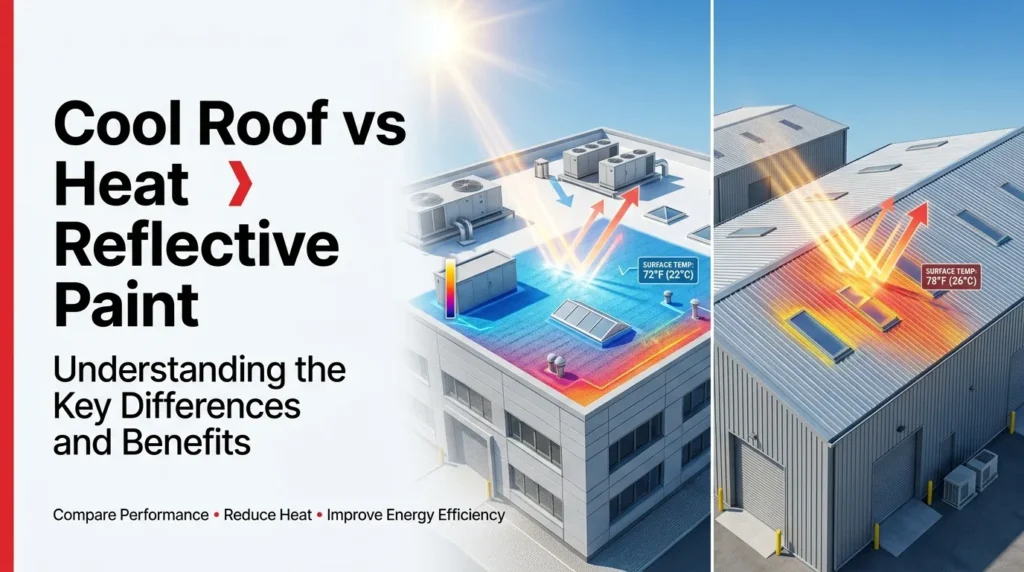
As temperatures continue to rise and energy costs increase, building owners are actively searching for effective ways to keep roofs cooler and reduce indoor heat. Two of the most commonly discussed solutions are Cool Roof systems and Heat Reflective Paint. While these terms are often used interchangeably, they are not exactly the same. Understanding the differences between them can help homeowners, architects, facility managers, and industrial operators choose the most suitable solution for their specific needs.
A cool roof is a broader roofing concept designed to reflect more sunlight and absorb less heat than conventional roofing materials. It can include specially designed roofing membranes, reflective tiles, metal roofing systems, and reflective roof coatings. Heat reflective paint, on the other hand, is a specialized coating applied to existing roofs and exterior surfaces to improve solar reflectance and reduce heat absorption.
Both solutions aim to lower roof temperatures, improve indoor comfort, reduce air conditioning usage, and enhance building energy efficiency. However, they differ in terms of technology, installation methods, costs, maintenance requirements, and applications. In hot climates where roofs are exposed to intense sunlight for most of the year, selecting the right cooling solution can significantly impact energy consumption and long-term operating costs.
Whether you own a residential property, commercial building, warehouse, or industrial facility, understanding how cool roofs and heat reflective paints work can help you make an informed investment. This guide explores the key differences, benefits, applications, and performance factors of both technologies to help you determine which roof cooling solution best meets your requirements.
Introduction – Why Roof Cooling Solutions Are Important
Rising Temperatures and Urban Heat Challenges
Global temperatures are steadily increasing, and urban areas are experiencing even greater heat buildup due to the urban heat island effect. Concrete structures, asphalt roads, and dark-colored rooftops absorb and retain large amounts of solar energy, causing cities to become significantly hotter than surrounding rural areas. As a result, buildings are exposed to prolonged heat stress, leading to higher indoor temperatures and increased cooling requirements. Effective roof cooling solutions have become essential for combating these challenges and maintaining comfortable indoor environments.
Growing Demand for Energy-Efficient Buildings
With rising electricity prices and greater awareness of environmental sustainability, energy-efficient building technologies are becoming a priority for property owners and developers. Governments, businesses, and homeowners are seeking solutions that can reduce energy consumption, lower carbon emissions, and improve building performance. Roof cooling technologies such as cool roof systems and heat reflective paints play a crucial role in achieving these objectives by reducing heat absorption and minimizing the need for excessive air conditioning.
Understanding Different Cooling Technologies
Modern roof cooling solutions are designed to reduce solar heat gain and improve thermal comfort. Among the most popular options are cool roof systems and heat reflective coatings. While both aim to lower roof temperatures and improve energy efficiency, they differ in their design, application methods, and performance characteristics. Understanding how these technologies work and where they are best applied helps building owners select the most effective solution for residential, commercial, and industrial environments.
What Is a Cool Roof?
Basic Definition of Cool Roof Technology
A cool roof is a roofing system designed to reflect more sunlight and absorb less heat than conventional roofs. Unlike traditional roofing materials that can become extremely hot under direct sunlight, cool roofs are engineered with high solar reflectance and thermal emittance properties that help keep roof surfaces significantly cooler. The primary goal of cool roof technology is to reduce heat gain, improve indoor comfort, and enhance building energy efficiency.
How Cool Roof Systems Work
Cool roof systems work by reflecting a large portion of the sun’s ultraviolet (UV), visible, and infrared (IR) radiation away from the roof surface. Any heat that is absorbed is efficiently released back into the atmosphere through thermal emittance. This combination reduces roof surface temperatures, limits heat transfer into the building, and decreases the cooling load on HVAC systems. As a result, buildings remain cooler and consume less energy for air conditioning, especially in hot climates.
Key Components of a Cool Roof
A cool roof’s performance depends on several important components. High-reflectance surfaces help bounce solar radiation away from the building, while high-emittance materials allow absorbed heat to dissipate quickly. Cool roof systems may include reflective coatings, specialized roofing membranes, reflective metal panels, cool-colored roofing materials, and energy-efficient roof designs. Together, these elements work to minimize heat buildup and improve overall thermal performance.
Common Types of Cool Roof Solutions
There are several types of cool roof solutions available for residential, commercial, and industrial buildings. These include reflective roof coatings applied to existing roofs, cool roof membranes used on flat roofs, reflective metal roofing systems, cool-colored tiles and shingles, and elastomeric roof coatings with high solar reflectance. The choice of solution depends on factors such as roof type, building design, climate conditions, budget, and long-term performance requirements. Each option is designed to reduce heat absorption and contribute to a more energy-efficient building.
What Is Heat Reflective Paint?
Basic Definition
Heat reflective paint is a specialized coating designed to reduce heat absorption by reflecting a significant portion of solar radiation away from a surface. Commonly used on roofs, exterior walls, industrial sheds, warehouses, and commercial buildings, this coating helps lower surface temperatures and improve overall building energy efficiency. It is often referred to as cool roof paint, solar reflective coating, or energy-saving roof paint due to its ability to minimize heat gain and support passive cooling.
How Heat Reflective Paint Works
Heat reflective paint works by creating a protective layer that reflects sunlight rather than allowing it to be absorbed by the roof or wall surface. When sunlight strikes a conventional roof, much of the solar energy is converted into heat and transferred into the building. Reflective coatings reduce this process by bouncing back a large percentage of solar radiation, helping keep the surface cooler. This reduction in heat transfer lowers indoor temperatures and decreases the demand for air conditioning and ventilation systems.
Reflective Pigments and Solar Reflection Technology
The effectiveness of heat reflective paint comes from advanced reflective pigments and solar reflection technologies incorporated into the coating formulation. These specialized pigments are designed to reflect ultraviolet (UV), visible, and infrared (IR) rays from the sun. Infrared radiation is responsible for a significant portion of solar heat gain, and by reflecting it away, the coating helps maintain lower roof temperatures. Many high-performance heat reflective paints also feature high Solar Reflectance Index (SRI) values, further enhancing their ability to reduce heat buildup and improve energy efficiency.
Typical Applications and Uses
Heat reflective paint is widely used across residential, commercial, and industrial sectors. Common applications include RCC roofs, metal roofs, asbestos sheets, exterior walls, warehouses, factories, industrial sheds, commercial buildings, schools, hospitals, and shopping complexes. It is particularly beneficial in regions with high solar exposure and hot climates, where reducing heat gain can lead to significant energy savings, improved occupant comfort, and longer roof life. Its versatility and ease of application make it one of the most popular solutions for enhancing building thermal performance.
Cool Roof vs Heat Reflective Paint – Core Differences
Difference in Definition
Roof System vs Coating Solution
A cool roof is a complete roofing concept designed to reflect more sunlight and absorb less heat than conventional roofing systems. It may include reflective roofing membranes, cool-colored tiles, metal roofing panels, or reflective coatings. Heat reflective paint, on the other hand, is a specific coating product applied to existing roofs and exterior surfaces to improve their solar reflectance and cooling performance. In simple terms, a cool roof is a broader roofing solution, while heat reflective paint is one of the methods used to create a cool roof.
Difference in Technology
Complete Roofing Strategy vs Reflective Paint Technology
Cool roof technology involves a combination of roofing materials, surface treatments, and design strategies that maximize solar reflectance and thermal emittance. Heat reflective paint relies primarily on advanced reflective pigments and specialized additives that reflect ultraviolet (UV) and infrared (IR) radiation. While both aim to reduce heat gain, cool roofs encompass an entire roof-performance system, whereas reflective paint focuses on enhancing the thermal performance of existing surfaces through coating technology.
Difference in Installation
New Construction vs Existing Roof Upgrades
Cool roof systems are often incorporated during new building construction or major roof replacement projects. They may require the installation of specialized roofing materials or membranes. Heat reflective paint is typically applied directly to existing roofs, making it a convenient option for renovation and retrofit projects. For property owners seeking a cost-effective upgrade without replacing the entire roof, heat reflective paint offers a simpler and faster installation process.
Difference in Cost
Initial Investment Comparison
The initial cost of a cool roof system is generally higher because it may involve new roofing materials, structural modifications, or complete roof replacement. Heat reflective paint usually requires a lower upfront investment since it can be applied over many existing roof surfaces. This makes reflective coatings an attractive solution for homeowners, commercial property owners, and industrial facilities looking for immediate cooling benefits without major capital expenditure.
Difference in Maintenance
Long-Term Upkeep Requirements
Cool roof systems and heat reflective coatings both require periodic maintenance to maintain optimal performance. However, maintenance approaches may differ. Cool roofs may require inspections of roofing membranes, joints, and structural components, while heat reflective paint may need periodic cleaning and recoating to preserve its reflective properties. Proper maintenance ensures that both systems continue delivering effective heat reduction and energy-saving benefits throughout their service life.
Difference in Performance
Heat Reduction and Energy Efficiency
Both cool roofs and heat reflective paints are designed to lower roof temperatures and improve energy efficiency, but their performance depends on the specific products and systems used. High-performance cool roof systems often provide comprehensive thermal management through specialized roofing materials, while heat reflective paint offers significant cooling benefits by reducing solar heat absorption. In many cases, a high-quality heat reflective coating can achieve substantial reductions in roof temperature and cooling costs, making it an effective and economical solution for a wide range of building types.
How Cool Roofs and Heat Reflective Paint Reduce Heat
Solar Reflectance Explained
Solar reflectance is the ability of a roof surface to reflect sunlight away rather than absorb it. Both cool roofs and heat reflective paints are designed with high solar reflectance properties that help bounce back a large portion of the sun’s ultraviolet (UV), visible, and infrared (IR) radiation. Traditional roofs often absorb significant amounts of solar energy, causing surface temperatures to rise dramatically. By reflecting more sunlight, cool roof systems and reflective coatings reduce heat buildup and improve overall thermal performance.
Thermal Emittance and Heat Release
In addition to reflecting sunlight, effective roof cooling solutions also rely on thermal emittance. Thermal emittance refers to a material’s ability to release absorbed heat back into the atmosphere. Surfaces with high thermal emittance cool down more quickly because they do not retain heat for long periods. Cool roofs and heat reflective coatings combine high solar reflectance with high thermal emittance, helping roofs remain cooler throughout the day and release heat efficiently after sunset.
Reduction in Roof Surface Temperature
One of the most noticeable benefits of cool roofs and heat reflective paint is the reduction in roof surface temperature. Conventional dark-colored roofs can become extremely hot under direct sunlight, often reaching temperatures that significantly increase heat transfer into the building. Reflective roof technologies help lower surface temperatures by minimizing solar heat absorption. Cooler roof surfaces reduce thermal stress on roofing materials and contribute to improved building energy efficiency.
Impact on Indoor Comfort
When less heat is absorbed by the roof, less heat is transferred into the building’s interior. This helps maintain lower indoor temperatures and creates a more comfortable environment for occupants. Homes, offices, warehouses, factories, and commercial facilities benefit from reduced heat gain, which decreases the workload on air conditioning systems. Improved indoor comfort, lower cooling costs, and better energy efficiency make cool roofs and heat reflective paints valuable solutions for modern buildings, particularly in hot and sunny climates.
Benefits of Cool Roof Systems
Lower Building Temperatures
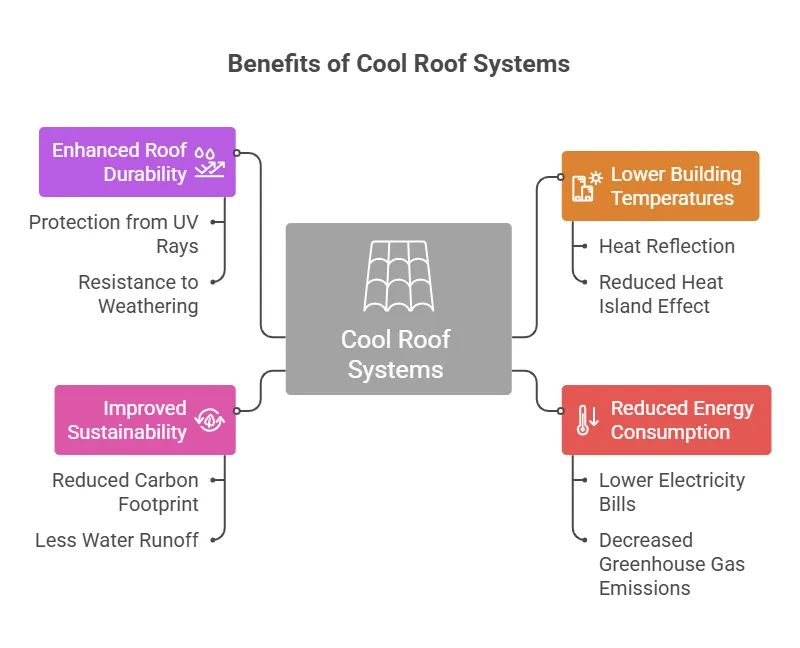
One of the primary benefits of cool roof systems is their ability to significantly reduce building temperatures. By reflecting a larger portion of solar radiation and minimizing heat absorption, cool roofs help keep roof surfaces cooler throughout the day. This reduction in heat gain decreases the amount of heat transferred into the building, resulting in more comfortable indoor conditions, especially during hot summer months.
Reduced Energy Consumption
Cool roof systems help lower the demand for air conditioning and mechanical cooling by reducing the amount of heat entering the building. When indoor spaces remain naturally cooler, HVAC systems operate more efficiently and consume less electricity. This reduction in energy usage can lead to substantial savings on utility bills for residential, commercial, and industrial properties over the long term.
Improved Sustainability
By lowering energy consumption, cool roofs contribute to reduced greenhouse gas emissions and support environmentally responsible building practices. They help decrease the carbon footprint associated with cooling operations while promoting energy conservation. Cool roof technology is often incorporated into green building initiatives and sustainable construction projects because of its positive impact on both energy efficiency and environmental performance.
Enhanced Roof Durability
Excessive heat and continuous exposure to sunlight can accelerate roof deterioration through thermal expansion, contraction, and UV damage. Cool roof systems help maintain lower surface temperatures, reducing thermal stress on roofing materials. This can extend the lifespan of the roof, minimize maintenance requirements, and reduce long-term repair and replacement costs, making cool roofs a valuable investment for building owners.
Benefits of Heat Reflective Paint
Easy Application
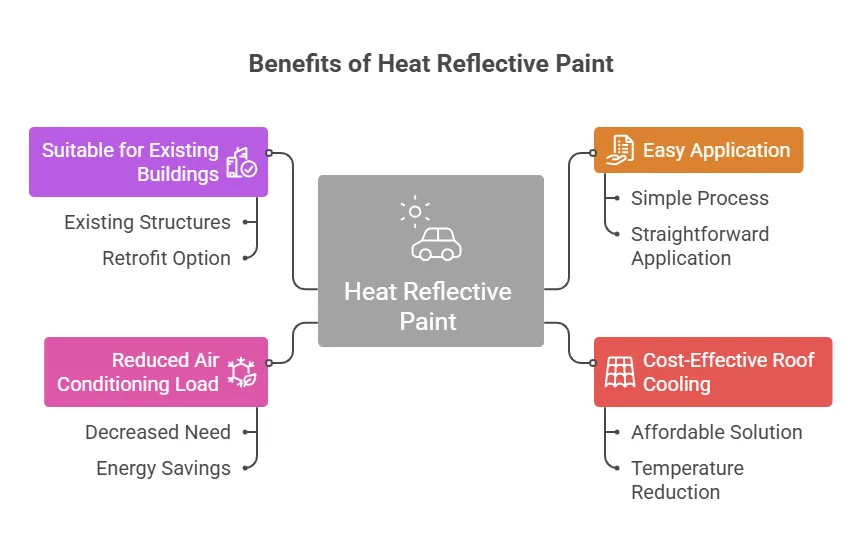
One of the biggest advantages of heat reflective paint is its ease of application. Unlike complete roof replacement or specialized roofing systems, heat reflective coatings can often be applied directly to existing roof surfaces with minimal disruption. They are suitable for various substrates, including RCC roofs, metal roofs, asbestos sheets, and exterior walls. This makes installation faster, simpler, and more convenient for both new and existing buildings.
Cost-Effective Roof Cooling
Heat reflective paint provides an economical solution for reducing roof temperatures without the high costs associated with major roofing upgrades. By reflecting solar radiation and minimizing heat absorption, the coating helps improve thermal performance at a relatively low initial investment. For homeowners, commercial property owners, and industrial facilities, it offers a practical way to achieve energy savings while staying within budget.
Reduced Air Conditioning Load
By lowering roof surface temperatures and reducing heat transfer into the building, heat reflective paint helps decrease the workload on air conditioning systems. Cooler indoor environments require less mechanical cooling, resulting in lower electricity consumption and reduced operating costs. Over time, this can contribute to significant energy savings while also extending the lifespan of HVAC equipment.
Suitable for Existing Buildings
Heat reflective paint is particularly beneficial for existing buildings that need improved thermal performance without undergoing major structural modifications. It can be applied as part of renovation, maintenance, or energy-efficiency upgrade projects, making it an ideal solution for residential homes, commercial buildings, warehouses, factories, and industrial sheds. Its versatility allows property owners to enhance building comfort and energy efficiency without replacing the entire roofing system.
Best Applications for Cool Roofs
New Residential Construction
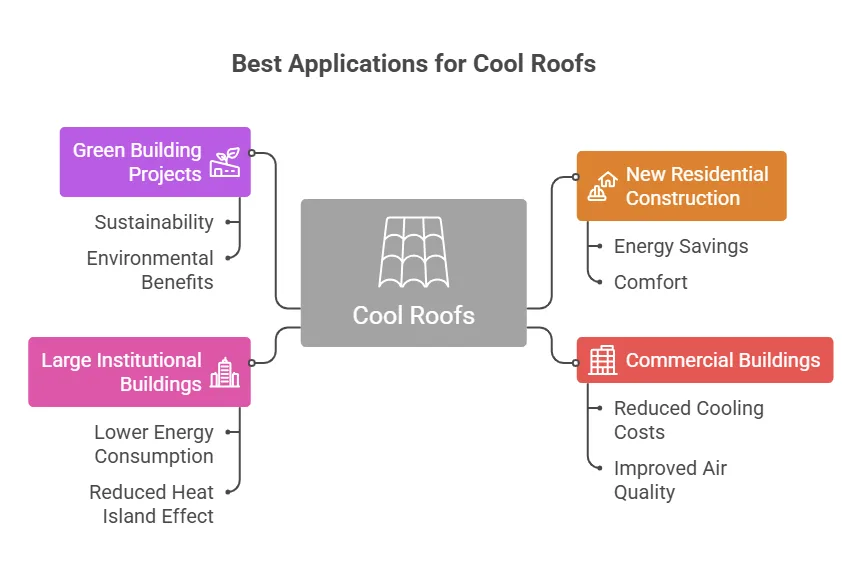
Cool roofs are an excellent choice for new residential construction projects where energy efficiency and long-term comfort are key priorities. Builders can incorporate cool roofing materials, reflective tiles, metal roofing systems, or cool roof coatings during the construction phase to reduce heat absorption from the start. This helps homeowners enjoy lower indoor temperatures, reduced cooling costs, and improved living comfort throughout the year.
Commercial Buildings
Commercial buildings such as offices, retail centers, shopping malls, hotels, and business complexes often have large roof areas exposed to direct sunlight. Cool roof systems help reduce heat gain, lower air conditioning requirements, and improve overall energy efficiency. By decreasing operational cooling costs, cool roofs contribute to better building performance and long-term cost savings for commercial property owners.
Large Institutional Buildings
Educational institutions, hospitals, government facilities, airports, and public infrastructure projects can benefit significantly from cool roof technology. These buildings typically operate for extended hours and require substantial energy for climate control. Cool roofs help maintain comfortable indoor environments while reducing energy consumption, making them a practical solution for large-scale facilities focused on operational efficiency and occupant well-being.
Green Building Projects
Cool roofs are widely used in sustainable construction and green building projects because of their ability to improve energy efficiency and reduce environmental impact. Many green building standards and certification programs recognize cool roof technology as an effective strategy for lowering energy demand and mitigating urban heat island effects. By supporting sustainable design goals, cool roofs help create environmentally responsible buildings with improved thermal performance and reduced carbon footprints.
Best Applications for Heat Reflective Paint
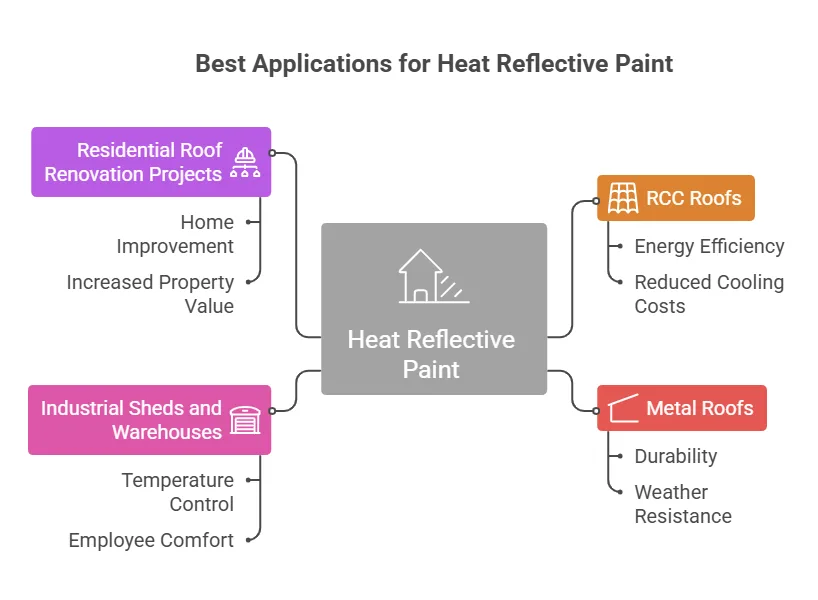
RCC Roofs
RCC (Reinforced Cement Concrete) roofs are among the most common applications for heat reflective paint, especially in residential, commercial, and institutional buildings. Concrete roofs absorb large amounts of solar heat during the day, causing indoor temperatures to rise significantly. Applying heat reflective paint helps reduce heat absorption, lower roof surface temperatures, and improve indoor comfort. It also contributes to lower cooling costs and enhanced energy efficiency.
Metal Roofs
Metal roofs are widely used in factories, warehouses, industrial sheds, and commercial buildings. Although durable, metal surfaces can become extremely hot when exposed to direct sunlight. Heat reflective paint helps reflect solar radiation away from the roof, reducing heat buildup and minimizing temperature transfer into the building. This results in cooler interiors, improved working conditions, and reduced dependence on air conditioning and ventilation systems.
Industrial Sheds and Warehouses
Industrial sheds and warehouses often have large roof areas that are continuously exposed to sunlight. Excessive heat inside these facilities can affect employee comfort, equipment performance, and stored products. Heat reflective paint provides an effective cooling solution by lowering roof temperatures and reducing indoor heat gain. This helps improve operational efficiency, reduce energy consumption, and create a more comfortable environment for workers.
Residential Roof Renovation Projects
For homeowners looking to improve thermal performance without replacing their existing roof, heat reflective paint offers a practical and cost-effective solution. It can be applied to existing RCC roofs, terrace roofs, and other exterior surfaces as part of a renovation or maintenance project. By enhancing solar reflectance and reducing heat absorption, the coating helps lower indoor temperatures, improve comfort, and reduce household energy expenses, making it an ideal upgrade for older residential properties.
Cool Roof vs Heat Reflective Paint – Cost Comparison
Installation Cost Analysis
The installation cost is one of the most significant differences between cool roof systems and heat reflective paint. Cool roof systems often involve specialized roofing materials, reflective membranes, cool-colored tiles, or complete roof replacements, which can result in a higher upfront investment. Heat reflective paint, on the other hand, can usually be applied directly to existing roof surfaces, making it a more affordable option for upgrading thermal performance. For building owners seeking immediate heat reduction without major construction work, heat reflective paint is often the more cost-effective solution.
Maintenance and Lifecycle Costs
Both cool roofs and heat reflective coatings require periodic maintenance to maintain their performance. Cool roof systems may require inspections, repairs, and maintenance of roofing membranes or roofing materials over time. Heat reflective paint generally requires routine cleaning and occasional recoating to preserve its reflective properties. While maintenance costs vary depending on environmental conditions and product quality, reflective coatings often provide lower lifecycle costs due to their simpler maintenance requirements and ease of reapplication.
Return on Investment (ROI)
The return on investment for both solutions comes primarily from reduced energy consumption and lower cooling costs. Cool roof systems may require a larger initial investment but can deliver substantial long-term benefits through improved thermal performance and roof durability. Heat reflective paint typically offers a faster payback period because of its lower installation cost and immediate cooling benefits. For many residential, commercial, and industrial buildings, the reduction in electricity bills can help recover the coating cost within a relatively short period.
Long-Term Energy Savings
Both cool roofs and heat reflective paints contribute to long-term energy savings by reducing heat absorption and lowering indoor temperatures. However, the actual savings depend on factors such as climate conditions, roof design, building insulation, and product performance. High-quality cool roof systems and reflective coatings can significantly reduce air conditioning loads, decrease electricity consumption, and lower operating costs over their service life. For existing buildings, heat reflective paint often provides an excellent balance between investment cost and energy-saving performance, while cool roof systems may offer broader benefits as part of a complete roofing strategy.
Factors to Consider When Choosing Between Them
Roof Type and Condition
The type and condition of your roof are important factors when deciding between a cool roof system and heat reflective paint. If you are constructing a new building or planning a complete roof replacement, a cool roof system may provide a comprehensive long-term solution. However, if your existing roof is structurally sound and only requires improved thermal performance, heat reflective paint can be a practical and cost-effective upgrade. RCC roofs, metal roofs, and industrial shed roofs are often excellent candidates for reflective coatings.
Climate and Geographic Location
Climate conditions significantly influence the effectiveness of roof cooling solutions. Buildings located in hot, sunny regions typically benefit the most from both cool roofs and heat reflective paint because they experience higher levels of solar radiation throughout the year. In areas with prolonged summers and high daytime temperatures, reflective roof technologies can help reduce heat gain, improve indoor comfort, and lower energy consumption more effectively.
Budget Constraints
Budget is often a key consideration when selecting a roof cooling solution. Cool roof systems may involve higher upfront costs due to specialized roofing materials or roof replacement requirements. Heat reflective paint generally requires a lower initial investment and can be applied to existing roofs without major structural modifications. For property owners seeking an affordable way to improve energy efficiency and reduce cooling costs, heat reflective paint often offers an attractive balance between performance and cost.
Energy Efficiency Goals
Your long-term energy efficiency objectives should also guide the decision-making process. If the goal is to maximize thermal performance as part of a new construction or green building project, a complete cool roof system may be the preferred option. If the objective is to reduce roof temperatures, lower electricity bills, and improve indoor comfort in an existing building, heat reflective paint can deliver significant benefits with minimal disruption. Evaluating expected energy savings, sustainability targets, and building performance requirements will help determine the most suitable solution.
Can Heat Reflective Paint Be Part of a Cool Roof System?
Understanding Cool Roof Coatings
Yes, heat reflective paint can be an important component of a cool roof system. In fact, many cool roof solutions use specialized reflective coatings to achieve high solar reflectance and thermal emittance. Cool roof coatings are designed to reflect sunlight, reduce heat absorption, and release absorbed heat efficiently. These coatings help lower roof surface temperatures and improve building energy efficiency without requiring a complete roof replacement. As a result, heat reflective paint is often considered one of the most practical and cost-effective ways to create a cool roof.
When Reflective Paint Qualifies as a Cool Roof Solution
A heat reflective paint can qualify as a cool roof solution when it meets specific performance criteria related to solar reflectance and thermal emittance. High-quality reflective coatings with strong Solar Reflectance Index (SRI) values are capable of significantly reducing heat gain and maintaining cooler roof surfaces. When applied correctly to suitable roof substrates such as RCC roofs, metal roofs, and industrial shed roofs, these coatings can deliver many of the same energy-saving and cooling benefits associated with traditional cool roof systems.
Combining Technologies for Maximum Performance
For maximum thermal efficiency, heat reflective paint can be combined with other cool roof technologies. Building owners may use reflective coatings alongside insulated roofing systems, cool roof membranes, energy-efficient building designs, and proper ventilation strategies. This integrated approach helps further reduce heat transfer, improve indoor comfort, and enhance energy savings. In commercial, industrial, and large-scale construction projects, combining multiple cooling technologies often delivers the best long-term performance, sustainability, and return on investment.
Frequently Asked Questions
Is Heat Reflective Paint the Same as a Cool Roof Coating?
Heat reflective paint and cool roof coatings are closely related, but they are not always exactly the same. Heat reflective paint is a type of coating designed to reflect solar radiation and reduce heat absorption. Cool roof coatings are a broader category of reflective coatings that meet specific performance standards for solar reflectance and thermal emittance. High-quality heat reflective paints can often function as cool roof coatings when they provide sufficient thermal performance.
Which Option Provides Better Energy Savings?
The answer depends on the building type, roof condition, and installation method. A complete cool roof system may offer the highest level of thermal performance because it combines specialized roofing materials with reflective technologies. However, heat reflective paint can deliver substantial energy savings at a lower cost, particularly when applied to existing roofs. For many residential, commercial, and industrial buildings, reflective coatings provide an excellent balance between performance and affordability.
Can Heat Reflective Paint Be Applied on Existing Roofs?
Yes. One of the major advantages of heat reflective paint is that it can be applied to many existing roof surfaces, including RCC roofs, metal roofs, asbestos sheets, and industrial shed roofs. This makes it a practical solution for renovation and energy-efficiency upgrade projects. Proper surface preparation and application are important to ensure maximum performance and long-term durability.
Which Solution Is More Cost-Effective?
Heat reflective paint is generally more cost-effective for existing buildings because it requires a lower initial investment and can be applied without replacing the roof. Cool roof systems may involve higher installation costs due to specialized roofing materials or roof replacement requirements. For property owners seeking an economical way to reduce heat gain and improve energy efficiency, heat reflective paint is often the preferred option.
How Long Do Cool Roof Coatings Last?
The lifespan of cool roof coatings depends on factors such as coating quality, climate conditions, roof exposure, maintenance practices, and application methods. High-quality cool roof coatings and heat reflective paints can provide effective performance for many years when properly applied and maintained. Regular inspections, cleaning, and timely recoating help preserve solar reflectance and ensure long-term energy-saving benefits.
Conclusion – Choosing the Right Roof Cooling Solution
Summary of Key Differences
While both cool roofs and heat reflective paints are designed to reduce heat absorption and improve building energy efficiency, they differ in their scope and application. A cool roof is a complete roofing solution that may include reflective materials, membranes, coatings, and specialized roofing systems. Heat reflective paint is a coating technology that can be applied to existing roofs and walls to enhance solar reflectance and reduce heat gain. Cool roofs often involve a broader roofing strategy, whereas heat reflective paint provides a practical and cost-effective cooling upgrade.
Selecting the Best Option for Your Building
The right choice depends on your building type, roof condition, budget, and energy-efficiency goals. For new construction projects or major roof replacements, a complete cool roof system may offer the most comprehensive thermal performance. For existing residential buildings, commercial properties, warehouses, and industrial sheds, heat reflective paint is often the preferred solution because it is easy to apply, cost-effective, and capable of delivering significant cooling benefits without extensive modifications. Evaluating your specific requirements will help determine the most suitable approach.
Long-Term Benefits of Energy-Efficient Roof Systems
Investing in roof cooling technology provides long-term advantages that extend beyond temperature reduction. Both cool roofs and heat reflective coatings can lower energy consumption, reduce electricity bills, improve indoor comfort, extend roof lifespan, and support sustainability goals. By minimizing heat gain and reducing dependence on air conditioning, these solutions contribute to more efficient and environmentally responsible buildings. Whether you choose a complete cool roof system or a high-performance heat reflective paint, implementing an energy-efficient roof solution is a smart investment that delivers lasting value for residential, commercial, and industrial properties.