

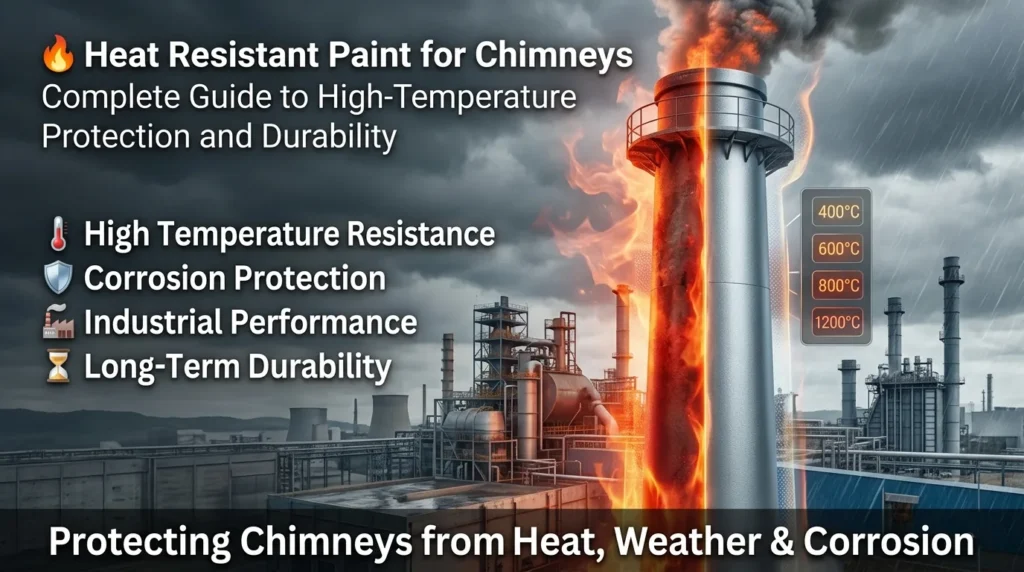
Chimneys are continuously exposed to extreme temperatures, combustion gases, moisture, and environmental pollutants. Over time, these conditions can lead to corrosion, surface deterioration, and structural damage if adequate protection is not provided. This is where heat resistant paint for chimneys plays a vital role. Designed to withstand elevated temperatures while protecting surfaces from corrosion and weathering, these specialized coatings help maintain the safety, efficiency, and longevity of chimney structures.
Heat resistant chimney coatings create a durable protective barrier that resists thermal stress, oxidation, and environmental damage. Whether used on industrial steel chimneys, power plant stacks, boiler exhaust systems, or commercial chimneys, these coatings help preserve structural integrity while reducing maintenance requirements.
Modern high-temperature chimney paints are formulated using advanced silicone, epoxy, ceramic, or aluminum-based technologies that can tolerate temperatures ranging from 200°C to over 600°C, depending on the application. In addition to heat resistance, many of these coatings provide excellent resistance to moisture, UV exposure, and chemical attack, making them suitable for demanding industrial environments.
Selecting the right heat resistant coating for chimneys requires consideration of operating temperature, environmental conditions, substrate type, and maintenance requirements. Proper surface preparation and application techniques are equally important to ensure long-term performance and durability.
In this guide, we will explore the benefits, types, applications, and maintenance practices of heat resistant paint for chimneys, helping you choose the most effective solution for reliable high-temperature protection and long-lasting performance.
Introduction to Heat Resistant Paint for Chimneys
Chimneys are exposed to continuous heat, combustion gases, moisture, and environmental pollutants, making them vulnerable to corrosion, cracking, and surface deterioration. To ensure long-term performance and structural integrity, specialized protective coatings are required. Heat resistant paint for chimneys is specifically designed to withstand elevated temperatures while providing a durable barrier against environmental and chemical damage.
These coatings help maintain the appearance, efficiency, and safety of chimney structures in industrial, commercial, and residential applications. By reducing the effects of thermal stress and corrosion, heat resistant paints contribute to longer service life and lower maintenance costs.
What is Heat Resistant Paint?
Heat resistant paint is a specialized coating formulated to withstand high temperatures without losing its protective properties. Unlike conventional paints, these coatings are designed to resist cracking, peeling, blistering, and discoloration when exposed to extreme heat.
Heat resistant paints typically contain silicone, epoxy, ceramic, or aluminum-based components that provide excellent thermal stability and durability. They are widely used on surfaces such as chimneys, exhaust stacks, boilers, furnaces, and industrial equipment where high-temperature protection is essential.
Why Chimneys Need High-Temperature Protection
Chimneys operate under challenging conditions that involve constant exposure to heat, smoke, corrosive gases, and changing weather conditions. Without proper protection, these factors can accelerate corrosion, weaken structural components, and increase maintenance requirements.
Applying a high-quality heat resistant coating helps protect the chimney surface from thermal damage and oxidation. It also improves resistance to moisture, chemicals, and environmental pollutants, ensuring reliable performance and extending the lifespan of the chimney. For industrial facilities, power plants, and manufacturing units, effective high-temperature protection is essential for maintaining operational safety and reducing long-term repair costs.
Importance of Heat Resistant Paint for Chimneys
Heat resistant paint plays a critical role in protecting chimneys from the damaging effects of high temperatures, corrosion, and environmental exposure. Whether used on industrial stacks, boiler chimneys, or commercial exhaust systems, these specialized coatings help maintain structural integrity, improve operational efficiency, and reduce maintenance costs. Investing in the right heat resistant coating ensures long-term protection and reliable performance in demanding conditions.
Protection Against Extreme Heat
Chimneys are constantly exposed to hot gases and elevated operating temperatures. Standard coatings can quickly deteriorate under such conditions, leading to cracking, blistering, and coating failure.
Heat resistant paint is specifically formulated to withstand extreme temperatures while maintaining its protective properties. It acts as a thermal barrier that helps protect the underlying surface from heat-related damage and prolongs the life of the chimney structure.
Preventing Surface Deterioration
Continuous exposure to heat, moisture, smoke, and pollutants can cause chimney surfaces to deteriorate over time. Corrosion, oxidation, and weathering can weaken the structure and affect its performance.
A high-quality heat resistant coating forms a durable protective layer that shields the surface from these damaging elements. This helps prevent rust formation, surface degradation, and costly structural repairs.
Enhancing Chimney Lifespan
One of the biggest advantages of heat resistant paint is its ability to extend the service life of chimneys. By protecting against thermal stress, corrosion, and environmental damage, the coating helps preserve the structural integrity of the chimney for many years.
Long-lasting protection reduces the frequency of maintenance and recoating, resulting in lower lifecycle costs and improved asset value.
Improving Safety and Reliability
Safety is a major concern in industries where chimneys operate at high temperatures. Damaged or corroded chimney surfaces can increase the risk of structural failure and operational disruptions.
Heat resistant paint helps maintain a stable and protected surface, ensuring the chimney performs reliably under demanding conditions. This contributes to safer operations, improved equipment reliability, and reduced downtime in industrial and commercial facilities.
Key Benefits of Heat Resistant Paint for Chimneys
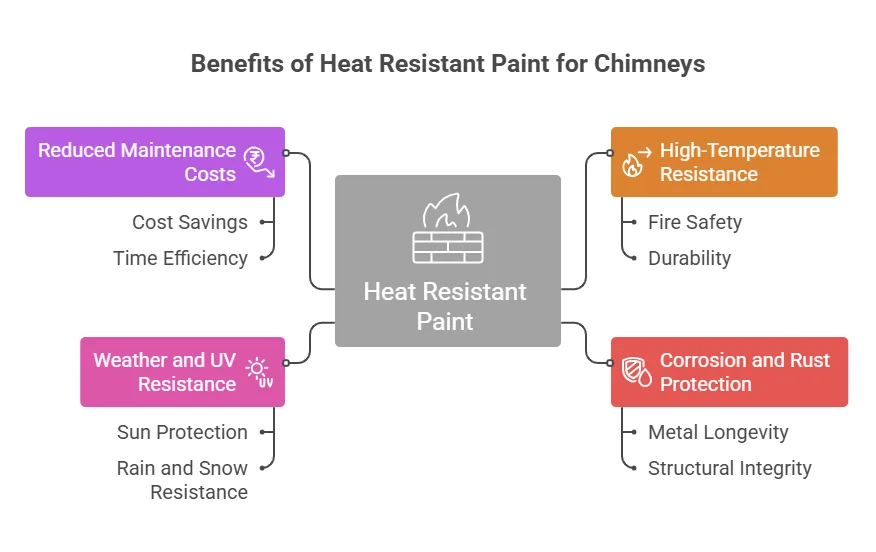
Heat resistant paint provides essential protection for chimneys operating in high-temperature environments. These specialized coatings are engineered to withstand thermal stress, prevent corrosion, and protect surfaces from harsh weather conditions. By improving durability and reducing maintenance requirements, heat resistant chimney coatings offer significant long-term benefits for industrial, commercial, and residential applications.
High-Temperature Resistance
One of the most important advantages of heat resistant paint is its ability to withstand extreme temperatures without cracking, blistering, or peeling. Chimneys are continuously exposed to hot exhaust gases and thermal fluctuations, which can quickly damage ordinary coatings.
Heat resistant paints maintain their structural integrity under elevated temperatures, ensuring reliable protection and long-lasting performance even in demanding operating conditions.
Corrosion and Rust Protection
Chimneys are often exposed to moisture, condensation, smoke particles, and corrosive gases that can lead to rust formation and metal deterioration. Heat resistant coatings create a durable barrier that protects the surface from oxidation and corrosion.
This protective layer helps preserve the structural strength of steel chimneys, exhaust stacks, and industrial flues while reducing the risk of costly repairs and replacements.
Weather and UV Resistance
In addition to heat exposure, outdoor chimneys must withstand rain, humidity, sunlight, wind, and changing weather conditions. High-quality heat resistant paints are formulated to resist UV radiation and environmental degradation.
This weather-resistant protection helps prevent fading, chalking, moisture damage, and coating breakdown, ensuring the chimney remains protected throughout its service life.
Reduced Maintenance Costs
By providing long-term protection against heat, corrosion, and environmental damage, heat resistant paint significantly reduces maintenance requirements. Durable coatings minimize the need for frequent repairs, touch-ups, and recoating.
Lower maintenance demands result in reduced downtime, improved operational efficiency, and long-term cost savings, making heat resistant chimney coatings a cost-effective investment for industrial and commercial facilities.
Types of Heat Resistant Paint Suitable for Chimneys
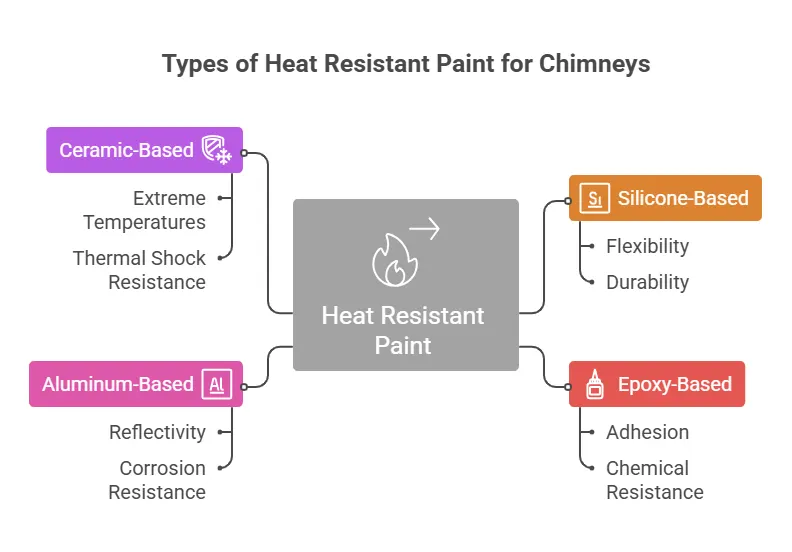
Selecting the right heat resistant paint is essential for ensuring long-term chimney protection and performance. Different coating technologies offer varying levels of heat resistance, corrosion protection, and durability. The choice depends on factors such as operating temperature, environmental conditions, and the type of chimney structure.
Silicone-Based Heat Resistant Paint
Silicone-based heat resistant paints are among the most commonly used coatings for chimneys due to their excellent thermal stability and weather resistance. These coatings can withstand high temperatures while maintaining flexibility and adhesion.
They provide outstanding protection against UV exposure, moisture, and thermal cycling, making them ideal for industrial chimneys, exhaust stacks, and outdoor high-temperature structures. Silicone coatings are often used in applications where temperatures exceed 400°C.
Epoxy Heat Resistant Paint
Epoxy heat resistant paints combine strong adhesion with excellent corrosion resistance. They form a tough protective barrier that protects chimney surfaces from heat, chemicals, and environmental contaminants.
These coatings are suitable for moderate to high-temperature applications and are widely used on steel chimneys, industrial equipment, and boiler systems. Epoxy coatings are particularly effective in environments where both heat resistance and corrosion protection are required.
Aluminum Heat Resistant Coatings
Aluminum heat resistant coatings contain metallic aluminum pigments that help reflect heat and improve thermal protection. These coatings provide excellent resistance to oxidation and weathering while offering an attractive metallic finish.
They are commonly applied to chimneys, exhaust ducts, boilers, and industrial pipelines operating at elevated temperatures. Aluminum coatings are valued for their durability, heat-reflective properties, and long-term protective performance.
Ceramic Heat Resistant Coatings
Ceramic heat resistant coatings are designed for extreme temperature environments where conventional coatings may not perform adequately. They contain ceramic particles that create a highly durable thermal barrier capable of withstanding very high temperatures.
These coatings offer superior heat insulation, chemical resistance, and protection against thermal shock. Ceramic coatings are often used in power plants, manufacturing facilities, furnaces, and industrial chimneys exposed to severe operating conditions.
How Heat Resistant Paint Works on Chimneys
Heat resistant paint protects chimneys by creating a durable barrier that can withstand extreme temperatures, environmental exposure, and corrosive gases. These specialized coatings are formulated with heat-stable resins and pigments that maintain their protective properties even under continuous thermal stress. Understanding how these coatings work helps explain their importance in extending chimney lifespan and maintaining operational safety.
Thermal Protection Mechanism
The primary function of heat resistant paint is to shield the chimney surface from excessive heat. The coating contains heat-resistant components that remain stable at elevated temperatures, preventing degradation of the underlying substrate.
By reducing the direct impact of heat on the chimney surface, the coating helps prevent structural weakening, oxidation, and premature material failure. This thermal protection is essential for industrial chimneys, boiler stacks, and exhaust systems that operate continuously at high temperatures.
Heat Dissipation and Surface Stability
Heat resistant coatings are designed to distribute and dissipate heat more effectively across the surface. This helps minimize localized hot spots that can cause stress and damage to the chimney structure.
The coating maintains surface stability by resisting cracking, blistering, and peeling even when exposed to fluctuating temperatures. As a result, the chimney remains protected and structurally sound over extended periods of operation.
Resistance to Thermal Cycling
Thermal cycling occurs when chimneys repeatedly heat up and cool down during operation. These temperature fluctuations can cause expansion and contraction of the substrate, leading to cracks and coating failure if not properly protected.
Heat resistant paint is formulated to withstand thermal cycling by maintaining flexibility and adhesion during repeated temperature changes. This ability to resist thermal stress helps preserve coating integrity, reduce maintenance requirements, and ensure long-term performance in demanding industrial environments.
Best Chimney Surfaces for Application
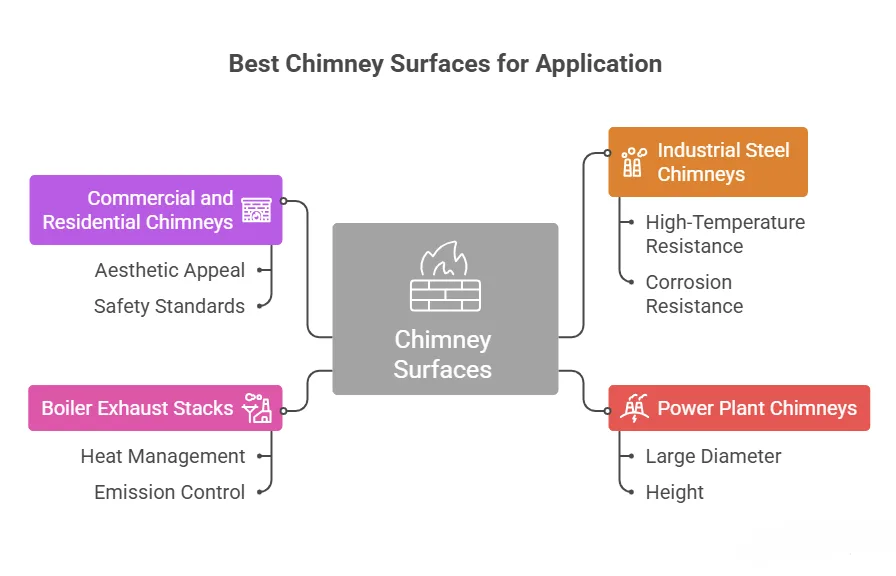
Heat resistant paint can be applied to various types of chimneys and exhaust structures that operate under high-temperature conditions. Selecting the appropriate coating for the specific substrate ensures optimal adhesion, durability, and long-term protection. These coatings are widely used across industrial, commercial, and residential applications to protect chimney surfaces from heat, corrosion, and environmental damage.
Industrial Steel Chimneys
Industrial steel chimneys are continuously exposed to high temperatures, moisture, and corrosive gases. Without proper protection, steel surfaces can quickly develop rust and structural deterioration.
Heat resistant paint provides a durable protective barrier that resists thermal stress and corrosion, helping maintain the strength and reliability of industrial chimneys. These coatings are commonly used in manufacturing plants, refineries, and processing facilities.
Power Plant Chimneys
Power plant chimneys handle large volumes of hot exhaust gases and operate under demanding conditions. Continuous exposure to heat, pollutants, and environmental factors can cause significant wear over time.
Applying heat resistant coatings helps protect chimney surfaces from oxidation, corrosion, and temperature-related damage. This improves operational efficiency, extends service life, and reduces maintenance requirements in power generation facilities.
Boiler Exhaust Stacks
Boiler exhaust stacks are subjected to constant thermal cycling and exposure to combustion by-products. These conditions can lead to coating degradation and metal corrosion if not adequately protected.
Heat resistant paint forms a stable, high-temperature-resistant layer that helps preserve the integrity of exhaust stacks. The coating also improves resistance to moisture and chemical attack, ensuring long-term performance.
Commercial and Residential Chimneys
Commercial and residential chimneys are exposed to heat, smoke, rain, sunlight, and changing weather conditions throughout the year. Over time, these factors can affect both appearance and structural durability.
Heat resistant coatings provide protection against heat damage, weathering, and corrosion while enhancing the overall lifespan of the chimney. They are an effective solution for maintaining both functionality and aesthetics in residential homes, commercial buildings, restaurants, and hospitality facilities.
Application Process of Heat Resistant Paint for Chimneys
The effectiveness and lifespan of heat resistant paint largely depend on proper application techniques. A well-executed coating system ensures strong adhesion, uniform coverage, and long-term protection against heat, corrosion, and environmental damage. Following the correct application process helps maximize coating performance and durability in demanding chimney environments.
Surface Preparation and Cleaning
Surface preparation is the most important step before applying heat resistant paint. The chimney surface must be thoroughly cleaned to remove dust, dirt, grease, oil, rust, old paint, and other contaminants that could affect adhesion.
For steel chimneys, abrasive blasting or mechanical cleaning is often recommended to achieve the required surface profile. A clean and properly prepared surface allows the coating to bond effectively and ensures long-lasting protection.
Primer Selection and Application
Selecting the right primer is essential for improving adhesion and enhancing corrosion resistance. Heat resistant primers are specifically designed to withstand elevated temperatures while providing a strong foundation for the topcoat.
The primer should be applied evenly according to the manufacturer’s recommended thickness. Allowing the primer to dry properly before applying the heat resistant paint helps achieve optimal coating performance and durability.
Paint Application Methods
Heat resistant paint can be applied using several methods, depending on the size and complexity of the chimney structure.
- Brush Application: Suitable for small areas, touch-ups, and detailed work.
- Roller Application: Effective for medium-sized surfaces requiring consistent coverage.
- Spray Application: Preferred for large industrial chimneys and exhaust stacks as it provides uniform coating thickness and faster application.
Applying multiple coats may be necessary to achieve the desired film thickness and protection level.
Drying and Curing Requirements
Proper drying and curing are crucial for achieving the full performance benefits of heat resistant paint. After application, the coating must be allowed to dry according to the manufacturer’s specifications.
Some high-temperature coatings require gradual heat curing during initial operation to develop maximum hardness, adhesion, and thermal resistance. Adequate curing ensures the coating can withstand extreme temperatures, thermal cycling, and harsh environmental conditions while delivering long-term protection.
Factors to Consider Before Choosing Chimney Paint
Selecting the right heat resistant paint for chimneys is essential for ensuring long-term protection, durability, and performance. Different chimney systems operate under varying temperature ranges and environmental conditions, making it important to evaluate several factors before choosing a coating. A properly selected coating system can significantly reduce maintenance costs and extend the service life of the chimney.
Maximum Operating Temperature
The operating temperature of the chimney is one of the most critical factors when selecting a heat resistant paint. Different coatings are formulated to withstand specific temperature ranges, from moderate heat applications to extreme industrial environments.
Choosing a coating with a temperature rating that exceeds the chimney’s maximum operating temperature helps prevent coating failure, discoloration, cracking, and loss of protection. Always verify the product specifications to ensure compatibility with the intended application.
Environmental Exposure Conditions
Chimneys are often exposed to harsh environmental conditions such as rain, humidity, UV radiation, wind, and industrial pollutants. These factors can accelerate coating deterioration if the wrong product is used.
For outdoor applications, selecting a coating with excellent weather resistance and UV stability is essential. In industrial environments, coatings should also provide protection against chemical exposure and airborne contaminants to maintain long-term performance.
Corrosion Protection Requirements
Many chimneys, particularly steel structures, are vulnerable to corrosion caused by moisture, condensation, and corrosive exhaust gases. Without adequate protection, corrosion can weaken the structure and increase maintenance costs.
Heat resistant paints with strong anti-corrosive properties help create a protective barrier that prevents rust formation and surface degradation. For highly corrosive environments, a complete coating system including a heat resistant primer and topcoat may be required.
Coating Thickness and Durability
The thickness of the coating directly affects its ability to withstand heat, weathering, and mechanical stress. A properly applied coating system with the recommended dry film thickness provides better insulation, corrosion resistance, and long-term durability.
Selecting a durable coating that maintains its protective properties under continuous thermal cycling and environmental exposure ensures reliable chimney performance. Following manufacturer recommendations for coating thickness helps achieve maximum service life and optimal protection.
Maintenance and Inspection Guidelines
Regular maintenance and inspection are essential for preserving the performance and durability of heat resistant paint on chimneys. Even high-quality coatings can experience wear over time due to continuous exposure to heat, weather, and corrosive gases. Implementing a proactive maintenance program helps identify potential issues early, reduces repair costs, and ensures long-term protection of the chimney structure.
Routine Inspection Procedures
Routine inspections should be conducted at scheduled intervals to assess the condition of the coating and chimney surface. Visual inspections can help detect issues such as cracks, blistering, peeling, rust formation, or discoloration.
Industrial chimneys operating under severe conditions may require more frequent inspections. Regular assessments ensure that minor defects are identified and corrected before they develop into major maintenance problems.
Cleaning and Surface Care
Keeping the chimney surface clean helps maintain the effectiveness of the heat resistant coating. Dust, soot, chemical deposits, and environmental contaminants can accumulate over time and affect coating performance.
Cleaning should be carried out using appropriate methods that do not damage the coating. Routine surface care helps preserve appearance, improve durability, and support long-term corrosion protection.
Recoating Recommendations
Over time, exposure to high temperatures and environmental conditions can gradually reduce the effectiveness of the coating. Recoating may be necessary to restore protection and maintain optimal performance.
The recoating schedule depends on operating conditions, coating quality, and inspection results. Areas showing signs of wear, corrosion, or coating breakdown should be repaired and recoated promptly to prevent further deterioration.
Identifying Early Signs of Damage
Early detection of coating damage is critical for avoiding costly repairs and unexpected downtime. Common warning signs include cracking, peeling, fading, blistering, rust spots, and loss of adhesion.
Addressing these issues as soon as they are identified helps maintain the integrity of the coating system and extends the service life of the chimney. A proactive approach to maintenance ensures reliable operation, improved safety, and long-term cost savings.
Common Problems and Solutions
Even when properly applied, heat resistant paint on chimneys can experience issues due to extreme temperatures, environmental exposure, aging, or improper maintenance. Identifying these problems early and implementing the correct solutions helps maintain coating performance, extend chimney lifespan, and reduce repair costs.
Peeling and Cracking
Peeling and cracking are common issues that occur when the coating loses flexibility or adhesion. This can result from inadequate surface preparation, incorrect application thickness, exposure to temperatures beyond the coating’s rating, or thermal cycling.
Solution:
Remove loose or damaged coating, properly prepare the surface, and reapply a compatible heat resistant paint according to manufacturer specifications. Ensuring the correct coating thickness and curing process can help prevent future peeling and cracking.
Rust Formation Under Coating
Rust can develop beneath the coating when moisture penetrates through damaged areas or when the substrate was not adequately cleaned before painting. Corrosion can spread beneath the coating and weaken the chimney structure over time.
Solution:
Remove rust using abrasive blasting or mechanical cleaning methods, apply a suitable heat resistant anti-corrosive primer, and then recoat the surface with a high-quality heat resistant paint. Regular inspections can help detect corrosion before it becomes severe.
Color Fading and Discoloration
Continuous exposure to high temperatures, UV radiation, and harsh weather conditions can cause the coating to fade or change color. While discoloration may not always affect performance, it can indicate prolonged environmental stress.
Solution:
Use premium heat resistant coatings formulated with UV-resistant pigments and temperature-stable ingredients. Regular maintenance and timely recoating help preserve appearance and maintain long-term protection.
Adhesion Failure
Adhesion failure occurs when the coating separates from the chimney surface, leading to blistering, peeling, or complete coating breakdown. This issue is often caused by poor surface preparation, contamination, moisture, or improper curing.
Solution:
Ensure the surface is clean, dry, and properly prepared before application. Use a compatible heat resistant primer and follow the recommended drying and curing procedures. Proper application techniques significantly improve coating adhesion and durability.
Industries That Use Heat Resistant Chimney Paint
Heat resistant chimney paint is widely used across industries where chimneys, exhaust stacks, and flue systems operate under high-temperature conditions. These coatings provide essential protection against heat, corrosion, moisture, and environmental pollutants, ensuring long-term durability and reliable performance. By reducing maintenance requirements and extending asset life, heat resistant coatings have become a critical component in many industrial sectors.
Power Generation Plants
Power plants rely on large chimneys and exhaust stacks to safely discharge combustion gases generated during electricity production. These structures are continuously exposed to extreme temperatures, moisture, and corrosive emissions.
Heat resistant chimney paint helps protect steel and concrete surfaces from thermal degradation, corrosion, and weather-related damage. This improves operational reliability, extends service life, and reduces maintenance costs for power generation facilities.
Cement Manufacturing Industry
Cement plants operate high-temperature kilns and processing systems that produce hot exhaust gases and abrasive particles. Chimneys in these facilities are subjected to severe thermal stress and harsh environmental conditions.
Heat resistant coatings provide a durable barrier that protects chimney surfaces from heat damage, chemical attack, and corrosion. This helps maintain structural integrity and supports uninterrupted plant operations.
Chemical Processing Plants
Chemical manufacturing facilities often use chimneys and vent stacks to release process gases and fumes. These structures are exposed to a combination of high temperatures, chemicals, and corrosive substances.
Applying heat resistant chimney paint helps safeguard surfaces from chemical corrosion and thermal degradation. The coating enhances durability, improves safety, and ensures long-term performance in demanding processing environments.
Oil & Gas Facilities
In the oil and gas industry, chimneys, flare stacks, and exhaust systems operate under extreme temperatures and are frequently exposed to moisture, hydrocarbons, and corrosive gases.
Heat resistant coatings provide critical protection against oxidation, rust, and thermal stress. By preserving the condition of chimney structures and reducing maintenance requirements, these coatings contribute to safer operations and improved asset longevity in refineries, petrochemical plants, and processing facilities.
Frequently Asked Questions About Heat Resistant Paint for Chimneys
What Temperature Can Chimney Paint Withstand?
The temperature resistance of chimney paint depends on the coating formulation. Standard heat resistant paints typically withstand temperatures between 200°C and 400°C, while advanced silicone and ceramic-based coatings can tolerate temperatures of 600°C or higher.
It is important to select a coating that matches or exceeds the chimney’s maximum operating temperature to ensure long-term performance and protection.
How Long Does Heat Resistant Chimney Paint Last?
The lifespan of heat resistant chimney paint varies depending on the coating quality, operating conditions, environmental exposure, and maintenance practices.
Under normal conditions, a high-quality coating can last between 5 and 15 years or more. Regular inspections, cleaning, and timely repairs can significantly extend the service life of the coating system.
Can It Be Applied to Existing Painted Surfaces?
Yes, heat resistant paint can often be applied over existing coatings, provided the surface is in good condition and properly prepared.
Loose, peeling, or damaged paint should be removed before application. The surface must be cleaned thoroughly to ensure proper adhesion. In some cases, a compatible primer may be required to achieve optimal performance.
Does Chimney Paint Prevent Corrosion?
Yes, heat resistant chimney paint helps prevent corrosion by creating a protective barrier between the chimney surface and environmental factors such as moisture, oxygen, chemicals, and corrosive gases.
Many heat resistant coating systems include anti-corrosive properties that protect steel chimneys and exhaust stacks from rust and oxidation. For maximum corrosion protection, a complete coating system consisting of a primer and heat resistant topcoat is often recommended.
Conclusion – Protecting Chimneys with the Right Heat Resistant Paint
Heat resistant paint is an essential protective solution for chimneys operating in high-temperature and demanding environments. By providing resistance against heat, corrosion, moisture, and weathering, these specialized coatings help maintain the structural integrity and performance of chimney systems. Whether used in power plants, manufacturing facilities, chemical industries, or commercial buildings, the right coating can significantly extend chimney lifespan while reducing maintenance requirements.
Long-Term Performance Benefits
High-quality heat resistant chimney paints are designed to deliver reliable protection over extended periods. They help prevent surface degradation, withstand thermal stress, and maintain coating integrity even under continuous exposure to elevated temperatures.
This long-term performance reduces the frequency of repairs and ensures that chimney structures remain protected and operational for years.
Improved Safety and Durability
Protecting chimneys from heat damage and corrosion is critical for maintaining safe operations. Heat resistant coatings strengthen the surface against harsh operating conditions, reducing the risk of structural deterioration and unexpected failures.
Enhanced durability not only improves operational reliability but also contributes to a safer working environment in industrial and commercial facilities.
Cost-Effective High-Temperature Protection
Although heat resistant coatings require an initial investment, they provide substantial long-term savings by reducing maintenance costs, minimizing downtime, and extending the life of chimney assets.
Their ability to protect against corrosion, weathering, and thermal damage makes them a highly cost-effective solution for high-temperature applications.
Choosing the Best Coating for Your Chimney
Selecting the right heat resistant paint depends on factors such as operating temperature, environmental conditions, substrate type, and corrosion protection requirements. Silicone, epoxy, aluminum, and ceramic-based coatings each offer unique advantages for specific applications.
By choosing a coating system that matches the chimney’s operating conditions and following proper application and maintenance practices, building owners and industries can ensure maximum protection, improved performance, and long-term durability.