

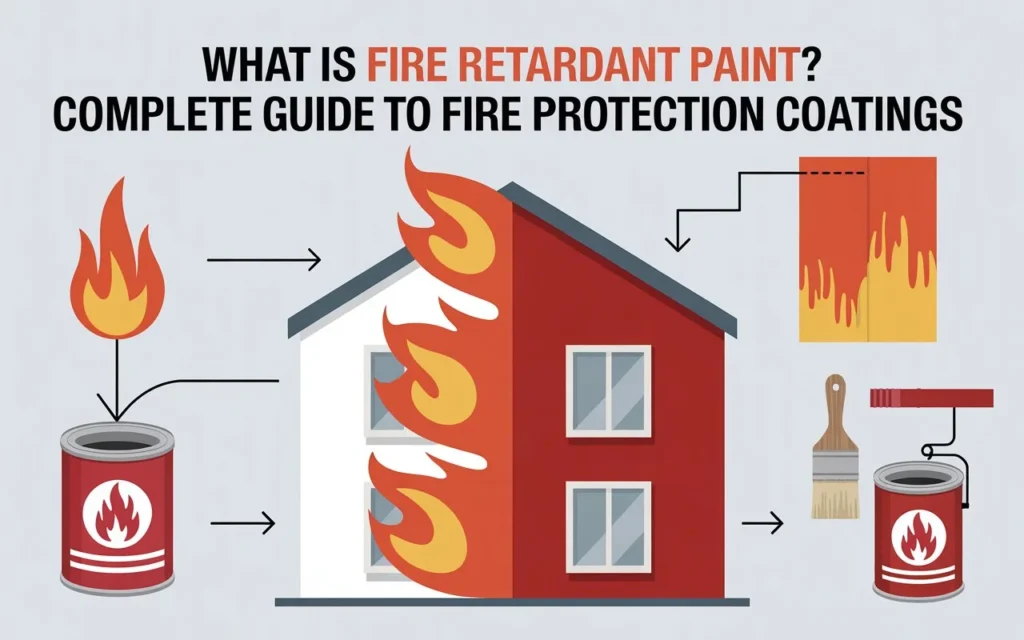
Fire safety has become a critical part of modern construction, industrial operations, and infrastructure planning. Whether it’s a factory, warehouse, office building, or residential project, protecting structures from fire hazards is essential for saving lives and reducing property damage. One of the most effective passive fire protection solutions used today is fire retardant paint.
Fire retardant paint is a specially formulated coating designed to slow the spread of flames and reduce heat transfer when exposed to high temperatures. Unlike regular decorative paint, it reacts during a fire by forming a protective insulating layer over the surface. This helps delay structural damage and provides valuable extra time for evacuation and emergency response.
These coatings are commonly applied on steel structures, wood surfaces, electrical cables, and building interiors where improved fire resistance is required. In many industrial and commercial environments, fire retardant coating systems also help meet fire safety regulations and building code requirements.
Introduction to Fire Retardant Paint
Fire safety is one of the most important considerations in modern construction, industrial facilities, and public infrastructure. As buildings become larger and more complex, the need for reliable fire protection solutions continues to grow. Fire retardant paint has become a widely used passive fire protection system because it helps slow down fire spread, protect structural materials, and improve overall building safety during emergencies.
What is Fire Retardant Paint?
Fire retardant paint is a specially engineered protective coating designed to reduce the spread of flames and resist heat when exposed to fire. Unlike conventional paint, it reacts under high temperatures and forms a thick insulating char layer over the surface.
This protective layer helps shield materials such as steel, wood, and electrical systems from direct heat exposure, delaying structural damage and improving fire resistance. Fire retardant paint is commonly used in industrial buildings, warehouses, offices, and residential projects where enhanced fire safety is required.
Why Fire Protection Coatings Matter
Fire protection coatings play a critical role in reducing fire-related risks in buildings and industrial environments. During a fire, they help slow flame spread, minimize heat transfer, and delay structural failure.
This added protection provides valuable extra time for:
- Safe evacuation of occupants
- Emergency response and firefighting operations
- Limiting damage to property and equipment
- Reducing business interruption and downtime
In many projects, fire retardant coatings are also essential for meeting building regulations and fire safety compliance standards.
Rising Demand for Fire Safety in Modern Construction
The demand for fire retardant paint continues to rise as construction standards become stricter and awareness around fire safety increases. Architects, builders, and facility owners are increasingly integrating fire protection coatings into project planning from the beginning.
Industries such as manufacturing, oil and gas, warehousing, healthcare, hospitality, and commercial real estate now rely heavily on fire retardant coating systems to improve long-term safety, meet code requirements, and protect valuable infrastructure from fire-related damage.
How Fire Retardant Paint Works
Fire retardant paint works as a passive fire protection system, meaning it begins protecting a surface automatically when exposed to high temperatures. Unlike ordinary paint, it is formulated with heat-reactive ingredients that help slow flame spread, reduce heat transfer, and protect the underlying structure during a fire. This makes it an essential solution for steel, wood, and industrial fire protection applications.
Intumescent Coating Technology Explained
Most fire retardant paints use intumescent coating technology. “Intumescent” means the coating expands when exposed to heat.
When temperatures rise during a fire, the coating reacts chemically and swells to many times its original thickness. This expansion creates a thick protective foam-like barrier over the painted surface.
That expanded layer acts like insulation, protecting the substrate from direct heat and delaying temperature rise.
Heat Reaction and Char Formation
As the temperature increases, fire retardant paint begins to activate at a specific heat threshold. During this reaction, it forms a dense carbon-rich char layer on the surface.
This char layer serves several important functions:
- Insulates the substrate from extreme heat
- Slows heat transfer into steel or wood
- Protects structural integrity
- Delays weakening or collapse
For steel structures especially, this protection is critical because steel can lose strength rapidly under high heat.
How It Slows Flame Spread
Fire retardant paint helps slow down how quickly flames move across a surface. Once activated, the expanded char barrier reduces oxygen access to the substrate and limits combustion.
This helps:
- Reduce flame spread across walls, ceilings, or structures
- Lower surface temperature rise
- Minimize smoke generation
- Delay ignition of the protected material
By slowing fire progression, the coating provides valuable extra time for evacuation and firefighting operations.
Passive Fire Protection vs Active Fire Protection
Fire retardant paint is part of passive fire protection (PFP). Passive systems are built into the structure and begin working automatically during a fire without requiring power or activation.
Examples of passive fire protection include:
- Fire retardant paint
- Fire-rated walls
- Fire doors
- Fire-resistant boards
This differs from active fire protection, which requires detection or activation to operate. Examples include:
- Sprinkler systems
- Fire alarms
- Smoke detectors
- Fire extinguishers
Both systems are important, but fire retardant paint adds an extra layer of built-in protection that starts working immediately when exposed to fire.
What is Fire Retardant Coating Made Of?
Fire retardant coating is a specially engineered system made with heat-reactive ingredients that help resist fire, reduce heat transfer, and protect surfaces during high-temperature exposure. Unlike conventional paint, it is designed not just for decoration but for performance under fire conditions. The exact formulation can vary by manufacturer and application, but most fire retardant coatings contain a combination of binders, pigments, additives, and intumescent chemicals that work together during a fire.
Key Chemical Components
Fire retardant coatings typically include a combination of active ingredients that activate under heat and create a protective insulating layer. Common components include:
- Acid source – helps trigger the chemical reaction under high temperature
- Carbon source – creates the char layer that insulates the surface
- Blowing agent – releases gases during heating, causing the coating to expand
- Resin or binder system – holds the coating together and helps it adhere to the substrate
These components work together to create the intumescent reaction that protects steel, wood, and other materials during fire exposure.
Role of Binders, Pigments & Additives
Each ingredient in a fire retardant coating serves a specific function:
- Binders help the coating stick firmly to the surface and maintain durability over time
- Pigments provide color, opacity, and visual finish while supporting coating consistency
- Additives improve application performance, drying time, flexibility, moisture resistance, and weather durability
Some formulations also include anti-corrosive additives for steel or water-resistant additives for exterior applications.
How Coating Expands Under Heat
When exposed to fire, the coating begins reacting at a certain temperature. The heat triggers a chemical expansion process known as intumescence.
During this reaction:
- The blowing agent releases gases
- The coating swells many times its original thickness
- A dense foam-like char layer forms on the surface
This char acts as an insulating barrier that slows heat penetration and protects the substrate beneath. The expansion can be several times thicker than the original coating, creating powerful thermal protection during the fire.
Fire Resistance Testing Standards
To verify performance, fire retardant coatings are tested according to recognized fire resistance standards. These tests measure how long the coating can protect a structure under fire exposure. Common standards include:
- ASTM – American Society for Testing and Materials
- BS – British Standards
- IS – Indian Standards
- UL – Underwriters Laboratories
These certifications typically evaluate:
- Flame spread resistance
- Heat transfer performance
- Structural fire endurance
- Smoke generation behavior
Choosing a tested and certified fire retardant coating ensures reliable performance, code compliance, and long-term fire safety protection.
Fire Retardant Paint vs Fire Proofing Paint
Fire retardant paint and fire proofing paint are often used interchangeably, but they are not exactly the same. Both are designed to improve fire resistance and protect buildings during a fire, but they differ in performance, application, and intended use. Understanding the difference helps architects, contractors, and facility owners choose the right fire protection solution for each project.
Key Differences Between Both
Fire retardant paint is primarily designed to slow the spread of flames and reduce heat transfer across a surface. It delays ignition and helps control how quickly fire moves through a structure.
Fire proofing paint, on the other hand, is typically used to provide a specific fire resistance rating to structural elements such as steel columns and beams. Its main goal is to maintain structural stability under extreme heat for a longer period.
In simple terms:
- Fire retardant paint → slows fire spread
- Fire proofing paint → protects structure during fire exposure
Both are part of passive fire protection systems but are selected based on project requirements.
Fire Resistance Ratings Explained
Fire resistance ratings measure how long a coating can protect a surface during fire exposure. Common ratings include:
- 30 Minutes
- 60 Minutes
- 90 Minutes
- 120 Minutes
Fire retardant paint may help reduce surface flame spread and improve reaction-to-fire performance, while fire proofing paint is more often selected when a certified structural fire endurance rating is required.
The required rating depends on building type, occupancy, and local fire safety regulations.
Surface Protection vs Structural Protection
One of the biggest differences is the level of protection provided.
Fire Retardant Paint – Surface Protection
Used on surfaces such as:
- Wood panels
- Interior walls
- Decorative finishes
- Cable coatings
- Partitions and doors
Its purpose is to reduce combustibility and slow flame spread.
Fire Proofing Paint – Structural Protection
Used on load-bearing structural elements such as:
- Steel beams
- Columns
- Industrial frameworks
- Structural support systems
Its purpose is to protect the structure from heat-induced weakening and collapse.
Which One Should You Choose?
The right choice depends on your application and fire safety goals.
Choose fire retardant paint when you need:
- Flame spread reduction
- Protection for wood or interior surfaces
- Decorative fire-resistant finishes
- Improved surface fire safety
Choose fire proofing paint when you need:
- Structural steel fire protection
- Certified fire resistance ratings
- Industrial or commercial structural safety compliance
- Long-duration thermal insulation during fire exposure
For many industrial and commercial projects, both systems may be used together to create a complete passive fire protection strategy. Selecting the right certified coating based on substrate, fire rating, and project requirements ensures maximum safety and long-term performance.
Where is Fire Retardant Paint Used?
Fire retardant paint is used in a wide range of industrial, commercial, and residential applications where enhanced fire protection is required. It is commonly applied to surfaces that are vulnerable to heat exposure or may contribute to flame spread during a fire. By improving fire resistance and slowing combustion, these coatings help protect structures, assets, and occupants across multiple environments.
Steel Structures & Beams
Steel is one of the most common materials protected with fire retardant paint. While steel is non-combustible, it can quickly lose strength when exposed to high temperatures.
Fire retardant coatings are applied to:
- Steel beams
- Columns
- Roof trusses
- Structural frameworks
- Industrial supports
These coatings help insulate steel during a fire, delay weakening, and maintain load-bearing capacity for a specified period.
Wood Surfaces & Doors
Wood is highly combustible and can contribute to rapid flame spread if left untreated. Fire retardant paint is widely used on wooden surfaces to slow ignition and reduce burning speed.
Common applications include:
- Wooden doors
- Wall panels
- Ceiling panels
- Decorative cladding
- Furniture and partitions
These coatings help preserve the natural appearance of wood while improving fire resistance.
Electrical Cables & Cable Trays
Electrical systems are a common source of fire in both industrial and commercial facilities. Fire retardant coatings help protect cable infrastructure by slowing flame spread along electrical pathways.
Typical applications include:
- Cable trays
- Electrical conduits
- Wiring routes
- Electrical control panels
- Cable enclosures
This protection is especially important in data centers, power plants, and manufacturing facilities where uninterrupted operations are critical.
Warehouses & Manufacturing Plants
Warehouses and manufacturing plants often contain flammable materials, heavy equipment, and large structural steel frameworks, making fire safety a top priority. Fire retardant paint is commonly applied to protect:
- Structural steel frameworks
- Storage areas
- Processing zones
- Machinery support structures
- Utility systems
These coatings help reduce fire damage, improve worker safety, and support industrial fire compliance requirements.
Commercial Buildings & Public Spaces
Fire retardant paint is also widely used in commercial and public buildings where large numbers of people gather daily. These environments require strong passive fire protection systems to improve evacuation safety and meet building regulations.
Common applications include:
- Office buildings
- Shopping malls
- Hospitals
- Schools and colleges
- Hotels
- Airports
- Railway stations
- Government buildings
By slowing fire spread and protecting structural elements, fire retardant paint helps improve safety, reduce damage, and support long-term building resilience.
Benefits of Fire Retardant Paint
Fire retardant paint offers a practical and reliable layer of passive fire protection for buildings, industrial facilities, and infrastructure. It is designed not only to improve fire resistance but also to help protect structural materials, reduce damage, and improve overall safety during a fire emergency. Below are some of the most important benefits of fire retardant paint.
Slows Down Flame Spread
One of the biggest advantages of fire retardant paint is its ability to slow down the spread of flames across a surface. When exposed to heat, the coating reacts and forms a protective char layer that helps control combustion.
By slowing flame movement, the coating helps contain the fire for longer and reduces the chance of it spreading rapidly throughout the structure.
Reduces Heat Transfer
Fire retardant paint helps reduce the transfer of heat from the fire source to the underlying material. The insulating layer created during fire exposure acts as a thermal barrier between the flames and the surface beneath.
This is especially important for steel structures, wood surfaces, and electrical systems that can be damaged quickly by extreme heat.
Delays Structural Failure
High temperatures can weaken structural materials and increase the risk of collapse during a fire. Fire retardant paint helps delay this process by protecting the substrate from direct heat exposure.
For steel beams and load-bearing components, this extra protection helps maintain strength and structural stability for a longer period, giving valuable time during emergencies.
Enhances Occupant Safety
By slowing fire spread and protecting structural elements, fire retardant paint improves safety for building occupants. It provides additional time for evacuation, emergency response, and firefighting operations.
This extra response time can be critical in reducing injuries, protecting lives, and improving emergency management during fire incidents.
Supports Fire Safety Compliance
Many commercial and industrial buildings must meet strict fire safety regulations. Fire retardant paint helps support compliance with fire protection requirements, building codes, and industry standards.
When using certified systems tested to standards such as ASTM, BS, or IS codes, fire retardant coatings help simplify inspections, support approvals, and improve long-term safety assurance for the project.
How to Choose the Right Fire Retardant Paint
Choosing the right fire retardant paint is essential for achieving reliable fire protection, long-term durability, and code compliance. Different surfaces and environments require different coating systems, so selecting the correct product depends on fire rating requirements, substrate type, exposure conditions, and certification standards. A well-chosen coating system improves performance during fire emergencies and helps ensure lasting protection.
Understanding Fire Ratings (30, 60, 90, 120 Minutes)
Fire ratings indicate how long a coating can protect a surface during fire exposure before critical failure occurs. Common ratings include 30, 60, 90, and 120 minutes.
The required rating usually depends on:
- Building type
- Occupancy level
- Structural design
- Local fire regulations
- Industrial risk assessment
For example, a warehouse may require 60-minute protection, while a high-rise commercial building or industrial plant may require 120-minute fire resistance. Higher ratings generally require greater dry film thickness and tested application systems.
Surface Compatibility
Fire retardant paint must be compatible with the surface being protected. Different coatings are designed specifically for different substrates, and using the wrong type may reduce adhesion or fire performance.
Common substrates include:
- Steel – beams, columns, frameworks
- Wood – doors, wall panels, ceilings
- Concrete – structural walls and slabs
- Cable systems – cable trays and conduits
Always confirm that the product is approved for the intended surface and compatible with the primer or existing coating system.
Indoor vs Outdoor Applications
Environmental exposure is another important factor when selecting fire retardant paint.
Indoor coatings are typically used in controlled environments such as offices, interiors, corridors, and enclosed industrial spaces.
Outdoor coatings require additional durability against:
- Rain and moisture
- UV exposure
- Temperature fluctuations
- Corrosion and pollutants
Exterior fire retardant coating systems often include protective topcoats to improve weather resistance and long-term performance.
Coating Thickness & Coverage Requirements
Correct coating thickness is critical to fire performance. Fire retardant paint must be applied at the manufacturer’s specified Dry Film Thickness (DFT) to achieve the required fire rating.
Factors affecting thickness include:
- Required fire resistance duration
- Surface type
- Steel section size
- Environmental conditions
- Application method
Coverage is typically measured in square meters per litre, but the actual rate can vary depending on thickness requirements. Using DFT gauges during application helps ensure consistent protection.
Certification & Compliance Checks
Always choose a fire retardant paint that has been tested and certified by recognized fire safety standards. Certification ensures the coating has been independently evaluated for fire resistance performance.
Look for testing or approval under standards such as:
- ASTM – American Society for Testing and Materials
- BS – British Standards
- IS – Indian Standards
- UL – Underwriters Laboratories
Also verify:
- Fire resistance rating certificates
- Technical data sheets
- Application guidelines
- Warranty information
- Regulatory compliance approvals
Using certified fire retardant coatings helps meet building code requirements, simplifies inspections, and provides greater confidence in long-term fire safety performance.
Application Process of Fire Retardant Coating
Proper application is essential for a fire retardant coating to perform as intended during a fire emergency. Even the best fire protection coating can lose effectiveness if the surface is not prepared correctly or the required thickness is not achieved. Following the correct application process helps ensure strong adhesion, reliable fire resistance, and long-term durability.
Surface Preparation
Surface preparation is the first and most important step before applying fire retardant coating. The substrate must be clean, dry, and free from contamination to ensure proper adhesion.
Before application, remove:
- Dust and dirt
- Oil and grease
- Rust or corrosion
- Loose paint or old coating residue
- Moisture from the surface
For steel, abrasive blasting or mechanical cleaning is often recommended. For wood, the surface should be smooth, dry, and properly sanded. Proper preparation creates a strong base for the coating system and improves long-term performance.
Primer Selection
Primer selection plays a major role in the success of a fire retardant coating system. The correct primer improves adhesion between the substrate and the fire retardant paint while also protecting the surface from corrosion or moisture damage.
The primer should be selected based on:
- Surface type (steel, wood, concrete)
- Environmental exposure
- Indoor or outdoor application
- Compatibility with the fire retardant coating system
Always verify compatibility with the manufacturer’s technical data sheet before application.
Spray, Brush & Roller Application
Fire retardant coating can be applied using different methods depending on the project size, surface type, and required film thickness.
Common application methods include:
- Airless spray application – ideal for large industrial projects, steel structures, and high-build coatings
- Brush application – suitable for edges, touch-ups, and smaller surfaces
- Roller application – commonly used on flat surfaces and interior applications
Spray application is often preferred for steel fire protection because it provides more uniform coverage and faster application.
Drying and Curing Time
After application, the coating must be allowed to dry and cure according to manufacturer specifications. Drying time can vary depending on:
- Coating thickness
- Temperature
- Humidity
- Ventilation
- Product formulation
The coating should not be exposed to mechanical stress, moisture, or overcoating until the recommended drying time is complete. Full curing is important to achieve the intended fire resistance performance.
Inspection After Application
Inspection is the final step to ensure the fire retardant coating has been applied correctly and meets required fire safety performance standards.
Post-application inspection typically includes checking:
- Dry film thickness (DFT)
- Uniform coverage
- Surface finish quality
- Adhesion performance
- Missed or damaged areas
Thickness gauges are often used to verify that the required fire rating has been achieved. Any damaged or under-applied sections should be repaired before the coating is approved for service.
Routine inspection after installation also helps maintain long-term fire protection performance and ensures ongoing compliance with fire safety standards.
Maintenance & Performance Life
Fire retardant paint is designed to provide long-term fire protection, but like any protective coating, its performance depends on regular inspection and proper maintenance. Environmental exposure, physical damage, moisture, and aging can affect how well the coating performs over time. A proactive maintenance plan helps preserve fire resistance, extend service life, and ensure the coating continues to meet safety requirements.
Inspection Frequency
Routine inspections are essential to confirm that the fire retardant coating remains intact and effective. The frequency of inspection usually depends on the environment and level of exposure.
Typical recommendations include:
- Every 6–12 months for indoor commercial and industrial spaces
- More frequent inspections in high-moisture, corrosive, or outdoor environments
- Immediate inspection after renovation work, impact damage, or exposure to water leaks
Regular checks help identify early signs of wear before they affect fire protection performance.
Recoating Requirements
Over time, fire retardant coatings may require repair or recoating to maintain the required fire rating. Recoating needs can vary depending on:
- Surface exposure conditions
- Mechanical wear
- Moisture or chemical contact
- UV exposure in outdoor environments
- Damage from impact or abrasion
Recoating should always be done using compatible materials and according to the manufacturer’s recommendations. Before recoating, damaged or loose areas should be cleaned and properly prepared to ensure strong adhesion.
Signs of Coating Damage
Visual inspection can reveal early coating failure and indicate when maintenance is needed. Common signs include:
- Cracking or flaking
- Peeling from the substrate
- Surface blistering
- Chipping or impact damage
- Rust bleeding through steel surfaces
- Water staining or moisture damage
- Uneven surface deterioration or discoloration
Any visible damage should be repaired as soon as possible to restore the protective fire barrier.
Long-Term Durability Factors
The lifespan of fire retardant paint depends on several factors, including product quality, application quality, and environmental conditions.
Key factors that influence durability include:
- Correct surface preparation before application
- Proper primer and topcoat compatibility
- Achieving specified dry film thickness
- Indoor vs outdoor exposure
- Humidity, UV radiation, and temperature fluctuations
- Regular inspection and preventive maintenance
When properly applied and maintained, many fire retardant coating systems can perform effectively for many years. A well-maintained coating not only extends service life but also ensures continued fire protection, compliance with safety standards, and reduced long-term repair costs.
Frequently Asked Questions About Fire Retardant Paint
Below are answers to some of the most commonly asked questions about fire retardant paint, its performance, and where it can be used.
Is fire retardant paint fireproof?
No, fire retardant paint is not completely fireproof. It is designed to slow down flame spread, reduce heat transfer, and delay structural failure during a fire.
When exposed to high temperatures, it reacts by forming an insulating char layer that helps protect the surface underneath. This provides valuable extra time for evacuation and emergency response, but it does not make a surface completely immune to fire.
How long does fire retardant paint last?
The lifespan of fire retardant paint depends on factors such as product quality, environmental conditions, application thickness, and maintenance.
In controlled indoor environments, properly applied fire retardant coatings can perform effectively for many years. Outdoor or high-exposure environments may require more frequent inspections and maintenance. Regular inspections and timely recoating help extend the coating’s service life and maintain fire protection performance.
Can it be applied over existing paint?
In some cases, yes — but it depends on the condition and compatibility of the existing coating. The existing paint must be stable, well-adhered, clean, and compatible with the fire retardant system being applied.
Before application, it is recommended to check:
- Adhesion of the existing coating
- Surface cleanliness
- Primer compatibility
- Manufacturer guidelines
If the old paint is damaged, peeling, or incompatible, it may need to be removed before applying the fire retardant coating.
Is it suitable for outdoor use?
Yes, fire retardant paint can be used outdoors when the product is specifically formulated for exterior applications. Outdoor fire retardant coatings are designed to resist:
- UV exposure
- Rain and humidity
- Temperature changes
- Environmental pollutants
Many outdoor systems also require a protective topcoat to improve weather resistance and long-term durability. Always choose an exterior-certified coating when applying in exposed environments.
Does fire retardant paint work on steel and wood?
Yes, fire retardant paint is widely used on both steel and wood surfaces.
For steel, it helps slow heat transfer and delays weakening caused by high temperatures, helping maintain structural integrity during a fire.
For wood, it helps reduce combustibility, slow ignition, and minimize flame spread across the surface.
Different formulations may be required depending on the substrate, so selecting a coating designed specifically for steel or wood is important for best performance.
Conclusion – Is Fire Retardant Paint Worth It?
Fire safety is a critical consideration for any building, whether it is industrial, commercial, or residential. Fire retardant paint offers a practical and effective way to improve fire resistance, protect structural materials, and reduce the impact of fire-related damage. As building regulations become stricter and awareness around passive fire protection grows, these coatings continue to play an important role in modern construction and infrastructure safety.
Importance of Passive Fire Protection
Fire retardant paint is an important part of a passive fire protection system. Unlike alarms or sprinklers that require activation, it works automatically when exposed to high temperatures.
By slowing flame spread and reducing heat transfer, it helps protect steel, wood, and other building materials during the most critical moments of a fire. This built-in protection adds an extra layer of safety without affecting daily operations.
Long-Term Safety Benefits
One of the biggest advantages of fire retardant paint is its long-term protective value. When properly applied and maintained, it continues to provide reliable fire resistance for years.
It helps reduce structural damage, supports safer evacuation, protects valuable assets, and lowers the risk of major losses caused by fire. This makes it a valuable investment for property owners, contractors, and industrial operators focused on long-term safety planning.
Choosing Certified Fire Protection Coatings
Choosing a certified fire retardant coating is essential for achieving dependable performance. Products tested under recognized standards such as ASTM, BS, IS, or UL offer verified fire resistance ratings and proven performance under real fire conditions.
Using certified coatings also helps meet building code requirements, simplifies inspections, and provides greater confidence in the safety and durability of the coating system.
Final Recommendations for Maximum Fire Safety
For the best results, always select fire retardant paint based on the required fire rating, substrate type, environmental conditions, and project specifications. Proper surface preparation, correct application thickness, and regular maintenance are just as important as the product itself.
When combined with a complete fire safety strategy, fire retardant paint can significantly improve structural protection and occupant safety. For projects where fire resistance is a priority, investing in a high-quality certified fire protection coating is a smart and worthwhile decision for long-term performance and peace of mind.