

Choosing the right type of heat reflective paint is essential for achieving maximum cooling performance, durability, and energy efficiency. As temperatures continue to rise, especially in hot regions like India, buildings are exposed to intense sunlight that increases roof and wall temperatures significantly. This leads to higher indoor heat, discomfort, and increased dependence on air conditioning systems.
Heat reflective paints are specially designed to reflect a large portion of solar radiation, including infrared (IR) and ultraviolet (UV) rays, reducing heat absorption and helping maintain cooler indoor environments. However, not all reflective paints are the same. Different types—such as acrylic, elastomeric, and ceramic-based coatings—are developed to suit specific surfaces like RCC roofs, metal sheets, and exterior walls, as well as different environmental conditions.
Each type offers unique advantages, including flexibility, waterproofing, insulation performance, and long-term durability. Understanding these differences is crucial for selecting the most effective solution for residential, commercial, or industrial applications. By choosing the right heat reflective paint, building owners can reduce energy costs, improve comfort, and protect their structures from heat-related damage over time.
Introduction – Why Choosing the Right Type Matters
Rising Heat Challenges in Buildings
With increasing global temperatures and frequent heat waves, buildings are exposed to intense sunlight for longer durations. Roofs and walls absorb a large amount of solar heat, especially in urban areas, leading to higher indoor temperatures and discomfort. This not only affects living and working conditions but also increases dependence on air conditioning, resulting in higher energy consumption and costs.
Importance of Selecting the Right Coating
Not all heat reflective paints perform the same way. Choosing the right type of coating is important to achieve the best results in terms of heat reduction, durability, and weather resistance. The effectiveness of the paint depends on factors such as surface type, climate conditions, and intended use. Selecting the correct coating ensures better performance, longer lifespan, and improved return on investment.
Overview of Available Paint Types
There are several types of heat reflective paints available, including acrylic-based, elastomeric, and ceramic-based coatings. Each type offers different features such as flexibility, insulation, waterproofing, and UV resistance. Understanding these options helps in choosing the most suitable paint for residential, commercial, or industrial applications, ensuring optimal cooling and long-term protection.
What Is Heat Reflective Paint? (Quick Overview)
Basic Definition
Heat reflective paint is a specialized coating designed to reflect a significant portion of solar radiation—especially infrared (IR) and ultraviolet (UV) rays—away from building surfaces. By reducing heat absorption on roofs and exterior walls, it helps keep surfaces cooler and limits heat transfer into indoor spaces.
How It Works
These coatings use advanced reflective pigments and additives that bounce back sunlight rather than absorbing it. This lowers surface temperatures and reduces the amount of heat entering the building. Some formulations also include insulating components that slow down heat transfer, further enhancing cooling performance.
Importance in Modern Construction
With rising temperatures, energy costs, and sustainability goals, heat reflective paint has become an essential solution in modern construction. It supports energy-efficient building design, reduces dependence on air conditioning, and contributes to eco-friendly practices by lowering overall energy consumption and carbon emissions.
Main Types of Heat Reflective Paint
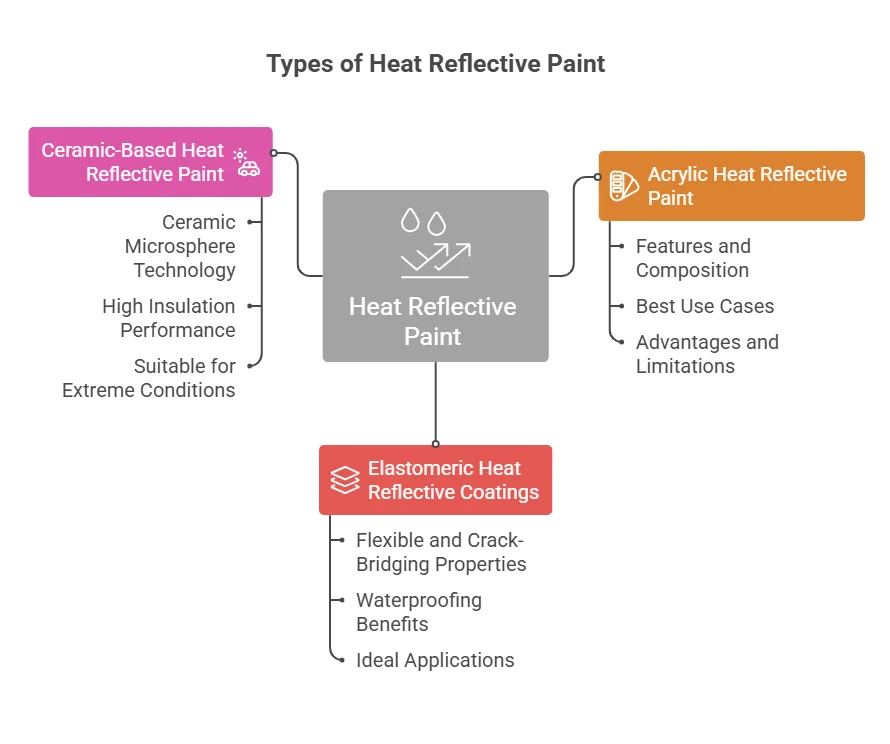
Acrylic Heat Reflective Paint
Features and Composition
Acrylic heat reflective paint is water-based and formulated with reflective pigments that help bounce back solar radiation. It offers good adhesion, UV resistance, and is easy to apply on various surfaces like concrete and masonry.
Best Use Cases
This type is widely used for residential rooftops, exterior walls, and light commercial buildings where moderate heat protection and cost-effectiveness are important.
Advantages and Limitations
Acrylic coatings are affordable, eco-friendly, and easy to maintain. However, they may offer lower flexibility and waterproofing compared to elastomeric coatings, especially in areas with extreme weather conditions.
Elastomeric Heat Reflective Coatings
Flexible and Crack-Bridging Properties
Elastomeric coatings are highly flexible and can expand and contract with temperature changes. This helps bridge small cracks on roof surfaces and prevents water seepage.
Waterproofing Benefits
These coatings provide excellent waterproofing along with heat reflection, making them ideal for areas prone to rain, moisture, or roof leakage issues.
Ideal Applications
Best suited for RCC roofs, terraces, industrial sheds, and buildings exposed to both heat and heavy rainfall.
Ceramic-Based Heat Reflective Paint
Ceramic Microsphere Technology
Ceramic-based paints contain hollow ceramic microspheres that reflect heat and reduce thermal conductivity. This technology enhances both heat reflection and insulation.
High Insulation Performance
These coatings not only reflect solar radiation but also slow down heat transfer, providing superior thermal insulation compared to conventional coatings.
Suitable for Extreme Conditions
Ideal for high-temperature environments such as industrial facilities, metal roofs, and areas with intense sunlight where maximum heat reduction is required.
Water-Based vs Solvent-Based Reflective Paint
Key Differences
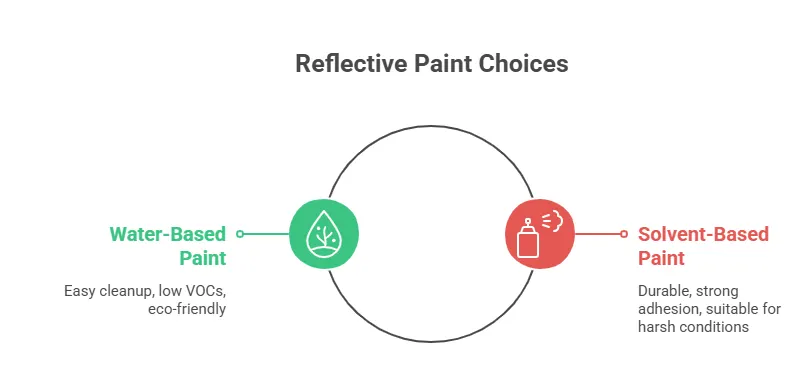
Water-based reflective paints use water as the primary solvent, making them low in odor, easy to apply, and quick to clean up. They typically dry faster and are safer for indoor and outdoor use. Solvent-based paints, on the other hand, use chemical solvents that provide stronger adhesion and better resistance to harsh environmental conditions, but they may emit stronger fumes and require careful handling during application.
Environmental Impact
Water-based coatings are more environmentally friendly as they contain lower levels of volatile organic compounds (VOCs), reducing air pollution and health risks. Solvent-based paints generally have higher VOC content, which can contribute to environmental pollution and require proper ventilation and safety precautions during use.
Performance Comparison
Water-based heat reflective paints offer good reflectivity, UV resistance, and are suitable for most residential and commercial applications. Solvent-based coatings tend to provide better durability, adhesion, and resistance in extreme industrial conditions. The choice depends on the surface type, climate, and performance requirements of the project.
Specialty Heat Reflective Coatings
High SRI Coatings
What Is SRI?
Solar Reflectance Index (SRI) is a measure of a surface’s ability to reflect solar heat and release absorbed heat. A higher SRI value means better performance in keeping surfaces cooler under direct sunlight.
Performance Benefits
High SRI coatings significantly reduce roof temperatures, improve indoor cooling, and enhance overall energy efficiency. They are ideal for buildings exposed to intense sunlight and are commonly used in energy-efficient construction.
UV-Resistant Reflective Paints
Protection from Sunlight Damage
UV-resistant reflective paints are formulated to withstand prolonged exposure to ultraviolet rays. They help prevent fading, cracking, and surface degradation, ensuring long-lasting protection and consistent performance in harsh outdoor conditions.
Weatherproof Reflective Coatings
Resistance to Rain, Dust, and Humidity
Weatherproof reflective coatings are designed to handle extreme environmental conditions, including heavy rainfall, dust, and humidity. These coatings maintain their reflective properties while protecting surfaces from water damage, corrosion, and environmental wear, making them suitable for both residential and industrial applications.
How to Choose the Right Type of Heat Reflective Paint
Based on Surface Type (RCC, Metal, Asbestos)
Different surfaces require different coating properties. RCC roofs benefit from elastomeric or acrylic coatings that offer good adhesion and crack-bridging. Metal roofs often need coatings with strong adhesion, corrosion resistance, and flexibility to handle thermal expansion. Asbestos sheets require lightweight, high-reflectivity coatings that can reduce heat without adding stress to the structure.
Based on Climate Conditions
Climate plays a key role in selecting the right paint. In extremely hot regions, choose coatings with high solar reflectance and UV resistance. In humid or coastal areas, opt for paints with waterproofing and anti-corrosion properties. For regions with heavy rainfall, elastomeric coatings are often preferred due to their weather resistance.
Budget and Durability Considerations
While some heat reflective paints have a higher upfront cost, they often provide better durability and long-term savings. Balancing budget with performance is important—investing in a high-quality coating can reduce maintenance costs and extend the life of the roof.
Industrial vs Residential Needs
Industrial buildings typically require high-performance coatings that can withstand extreme temperatures, heavy usage, and harsh environmental conditions. Residential applications, on the other hand, focus more on cost-effectiveness, ease of application, and comfort. Choosing the right type depends on the scale, usage, and performance expectations of the building.
Applications of Different Types of Heat Reflective Paint
Residential Rooftops
Heat reflective paints are widely used on residential rooftops to reduce heat absorption and keep homes cooler. Acrylic and elastomeric coatings are commonly applied on RCC roofs and terraces to lower indoor temperatures, improve comfort, and reduce electricity bills during summer months.
Industrial Sheds and Factories
Industrial sheds, especially those with metal roofs, experience extreme heat buildup. Elastomeric and ceramic-based coatings are ideal in such environments as they offer high reflectivity, durability, and resistance to harsh conditions. These coatings help improve working conditions and reduce cooling costs in factories.
Warehouses and Commercial Buildings
Warehouses and commercial buildings benefit from heat reflective coatings by maintaining controlled indoor temperatures. This is particularly important for protecting stored goods and ensuring energy efficiency. High SRI and weatherproof coatings are often used in these structures to provide long-term performance and cost savings.
Conclusion – Selecting the Best Heat Reflective Paint for Your Needs
Summary of Paint Types
Heat reflective paints come in various types, including acrylic, elastomeric, and ceramic-based coatings, each designed for specific applications and performance needs. While acrylic paints are cost-effective and easy to apply, elastomeric coatings offer flexibility and waterproofing, and ceramic-based paints provide superior insulation and heat resistance for extreme conditions.
Importance of Right Selection
Choosing the right type of heat reflective paint is essential to achieve maximum efficiency and durability. Factors such as surface type, climate, and building usage should be carefully considered to ensure optimal performance and long-term protection.
Long-Term Performance and Savings
Investing in the right heat reflective paint not only improves indoor comfort but also reduces energy consumption, maintenance costs, and roof damage over time. With proper selection and application, it becomes a reliable, cost-effective solution for sustainable cooling and long-term savings.