

Heat insulating coatings are advanced protective solutions designed to reduce heat transfer and improve thermal efficiency across various surfaces. These coatings are widely used in industrial, commercial, and residential applications where controlling temperature is essential for performance, safety, and energy savings.
Unlike traditional coatings, heat insulating coatings act as a thermal barrier that minimizes the flow of heat between surfaces and the surrounding environment. This helps in maintaining stable temperatures, whether it is keeping heat out in hot climates or retaining heat in controlled environments. As a result, they play a crucial role in enhancing energy efficiency and reducing operational costs.
One of the major advantages of heat insulating coatings is their ability to improve indoor comfort. By reducing heat gain through roofs and walls, they help maintain cooler interiors, reducing the dependency on air conditioning systems. In industrial settings, these coatings are used on equipment, pipelines, and storage tanks to prevent heat loss and improve process efficiency.
These coatings are formulated using advanced materials such as ceramic microspheres and insulating fillers that provide low thermal conductivity. This ensures effective insulation even under extreme temperature conditions. Additionally, they offer protection against thermal stress, corrosion, and environmental damage, extending the lifespan of surfaces and equipment.
Heat insulating coatings can be applied on a wide range of surfaces, including metal, concrete, and industrial structures. Their versatility, ease of application, and long-term performance make them a preferred solution for modern infrastructure and energy-efficient systems.
By choosing the right heat insulating coating and ensuring proper application and maintenance, businesses and property owners can achieve significant energy savings, improved safety, and long-lasting thermal protection.
Introduction to Heat Insulating Coatings
Heat insulating coatings are specially engineered solutions designed to minimize heat transfer and improve thermal efficiency across various surfaces. These coatings are widely used in industries and buildings where controlling temperature is critical for performance, safety, and energy conservation. By creating an effective thermal barrier, they help maintain stable temperatures and enhance overall efficiency.
What are Heat Insulating Coatings?
Heat insulating coatings are advanced coatings formulated with insulating materials such as ceramic microspheres and low-conductivity fillers. Unlike conventional paints, they are designed to reduce the flow of heat rather than simply protect the surface.
These coatings are applied to surfaces like roofs, walls, pipelines, and industrial equipment to prevent heat gain or heat loss. Their ability to provide thermal insulation makes them a valuable solution for both high-temperature and temperature-controlled environments.
How They Reduce Heat Transfer
Heat insulating coatings work by slowing down the transfer of heat through a surface. They create a barrier that reduces conduction, which is the primary mode of heat transfer in solid materials.
Additionally, some coatings reflect a portion of radiant heat while limiting the absorption of thermal energy. This combined effect helps maintain cooler indoor temperatures in hot conditions and retains heat in colder environments, resulting in improved energy efficiency and reduced operational costs.
Key Benefits of Heat Insulating Coatings
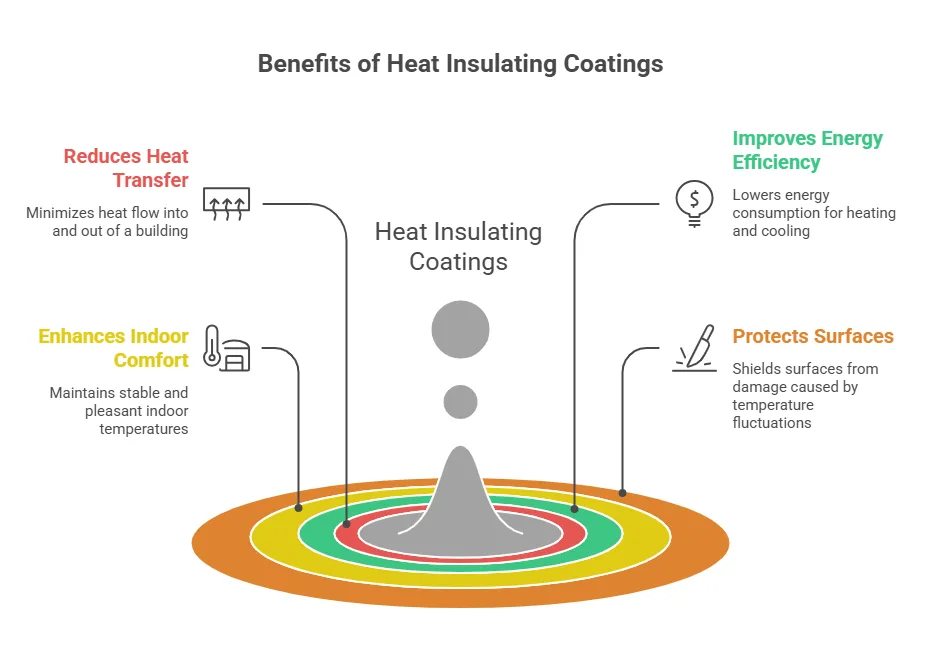
Heat insulating coatings provide multiple advantages for both industrial and building applications by effectively controlling heat transfer. These coatings not only improve thermal performance but also contribute to energy savings, comfort, and long-term durability of surfaces. Their ability to act as a thermal barrier makes them a valuable solution in high-temperature and energy-sensitive environments.
Reduces Heat Transfer
One of the primary benefits of heat insulating coatings is their ability to reduce heat transfer through surfaces. By minimizing heat conduction, these coatings prevent excessive heat from entering or escaping a structure.
This helps maintain stable temperatures, making them ideal for both hot and cold environments where thermal control is essential.
Improves Energy Efficiency
Heat insulating coatings significantly enhance energy efficiency by reducing the need for heating and cooling systems. When less heat enters a building during hot weather, air conditioning systems consume less energy.
Similarly, in controlled environments, these coatings help retain heat, reducing the need for additional heating. This leads to lower energy consumption and long-term cost savings.
Enhances Indoor Comfort
By maintaining consistent indoor temperatures, heat insulating coatings create a more comfortable living and working environment. They reduce temperature fluctuations and prevent overheating of interior spaces.
This is especially beneficial in residential buildings, offices, and industrial workplaces where comfort directly impacts productivity and well-being.
Protects Surfaces from Thermal Stress
Continuous exposure to temperature fluctuations can cause expansion and contraction of materials, leading to cracks and structural damage. Heat insulating coatings help reduce this thermal stress by stabilizing surface temperatures.
As a result, they extend the lifespan of roofs, walls, and industrial equipment while reducing maintenance requirements and repair costs.
Types of Heat Insulating Coatings
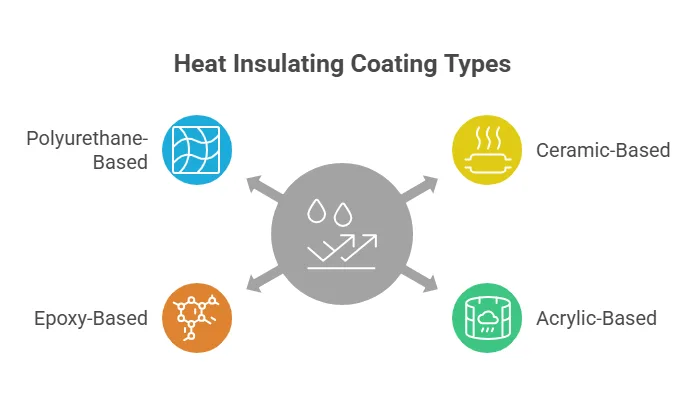
Heat insulating coatings are available in different formulations, each designed to meet specific thermal performance requirements and application conditions. Choosing the right type of coating depends on factors such as temperature range, surface type, and environmental exposure. Below are the most commonly used types of heat insulating coatings.
Ceramic-Based Insulating Coatings
Ceramic-based coatings are among the most advanced heat insulating solutions. They contain ceramic microspheres that create a thermal barrier by reducing heat conduction and reflecting radiant heat.
These coatings are ideal for high-temperature applications such as industrial equipment, pipelines, and furnaces. They offer excellent durability, corrosion resistance, and long-term thermal performance even under extreme conditions.
Acrylic Insulating Coatings
Acrylic insulating coatings are water-based and commonly used for building applications such as roofs and walls. They provide moderate thermal insulation along with UV resistance and weather protection.
These coatings are easy to apply, environmentally friendly, and cost-effective, making them suitable for residential and commercial use where extreme temperatures are not a major concern.
Epoxy-Based Insulating Coatings
Epoxy-based coatings are known for their strong adhesion, chemical resistance, and mechanical strength. When formulated for insulation, they provide effective thermal resistance along with surface protection.
These coatings are widely used in industrial environments where surfaces are exposed to both heat and harsh chemicals. They ensure durability and long-lasting performance in demanding conditions.
Polyurethane Insulating Coatings
Polyurethane coatings offer excellent insulation properties combined with flexibility and abrasion resistance. They can withstand temperature variations and mechanical stress without cracking or peeling.
These coatings are suitable for a wide range of applications, including roofs, storage tanks, and industrial structures. Their durability and resistance to environmental factors make them a reliable choice for long-term use.
How Heat Insulating Coatings Work
Heat insulating coatings are designed to control and reduce heat transfer through surfaces using advanced material science. Their effectiveness lies in their ability to act as a thermal barrier, limiting the movement of heat between the external environment and the substrate. Understanding how these coatings function helps in selecting the right solution for efficient thermal insulation.
Thermal Barrier Principle
The primary function of heat insulating coatings is to create a thermal barrier between the surface and the surrounding environment. This barrier reduces the direct flow of heat, preventing it from passing through the coated material.
By slowing down heat transfer, these coatings help maintain stable temperatures, whether it is keeping interiors cool in hot conditions or retaining heat in controlled environments. This principle is essential for improving energy efficiency and protecting surfaces from temperature extremes.
Low Thermal Conductivity Explained
Thermal conductivity refers to how easily heat passes through a material. Heat insulating coatings are formulated with materials that have low thermal conductivity, meaning they resist the flow of heat.
This property helps reduce the rate at which heat is transferred through surfaces such as metal, concrete, or pipelines. As a result, less heat enters or escapes, leading to better temperature control and reduced energy consumption.
Role of Insulating Fillers
Insulating fillers play a crucial role in enhancing the performance of heat insulating coatings. Materials such as ceramic microspheres, hollow spheres, and specialized additives are incorporated into the coating to create air pockets and reduce heat flow.
These fillers disrupt the path of heat transfer, making it more difficult for heat to pass through the coating. This improves the overall insulation capability and ensures long-lasting thermal protection even in high-temperature environments.
Best Surfaces for Application
Heat insulating coatings are highly versatile and can be applied to a wide range of surfaces where temperature control and thermal protection are essential. Selecting the right surface ensures maximum insulation performance, improved energy efficiency, and long-term durability. These coatings are especially effective in environments exposed to high temperatures or continuous heat flow.
Industrial Equipment and Machinery
Industrial equipment and machinery often operate under high-temperature conditions, leading to heat loss and reduced efficiency. Applying heat insulating coatings helps maintain optimal operating temperatures by minimizing heat transfer.
This not only improves process efficiency but also enhances worker safety by reducing surface temperatures and preventing accidental burns.
Pipelines and Storage Tanks
Pipelines and storage tanks used in industries such as oil & gas, chemical processing, and manufacturing require effective thermal insulation to prevent heat loss or gain.
Heat insulating coatings help maintain the temperature of fluids, reduce energy consumption, and protect surfaces from corrosion and environmental damage. They also improve operational efficiency by ensuring consistent temperature control.
Roofs and Walls
Roofs and walls are major sources of heat gain in buildings, especially in hot climates. Applying heat insulating coatings on these surfaces helps reduce heat transfer into the building.
This results in cooler indoor environments, improved comfort, and reduced reliance on air conditioning systems, leading to energy savings.
Boilers and Furnaces
Boilers and furnaces operate at extremely high temperatures and require effective insulation to maintain efficiency and safety. Heat insulating coatings help reduce heat loss, improve thermal efficiency, and protect surrounding structures from excessive heat exposure.
They also contribute to energy conservation and extend the lifespan of equipment by minimizing thermal stress and surface degradation.
Application Process of Heat Insulating Coatings
The performance of heat insulating coatings depends heavily on proper application techniques. A well-executed application ensures strong adhesion, uniform insulation, and long-lasting thermal protection. Following the correct process not only improves efficiency but also maximizes the coating’s durability and effectiveness.
Surface Preparation
Surface preparation is the most important step before applying heat insulating coatings. The surface must be clean, dry, and free from dust, grease, oil, rust, or any loose particles.
Damaged areas such as cracks or corrosion should be repaired prior to application. For metal surfaces, rust removal is essential, while concrete surfaces may require cleaning and leveling. Proper preparation ensures better bonding and enhances the coating’s overall performance.
Application Methods (Brush, Roller, Spray)
Heat insulating coatings can be applied using various methods depending on the surface type and project requirements. Common methods include brush, roller, and spray application.
Brush and roller are suitable for smaller or detailed areas, while spray application is ideal for large industrial surfaces, providing uniform coverage. Applying the coating in multiple layers as per manufacturer recommendations helps achieve the required thickness for effective insulation.
Drying and Curing Time
Drying and curing are critical to achieving the full insulating properties of the coating. After application, each layer should be allowed to dry properly before applying the next coat.
Curing time depends on environmental factors such as temperature, humidity, and ventilation. Proper curing ensures strong adhesion, improved durability, and optimal thermal insulation performance over the long term.
Factors to Consider Before Choosing a Coating
Selecting the right heat insulating coating is essential to achieve optimal thermal performance, durability, and cost efficiency. Different applications require different coating properties, so evaluating key factors before selection ensures long-term effectiveness and reliable results.
Operating Temperature Range
The operating temperature range is one of the most important factors when choosing a heat insulating coating. Different coatings are designed to perform within specific temperature limits.
For high-temperature environments such as boilers or furnaces, coatings with superior thermal resistance are required. Choosing a coating that matches the operating temperature ensures safety, efficiency, and long-lasting performance.
Surface Type and Condition
The type and condition of the surface play a crucial role in coating selection. Surfaces such as metal, concrete, and industrial equipment require different formulations for proper adhesion and insulation.
Additionally, the condition of the surface—whether it is new, corroded, or damaged—affects how well the coating will perform. Proper surface preparation and selecting a compatible coating ensure better results and durability.
Thickness Requirements
The thickness of the coating directly impacts its insulating performance. Thicker coatings generally provide better thermal insulation by creating a stronger barrier against heat transfer.
However, the required thickness depends on the application, temperature conditions, and desired level of insulation. Following manufacturer recommendations for coating thickness ensures optimal efficiency without over-application.
Budget and Maintenance Needs
Budget and long-term maintenance requirements are important considerations when selecting a coating. While high-quality coatings may have a higher initial cost, they often provide better performance and require less frequent maintenance.
Evaluating the total cost, including application, maintenance, and recoating, helps in making a cost-effective decision. Investing in the right coating ensures long-term savings and consistent performance.
Maintenance and Lifespan
Proper maintenance is essential to ensure the long-term effectiveness and durability of heat insulating coatings. Although these coatings are designed to perform under demanding conditions, regular upkeep helps preserve their insulating properties and extends their service life. A well-maintained coating system continues to deliver consistent thermal performance and energy efficiency over time.
Cleaning and Inspection
Routine cleaning and inspection are important to maintain the efficiency of heat insulating coatings. Dust, dirt, and industrial contaminants can accumulate on the surface, potentially affecting performance.
Periodic inspection helps identify early signs of damage such as cracks, peeling, or surface wear. Cleaning with mild methods and removing contaminants ensures the coating remains effective and continues to provide reliable insulation.
Recoating Guidelines
Over time, heat insulating coatings may degrade due to continuous exposure to temperature fluctuations and environmental factors. Recoating is necessary to restore their insulating performance and protective properties.
The timing for recoating depends on factors such as operating conditions, coating quality, and maintenance practices. Regular inspections help determine when recoating is required, ensuring uninterrupted thermal protection.
Performance Over Time
The performance of heat insulating coatings can gradually decline if not properly maintained. Factors such as UV exposure, mechanical wear, and environmental stress can impact their effectiveness.
However, with proper maintenance, timely repairs, and periodic recoating, these coatings can maintain high levels of performance for many years. This ensures consistent temperature control, improved energy efficiency, and long-term cost savings.
Common Myths About Heat Insulating Coatings
Heat insulating coatings are often misunderstood, leading to several myths that can prevent users from fully leveraging their benefits. Clearing these misconceptions helps in making informed decisions and selecting the right coating solution for different applications.
“Same as Heat Reflective Coatings”
One of the most common myths is that heat insulating coatings are the same as heat reflective coatings. In reality, both serve different purposes.
Heat insulating coatings reduce heat transfer by acting as a thermal barrier, while heat reflective coatings primarily reflect solar radiation. Although both help in temperature control, they work on different principles and are often used together for maximum efficiency.
“Too Expensive for Small Projects”
Many people believe that heat insulating coatings are only suitable for large industrial projects due to their cost. However, this is not entirely true.
While the initial investment may seem higher than conventional coatings, the long-term energy savings and reduced maintenance costs make them a cost-effective solution even for smaller residential and commercial projects.
“Only for Industrial Use”
Another misconception is that heat insulating coatings are limited to industrial applications. In reality, they are widely used across residential, commercial, and infrastructure projects.
From homes and office buildings to pipelines and industrial equipment, these coatings offer effective thermal insulation, improved comfort, and energy savings in a variety of settings.
Applications Across Industries
Heat insulating coatings are widely used across multiple industries where temperature control, energy efficiency, and surface protection are critical. Their ability to reduce heat transfer and improve operational efficiency makes them a valuable solution in both industrial and building applications.
Oil & Gas Industry
In the oil and gas sector, pipelines, storage tanks, and processing equipment are exposed to extreme temperatures. Heat insulating coatings help maintain the required temperature of fluids, reduce heat loss, and improve process efficiency.
They also provide protection against corrosion and environmental damage, ensuring long-term durability of critical infrastructure.
Manufacturing and Processing Plants
Manufacturing units and processing plants often involve high-temperature operations. Heat insulating coatings are applied to machinery, reactors, and pipelines to control heat flow and improve efficiency.
These coatings help reduce energy consumption, enhance safety by lowering surface temperatures, and improve overall productivity in industrial operations.
Power Generation Units
Power plants operate with high-temperature systems such as boilers, turbines, and steam pipelines. Heat insulating coatings play a vital role in minimizing heat loss and maintaining thermal efficiency.
By improving insulation, these coatings help optimize energy usage, reduce operational costs, and support consistent performance in power generation processes.
Commercial and Residential Buildings
Heat insulating coatings are also widely used in buildings to improve thermal comfort and energy efficiency. When applied to roofs and walls, they reduce heat transfer, helping maintain stable indoor temperatures.
This results in lower energy consumption for cooling and heating, making them an effective solution for modern residential and commercial construction projects.
Conclusion – Are Heat Insulating Coatings Worth It?
Heat insulating coatings have become a highly effective solution for controlling heat transfer, improving energy efficiency, and protecting surfaces in both industrial and building applications. With increasing energy costs and the need for sustainable solutions, these coatings offer a practical way to enhance thermal performance while reducing operational expenses.
Long-Term Benefits
Heat insulating coatings provide long-term advantages by maintaining stable temperatures, reducing heat loss or gain, and protecting surfaces from thermal stress and environmental damage. Their durability and performance help extend the lifespan of equipment and structures, making them a reliable investment.
Cost vs Performance
Although the initial cost of heat insulating coatings may be higher than traditional coatings, their long-term performance justifies the investment. Reduced energy consumption, lower maintenance requirements, and improved efficiency lead to significant cost savings over time.
This balance between cost and performance makes them a smart choice for industries and property owners looking for sustainable and economical solutions.
Ideal Solution for High-Temperature Protection
For applications involving high temperatures and demanding environments, heat insulating coatings stand out as an ideal solution. They provide effective thermal insulation, enhance safety, and improve operational efficiency.
Whether used in industrial systems or modern buildings, these coatings deliver reliable performance and contribute to long-term energy savings and protection.