

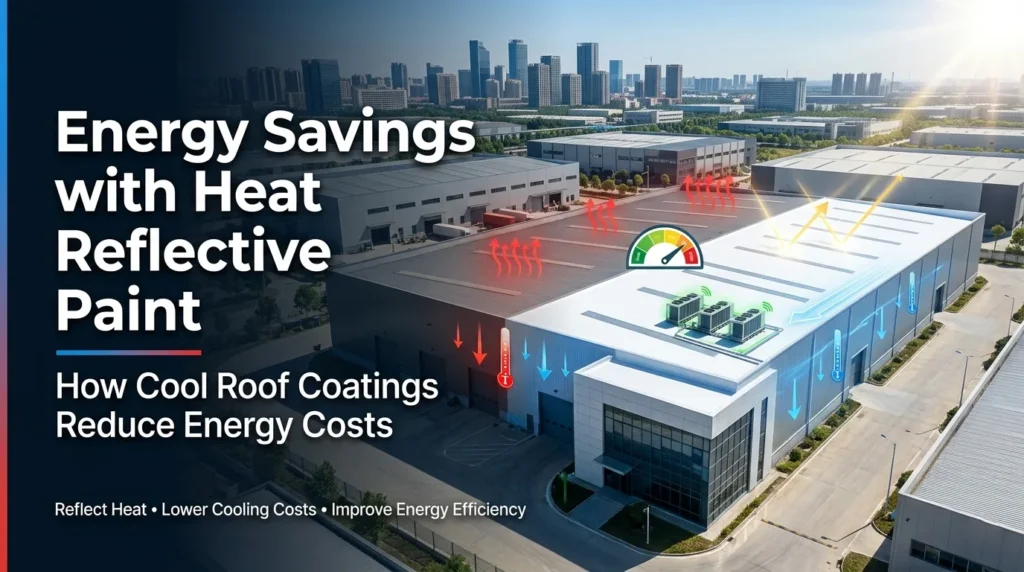
Rising temperatures, increasing electricity bills, and growing concerns about energy efficiency have made heat management a priority for homeowners, commercial property owners, and industrial facility managers. In hot climates such as India, roofs can absorb a significant amount of solar radiation throughout the day, causing indoor temperatures to rise and increasing dependence on air conditioning systems. This leads to higher energy consumption, increased operational costs, and greater environmental impact.
Heat reflective paint offers a practical and cost-effective solution to this challenge. Also known as cool roof paint or solar reflective coating, it is specially engineered to reflect sunlight and reduce heat absorption on roofs and exterior surfaces. By lowering roof temperatures and minimizing heat transfer into buildings, heat reflective coatings help create cooler indoor environments while reducing the workload on cooling systems.
For residential homes, commercial buildings, warehouses, and industrial sheds, heat reflective paint can contribute to substantial energy savings over time. In addition to lowering electricity bills, it improves indoor comfort, extends roof life, and supports sustainable building practices. As businesses and property owners seek energy-efficient solutions, heat reflective paint has emerged as an effective technology for reducing cooling costs and improving overall building performance.
Whether applied on RCC roofs, metal roofs, industrial sheds, or commercial facilities, heat reflective paint provides long-term value by combining energy efficiency with thermal protection. Understanding how these coatings work and the savings they can generate can help building owners make informed decisions for both financial and environmental benefits.
Introduction – Why Energy Efficiency Matters More Than Ever
Rising Electricity Costs
Electricity costs have been steadily increasing across residential, commercial, and industrial sectors, making energy efficiency a top priority for property owners. In hot regions where cooling systems operate for long hours, air conditioning can account for a significant portion of monthly energy expenses. As energy prices continue to rise, finding effective ways to reduce cooling demand has become essential for controlling operational and household costs.
Growing Demand for Sustainable Cooling Solutions
With increasing awareness of environmental sustainability and energy conservation, there is a growing demand for cooling solutions that reduce electricity consumption without compromising comfort. Building owners are actively seeking technologies that can improve thermal performance while lowering carbon emissions. Heat reflective paint has emerged as one of the most practical and cost-effective solutions because it reduces heat absorption naturally, minimizing the need for excessive mechanical cooling.
Impact of Heat on Building Energy Consumption
Roofs and exterior walls are constantly exposed to solar radiation, causing buildings to absorb large amounts of heat throughout the day. This heat transfer raises indoor temperatures and forces air conditioning systems to work harder to maintain comfortable conditions. The greater the heat gain, the higher the energy consumption and electricity costs. By reducing heat absorption at the source, heat reflective paint helps lower indoor temperatures, reduce cooling loads, and improve overall building energy efficiency.
What Is Heat Reflective Paint?
Basic Definition
Heat reflective paint is a specialized coating designed to reduce heat absorption by reflecting a significant portion of the sun’s radiation away from a surface. Commonly used on roofs, exterior walls, warehouses, factories, and commercial buildings, these coatings help maintain lower surface temperatures and improve overall building energy efficiency. Heat reflective paint is often referred to as cool roof paint, solar reflective coating, or energy-saving roof coating because of its ability to minimize heat gain and support indoor cooling.
How Heat Reflective Paint Works
Heat reflective paint works by incorporating advanced reflective pigments and thermal-control additives that reflect ultraviolet (UV) and infrared (IR) rays from sunlight. Instead of allowing solar energy to be absorbed by the roof or wall, the coating reflects a large portion of the heat back into the atmosphere. This reduces surface temperatures and limits heat transfer into the building. As a result, indoor spaces remain cooler, and air conditioning systems require less energy to maintain comfortable temperatures.
Difference Between Reflective Paint and Regular Paint
The main difference between heat reflective paint and regular paint lies in their thermal performance. Conventional paints primarily provide color, decoration, and basic surface protection but absorb a significant amount of solar heat. Heat reflective paint, on the other hand, is specifically engineered to reduce heat buildup through high solar reflectance and thermal emittance properties. While regular paint may cause roofs and walls to become extremely hot under direct sunlight, reflective coatings help keep surfaces cooler, improve occupant comfort, and contribute to long-term energy savings.
How Heat Reflective Paint Helps Save Energy
Reducing Solar Heat Absorption
One of the primary ways heat reflective paint saves energy is by reducing the amount of solar heat absorbed by roofs and exterior walls. Traditional building surfaces absorb a large percentage of sunlight, converting it into heat that is transferred indoors. Heat reflective coatings are designed with advanced reflective pigments that bounce a significant portion of solar radiation back into the atmosphere. By limiting heat absorption, buildings remain naturally cooler and require less energy for temperature control.
Lowering Roof Surface Temperatures
Roofs are often the most exposed part of a building and can become extremely hot under direct sunlight. Heat reflective paint helps lower roof surface temperatures by reflecting ultraviolet (UV) and infrared (IR) rays before they are absorbed. Cooler roof surfaces reduce the amount of heat entering the building and help maintain a more comfortable indoor environment. This is especially beneficial for RCC roofs, metal roofs, warehouses, factories, and commercial buildings located in hot climate regions.
Minimizing Heat Transfer into Buildings
When roofs and walls absorb less heat, the amount of thermal energy transferred into indoor spaces is significantly reduced. This helps stabilize indoor temperatures throughout the day and prevents excessive heat buildup inside the building. As a result, occupants experience greater comfort, and cooling systems do not have to work as hard to maintain the desired temperature.
Reducing Dependence on Air Conditioning
By lowering indoor temperatures naturally, heat reflective paint reduces the workload on air conditioning and ventilation systems. Cooling equipment operates more efficiently and for shorter periods, resulting in lower electricity consumption and reduced energy costs. Over time, this can lead to substantial savings for homeowners, commercial property owners, and industrial facilities while also contributing to lower carbon emissions and improved energy efficiency.
The Science Behind Energy Savings
Solar Reflectance and Thermal Emittance
The energy-saving performance of heat reflective paint is based on two important properties: solar reflectance and thermal emittance. Solar reflectance refers to a surface’s ability to reflect sunlight away rather than absorb it. Thermal emittance is the ability of a surface to release any absorbed heat back into the atmosphere. A high-quality heat reflective coating combines both properties, helping roofs and walls stay cooler even under intense sunlight. The higher these values, the better the coating performs in reducing heat buildup and improving energy efficiency.
Understanding Solar Reflectance Index (SRI)
Solar Reflectance Index (SRI) is a measurement used to evaluate how effectively a surface rejects solar heat. It combines both solar reflectance and thermal emittance into a single performance rating. Surfaces with a high SRI remain significantly cooler than those with a low SRI when exposed to the same environmental conditions. Heat reflective paints with higher SRI values are generally more effective at reducing roof temperatures, improving indoor comfort, and lowering cooling energy requirements.
Heat Reflection vs Heat Absorption
Traditional roofs and exterior surfaces absorb a large portion of solar radiation, causing temperatures to rise throughout the day. This absorbed heat is then transferred into the building, increasing indoor temperatures and cooling costs. Heat reflective paint works differently by reflecting a substantial amount of incoming solar energy away from the surface. Because less heat is absorbed, the building remains cooler and experiences reduced thermal stress, resulting in lower energy consumption.
Impact on Indoor Temperature Control
When less heat enters a building through the roof and walls, indoor temperatures become easier to manage. Air conditioning systems do not need to operate as frequently or as intensively to maintain comfortable conditions. This improved temperature control helps reduce electricity usage, lowers operating costs, and creates a more comfortable environment for occupants. In residential, commercial, and industrial buildings, the cumulative effect of reduced heat gain can lead to significant long-term energy savings.
Key Energy-Saving Benefits of Heat Reflective Paint
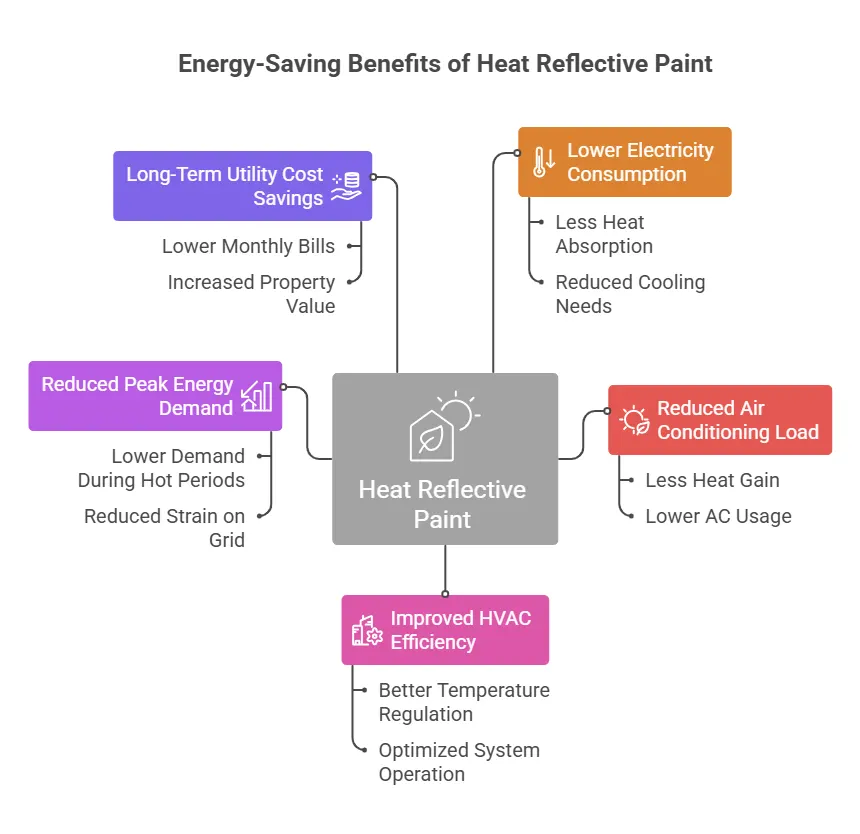
Lower Electricity Consumption
One of the biggest advantages of heat reflective paint is its ability to reduce overall electricity consumption. By reflecting a significant portion of solar radiation away from the building, the coating minimizes heat gain and helps maintain cooler indoor temperatures. As a result, cooling systems consume less energy, leading to noticeable reductions in monthly electricity usage.
Reduced Air Conditioning Load
Air conditioning systems often account for a large share of energy costs in homes, offices, factories, and warehouses. Heat reflective paint reduces the amount of heat entering the building, allowing air conditioners to operate more efficiently and for shorter periods. This reduced cooling load helps decrease energy demand while extending the lifespan of HVAC equipment.
Improved HVAC Efficiency
When indoor temperatures remain lower, HVAC systems can maintain comfortable conditions with less effort. Heat reflective coatings help reduce thermal stress on cooling equipment, enabling it to perform more efficiently. Improved HVAC efficiency not only lowers energy consumption but also reduces maintenance requirements and operational costs over time.
Reduced Peak Energy Demand
During hot summer afternoons, buildings experience maximum heat gain and cooling systems operate at their highest capacity. Heat reflective paint helps reduce peak energy demand by limiting heat absorption before it enters the building. Lower peak demand can result in reduced energy costs and improved energy management for commercial and industrial facilities.
Long-Term Utility Cost Savings
The cumulative effect of lower electricity consumption, reduced cooling loads, and improved HVAC performance translates into substantial long-term utility cost savings. Over the lifespan of the coating, building owners can recover their initial investment through reduced energy expenses while continuing to benefit from improved comfort, sustainability, and building performance.
Energy Savings Across Different Building Types
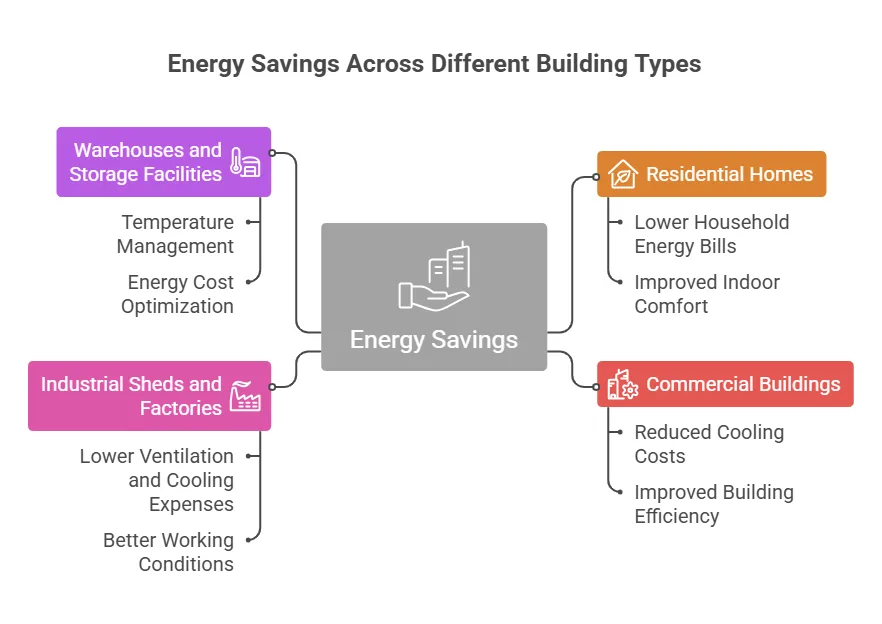
Residential Homes
Lower Household Energy Bills
Residential buildings can benefit significantly from heat reflective paint, especially in regions with long and hot summers. By reducing roof and wall heat absorption, these coatings help keep homes cooler and reduce the need for continuous air conditioning. This leads to lower electricity consumption and noticeable savings on monthly energy bills.
Improved Indoor Comfort
Cooler roof surfaces result in lower indoor temperatures, creating a more comfortable living environment for occupants. Heat reflective paint helps reduce heat buildup in bedrooms, living areas, and top-floor rooms, improving comfort throughout the day without excessive reliance on cooling systems.
Commercial Buildings
Reduced Cooling Costs
Office buildings, retail centers, educational institutions, and commercial complexes often face high cooling expenses due to large roof areas exposed to sunlight. Heat reflective coatings help minimize heat gain, reducing air conditioning requirements and lowering overall cooling costs.
Improved Building Efficiency
By reducing thermal load on the building, heat reflective paint supports better HVAC performance and energy management. Improved efficiency not only lowers operating expenses but also contributes to sustainability goals and green building initiatives.
Industrial Sheds and Factories
Lower Ventilation and Cooling Expenses
Industrial sheds and factories with metal or RCC roofs can become extremely hot during summer months. Heat reflective paint reduces roof temperatures and lowers indoor heat buildup, decreasing the need for mechanical ventilation and cooling systems. This helps industries reduce operational energy costs.
Better Working Conditions
Maintaining cooler indoor temperatures improves employee comfort and reduces heat-related stress in industrial environments. Better working conditions can enhance productivity, support worker safety, and contribute to overall operational efficiency.
Warehouses and Storage Facilities
Temperature Management
Warehouses often store products that can be affected by excessive heat. Heat reflective coatings help maintain more stable indoor temperatures, reducing the risk of heat-related damage to stored goods and improving storage conditions.
Energy Cost Optimization
By minimizing heat transfer into the facility, heat reflective paint reduces the energy required for cooling and ventilation. This allows warehouse operators to optimize energy usage, lower operating costs, and improve overall facility efficiency over the long term.
Factors Affecting Energy Savings
Roof Material and Color
The amount of energy savings achieved with heat reflective paint depends largely on the type and color of the roof. Dark-colored roofs typically absorb more solar heat, making them hotter and increasing indoor temperatures. Metal roofs, RCC roofs, and asbestos sheets can all benefit from reflective coatings, but the level of heat reduction may vary based on the material’s thermal properties. Lighter-colored reflective coatings generally provide higher solar reflectance and better cooling performance.
Climate and Geographic Location
Local climate conditions play a significant role in determining the effectiveness of heat reflective paint. Buildings located in hot and sunny regions tend to experience greater benefits because they are exposed to higher levels of solar radiation throughout the year. Areas with long summers and high daytime temperatures often see the most noticeable reductions in cooling energy consumption and electricity costs.
Building Design and Insulation
The overall design of a building influences how much heat enters and accumulates indoors. Factors such as roof size, ceiling height, ventilation, window placement, and insulation quality affect energy performance. Heat reflective paint works most effectively when combined with proper insulation and efficient building design, helping maximize indoor cooling and energy savings.
Quality of Heat Reflective Coating
Not all heat reflective paints offer the same level of performance. High-quality coatings with superior solar reflectance, thermal emittance, and weather resistance generally provide better heat reduction and longer-lasting results. Choosing a certified, high-performance reflective coating can significantly improve energy efficiency and return on investment.
Proper Application and Maintenance
Correct surface preparation and application are essential for achieving optimal performance. Surfaces should be clean, dry, and properly repaired before coating application. Regular inspection and maintenance help preserve reflectivity and ensure consistent energy-saving benefits over time. A well-maintained heat reflective coating will continue to deliver effective cooling performance for many years.
Heat Reflective Paint vs Traditional Cooling Methods
Air Conditioning Alone vs Reflective Coatings
Air conditioning systems cool indoor spaces by actively removing heat, but they require continuous electricity consumption to operate. Heat reflective paint works differently by preventing a significant portion of solar heat from entering the building in the first place. While air conditioning treats the symptoms of heat buildup, reflective coatings address the source of the problem. When used together, heat reflective paint can reduce the cooling load on air conditioning systems, resulting in better overall energy efficiency and lower operating costs.
Cost Comparison
Traditional cooling methods such as air conditioning involve ongoing expenses, including electricity consumption, maintenance, repairs, and equipment replacement. Heat reflective paint requires an initial investment for application but provides long-term benefits with relatively low maintenance requirements. Over time, the reduction in cooling costs can help offset the installation expense, making reflective coatings a cost-effective solution for residential, commercial, and industrial buildings.
Energy Efficiency Benefits
Heat reflective paint improves energy efficiency by reducing heat absorption and lowering indoor temperatures naturally. This decreases the demand on cooling equipment and allows HVAC systems to operate more efficiently. Traditional cooling systems alone consume significant amounts of electricity, especially during peak summer months. By combining reflective coatings with existing cooling systems, building owners can achieve greater energy savings and improved building performance.
Environmental Impact Comparison
Air conditioning systems contribute to higher energy consumption and increased greenhouse gas emissions due to their reliance on electricity. Heat reflective paint provides a passive cooling solution that reduces the need for excessive mechanical cooling. Lower energy demand helps reduce carbon emissions and supports sustainable building practices. As a result, heat reflective coatings are considered a more environmentally friendly option for managing heat and improving building energy efficiency.
Additional Benefits Beyond Energy Savings
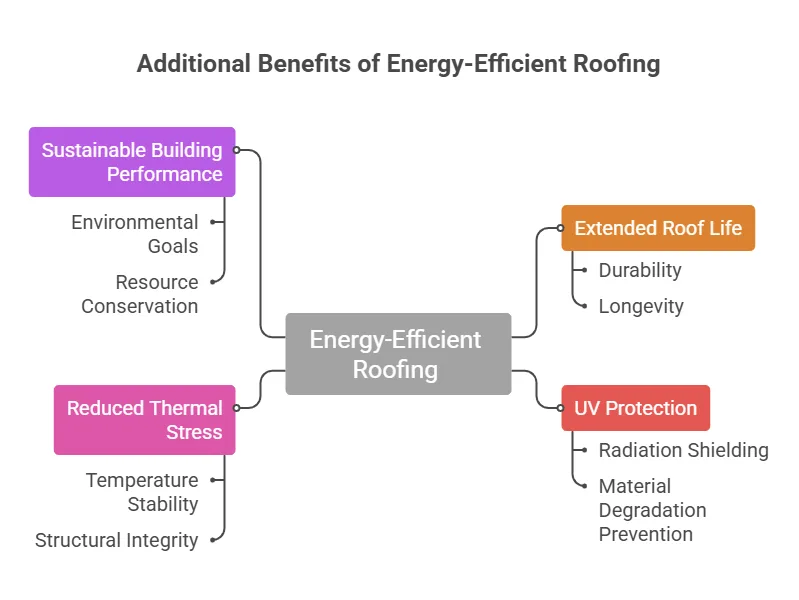
Extended Roof Life
Heat reflective paint does more than reduce energy consumption—it also helps extend the lifespan of roofing materials. Constant exposure to sunlight and high temperatures can cause roofs to deteriorate over time through cracking, fading, and surface degradation. By reducing heat absorption and lowering surface temperatures, reflective coatings minimize thermal damage and help preserve the structural integrity of the roof for longer periods.
UV Protection
Ultraviolet (UV) rays are one of the primary causes of roof and exterior surface deterioration. Heat reflective coatings are formulated to resist UV radiation, helping protect roofs and walls from discoloration, material breakdown, and weather-related wear. This added layer of protection improves the durability of the building envelope and reduces the frequency of repairs and recoating.
Reduced Thermal Stress
Building materials naturally expand and contract as temperatures rise and fall. Continuous temperature fluctuations can create thermal stress, leading to cracks, leaks, and structural damage over time. Heat reflective paint helps maintain more stable surface temperatures, reducing the stress caused by repeated heating and cooling cycles. This contributes to better long-term performance and lower maintenance requirements.
Sustainable Building Performance
Heat reflective paint supports sustainable construction and energy-efficient building design by reducing heat gain and lowering energy demand. Improved thermal performance helps decrease reliance on air conditioning systems, resulting in lower carbon emissions and reduced environmental impact. For residential, commercial, and industrial buildings, reflective coatings contribute to greener operations while enhancing comfort, durability, and overall building efficiency.
Calculating Return on Investment (ROI)
Initial Coating Cost
The first step in evaluating the ROI of heat reflective paint is understanding the initial investment. This includes the cost of the coating material, surface preparation, labor, and application. While the upfront expense may vary depending on the roof size, coating type, and building condition, heat reflective paint is generally a cost-effective upgrade compared to major cooling system modifications or roof replacements.
Annual Energy Savings
One of the biggest contributors to ROI is the reduction in annual energy costs. By lowering roof temperatures and reducing heat transfer into the building, heat reflective coatings decrease the workload on air conditioning and ventilation systems. Over time, the resulting reduction in electricity consumption can generate substantial savings, particularly for industrial facilities, warehouses, commercial buildings, and homes located in hot climates.
Maintenance Cost Reduction
Heat reflective paint also helps reduce maintenance expenses by protecting roofs from UV damage, thermal stress, and weather-related deterioration. Cooler roof surfaces experience less expansion and contraction, which can minimize cracking, leaks, and surface degradation. This can reduce repair frequency, lower maintenance costs, and extend the service life of the roof.
Long-Term Financial Benefits
The combined effect of lower energy bills, reduced maintenance costs, and extended roof life creates strong long-term financial benefits. In many cases, building owners can recover their initial investment through energy savings over the lifespan of the coating. Beyond direct cost savings, improved occupant comfort, enhanced building performance, and increased property value further strengthen the overall return on investment, making heat reflective paint a smart long-term solution for energy-efficient buildings.
Frequently Asked Questions
How Much Energy Can Heat Reflective Paint Save?
The amount of energy savings depends on factors such as roof type, building design, climate conditions, insulation quality, and the performance of the coating used. Buildings in hot and sunny regions typically experience the greatest benefits. By reducing heat absorption and lowering indoor temperatures, heat reflective paint can significantly decrease the energy required for cooling and improve overall building efficiency.
Does Heat Reflective Paint Reduce Electricity Bills?
Yes. Heat reflective paint helps reduce electricity bills by lowering the cooling load on air conditioning and ventilation systems. Since less heat enters the building, cooling equipment operates more efficiently and consumes less power. Over time, this reduction in energy usage can lead to noticeable savings on monthly utility costs.
Is Heat Reflective Paint Effective in Hot Climates?
Absolutely. Heat reflective paint is particularly effective in hot climates where buildings are exposed to intense sunlight and high temperatures for extended periods. By reflecting solar radiation and reducing heat gain, these coatings help maintain cooler indoor environments, improve occupant comfort, and lower energy consumption in residential, commercial, and industrial buildings.
How Long Do Energy-Saving Benefits Last?
The longevity of energy-saving benefits depends on the quality of the coating, environmental conditions, and maintenance practices. High-quality heat reflective coatings can continue delivering effective thermal performance for many years when properly applied and maintained. Regular inspections and periodic cleaning help preserve reflectivity and ensure consistent energy-saving results throughout the coating’s service life.
Conclusion – A Smart Investment for Energy-Efficient Buildings
Summary of Energy-Saving Benefits
Heat reflective paint is an effective solution for reducing heat absorption, lowering roof surface temperatures, and minimizing heat transfer into buildings. By decreasing the workload on air conditioning and ventilation systems, it helps reduce electricity consumption and improve overall energy efficiency. Whether applied to residential homes, commercial buildings, warehouses, or industrial facilities, reflective coatings contribute to cooler indoor environments and better thermal performance.
Long-Term Cost and Sustainability Advantages
Beyond immediate cooling benefits, heat reflective paint offers significant long-term advantages. Reduced energy bills, lower maintenance costs, improved roof durability, and extended building life all contribute to a strong return on ivestment. Additionally, by lowering energy demand and reducing carbon emissions, these coatings support sustainable construction practices and help organizations meet environmental and energy-efficiency goals.
Why Heat Reflective Paint Is Worth the Investment
As energy costs continue to rise and demand for sustainable building solutions increases, heat reflective paint has become a practical and cost-effective choice for modern construction. It provides long-lasting protection against solar heat, improves occupant comfort, and delivers measurable energy savings over time. For property owners looking to enhance building performance while reducing operational expenses, heat reflective paint is a smart investment that combines economic value with environmental responsibility.