

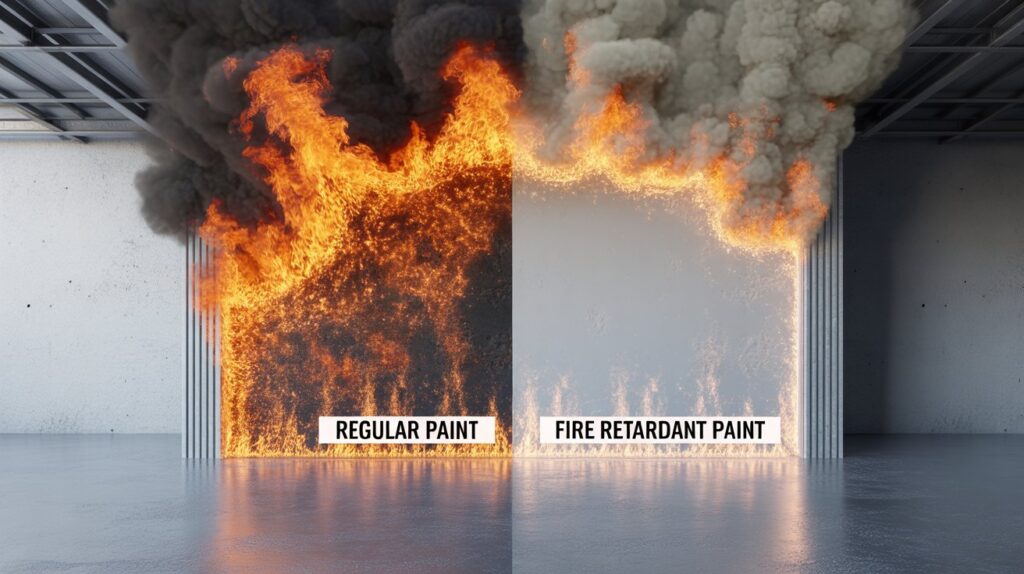
In an age where fire safety is more than just a regulation — it’s a necessity — the coatings and finishes we choose for our buildings play a crucial role in preventing potential disasters. Whether you’re designing a residential home, an office, or an industrial plant, choosing the right type of paint can significantly impact both the safety and longevity of your structure.
Among the most discussed innovations in modern safety coatings is Fire Retardant Paint, also known as fire resistant coating or fire protection coating. While regular paint enhances aesthetics and offers minimal surface protection, fire retardant paint goes a step further — it safeguards life and property from one of the most destructive forces known to mankind: fire.
So, what really sets fire retardant paint apart from regular paint? Let’s dive deep into the details, explore their key differences, and understand why this advanced coating is becoming a must-have in modern infrastructure.
🔥 The Importance of Fire Safety in Homes, Offices, and Industries
Every year, thousands of fires occur globally, causing immense damage to property, infrastructure, and, most tragically, human lives. In many of these incidents, fire spreads rapidly due to flammable materials — walls, ceilings, wooden structures, fabrics, and more — that aren’t adequately protected.
Fire prevention measures like alarms, sprinklers, and extinguishers are essential, but Fire Retardant Coatings add an extra layer of passive protection. They don’t require electricity, human intervention, or activation — they’re always on guard.
Fire retardant paint can reduce the rate at which hardwood ceilings or walls ignite in dwellings. It keeps fire from spreading through furniture or partitions in offices. It shields expensive equipment and buildings from harm caused by high temperatures in manufacturing.
To put it briefly, fire retardant paint is one of the best investments for contemporary structures since it combines long-term durability, safety, and functionality.
🧯 What Is Fire Retardant Paint and How Does It Work?
Fire retardant paint, often referred to as fire resistant coating, is a specially formulated paint designed to resist ignition and slow down the spread of flames when exposed to high temperatures. Unlike regular paint that may burn or melt when in contact with fire, fire retardant paint undergoes a chemical transformation to protect the surface beneath.
🔬 The Science Behind It
When subjected to heat or flames, fire retardant paint expands several times its original thickness, forming a thick, carbonaceous foam layer (called a char). This layer acts as an insulating barrier that:
- Blocks heat transfer to the substrate (like wood, metal, or fabric)
- Limits oxygen access to the surface
- Slows down combustion and flame propagation
This intumescent reaction buys critical time — often several valuable minutes — for people to evacuate and for firefighters to respond.
⚙️ Main Components of Fire Retardant Paint
The performance of fire protection coatings depends on their composition. Typical components include:
- Resins and Binders – Ensure the paint adheres properly to the surface and maintains flexibility.
- Intumescent Agents – Expand under heat to form the protective char layer.
- Carbon Source (Char Former) – Contributes to forming the heat-resistant barrier.
- Blowing Agents – Create the foam-like expansion when heated.
- Additives and Pigments – Improve durability, UV resistance, and finish quality.
Modern solutions like ALTIC Fire Retardant Paint are engineered using advanced chemical formulations that provide both fire protection and a high-quality, durable finish suitable for wood, metal, cloth, and other materials.
🎨 What Is Regular Paint?
Before understanding the comparison, let’s define the baseline — regular paint.
Regular paint is designed for decoration and surface protection. It provides color, texture, and a layer of resistance against moisture, sunlight, and general wear and tear. Regular paints are made of:
- Binders (resins) – Provide adhesion
- Pigments – Add color and opacity
- Solvents – Help in spreading and drying
- Additives – Enhance properties like gloss or weather resistance
However, regular paints lack fire-resistant properties. When exposed to flames, they can ignite easily and sometimes even accelerate the spread of fire, depending on their chemical makeup.
🏠 Common Uses of Regular Paint
Regular paint is ideal for:
- Residential interiors and exteriors
- Decorative walls, ceilings, and furniture
- Low-risk environments where fire exposure is minimal
- Commercial and retail spaces focused on aesthetics
While regular paints enhance the appearance of a surface, they offer no protection in the event of a fire, making them unsuitable for high-risk zones or industrial applications.
⚖️ Fire Retardant Paint vs. Regular Paint: A Detailed Comparison
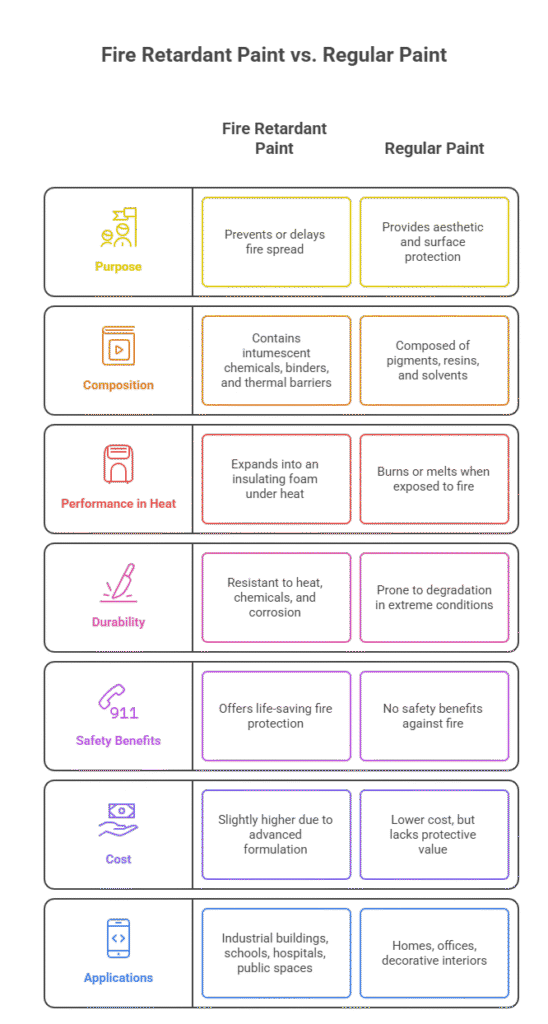
When conducting a paint safety comparison, it’s evident that fire retardant coatings not only enhance safety but also extend the lifespan of the structure by protecting critical materials from heat damage.
🔒 How Fire Retardant Paint Helps Prevent Fire Spread and Property Damage
One of the biggest advantages of fire retardant paint is its ability to slow down or stop fire progression.
During a fire, surfaces coated with fire protection paint don’t ignite easily. Instead, the coating reacts to heat, forming an insulating barrier that isolates the underlying material. This barrier keeps the substrate cooler and prevents it from reaching ignition temperature.
Key Protective Mechanisms:
- Thermal Insulation – Reduces heat transfer to building materials.
- Char Formation – Limits oxygen supply and combustion.
- Smoke Reduction – Decreases toxic smoke release, which often causes more harm than the fire itself.
- Structural Protection – Maintains integrity of metal, wood, or fabric for a longer duration.
In short, fire retardant paint can mean the difference between a contained incident and a full-blown catastrophe. It minimizes property loss, reduces repair costs, and most importantly — saves lives.
🏗️ Industries and Areas Where Fire Retardant Paint Is Highly Recommended
Fire retardant coatings are widely adopted across sectors that demand high levels of fire safety and compliance. Some major applications include:
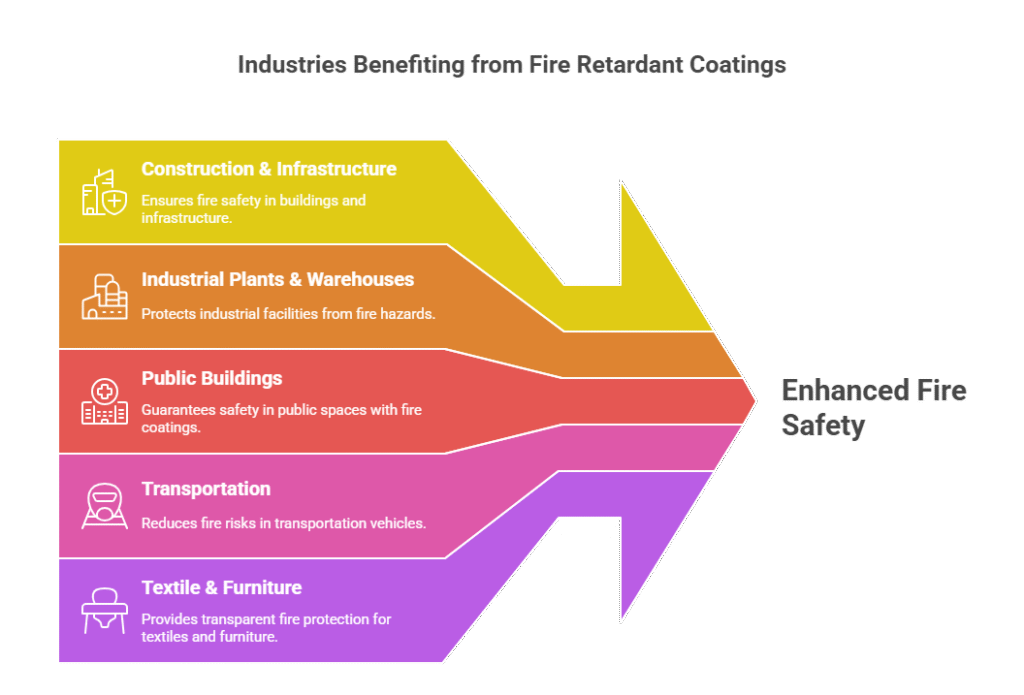
1. Construction & Infrastructure
Used on walls, ceilings, and steel structures to meet fire safety codes in residential and commercial buildings.
2. Industrial Plants & Warehouses
Protects machinery, storage racks, and structures containing combustible materials.
3. Public Buildings
Hospitals, schools, airports, and government facilities rely on fire protection coatings to ensure occupant safety.
4. Transportation
Used in trains, ships, and aircraft interiors to reduce fire spread in confined spaces.
5. Textile and Furniture Manufacturing
When applied to fabrics, cloth, or wooden furniture, ALTIC Fire Retardant Paint provides a transparent yet protective finish that doesn’t alter appearance.
These industries benefit from regulatory compliance, lower insurance risks, and enhanced safety standards through the use of fire resistant coatings.
🧩 Real-World Examples and Case Studies
Case Study 1: Industrial Manufacturing Plant (India)
A large electronics manufacturing facility faced a short-circuit fire in one of its assembly lines. Sections of the plant coated with ALTIC fire retardant paint showed minimal damage. The walls maintained structural integrity for over 30 minutes, allowing staff to safely evacuate and fire teams to respond.
By contrast, adjacent areas coated with regular paint suffered rapid flame spread, extensive soot damage, and structural weakening.
Result: The management decided to coat all production areas with ALTIC fire protection coating, significantly enhancing plant-wide safety.
Case Study 2: Educational Institution (Middle East)
A private university upgraded its facilities with fire retardant coatings in dormitories and classrooms. During a minor electrical fire incident in a storage room, the flames were contained quickly due to the intumescent layer formed by the paint.
No major damage occurred, and students were safely evacuated. The event highlighted how fire retardant paints provide valuable time during emergencies.
Case Study 3: Residential Apartment Complex (Europe)
A newly constructed apartment project used ALTIC fire resistant coating on wooden doors, stair railings, and decorative panels. When tested under local fire safety standards, the coated surfaces delayed ignition by more than 25 minutes compared to untreated samples.
The developers marketed this as a “fire-safe housing feature”, increasing both safety and property value.
💰 Cost vs. Value: A Practical Perspective
One common question during the paint safety comparison is cost. Fire retardant paints are indeed more expensive than regular paints — but the benefits far outweigh the difference.
Initial Cost Difference:
- Regular paint: Lower upfront cost
- Fire retardant paint: Slightly higher cost due to advanced materials
Long-Term Value:
- Reduces potential property damage
- Extends lifespan of materials
- Enhances compliance with fire safety regulations
- Lowers insurance premiums
- Adds resale value to the property
From a financial and safety perspective, fire retardant paint is a smart, long-term investment for any structure.
🌿 Eco-Friendly Fire Protection Options
Modern fire resistant coatings are evolving with sustainability in mind. Many manufacturers, including ALTIC Paints, are developing low-VOC, non-toxic, and eco-friendly fire retardant paints.
These environmentally responsible coatings not only provide fire resistance but also maintain indoor air quality and reduce harmful emissions — aligning safety with sustainability goals.
🧠 Common Myths About Fire Retardant Paint
Let’s debunk a few misconceptions that often circulate around fire protection coatings
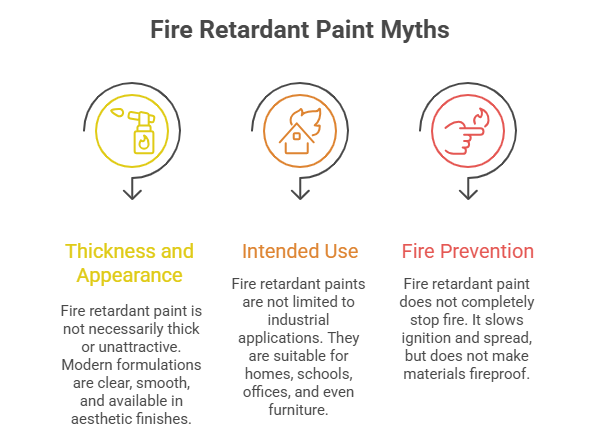
Understanding these facts helps users make better, informed decisions about where and how to apply these coatings effectively.
Conclusion:
Choose Smart Safety with ALTIC Fire Retardant Paint
When comparing fire retardant paint vs regular paint, the conclusion is clear — fire retardant coatings don’t just beautify; they protect. Regular paints offer color and surface protection, but they do nothing against the threat of fire. On the other hand, fire retardant paints safeguard property, extend structural integrity, and most importantly, save lives.
With products like ALTIC Fire Retardant Paint, builders, architects, and homeowners can now achieve the perfect balance of aesthetics and safety. From residential interiors to industrial complexes, these coatings offer a reliable, lasting, and intelligent defense against fire hazards.
In a world where safety and sustainability go hand in hand, choosing fire retardant paint isn’t just a construction decision — it’s a commitment to protection, innovation, and peace of mind.
Pingback: Why Every Building Needs Fire Retardant Mortar and Fire Blocks for Safety Compliance - alticpaint.com
Pingback: Protecting Lives and Property: The Rising Importance of Fire Doors in Indian Infrastructure - alticpaint.com