

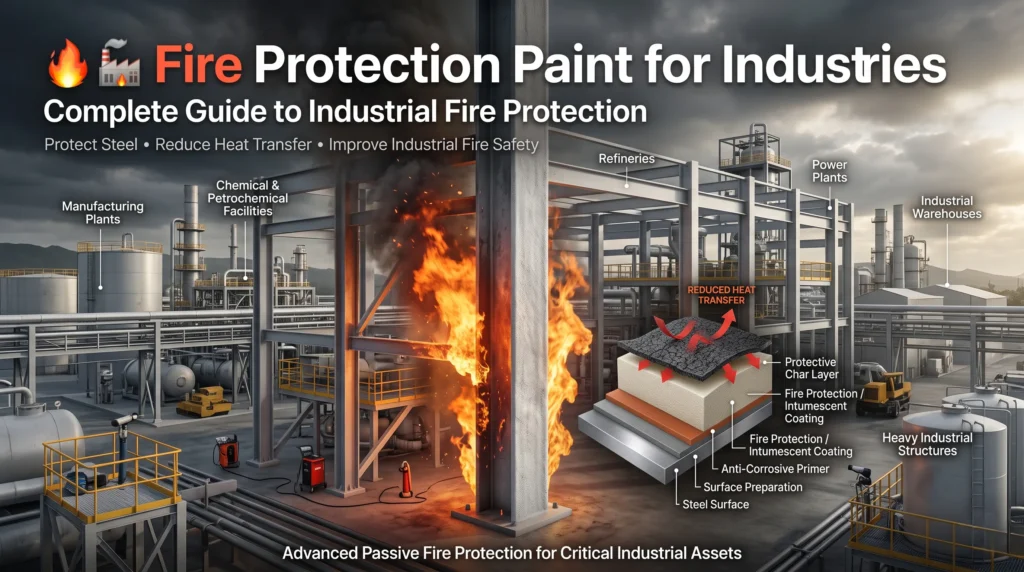
Intumescent paint for steel structures is a passive fire protection coating designed to protect structural steel during fire exposure. When exposed to high temperatures, the coating reacts and expands to form an insulating char layer that slows heat transfer to the steel. This helps delay the rise in steel temperature and supports the structural integrity of beams, columns, frames, supports, and other steel components for the required fire-resistance period. The performance of an intumescent coating system depends on factors such as the required fire rating, steel section factor, Dry Film Thickness (DFT), surface preparation, primer compatibility, environmental exposure, and correct application.
Introduction to Intumescent Paint for Steel Structures
What Is Intumescent Paint?
Intumescent paint is a passive fire protection coating used to protect structural steel from the effects of high temperatures during a fire. When exposed to heat, the coating expands and forms a thick insulating char layer over the steel surface. This protective layer reduces the rate at which heat reaches the steel, helping delay the increase in steel temperature and maintain structural stability for the specified fire-resistance period.
Why Steel Structures Need Fire Protection
Steel structures require fire protection because their strength and load-bearing capacity can reduce significantly when exposed to high temperatures. Beams, columns, frames, and other structural steel components may lose their ability to safely support loads during a fire if their temperature rises rapidly. Applying an appropriate fire protection system, such as intumescent paint, helps delay this temperature rise and provides valuable time for evacuation, emergency response, and structural fire performance.
How Intumescent Coatings Protect Steel
Intumescent coatings protect steel through a heat-activated expansion process. As the temperature increases, the coating undergoes a chemical reaction and expands to form a low-conductivity char layer around the steel. This char acts as an insulating barrier, slowing heat transfer from the fire to the steel surface. The required coating thickness and overall performance depend on factors such as the required fire rating, steel section factor, coating system, and application quality.
How Intumescent Paint Protects Steel Structures
Heat Activation of the Coating
Intumescent paint is activated when the coated steel is exposed to the high temperatures generated during a fire. As the temperature increases, the coating undergoes a heat-triggered chemical reaction. This activation causes the coating to begin softening and expanding, initiating the formation of a protective insulating layer over the steel surface.
Expansion and Char Formation
After heat activation, the intumescent coating expands significantly and develops a carbon-rich char layer. This expanded char is much thicker than the original dry coating and acts as a thermal barrier around the steel. The quality and effectiveness of char formation depend on the formulation of the coating and the specified application thickness.
Slowing Heat Transfer to Steel
The expanded char layer has low thermal conductivity and helps slow the transfer of heat from the fire environment to the structural steel. By reducing the rate of heat transfer, the coating provides additional time before the steel reaches critical temperatures. This passive protection is particularly important for steel beams, columns, frames, and other load-bearing components.
Delaying the Rise in Steel Temperature
Intumescent paint helps delay the rise in steel temperature during fire exposure, allowing the structural member to retain its load-bearing performance for the specified fire-resistance period. The required protection depends on factors such as the fire rating, steel section factor, Dry Film Thickness (DFT), and approved coating system. Correct application and inspection are therefore essential for achieving the intended fire protection performance.
Steel Structures Suitable for Intumescent Protection
Intumescent paint can be used on a wide range of structural steel components where passive fire protection is required. The coating system is selected according to the required fire-resistance period, steel section factor, exposure conditions, and specified DFT. Common applications include steel beams, columns, structural frames, supports, and connections.
Steel Beams
Steel beams are commonly protected with intumescent paint because they can be exposed to high temperatures during a fire and contribute directly to the load-bearing capacity of a building. An appropriately specified intumescent coating forms an insulating char layer around the beam, helping slow the temperature increase and maintain structural performance for the required fire-resistance period.
Steel Columns
Steel columns are critical load-bearing elements and require reliable fire protection where specified by the building design and fire strategy. Intumescent paint can be applied to suitable steel column surfaces to provide passive fire protection. The required coating thickness is determined based on the column section, exposure conditions, and required fire rating.
Structural Steel Frames
Structural steel frames consist of interconnected beams, columns, and other load-bearing members that may require a coordinated fire protection system. Intumescent coatings provide a relatively thin protective layer while maintaining the visible appearance of steelwork. Proper surface preparation, compatible primers, specified DFT, and system-approved application are important for consistent fire protection across the entire frame.
Steel Supports and Connections
Steel supports, connection areas, brackets, and other structural components may also require protection depending on the approved fire protection design. Intumescent paint can be incorporated into the overall coating system where the product and tested system are suitable for these details. Careful application around connections and complex geometries helps ensure continuous protection without leaving exposed steel areas.
Applications of Intumescent Paint for Steel Structures
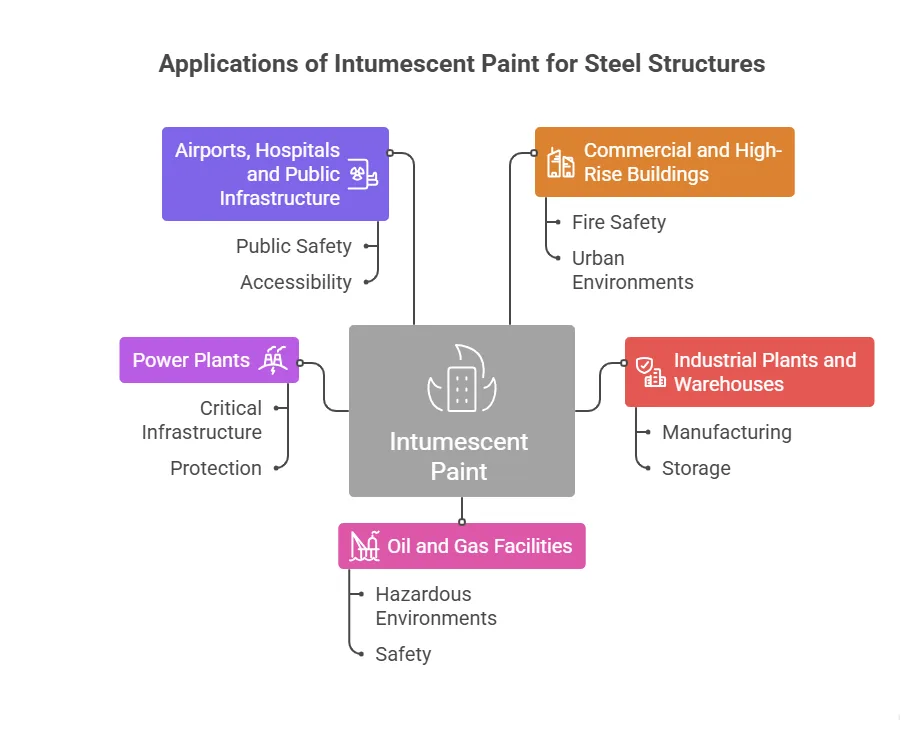
Intumescent paint is used across different building and industrial environments where structural steel requires passive fire protection. The appropriate coating system depends on the required fire-resistance period, steel section factor, environmental exposure, and specified application thickness. Common applications include commercial buildings, industrial facilities, oil and gas plants, power generation facilities, and public infrastructure.
Commercial and High-Rise Buildings
In commercial and high-rise buildings, intumescent paint can be applied to structural steel beams, columns, frames, and other load-bearing components. The coating provides passive fire protection while maintaining a relatively thin and visually acceptable finish. It is particularly useful where exposed structural steel forms part of the building’s architectural design.
Industrial Plants and Warehouses
Industrial plants and warehouses often contain extensive structural steel frameworks supporting production areas, storage spaces, equipment, and roofing systems. Intumescent coatings can provide passive fire protection to suitable steel members by forming an insulating char when exposed to fire. The coating system should be selected according to the required fire rating and the specific industrial environmental conditions.
Oil and Gas Facilities
Oil and gas facilities require carefully specified fire protection systems because structural steel may be exposed to demanding operating and fire-risk environments. Intumescent paint can be used on suitable structural steel members in refineries, petrochemical plants, processing facilities, and other areas where passive fire protection is required. System selection should consider the required fire performance, substrate condition, environmental exposure, and compatibility with primers and protective topcoats.
Power Plants
Power plants contain structural steel supporting buildings, equipment, platforms, and other critical infrastructure. Intumescent coatings can be incorporated into the fire protection system for suitable steel structures where specified. Proper surface preparation, coating thickness, inspection, and environmental protection are important to maintain the intended performance of the coating system.
Airports, Hospitals and Public Infrastructure
Airports, hospitals, railway facilities, and other public infrastructure may use structural steel in buildings and supporting structures that require passive fire protection. Intumescent paint provides a practical coating-based approach for protecting suitable steel members while maintaining a clean surface appearance. The coating system should be selected and applied according to the project’s fire-resistance requirements, exposure conditions, and approved specifications.
Benefits of Intumescent Paint for Steel Structures
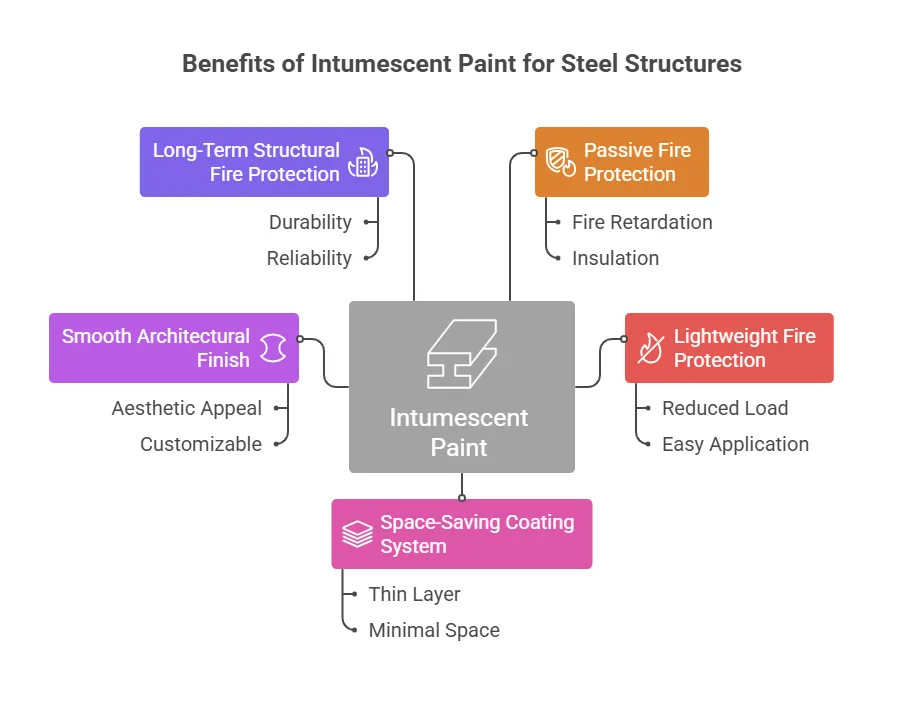
Intumescent paint offers several advantages for protecting structural steel against fire. It provides passive fire protection through a heat-activated insulating layer while adding relatively little weight and thickness compared with some traditional fireproofing methods. When the coating system is correctly selected, applied, and maintained, it can support the required fire-resistance performance of steel beams, columns, frames, and other structural components.
Passive Fire Protection
Intumescent paint provides passive fire protection without requiring an active fire suppression system to trigger its protective action. When exposed to high temperatures, the coating expands and forms an insulating char layer that slows heat transfer to the steel. This helps delay the increase in steel temperature and supports structural stability during the specified fire-resistance period.
Lightweight Fire Protection
Intumescent coatings provide fire protection with a relatively low added weight compared with heavier protection systems. This makes them suitable for many structural steel applications where maintaining the existing structural configuration and minimizing additional load are important considerations. The actual coating thickness depends on the required fire rating and approved coating system.
Space-Saving Coating System
Intumescent paint can provide the required fire protection through a comparatively thin coating system, helping preserve available space around structural steel members. This can be particularly useful in commercial buildings, industrial facilities, and areas where structural dimensions or clearances are important. The required DFT must always be determined according to the approved fire protection specification.
Smooth Architectural Finish
One advantage of intumescent paint is its ability to provide a clean and visually acceptable finish on exposed structural steel. Unlike some bulky fireproofing systems, a properly applied intumescent coating can maintain the profile and appearance of beams, columns, and steel frames. Where required, a compatible decorative or protective topcoat can be applied to achieve the specified appearance and environmental resistance.
Long-Term Structural Fire Protection
When the correct coating system is selected and properly applied, intumescent paint can provide durable passive fire protection for structural steel. Long-term performance depends on factors such as surface preparation, primer compatibility, specified DFT, environmental exposure, topcoat requirements, and regular inspection. Following the manufacturer’s approved application system is essential for maintaining the intended fire protection performance.
Types of Intumescent Paint for Steel
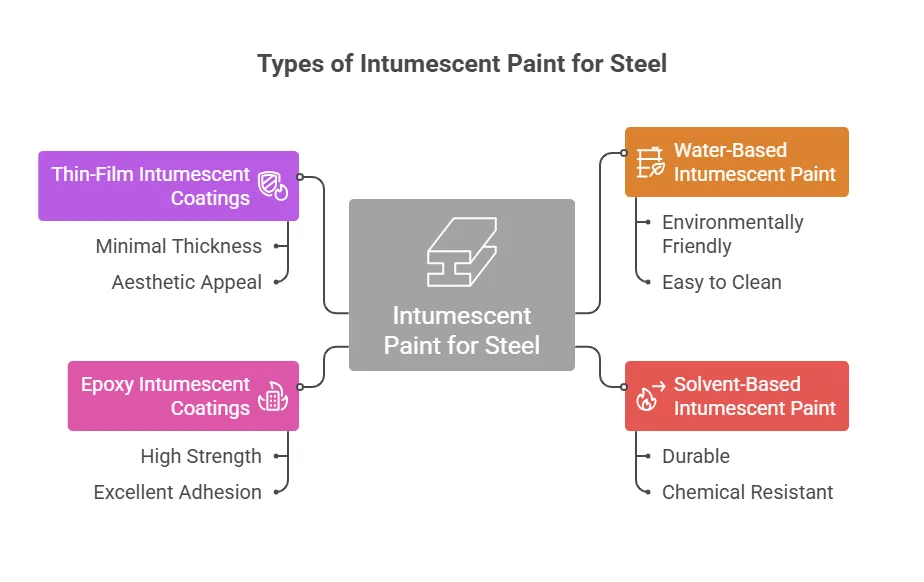
Intumescent coatings for steel are available in different formulations, each designed for specific application environments and performance requirements. The main types include water-based, solvent-based, epoxy, and thin-film intumescent coatings. Selection should be based on the required fire rating, steel section factor, environmental exposure, application conditions, and the manufacturer’s approved coating system.
Water-Based Intumescent Paint
Water-based intumescent paint uses water as the primary carrier and is commonly selected for suitable indoor structural steel applications. It generally offers low solvent emissions and can provide a smooth finish when properly applied. Its suitability depends on the environmental conditions, required fire rating, substrate preparation, and compatibility with the primer and topcoat.
Solvent-Based Intumescent Paint
Solvent-based intumescent coatings use organic solvents as the carrier and can be selected for applications where the coating system requires specific environmental or application characteristics. They are available for various structural steel fire protection requirements. Proper ventilation, surface preparation, application conditions, and compatibility with the complete coating system are important for achieving the intended performance.
Epoxy Intumescent Coatings
Epoxy intumescent coatings are designed for demanding industrial environments where greater resistance to moisture, chemicals, abrasion, or mechanical exposure may be required. They are commonly considered for structural steel in industrial, offshore, oil and gas, and other challenging environments. The coating thickness and system specification should be determined according to the required fire-resistance performance and approved test data.
Thin-Film Intumescent Coatings
Thin-film intumescent coatings provide fire protection through a comparatively thin applied coating that expands significantly when exposed to high temperatures. They are widely used where maintaining the appearance and dimensions of structural steel is important. The required Dry Film Thickness (DFT) varies according to the steel section, required fire rating, exposure conditions, and specific tested coating system.
Factors for Selecting Intumescent Paint for Steel
Selecting the right intumescent paint for steel structures requires consideration of the fire protection requirement, steel geometry, coating thickness, exposure environment, and compatibility of the complete coating system. These factors determine whether the selected coating can deliver the intended passive fire protection performance and maintain durability throughout its service life.
Required Fire Rating
The required fire rating is one of the most important factors when selecting an intumescent coating for structural steel. The coating system must be suitable for the specified fire-resistance period and the type of structural member being protected. Fire rating requirements may vary according to the building design, application, and applicable fire safety specifications.
Steel Section Factor
The steel section factor describes the relationship between the exposed surface area of a steel member and its volume or mass and is an important consideration when determining intumescent coating requirements. Steel members with different shapes and exposure conditions can heat at different rates during a fire. Therefore, the section factor is used as part of the technical assessment for determining the appropriate coating thickness.
Dry Film Thickness (DFT)
Dry Film Thickness (DFT) is critical to the performance of an intumescent paint system. The required DFT depends on factors such as the required fire rating, steel section factor, and approved coating system. Applying insufficient thickness may reduce the intended fire protection performance, while excessive or uncontrolled thickness can create application and curing issues. DFT should therefore be measured and documented during quality inspection.
Indoor and Outdoor Exposure
The exposure environment should be considered before selecting an intumescent coating for steel. Indoor applications may have different moisture and weathering requirements compared with exterior steel structures. For outdoor applications, the intumescent system should be specifically suitable for the exposure conditions and may require a compatible protective topcoat to protect the coating from moisture and weathering.
Environmental and Corrosion Conditions
Industrial steel structures may be exposed to humidity, chemicals, pollutants, moisture, abrasion, or corrosive atmospheres. The selected intumescent coating system should therefore be appropriate for the expected environmental conditions. Proper surface preparation and an approved primer system are also important for maintaining adhesion and long-term corrosion protection of the steel substrate.
Primer and Topcoat Compatibility
Primer and topcoat compatibility is essential because intumescent paint normally forms part of a complete coating system rather than functioning as an isolated layer. The primer must be compatible with the intumescent coating, while the topcoat should be suitable for the intended exposure and compatible with the intumescent layer. Using products outside the approved system can affect adhesion, durability, curing, or fire performance, so the manufacturer’s specified coating system should always be followed.
Intumescent Paint Application on Steel Structures
Applying intumescent paint correctly is essential for achieving the intended passive fire protection performance of structural steel. The application process generally involves proper surface preparation, a compatible primer, controlled application of the intumescent coating, DFT inspection, and a suitable protective topcoat where required. The complete system should always follow the manufacturer’s approved application procedure and technical specifications.
Surface Preparation
Surface preparation is the foundation of a reliable intumescent coating system. Steel surfaces should be clean, dry, and free from rust, oil, grease, dust, loose material, and other contaminants that could affect coating adhesion. The specified cleaning and surface profile requirements should be achieved before primer application, with the prepared surface inspected to confirm it is suitable for the coating system.
Compatible Primer Application
A compatible primer is applied where required to provide adhesion and substrate protection as part of the approved coating system. The primer must be specifically compatible with the selected intumescent paint, and its application should follow the manufacturer’s recommended method and thickness. The primer should be adequately cured before the intumescent layer is applied.
Intumescent Coating Application
The intumescent coating should be applied using the application method specified for the product, such as airless spray, brush, or roller where permitted. Multiple coats may be required to achieve the specified DFT, with appropriate drying or recoat intervals between coats. Consistent application is important to achieve uniform protection across beams, columns, frames, supports, and other steel components.
DFT Control and Inspection
Dry Film Thickness (DFT) must be carefully controlled because the required coating thickness is directly related to the specified fire protection performance. Measurements should be taken at appropriate stages of application using suitable thickness-measuring equipment. Areas with insufficient or excessive thickness should be assessed and corrected according to the manufacturer’s technical requirements, with inspection results properly documented.
Protective Topcoat Application
A protective topcoat may be required when the intumescent coating is exposed to moisture, weathering, chemicals, or other demanding environmental conditions. The topcoat must be compatible with the intumescent system and suitable for the intended exposure. For exterior or industrial applications, selecting and applying the approved topcoat correctly helps protect the underlying intumescent layer and maintain the overall coating system’s durability.
Inspection and Quality Control
Inspection and quality control are essential when applying intumescent paint to steel structures because coating performance depends on achieving the specified coating system and thickness. Quality checks should be carried out from surface preparation through final coating, with inspection results documented according to the project and manufacturer’s requirements.
Surface Inspection
Before applying intumescent paint, the steel surface should be inspected to confirm that it is clean, dry, and free from rust, oil, grease, dust, loose material, and other contaminants. The condition of the primer should also be checked to ensure proper adhesion and compatibility with the intumescent coating. Any surface defects should be corrected before proceeding with further coating application.
Wet and Dry Film Thickness Inspection
Wet Film Thickness (WFT) and Dry Film Thickness (DFT) measurements help control the amount of coating applied. DFT is particularly important for intumescent systems because the required thickness is determined by factors such as the specified fire rating, steel section factor, and approved coating system. Measurements should be taken using suitable inspection equipment and recorded as part of the quality-control process.
Checking Coating Defects
The coated steel should be visually inspected for defects such as uneven application, pinholes, cracking, blistering, sagging, poor coverage, or damaged areas. Any identified defects should be evaluated and repaired according to the manufacturer’s recommended procedure. Careful inspection helps maintain continuous protection across the entire steel member.
Application Records and Documentation
Proper documentation provides a record of how the intumescent coating system was applied and inspected. Records can include surface preparation details, primer information, environmental conditions, coating batches, application dates, WFT and DFT measurements, inspection results, repairs, and topcoat details where applicable. Maintaining accurate application records supports quality assurance and helps demonstrate that the specified coating system was followed.
Common Mistakes to Avoid
Avoiding common application and specification mistakes is important for maintaining the intended fire protection performance of an intumescent coating system on structural steel. Errors in coating selection, DFT, surface preparation, environmental control, or system compatibility can affect adhesion, durability, and overall fire protection performance.
Selecting the Wrong Coating System
Selecting an intumescent coating without considering the required fire rating, steel section factor, exposure environment, and application requirements can result in an unsuitable fire protection system. The coating should be selected based on the project’s approved specification and the manufacturer’s tested or approved system.
Applying Incorrect DFT
Applying an incorrect Dry Film Thickness (DFT) is a common mistake in intumescent coating work. Insufficient thickness may not provide the required fire protection, while uncontrolled excessive thickness can create application and curing issues. DFT should be measured using suitable equipment and maintained according to the manufacturer’s specified requirements.
Poor Surface Preparation
Poor surface preparation can reduce adhesion and affect the durability of the complete coating system. Steel should be properly cleaned and prepared to remove rust, oil, grease, dust, moisture, and other contaminants before coating application. The required surface preparation standard should be confirmed before proceeding with primer and intumescent coating application.
Using Incompatible Primer or Topcoat
Using a primer or topcoat that is not compatible with the intumescent coating can affect adhesion, curing, durability, and potentially the intended fire performance of the system. Only primers and topcoats approved or specified for use with the selected intumescent coating should be used.
Ignoring Environmental Conditions
Temperature, humidity, moisture, ventilation, and steel surface temperature can influence coating application and curing. Applying intumescent paint under unsuitable environmental conditions may result in defects or inadequate curing. Environmental conditions should therefore be checked and maintained within the manufacturer’s recommended application limits.
Not Following Manufacturer Specifications
Every intumescent coating has specific requirements for preparation, mixing, application method, recoat intervals, DFT, curing, and topcoat application. Failing to follow the manufacturer’s Technical Data Sheet (TDS) and approved application procedure can compromise the coating system. Following the specified instructions and maintaining proper inspection records helps achieve consistent and reliable fire protection performance.
Intumescent Paint vs Other Steel Fire Protection Methods
Intumescent paint is one of several methods used for passive fire protection of structural steel. Compared with traditional fireproofing systems, it can provide protection through a relatively thin coating while preserving the profile and appearance of steel members. The most suitable method depends on the required fire rating, steel section, exposure conditions, project specifications, application requirements, and long-term maintenance needs.
Intumescent Paint vs Cementitious Fireproofing
Intumescent paint and cementitious fireproofing protect structural steel through different coating approaches. Intumescent paint reacts to heat and expands to form an insulating char layer, while cementitious systems provide protection through a thicker, insulating fireproofing layer. Intumescent coatings are often preferred where a thinner system and visible architectural finish are important, whereas cementitious fireproofing may be selected for applications where a robust, thicker protective layer is acceptable.
Intumescent Paint vs Fire Retardant Paint
Intumescent paint is specifically designed to expand under fire exposure and form an insulating char that helps delay the rise in steel temperature. Fire retardant paints can have different formulations, substrates, and performance objectives and should not automatically be treated as equivalent to structural-steel intumescent systems. For structural steel, the selected coating must be appropriate for the required fire-resistance performance and supported by the relevant approved or tested system.
Thickness, Weight and Appearance Comparison
Intumescent coatings generally provide fire protection through a relatively thin coating system compared with some traditional thick-film fireproofing methods. This can reduce the impact on the steel profile, added weight, and available space around structural members while providing a smoother architectural appearance. However, the required DFT is application-specific and depends on the fire rating, steel section factor, exposure conditions, and approved coating system.
Choosing the Right Fire Protection System
Choosing the right steel fire protection system requires evaluating the required fire rating, structural member geometry, environmental exposure, coating thickness, durability requirements, and desired appearance. Intumescent paint can be a suitable choice where passive fire protection, space efficiency, and an attractive steel finish are priorities. The final selection should always be based on the project’s fire protection design, applicable requirements, and the manufacturer’s tested or approved coating system.
Frequently Asked Questions (FAQs)
Is Intumescent Paint Suitable for Steel Structures?
Yes. Intumescent paint is widely used as a passive fire protection coating for suitable structural steel members such as beams, columns, frames, supports, and connections. When exposed to high temperatures, it expands and forms an insulating char layer that helps slow the rise in steel temperature. The selected system must meet the project’s required fire-resistance specification.
How Does Intumescent Paint Protect Steel?
Intumescent paint protects steel by reacting to high temperatures and expanding to form an insulating char layer. This char acts as a thermal barrier, slowing heat transfer from the fire to the steel. By delaying the temperature rise of the structural member, the coating helps support its load-bearing performance for the specified fire-resistance period.
How Thick Should Intumescent Paint Be on Steel?
There is no single standard thickness suitable for every steel structure. The required Dry Film Thickness (DFT) depends on factors such as the required fire rating, steel section factor, number of exposed sides, and the specific tested or approved coating system. DFT should be calculated according to the manufacturer’s technical specifications and verified during application.
Can Intumescent Paint Be Used Outdoors?
Yes, but only when the selected intumescent coating system is suitable for the intended exterior exposure. Outdoor steel may be exposed to moisture, humidity, UV radiation, and changing temperatures, so a compatible protective topcoat may be required. The manufacturer’s approved system should be followed for exterior applications.
Does Structural Steel Need a Primer Before Intumescent Paint?
A primer may be required as part of the complete intumescent coating system. The primer provides suitable adhesion and can contribute to corrosion protection of the steel substrate. It is important to use a primer specifically approved as compatible with the selected intumescent coating, as an incompatible primer can affect coating performance.
Does Intumescent Paint Require a Topcoat?
A topcoat is not always required, but it may be necessary depending on the exposure environment and the specifications of the coating system. For outdoor or demanding industrial environments, a compatible topcoat can help protect the intumescent layer against moisture, weathering, and other environmental conditions. The topcoat should always be approved for use with the specific intumescent system.
Conclusion
Choosing the Right Intumescent System for Steel
Choosing the right intumescent system for steel requires careful consideration of the required fire rating, steel section factor, Dry Film Thickness (DFT), exposure conditions, and the overall coating system. The selected product should be suitable for the specific structural steel application and supported by the manufacturer’s approved specifications.
Following the Approved Application Process
Correct application is essential for achieving the intended fire protection performance of intumescent paint. Proper surface preparation, compatible primer selection, controlled coating application, accurate DFT measurement, suitable environmental conditions, and protective topcoat application where required should be carried out according to the manufacturer’s Technical Data Sheet (TDS) and approved application procedure.
Improving Structural Fire Protection and Safety
Intumescent paint provides a practical passive fire protection solution for suitable steel structures by forming an insulating char layer that helps delay the rise in steel temperature during fire exposure. When the correct system is selected, properly applied, inspected, and maintained, it can support the required fire-resistance performance and contribute to improved structural fire safety.