

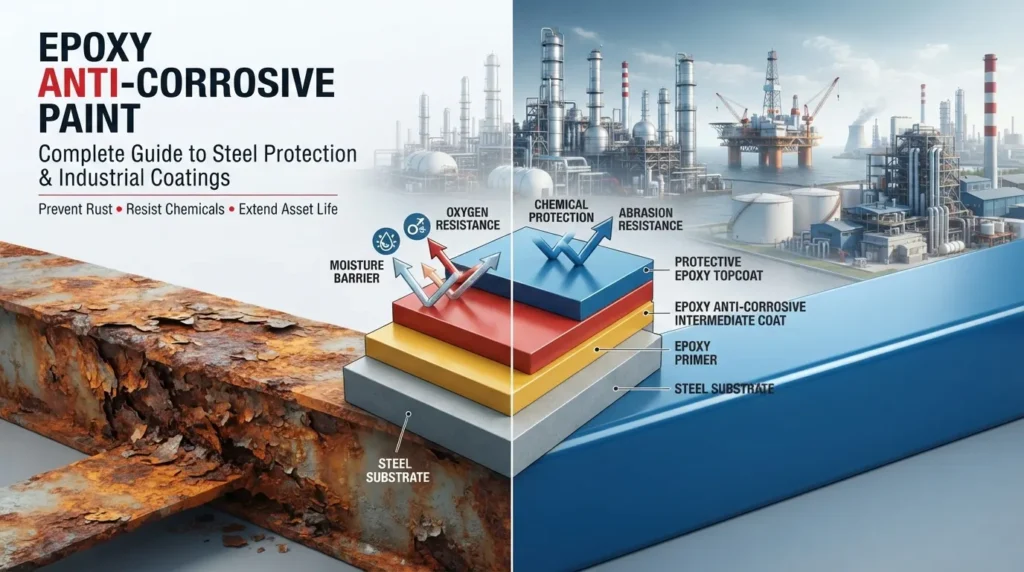
Epoxy anti-corrosive paint is one of the most reliable protective coatings used to safeguard steel and metal surfaces from rust, chemical attack, moisture, and harsh environmental conditions. Its exceptional adhesion, durability, and resistance to abrasion make it the preferred choice for industries such as construction, oil & gas, marine, manufacturing, power generation, and infrastructure. By forming a strong protective barrier, epoxy coatings help preserve the structural integrity of steel assets and significantly extend their service life.
Unlike conventional paints, epoxy anti-corrosive paint is formulated with high-performance epoxy resins and corrosion-resistant pigments that provide outstanding protection against oxidation and corrosion. It adheres firmly to properly prepared steel surfaces, creating a dense, impermeable coating that resists water penetration, chemicals, oils, and mechanical wear. This makes epoxy coatings ideal for demanding industrial environments where long-term durability and minimal maintenance are essential.
Epoxy coatings are commonly used as primers, intermediate coats, or complete protective systems depending on the level of corrosion resistance required. In many heavy-duty applications, they are combined with zinc-rich primers and polyurethane topcoats to create a multi-layer coating system that delivers superior performance against rust, UV exposure, and weathering. This combination provides comprehensive protection for steel structures, pipelines, storage tanks, industrial machinery, bridges, and offshore equipment.
This comprehensive guide explains everything you need to know about epoxy anti-corrosive paint, including how it works, its key benefits, different types, industrial applications, surface preparation, application methods, and expert recommendations for selecting the right coating system to achieve long-lasting steel protection.
What is Epoxy Anti-Corrosive Paint?
Epoxy anti-corrosive paint is a high-performance protective coating specifically designed to protect steel and other metal surfaces from rust, corrosion, chemicals, moisture, and abrasion. It is formulated using epoxy resins, hardeners, anti-corrosive pigments, and specialized additives that react together to form a hard, durable, and chemically resistant coating. Due to its excellent adhesion and long service life, epoxy anti-corrosive paint is widely used in industrial plants, oil and gas facilities, marine structures, bridges, pipelines, storage tanks, and heavy machinery.
Definition and Composition
Epoxy anti-corrosive paint is a two-component coating system consisting of an epoxy resin (Part A) and a hardener or curing agent (Part B). When mixed in the correct ratio, these components undergo a chemical reaction that creates a strong cross-linked polymer network. This hardened film provides exceptional adhesion, mechanical strength, and resistance to corrosion, chemicals, and moisture.
In addition to epoxy resin and hardener, the coating may contain corrosion-inhibiting pigments, fillers, solvents, and performance-enhancing additives that improve durability, flow, and application properties.
How Epoxy Paint Protects Metal
Epoxy paint protects metal by forming a dense, impermeable barrier that prevents moisture, oxygen, salts, and corrosive chemicals from reaching the steel surface. Since corrosion requires direct contact between the metal and these environmental elements, the epoxy coating effectively blocks the corrosion process before it begins.
The coating also offers excellent resistance to chemicals, oils, solvents, and abrasion, making it suitable for demanding industrial environments. When applied over a properly prepared surface and compatible primer, epoxy paint provides long-lasting corrosion protection and significantly extends the service life of steel structures.
Key Characteristics of Epoxy Coatings
Epoxy anti-corrosive coatings are known for their outstanding performance in harsh operating conditions. They provide excellent adhesion to steel, concrete, and other prepared substrates while delivering superior corrosion resistance and mechanical durability. These coatings are highly resistant to chemicals, water, abrasion, and impact, making them ideal for heavy-duty industrial applications.
Other key characteristics include high-build capability, low permeability to moisture, excellent bonding with primer and topcoat systems, and long service life with minimal maintenance. When combined with a zinc-rich primer and polyurethane topcoat, epoxy coatings form a complete protective system that delivers reliable corrosion protection for critical industrial assets.
How Epoxy Anti-Corrosive Paint Works
Epoxy anti-corrosive paint protects steel by creating a tough, impermeable coating that isolates the metal from moisture, oxygen, chemicals, and other corrosive elements. Once the epoxy resin and hardener are mixed, they undergo a chemical curing process that forms a strong cross-linked polymer network. This hardened coating provides exceptional adhesion, durability, and resistance to corrosion, making epoxy one of the most effective protective coatings for industrial steel structures and equipment.
Barrier Protection Against Moisture
The primary protection mechanism of epoxy anti-corrosive paint is its ability to create a continuous, non-porous barrier over the metal surface. This barrier prevents water, humidity, oxygen, and airborne contaminants from coming into contact with the steel. By blocking these corrosive elements, the coating significantly reduces the risk of oxidation and rust formation, ensuring long-term protection even in harsh industrial and outdoor environments.
Chemical Resistance Mechanism
Epoxy coatings are highly resistant to a wide range of industrial chemicals, including acids, alkalis, oils, solvents, and fuels. The chemically cured epoxy film acts as a protective shield that prevents these substances from penetrating the coating and damaging the underlying metal. This makes epoxy anti-corrosive paint an ideal choice for chemical processing plants, oil and gas facilities, storage tanks, and manufacturing industries where chemical exposure is common.
Strong Adhesion to Steel
One of the key advantages of epoxy coatings is their exceptional adhesion to properly prepared steel surfaces. The epoxy resin penetrates the surface profile created during blasting or mechanical preparation, forming a strong mechanical and chemical bond. This excellent adhesion minimizes the risk of peeling, blistering, or delamination, ensuring the coating remains intact under demanding operating conditions.
Abrasion and Impact Resistance
Industrial steel structures are often exposed to heavy mechanical wear, abrasion, and impact during daily operations. Epoxy anti-corrosive paint forms a hard, durable coating that resists scratches, abrasion, and physical damage while maintaining its protective properties. This high level of mechanical strength helps reduce coating deterioration, minimizes maintenance requirements, and extends the service life of steel equipment, machinery, pipelines, and structural components.
Types of Epoxy Anti-Corrosive Paint
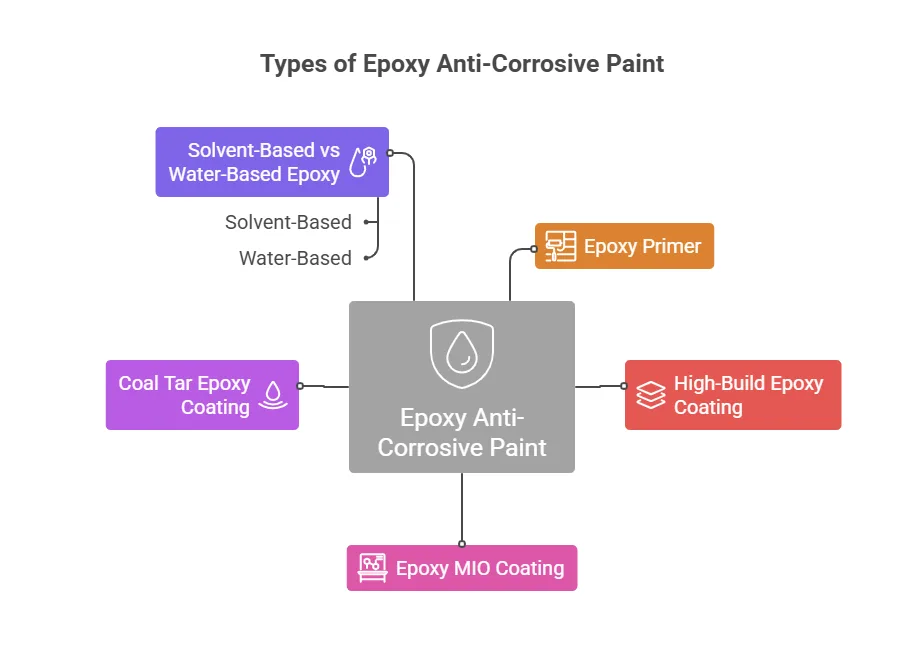
Epoxy anti-corrosive paints are available in several formulations, each designed to meet specific environmental conditions and industrial requirements. The right type of epoxy coating depends on factors such as corrosion severity, chemical exposure, mechanical wear, and service life expectations. Understanding the different types of epoxy coatings helps in selecting the most suitable system for protecting steel structures and equipment.
Epoxy Primer
Epoxy primer is the first protective layer applied directly to prepared steel surfaces. It provides excellent adhesion, seals the substrate, and offers superior resistance to moisture and corrosion. Epoxy primers are commonly used with zinc-rich primers or as standalone primers in industrial coating systems. They create a strong foundation for intermediate and topcoat applications, ensuring long-lasting coating performance.
High-Build Epoxy Coating
High-build epoxy coatings are formulated to achieve greater film thickness in fewer coats, providing enhanced corrosion protection and durability. These coatings offer outstanding resistance to chemicals, abrasion, water, and impact, making them ideal for heavy-duty industrial applications. They are widely used on structural steel, storage tanks, pipelines, power plants, and manufacturing equipment where long-term protection is essential.
Epoxy MIO Coating
Epoxy MIO (Micaceous Iron Oxide) coating contains specially formulated micaceous iron oxide pigments that create an additional barrier against moisture and oxygen. The layered structure of MIO pigments improves the coating’s resistance to corrosion, weathering, and mechanical damage. Epoxy MIO coatings are commonly applied to steel bridges, transmission towers, offshore platforms, and industrial structures exposed to harsh outdoor conditions.
Coal Tar Epoxy Coating
Coal tar epoxy coating combines epoxy resin with refined coal tar to provide exceptional resistance to water, chemicals, and underground corrosion. It has traditionally been used for buried pipelines, wastewater treatment plants, marine structures, and submerged steel surfaces. Due to environmental and regulatory considerations in many regions, coal tar epoxy coatings are increasingly being replaced by more environmentally friendly epoxy coating systems.
Solvent-Based vs Water-Based Epoxy
Epoxy anti-corrosive coatings are available in both solvent-based and water-based formulations.
- Solvent-Based Epoxy offers excellent adhesion, superior chemical resistance, high durability, and outstanding performance in aggressive industrial environments. It is commonly used for heavy-duty steel structures, offshore facilities, and chemical processing plants.
- Water-Based Epoxy provides good corrosion protection with lower volatile organic compound (VOC) emissions, making it a more environmentally friendly option. It is suitable for commercial buildings, warehouses, food processing facilities, and indoor industrial applications where low odor and reduced environmental impact are important.
Selecting the appropriate epoxy coating type ensures optimal corrosion resistance, improved durability, and long-term protection based on the operating environment and performance requirements.
Benefits of Epoxy Anti-Corrosive Paint
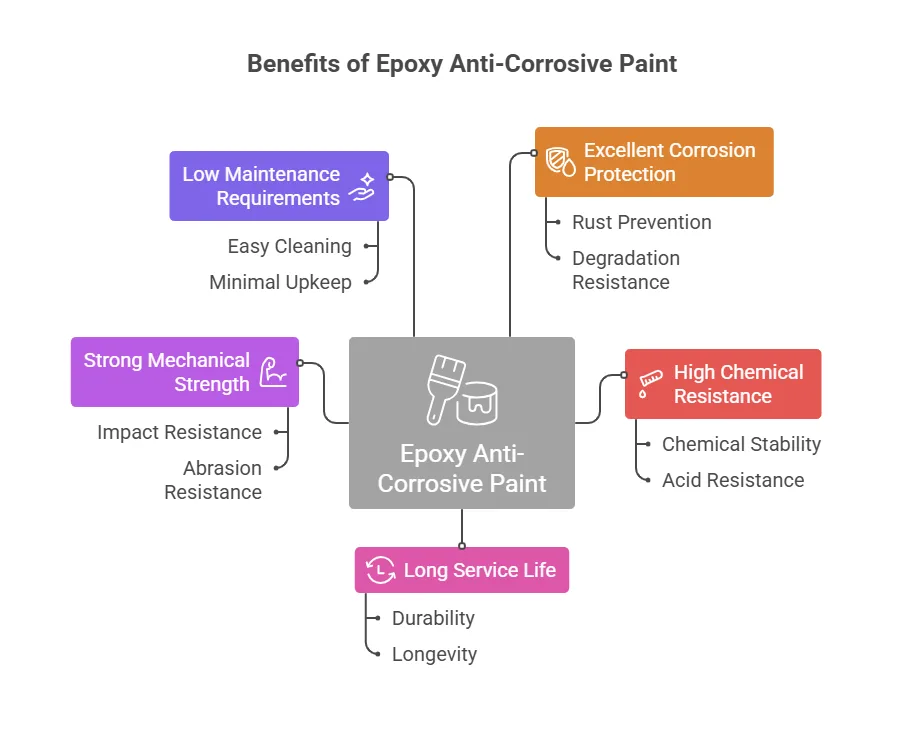
Epoxy anti-corrosive paint is one of the most trusted protective coating solutions for steel and metal surfaces. Its advanced formulation provides outstanding resistance to corrosion, chemicals, moisture, and mechanical damage, making it ideal for industrial, marine, oil & gas, and infrastructure applications. By protecting steel from harsh operating conditions, epoxy coatings help extend asset life, reduce maintenance costs, and improve overall operational reliability.
Excellent Corrosion Protection
One of the biggest advantages of epoxy anti-corrosive paint is its exceptional corrosion resistance. The coating forms a dense, impermeable barrier that prevents moisture, oxygen, salts, and corrosive chemicals from reaching the steel surface. This significantly reduces the risk of rust formation and helps preserve the structural integrity of steel in even the most demanding environments.
High Chemical Resistance
Epoxy coatings are highly resistant to a wide range of chemicals, including acids, alkalis, solvents, fuels, oils, and industrial cleaning agents. This makes them an excellent choice for chemical processing plants, refineries, manufacturing facilities, wastewater treatment plants, and storage tanks where steel surfaces are regularly exposed to aggressive chemicals.
Long Service Life
When applied over a properly prepared surface and maintained correctly, epoxy anti-corrosive coatings provide long-lasting protection. Their excellent adhesion and durability allow them to withstand years of exposure to harsh environmental conditions with minimal deterioration. This extended service life reduces the frequency of recoating and helps lower the overall lifecycle cost of steel structures and equipment.
Strong Mechanical Strength
Epoxy coatings cure into a hard, durable film that offers excellent resistance to abrasion, impact, scratches, and mechanical wear. This makes them suitable for industrial machinery, factory equipment, structural steel, pipelines, and other high-traffic applications where coatings must withstand continuous physical stress while maintaining their protective performance.
Low Maintenance Requirements
Due to their superior durability and corrosion resistance, epoxy anti-corrosive coatings require minimal maintenance throughout their service life. Routine inspections and occasional touch-up repairs are usually sufficient to maintain protection. This reduces maintenance downtime, lowers repair costs, and improves the long-term reliability of industrial assets, making epoxy coatings a cost-effective solution for steel protection.
Where is Epoxy Anti-Corrosive Paint Used?
Epoxy anti-corrosive paint is widely used across industries where steel structures and equipment require long-term protection against corrosion, chemicals, moisture, and mechanical wear. Its excellent adhesion, durability, and chemical resistance make it one of the most trusted coating solutions for heavy-duty industrial applications. From manufacturing plants to offshore platforms, epoxy coatings help extend the lifespan of critical assets while reducing maintenance costs and operational downtime.
Structural Steel
Structural steel used in factories, warehouses, commercial buildings, bridges, and industrial plants is constantly exposed to weather and environmental pollutants. Epoxy anti-corrosive paint provides a strong protective barrier that prevents rust formation, enhances structural durability, and extends the service life of steel frameworks. It is often used as part of a multi-layer coating system with zinc-rich primers and polyurethane topcoats.
Industrial Machinery
Industrial machinery operates in demanding environments where exposure to oils, chemicals, moisture, and abrasion can lead to rapid corrosion. Epoxy coatings protect machine components from rust, chemical attack, and mechanical damage while maintaining their operational efficiency. Their excellent adhesion and wear resistance make them ideal for manufacturing equipment, processing machines, and heavy industrial tools.
Storage Tanks
Steel storage tanks used for water, fuels, chemicals, and industrial liquids require coatings that can withstand continuous exposure to moisture and corrosive substances. Epoxy anti-corrosive paint offers exceptional chemical resistance and forms an impermeable barrier that protects both the interior and exterior surfaces of tanks, reducing the risk of corrosion and extending service life.
Oil & Gas Pipelines
Pipelines in the oil and gas industry operate under harsh environmental and chemical conditions. Epoxy coatings provide excellent protection against moisture, soil corrosion, fuels, and aggressive chemicals, helping maintain pipeline integrity and prevent costly leaks. High-build epoxy systems are commonly used for both above-ground and underground pipeline protection.
Chemical Processing Plants
Chemical processing facilities expose steel equipment to acids, alkalis, solvents, and other corrosive substances. Epoxy anti-corrosive paint is highly resistant to these chemicals, making it suitable for reactors, vessels, process equipment, pipe supports, and structural steel. Its durable protective layer helps maintain safety, reduces maintenance, and improves equipment reliability.
Marine & Offshore Structures
Ships, offshore platforms, ports, and coastal structures operate in highly corrosive environments with constant exposure to saltwater, humidity, and UV radiation. Epoxy anti-corrosive coatings provide excellent resistance to salt spray, water penetration, and mechanical wear, making them a preferred solution for protecting marine steel structures. They are typically used with zinc-rich primers and polyurethane topcoats for maximum durability.
Power Plants
Power plants contain a wide range of steel equipment, including boilers, turbines, pipelines, cooling towers, and structural frameworks that operate under demanding conditions. Epoxy coatings protect these assets from corrosion caused by moisture, chemicals, and industrial pollutants while improving operational reliability. Their long service life and low maintenance requirements make them an ideal choice for thermal, hydroelectric, and renewable energy facilities.
How to Choose the Right Epoxy Anti-Corrosive Paint
Selecting the right epoxy anti-corrosive paint is essential for achieving long-lasting protection and maximum coating performance. The ideal coating depends on several factors, including the type of steel surface, environmental conditions, chemical exposure, and the expected service life of the asset. Evaluating these factors before selecting a coating system helps ensure reliable corrosion protection while reducing maintenance costs and extending the lifespan of steel structures.
Type of Steel Surface
The condition and type of steel surface play a significant role in selecting the appropriate epoxy coating. New steel typically requires proper surface preparation and a compatible epoxy primer, while previously coated or corroded steel may need rust removal, abrasive blasting, and repair before recoating. Galvanized steel, carbon steel, and stainless steel may also require different primer systems to achieve optimum adhesion and corrosion resistance.
Indoor vs Outdoor Applications
The location of the steel structure influences the choice of epoxy coating. Indoor applications, such as factories, warehouses, and processing facilities, primarily require resistance to chemicals, abrasion, and moisture. Outdoor structures are exposed to sunlight, rain, humidity, and temperature fluctuations. Since epoxy coatings have limited UV resistance, they are commonly protected with a polyurethane topcoat for outdoor applications to improve weatherability and colour retention.
Chemical Exposure
Steel structures operating in chemical plants, refineries, wastewater treatment facilities, or manufacturing industries require coatings that can withstand aggressive chemicals. High-performance epoxy coatings provide excellent resistance to acids, alkalis, solvents, oils, and fuels, making them suitable for these demanding environments. Selecting a coating specifically designed for the expected chemical exposure ensures long-term protection and reliable performance.
Temperature and Humidity
Environmental conditions during both application and service affect coating performance. High humidity, excessive moisture, and extreme temperatures can influence adhesion, drying, and curing. In addition, steel exposed to elevated operating temperatures may require specially formulated epoxy coating systems. Always choose an epoxy coating that matches the anticipated temperature range and environmental conditions to ensure maximum durability.
Expected Service Life
The required service life of the steel structure should be considered when selecting an epoxy anti-corrosive paint. Assets expected to operate for many years with minimal maintenance benefit from high-performance multi-coat systems consisting of a zinc-rich primer, epoxy intermediate coat, and polyurethane topcoat. Although these systems have a higher initial cost, they provide superior corrosion resistance, lower maintenance requirements, and significantly reduce lifecycle costs over the long term.
Surface Preparation Before Applying Epoxy Paint
Proper surface preparation is the most critical step in the epoxy coating process. Even the highest-quality epoxy anti-corrosive paint cannot deliver maximum performance if it is applied to a contaminated or poorly prepared surface. Removing rust, cleaning the substrate, creating the correct surface profile, and selecting a compatible primer all contribute to better adhesion, improved corrosion resistance, and a longer coating lifespan.
Rust Removal
Before applying epoxy paint, all rust, mill scale, loose paint, and corrosion products should be completely removed from the steel surface. Depending on the level of corrosion, rust can be removed using wire brushing, power tools, grinding, or abrasive blasting. Eliminating rust prevents corrosion from continuing beneath the coating and allows the epoxy paint to bond directly to clean steel, ensuring long-lasting protection.
Degreasing and Cleaning
After rust removal, the steel surface must be cleaned thoroughly to remove grease, oil, dust, dirt, salts, and other contaminants. Solvent cleaning, industrial degreasers, or pressure washing are commonly used to achieve a clean surface. Any remaining contaminants can reduce coating adhesion and lead to defects such as blistering, peeling, or premature coating failure. The surface should also be completely dry before the primer or epoxy coating is applied.
Abrasive Blasting
Abrasive blasting, commonly known as sandblasting or grit blasting, is one of the most effective methods for preparing steel before epoxy coating. It removes rust, old coatings, and surface impurities while creating a uniform anchor profile that improves mechanical bonding between the steel and the epoxy coating. Abrasive blasting is widely recommended for structural steel, pipelines, storage tanks, offshore platforms, bridges, and other heavy-duty industrial applications where maximum coating performance is required.
Selecting the Right Primer
Choosing the correct primer is essential for achieving superior adhesion and corrosion protection. Zinc-rich primers provide sacrificial protection and are ideal for steel exposed to severe industrial or marine environments, while epoxy primers offer excellent adhesion, moisture resistance, and chemical protection for a wide range of applications. The primer should always be compatible with the epoxy coating system and selected based on the operating environment, corrosion severity, and expected service life to ensure long-term performance and durability.
Step-by-Step Application Process
Applying epoxy anti-corrosive paint correctly is essential for achieving maximum corrosion resistance and long-term coating performance. A systematic application process ensures proper adhesion, uniform coverage, and a durable protective finish. From inspecting the prepared surface to performing a final quality check, each step plays a vital role in extending the service life of steel structures and industrial equipment.
Surface Inspection
Before applying any coating, inspect the steel surface to ensure it is clean, dry, and free from rust, oil, grease, dust, moisture, and loose particles. Verify that surface preparation has been completed according to the required specification and that the surface profile is suitable for epoxy coating. Any defects should be corrected before proceeding to the priming stage to ensure optimal coating adhesion.
Primer Application
Apply a compatible epoxy or zinc-rich primer evenly over the prepared steel surface using a brush, roller, or airless spray, depending on the project requirements. The primer provides the first layer of corrosion protection while improving adhesion between the steel substrate and the epoxy coating. Ensure the recommended dry film thickness (DFT) is achieved and allow the primer to dry according to the manufacturer’s specified recoat interval.
Epoxy Coating Application
Once the primer has cured, mix the epoxy resin and hardener in the correct ratio as specified by the manufacturer. Apply the epoxy coating uniformly to achieve the required coating thickness and complete surface coverage. Depending on the protection level required, one or more epoxy coats may be applied while maintaining the recommended drying time between coats. Consistent application helps eliminate weak spots and ensures reliable long-term corrosion protection.
Drying and Curing
After application, allow the epoxy coating to dry and cure under the recommended temperature and humidity conditions. Proper curing enables the epoxy to develop its full mechanical strength, chemical resistance, and adhesion. Avoid exposing the coated surface to moisture, chemicals, or mechanical stress until the coating has completely cured, as premature exposure can affect its performance and durability.
Quality Inspection
Once the coating has fully cured, perform a comprehensive quality inspection to verify its performance. Check the coating for uniform appearance, complete coverage, and the absence of defects such as pinholes, bubbles, runs, cracks, or peeling. Measure the Dry Film Thickness (DFT) using a calibrated coating thickness gauge and inspect adhesion where required. Conducting a final quality inspection ensures the epoxy coating system meets project specifications and provides reliable, long-term protection against corrosion.
Epoxy vs Other Anti-Corrosive Coatings
Selecting the right anti-corrosive coating depends on the operating environment, corrosion severity, chemical exposure, and performance requirements. While epoxy coatings are widely recognized for their excellent adhesion and corrosion resistance, other coating systems such as polyurethane, zinc-rich coatings, alkyd paints, and acrylic coatings also offer unique advantages. Understanding the differences helps you choose the most effective coating system for long-term steel protection.
Epoxy vs Polyurethane
Epoxy and polyurethane coatings are often used together in a complete protective coating system, but they serve different purposes.
| Feature | Epoxy Coating | Polyurethane Coating |
| Primary Use | Primer & Intermediate Coat | Protective Topcoat |
| Corrosion Resistance | Excellent | Very Good |
| Chemical Resistance | Excellent | Good to Excellent |
| UV Resistance | Limited | Excellent |
| Abrasion Resistance | Excellent | Excellent |
| Adhesion | Excellent | Very Good |
| Best Applications | Industrial plants, pipelines, storage tanks | Outdoor steel, bridges, commercial buildings |
Best Choice: Use epoxy for corrosion protection and polyurethane as the final topcoat for superior UV resistance, weather protection, and color retention.
Epoxy vs Zinc-Rich Coatings
Both epoxy and zinc-rich coatings are highly effective, but they protect steel through different mechanisms.
| Feature | Epoxy Coating | Zinc-Rich Coating |
| Protection Method | Barrier Protection | Sacrificial (Cathodic) Protection |
| Corrosion Resistance | Excellent | Excellent |
| Adhesion | Excellent | Excellent |
| Chemical Resistance | Excellent | Moderate |
| Typical Position | Intermediate Coat | Primer |
| Best Applications | Industrial equipment, tanks, machinery | Bridges, offshore structures, structural steel |
Best Choice: Zinc-rich primer provides the first layer of corrosion protection, while epoxy coating builds a durable protective barrier. Together they create a high-performance coating system.
Epoxy vs Alkyd Paint
Alkyd paints are commonly used for general-purpose steel protection, whereas epoxy coatings are designed for demanding industrial applications.
| Feature | Epoxy Coating | Alkyd Paint |
| Corrosion Resistance | Excellent | Moderate |
| Chemical Resistance | Excellent | Low |
| Moisture Resistance | Excellent | Moderate |
| Durability | Long | Medium |
| Service Life | 10–20+ Years* | 3–7 Years* |
| Best Applications | Heavy industry, marine, chemical plants | Light industrial, indoor steel, maintenance painting |
*Actual service life depends on environmental conditions, coating system, and maintenance.
Best Choice: Epoxy coatings are preferred for harsh industrial environments, while alkyd paints are suitable for general-purpose applications with lower corrosion exposure.
Epoxy vs Acrylic Coatings
Acrylic coatings offer good weather resistance and decorative finishes, while epoxy coatings provide superior corrosion and chemical protection.
| Feature | Epoxy Coating | Acrylic Coating |
| Corrosion Resistance | Excellent | Good |
| Chemical Resistance | Excellent | Moderate |
| UV Resistance | Moderate | Excellent |
| Adhesion | Excellent | Good |
| Mechanical Strength | Excellent | Moderate |
| Best Applications | Industrial steel, pipelines, storage tanks | Commercial buildings, architectural steel, exterior structures |
Best Choice: Epoxy coatings are ideal where maximum corrosion resistance and durability are required, while acrylic coatings are better suited for decorative applications requiring excellent UV stability and weather resistance.
Common Application Mistakes
Even the highest-quality epoxy anti-corrosive paint can fail if it is not applied correctly. Most coating failures are caused by application errors rather than problems with the coating itself. Poor surface preparation, incorrect mixing, improper coating thickness, and insufficient curing can all reduce corrosion resistance and shorten the lifespan of the coating. Avoiding these common mistakes helps ensure maximum protection and long-term performance.
Poor Surface Preparation
Surface preparation is the foundation of a successful epoxy coating system. Applying epoxy paint over rust, grease, oil, dust, moisture, or loose old coatings prevents proper adhesion and can lead to peeling, blistering, or premature coating failure. Steel surfaces should be thoroughly cleaned, degreased, and prepared through mechanical cleaning or abrasive blasting before applying the primer and epoxy coating.
Incorrect Mixing Ratio
Epoxy anti-corrosive paint is typically supplied as a two-component system consisting of epoxy resin (Part A) and hardener (Part B). Mixing these components in the wrong ratio can prevent proper curing and reduce the coating’s mechanical strength, adhesion, and chemical resistance. Always follow the manufacturer’s recommended mixing ratio and pot life to achieve the intended coating performance.
Improper Dry Film Thickness (DFT)
Applying the coating below or above the recommended Dry Film Thickness (DFT) can negatively affect its protective performance. A coating that is too thin may not provide adequate corrosion protection, while an excessively thick coating can result in cracking, solvent entrapment, or poor curing. Measuring the DFT with a calibrated coating thickness gauge ensures the coating meets project specifications and delivers long-term durability.
Inadequate Curing Time
Proper curing is essential for epoxy coatings to develop their full hardness, adhesion, and chemical resistance. Exposing freshly coated steel to moisture, chemicals, heavy loads, or service conditions before the coating has completely cured can lead to blistering, soft coatings, reduced adhesion, and early coating failure. Always allow sufficient drying and curing time according to the manufacturer’s recommendations and maintain suitable temperature and humidity conditions throughout the curing process.
Expert Tips for Maximum Coating Performance (E-E-A-T)
Achieving maximum performance from an epoxy anti-corrosive coating requires more than selecting a high-quality product. Proper surface preparation, accurate application techniques, environmental control, and routine maintenance all play a crucial role in ensuring long-term corrosion protection. Following industry best practices helps improve coating durability, reduce maintenance costs, and extend the service life of steel structures and equipment.
Follow Surface Preparation Standards
Proper surface preparation is the foundation of a successful coating system. Steel surfaces should be cleaned to remove rust, mill scale, oil, grease, dust, and other contaminants before applying any coating. Following internationally recognized surface preparation standards, such as SSPC and NACE, helps achieve the correct surface profile, improves coating adhesion, and significantly reduces the risk of premature coating failure.
Measure Dry Film Thickness (DFT)
Maintaining the recommended Dry Film Thickness (DFT) is essential for ensuring effective corrosion protection. A coating that is too thin may not provide sufficient resistance to moisture and chemicals, while excessive thickness can cause cracking, poor curing, or adhesion issues. Using a calibrated DFT gauge during and after application helps verify that the coating meets the manufacturer’s specifications and delivers consistent long-term performance.
Apply Under Suitable Environmental Conditions
Environmental conditions during application have a direct impact on coating quality and durability. Temperature, humidity, surface temperature, and dew point should all be within the manufacturer’s recommended limits before painting begins. Applying epoxy coatings under unsuitable conditions can lead to poor adhesion, blistering, slow curing, or surface defects. Monitoring environmental conditions throughout the application process helps ensure optimal coating performance.
Perform Regular Inspection and Maintenance
Even the most durable epoxy coating systems require routine inspection to maintain long-term protection. Periodically check coated steel surfaces for scratches, chips, blistering, cracking, or early signs of corrosion, particularly in aggressive industrial or marine environments. Prompt cleaning, touch-up repairs, and scheduled recoating when necessary help preserve the integrity of the coating system, extend the lifespan of steel assets, and minimise maintenance costs over time.
Frequently Asked Questions (FAQs)
What is epoxy anti-corrosive paint used for?
Epoxy anti-corrosive paint is used to protect steel and metal surfaces from rust, corrosion, moisture, chemicals, and abrasion. It is widely applied to structural steel, industrial machinery, storage tanks, pipelines, bridges, marine structures, power plants, and manufacturing facilities where long-term corrosion protection is required.
Is epoxy paint waterproof?
Yes. Once fully cured, epoxy paint forms a dense, non-porous coating that is highly resistant to water and moisture. This waterproof barrier helps prevent rust formation and protects steel surfaces in humid, wet, and marine environments. However, the coating system should always be selected based on the specific service conditions.
Can epoxy paint be applied directly to steel?
Yes, epoxy paint can be applied directly to properly prepared steel. The surface should be clean, dry, and free from rust, oil, grease, dust, and loose contaminants. For maximum corrosion protection, especially in industrial and marine environments, applying a compatible epoxy or zinc-rich primer before the epoxy coating is highly recommended.
How long does epoxy anti-corrosive paint last?
The lifespan of epoxy anti-corrosive paint depends on factors such as surface preparation, coating thickness, environmental conditions, and maintenance. A properly applied high-performance epoxy coating system can typically provide 10 to 20 years or more of corrosion protection, particularly when combined with routine inspections and timely maintenance.
Does epoxy paint require a primer?
In most applications, yes. A primer improves adhesion and provides an additional layer of corrosion protection. Epoxy primers and zinc-rich primers are commonly used before applying epoxy coatings. The appropriate primer should be selected based on the steel surface, operating environment, and performance requirements.
Can epoxy paint be used outdoors?
Yes, epoxy paint can be used outdoors, but it has limited resistance to prolonged UV exposure. To improve weather resistance, colour retention, and gloss, epoxy coatings are typically protected with a polyurethane topcoat. This combination provides excellent long-term performance for outdoor steel structures.
What is the ideal thickness for epoxy coatings?
The ideal coating thickness depends on the application, service environment, and manufacturer’s recommendations. Industrial epoxy coating systems are commonly applied with a Dry Film Thickness (DFT) ranging from 150 to 350 microns, while heavy-duty systems may require higher thicknesses. Always follow the coating specification to achieve optimal corrosion protection.
Is epoxy coating resistant to chemicals?
Yes. Epoxy coatings offer excellent resistance to a wide range of chemicals, including acids, alkalis, oils, fuels, solvents, and industrial cleaning agents. Their superior chemical resistance makes them ideal for chemical processing plants, oil and gas facilities, storage tanks, wastewater treatment plants, and other industrial environments where steel is exposed to aggressive substances.
Conclusion – Why Epoxy Anti-Corrosive Paint is the Preferred Choice
Superior Protection Against Corrosion
Epoxy anti-corrosive paint is one of the most effective coating solutions for protecting steel from rust, moisture, chemicals, and harsh environmental conditions. Its excellent adhesion, low permeability, and durable protective barrier prevent corrosive elements from reaching the metal surface, significantly reducing the risk of corrosion. Whether used on structural steel, industrial machinery, pipelines, storage tanks, or marine structures, epoxy coatings provide reliable, long-term protection that helps maintain the strength and integrity of steel assets.
Long-Term Industrial Performance
High-performance epoxy coating systems are designed to withstand demanding industrial environments where steel is exposed to chemicals, abrasion, moisture, and mechanical stress. When combined with a zinc-rich primer and a polyurethane topcoat, epoxy coatings deliver exceptional durability, extended service life, and reduced maintenance requirements. This long-term performance helps industries minimise downtime, lower repair costs, and maximise the return on investment for critical infrastructure and equipment.
Best Practices for Maximum Coating Life
Achieving the full benefits of epoxy anti-corrosive paint depends on following proven coating practices. Proper surface preparation, selecting the right primer, applying the recommended dry film thickness (DFT), and allowing adequate drying and curing time are essential for long-lasting performance. Routine inspections, timely maintenance, and periodic recoating further extend the life of the coating system. By choosing the right epoxy anti-corrosive paint and following industry best practices, businesses can ensure superior corrosion protection, improved operational reliability, and long-lasting steel performance in even the most challenging environments.