

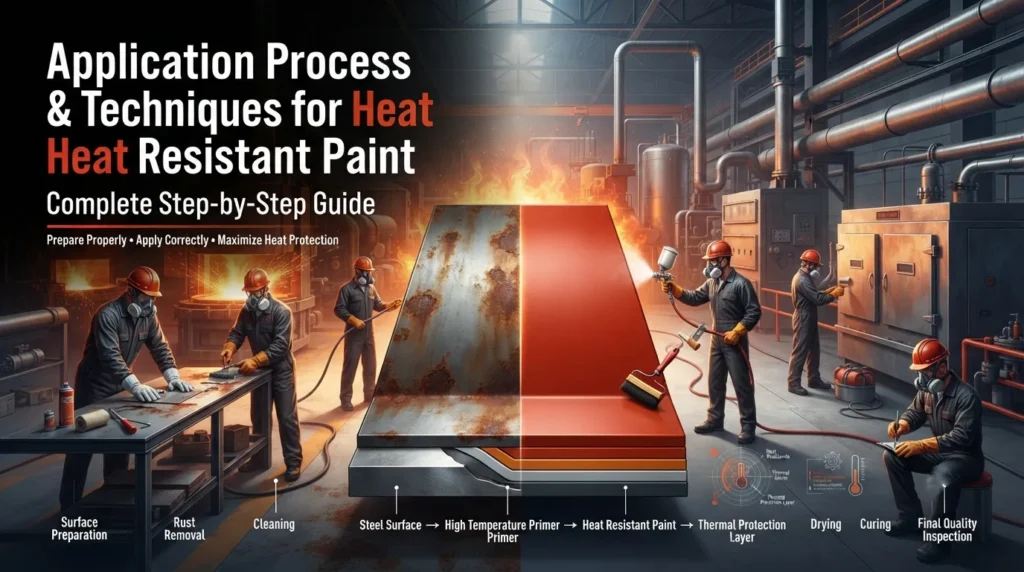
Just as important as choosing the right coating is applying heat resistant paint properly. Even the best heat resistant paint may not perform as expected if the surface has not been prepared properly or the application process has not been followed properly. Proper application results in perfect adhesion, uniform coating thickness, long-lasting durability, and reliable protection from extreme temperatures, corrosion and environmental exposure.
Heat resistant paints are extensively used for the protection of industrial equipment, boilers, furnaces, chimneys, exhaust systems, pipelines, steel structures and manufacturing machinery exposed to high temperature environment . These specialized coatings are designed to continuously withstand heat, thermal cycling, exposure to moisture, chemicals and severe weather conditions while maintaining their protective properties.
It all starts with good surface preparation, including cleaning, removal of rust, and good priming where needed – this is the foundation of a successful heat resistant coating system. Then the coating must be applied with suitable techniques such as brush, roller or spray equipment taking the recommended coating thickness. Also important is proper drying and curing to develop full heat resistance, adhesion and mechanical strength of the coating.
Environmental conditions, such as temperature and humidity, as well as surface cleanliness, also affect the final performance of the coating. Following manufacturer recommendations when applying helps avoid common problems such as peeling, blistering, cracking and premature coating failure.
This complete guide covers the entire application process and techniques for heat resistant paint, including surface preparation, coating methods, drying and curing procedures, quality inspection, and maintenance practices to achieve long-lasting high-temperature protection and maximum coating performance.
Introduction to Heat Resistant Paint Application
The performance and durability of heat resistant paint will be affected by the quality of the coating and the manner in which it is applied. A heat resistant coating, when applied properly, offers superb protection against extreme temperatures, corrosion, oxidation and environmental exposure. When applied correctly it helps to ensure maximum adhesion, long-lasting performance and reduced maintenance costs when using on boilers, furnaces, chimneys, exhaust systems, pipelines or industrial machinery.
Proper surface preparation, followed by proper primer selection, proper coating thickness and sufficient drying and curing time are the beginning of successful application. Each step is important to the development of a durable coating system that can stand up to demanding service conditions.
Why Proper Application Matters
To obtain the full protective benefits of heat resistant paint, it must be applied properly. However, even the best quality coating can fail prematurely if the surface is contaminated, the coating is not applied correctly or the recommended curing process is not followed.
The coating will have good adhesion to the substrate when applied correctly and the paint will be resistant to thermal cycling, moisture, chemicals and weathering. This also helps to reduce common problems such as peeling, blistering, cracking and loss of adhesion, resulting in a more reliable and durable protective finish.
Benefits of Following the Correct Process
Adhering to the recommended application process provides consistent coating performance and increases the service life of heat resistant paint. When properly applied, coatings can maintain their heat resistance, corrosion protection and appearance even with continuous exposure to high temperatures.
Other benefits include increased durability of coatings, lower maintenance costs, improved reliability of equipment, improved resistance to environmental damage and increased operational safety. By following industry best practices and manufacturer guidelines, businesses and property owners can maximize the effectiveness of their heat resistant coating systems and realize long-term high temperature protection.
Understanding Heat Resistant Paint Systems
A heat resistant paint system is made up of a number of layers of coatings working together to provide long term protection from high temperature, corrosion, oxidation and environmental exposure. Depending on operating conditions and substrate, system can be used as a primer and/or intermediate coat as well as a heat resistant top coat. Each layer performs a function that helps the coating to be durable and perform well overall.
Selecting the appropriate coating system is determined by the operating temperature, the surface type and environmental conditions, and will ensure reliable protection and extend the service life of industrial equipment and structures.
Primer Coat
The primer coat is the base of any heat resistant paint system. It is applied directly to the prepared surface to enhance adhesion and to provide initial protection against corrosion and moisture.
Heat resistant primers are specially formulated to withstand high temperatures and at the same time to develop a good bond between the substrate and the successive coating layers. The correct primer for steel surfaces stops corrosion and improves the durability of the entire coating system.
Intermediate Coat (If Required)
An intermediate coat is applied in high performance coating systems where extra protection or increased coating thickness is needed. This layer makes the overall coating system stronger by providing improved barrier protection against heat, chemicals and environmental contaminants.
Depending on the application, the intermediate coat may also help achieve the desired dry film thickness (DFT) and improve adhesion between the primer and the heat resistant top coat. It is widely used in heavy industrial environments such as power plants, refineries and chemical processing plants.
Heat Resistant Top Coat
The heat resistant top coat is the final protective layer that withstands high temperatures, oxidation, UV radiation, weathering and mechanical wear. It is specifically designed to retain its protective properties even when continuously exposed to high temperatures.
The top coat is available in silicone-based, epoxy-based, ceramic, aluminum and other high temperature formulas to protect the underlying coating system and add durability and appearance. Choosing a top coat with the right temperature rating will ensure long term performance in applications including boilers, furnaces, chimneys, exhaust stacks, pipelines and industrial machinery.
Surface Preparation Before Painting
The most important step in applying heat resistant paint is surface preparation. No matter how good or sophisticated the coating, it cannot work well if applied to a badly prepared surface. Proper preparation removes contaminants, provides an ideal surface for adhesion and guarantees the coating offers long-lasting protection against high temperatures, corrosion and environmental exposure.
A properly prepared surface will enhance coating adhesion, reduce the likelihood of peeling and blistering, and greatly improve the life expectancy of the heat resistant paint system.
Removing Rust, Scale, and Old Paint
All rust, mill scale, loose paint and deteriorated coatings shall be completely removed before application of heat resistant paint. These surface contaminants prevent proper adhesion and can result in premature coating failure when exposed to high temperatures.
Mechanical means (e.g. wire brushing, grit blasting, power tool cleaning) are usually used to remove corrosion and old coatings. Remove loose particles from the surface before going to the next stage of preparation.
Degreasing and Cleaning the Surface
Oil, grease, dust, moisture, salt deposits and other contaminants will affect the adhesion of a coating and reduce the effectiveness of the paint. You have to clean thoroughly before you apply primer or topcoat.
Clean oils and contaminants with suitable industrial degreasers or approved cleaning solvents. Once the surface has been cleaned, it must be totally dry and free of any residue before painting.
Surface Abrasive Blasting Standards
Abrasive blasting is the preferred method of surface preparation of industrial steel structures. It removes rust, scale, oxidation and previous coatings, leaving a uniform anchor profile for improved coating adhesion.
Usually, surface preparation is performed according to internationally accepted standards such as ISO 8501-1 or SSPC/NACE surface preparation standards depending on the service environment and coating specifications. The standards give a basis for consistent coating performance and long-term durability.
Surface Profile Requirements
To achieve maximum coating adhesion, a suitable surface profile, often called the anchor profile, is required. The profile produced by abrasive blasting provides a mechanical bond between the primer and heat resistant paint and substrate.
The required surface profile depends on the coating system used and manufacturer recommendations. A profile that is too smooth may lead to poor adhesion and a profile that is too rough may increase the amount of paint required and the quality of the coating. The recommended surface profile provides uniform film thickness, good adhesion and reliable protection at high temperatures.
Choosing the Right Heat Resistant Paint
Choosing the best heat resistant paint for long term protection, durability and reliable performance in high temperature environments is important. Performance requirements of different applications necessitate coatings with particular temperature ratings, substrate compatibility and resistance to environmental conditions. Choosing the right coating system helps prevent premature failure, lowering maintenance costs and extending the life of equipment and structures.
You should consider the operating temperature, application environment, surface material and whether it will be exposed to moisture, chemicals or UV radiation closely before selecting a heat resistant paint.
Selecting Based on Operating Temperature
The most important factor when selecting heat resistant paint is the maximum operating temperature. Each coating is designed for a specific temperature range. Using a coating below its required temperature rating can cause cracking, blistering, discoloration or total coating failure.
Coatings rated to 200°C may be useful in moderate heat applications, but industrial equipment such as boilers, furnaces, exhaust systems and chimneys often need coatings that can withstand 400°C, 600°C or more. The key to dependable long-term performance is to select a paint that has an adequate safety margin above the expected service temperature.
Indoor vs Outdoor Applications
The choice of coating is largely determined by the application environment. Inside equipment is usually protected from heat, wear and the occasional chemical, whereas outside structures must also stand up to rain, humidity, UV radiation, pollution and changing weather conditions.
For outdoor applications you may want to consider a heat resistant paint that has good weather resistance, UV stability and moisture protection to help preserve the coating integrity and appearance over time. Depending on the operating environment, indoor applications may also require a high level of chemical durability and thermal resistance.
Steel, Metal, and Concrete Compatibility
Different substrates require different coating systems for optimum adhesion and protection. Steel and metal surfaces usually require heat resistant primers and coatings with high corrosion resistance and good adhesion under thermal cycling.
Specially formulated coatings or compatible primers may be needed for concrete and masonry surfaces to ensure proper bonding and long-term durability. Choosing a coating specially formulated for the substrate will help maximize service life and overall performance.
Environmental Exposure Considerations
How long a heat resistant paint lasts depends mainly on the conditions around it. Equipment operating in coastal areas, chemical plants, refineries, manufacturing facilities or high humidity areas is subject to corrosive materials, moisture and airborne contaminants that can accelerate the degradation of coatings.
Consider the chemical exposure, risk of corrosion, level of humidity, UV exposure, thermal cycling and mechanical wear when deciding on a coating. Selecting a coating system that’s specified for the specific service environment provides for better protection, less maintenance and consistent high-temperature performance throughout the coating’s life.
Essential Tools and Equipment
To apply high-quality heat resistant paint, it is essential to use the right tools and equipment. The right application tools ensure uniform coating thickness, strong adhesion and a smooth finish, and also cut down on paint wastage. Equipment selection is based on the type of surface, the coating system, and the scale of the project. Besides application tools, workers should be provided with adequate safety equipment to prevent exposure to paint fumes, dust and hazardous substances.
Brushes and Rollers
Spray equipment is generally used for small jobs , touch-up work , and for hard to reach areas with brushes and rollers . High quality brushes give better control when painting edges, corners and welded joints and rollers make flat surfaces easier to cover evenly.
These tools are well suited for maintenance work, small steel structures, pipelines and equipment where precision is more important than speed of application. Choose suitable brushes and rollers for solvent-based or water-based heat resistant paints to get a smooth and long-lasting finish.
Airless Spray Equipment
Large industrial surfaces are best coated with heat resistant paint using airless spray equipment. It provides high pressure paint application without the aid of compressed air, producing a uniform coating with excellent coverage and minimal overspray.
This method improves productivity, provides uniform dry film thickness (DFT), and is applicable on chimneys, boilers, storage tanks, steel structures, industrial machinery, and large pipelines. Airless spraying also reduces application time – all with a professional quality finish.
Conventional Spray Guns
Traditional spray guns use compressed air to atomize the paint and provide great control of the application process. They are particularly well-suited for complex surfaces, intricate components and applications where a high-quality decorative finish is a must.
Traditional spray guns have a slightly lower transfer efficiency than airless systems, but they provide a smooth, even finish and are widely used for mid-sized industrial applications and maintenance projects.
Personal Protective Equipment (PPE)
Safety is a critical aspect of heat resistant paint application. Painters should always wear appropriate Personal Protective Equipment (PPE) to minimize exposure to paint fumes, solvents, dust, and airborne particles.
Essential PPE includes:
- Safety goggles or face shields to protect the eyes from paint splashes.
- Chemical-resistant gloves to prevent skin contact with coatings and solvents.
- Respirators or appropriate masks to reduce inhalation of paint vapors and dust.
- Protective coveralls to safeguard clothing and skin.
- Safety shoes and helmets for industrial work environments.
Using the correct PPE, along with proper ventilation and safe handling practices, helps ensure compliance with workplace safety standards while protecting workers during the heat resistant paint application process.
Step-by-Step Heat Resistant Paint Application Process
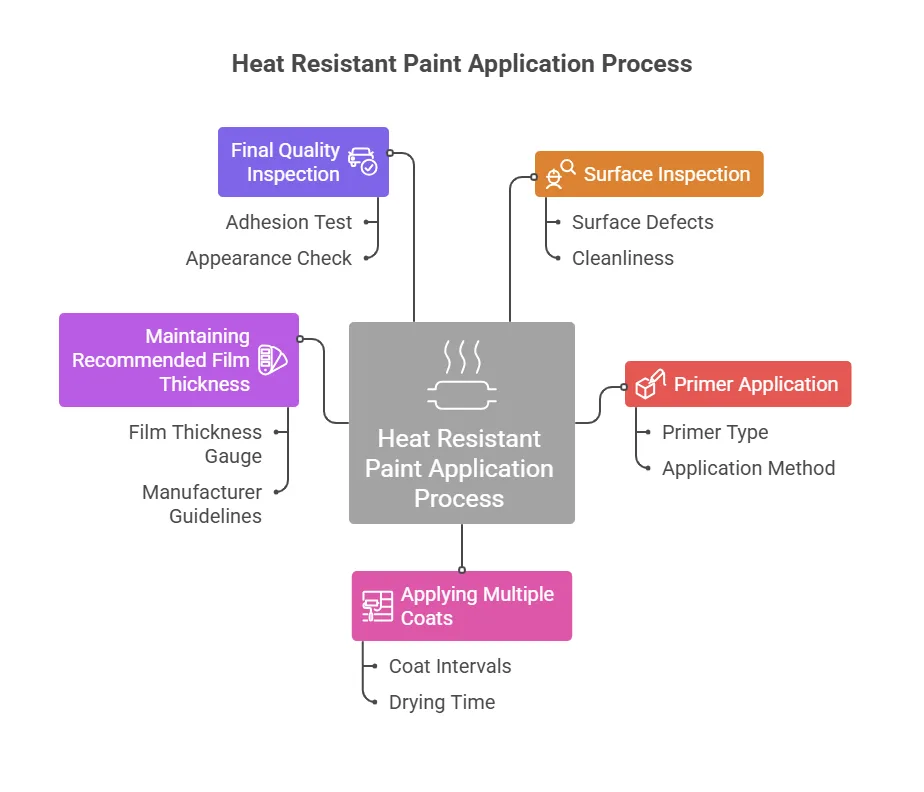
A systematic application process is essential for achieving the best performance from heat resistant paint. Each stage—from surface inspection to the final quality check—plays a vital role in ensuring strong adhesion, uniform coverage, and long-lasting protection against high temperatures, corrosion, and environmental exposure. Following industry best practices and manufacturer recommendations helps maximize coating durability and minimize future maintenance.
Surface Inspection
Before any coating work begins, the surface should be carefully inspected to evaluate its condition. Look for rust, mill scale, old paint, grease, oil, moisture, cracks, and other contaminants that could affect coating adhesion.
Any damaged areas should be repaired, and the surface should be cleaned thoroughly before painting. A proper inspection ensures that the substrate is suitable for coating and helps prevent premature paint failure.
Primer Application
Once the surface has been properly prepared, apply a compatible heat resistant primer if required by the coating system. The primer improves adhesion, provides corrosion protection, and creates a stable base for the topcoat.
The primer should be applied evenly using the recommended application method while maintaining the specified film thickness. It must be allowed to dry according to the manufacturer’s instructions before applying subsequent coats.
Applying Multiple Coats
Most heat resistant paint systems require multiple coats to achieve the desired level of protection. Each coat should be applied uniformly, allowing adequate drying time between applications.
Applying multiple thin coats generally produces better adhesion and durability than applying a single thick coat. Following the recommended recoating interval helps ensure proper bonding between layers and improves the overall performance of the coating system.
Maintaining Recommended Film Thickness
Maintaining the correct Dry Film Thickness (DFT) is critical for the effectiveness of heat resistant paint. A coating that is too thin may not provide adequate heat or corrosion protection, while excessive thickness can lead to poor curing, cracking, or adhesion problems.
Film thickness should be monitored throughout the application process using appropriate measuring instruments to ensure compliance with the coating manufacturer’s specifications.
Final Quality Inspection
After the final coat has dried or cured, a comprehensive quality inspection should be carried out. The inspection should verify coating uniformity, adhesion, coverage, and the absence of visible defects such as pinholes, runs, blistering, or missed areas.
Where required, additional tests such as dry film thickness (DFT) measurement, adhesion testing, and visual inspection should be performed to confirm that the coating meets project specifications. A thorough final inspection ensures the heat resistant paint system is ready to provide reliable long-term protection in high-temperature environments.
Heat Resistant Paint Application Techniques
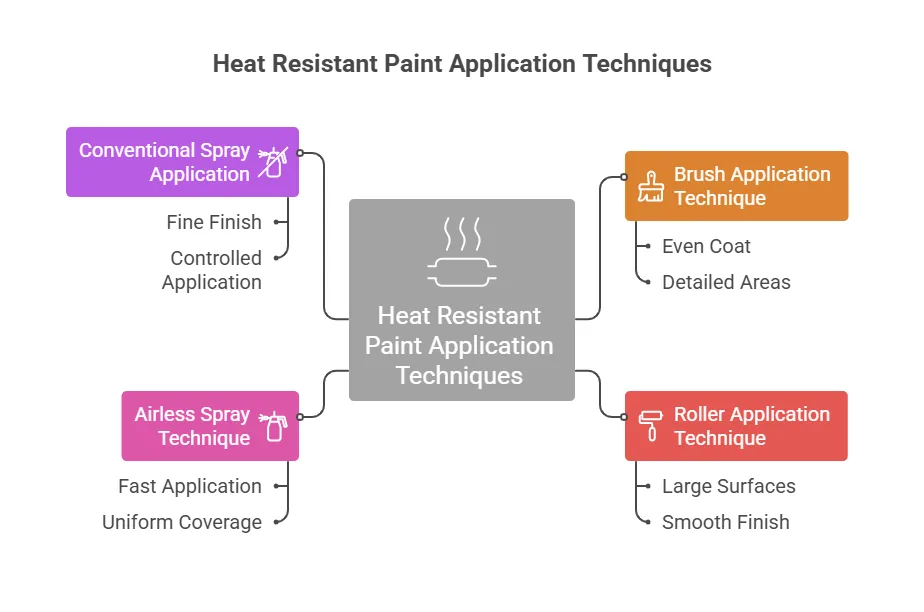
Selecting the appropriate application technique is essential for achieving a durable, uniform, and high-performance heat resistant coating. The choice of application method depends on factors such as the size of the surface, coating type, project requirements, and desired finish quality. Whether using a brush, roller, airless spray, or conventional spray gun, proper application techniques help ensure consistent coating thickness, excellent adhesion, and long-lasting protection against high temperatures and corrosion.
Brush Application Technique
Brush application is ideal for small surfaces, maintenance work, touch-ups, and areas that are difficult to access with spray equipment. It provides excellent control when coating corners, edges, weld joints, bolts, and intricate components.
To achieve the best results, use a high-quality brush suitable for the coating type and apply the paint in smooth, even strokes. Avoid excessive brushing, as this can create uneven film thickness or visible brush marks. Thin, uniform coats are recommended to ensure proper drying and adhesion.
Roller Application Technique
Roller application is commonly used for medium-sized flat surfaces where quick and consistent coverage is required. It is an efficient method for coating tanks, steel panels, structural components, and other accessible surfaces.
Use a roller with the appropriate nap length for the surface texture and apply the paint evenly without excessive pressure. Overlapping each pass slightly helps maintain a uniform coating thickness while minimizing streaks and missed areas. Multiple thin coats generally provide better durability than one heavy coat.
Airless Spray Technique
Airless spray application is the preferred method for large industrial projects because it delivers high-speed application, uniform film thickness, and excellent coverage. The equipment uses high pressure to atomize the paint without compressed air, reducing overspray and improving transfer efficiency.
This technique is widely used for chimneys, boilers, pipelines, storage tanks, steel structures, and industrial machinery. Proper nozzle selection, spray pressure, and spray distance are important to achieve an even finish and maintain the recommended dry film thickness (DFT).
Conventional Spray Application
Conventional spray application uses compressed air to atomize the paint, producing a smooth and high-quality finish. It offers greater control over paint flow and spray pattern, making it suitable for detailed components, fabricated structures, and applications where appearance is important.
To obtain the best results, maintain a consistent spray distance and move the spray gun at a steady speed while overlapping each pass by approximately 50%. Proper adjustment of air pressure and paint flow helps ensure uniform coverage, reduces paint wastage, and delivers a professional-quality finish.
Drying and Curing Process
The drying and curing process is a critical stage in the application of heat resistant paint. Proper drying allows solvents or water to evaporate from the coating, while curing enables the paint to develop its full mechanical strength, adhesion, and heat resistance. If the coating is exposed to high temperatures before it has fully dried or cured, it may blister, crack, peel, or lose its protective properties. Following the manufacturer’s recommended drying and curing procedures ensures maximum coating performance and long-term durability.
Air Drying
Air drying is the initial stage after the application of heat resistant paint. During this period, the coating becomes touch dry and gradually hardens as solvents or moisture evaporate.
The drying time varies depending on the paint formulation, coating thickness, ambient temperature, humidity, and ventilation. Good airflow and suitable environmental conditions help accelerate the drying process while ensuring a smooth and defect-free finish.
Heat Curing Requirements
Many high-temperature coatings, particularly silicone-based and ceramic heat resistant paints, require heat curing to achieve their full performance. During heat curing, the coated surface is gradually heated according to the manufacturer’s recommended schedule, allowing the coating to chemically cross-link and develop maximum heat resistance.
Gradual heating is important because rapid exposure to high temperatures can cause blistering, cracking, solvent entrapment, or coating failure. Following the specified heat curing cycle ensures optimal adhesion, durability, and long-term protection.
Recommended Curing Temperatures
The recommended curing temperature depends on the type of heat resistant paint and its intended service temperature. Some coatings cure completely at ambient conditions, while others require staged heating at progressively higher temperatures before reaching full performance.
Always follow the manufacturer’s technical data sheet (TDS) for the recommended curing schedule, temperature range, and holding time. Adhering to these guidelines ensures the coating achieves its designed heat resistance, corrosion protection, and mechanical strength.
Common Curing Mistakes
Improper curing is one of the most common causes of premature coating failure. Frequent mistakes include exposing the coating to high temperatures before it has adequately dried, applying excessively thick coats, insufficient drying time between coats, and failing to follow the recommended curing schedule.
Other issues such as poor ventilation, high humidity, contamination during curing, and incorrect application temperatures can also affect coating performance. Avoiding these mistakes and following the specified drying and curing procedures helps maximize the lifespan and reliability of the heat resistant paint system.
Environmental Conditions During Application
Environmental conditions have a significant impact on the performance and durability of heat resistant paint. Factors such as ambient temperature, humidity, dew point, and ventilation directly influence coating adhesion, drying time, curing, and the final finish. Applying heat resistant paint under suitable environmental conditions helps prevent common defects such as blistering, poor adhesion, pinholes, and premature coating failure.
Before starting any painting work, environmental conditions should be assessed to ensure they meet the coating manufacturer’s recommendations.
Ideal Temperature Range
Applying heat resistant paint within the recommended ambient temperature range is essential for proper coating performance. Extremely low temperatures can slow drying and curing, while excessively high temperatures may cause the paint to dry too quickly, leading to poor film formation and reduced adhesion.
For most heat resistant coatings, application is generally recommended when the ambient and surface temperatures are within the manufacturer’s specified range. Maintaining stable conditions throughout the application and drying process helps ensure uniform coverage and long-lasting protection.
Humidity Control
High humidity can significantly affect the drying and curing of heat resistant paint. Excess moisture in the air may lead to slower drying, condensation on the surface, reduced adhesion, and coating defects such as blistering or whitening.
Whenever possible, painting should be carried out in controlled humidity conditions. Proper humidity management helps the coating cure correctly, improves finish quality, and enhances long-term durability.
Dew Point Considerations
The surface temperature should always remain above the dew point during painting. If the surface temperature falls too close to the dew point, moisture can condense on the substrate, even if it appears dry to the naked eye.
Painting over a damp surface can result in poor adhesion, corrosion beneath the coating, blistering, and premature coating failure. Measuring both ambient conditions and surface temperature before application helps ensure suitable painting conditions.
Ventilation Requirements
Adequate ventilation is essential during the application and drying of heat resistant paint, especially when using solvent-based coatings. Good airflow helps remove solvent vapors, accelerates drying, and reduces the risk of trapped fumes that can affect coating quality.
For indoor applications, enclosed equipment, or confined spaces, proper mechanical ventilation should be provided to maintain a safe working environment and promote uniform drying. Following recommended ventilation practices also helps improve worker safety and ensures the coating develops its intended performance characteristics.
Common Application Mistakes to Avoid
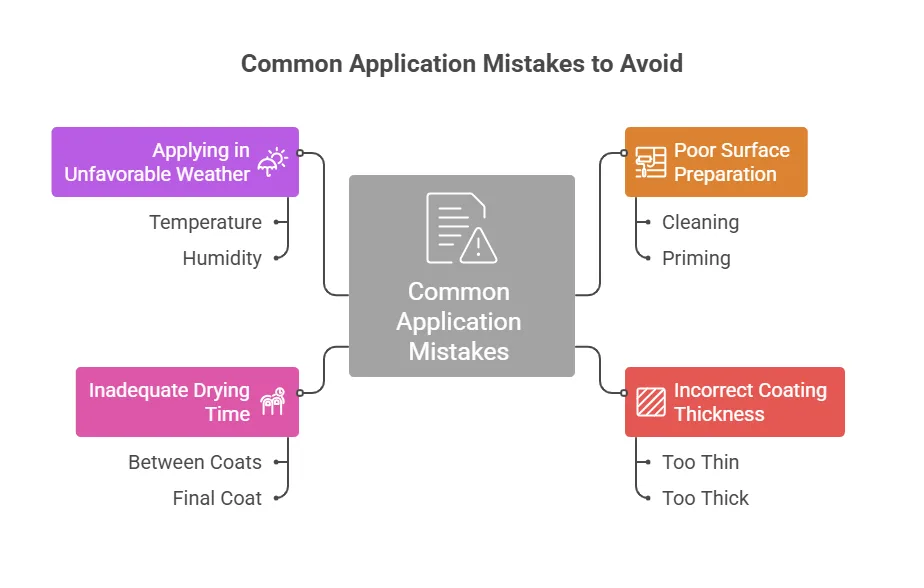
Even high-quality heat resistant paint can fail prematurely if it is applied incorrectly. Most coating problems are caused by avoidable mistakes during surface preparation, application, or drying. Understanding these common errors helps ensure better adhesion, longer coating life, and consistent protection against heat, corrosion, and environmental exposure. Following manufacturer recommendations and industry best practices is the key to achieving a durable, high-performance coating system.
Poor Surface Preparation
Inadequate surface preparation is the leading cause of coating failure. Applying heat resistant paint over rust, grease, oil, dust, moisture, or loose old paint prevents proper adhesion and reduces the coating’s protective performance.
To avoid this problem, thoroughly clean the surface, remove all contaminants, and prepare the substrate using appropriate mechanical cleaning or abrasive blasting methods. A clean, dry, and properly prepared surface provides the foundation for a durable coating system.
Incorrect Coating Thickness
Applying the coating either too thin or too thick can negatively affect its performance. A thin coating may not provide sufficient heat resistance or corrosion protection, while an excessively thick coating can lead to cracking, blistering, poor curing, and reduced adhesion.
Maintain the recommended Wet Film Thickness (WFT) during application and verify the Dry Film Thickness (DFT) after drying using appropriate measuring instruments. Following the manufacturer’s specified coating thickness ensures optimal protection and long-term durability.
Inadequate Drying Time
Insufficient drying time between coats or before placing equipment into service is a common mistake that can compromise coating performance. If additional coats are applied too soon or the coated surface is exposed to heat before proper curing, defects such as blistering, wrinkling, peeling, or adhesion failure may occur.
Always allow each coat to dry according to the manufacturer’s recommended recoating interval and complete the required curing process before exposing the coating to operating temperatures.
Applying in Unfavorable Weather
Environmental conditions play a crucial role in coating performance. Applying heat resistant paint during rain, excessive humidity, strong winds, extreme temperatures, or when the surface temperature is near the dew point can result in poor adhesion and coating defects.
Whenever possible, paint should be applied under recommended environmental conditions with suitable ambient temperature, controlled humidity, and adequate ventilation. Monitoring weather conditions before and during application helps ensure proper drying, curing, and long-term coating performance.
Inspection and Quality Control
Inspection and quality control are essential steps in ensuring that a heat resistant paint system performs as intended. Proper inspection verifies that the coating has been applied according to project specifications and meets the required standards for adhesion, thickness, appearance, and durability. Regular quality checks help identify defects before the equipment is placed into service, reducing the risk of premature coating failure and costly repairs.
A comprehensive quality control program typically includes dry film thickness measurement, adhesion testing, visual inspection, and final performance verification.
Dry Film Thickness (DFT) Testing
Dry Film Thickness (DFT) testing is one of the most important quality control procedures for heat resistant paint. It measures the thickness of the fully cured coating to ensure it meets the manufacturer’s specified requirements.
A coating that is too thin may not provide sufficient heat and corrosion protection, while excessive thickness can lead to cracking, poor curing, and reduced adhesion. DFT is commonly measured using calibrated magnetic or electronic coating thickness gauges to ensure consistent and accurate results.
Adhesion Testing
Adhesion testing evaluates how well the heat resistant coating is bonded to the substrate. Strong adhesion is essential for maintaining coating integrity during thermal expansion, contraction, and continuous exposure to high temperatures.
Depending on project specifications and industry standards, adhesion may be assessed using methods such as the cross-cut test, pull-off test, or other approved testing procedures. A successful adhesion test confirms that the coating system is capable of delivering reliable long-term performance.
Visual Inspection
Visual inspection is performed throughout the coating process and after final application to identify any visible defects. Inspectors examine the coated surface for issues such as uneven coverage, runs, sags, pinholes, blistering, peeling, cracking, contamination, or missed areas.
A uniform appearance with complete surface coverage indicates proper application. Any defects identified during the inspection should be repaired before the coating is approved for service.
Final Performance Verification
Final performance verification is the last step before the coated equipment or structure is put into operation. This process confirms that the coating system complies with project specifications, manufacturer recommendations, and applicable industry standards.
The verification may include reviewing inspection records, confirming dry film thickness measurements, evaluating adhesion test results, checking curing completion, and ensuring the coating is free from defects. Completing this final assessment provides confidence that the heat resistant paint system will deliver long-lasting protection against heat, corrosion, and environmental exposure.
Maintenance After Application
Proper maintenance after applying heat resistant paint is essential for preserving its protective properties and extending the lifespan of the coating system. Although heat resistant coatings are designed to withstand extreme temperatures and harsh environments, regular inspection, cleaning, and timely repairs help maintain their performance over time. A proactive maintenance program minimizes unexpected failures, reduces repair costs, and ensures continuous protection against heat, corrosion, and environmental exposure.
Initial Inspection Schedule
An initial inspection should be carried out after the coating has fully dried and cured, or after the equipment has completed its first operating cycle. This inspection helps verify that the coating has performed as expected under actual service conditions.
Inspect the surface for signs of blistering, peeling, discoloration, cracking, or loss of adhesion. Any defects detected during the initial inspection should be corrected immediately to prevent further deterioration.
Routine Cleaning
Regular cleaning helps maintain the effectiveness and appearance of heat resistant paint. Over time, dust, soot, oil, chemical residues, and environmental contaminants can accumulate on coated surfaces, potentially affecting their performance.
Cleaning should be performed using approved methods and non-abrasive cleaning agents that do not damage the coating. Maintaining a clean surface also makes routine inspections easier and helps identify early signs of wear or damage.
Touch-Up and Repair Procedures
Minor coating damage such as scratches, chips, or localized corrosion should be repaired as soon as possible. Delaying repairs may allow moisture and corrosive substances to penetrate the coating, leading to more extensive damage.
The repair process typically involves removing loose or damaged coating, cleaning and preparing the affected area, applying a compatible heat resistant primer if required, and finishing with the appropriate heat resistant topcoat. Proper touch-up procedures restore the protective barrier and extend the service life of the coating system.
Recoating Recommendations
Over time, continuous exposure to high temperatures, thermal cycling, weather, and corrosive environments may gradually reduce the effectiveness of the coating. Periodic recoating helps restore protection and maintain long-term performance.
The recoating interval depends on factors such as operating temperature, environmental conditions, coating quality, and inspection results. Recoating should be performed whenever inspections reveal significant coating degradation, reduced adhesion, excessive wear, or widespread corrosion. Following the manufacturer’s recommended maintenance schedule ensures reliable protection and maximizes the lifespan of the heat resistant paint system.
Applications Across Industries
Heat resistant paint is widely used across industries where equipment and structures are exposed to elevated temperatures, thermal cycling, and harsh operating conditions. These specialized coatings provide a durable protective barrier against heat, oxidation, corrosion, and environmental damage, helping improve equipment reliability and extend service life. From power generation to manufacturing, heat resistant paint plays a vital role in maintaining operational efficiency and reducing maintenance costs.
Boilers and Furnaces
Boilers and furnaces operate at extremely high temperatures and are continuously exposed to heat, combustion gases, and thermal stress. Without proper protection, their external surfaces can experience oxidation, corrosion, and coating degradation.
Heat resistant paint forms a protective layer that withstands high temperatures while preventing rust and surface deterioration. This helps improve equipment longevity, reduce maintenance frequency, and maintain safe and efficient operation in industrial facilities.
Chimneys and Exhaust Stacks
Industrial chimneys and exhaust stacks are constantly exposed to hot gases, moisture, pollutants, and changing weather conditions. These factors can accelerate corrosion and reduce the structural integrity of the chimney over time.
Applying heat resistant paint protects steel and concrete chimney surfaces from thermal damage, oxidation, and environmental exposure. The coating enhances durability, minimizes maintenance requirements, and ensures reliable long-term performance.
Industrial Pipelines
Pipelines carrying steam, hot oil, chemicals, and other high-temperature fluids require specialized coatings to withstand continuous heat and corrosive operating conditions. Unprotected pipelines are susceptible to corrosion, heat damage, and premature deterioration.
Heat resistant paint provides excellent thermal stability and corrosion resistance, helping maintain pipeline integrity and reducing the likelihood of leaks or costly repairs. These coatings are widely used in petrochemical plants, refineries, manufacturing facilities, and utility systems.
Manufacturing Plants and Refineries
Manufacturing plants and refineries contain a wide range of high-temperature equipment, including reactors, processing units, heat exchangers, storage vessels, and structural steel. These assets operate under demanding conditions where heat, chemicals, and moisture can significantly affect surface durability.
Heat resistant paint protects critical equipment from thermal degradation, corrosion, and weathering while improving operational reliability. By extending equipment lifespan and reducing maintenance downtime, these coatings contribute to safer operations and increased productivity across manufacturing and refining industries.
Frequently Asked Questions
How Many Coats of Heat Resistant Paint Are Required?
The number of coats depends on the type of heat resistant paint, the substrate, and the operating environment. In most applications, a complete coating system consists of one primer coat (if required) followed by two or more heat resistant top coats to achieve the recommended dry film thickness (DFT).
Always follow the manufacturer’s technical data sheet (TDS) for the specified number of coats and coating thickness. Applying multiple thin coats generally provides better adhesion, durability, and heat resistance than applying a single heavy coat.
Can Heat Resistant Paint Be Applied Without a Primer?
It depends on the coating system and the substrate. Some heat resistant paints are designed to be applied directly to properly prepared metal surfaces, while others require a compatible heat resistant primer to improve adhesion and corrosion resistance.
For steel structures exposed to moisture or corrosive environments, using the recommended primer is generally advisable. Always refer to the manufacturer’s application guidelines to determine whether a primer is required for your specific project.
What Is the Ideal Drying Time Before Heating the Equipment?
The ideal drying time varies depending on the paint formulation, coating thickness, ambient temperature, and humidity. Most heat resistant paints should be allowed to dry completely before the equipment is placed into service.
Some high-temperature coatings also require gradual heat curing after air drying to develop their full mechanical strength and heat resistance. Heating the equipment too early can result in blistering, poor adhesion, or premature coating failure. Always follow the drying and curing schedule provided in the product’s technical data sheet.
Can Heat Resistant Paint Be Applied Over Old Paint?
Yes, heat resistant paint can be applied over an existing coating if the old paint is firmly bonded, compatible with the new coating, and in good condition. The surface should be thoroughly cleaned, and any loose, peeling, cracked, or damaged paint must be removed before recoating.
If the existing coating is incompatible or severely deteriorated, it should be completely removed and the surface properly prepared before applying the new heat resistant paint system. Proper surface preparation is essential for achieving strong adhesion and long-lasting performance.
Conclusion – Achieving Long-Lasting Heat Resistant Paint Performance
The long-term performance of heat resistant paint depends on much more than selecting a high-quality coating. Proper surface preparation, correct application techniques, suitable environmental conditions, and regular maintenance all contribute to creating a durable coating system that can withstand extreme temperatures and harsh operating environments. When applied correctly, heat resistant paint provides reliable protection against heat, corrosion, oxidation, and weathering, helping to extend the service life of industrial equipment and structures while reducing maintenance costs.
Importance of Proper Surface Preparation
Surface preparation is the foundation of every successful heat resistant coating system. Removing rust, mill scale, grease, moisture, and old paint ensures strong adhesion and allows the coating to perform as intended.
A clean and properly prepared surface minimizes the risk of peeling, blistering, and premature coating failure while maximizing long-term durability and corrosion protection.
Following the Correct Application Technique
Using the appropriate application method—whether by brush, roller, airless spray, or conventional spray gun—is essential for achieving uniform coverage and the recommended coating thickness.
Following the manufacturer’s instructions for primer selection, film thickness, drying, and curing helps ensure the coating develops its full heat resistance, mechanical strength, and protective properties.
Maximizing Coating Life Through Quality Application
Consistent application quality plays a major role in extending the lifespan of heat resistant paint. Proper inspection, dry film thickness (DFT) measurement, adhesion testing, and routine maintenance help identify potential issues before they become costly repairs.
By maintaining the coating system through regular cleaning, inspections, touch-ups, and timely recoating, industries can significantly improve equipment reliability and reduce long-term maintenance expenses.
Selecting the Right Heat Resistant Paint System
Every high-temperature application has unique operating conditions, making it essential to choose a coating system that matches the required temperature range, substrate type, and environmental exposure. Factors such as corrosion resistance, chemical exposure, UV resistance, and service environment should all be considered during product selection.
Choosing the right combination of primer, intermediate coat (where required), and heat resistant topcoat ensures optimal performance and long-lasting protection. With the correct coating system and proper application practices, businesses can safeguard critical assets, improve operational efficiency, and achieve dependable high-temperature protection for years to come.