

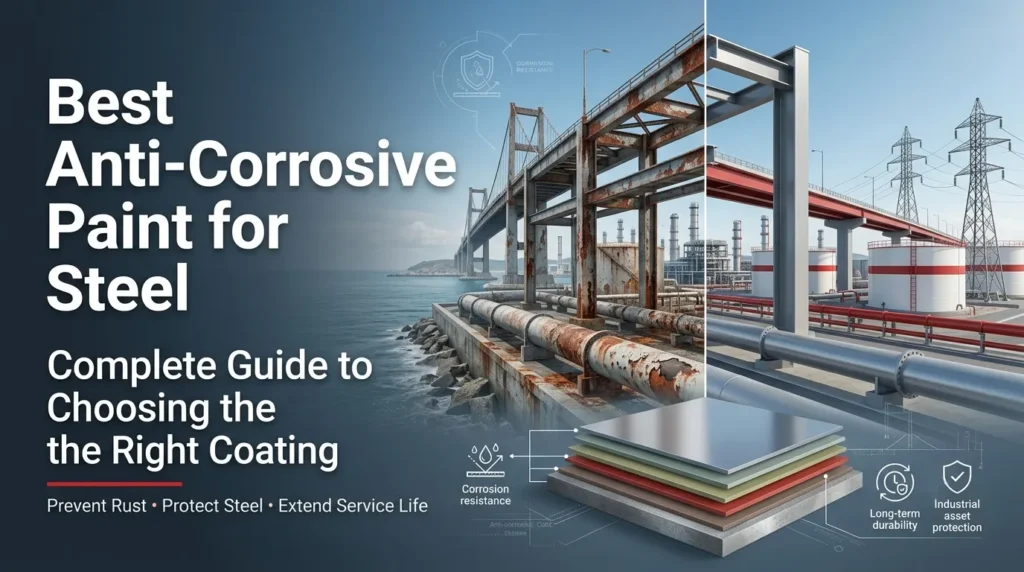
Steel is one of the most widely used materials in construction, manufacturing, infrastructure, and heavy industries because of its exceptional strength and durability. However, when exposed to moisture, oxygen, chemicals, and harsh weather conditions, steel is highly susceptible to corrosion. Rust not only affects the appearance of steel but also weakens its structural integrity, leading to costly repairs, increased maintenance, and reduced service life.
Choosing the best anti-corrosive paint for steel is one of the most effective ways to protect steel surfaces from corrosion. These specialized coatings create a durable barrier that prevents moisture and corrosive elements from reaching the metal. Advanced coating systems, including epoxy, zinc-rich primers, and polyurethane topcoats, provide long-lasting protection even in demanding industrial, marine, and outdoor environments.
The ideal anti-corrosive paint depends on several factors, including the type of steel structure, environmental exposure, operating conditions, and maintenance requirements. Whether you are protecting structural steel, pipelines, storage tanks, industrial machinery, or bridges, selecting the right coating system ensures superior corrosion resistance, extended asset lifespan, and lower lifecycle costs.
In this comprehensive guide, you’ll learn about the best anti-corrosive paint options for steel, their key features, how to choose the right coating, proper application methods, and best practices for achieving maximum rust protection and long-term performance.
What is the Best Anti-Corrosive Paint for Steel?
The best anti-corrosive paint for steel depends on the environment, level of corrosion risk, and intended application. For heavy industrial and chemical environments, epoxy anti-corrosive coatings are widely preferred due to their excellent adhesion, chemical resistance, and long-term durability. Zinc-rich primers provide outstanding protection for structural steel by offering sacrificial protection, while polyurethane topcoats enhance UV resistance and weatherability. In many industrial projects, a complete coating system consisting of a zinc-rich primer, epoxy intermediate coat, and polyurethane topcoat delivers the highest level of corrosion protection and service life.
Introduction to Anti-Corrosive Paint for Steel
Steel is a durable and versatile construction material, but it is highly vulnerable to corrosion when exposed to moisture, oxygen, chemicals, and harsh environmental conditions. Without adequate protection, rust can weaken steel structures, reduce their lifespan, and increase maintenance costs. Anti-corrosive paint provides a reliable solution by creating a protective barrier that shields steel from these damaging elements.
Modern anti-corrosive coatings are engineered with advanced resins, corrosion-resistant pigments, and protective additives that help prevent oxidation and extend the life of steel assets. These coatings are commonly used on structural steel, industrial machinery, pipelines, storage tanks, bridges, and marine equipment to ensure long-term performance and reliability.
Why Steel Needs Anti-Corrosive Protection
Steel is constantly exposed to environmental conditions that promote corrosion, especially in industrial, marine, and outdoor applications. Once corrosion begins, it can spread beneath the surface, compromising the strength and safety of the structure. Applying a high-quality anti-corrosive coating significantly reduces this risk, helping protect valuable assets while minimizing repair and replacement costs.
What Causes Steel Corrosion?
Steel corrodes through a chemical or electrochemical reaction between the metal and its surrounding environment. When steel comes into contact with moisture and oxygen, oxidation occurs, resulting in the formation of rust. Exposure to chemicals, acids, alkalis, and saltwater further accelerates this process, causing the metal to deteriorate over time.
Common Environmental Factors
Several environmental factors contribute to steel corrosion, including high humidity, rainfall, coastal salt spray, industrial pollution, chemical fumes, and extreme temperature variations. Outdoor structures and equipment operating in harsh environments are particularly susceptible to rapid corrosion if they are not protected with an appropriate coating system.
Risks of Unprotected Steel
Unprotected steel is vulnerable to rust, loss of structural strength, and premature failure. Corrosion can lead to expensive maintenance, production downtime, safety hazards, and reduced operational efficiency. By applying the right anti-corrosive paint system, businesses can extend the lifespan of steel structures, improve reliability, and lower long-term ownership costs.
What Makes a Good Anti-Corrosive Paint for Steel?
Choosing the right anti-corrosive paint is essential for protecting steel structures from rust, chemical damage, and environmental exposure. A high-quality coating should not only prevent corrosion but also withstand harsh operating conditions while maintaining strong adhesion and long-lasting performance. The best anti-corrosive paints combine advanced resins, corrosion-resistant pigments, and durable protective layers to ensure reliable steel protection.
Strong Adhesion
Strong adhesion is one of the most important characteristics of an effective anti-corrosive paint. The coating must bond firmly to the steel surface to prevent peeling, cracking, or flaking over time. Good adhesion ensures the protective layer remains intact even when exposed to vibration, impact, or changing weather conditions, providing continuous corrosion protection.
Excellent Corrosion Resistance
A quality anti-corrosive paint should provide superior resistance to rust and oxidation. It creates a protective barrier that blocks moisture, oxygen, and corrosive substances from reaching the steel surface. Many industrial coatings also contain corrosion-inhibiting pigments or zinc-rich compounds that offer additional protection, making them suitable for demanding environments.
Chemical and Weather Resistance
Steel structures are often exposed to chemicals, acids, alkalis, UV radiation, rain, humidity, and temperature fluctuations. A good anti-corrosive coating should resist these harsh conditions without losing its protective properties. Coatings with excellent chemical and weather resistance help maintain both the appearance and structural integrity of steel in industrial, marine, and outdoor applications.
Long Service Life
The best anti-corrosive paint is designed to provide long-lasting protection with minimal maintenance. High-performance coating systems, when applied over a properly prepared surface, can protect steel for many years before recoating is required. A longer service life reduces maintenance costs, minimizes downtime, and improves the overall value of industrial assets.
Best Types of Anti-Corrosive Paint for Steel
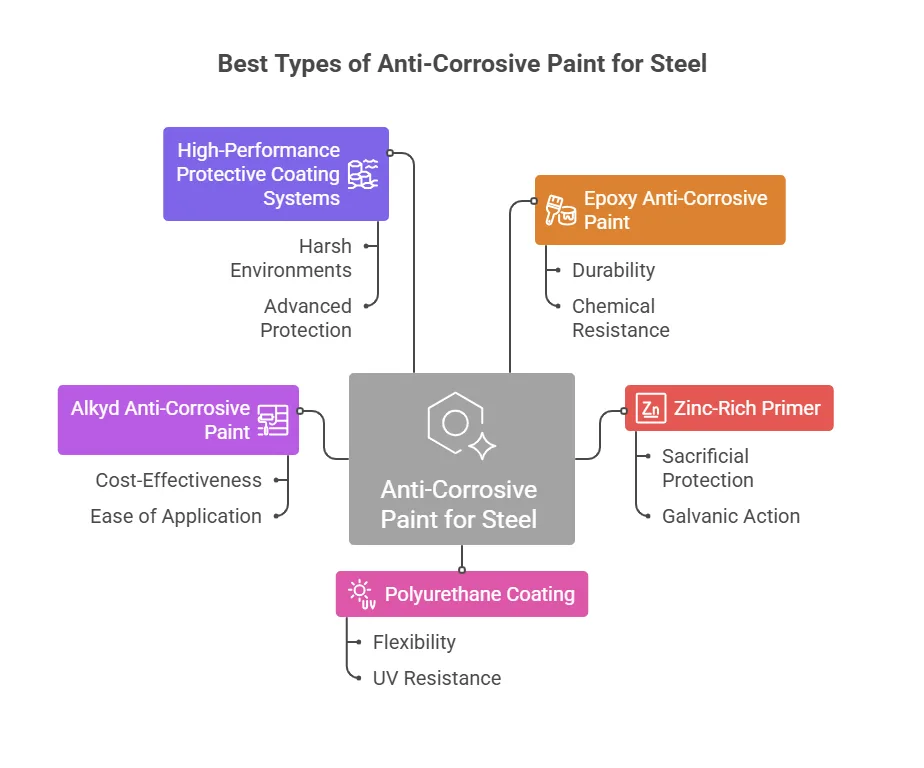
Selecting the right anti-corrosive paint depends on the operating environment, level of corrosion risk, and expected service life of the steel structure. Different coating systems offer varying levels of protection against moisture, chemicals, UV exposure, and harsh weather. Understanding the characteristics of each type helps ensure optimal performance and long-term durability.
Epoxy Anti-Corrosive Paint
Epoxy anti-corrosive paint is one of the most widely used coatings for protecting steel in industrial environments. It provides exceptional adhesion, excellent chemical resistance, and superior durability. Epoxy coatings form a hard, impermeable barrier that protects steel from moisture, corrosion, abrasion, and industrial chemicals. They are commonly used on structural steel, pipelines, storage tanks, machinery, and factory equipment.
Zinc-Rich Primer
Zinc-rich primers offer one of the highest levels of corrosion protection for steel. They contain a high concentration of zinc particles that provide sacrificial or cathodic protection, meaning the zinc corrodes before the steel does. These primers are widely used as the first coat in heavy-duty coating systems for bridges, offshore structures, transmission towers, and industrial steel frameworks exposed to severe environmental conditions.
Polyurethane Coating
Polyurethane coatings are primarily used as protective topcoats over epoxy or zinc-rich primer systems. They provide excellent resistance to ultraviolet (UV) radiation, weathering, abrasion, and chemicals while maintaining color and gloss for extended periods. Polyurethane coatings are ideal for outdoor steel structures, commercial buildings, industrial facilities, and marine applications where both appearance and durability are important.
Alkyd Anti-Corrosive Paint
Alkyd anti-corrosive paints are a cost-effective solution for protecting steel in mild to moderate environments. They offer good adhesion, moisture resistance, and ease of application, making them suitable for general industrial equipment, indoor steel structures, agricultural machinery, and maintenance projects. Although they provide lower corrosion resistance than epoxy systems, they remain a practical option for less demanding applications.
High-Performance Protective Coating Systems
For maximum durability, industries often use multi-layer protective coating systems that combine a zinc-rich primer, an epoxy intermediate coat, and a polyurethane topcoat. This combination provides comprehensive protection against corrosion, chemicals, abrasion, moisture, and UV exposure. High-performance coating systems are recommended for critical infrastructure such as steel bridges, oil and gas facilities, power plants, marine structures, and heavy industrial equipment, where long-term reliability and minimal maintenance are essential.
Which Anti-Corrosive Paint is Best for Different Steel Applications?
The best anti-corrosive paint for steel depends on the application, environmental exposure, and performance requirements. Steel used in industrial plants, marine environments, and infrastructure faces different corrosion challenges, making it important to choose the right coating system. Selecting an appropriate primer and topcoat ensures maximum protection, longer service life, and lower maintenance costs.
Structural Steel
Structural steel used in buildings, factories, warehouses, and industrial plants requires excellent corrosion resistance and long-term durability. A coating system consisting of a zinc-rich primer, epoxy intermediate coat, and polyurethane topcoat is widely recommended to protect steel from moisture, weather, and industrial pollutants.
Industrial Machinery
Industrial machinery is frequently exposed to chemicals, abrasion, oils, and varying temperatures. Epoxy anti-corrosive paint is an ideal choice because it offers superior adhesion, chemical resistance, and durability, helping protect equipment from rust while reducing maintenance and downtime.
Pipelines
Steel pipelines carrying water, oil, gas, or chemicals require coatings that resist corrosion, moisture, and chemical attack. Fusion-bonded epoxy (FBE) or high-build epoxy coating systems are commonly used to provide long-lasting protection and maintain pipeline integrity in demanding environments.
Storage Tanks
Storage tanks used for water, fuel, chemicals, and industrial liquids require coatings that can withstand both internal and external corrosion. Epoxy coatings combined with zinc-rich primers provide excellent chemical resistance, moisture protection, and long-term durability, making them a preferred solution for industrial storage facilities.
Marine Steel
Ships, offshore platforms, ports, and coastal steel structures are continuously exposed to saltwater, high humidity, and harsh weather. A marine-grade coating system consisting of a zinc-rich primer, epoxy intermediate coat, and polyurethane topcoat provides outstanding resistance to salt spray, corrosion, and UV exposure, ensuring reliable performance in aggressive marine environments.
Bridges
Steel bridges are exposed to rain, humidity, sunlight, pollution, and heavy traffic, all of which contribute to corrosion. High-performance coating systems using zinc-rich primers, epoxy coatings, and polyurethane finishes provide long-term protection, reduce maintenance frequency, and help preserve the structural integrity of bridge components.
Commercial Buildings
Steel used in commercial buildings, shopping complexes, airports, and office structures requires coatings that offer both protection and an attractive finish. Epoxy primers paired with polyurethane topcoats provide excellent corrosion resistance, weather durability, UV stability, and color retention, ensuring long-lasting performance and aesthetic appeal.
How to Choose the Best Anti-Corrosive Paint for Steel
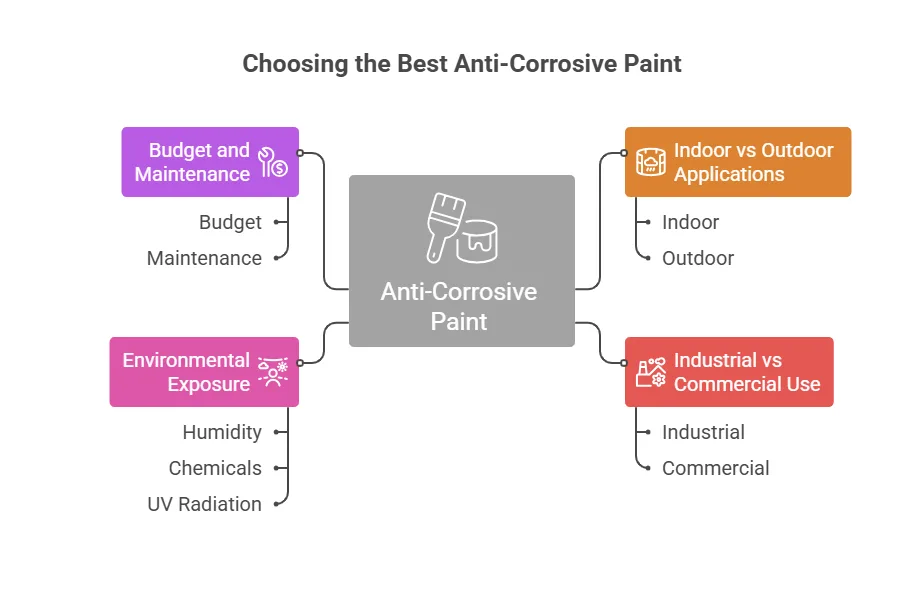
Choosing the best anti-corrosive paint for steel requires evaluating the operating environment, type of structure, exposure conditions, and long-term maintenance needs. A coating that performs well in one application may not be suitable for another. By considering these key factors, you can select a coating system that delivers maximum corrosion protection, durability, and cost-effectiveness.
Indoor vs Outdoor Applications
Steel used indoors generally faces lower exposure to moisture, UV radiation, and extreme weather, allowing for standard epoxy or alkyd-based coatings. Outdoor steel structures, however, require coatings with superior resistance to rain, sunlight, humidity, and temperature fluctuations. For outdoor applications, a combination of a zinc-rich primer, epoxy intermediate coat, and polyurethane topcoat provides long-lasting protection against corrosion and weathering.
Industrial vs Commercial Use
Industrial environments often expose steel to harsh chemicals, abrasion, heavy machinery, and extreme operating conditions. In these situations, high-performance epoxy coatings and zinc-rich primer systems offer the best protection. Commercial buildings, warehouses, and office structures typically require coatings that combine corrosion resistance with an attractive finish, making epoxy primers and polyurethane topcoats a popular choice.
Environmental Exposure
The surrounding environment plays a significant role in determining the appropriate coating system. Steel installed in coastal areas, marine environments, chemical plants, or high-humidity regions requires coatings with excellent resistance to salt spray, moisture, and chemical attack. Selecting a coating specifically designed for the expected exposure conditions ensures better performance and a longer service life.
Budget and Maintenance Requirements
While premium anti-corrosive coating systems may involve a higher initial investment, they often provide longer protection, lower maintenance costs, and reduced downtime over their service life. Consider both the upfront cost and the long-term maintenance requirements when choosing a coating. Investing in a high-quality coating system can significantly reduce repair expenses and extend the lifespan of steel structures and equipment.
Steel Surface Preparation Before Painting
Proper surface preparation is the foundation of a successful anti-corrosive coating system. Even the highest-quality paint cannot provide effective protection if it is applied to a dirty, rusty, or poorly prepared surface. Preparing the steel correctly improves coating adhesion, enhances corrosion resistance, and ensures long-term durability.
Rust Removal
Before applying any anti-corrosive paint, all loose rust, mill scale, and deteriorated coatings should be removed from the steel surface. Rust can be eliminated using wire brushing, grinding, abrasive blasting, or chemical rust removers, depending on the level of corrosion. Removing rust completely prevents corrosion from spreading beneath the new coating and improves the overall performance of the paint system.
Surface Cleaning
After rust removal, the steel surface must be thoroughly cleaned to remove dust, grease, oil, dirt, salts, and other contaminants. Cleaning can be carried out using solvents, degreasers, or pressure washing, depending on the application. A clean and dry surface allows the coating to bond properly and reduces the risk of peeling, blistering, or premature coating failure.
Sandblasting
Sandblasting, also known as abrasive blasting, is one of the most effective methods for preparing steel before painting. It removes rust, old coatings, and surface contaminants while creating a uniform surface profile that improves paint adhesion. Sandblasting is widely recommended for structural steel, bridges, pipelines, storage tanks, and heavy industrial equipment where maximum coating performance is required.
Primer Selection
Choosing the right primer is essential for achieving long-lasting corrosion protection. Zinc-rich primers are ideal for steel exposed to severe corrosion because they provide sacrificial protection, while epoxy primers offer excellent adhesion and chemical resistance for industrial applications. Selecting a primer that is compatible with the topcoat and the service environment ensures a durable, high-performance coating system.
Step-by-Step Application Process
Applying anti-corrosive paint correctly is essential to achieve maximum protection and long-lasting performance. A well-planned coating system, combined with proper surface preparation and recommended application techniques, ensures excellent adhesion, corrosion resistance, and durability. Following each step carefully helps protect steel structures from rust and environmental damage for many years.
Applying the Primer
The first step is to apply a suitable anti-corrosive primer to the prepared steel surface. Primers such as zinc-rich or epoxy primers improve adhesion and provide the initial layer of corrosion protection. Apply the primer evenly using a brush, roller, or spray equipment while maintaining the recommended dry film thickness (DFT). Allow the primer to dry completely before applying the next coat.
Applying the Intermediate Coat
After the primer has cured, apply an intermediate coat, typically a high-build epoxy coating, to enhance corrosion resistance and increase the overall coating thickness. This layer acts as the main protective barrier against moisture, chemicals, and abrasion. Ensure uniform coverage and follow the manufacturer’s specified recoat intervals to achieve optimal performance.
Applying the Topcoat
The topcoat provides the final protective layer while improving resistance to UV radiation, weathering, abrasion, and chemical exposure. Polyurethane topcoats are commonly used because they offer excellent durability, color retention, and gloss. Apply the topcoat evenly to obtain a smooth finish and ensure complete coverage of the coated surface.
Drying & Curing
Proper drying and curing are essential for the coating system to reach its full protective performance. Allow each coat to dry according to the manufacturer’s recommended time before applying the next layer. After the final coat, provide sufficient curing time before exposing the steel to service conditions. Maintaining suitable temperature and humidity during curing helps ensure maximum adhesion, hardness, and long-term corrosion protection.
Comparison of Anti-Corrosive Paint Types
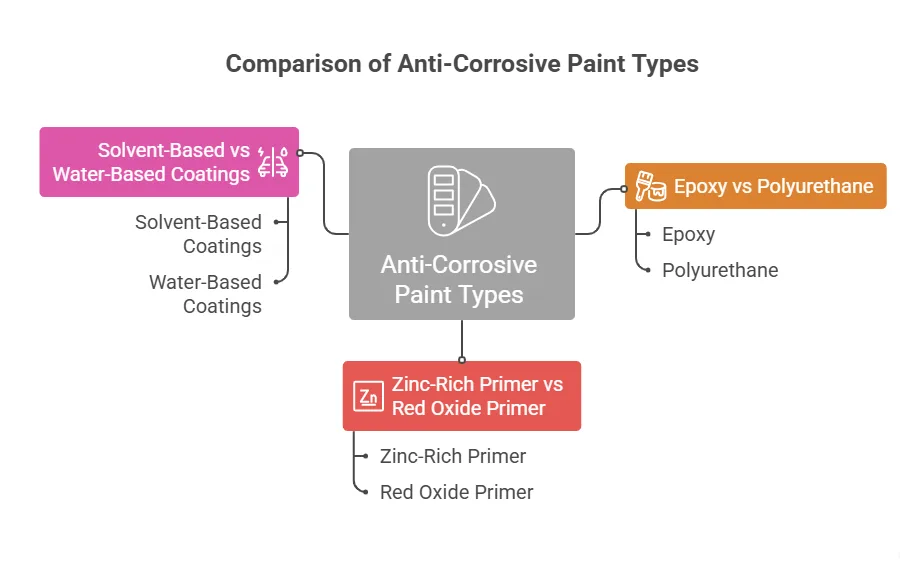
Choosing the right anti-corrosive paint depends on the application, environmental conditions, and required level of protection. The comparison below highlights the key differences between the most commonly used anti-corrosive coating systems, making it easier to select the best option for your steel protection needs.
Epoxy vs Polyurethane
| Feature | Epoxy Coating | Polyurethane Coating |
| Primary Use | Primer or intermediate coat | Protective topcoat |
| Corrosion Resistance | Excellent | Very Good |
| Chemical Resistance | Excellent | Good to Excellent |
| UV Resistance | Poor | Excellent |
| Abrasion Resistance | Excellent | Excellent |
| Finish | Matte/Semi-gloss | High Gloss |
| Best Applications | Industrial plants, pipelines, storage tanks | Outdoor steel structures, commercial buildings, bridges |
Best Choice: Use epoxy for corrosion protection and polyurethane as the finishing coat for UV and weather resistance.
Zinc-Rich Primer vs Red Oxide Primer
| Feature | Zinc-Rich Primer | Red Oxide Primer |
| Protection Method | Sacrificial (Cathodic) Protection | Barrier Protection |
| Corrosion Resistance | Excellent | Moderate |
| Service Life | Long | Medium |
| Suitable Environment | Marine, Industrial, Coastal | Mild Industrial & Indoor |
| Cost | Higher | Lower |
| Best Applications | Bridges, Offshore, Steel Structures | General Steel Fabrication |
Best Choice: Zinc-rich primer is recommended for heavy-duty industrial applications, while red oxide primer is suitable for general-purpose steel protection.
Solvent-Based vs Water-Based Coatings
| Feature | Solvent-Based Coatings | Water-Based Coatings |
| Durability | Excellent | Good |
| Chemical Resistance | Excellent | Moderate |
| VOC Emissions | Higher | Low |
| Drying Time | Moderate | Faster |
| Environmental Impact | Higher | Eco-Friendly |
| Best Applications | Heavy Industrial & Marine | Commercial Buildings & Indoor Steel |
Best Choice: Solvent-based coatings provide superior protection in harsh industrial environments, while water-based coatings are preferred for environmentally friendly applications with lower VOC emissions.
Benefits of Using Anti-Corrosive Paint for Steel
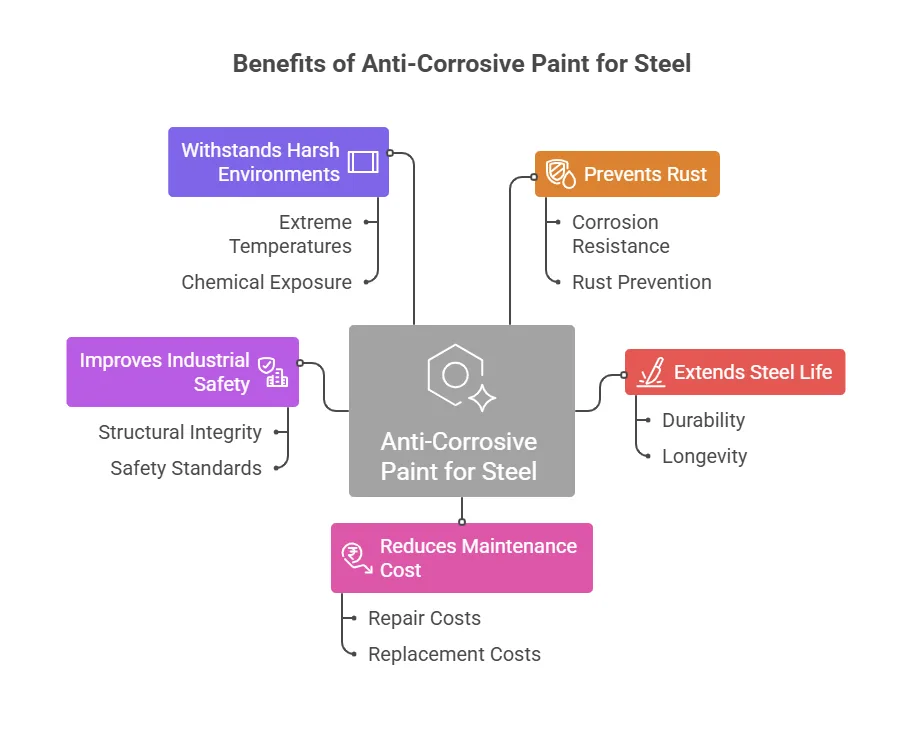
Anti-corrosive paint provides comprehensive protection for steel by preventing rust, resisting environmental damage, and improving the durability of metal structures. Whether used in industrial plants, commercial buildings, bridges, or marine applications, these coatings help maintain the structural integrity of steel while reducing long-term maintenance and operational costs. Investing in the right anti-corrosive coating system ensures reliable performance and extends the lifespan of valuable assets.
Prevents Rust
The primary benefit of anti-corrosive paint is its ability to prevent rust formation. It creates a protective barrier that blocks moisture, oxygen, salts, and corrosive chemicals from reaching the steel surface. Many high-performance coatings also contain corrosion-inhibiting pigments or zinc-rich compounds that provide additional protection against oxidation, ensuring long-term corrosion resistance.
Extends Steel Life
Corrosion gradually weakens steel, reducing its strength and durability. Anti-corrosive coatings significantly slow this process by protecting the metal from environmental damage. As a result, steel structures, machinery, pipelines, and storage tanks maintain their performance for many years, reducing the need for premature replacement.
Reduces Maintenance Cost
Rust damage often leads to frequent repairs, repainting, and equipment downtime. Applying a durable anti-corrosive coating minimizes corrosion-related issues, lowering maintenance expenses and extending the interval between recoating cycles. Although high-quality coatings may require a greater initial investment, they offer significant long-term cost savings through reduced maintenance and improved asset reliability.
Improves Industrial Safety
Corroded steel can compromise the structural integrity of buildings, bridges, machinery, and industrial equipment, increasing the risk of failures and accidents. Anti-corrosive paint helps maintain the strength and stability of steel structures, creating a safer working environment while ensuring compliance with industrial safety standards.
Withstands Harsh Environments
Steel used in coastal regions, chemical plants, marine facilities, and heavy industrial environments is constantly exposed to moisture, salt, chemicals, UV radiation, and extreme weather. High-performance anti-corrosive coating systems are designed to withstand these challenging conditions, providing long-lasting protection against corrosion while maintaining their appearance and performance over time.
Common Mistakes That Reduce Coating Performance
Even the highest-quality anti-corrosive paint can fail if it is not applied correctly. Common application errors can reduce corrosion resistance, shorten the coating’s lifespan, and increase maintenance costs. Understanding and avoiding these mistakes ensures that the coating system delivers maximum protection and long-term performance.
Poor Surface Preparation
Inadequate surface preparation is one of the leading causes of coating failure. Applying paint over rust, grease, oil, dust, or loose old coatings prevents proper adhesion and allows corrosion to continue beneath the paint. Proper cleaning, rust removal, and surface profiling before painting are essential for achieving a durable and effective protective coating.
Wrong Primer Selection
Using the wrong primer can significantly reduce the effectiveness of the coating system. Different steel applications require different primers based on environmental exposure and operating conditions. For example, zinc-rich primers are ideal for severe industrial and marine environments, while epoxy primers are suitable for applications requiring strong adhesion and chemical resistance. Always choose a primer that is compatible with both the substrate and the topcoat.
Low DFT (Dry Film Thickness)
Applying a coating with a dry film thickness (DFT) below the manufacturer’s recommended specification can leave steel inadequately protected against moisture and corrosive elements. A coating that is too thin may fail prematurely, while an excessively thick coating can lead to cracking or poor curing. Measuring and maintaining the correct DFT is essential for achieving optimal corrosion resistance and long-term durability.
Improper Curing
Proper curing allows the coating to develop its full hardness, adhesion, and protective properties. Exposing freshly painted steel to moisture, chemicals, or heavy use before the coating has fully cured can result in blistering, peeling, reduced adhesion, and early coating failure. Following the manufacturer’s recommended drying and curing times, along with maintaining suitable temperature and humidity conditions, is essential for ensuring maximum coating performance.
Expert Tips for Maximum Steel Protection (E-E-A-T)
Achieving long-term corrosion protection requires more than selecting a high-quality anti-corrosive paint. Proper product selection, industry-standard surface preparation, correct application techniques, and routine maintenance all contribute to the overall performance of the coating system. Following these expert recommendations helps maximize the lifespan of steel structures while ensuring safety, reliability, and cost-effective maintenance.
Choose ISO-Certified Coatings
Select anti-corrosive coatings from reputable manufacturers that follow internationally recognized quality standards, such as ISO 9001 for quality management. High-quality, certified coating systems are manufactured under strict quality control processes, ensuring consistent performance, reliable corrosion resistance, and long-term durability in industrial applications.
Follow SSPC/NACE Surface Preparation Standards
Proper surface preparation is essential for coating performance. Industry standards developed by SSPC (The Society for Protective Coatings) and NACE (formerly the National Association of Corrosion Engineers) provide internationally accepted guidelines for cleaning, abrasive blasting, and preparing steel surfaces before coating application. Following these standards improves coating adhesion, minimizes the risk of premature failure, and enhances long-term corrosion protection.
Measure Dry Film Thickness (DFT)
Maintaining the recommended Dry Film Thickness (DFT) is critical for achieving effective corrosion resistance. A coating that is too thin may not provide sufficient protection, while excessive thickness can cause cracking, poor curing, or reduced adhesion. Using a calibrated DFT gauge during application helps ensure the coating meets the manufacturer’s specifications and delivers consistent long-term performance.
Schedule Regular Maintenance
Even the best anti-corrosive coating systems require periodic inspection and maintenance to remain effective. Regularly inspect steel surfaces for scratches, chips, blistering, or early signs of corrosion, especially in harsh industrial or marine environments. Prompt repairs, cleaning, and timely recoating help prevent minor defects from developing into major corrosion problems, extending the service life of both the coating and the underlying steel structure.
Frequently Asked Questions
Which anti-corrosive paint is best for steel?
The best anti-corrosive paint for steel depends on the application and environment. For heavy-duty industrial, marine, and chemical environments, a coating system consisting of a zinc-rich primer, epoxy intermediate coat, and polyurethane topcoat offers the highest level of corrosion protection, durability, and weather resistance.
Is epoxy paint better than zinc-rich paint?
Epoxy paint and zinc-rich paint serve different purposes. Zinc-rich primers provide sacrificial protection by corroding before the steel, making them ideal as the first protective layer. Epoxy coatings provide excellent adhesion, chemical resistance, and moisture protection. For maximum performance, both are often used together in a multi-layer coating system.
Can anti-corrosive paint be applied directly to rusty steel?
It is not recommended to apply anti-corrosive paint directly over heavy rust. Loose rust, old paint, grease, and contaminants should be removed through proper surface preparation. After cleaning, apply a suitable anti-corrosive primer before the topcoat to achieve maximum adhesion and long-term protection.
How long does anti-corrosive paint last?
The lifespan of anti-corrosive paint depends on the coating type, application quality, environmental conditions, and maintenance. A properly applied high-performance coating system can typically protect steel for 5 to 15 years or more, especially when periodic inspections and maintenance are carried out.
Do I need a primer before painting steel?
Yes. A primer is highly recommended because it improves adhesion and provides the first layer of corrosion protection. Primers such as zinc-rich or epoxy primers help create a durable foundation for the topcoat, resulting in better performance and a longer-lasting coating system.
Which coating is best for outdoor steel structures?
For outdoor steel structures exposed to sunlight, rain, and changing weather conditions, a zinc-rich primer, epoxy intermediate coat, and polyurethane topcoat is considered one of the best coating systems. It provides excellent corrosion resistance, UV protection, and long-term durability.
Which paint is best for coastal environments?
Steel structures located in coastal or marine environments require coatings with exceptional resistance to salt spray and high humidity. A marine-grade coating system using a zinc-rich primer, high-build epoxy coating, and polyurethane topcoat offers excellent protection against aggressive coastal corrosion.
How many coats are required for steel protection?
For most industrial applications, a three-coat system is recommended:
- Primer – Provides adhesion and initial corrosion protection.
- Intermediate Coat – Builds coating thickness and enhances corrosion resistance.
- Topcoat – Protects against UV exposure, weather, chemicals, and abrasion.
The exact number of coats and total dry film thickness (DFT) should always follow the coating manufacturer’s recommendations and the requirements of the service environment.
Conclusion – Choosing the Best Anti-Corrosive Paint for Steel
Selecting the Right Coating System
Choosing the right anti-corrosive paint for steel is essential for ensuring reliable and long-lasting protection against rust and environmental damage. The ideal coating system depends on factors such as the type of steel structure, operating environment, chemical exposure, and maintenance requirements. For demanding industrial applications, a combination of a zinc-rich primer, epoxy intermediate coat, and polyurethane topcoat provides excellent corrosion resistance, durability, and weather protection.
Long-Term Protection & Cost Savings
Investing in a high-quality anti-corrosive coating system offers significant long-term benefits. It helps prevent corrosion, extends the lifespan of steel structures and equipment, reduces maintenance frequency, and minimizes repair and replacement costs. Although premium coating systems may have a higher initial cost, they provide greater value over time by improving asset reliability and reducing operational downtime.
Best Practices for Industrial Steel Protection
Maximum steel protection is achieved through proper surface preparation, selecting the appropriate primer and topcoat, applying the recommended coating thickness, and allowing sufficient drying and curing time. Regular inspections, preventive maintenance, and timely recoating further enhance the performance of the coating system. By following these best practices and choosing a high-performance anti-corrosive paint, industries can protect valuable steel assets, improve operational safety, and ensure long-term durability in even the harshest environments.