

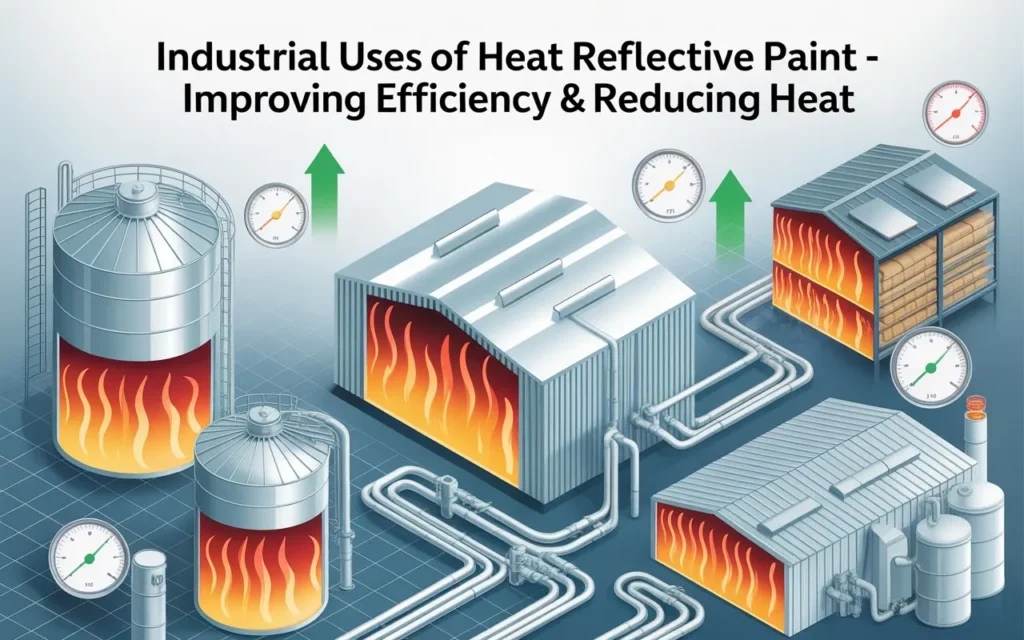
Heat reflective paint has become an essential solution for industries facing excessive heat buildup in factories, warehouses, and manufacturing facilities. Industrial buildings, especially those with large metal or RCC roofs, absorb significant amounts of solar heat, leading to high indoor temperatures, uncomfortable working conditions, and increased energy consumption. Heat reflective coatings help reduce this heat absorption by reflecting solar radiation away from the surface, improving indoor cooling and overall energy efficiency.
From industrial sheds and storage facilities to power plants and oil & gas infrastructure, heat reflective paint is widely used to lower roof temperatures, protect equipment, and reduce dependence on air conditioning systems. In addition to improving worker comfort and productivity, these coatings also help extend roof life and lower long-term operational costs. As industries continue to focus on sustainability and energy savings, heat reflective paint is becoming a smart investment for modern industrial infrastructure.
Introduction – Why Heat Control Matters in Industrial Environments
Rising Temperatures in Industrial Facilities
Industrial facilities are increasingly exposed to extreme heat due to rising global temperatures and prolonged summer seasons. Large industrial roofs, especially metal structures, absorb significant solar radiation throughout the day, causing indoor temperatures to rise rapidly. In many factories and warehouses, this heat buildup creates uncomfortable and challenging working conditions.
Impact of Excessive Heat on Operations
Excessive heat inside industrial buildings can negatively affect both workers and equipment. High temperatures may reduce employee productivity, increase fatigue, and create unsafe working environments. Heat can also impact machinery performance, damage temperature-sensitive materials, and increase the risk of equipment overheating, leading to operational inefficiencies and higher maintenance costs.
Need for Energy-Efficient Cooling Solutions
To manage indoor heat, many industries rely heavily on ventilation systems and air conditioning, which significantly increases electricity consumption and operational expenses. Heat reflective paint offers an energy-efficient alternative by reducing heat absorption at the source. By reflecting solar radiation away from roofs and walls, these coatings help maintain cooler indoor temperatures while lowering energy usage and improving overall industrial efficiency.
What Is Heat Reflective Paint?
Basic Definition
Heat reflective paint is a specialized industrial coating designed to reflect a significant portion of solar radiation, including infrared (IR) and ultraviolet (UV) rays, away from building surfaces. It is commonly applied on roofs, walls, storage tanks, and industrial structures to reduce heat absorption and maintain cooler surface temperatures.
How Heat Reflective Coatings Work
Heat reflective coatings work by using advanced reflective pigments and thermal-resistant materials that bounce sunlight away from the surface instead of absorbing it. This reduces the amount of heat transferred into the building, helping maintain lower indoor temperatures. Some coatings also contain insulating components that further slow down heat transfer and improve thermal efficiency.
Difference Between Regular and Reflective Industrial Coatings
Regular industrial coatings are mainly designed for surface protection, decoration, or corrosion resistance, but they do not significantly reduce heat buildup. Heat reflective industrial coatings, on the other hand, are specifically engineered to minimize solar heat absorption while still providing durability and weather protection. This makes them more effective for reducing indoor heat, improving energy efficiency, and lowering cooling costs in industrial environments.
Why Industries Use Heat Reflective Paint
Reducing Heat Absorption on Industrial Roofs
Industrial roofs, especially metal and RCC structures, absorb a large amount of solar heat during the day. Heat reflective paint helps reduce this heat absorption by reflecting sunlight away from the surface, keeping roofs significantly cooler and minimizing heat transfer into the building.
Improving Indoor Working Conditions
High indoor temperatures can create uncomfortable and unsafe working environments for employees. Heat reflective coatings help maintain cooler indoor conditions, improving worker comfort, reducing heat stress, and supporting better productivity in factories and industrial facilities.
Lowering Cooling and Ventilation Costs
Industries often spend heavily on air conditioning and ventilation systems to control indoor temperatures. By reducing heat buildup inside the building, heat reflective paint decreases the load on cooling systems, helping lower electricity consumption and operational costs.
Protecting Equipment from Heat Exposure
Excessive heat can affect machinery performance, electronic systems, and temperature-sensitive materials. Heat reflective coatings help stabilize indoor temperatures and reduce thermal stress on industrial equipment, contributing to improved efficiency, reliability, and longer equipment lifespan.
Common Industrial Applications of Heat Reflective Paint
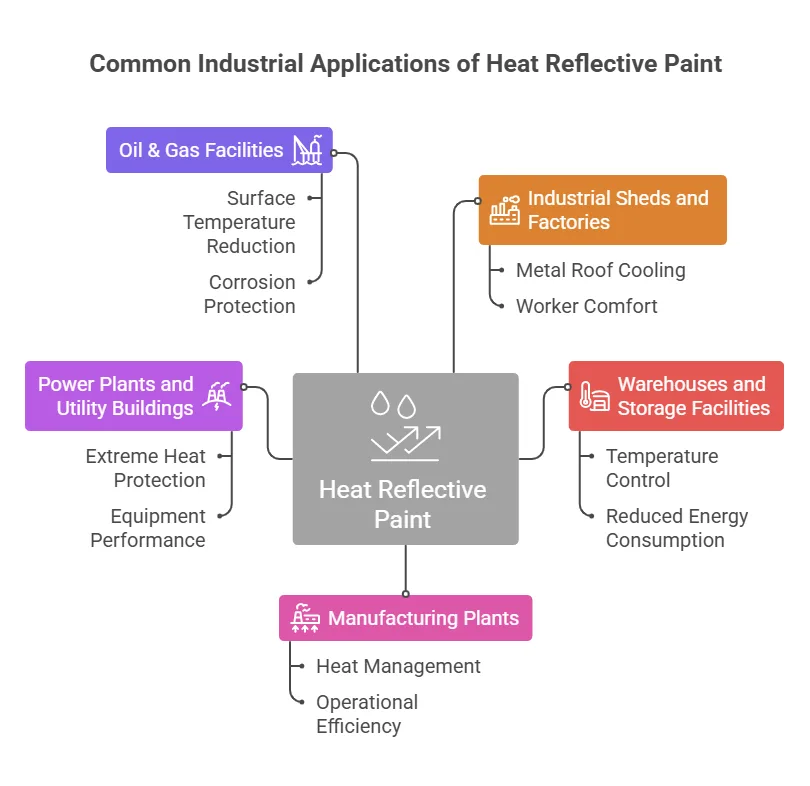
Industrial Sheds and Factories
Metal Roof Cooling
Industrial sheds and factory buildings often use metal roofing, which absorbs and transfers heat rapidly. Heat reflective paint helps lower roof surface temperatures by reflecting solar radiation, reducing excessive heat buildup inside the facility.
Worker Comfort and Productivity
Cooler indoor environments improve employee comfort and reduce heat stress during long working hours. Better temperature control can also support higher productivity and safer working conditions in industrial operations.
Warehouses and Storage Facilities
Temperature Control for Stored Goods
Warehouses frequently store temperature-sensitive materials and products that can be affected by excessive heat. Heat reflective coatings help maintain more stable indoor temperatures and protect stored inventory from heat-related damage.
Reduced Energy Consumption
By minimizing heat transfer through the roof and walls, reflective coatings reduce the need for constant cooling and ventilation, leading to lower energy consumption and operational expenses.
Manufacturing Plants
Heat Management Around Production Areas
Manufacturing plants generate additional internal heat from machinery and production processes. Heat reflective paint helps reduce external heat gain, improving overall temperature management within production zones.
Improved Operational Efficiency
Maintaining controlled indoor temperatures can improve equipment performance, reduce overheating risks, and support smoother industrial operations with fewer disruptions.
Power Plants and Utility Buildings
Protection Against Extreme Heat
Power plants and utility buildings are exposed to continuous heat from both environmental conditions and operational systems. Heat reflective coatings help reduce surface temperatures and protect structures from thermal stress.
Enhanced Equipment Performance
Lower indoor temperatures help improve the reliability and efficiency of electrical systems, control rooms, and sensitive equipment by reducing excessive heat exposure.
Oil & Gas Facilities
Surface Temperature Reduction
Oil and gas facilities often operate in harsh environments with high heat exposure. Heat reflective paint helps reduce the surface temperature of storage tanks, pipelines, and facility structures.
Corrosion and UV Protection
In addition to heat reduction, many reflective industrial coatings provide resistance against UV rays, moisture, and corrosion, helping extend the life of metal surfaces and infrastructure.
Best Surfaces for Industrial Heat Reflective Paint
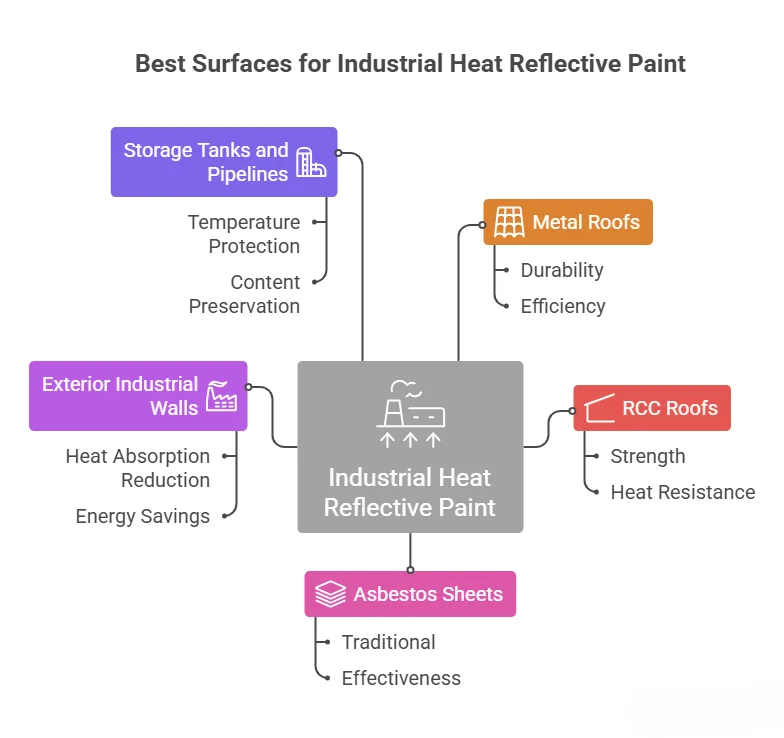
Metal Roofs
Metal roofs are one of the most common surfaces used in industrial buildings and are highly prone to heat absorption. Heat reflective paint helps reduce roof surface temperature by reflecting solar radiation, making factories and warehouses cooler and more energy-efficient.
RCC Roofs
RCC (Reinforced Cement Concrete) roofs absorb and retain heat for long periods, increasing indoor temperatures. Applying heat reflective coatings on RCC roofs helps minimize heat transfer into the building and improves indoor comfort in industrial and commercial spaces.
Asbestos Sheets
Asbestos sheet roofing is still used in many older industrial structures and sheds. These sheets can become extremely hot under direct sunlight. Heat reflective paint helps lower heat buildup on asbestos roofs and improves the internal environment of the facility.
Exterior Industrial Walls
Industrial walls exposed to direct sunlight also contribute to internal heat gain. Applying reflective coatings on exterior walls helps reduce heat absorption, supports temperature control, and protects the building surface from UV damage and weathering.
Storage Tanks and Pipelines
Storage tanks and pipelines in industries such as oil & gas, chemicals, and manufacturing are frequently exposed to high temperatures. Heat reflective paint helps reduce surface heat buildup, protects the structure from thermal stress, and improves overall operational safety and efficiency.
Key Benefits of Heat Reflective Paint in Industries
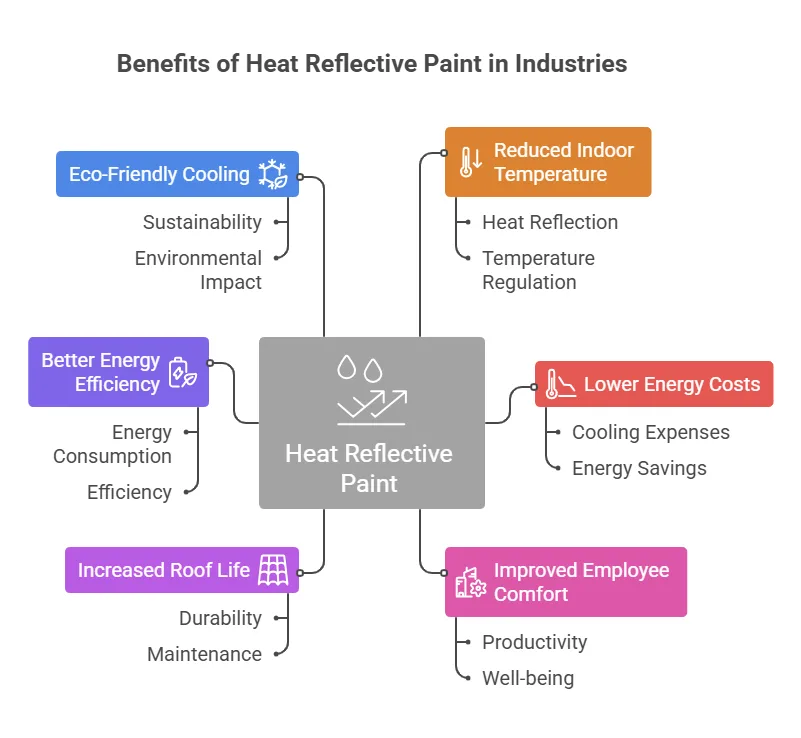
Reduced Indoor Temperature
Heat reflective paint helps reduce the amount of solar heat entering industrial buildings by reflecting sunlight away from roofs and walls. This significantly lowers indoor temperatures, especially in large factories, warehouses, and industrial sheds exposed to direct sunlight.
Lower Energy and Cooling Costs
By reducing heat buildup inside the facility, heat reflective coatings decrease the workload on air conditioning and ventilation systems. This results in lower electricity consumption and reduced operational cooling costs over time.
Improved Employee Comfort
Excessive indoor heat can create uncomfortable and stressful working conditions. Cooler environments improve employee comfort, reduce heat fatigue, and support better concentration and productivity in industrial workplaces.
Increased Roof Life
Continuous exposure to heat and UV radiation can damage industrial roofing materials over time. Heat reflective paint helps protect roofs from thermal stress, cracking, fading, and surface deterioration, extending the lifespan of the roof structure.
Better Energy Efficiency
Industries aiming to improve energy performance can benefit from reflective coatings by reducing unnecessary heat gain and lowering energy demand. This contributes to more efficient building operations and supports sustainability goals.
Eco-Friendly Industrial Cooling
Heat reflective paint provides a sustainable cooling solution by reducing reliance on energy-intensive cooling systems. Lower energy consumption also helps reduce carbon emissions, making it an environmentally responsible option for industrial facilities.
Types of Heat Reflective Paint Used in Industrial Applications
Acrylic Reflective Coatings
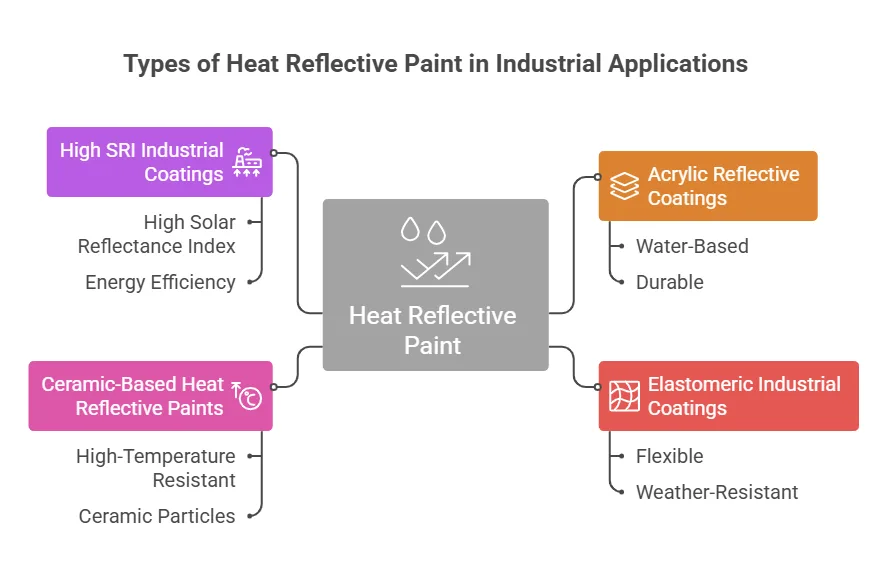
Acrylic reflective coatings are widely used in industrial applications due to their cost-effectiveness, good solar reflectivity, and ease of application. These water-based coatings provide UV resistance and are suitable for RCC roofs, exterior walls, and light industrial structures where moderate heat reduction is required.
Elastomeric Industrial Coatings
Elastomeric coatings are flexible, durable, and designed to handle expansion and contraction caused by temperature changes. They also offer waterproofing benefits, making them ideal for industrial roofs exposed to harsh weather conditions, rain, and prolonged sunlight.
Ceramic-Based Heat Reflective Paints
Ceramic-based reflective paints contain advanced ceramic microspheres that improve both heat reflection and insulation performance. These coatings are highly effective in reducing thermal transfer and are commonly used in high-temperature industrial environments such as factories, metal roofs, storage tanks, and manufacturing plants.
High SRI Industrial Coatings
High Solar Reflectance Index (SRI) coatings are specifically engineered to maximize solar heat reflection and thermal emittance. These coatings help maintain lower roof temperatures and improve overall building energy efficiency, making them suitable for large industrial facilities aiming to reduce cooling loads and operational costs.
How to Choose the Right Industrial Heat Reflective Paint
Based on Industry Type
Different industries have different heat management requirements. Manufacturing plants, warehouses, power plants, and oil & gas facilities may require coatings with varying levels of heat resistance, chemical resistance, and durability. Selecting a coating designed for the specific operational environment ensures better performance and long-term protection.
Based on Roof Material
The type of roof surface plays an important role in coating selection. Metal roofs generally require flexible coatings with strong adhesion and corrosion resistance, while RCC roofs benefit from elastomeric or acrylic coatings that can handle cracks and thermal expansion. Asbestos sheets may require lightweight coatings with high solar reflectivity.
Climate and Environmental Conditions
Industrial buildings located in extremely hot, humid, coastal, or high-rainfall areas need coatings that can withstand local environmental conditions. UV resistance, waterproofing, anti-corrosion properties, and weather durability should be considered based on the surrounding climate.
Durability and Maintenance Requirements
Choosing a long-lasting coating helps reduce maintenance costs and operational downtime. Industries should consider factors such as coating lifespan, resistance to wear and tear, ease of maintenance, and recoating requirements to ensure long-term cost-effectiveness and consistent thermal performance.
Challenges and Considerations in Industrial Applications
Surface Preparation Requirements
Proper surface preparation is essential for the successful application of heat reflective paint in industrial environments. Roofs and surfaces must be cleaned thoroughly to remove dust, grease, rust, loose particles, and old damaged coatings. Any cracks, leaks, or corrosion should be repaired before application to ensure strong adhesion and long-lasting performance.
Application During Operational Hours
Applying heat reflective coatings in active industrial facilities can be challenging due to ongoing operations, machinery movement, and worker safety concerns. Proper planning is required to minimize disruption during application. In some cases, coating work may need to be scheduled during non-operational hours or maintenance shutdowns to ensure safe and efficient installation.
Long-Term Maintenance Planning
Although heat reflective paints are designed for durability, regular inspection and maintenance are important for maintaining optimal performance. Industries should plan for periodic cleaning, inspection of damaged areas, and timely recoating when necessary. A proper maintenance strategy helps preserve reflectivity, extend coating life, and ensure long-term energy efficiency.
Frequently Asked Questions
Does Heat Reflective Paint Work on Industrial Metal Roofs?
Yes, heat reflective paint is highly effective on industrial metal roofs. Metal surfaces absorb and transfer heat quickly, making factories and warehouses extremely hot during summer. Reflective coatings help reduce roof surface temperatures by reflecting solar radiation, which improves indoor comfort and lowers cooling costs.
How Much Temperature Reduction Can Industries Expect?
The temperature reduction depends on factors such as roof material, coating type, climate conditions, and application quality. In many cases, industries can experience significantly lower roof surface temperatures and noticeable improvements in indoor cooling after applying heat reflective coatings.
Is Heat Reflective Paint Suitable for Chemical Plants?
Yes, specially formulated industrial heat reflective coatings can be used in chemical plants and harsh industrial environments. Many coatings offer additional resistance to chemicals, UV exposure, corrosion, and extreme weather conditions, making them suitable for demanding industrial applications.
How Long Does Industrial Reflective Coating Last?
The lifespan of industrial heat reflective coatings varies depending on the coating quality, environmental exposure, and maintenance practices. High-quality coatings can typically last between 5 to 10 years or more when properly applied and maintained.
Conclusion – Smart Cooling Solution for Modern Industries
Long-Term Industrial Benefits
Heat reflective paint provides long-term advantages for industrial facilities by reducing heat absorption, improving indoor working conditions, and protecting roofs and structures from thermal damage. These coatings help industries maintain more stable operating environments while extending the lifespan of industrial infrastructure.
Cost Savings and Sustainability
By lowering indoor temperatures and reducing the load on cooling systems, heat reflective coatings help industries reduce electricity consumption and operational expenses. In addition to financial savings, they also support sustainable industrial practices by improving energy efficiency and reducing overall carbon emissions.
Future of Energy-Efficient Industrial Coatings
As industries continue to focus on energy conservation and environmental responsibility, advanced heat reflective coatings are becoming an important part of modern industrial construction. Innovations in reflective pigments, ceramic technologies, and high-performance coatings are expected to further improve cooling efficiency and durability, making heat reflective paint a key solution for future-ready industrial infrastructure.