

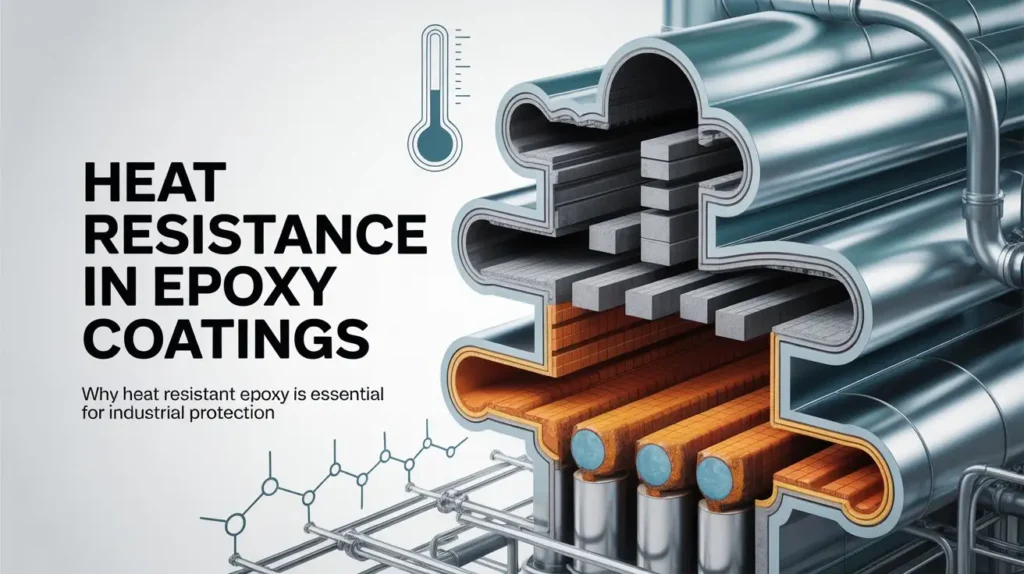
In many industrial environments, surfaces are constantly exposed to high temperatures, thermal fluctuations, and extreme operating conditions. Standard coatings often fail under such stress, leading to cracking, peeling, discoloration, and surface damage. This is where heat resistance in epoxy coatings plays a critical role in ensuring long-term protection and performance.
Heat resistant epoxy is specially formulated to withstand elevated temperatures without losing its strength, adhesion, or protective properties. Unlike conventional coatings, it creates a durable barrier that protects metal and concrete surfaces from heat-induced degradation, oxidation, and wear. This makes it an ideal solution for industries where temperature exposure is a constant challenge.
One of the key advantages of heat resistant epoxy is its ability to handle thermal expansion and contraction. In high-temperature environments, materials expand and contract repeatedly, which can weaken ordinary coatings. Heat resistant epoxy is designed to resist these changes, preventing cracks and maintaining a stable surface over time.
Industries such as manufacturing plants, power generation units, automotive sectors, and heavy engineering facilities widely use heat resistant epoxy to protect equipment like boilers, chimneys, exhaust systems, pipelines, and machinery. Its durability not only enhances performance but also reduces maintenance and downtime.
With its combination of high-temperature tolerance, strong adhesion, and long-lasting protection, heat resistant epoxy has become an essential solution for modern industrial applications. Understanding the importance of heat resistance helps businesses choose the right coating system for reliable and cost-effective protection in demanding environments.
What Is Heat Resistance in Coatings?
Heat resistance in coatings refers to the ability of a coating material to withstand high temperatures without losing its physical and chemical properties. In industrial environments, surfaces are often exposed to continuous heat, sudden temperature changes, and thermal stress. A heat-resistant coating ensures that the surface remains protected, stable, and durable even under such extreme conditions.
This property is especially important for protecting metal and concrete surfaces from damage caused by heat, oxidation, and thermal expansion.
Understanding Heat Resistance in Industrial Coatings
In industrial coatings, heat resistance means the coating can maintain its structure, adhesion, and protective qualities when exposed to elevated temperatures. Unlike standard coatings that may soften, crack, or peel under heat, heat-resistant coatings are formulated with special resins and additives that enhance thermal stability.
These coatings act as a protective barrier, reducing the direct impact of heat on the substrate and preventing issues like:
- Surface deformation
- Loss of adhesion
- Discoloration and fading
- Structural damage
This makes them suitable for high-temperature equipment and structures.
Importance of Heat Resistance in High-Temperature Environments
In industries where heat exposure is constant, such as manufacturing, power plants, automotive, and metal processing, heat resistance is critical for maintaining safety and performance.
Without proper heat-resistant coatings:
- Surfaces can deteriorate quickly
- Equipment may require frequent repairs or replacements
- There is a higher risk of operational downtime and safety hazards
Using coatings with strong heat resistance helps extend the life of equipment and ensures consistent performance in extreme environments.
How Heat Resistance Improves Coating Performance
Heat resistance significantly enhances the overall performance of a coating by improving its ability to withstand thermal stress and harsh conditions. It ensures that the coating continues to provide protection even when exposed to high temperatures over long periods.
Key performance improvements include:
- Enhanced durability under continuous heat exposure
- Resistance to thermal shock (sudden temperature changes)
- Improved adhesion to the surface
- Reduced maintenance and repair costs
Overall, heat resistance is a crucial factor in selecting the right coating system, especially when long-term protection and reliability are required in high-temperature industrial applications.
What Is Heat Resistant Epoxy?
Heat resistant epoxy is a specially formulated coating designed to withstand high temperatures while maintaining its strength, adhesion, and protective properties. Unlike standard epoxy coatings, which may degrade under extreme heat, heat resistant epoxy is engineered to perform reliably in high-temperature industrial environments.
It is widely used to protect metal and concrete surfaces exposed to heat, such as machinery, pipelines, exhaust systems, and structural components.
Definition and Composition of Heat Resistant Epoxy
Heat resistant epoxy is a type of epoxy coating made by combining epoxy resin with a hardener and heat-stable additives. These additives enhance the coating’s ability to resist thermal stress, oxidation, and surface degradation.
The composition is carefully designed to provide:
- High thermal stability
- Strong adhesion to substrates
- Resistance to chemicals and environmental factors
This makes heat resistant epoxy suitable for applications where both heat resistance and durability are required.
How Heat Resistant Epoxy Works Under High Temperatures
Heat resistant epoxy works by forming a protective barrier over the surface that reduces the direct impact of heat. When exposed to high temperatures, the coating maintains its structural integrity and bonding strength, preventing damage to the underlying material.
It also helps manage thermal expansion and contraction, reducing the risk of cracking or peeling. Additionally, it protects surfaces from oxidation and corrosion, which are often accelerated by heat.
Key Features of Heat Resistant Epoxy Coatings
Heat resistant epoxy coatings offer several features that make them ideal for demanding environments:
- Ability to withstand elevated temperatures without degradation
- Strong adhesion to metal and concrete surfaces
- Resistance to chemicals, moisture, and environmental exposure
- Durable and long-lasting protective layer
- Suitable for both indoor and outdoor applications
Key Benefits of Heat Resistance in Epoxy Coatings
Heat resistance plays a vital role in enhancing the performance and reliability of epoxy coatings. It ensures that the coating continues to protect surfaces even under extreme thermal conditions.
Protection Against High Temperatures
Heat resistant epoxy provides a strong barrier against high temperatures, preventing heat from directly affecting the surface. This helps maintain the structural integrity of equipment and materials.
Prevention of Surface Damage and Degradation
Continuous heat exposure can cause cracking, peeling, and discoloration in standard coatings. Heat resistant epoxy prevents these issues by maintaining a stable and protective layer.
Improved Durability and Lifespan
By resisting heat and thermal stress, epoxy coatings last longer and perform better over time. This increases the overall lifespan of both the coating and the substrate.
Resistance to Thermal Shock
In many industries, surfaces experience sudden temperature changes. Heat resistant epoxy can handle thermal shock, reducing the risk of cracks or coating failure.
Reduced Maintenance and Repair Costs
Because of its durability and resistance to heat damage, heat resistant epoxy requires less frequent maintenance and repairs. This helps businesses reduce operational costs and downtime.
Overall, heat resistant epoxy is an essential solution for industries that require reliable protection in high-temperature environments, offering both performance and long-term cost benefits.
Common Applications of Heat Resistant Epoxy
Heat resistant epoxy is widely used in industries where surfaces are exposed to high temperatures, thermal stress, and harsh operating conditions. Its ability to maintain strength, adhesion, and protective performance under heat makes it a reliable coating solution for various industrial applications.
Below are some of the most common applications of heat resistant epoxy across different sectors.
Industrial Machinery and Equipment
Industrial machinery often operates under continuous heat and friction, which can damage unprotected surfaces. Heat resistant epoxy is applied to machinery components to provide a protective barrier against high temperatures, wear, and corrosion.
This helps improve equipment performance, reduce downtime, and extend the operational lifespan of machines.
Boilers, Chimneys, and Exhaust Systems
Boilers, chimneys, and exhaust systems are constantly exposed to extreme temperatures and hot gases. Heat resistant epoxy coatings protect these surfaces from heat damage, oxidation, and corrosion.
By maintaining coating integrity under high heat, they help ensure safe and efficient operation of these systems in industrial and commercial setups.
Automotive and Engine Components
In the automotive industry, parts such as engines, exhaust manifolds, and heat-exposed components require coatings that can withstand elevated temperatures.
Heat resistant epoxy is used to protect these components from thermal stress, oil exposure, and environmental damage, improving both durability and performance.
Manufacturing Plants and Factories
Manufacturing facilities often involve processes that generate high levels of heat, such as metal fabrication, processing, and heavy engineering operations.
Heat resistant epoxy is applied on floors, equipment, and structures to ensure long-term protection against heat, chemicals, and mechanical stress, making it ideal for factory environments.
Metal Structures Exposed to Heat
Metal structures such as pipelines, storage tanks, steel frameworks, and industrial installations are vulnerable to heat-related damage and corrosion.
Applying heat resistant epoxy creates a protective coating layer that helps prevent oxidation, surface degradation, and structural weakening, ensuring durability even in high-temperature conditions.
These diverse applications highlight the importance of heat resistant epoxy in protecting assets, improving safety, and ensuring reliable performance in high-temperature industrial environments.
Heat Resistant Epoxy vs Standard Epoxy
When selecting the right coating for industrial use, it’s important to understand the difference between heat resistant epoxy and standard epoxy. While both offer strong adhesion and protection, their performance varies significantly in high-temperature environments. Choosing the right type depends on the level of heat exposure and operational conditions.
Temperature Tolerance Comparison
Standard epoxy coatings are suitable for moderate temperature conditions, typically handling temperatures up to a certain limit before they begin to soften, discolor, or lose adhesion.
Heat resistant epoxy, on the other hand, is specifically designed to withstand much higher temperatures without compromising its structure. It maintains its strength, stability, and protective properties even under continuous or extreme heat exposure, making it ideal for high-temperature applications.
Performance Under Extreme Conditions
In environments with intense heat, thermal fluctuations, and exposure to hot gases, standard epoxy may fail over time due to cracking, peeling, or surface degradation.
Heat resistant epoxy performs reliably in such conditions by offering:
- Resistance to thermal shock (sudden temperature changes)
- Protection against oxidation and heat-induced corrosion
- Stable performance in continuous high-temperature operations
This makes it a better choice for industries dealing with boilers, exhaust systems, and heavy machinery.
Durability and Cost Comparison
Standard epoxy is generally more cost-effective for applications where extreme heat is not a factor. However, in high-temperature environments, it may require frequent repairs or replacement, increasing long-term costs.
Heat resistant epoxy may have a higher initial cost, but it provides greater durability and longer service life in demanding conditions. Its ability to reduce maintenance, downtime, and damage makes it a more cost-effective solution over time for industries exposed to heat.
Overall, while standard epoxy works well for general-purpose applications, heat resistant epoxy is the preferred choice for high-temperature environments, offering superior performance, durability, and long-term value.
Factors Affecting Heat Resistance in Epoxy Coatings
The performance of heat resistant epoxy coatings depends on several key factors that influence their ability to withstand high temperatures and maintain long-term durability. Even the best coating can underperform if these factors are not properly considered during selection and application. Understanding these elements helps ensure maximum heat resistance and reliable protection in industrial environments.
Temperature Range and Exposure Duration
One of the most critical factors is the temperature range the coating is exposed to and how long the exposure lasts. Different heat resistant epoxy systems are designed for specific temperature limits.
- Short-term exposure to high temperatures may be tolerated better than continuous heat
- Continuous high-temperature exposure can gradually degrade coatings if they are not designed for such conditions
Choosing the right epoxy based on maximum operating temperature and duration is essential to avoid premature coating failure.
Surface Preparation and Application Quality
Proper surface preparation plays a major role in the effectiveness of heat resistant epoxy coatings. If the surface is not adequately prepared, the coating may fail regardless of its quality.
Important aspects include:
- Thorough cleaning to remove dust, oil, and contaminants
- Mechanical preparation like grinding or blasting for better adhesion
- Correct mixing and application techniques
Poor application can lead to issues such as weak adhesion, bubbles, or uneven coating thickness, reducing the overall heat resistance and durability.
Environmental Conditions (Moisture, Chemicals)
Environmental factors such as moisture, humidity, and chemical exposure can significantly impact the performance of epoxy coatings under heat.
- High humidity may affect curing and bonding
- Chemical exposure combined with heat can accelerate coating degradation
- Moisture can lead to blistering or surface defects
Selecting a heat resistant epoxy that is compatible with the specific environmental conditions ensures better performance and longer service life.
By carefully considering these factors, industries can maximize the effectiveness, durability, and heat resistance of epoxy coatings, ensuring reliable protection in demanding high-temperature applications.
How to Choose the Right Heat Resistant Epoxy
Selecting the right heat resistant epoxy is essential for ensuring long-term performance, safety, and cost efficiency in high-temperature environments. Different applications have different requirements, so choosing the correct coating depends on factors such as temperature exposure, surface conditions, and industry needs. Making the right choice helps prevent coating failure and reduces maintenance costs.
Understanding Temperature Requirements
The first step in choosing a heat resistant epoxy is to identify the maximum temperature range the surface will be exposed to.
- Determine whether the heat exposure is continuous or intermittent
- Consider peak temperatures and possible thermal fluctuations
- Match the epoxy system with its rated temperature resistance
Using a coating that is not designed for the required temperature can lead to cracking, peeling, or loss of adhesion over time.
Selecting the Right Coating Thickness
Coating thickness plays a crucial role in the performance of heat resistant epoxy. The thickness determines how well the coating can protect the surface from heat and environmental stress.
- Thicker coatings generally provide better insulation and durability
- Thinner coatings may be suitable for moderate temperature conditions
- Proper thickness ensures uniform coverage and long-term protection
It is important to follow manufacturer guidelines to achieve the optimal thickness for specific applications.
Industry-Specific Considerations
Different industries have unique operational conditions that influence the selection of heat resistant epoxy.
- Manufacturing and heavy industries may require coatings that handle extreme heat and mechanical stress
- Automotive and engineering sectors may need coatings resistant to heat, oil, and chemicals
- Power plants and infrastructure projects require coatings that can withstand continuous high temperatures and environmental exposure
Understanding the specific requirements of your industry ensures that the chosen epoxy coating delivers maximum efficiency, durability, and protection.
By evaluating temperature requirements, coating thickness, and industry-specific conditions, businesses can select the most suitable heat resistant epoxy for reliable performance in demanding environments.
Application Process of Heat Resistant Epoxy
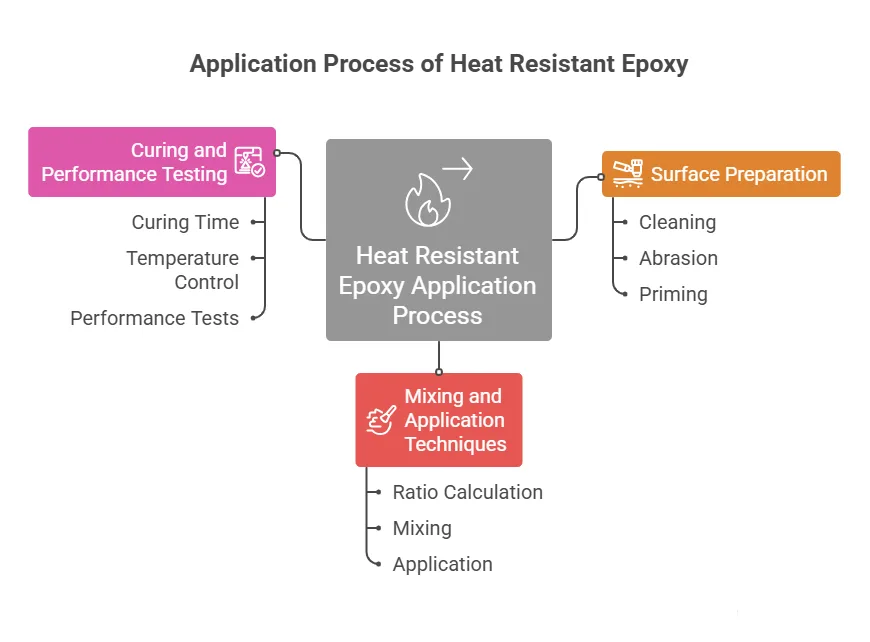
The performance of heat resistant epoxy largely depends on the correct application process. Proper installation ensures strong adhesion, uniform coating thickness, and maximum resistance to high temperatures and thermal stress. A well-applied coating provides long-lasting protection and reduces the risk of premature failure.
Below are the key steps involved in applying heat resistant epoxy.
Surface Preparation
Surface preparation is the foundation of a successful coating system. The substrate must be clean, dry, and properly prepared to ensure strong bonding of the epoxy.
The process typically includes:
- Removing dust, grease, oil, and contaminants from the surface
- Mechanical preparation such as grinding or blasting to create a rough profile
- Repairing cracks, pits, or surface defects
- Ensuring the surface is completely dry before application
Proper preparation improves adhesion and prevents issues like peeling, blistering, or coating failure.
Mixing and Application Techniques
Heat resistant epoxy is usually supplied in two components—resin and hardener—which must be mixed in the correct ratio.
Key points during this stage include:
- Accurate mixing to ensure proper chemical reaction
- Applying the coating using brush, roller, or spray methods depending on the surface and project size
- Maintaining uniform thickness across the surface
- Applying multiple layers if required for enhanced protection
Following the correct application technique ensures the coating performs effectively under high-temperature conditions.
Curing and Performance Testing
After application, the coating must undergo a curing process, during which the epoxy hardens and develops its full strength and heat resistance.
- Curing time depends on temperature, humidity, and product specifications
- The coating should be allowed to cure fully before exposure to heat or heavy use
- In critical applications, performance testing may be conducted to ensure the coating meets required standards
Proper curing ensures that the heat resistant epoxy achieves its maximum durability, adhesion, and thermal stability.
By following the correct application process, industries can ensure that heat resistant epoxy coatings deliver reliable, long-term protection in high-temperature environments.
Maintenance Tips for Heat Resistant Epoxy Coatings
Heat resistant epoxy coatings are designed to perform in high-temperature and demanding industrial environments, but proper maintenance is essential to ensure their long-term durability and effectiveness. Regular care helps prevent damage, maintain performance, and extend the life of the coating system.
Regular Inspection
Routine inspection is important to identify early signs of wear or damage caused by continuous heat exposure and operational stress.
During inspections, check for:
- Cracks, peeling, or blistering on the coating surface
- Areas exposed to extreme heat or thermal cycling
- Signs of corrosion or surface degradation
Early detection of issues allows for timely repairs, preventing more serious damage and costly downtime.
Cleaning and Upkeep
Keeping the coated surface clean helps maintain both performance and appearance. Dirt, chemicals, and residues can affect the coating over time, especially in high-temperature environments.
Recommended cleaning practices include:
- Removing dust, debris, and industrial residues regularly
- Cleaning with mild, non-abrasive solutions
- Avoiding harsh chemicals that may damage the coating
- Promptly cleaning spills or deposits to prevent buildup
Regular upkeep ensures the coating continues to provide effective protection.
Recoating Guidelines
Over time, even high-quality heat resistant epoxy coatings may require recoating to maintain optimal performance.
Key guidelines include:
- Recoat when there are visible signs of wear, thinning, or reduced protection
- Ensure proper surface preparation before recoating
- Follow recommended recoating intervals based on usage and temperature exposure
Timely recoating helps restore the coating’s heat resistance, durability, and protective properties, ensuring continued performance in demanding conditions.
Conclusion – Why Heat Resistant Epoxy Is Critical for High-Temperature Environments
Heat resistant epoxy has become an essential solution for industries that operate under high temperatures, thermal fluctuations, and harsh working conditions. Its ability to maintain strength, adhesion, and protective performance makes it far more reliable than standard coatings in demanding environments.
Summary of Heat Resistance Benefits
Heat resistant epoxy provides a range of advantages that improve overall coating performance:
- Protects surfaces from extreme heat and thermal stress
- Prevents cracking, peeling, and surface degradation
- Offers strong adhesion and long-lasting durability
- Resists thermal shock and sudden temperature changes
- Reduces maintenance requirements and operational downtime
These benefits make it a dependable choice for industries where heat exposure is unavoidable.
Long-Term Industrial Advantages
In the long run, heat resistant epoxy helps industries achieve cost efficiency and operational reliability. By protecting equipment and structures from heat-related damage, it extends the lifespan of assets and minimizes the need for frequent repairs.
This results in:
- Lower maintenance and replacement costs
- Improved equipment performance and safety
- Reduced downtime in critical operations
Such advantages are especially valuable in sectors like manufacturing, power plants, automotive, and heavy engineering.
Choosing the Right Solution for Durability
Selecting the right heat resistant epoxy is crucial for achieving the best results. Factors such as temperature range, application method, and environmental conditions should be carefully evaluated before choosing a coating system.
By investing in the right solution and ensuring proper application and maintenance, businesses can achieve long-term durability, safety, and high performance in high-temperature environments.