

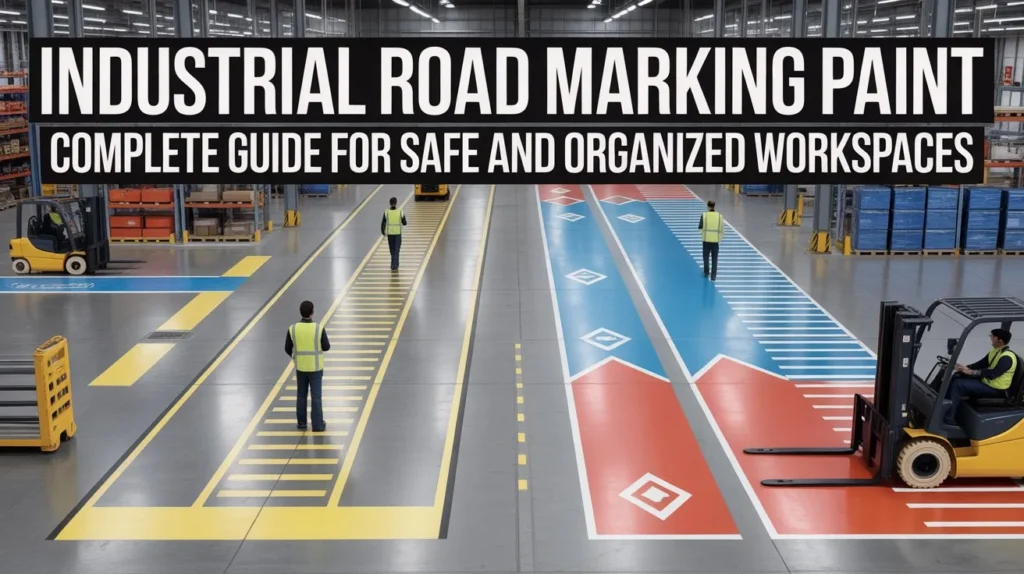
Industrial road marking paint plays a vital role in maintaining safety, organization, and efficiency within industrial environments. From factories and warehouses to logistics hubs and parking areas, clear floor markings help guide vehicles, define work zones, and ensure smooth operations.
These markings are essential for separating pedestrian walkways, forklift paths, loading zones, and restricted areas. By providing clear visual guidance, industrial road marking paint reduces confusion, prevents accidents, and improves overall workflow.
High-quality industrial marking paints are designed to withstand heavy traffic, abrasion, and exposure to chemicals or oils. With proper application and maintenance, they offer long-lasting performance, making them a reliable solution for creating safer and more organized industrial workspaces. 🚧
Introduction to Industrial Road Marking Paint
What is industrial road marking paint
Industrial road marking paint is a specially formulated coating used to create lines, symbols, and safety markings on floors within industrial environments. It is designed for high durability, strong adhesion, and resistance to heavy traffic, chemicals, and wear, making it ideal for factories, warehouses, and commercial facilities.
Importance in industrial safety and operations
Industrial road markings play a crucial role in maintaining workplace safety. They help define pedestrian walkways, vehicle paths, hazard zones, and restricted areas. Clear markings reduce confusion, prevent accidents, and ensure smooth movement of people and machinery, improving overall operational efficiency.
Where it is commonly used
Industrial road marking paint is widely used in factories, warehouses, logistics centers, parking areas, and loading docks. It is also applied in production units, storage facilities, and distribution hubs to organize space and enhance safety within the workplace.
Why Industrial Road Marking Paint Is Important
Improves workplace safety
Industrial road marking paint clearly defines pedestrian walkways, vehicle paths, and hazard zones. This helps workers understand safe movement areas, reducing the risk of accidents and improving overall workplace safety.
Organizes traffic flow inside facilities
Clear floor markings guide the movement of forklifts, trucks, and workers within industrial spaces. Organized traffic flow prevents congestion and ensures smooth operations in busy environments like warehouses and factories.
Reduces accidents and hazards
By marking danger zones, restricted areas, and emergency exits, industrial road markings help prevent collisions and workplace injuries. They provide clear visual warnings that keep employees alert and cautious.
Enhances productivity and efficiency
Well-planned markings improve workflow by organizing space and reducing confusion. Employees can move efficiently, locate areas quickly, and perform tasks smoothly, leading to increased productivity and better operational performance. 🚧
Types of Industrial Road Marking Paint
Epoxy road marking paint
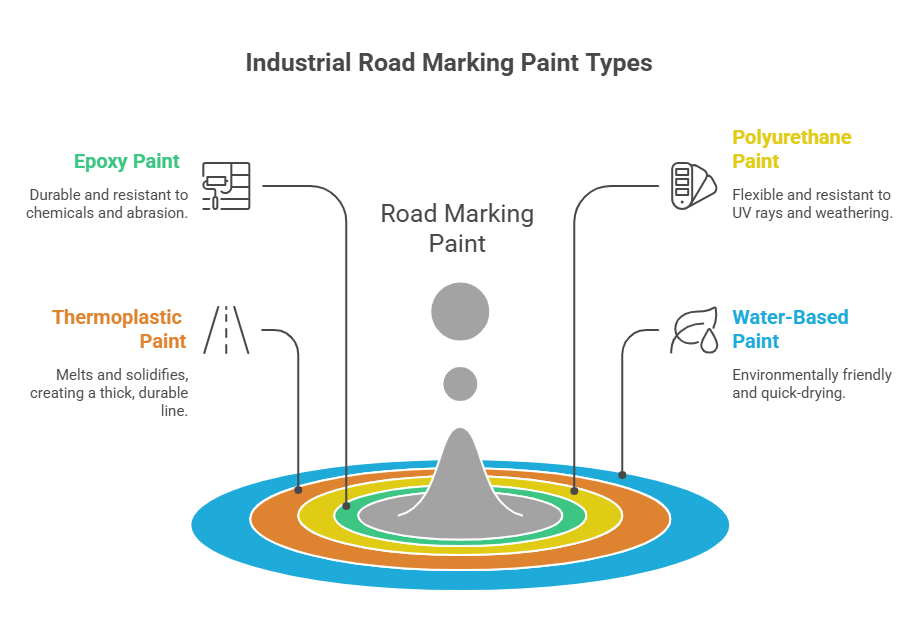
Epoxy road marking paint is a two-component system known for its high durability and strong adhesion. It is highly resistant to chemicals, oils, and abrasion, making it ideal for factories, warehouses, and heavy-duty industrial floors.
Polyurethane (PU) marking paint
Polyurethane (PU) marking paint offers excellent flexibility and resistance to wear and tear. It performs well in areas with frequent movement and slight surface expansion or contraction. PU coatings also provide good chemical and UV resistance.
Thermoplastic marking paint
Thermoplastic marking paint is applied in a heated molten form and hardens quickly to create thick, long-lasting markings. It is suitable for industrial areas with heavy vehicle movement where durability and visibility are important.
Water-based marking paint
Water-based marking paint is an eco-friendly option with low VOC emissions. It is easy to apply and dries quickly, making it suitable for light to medium traffic industrial areas and temporary markings.
Key Features of Industrial Road Marking Paint
High durability and abrasion resistance
Industrial road marking paint is designed to handle heavy traffic from forklifts, trucks, and machinery. Its strong abrasion resistance ensures that markings do not wear off easily, even in high-use areas.
Chemical and oil resistance
In industrial environments, floors are often exposed to chemicals, oils, and spills. High-quality marking paint resists these substances, maintaining its strength and visibility without damage.
Fast drying time
Fast drying is essential to avoid downtime in industrial operations. Quick-drying paint allows areas to be used soon after application, minimizing disruption to daily activities.
Strong adhesion to concrete floors
Industrial markings must bond firmly to surfaces like concrete or coated floors. Strong adhesion prevents peeling or cracking, ensuring long-lasting performance even under heavy loads.
High visibility and color retention
Bright and clear markings improve safety by making pathways, zones, and hazards easy to identify. Good color retention ensures that markings remain visible over time without fading. 🚧
Industrial Road Marking Applications
Factory floors
Industrial road marking paint is widely used on factory floors to define work zones, machine areas, and movement paths. Clear markings help workers and equipment operate safely and efficiently within production areas.
Warehouses
In warehouses, road markings are essential for organizing storage spaces, forklift routes, and loading areas. They help maintain smooth movement of goods and reduce the risk of collisions or confusion.
Parking areas and loading docks
Road marking paint is used to create parking bays, traffic lanes, and loading/unloading zones. This ensures proper vehicle management and safe handling of materials in busy industrial environments.
Logistics and distribution centers
In logistics hubs, markings guide trucks, forklifts, and workers through designated routes. Clear line markings improve coordination, reduce delays, and enhance overall operational efficiency.
Safety zones and pedestrian walkways
Industrial markings clearly define pedestrian paths, emergency exits, and hazard zones. These safety markings protect workers by separating them from moving vehicles and highlighting dangerous areas. 🚧
Industrial Floor Marking Types
Safety lines and hazard zones
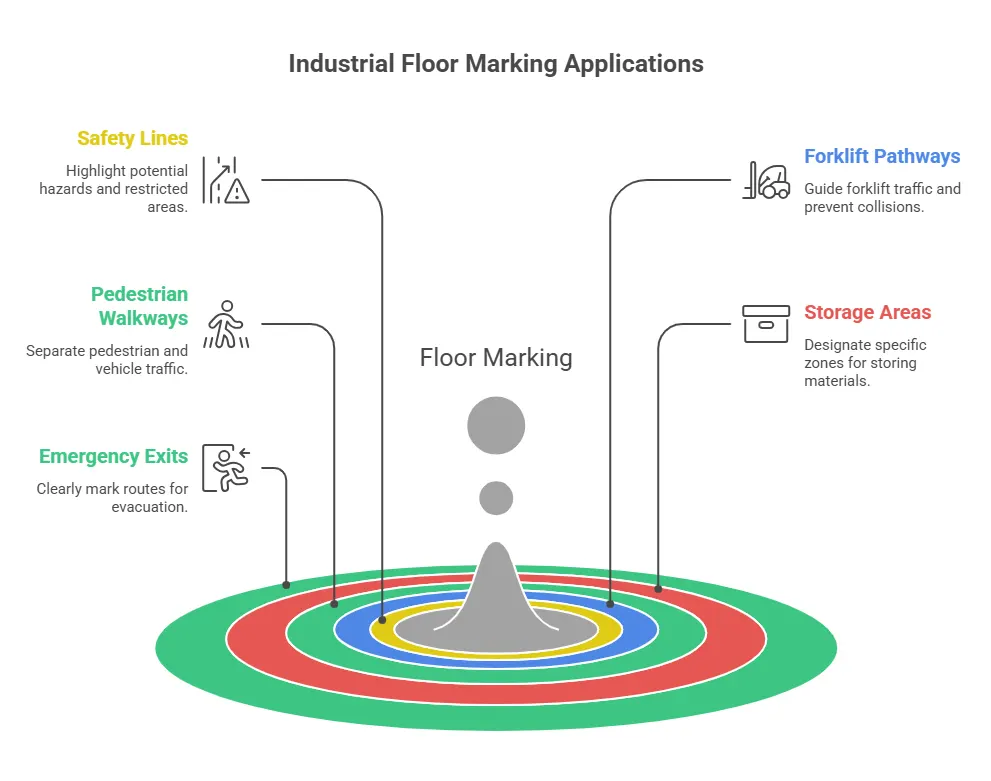
Safety lines and hazard markings are used to highlight dangerous areas such as machinery zones, restricted sections, and high-risk locations. These markings alert workers to stay cautious and follow safety guidelines.
Forklift pathways
Dedicated forklift pathways help control the movement of industrial vehicles. Clear markings ensure that forklifts follow specific routes, reducing the chances of collisions with workers or other equipment.
Pedestrian walkways
Pedestrian walkways are clearly marked paths for workers to move safely within the facility. These markings separate people from vehicle traffic, improving overall workplace safety.
Storage and stacking areas
Markings for storage zones help organize materials and products efficiently. They define where goods should be placed, ensuring better space utilization and easy access within warehouses and factories.
Emergency exit markings
Emergency exit markings guide workers toward safe exit routes during emergencies. Bright and visible markings ensure quick evacuation and improve overall safety preparedness in industrial environments. 🚧
Application Process of Industrial Road Marking Paint
Surface preparation
Proper surface preparation is essential for long-lasting results. The floor must be clean, dry, and free from dust, oil, grease, and loose particles. In some cases, surface grinding or priming may be required to ensure better adhesion of the paint.
Layout and marking plan
Before application, a clear marking plan is created. Lines, zones, and symbols are measured and marked using chalk or tape to ensure accurate placement, proper spacing, and alignment according to safety standards.
Manual vs machine application
Industrial road marking paint can be applied manually using rollers and brushes or with marking machines. Manual application is suitable for small or detailed areas, while machines provide faster and more uniform results for large industrial spaces.
Drying and curing process
After application, the paint must be allowed to dry and cure properly. Drying time depends on the type of paint used, but fast-curing coatings help minimize downtime and allow the area to be used quickly without damaging the markings. 🚧
Benefits of Industrial Road Marking Paint
Improved safety compliance
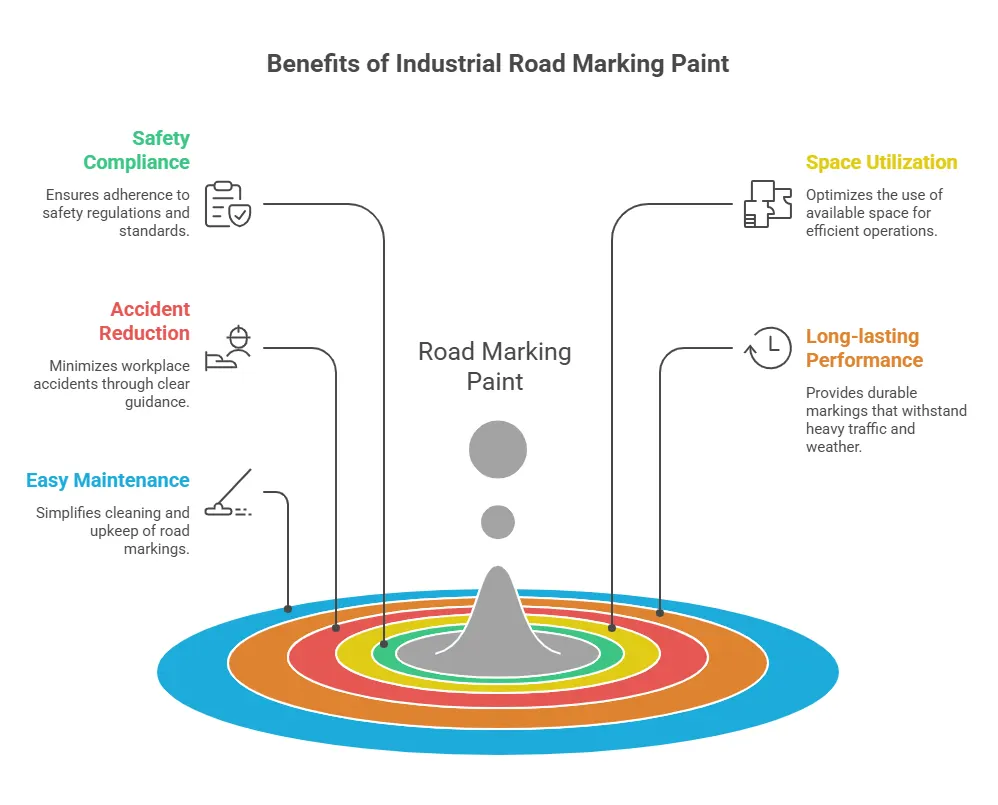
Industrial road marking paint helps businesses meet safety regulations by clearly marking walkways, hazard zones, and emergency exits. This ensures a safer working environment and compliance with industry standards.
Better space utilization
Clear floor markings organize workspaces efficiently by defining storage areas, traffic lanes, and operational zones. This helps maximize available space and improves overall facility management.
Reduced workplace accidents
By separating pedestrian paths from vehicle routes and highlighting danger zones, industrial markings significantly reduce the risk of collisions and workplace injuries.
Long-lasting performance
High-quality industrial marking paint is designed to withstand heavy traffic, chemicals, and wear. This ensures markings remain visible and effective for a long time without frequent repainting.
Easy maintenance
Industrial road markings are easy to maintain with regular cleaning and occasional touch-ups. Durable coatings reduce maintenance efforts while keeping the workspace safe and well-organized. 🚧
How to Choose the Right Industrial Road Marking Paint
Type of industry and usage
Different industries have different requirements. For example, factories with heavy machinery need highly durable paint, while warehouses may focus more on visibility and organization. Choosing paint based on usage ensures better performance and safety.
Floor surface (concrete, epoxy, etc.)
The type of floor surface plays a key role in paint selection. Concrete, epoxy-coated floors, or other surfaces require compatible paints to ensure strong adhesion and long-lasting markings.
Traffic load (forklifts, vehicles)
Areas with high movement of forklifts, trucks, or heavy equipment need paints with strong abrasion resistance. For low-traffic areas, standard coatings may be sufficient.
Budget and durability requirements
Balancing cost and durability is important. While lower-cost paints may save money initially, high-quality durable coatings offer longer life and reduced maintenance, making them more cost-effective in the long run. 🚧
Maintenance and Repainting of Industrial Markings
Regular inspection
Regular inspection helps ensure that industrial floor markings remain clear and effective. Check for signs of fading, peeling, or damage caused by heavy traffic, chemicals, or equipment. Early detection allows timely repairs and maintains workplace safety.
Cleaning and upkeep
Keeping the marked areas clean is essential for visibility and durability. Dust, oil, and debris can reduce the clarity of markings, so routine cleaning helps maintain bright and visible lines. Proper upkeep also extends the life of the paint.
Repainting guidelines
Over time, markings may wear out and need repainting. Areas with high traffic or heavy machinery may require more frequent touch-ups. Following a proper repainting schedule ensures that safety markings remain clear, compliant, and effective at all times. 🚧
Conclusion – Importance of Industrial Road Marking for Safe Operations
Industrial road marking paint is essential for creating safe, organized, and efficient work environments. Clear floor markings help define pathways, control movement, and highlight safety zones, ensuring smooth operations in factories, warehouses, and industrial facilities.
By improving visibility, reducing confusion, and guiding both workers and vehicles, industrial markings play a key role in preventing accidents and maintaining safety compliance.
Investing in high-quality industrial road marking paint, along with proper application and maintenance, ensures long-lasting performance and contributes to safer, more productive industrial operations. 🚧