

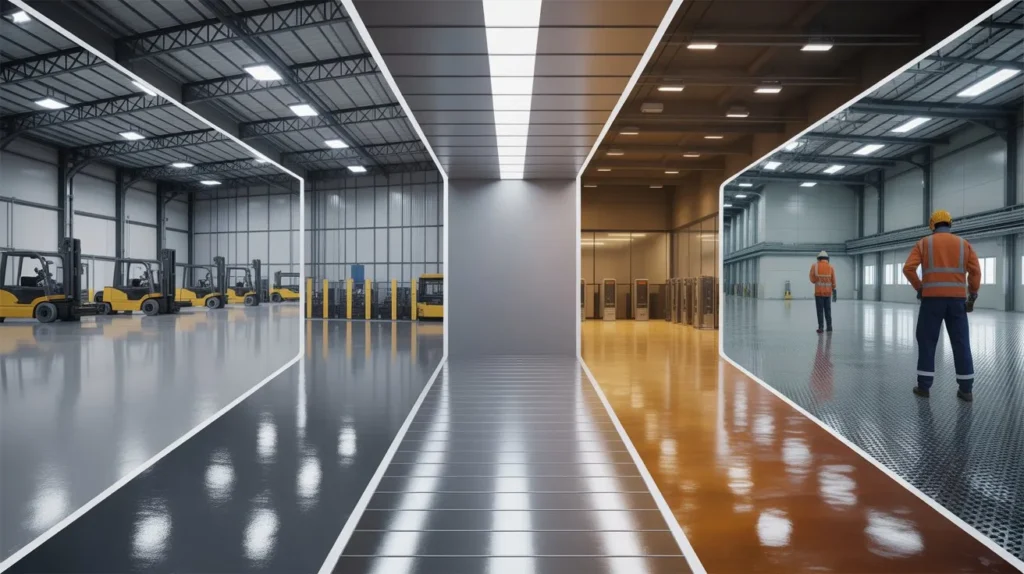
Epoxy flooring systems have become one of the most reliable and widely used surface solutions in industrial, commercial, and residential environments. Known for their durability, chemical resistance, and seamless finish, epoxy coatings are designed to meet specific performance requirements.
However, not all epoxy flooring systems are the same. Different types of epoxy systems are developed to handle varying levels of traffic, chemical exposure, moisture conditions, and aesthetic needs. Choosing the right epoxy flooring system is essential for long-term performance and cost efficiency.
In this complete guide, we will explore the different types of epoxy flooring systems, their features, advantages, and applications.
Introduction to Epoxy Flooring
Epoxy flooring is created by mixing epoxy resin with a hardener. This chemical reaction forms a rigid, durable, and non-porous surface that bonds strongly with concrete substrates.
Why Epoxy Flooring Is Widely Used
- High durability and strength
- Resistance to chemicals and abrasion
- Seamless and hygienic surface
- Easy maintenance
- Long lifespan
Epoxy flooring is commonly used in warehouses, factories, hospitals, parking areas, and commercial buildings.
What Are Epoxy Flooring Systems?
Epoxy flooring systems refer to different formulations and application methods of epoxy coatings designed for specific purposes. These systems vary based on:
- Thickness
- Composition
- Performance requirements
- Environmental conditions
Each system is engineered to solve a particular problem—whether it’s heavy load resistance, moisture control, or aesthetic enhancement.
Self-Leveling Epoxy Flooring
Overview
Self-leveling epoxy is designed to create a smooth, flat, and seamless surface over concrete floors. It automatically spreads and levels itself, filling minor cracks and imperfections.
Key Features
- Smooth and glossy finish
- Thickness: 1–3 mm
- Seamless and non-porous
- Easy to clean
Advantages
- Improves surface appearance
- Enhances hygiene
- Reduces maintenance
- Ideal for medium to heavy traffic
Common Applications
- Hospitals
- Showrooms
- Commercial spaces
- Warehouses
Epoxy Mortar Flooring
Overview
Epoxy mortar flooring is one of the strongest epoxy systems. It is made by combining epoxy resin with graded aggregates such as sand or quartz.
Composition
- Epoxy resin
- Hardener
- Aggregates (sand/quartz)
Strength and Durability
- Extremely high compressive strength
- Resistant to impact and heavy loads
- Ideal for damaged concrete repair
Industrial Use Cases
- Manufacturing plants
- Heavy machinery areas
- Industrial workshops
Quartz-Filled Epoxy Flooring
What Is Quartz Epoxy?
Quartz-filled epoxy combines epoxy resin with colored quartz grains to create a decorative and slip-resistant surface.
Slip-Resistant Properties
- Provides excellent grip
- Reduces accident risk
- Suitable for wet areas
Decorative Options
- Available in multiple colors
- Custom patterns possible
Best Environments for Use
- Hospitals
- Laboratories
- Locker rooms
- Food processing units
Anti-Static (ESD) Epoxy Flooring
What Is ESD Flooring?
Anti-static epoxy flooring is designed to control electrostatic discharge (ESD), which can damage sensitive electronic equipment.
How It Works
- Conductive materials are added to the epoxy
- Static electricity is safely discharged
Industries That Require ESD
- Electronics manufacturing
- Data centers
- Laboratories
- Pharmaceutical units
Key Benefits
- Protects equipment
- Improves safety
- Prevents static buildup
Flake Epoxy Flooring System
Decorative Flakes Explained
Flake epoxy systems include colored flakes broadcast over the epoxy base coat to create a textured and decorative finish.
Aesthetic Benefits
- Attractive appearance
- Wide color combinations
- Hides surface imperfections
Durability Features
- Resistant to wear and tear
- Slip-resistant surface
- Easy to maintain
Typical Applications
- Showrooms
- Offices
- Garages
- Commercial spaces
Metallic Epoxy Flooring
Unique Visual Effects
Metallic epoxy creates a high-gloss, marble-like finish using metallic pigments.
Application Technique
- Multi-layer system
- Special application methods for patterns
Pros and Cons
Pros:
- Premium appearance
- Unique designs
- Seamless finish
Cons:
- Higher cost
- Skilled application required
Ideal Use Cases
- Retail stores
- Hotels
- Luxury homes
- Offices
High-Build Epoxy Coating
Thickness and Layering
High-build epoxy coatings are thicker systems applied in multiple layers for enhanced protection.
Industrial Performance
- High durability
- Strong adhesion
- Resistant to heavy traffic
Chemical Resistance
- Protects against oils, solvents, and chemicals
Suitable Industries
- Warehouses
- Factories
- Automotive workshops
Vapor Barrier Epoxy Systems
Moisture-Related Problems
Moisture in concrete can cause:
- Coating failure
- Peeling
- Blistering
How Vapor Barrier Works
Vapor barrier epoxy prevents moisture from passing through the concrete surface.
Benefits
- Protects coating integrity
- Improves adhesion
- Extends lifespan
Application Areas
- Basements
- Ground floors
- Moisture-prone environments
Comparison of Epoxy Flooring Systems
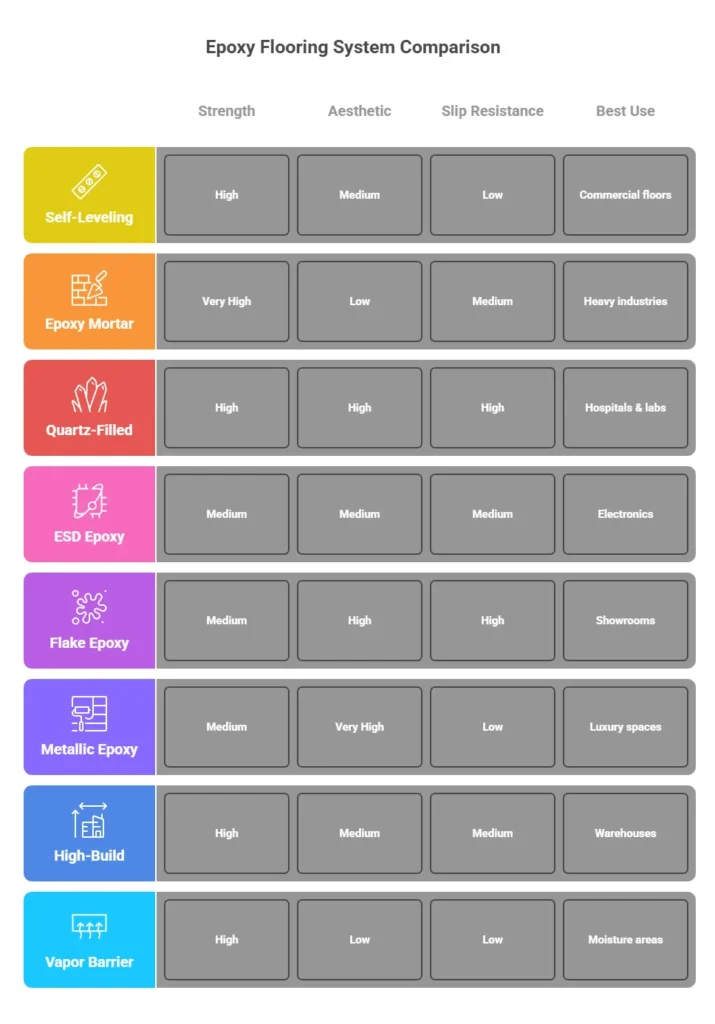
Choosing the Right Epoxy Flooring System
Based on Traffic Load
- Heavy traffic → Epoxy mortar or high-build
- Medium traffic → Self-leveling
- Light traffic → Decorative epoxy
Based on Chemical Exposure
- High chemical exposure → Industrial epoxy systems
- Low exposure → Decorative systems
Based on Aesthetics
- High design requirement → Metallic or flake epoxy
- Functional areas → Industrial epoxy
Budget Considerations
- Low budget → Basic epoxy coating
- Medium budget → Self-leveling or flake
- High budget → Metallic or specialized systems
Benefits of Using Epoxy Flooring Systems
- High durability
- Chemical resistance
- Seamless finish
- Easy maintenance
- Long lifespan
- Cost-effective in the long run
Conclusion
Epoxy flooring systems offer a wide range of solutions tailored to different industries and applications. From heavy-duty epoxy mortar flooring to visually appealing metallic epoxy, each system is designed to meet specific requirements.
Choosing the right epoxy flooring system depends on:
- Load conditions
- Environmental exposure
- Aesthetic needs
- Budget
A well-selected and professionally installed epoxy flooring system ensures durability, safety, and long-term performance.
For best results, always consult experts, use high-quality materials, and follow proper installation procedures. A strong epoxy floor is not just a surface—it’s a long-term investment in performance and protection.