

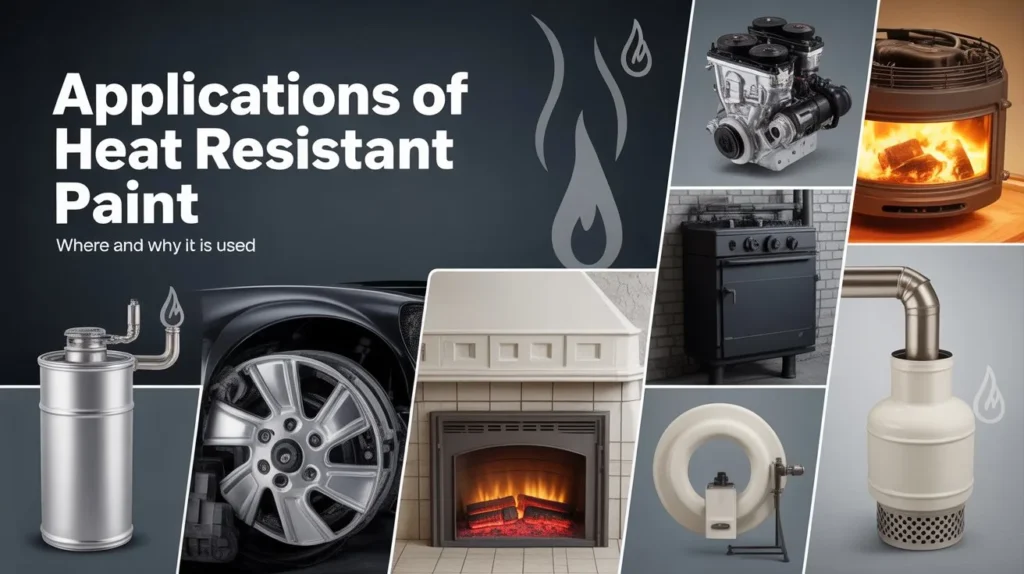
Heat resistant paint is widely used to protect surfaces exposed to extreme temperatures, especially in industrial hubs like Vadodara, Gujarat. It is ideal for metal structures, boilers, chimneys, furnaces, and pipelines where heat and corrosion are major concerns. This specialized coating forms a thermal barrier that prevents damage, oxidation, and surface degradation. In automotive and residential settings, it is commonly applied to exhaust systems, stoves, and fireplaces. Industries prefer heat resistant paint for its durability, safety enhancement, and long-lasting performance, making it a cost-effective solution for high-temperature environments across India.
Introduction to Heat Resistant Paint Applications
What Is Heat Resistant Paint?
Heat resistant paint is a specially formulated coating designed to withstand high temperatures without cracking, peeling, or losing its protective properties. Unlike regular paints, it contains heat-stable resins such as silicone or epoxy that create a strong barrier on surfaces like metal, ensuring long-term performance in extreme heat conditions.
Importance in High-Temperature Environments
In industries across Vadodara, Gujarat, where machinery and equipment operate under intense heat, heat resistant paint plays a critical role. It protects surfaces from thermal damage, oxidation, and structural weakening, helping maintain safety and efficiency in environments like power plants, refineries, and manufacturing units.
Why Industries Prefer Heat Resistant Coatings
Industries choose heat resistant coatings because they enhance durability, reduce maintenance costs, and improve equipment lifespan. These coatings also provide corrosion resistance and thermal insulation, making them essential for high-performance industrial applications where reliability and safety are top priorities.
Industrial Applications of Heat Resistant Paint
Boilers and Furnaces
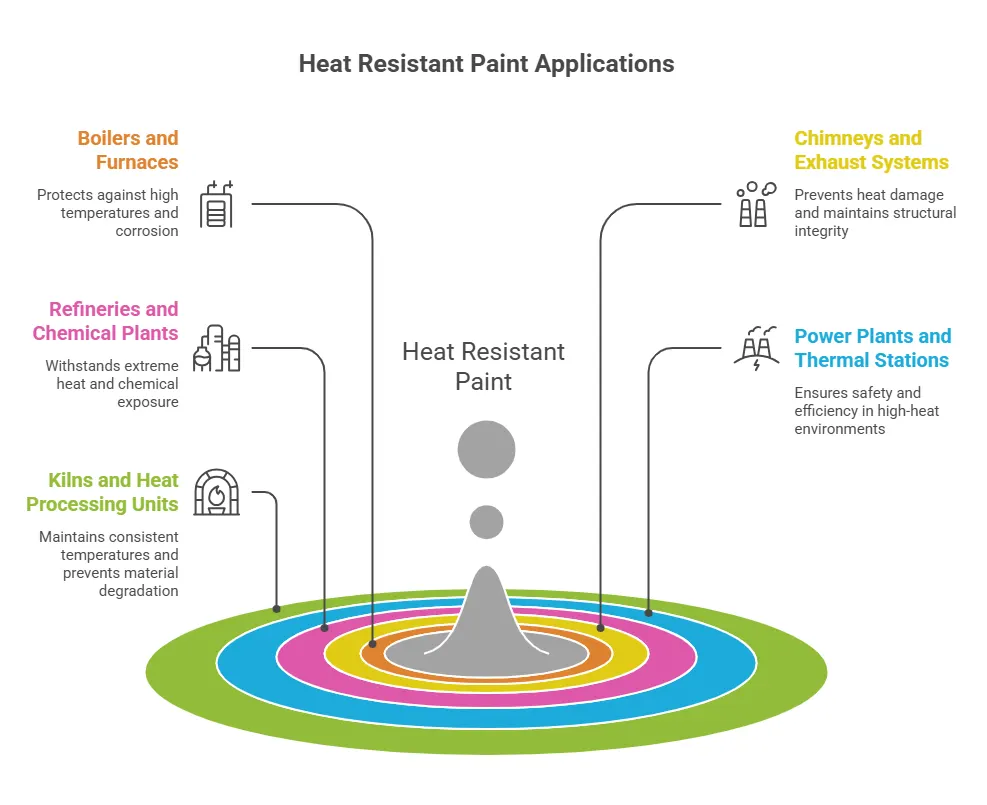
Heat resistant paint is widely applied on boilers and furnaces to withstand extreme temperatures and continuous heat exposure. It protects metal surfaces from scaling, cracking, and oxidation, ensuring safe operation and longer equipment life in demanding industrial environments.
Chimneys and Exhaust Systems
Chimneys and exhaust systems are exposed to hot gases, smoke, and environmental pollutants. Heat resistant coatings help maintain structural integrity by preventing corrosion and thermal damage, while also improving durability and reducing maintenance needs.
Refineries and Chemical Plants
In refineries and chemical plants, equipment operates under both high heat and chemical exposure. Heat resistant paint provides a protective barrier against thermal stress and corrosion, helping industries maintain safety, efficiency, and compliance with operational standards.
Power Plants and Thermal Stations
Power plants and thermal stations rely heavily on heat resistant coatings to protect boilers, turbines, and pipelines. These coatings enhance performance by minimizing heat-related damage and reducing downtime, ensuring consistent energy production.
Kilns and Heat Processing Units
Kilns and heat processing units function at extremely high temperatures, especially in industries like cement, ceramics, and metal processing. Heat resistant paint acts as a thermal shield, preventing surface degradation and ensuring reliable, long-term operation.
Heat Resistant Paint for Metal Surfaces
Structural Steel Protection
Heat resistant paint is essential for protecting structural steel used in factories, warehouses, and industrial frameworks. High temperatures can weaken steel over time, leading to deformation and reduced strength. A heat resistant coating forms a protective barrier that minimizes thermal damage, ensuring durability, safety, and long-term structural stability.
Pipelines and Storage Tanks
Pipelines and storage tanks often carry or store high-temperature materials, especially in oil, gas, and chemical industries. Heat resistant paint helps protect these metal surfaces from heat-induced stress, corrosion, and external environmental factors. This improves operational safety, prevents leaks, and extends the lifespan of critical infrastructure.
Machinery and Equipment Coating
Industrial machinery and equipment generate significant heat during operation. Applying heat resistant paint protects metal components from overheating, surface wear, and degradation. This not only enhances performance but also reduces maintenance costs and increases the overall efficiency of operations.
Prevention of Rust and Oxidation
Heat accelerates the process of rusting and oxidation on metal surfaces. Heat resistant coatings act as a shield against moisture, oxygen, and extreme temperatures, preventing corrosion and maintaining the integrity of the metal. This makes them a reliable solution for industries that require long-lasting protection in harsh environments.
Automotive and Transportation Applications
Engine Components
Heat resistant paint is widely used on engine components that operate under high temperatures. It helps protect metal parts such as engine blocks, manifolds, and covers from heat damage, oxidation, and wear. This ensures better performance, improved durability, and longer service life of automotive systems.
Exhaust Pipes and Mufflers
Exhaust systems are constantly exposed to extreme heat and corrosive gases. Applying heat resistant paint on exhaust pipes and mufflers prevents rust, reduces surface degradation, and maintains structural strength. It also enhances the appearance by keeping surfaces clean and resistant to discoloration.
Brake Systems
Brake components generate intense heat due to friction during operation. Heat resistant coatings help protect brake calipers and related metal parts from thermal stress and corrosion. This improves safety, maintains efficiency, and ensures consistent braking performance over time.
Aerospace and Aviation Parts
In aerospace and aviation industries, components are exposed to extreme temperature variations and harsh environmental conditions. Heat resistant paint provides critical protection for metal surfaces, helping prevent thermal fatigue, oxidation, and material failure, ensuring reliability and safety in high-performance applications.
Residential and Commercial Uses
Kitchen Appliances (Stoves, Ovens)
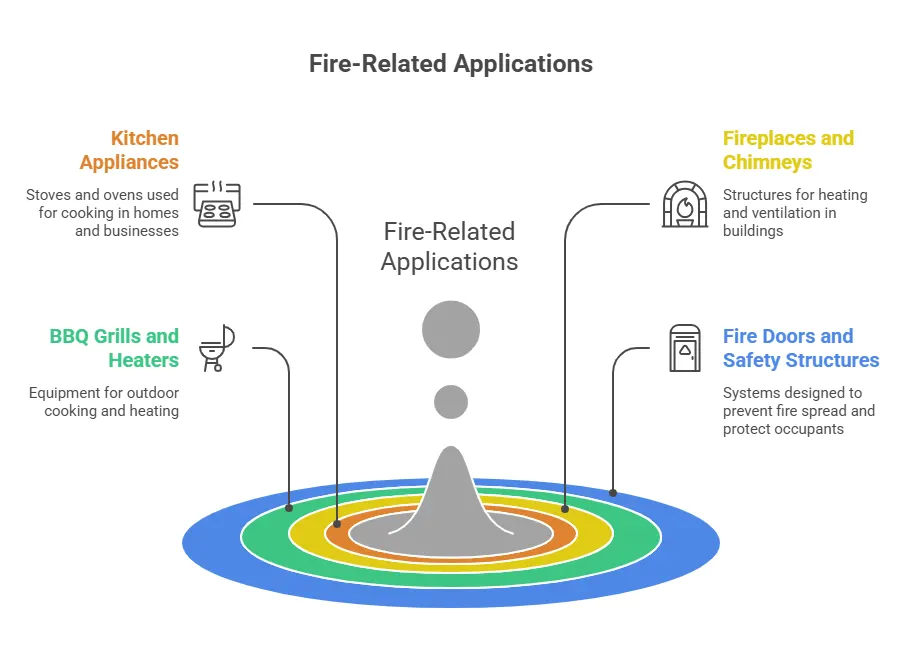
Heat resistant paint is commonly used on kitchen appliances like stoves and ovens that are exposed to continuous high temperatures. It protects metal surfaces from heat damage, discoloration, and wear, while maintaining a clean and durable finish suitable for daily use.
Fireplaces and Chimneys
Fireplaces and chimneys experience direct exposure to flames and hot gases. Applying heat resistant paint helps prevent cracking, peeling, and soot damage, while also improving the lifespan and safety of these structures in both residential and commercial settings.
BBQ Grills and Heaters
BBQ grills and outdoor heaters require coatings that can withstand extreme heat and weather conditions. Heat resistant paint ensures these surfaces remain rust-free, durable, and visually appealing, even after repeated exposure to high temperatures and outdoor environments.
Fire Doors and Safety Structures
Fire doors and safety structures are critical for fire protection in buildings. Heat resistant coatings enhance their ability to withstand high temperatures, delay heat transfer, and maintain structural integrity during fire incidents, improving overall safety and compliance with fire standards.
Marine and Offshore Applications
Ship Engine Rooms
Ship engine rooms operate under intense heat and humidity, making metal surfaces highly vulnerable to corrosion and wear. Heat resistant paint is applied to engines, exhaust systems, and surrounding structures to protect against thermal damage and moisture exposure, ensuring reliable performance during long voyages.
Offshore Platforms
Offshore oil and gas platforms are exposed to extreme conditions, including high temperatures, strong winds, and corrosive marine environments. Heat resistant coatings help protect structural steel, pipelines, and equipment from heat stress and corrosion, improving durability and reducing maintenance costs.
Protection Against Saltwater and Heat
Marine environments combine high heat with salt-laden air, which accelerates corrosion. Heat resistant paint acts as a protective barrier against both thermal impact and saltwater exposure, preventing rust, oxidation, and surface degradation, and ensuring long-term protection of critical assets.
Oil & Gas Industry Applications
Pipelines Exposed to High Temperatures
In the oil and gas sector, pipelines often carry hot fluids and gases under extreme pressure. Heat resistant paint protects these pipelines from thermal stress, corrosion, and external environmental damage. This ensures safe transportation, minimizes leakage risks, and extends the service life of pipeline systems.
Storage Tanks and Reactors
Storage tanks and reactors are frequently exposed to high temperatures and chemical reactions. Heat resistant coatings provide a strong barrier that prevents heat damage, surface degradation, and corrosion. This helps maintain structural integrity and ensures safe storage and processing of volatile materials.
Drilling Equipment
Drilling equipment operates in harsh environments where heat, friction, and pressure are constant challenges. Applying heat resistant paint to drilling machinery and components protects metal surfaces from overheating and wear, improving durability, reducing maintenance, and ensuring consistent performance in demanding oil and gas operations.
Benefits of Using Heat Resistant Paint in Various Applications
High Temperature Protection
Heat resistant paint is specifically designed to withstand extreme temperatures without cracking, peeling, or degrading. It forms a thermal barrier that protects surfaces from direct heat exposure, making it ideal for industrial equipment, metal structures, and high-temperature environments.
Corrosion Resistance
One of the key advantages of heat resistant coatings is their ability to resist corrosion. By preventing contact with moisture, oxygen, and chemicals, these coatings protect metal surfaces from rust and oxidation, even under high heat conditions.
Increased Equipment Lifespan
Applying heat resistant paint significantly extends the life of machinery, pipelines, and structural components. It reduces wear and tear caused by heat and environmental factors, minimizing maintenance costs and improving overall operational efficiency.
Safety Enhancement
Heat resistant coatings contribute to a safer working environment by reducing the risk of equipment failure due to overheating. They help maintain structural stability during high-temperature operations and can also play a role in fire protection, making them essential for industrial and commercial safety standards.
actors to Consider When Choosing Heat Resistant Paint
Temperature Range (e.g., 200°C to 1000°C+)
One of the most important factors is the temperature resistance of the paint. Different coatings are designed for specific heat ranges, from moderate temperatures (200°C) to extreme conditions (1000°C+). Selecting the right grade ensures optimal performance without failure such as cracking or peeling.
Surface Type (Metal, Concrete, etc.)
The type of surface plays a key role in choosing the correct heat resistant paint. Metal surfaces may require anti-corrosive and high-adhesion coatings, while concrete or masonry surfaces need formulations that can handle porosity and thermal expansion.
Environmental Exposure
Consider the environment where the coating will be applied. Factors like moisture, chemicals, UV exposure, and salt air can impact performance. In industries such as marine, chemical, or outdoor applications, choosing a coating with added resistance to harsh conditions is essential.
Durability and Maintenance
A high-quality heat resistant paint should offer long-lasting durability with minimal maintenance. Choosing coatings with strong adhesion, resistance to wear, and long service life helps reduce repainting frequency and lowers overall operational costs.
Conclusion – Choosing the Right Application for Maximum Performance
Matching Paint Type with Use Case
Selecting the right heat resistant paint depends on the specific application and operating conditions. Different environments—such as industrial furnaces, pipelines, automotive parts, or residential appliances—require coatings with suitable temperature resistance, adhesion, and protective properties. Matching the correct paint type with the intended use ensures optimal performance, durability, and safety.
Long-Term Cost and Performance Benefits
Investing in the right heat resistant coating delivers significant long-term benefits. It reduces maintenance costs, prevents premature equipment failure, and extends the lifespan of assets. By minimizing downtime and improving efficiency, heat resistant paint proves to be a cost-effective solution for industries and applications where high-temperature protection is essential.