

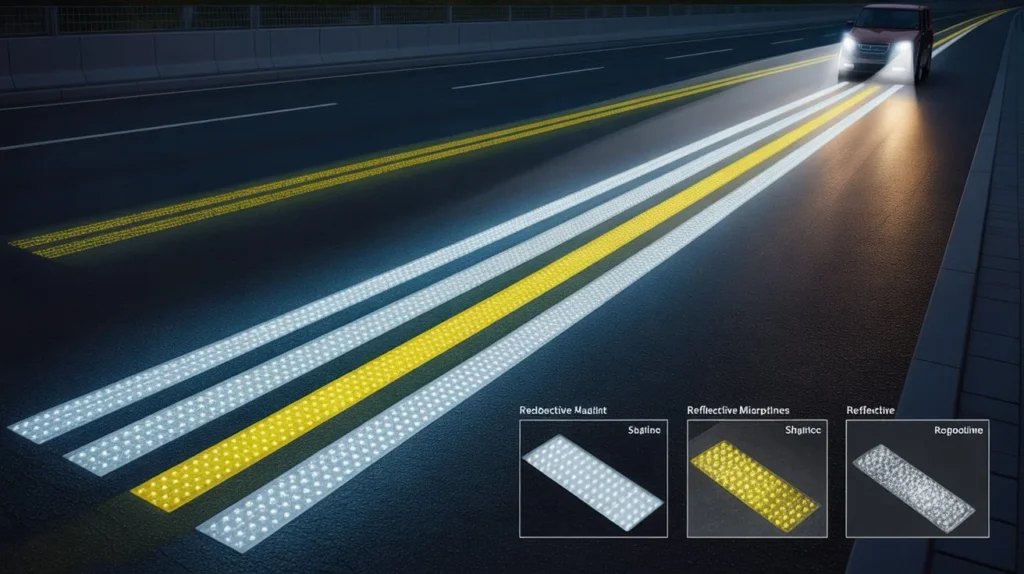
Reflective road marking paint plays an important role in improving road safety, especially during night driving and low-visibility conditions. It is designed with special reflective materials such as glass beads that reflect vehicle headlights, making road lines, arrows, and symbols clearly visible to drivers.
These high-visibility road markings help guide vehicles, maintain lane discipline, and reduce confusion on busy highways, city roads, and intersections. Reflective road marking paint is widely used in traffic management systems to enhance driver awareness and improve overall road safety.
By providing clear guidance in both daytime and nighttime conditions, reflective road marking solutions support smoother traffic flow and help prevent accidents on modern road infrastructure. 🚧
Introduction to Reflective Road Marking Paint
What is reflective road marking paint
Reflective road marking paint is a special type of road coating designed to improve the visibility of road lines, arrows, and symbols. It contains small glass beads or reflective materials that bounce vehicle headlights back toward the driver, making the markings easy to see at night and in low-light conditions.
Why reflectivity is important for road safety
Reflectivity is very important for road safety because many accidents happen at night or in poor visibility conditions. Reflective road markings help drivers clearly identify lanes, road edges, and turns, allowing them to react quickly and drive more safely.
How reflective road markings improve driver visibility
Reflective road markings work by reflecting light from vehicle headlights back to the driver’s eyes. This makes lane lines and road symbols brighter and easier to notice, helping drivers stay in the correct lane and navigate roads safely even in darkness, rain, or fog.
How Reflective Road Marking Paint Works
Role of glass beads in reflection
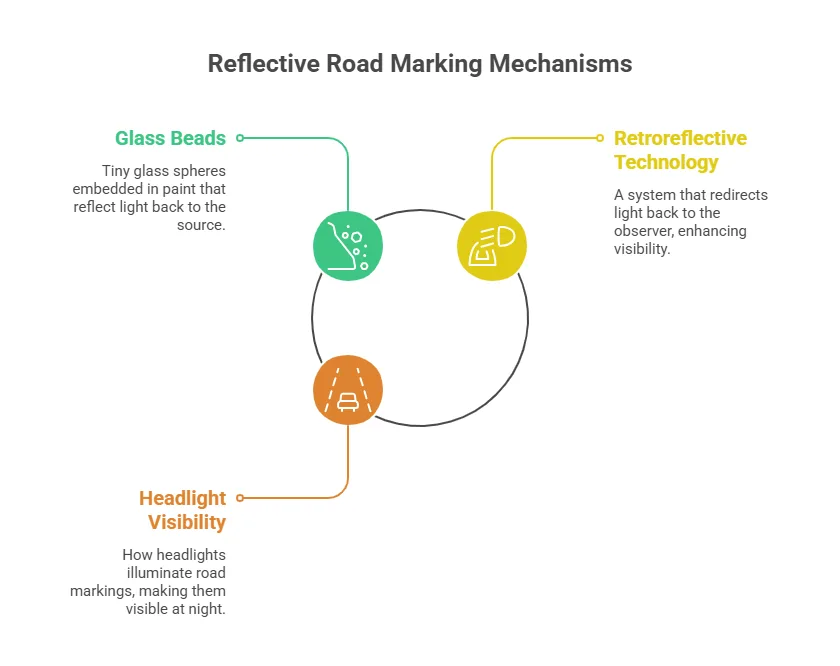
Reflective road marking paint uses tiny glass beads that are added during or after the paint application. These beads sit on the surface of the marking and act like small mirrors. When light from vehicle headlights hits the beads, it is reflected back toward the driver, making the road markings appear bright and clearly visible.
Retroreflective technology explained
Retroreflective technology means that light is reflected back toward its original source rather than scattering in different directions. In road markings, the glass beads capture the light from headlights and send it directly back to the driver. This effect increases the brightness of lane lines and symbols, especially at night.
How headlights create visibility at night
At night, vehicle headlights shine on the reflective road markings. The glass beads embedded in the paint reflect this light back toward the driver’s eyes. This process helps drivers clearly see lanes, road edges, and directional markings, improving guidance and safety during nighttime driving. 🚗
Key Features of Reflective Road Marking Paint
High night visibility
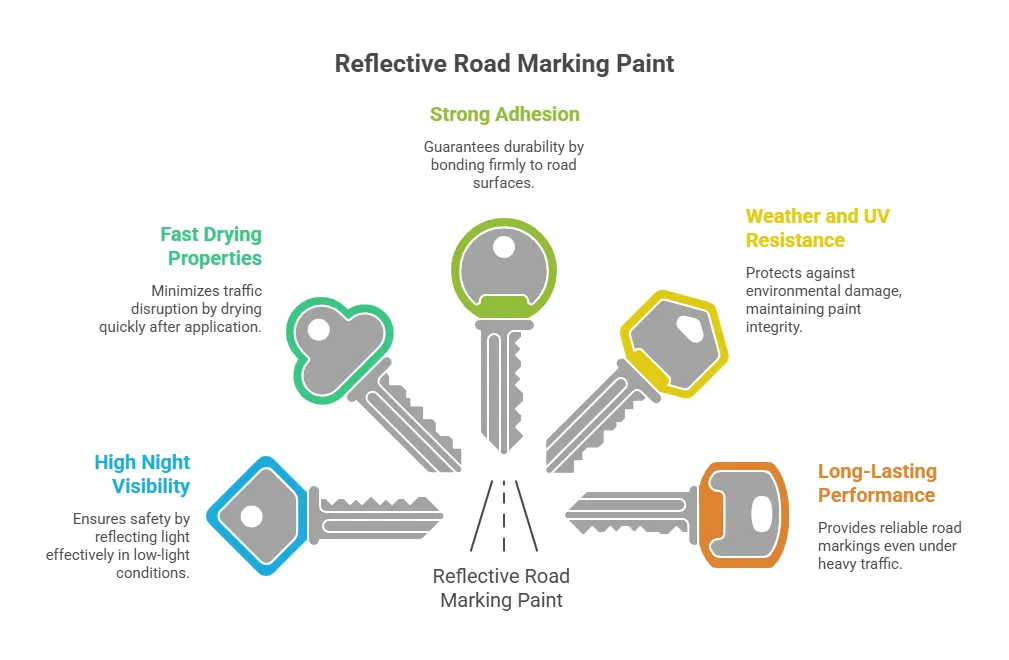
One of the most important features of reflective road marking paint is its high visibility at night. The reflective glass beads in the paint bounce vehicle headlights back toward drivers, making road lines, arrows, and symbols clearly visible even in dark conditions.
Fast drying properties
Reflective road marking paint is designed to dry quickly after application. This allows roads to reopen to traffic faster and reduces the risk of vehicles damaging fresh markings.
Strong adhesion to asphalt and concrete
High-quality reflective paint provides strong bonding to common road surfaces such as asphalt and concrete. This strong adhesion helps the markings stay intact even under heavy traffic and frequent vehicle movement.
Weather and UV resistance
Reflective road marking paint is formulated to withstand harsh environmental conditions such as sunlight, rain, and temperature changes. UV resistance helps prevent fading, keeping the markings bright and visible for a longer time.
Long-lasting performance under heavy traffic
Durability is a key feature of reflective road marking paint. It is designed to resist wear caused by heavy traffic, ensuring that road markings remain visible and effective for an extended period.
Types of Reflective Road Marking Paint
Thermoplastic reflective road marking paint
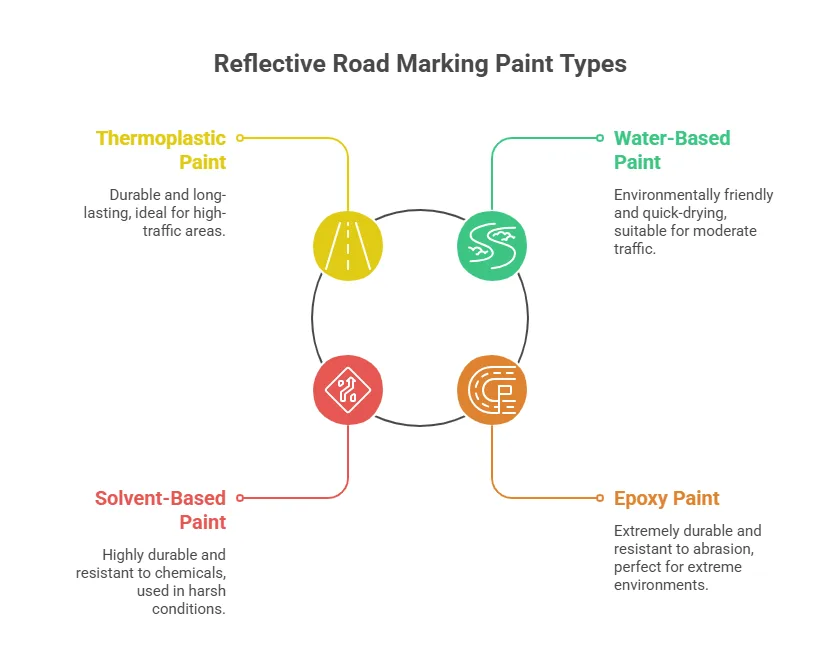
Thermoplastic reflective road marking paint is widely used for highways and high-traffic roads. It is applied in a heated molten form and hardens quickly after cooling. When combined with reflective glass beads, it provides excellent durability and strong night visibility, making it ideal for long-lasting road markings.
Water-based reflective road marking paint
Water-based reflective road marking paint uses water as the primary solvent and contains reflective glass beads for improved visibility. It is considered more environmentally friendly and is commonly used on city roads, parking lots, and low to medium traffic areas.
Solvent-based reflective road marking paint
Solvent-based reflective road marking paint is known for its strong adhesion and reliable performance in humid or slightly wet conditions. It dries quickly and is often used on roads where fast application and durability are important.
Epoxy reflective road marking paint
Epoxy reflective road marking paint is a two-component system that provides excellent durability and chemical resistance. It is commonly used in industrial areas, warehouses, parking garages, and locations where highly durable and visible markings are required.
Application Process of Reflective Road Marking Paint
Surface preparation
Proper surface preparation is essential before applying reflective road marking paint. The road surface must be clean, dry, and free from dust, oil, and loose particles. A well-prepared surface helps the paint adhere strongly and ensures longer-lasting markings.
Road marking layout and measurements
Before painting begins, accurate layout planning and measurements are done. Marking lines, arrows, and symbols are carefully measured and marked using chalk or temporary lines to ensure correct positioning and uniform spacing.
Machine vs manual application
Reflective road marking paint can be applied using road marking machines or manual methods. Machines are commonly used for highways and large roads because they provide faster and more uniform application, while manual methods are suitable for smaller areas like parking lots and intersections.
Glass bead application methods
Glass beads are applied either by mixing them into the paint or by dropping them on the wet paint immediately after application. These beads create the reflective effect by reflecting vehicle headlights, which improves visibility at night and in low-light conditions.
Applications of Reflective Road Marking Paint
Highways and expressways
Reflective road marking paint is widely used on highways and expressways to create clear lane lines, edge markings, and directional arrows. These markings help drivers maintain proper lanes and improve visibility during night driving and high-speed traffic conditions.
City roads and intersections
In busy city roads and intersections, reflective road markings help organize traffic flow and guide drivers safely. They are used for lane markings, pedestrian crossings, stop lines, and turning arrows to improve traffic control and safety.
Parking areas and commercial spaces
Reflective road marking paint is commonly applied in parking lots and commercial areas to mark parking spaces, driving lanes, pedestrian walkways, and restricted zones. Clear markings help maintain order and reduce confusion for drivers and pedestrians.
Industrial factories and warehouses
In factories and warehouses, reflective markings help separate vehicle paths, pedestrian walkways, and loading areas. These markings improve workplace safety and help prevent accidents involving forklifts, trucks, and workers.
Airports and logistics terminals
Airports and logistics terminals use reflective road markings to guide vehicles, service equipment, and cargo movement. These clear and visible markings ensure smooth operations and enhance safety in high-activity transport areas. ✈️🚧
Benefits of Reflective Road Marking Paint
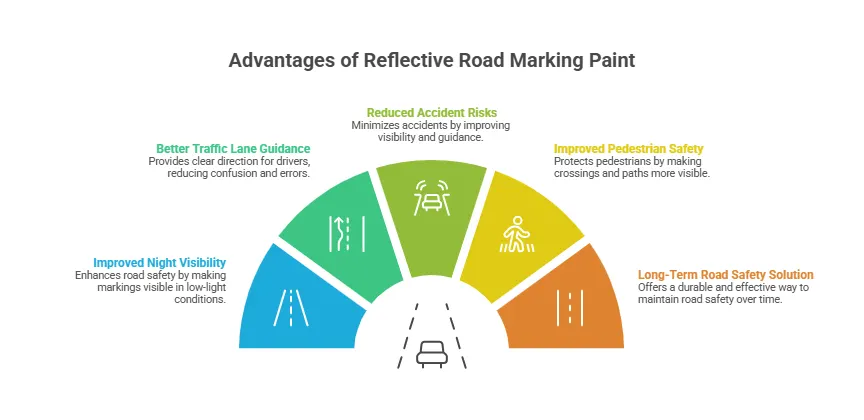
Improved night visibility
Reflective road marking paint significantly improves visibility during nighttime driving. The reflective glass beads embedded in the paint reflect vehicle headlights back to the driver, making road lines, arrows, and symbols brighter and easier to see.
Better traffic lane guidance
Clear reflective markings help drivers stay in the correct lane and follow road directions easily. This is especially important on highways, intersections, and busy city roads where proper lane guidance improves overall traffic flow.
Reduced accident risks
By improving visibility and providing clear road guidance, reflective road markings help reduce confusion for drivers. This lowers the chances of sudden lane changes, wrong turns, and other risky driving behaviors that can lead to accidents.
Improved pedestrian safety
Reflective road marking paint also improves the visibility of pedestrian crossings, safety zones, and warning signs. This helps drivers notice pedestrians earlier and respond more safely in busy areas.
Long-term road safety solution
High-quality reflective road marking paint offers long-lasting performance and durability. It maintains clear visibility over time, making it a reliable and cost-effective solution for improving road safety and traffic management. 🚧
How to Choose the Right Reflective Road Marking Paint
Traffic volume and road type
The level of traffic on a road is an important factor when selecting reflective road marking paint. Highways and busy city roads require highly durable paints such as thermoplastic or epoxy coatings that can withstand constant vehicle movement and heavy loads.
Climate and environmental conditions
Weather conditions can affect the performance of road markings. In areas with strong sunlight, heavy rain, or temperature fluctuations, it is important to choose reflective paint that offers good weather resistance and maintains visibility over time.
Surface compatibility
Different road surfaces, such as asphalt and concrete, require compatible types of road marking paint. Choosing a paint that adheres well to the specific surface ensures better durability and longer-lasting markings.
Durability and maintenance requirements
Selecting a paint with high durability helps reduce the need for frequent repainting. Long-lasting reflective road marking paint provides better value over time by lowering maintenance costs while maintaining clear and visible road markings. 🚧
Conclusion – Importance of Reflective Road Marking for Safer Roads
Reflective road marking paint plays a vital role in improving road safety and traffic management. By enhancing the visibility of lanes, symbols, and pedestrian crossings, it helps drivers clearly understand road directions and maintain proper lane discipline.
The reflective properties, created with glass beads, ensure that road markings remain visible at night and during low-light conditions such as rain or fog. This improved visibility reduces confusion for drivers and helps lower the risk of accidents on highways and city roads.
With durable performance and long-lasting visibility, reflective road marking paint is an essential solution for modern transportation infrastructure. Properly applied reflective markings support safer roads, smoother traffic flow, and better protection for both drivers and pedestrians. 🚧🚗