

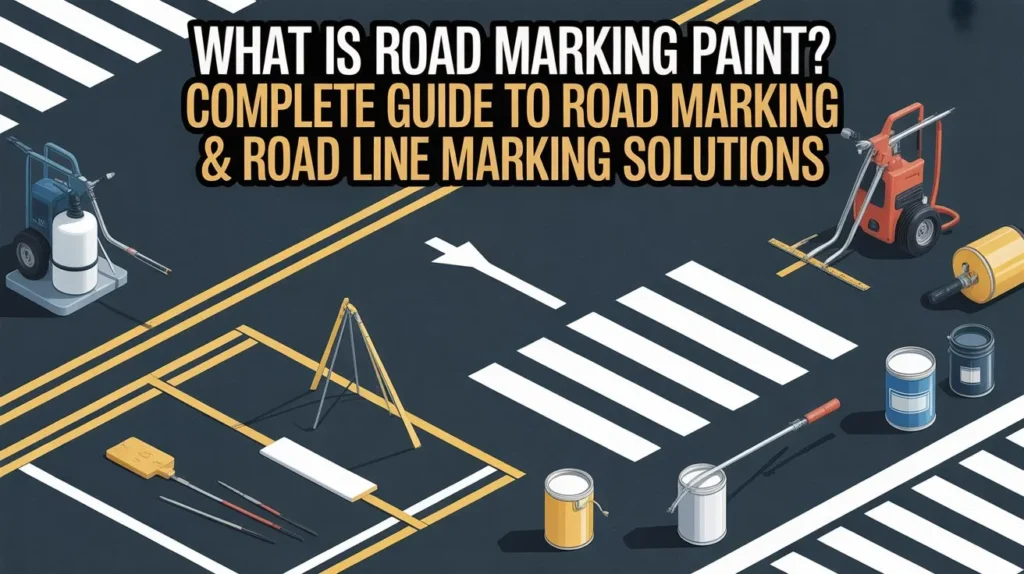
Road marking paint is a coating used to draw lines, arrows and symbols on roads, parking areas and industrial floors. This paint helps improve traffic safety and visibility.
It is applied on highways, city roads, parking lots, factories and warehouses to create lines, arrows, symbols and safety zones.
Road marking paint dries quickly can handle traffic and tough weather and often includes reflective beads for better night visibility.
Introduction to Road Marking Paint
Definition of Road Marking Paint
Road marking paint is used to draw lines, arrows and symbols on roads, parking areas and industrial floors.
- It dries quickly. Sticks strongly to surfaces.
- Many types include beads for clear visibility at night.
Importance of Road Marking in Traffic Management
Clear road markings guide drivers control traffic flow and reduce accidents.
- They help maintain lane discipline and keep roads organized and safe.
Difference Between Road Marking and Road Line Marking
- Road marking includes all symbols and signs on roads.
- Road line marking mainly refers to painted lines like dashed lane dividers.
Growing Demand in India
India’s demand for high-visibility road marking paint is rising fast due to new highways smart cities and industrial growth.
What Is Road Marking?
Purpose of Road Marking
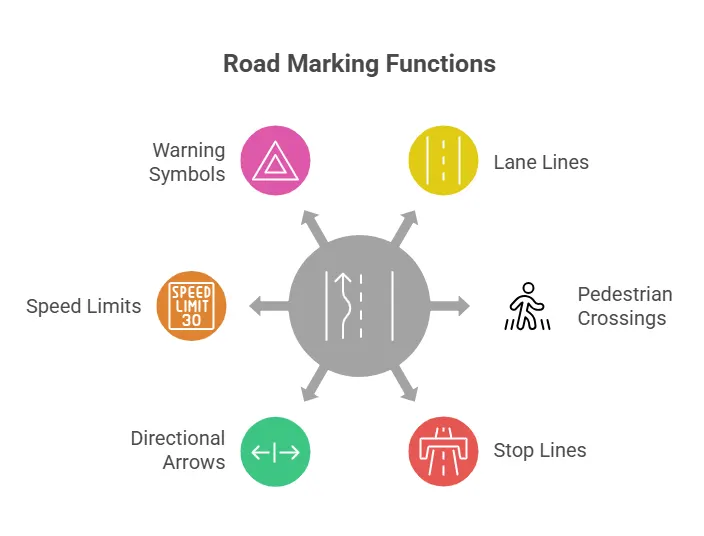
Road marking helps guide drivers, pedestrians and cyclists by showing lanes, directions and safety zones.
- Its main purpose is to improve road discipline and prevent accidents.
Types of Road Markings (Lines, Symbols, Arrows)
Road markings include:
Role in Highway and City Traffic Safety
- On highways road markings control high-speed traffic and lane changes.
- In cities they manage intersections, parking zones and pedestrian areas.
Government Standards and Regulations
Road markings must follow government guidelines for color, thickness and reflectivity.
What Is Road Line Marking?
Definition and Meaning
Road line marking refers to the painted lines drawn on roads to lanes and guide vehicles safely.
Types of Road Line Markings (Solid, Dashed, Double Lines)
- Solid lines indicate no crossing or overtaking.
- Dashed lines allow lane changes when safe.
- Double lines are used for control.
Lane Marking Systems
Lane marking systems help organize traffic flow on highways and city roads.
Parking and Industrial Line Marking
In parking lots and factories line marking defines parking spaces, pedestrian paths, loading zones and safety areas.
Types of Road Marking Paint
Thermoplastic Road Marking Paint
- paint is applied in a heated molten form and hardens quickly.
- It is highly durable and ideal for highways and heavy-traffic areas.
Water-Based Road Marking Paint
- Water-based paint is eco-friendly and low in VOCs.
- It dries fast. Is commonly used for city roads and parking lots.
Solvent-Based Road Marking Paint
Solvent-based paint offers adhesion and better performance in humid or rainy conditions.
Reflective Road Marking Paint
Reflective paint contains glass beads that enhance visibility at night.
Epoxy Road Marking Paint
Epoxy paint is a two-component system known for durability and chemical resistance.
Key Features of High-Quality Road Marking Paint
High Visibility and Reflectivity
A good road marking paint must be clearly visible during the day and at night.
Fast Drying Time
Quick drying is essential to reopen roads to traffic without delays.
Weather and UV Resistance
Road markings are exposed to sun, rain, heat, and dust every day. Premium paint resists fading, cracking, and peeling caused by harsh weather and UV rays.
Abrasion Resistance for Heavy Traffic
Constant vehicle movement can wear out weak paint quickly. High-quality road marking paint is designed to withstand heavy traffic and friction without losing clarity.
Long-Lasting Durability
Durability is key for cost savings and safety. Strong adhesion and tough formulation ensure the markings remain clear and effective for a longer period, reducing frequent maintenance.
Road Line Marking Application Process
Surface Preparation
Proper surface preparation is the first and most important step. The road must be clean, dry, and free from dust, oil, and loose particles. A well-prepared surface ensures strong paint adhesion and longer-lasting markings.
Layout Planning and Measurements
Before painting, accurate measurements and marking layouts are done. This includes lane width, spacing, symbols, and alignment to ensure the markings follow safety standards and traffic regulations.
Machine vs Manual Application
For highways and large projects, machine application provides uniform thickness and faster work. Manual application is suitable for small areas like parking lots and industrial zones where precision is needed.
Glass Bead Application for Reflectivity
Glass beads are sprayed over wet paint to enhance night visibility. These beads reflect vehicle headlights, making road lines clearly visible in low-light conditions.
Quality Inspection and Curing Time
After application, the markings are inspected for thickness, alignment, and reflectivity. Proper curing time is essential before opening the road to traffic to ensure durability and performance.
Applications of Road Marking Paint
Highways and Expressways
On highways and expressways, road marking paint is used for lane dividers, edge lines, arrows, and warning symbols. Clear markings help control high-speed traffic, improve lane discipline, and reduce accident risks.
Parking Lots
In parking areas, road marking paint defines parking spaces, entry and exit routes, pedestrian crossings, and disabled parking zones. Proper markings improve traffic flow and maximize space utilization.
Industrial Factories
Factories use road marking paint for safety lines, hazard zones, forklift paths, and emergency exits. Clear markings create a safer and more organized working environment.
Warehouses
In warehouses, line markings guide material movement, storage areas, loading zones, and walking paths. This improves operational efficiency and reduces workplace accidents.
Airports and Ports
Airports and ports require highly durable and reflective markings for runways, taxiways, cargo zones, and container yards. Strong, weather-resistant paint ensures visibility and safety in heavy-duty environments.
Benefits of Professional Road Marking Solutions
Improved Road Safety
Professional road marking ensures clear, sharp, and highly visible lines that guide drivers correctly. This reduces confusion and helps prevent dangerous driving mistakes.
Better Traffic Flow Management
Well-planned markings organize lanes, turns, and pedestrian zones efficiently. This improves traffic movement and minimizes congestion in busy areas.
Reduced Accident Risks
Clear lane dividers, stop lines, and warning symbols help drivers react quickly. Proper markings play a major role in lowering collision rates on highways and city roads.
Compliance with Safety Standards
Professional solutions follow government guidelines for thickness, reflectivity, and color standards. This ensures legal compliance and consistent road safety performance.
Cost-Effective Long-Term Solution
High-quality application increases durability and reduces frequent repainting. This saves maintenance costs while maintaining long-lasting visibility and safety.
How to Choose the Right Road Marking Paint
Traffic Load Consideration
Always consider how much traffic the road handles daily. Highways and heavy-traffic zones require durable options like thermoplastic or epoxy paint, while low-traffic areas can use water-based paint.
Climate and Weather Conditions
Choose paint that can handle local weather. In hot regions, UV-resistant paint prevents fading. In rainy or humid areas, strong adhesion and quick-drying properties are essential.
Surface Type (Asphalt or Concrete)
Different surfaces need different formulations. Asphalt and concrete react differently to paint, so selecting a compatible product ensures better bonding and long-lasting performance.
Budget and Lifespan Requirements
Balance cost with durability. Cheaper paints may require frequent repainting, while premium-quality paint offers longer service life and better value over time.
Supplier and Quality Certification
Always select a trusted supplier who follows safety standards and provides certified products. Quality assurance ensures consistent performance, reflectivity, and compliance with regulations.
Voice chat ended
Conclusion – Why Road Marking Paint Is Essential for Safe Infrastructure
Road marking paint plays a role in building safe and organized infrastructure.
- Clear road markings guide drivers to control traffic flow and reduce the risk of accidents on highways, city roads and industrial areas.
- High-quality road marking solutions improve visibility during day and night withstand weather conditions and handle heavy traffic without fading quickly.
- They also ensure compliance with safety standards and government regulations.
In short, good road markings are not about paint. They are about keeping people safe, helping drivers follow the rules and making sure roads last a long time. When we use road marking paint we are really investing in roads that are safer, for everyone.