

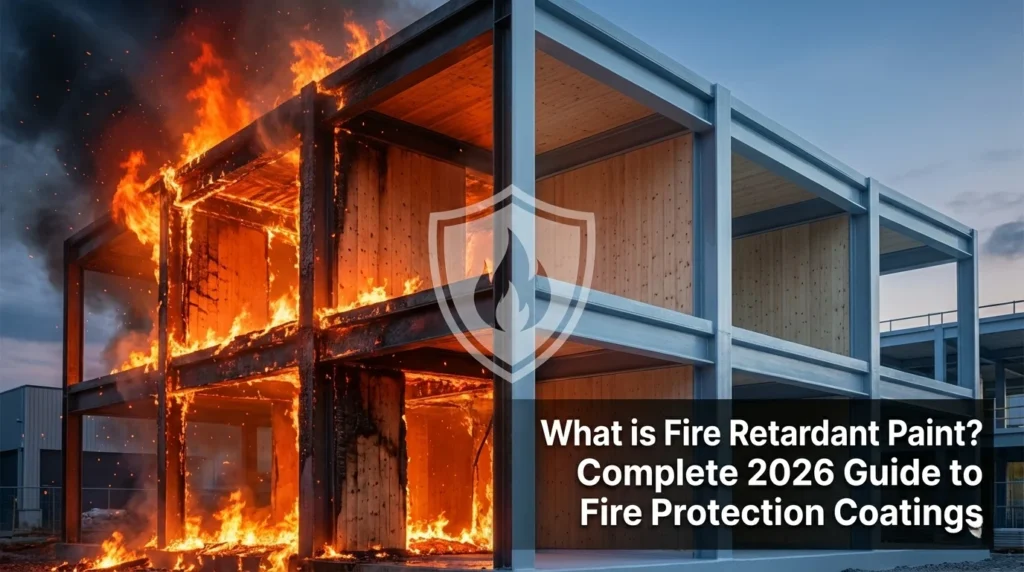
Fire safety is really important when we build things or work in factories. So what is this fire retardant paint. Why do we need it so much now? Fire retardant paint is a kind of paint that helps stop fires from spreading fast. It is made to keep the heat from getting through when things get very hot. This paint is different from the kind because when there is a fire it does something special. It makes a layer that keeps the surface underneath safe. Fire retardant paint is very good, at slowing down fires and keeping things from getting too hot. We use fire paint to protect people and buildings from fires.
As the rules for building get tougher in 2026. After that people are using fire retardant coating systems more and more to help prevent fires from spreading. These coatings are used on things like steel beams and wooden walls to wires. They help make these things safer in case of a fire. Knowing how fire proofing paint works is important for people who own buildings, contractors and people who run factories. It helps them make decisions that keep people safe and protect valuable things, like buildings and equipment. Fire retardant coating systems are a part of this. They are used to help keep fires from spreading and to keep people safe. Fire proofing paint is a part of fire retardant coating systems.
Understanding Fire Retardant Coating Technology
Fire safety these days is really dependent on coatings. A fire retardant coating is not something that you put on to protect things. It is a system that people have carefully planned and created to work when things get very hot. Knowing how fire retardant coatings work helps us see why they are so important for keeping fires from spreading. Fire retardant coatings play a part in keeping people and things safe, from fires.
How Intumescent Technology Works
Fire retardant coatings that are really good at their job usually have something called technology. When these fire retardant coatings get too hot they get a lot thicker like times thicker than they were before. This makes a thick layer that is like foam and it helps stop the fire from getting to the stuff underneath. The fire retardant coatings create this layer to keep the fire and the important parts of the building separate. Fire retardant coatings with technology are very good, at keeping things safe from fires.
For example in steel structures the insulating layer helps to slow down the temperature rise. This is important because it prevents the steel structures from losing their load-bearing strength quickly when there is a fire. The steel structures need to be able to hold their strength for long, as possible during a fire event. This is what the insulating layer does for the steel structures.
Chemical Composition Explained
Fire retardant coatings typically contain three key components:
- Acid source – Triggers the chemical reaction under heat.
- Carbon source – Forms the char layer.
- Blowing agent – Causes expansion when exposed to high temperatures.
When combined, these components create a controlled reaction that transforms the coating into an insulating shield. The formulation may also include binders, pigments, and additives to improve adhesion, durability, and environmental resistance.
Heat Reaction & Char Formation Process
During a fire, temperatures rise rapidly. At a critical activation temperature, the fire retardant coating begins to react. The coating softens, expands, and forms a carbon-rich char layer.
This char layer:
- Reduces heat transfer to the substrate
- Slows flame spread
- Minimizes structural deformation
- Delays potential collapse
The thicker and more stable the char layer, the longer the protection period — often rated at 30, 60, 90, or 120 minutes depending on the system.
Fire Testing Standards (ASTM, BS, IS Codes)
To ensure reliability, fire retardant coatings are tested according to recognized international standards. Common testing standards include:
- ASTM (American Society for Testing and Materials)
- BS (British Standards)
- IS (Indian Standards)
These standards evaluate fire resistance duration, structural stability, and performance under controlled fire exposure. Certified products that comply with these codes provide verified fire ratings and greater trust for architects, engineers, and regulatory authorities.
Fire Retardant Paint vs Fire Proofing Paint
So you have fire paint and fire proofing paint. These two things are not exactly the same. Fire retardant paint and fire proofing paint do jobs when it comes to keeping people and things safe from fires.
You need to know what makes fire paint and fire proofing paint different so you can pick the right one for what you need to keep people safe and follow the rules for buildings. Fire retardant paint and fire proofing paint are important for fire protection systems.
Key Technical Differences
Fire Retardant Paint is primarily designed to slow down the spread of flames and reduce surface combustibility. It works by reacting to heat and forming a protective insulating layer that delays fire progression.
Fire Proofing Paint, on the other hand, is typically engineered to provide higher levels of structural fire resistance. It focuses on protecting load-bearing elements such as steel beams and columns from reaching critical failure temperatures during a fire.
In simple terms:
- Fire retardant paint = Controls flame spread and heat transfer
- Fire proofing paint = Protects structural integrity for longer durations
Fire Resistance Ratings (30, 60, 90, 120 Minutes)
Both systems are tested and certified according to fire resistance ratings. These ratings indicate how long a coating can protect a structure under fire exposure:
- 30 Minutes – Basic protection for low-risk areas
- 60 Minutes – Common for offices and commercial buildings
- 90 Minutes – Enhanced safety for larger structures
- 120 Minutes – High-risk industrial or critical infrastructure
The required rating depends on building codes, occupancy type, and risk assessment. Higher ratings generally require greater coating thickness and certified testing documentation.
Structural vs Surface Protection
Fire retardant paint is often used for surface-level protection on wood, decorative panels, cable trays, and interior elements where flame spread control is essential.
Fire proofing paint is mainly applied to structural components, particularly steel frameworks, to maintain load-bearing capacity during fire exposure. Structural protection is critical in preventing collapse and allowing safe evacuation.
When Each Solution is Recommended
Choose fire retardant paint when:
- You need to limit flame spread on combustible surfaces
- Protecting interior finishes or non-load-bearing elements
- Meeting surface spread of flame compliance standards
Choose fire proofing paint when:
- Protecting structural steel or load-bearing components
- Meeting strict fire endurance requirements
- Working in high-risk industrial or commercial environments
Selecting the correct system ensures compliance, enhances safety, and maximizes long-term fire protection performance.
Where is Fire Retardant Coating Used?
Fire retardant coating is widely used across industries as part of a passive fire protection strategy. Its versatility allows it to be applied on multiple substrates, helping reduce flame spread, delay structural failure, and improve overall building safety. Below are the key areas where fire retardant coatings are commonly used.
Steel Structures & Beams
Steel is really strong when things are normal.. When it gets very hot it can lose a lot of its strength. Up to 50% of its strength. That is why we use a fire retardant coating, on steel beams and columns and the framework that holds everything together. This coating helps to slow down the heat. When there is a fire the coating gets bigger. Forms a kind of barrier that keeps the heat from getting to the steel. This helps the steel to keep holding everything up for an amount of time which is what we call the fire rating period. We apply this fire coating to the steel so that it can keep doing its job even when it is hot. The steel beams and columns and framework are very important so we use this coating to protect them.
Wood & Interior Surfaces
Wood is something that can catch fire easily. It is used in a lot of things like doors and walls and panels. If you put a coating on the wood it will not catch fire as quickly. This is really important for places like schools and hospitals and hotels where a lot of people’re inside. You want to make sure everyone is safe in these places. Wood with this coating is also good, for homes and big rooms where people gather.
Electrical Cables & Cable Trays
Electrical systems can really help fires spread quickly if we do not take care of them. To prevent this we use a fire retardant coating on the cables and the trays that hold the cables. This coating helps stop the flames from spreading and makes smoke. This is very important in places, like data centers, power stations and big industrial facilities and commercial buildings. Electrical systems need this protection to prevent fires from getting out of control.
Warehouses & Industrial Plants
Warehouses and manufacturing plants usually have things that can catch fire easily. They use big machines. Fire retardant coatings are really important because they protect the building and the shelves where things are stored. They also protect the areas where work is being done. This helps to reduce the chance of a fire. It limits the damage if a fire does happen. Fire retardant coatings help warehouses and manufacturing plants follow the rules about fire safety. They also help with insurance requirements, for warehouses and manufacturing plants.
Commercial Buildings & Public Infrastructure
When we think about shopping malls and airports and railway stations and offices and government buildings we know they need good fire safety measures. Fire retardant coating is a help because it makes these buildings stronger in case of a fire. This special coating also helps people follow the rules about building safety. If we use these coatings when we are planning to build something it will be safer for the people who use the building. It will also help protect the building itself for a long time. Fire retardant coating is very important, for shopping malls and airports and railway stations and offices and government buildings.
Why Fire Retardant Paint is Essential in Modern Construction
Modern buildings are really complicated. They are getting taller all the time. They are also more packed with people than ever before. Because of this we have to follow a lot of safety rules and the buildings themselves are very valuable. So fire protection is not something we think about later, it is something we have to think about when we’re designing the building. Fire retardant paint is very important for keeping people safe from fires in the buildings that are being constructed today. Fire retardant paint helps to make sure that the buildings are safe from fires.
Passive Fire Protection Strategy
Fire retardant paint is really important for keeping fires from spreading. It is a part of what we call passive fire protection systems. These systems are different from things, like sprinklers or alarms that need to be turned on. Fire retardant paint and other passive systems are actually built into the building. This means that fire retardant paint is always working to protect the building even when no one is around to activate anything.
When exposed to heat, fire retardant coatings automatically react and form an insulating barrier. This helps delay structural failure, slow flame spread, and provide valuable time for evacuation and emergency response — without requiring any manual intervention.
Compliance with Building Codes
In the future like in 2026 and later buildings need to be safer from fires. This means they have to be able to resist fires for an amount of time. Fire retardant paint is a way to make sure buildings can do this. Buildings need to be able to withstand fires for 30 minutes or 60 minutes or 90 minutes or 120 minutes. Fire retardant paint helps buildings meet these fire endurance standards, which’s very important, for fire safety. Fire retardant paint is a part of making sure fire safety systems are certified and working properly.
Using certified fire coating systems is a good idea because it helps you follow the rules that the country and the world have set. This makes it easier when people come to check your industrial project. They can approve it too.
Insurance & Risk Reduction Benefits
Insurance companies are looking really closely at what people do to protect themselves from fires when they figure out how money to charge them. If you have a building with paint that helps stop fires you might be able to pay less money for insurance because you are safer. This special paint can help insurance providers see that you are not as likely to have a fire so they might give you a better deal, on your insurance.
These coatings help by stopping buildings from getting badly damaged and slowing down how fast fires spread. This means that people can avoid losing a lot of money and their businesses do not have to stay closed for long. These coatings really help reduce the losses, from fires and the time that businesses are not operating.
Life Safety & Asset Protection
The main reason we have fire protection is to save peoples lives. Fire retardant paint is really important because it helps keep people safe by slowing down fires and making sure buildings do not collapse when it really matters. Fire protection and fire retardant paint work together to save lives.
Fire retardant paint does a lot of things. It helps keep people safe. It also protects things like buildings and equipment and the money that people have invested in them. When we build something we should use fire retardant paint. This is not something we have to do because the rules say so. It is an idea because it helps prevent bad things from happening. Using fire paint is a smart thing to do because it helps keep people and things safe. Fire retardant paint is a choice, for people who want to be safe and think about the future.
How to Choose the Right Fire Proofing Paint
Choosing the fire proofing paint is a big deal. It affects how safe a building is and if it meets the rules. Fire proofing paint is not all the same. The good thing about fire proofing paint depends on what kind of fire it needs to stop, what the surface is made of and the weather around it. You also need to make sure it has the certification. If you pick the fire proofing paint it will keep working well for a long time and it will really stop fires from spreading. Fire proofing paint is very important for safety and regulatory compliance. You have to think about fire proofing paint to get the one that is right for you.
Understanding Fire Ratings
Fire ratings indicate how long a coating can protect a structure during fire exposure. Common ratings include 30, 60, 90, and 120 minutes.
The required rating depends on:
- Building type and occupancy
- Height and structural design
- Local fire safety regulations
- Risk assessment level
Higher fire ratings typically require greater coating thickness and certified testing documentation. Always match the product rating with project specifications and compliance standards.
Surface Compatibility
Fire proofing systems are not all the same. You need to use a fire proofing system for different materials. For example some special coatings are made for structural steel. On the hand you can use other coatings for concrete or for wood or for materials that are made from a combination of things. Fire proofing systems are really important, for all these materials.
If you use the product the paint will not stick well to the surface. It may even. It will not be able to stop fires as well as it should. So you should always check that the fire proofing paint is okay to use on the surface you have and the primer system you are using. The fire proofing paint needs to be approved for the surface and the primer system.
Environmental Exposure Conditions
Environmental factors significantly affect coating durability. Indoor environments may require low-VOC, odor-controlled formulations, while outdoor applications demand weather-resistant and UV-stable coatings.
Consider exposure to:
- Moisture and humidity
- Temperature fluctuations
- Chemical vapors or industrial pollutants
- Corrosive environments
Choosing the correct formulation ensures both fire protection and long-term durability.
Thickness & Certification Requirements
When you are using fire proofing paint you need to put it on so that it’s the right thickness when it is dry. This thickness is very important because the fire proofing paint will only work properly if it is this thick. If you do not put on fire proofing paint it will not protect things for as long as it should. On the other hand if you put on too much fire proofing paint it can crack or it will not stick to the surface properly. You have to get the thickness of the fire proofing paint right so that it works the way it is supposed to.
When you are using a product you should always follow what the manufacturer says about it. The manufacturer has a list of details that you need to follow. You also need to make sure the product is tested in a way that is accepted by everyone. This means the product should meet standards like the ones, from ASTM, BS or IS codes.
If a product is certified that means it has been checked and it works like it should. This gives you confidence that the product is safe to use in a building. You can be sure that the product meets all the safety rules that’re in place.
Installation & Application Best Practices
Fire retardant paint needs to be put on so it can do what it is supposed to do. If you do not put fire paint on the right way it will not work properly even if it is a really good kind. Fire retardant paint and fire proofing paint have to be applied in a way. Following the rules that experts use when they put on fire coating makes sure it sticks well, lasts a long time and protects against fire for a long time. This is important, for fire paint and fire proofing paint to work like they should.
Surface Preparation Standards
Surface preparation is the foundation of successful application. All substrates must be clean, dry, and free from dust, grease, rust, loose paint, or contaminants.
For steel structures, surface preparation may require mechanical cleaning or abrasive blasting to achieve the specified surface profile. Wooden or interior surfaces should be smooth and moisture-controlled. Proper preparation ensures strong bonding and consistent fire resistance performance.
Primer Compatibility
The right primer is really important especially when you are working with steel. Steel needs a primer to stop it from corroding and to make sure the fire retardant coating sticks well, to the surface. The primer helps the coating stay on the steel. Does a good job of keeping the steel from getting damaged. Using the primer for steel is the best way to get a good result.
You have to be careful when you are choosing a primer to use with fire protection systems. Not all primers work well with these systems. You should always use a primer that the manufacturer says is okay to use. This way you can avoid problems, like the primer not working with the other chemicals or the primer not sticking properly. If you do not use the primer it can also affect how well the fire protection system works. Always remember to use a manufacturer-approved primer when you are working with fire protection systems.
Recommended Application Methods
Fire retardant and fire proofing paints can be applied using:
- Airless spray systems for large structural areas
- Brush or roller application for smaller sections or touch-ups
Spray application is typically preferred in industrial projects because it ensures uniform film thickness. Maintaining the recommended wet film thickness (WFT) and dry film thickness (DFT) is crucial for achieving the required fire resistance rating.
Inspection & Quality Control
Quality control ensures that the coating meets project specifications and fire certification standards. Inspection should include:
- Verification of surface preparation
- Measurement of wet and dry film thickness
- Adhesion testing where required
- Visual inspection for defects such as sagging or cracking
Documenting application and inspection records strengthens compliance and supports audit requirements. Proper installation combined with strict quality control guarantees that the fire protection system performs effectively when it matters most.
Maintenance & Long-Term Performance
Installing fire retardant paint is only the first step in ensuring reliable fire protection. To maintain certified performance over time, regular inspection and proper maintenance are essential. Environmental exposure, mechanical damage, and aging can affect the integrity of a fire retardant coating or fire proofing paint system. A structured maintenance plan helps preserve both safety and compliance.
Inspection Schedule
Routine inspections should be conducted at least once a year or as required by local safety regulations. In high-risk industrial environments, more frequent checks may be necessary.
During inspections, evaluate:
- Surface condition and visible damage
- Cracks, peeling, or flaking areas
- Rust formation on steel substrates
- Moisture exposure or leakage impact
- Coating thickness where testing is required
Documented inspections help demonstrate compliance and ensure early detection of potential issues.
Recoating Guidelines
Recoating may be required if the coating is damaged or if thickness falls below certified specifications. Before recoating:
- Remove loose or deteriorated material.
- Clean and prepare the surface properly.
- Reapply compatible primer if needed.
- Apply fire retardant coating to the specified dry film thickness.
Following manufacturer technical data sheets ensures the system maintains its fire resistance rating after repair.
Signs of Coating Deterioration
Early identification of deterioration prevents safety risks. Common warning signs include:
- Bubbling or blistering
- Cracking or surface splitting
- Discoloration due to heat exposure
- Delamination from the substrate
- Rust bleeding through the coating
If any of these signs appear, corrective action should be taken immediately to restore fire protection performance. Proper maintenance ensures long-term reliability and sustained structural safety.
Frequently Asked Questions
Below are answers to some of the most common questions about fire retardant paint, fire retardant coating systems, and fire proofing paint applications.
Is fire retardant paint completely fireproof?
No fire retardant paint is not completely fireproof. It helps to slow down the fire. This paint is supposed to reduce the heat and slow down the flames not make something safe, from fire. When it gets really hot the fire retardant paint does something. It makes a layer that helps keep the heat from getting through. This special layer helps things from falling too quickly. The amount of protection you get from fire paint depends on what kind of fire rating it has. For example it might be rated for 30 minutes or 60 minutes or 90 minutes or 120 minutes.
How long does fire protection last?
Fire protection is really good if you have a quality product. You also have to put it on the way and make it thick enough. The fire protection has to be able to deal with the environment it’s in.. You have to take care of it. If you do all these things a certified fire retardant coating can last for years. You should check the fire coating a lot to make sure it is still good and that it still meets the fire resistance standards that are required. Fire retardant coating is important and regular inspections are necessary, for fire protection.
Can it be applied over existing coatings?
So sometimes it is okay to do this. The coating that is already there has to be compatible. The old coating must be, in shape and stick well to the surface. It also has to be approved by the company that made it for putting another coat on top. You still have to get the surface ready so that the new coat will stick properly. If you put fire proofing paint over a coating that’s not compatible or is damaged it may not work as well to prevent fires. The fire proofing paint has to be used with a coating that works with it. It may not be able to do its job.
Is it suitable for outdoor use?
When you are looking for fire paints to use outside you need to get the kind that is made for exterior environments. These fire retardant paints are special because they can handle the weather and the suns ultraviolet rays. They do not get damaged when it is wet or when the temperature changes a lot. To make sure the fire retardant paints work well for a time you should always pick a product that is specifically certified for use outside.
Conclusion – Is Fire Retardant Paint Worth It?
When we think about fire safety it is always better to prevent fires and be prepared. So people want to know if fire retardant paint is worth using. The answer is yes. This is especially true for buildings where safety is a big deal. Things are very valuable and a lot of people are inside. Fire retardant paint is really worth it, in these situations.
Fire retardant paint is really important for keeping people safe from fires. It helps stop the fire from spreading fast and it also reduces the heat. When you put fire paint on something it helps keep the building stable when there is a fire. This gives people time to get out of the building. It also gives the emergency workers time to do their job. Fire retardant paint is especially important for the parts of the building that hold it up like the beams and columns. There are fire proofing paint systems that are certified to work well and they help buildings follow the rules and regulations. These paint systems also help with insurance requirements for buildings. Fire retardant paint is a part of keeping buildings safe from fires.
Beyond compliance, the real value lies in life safety and long-term asset protection. Investing in tested and certified fire protection coatings is not just a regulatory decision — it is a responsible commitment to safety, durability, and risk reduction.