

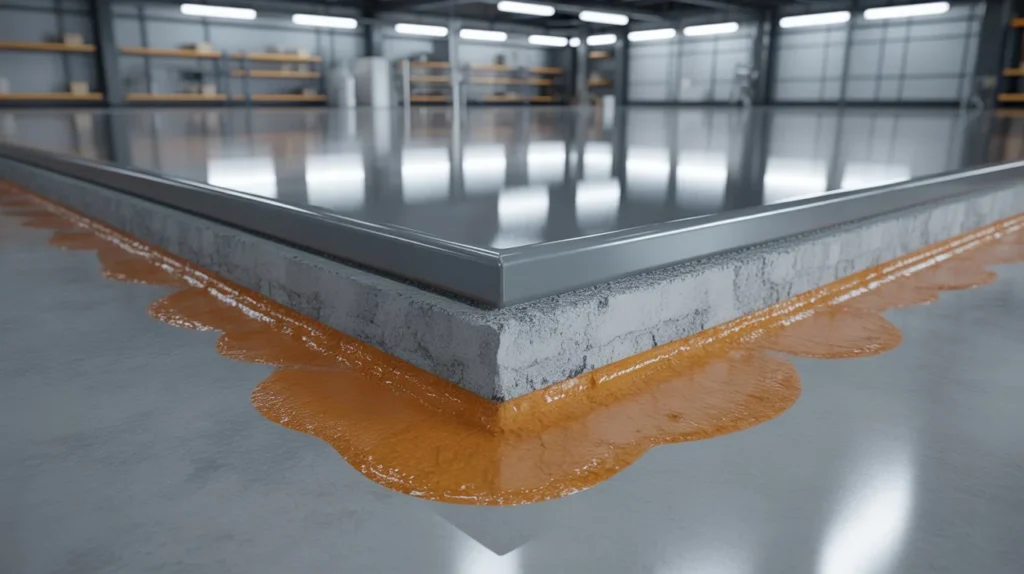
Epoxy coating is a high-performance protective system created by combining epoxy resin and a hardener to form a strong, durable, and chemically resistant surface. Unlike traditional paint, epoxy coating undergoes a chemical reaction that transforms it into a rigid thermoset material. This makes it ideal for industrial flooring, commercial spaces, and heavy-duty environments where durability, hygiene, and long-term performance are essential.
From warehouses and factories to hospitals and pharmaceutical units, epoxy coating has become one of the most trusted flooring and surface protection solutions worldwide. In this detailed guide, we will explore how epoxy works, its types, benefits, applications, installation process, and maintenance requirements.
Introduction to Epoxy
Definition of Epoxy
Epoxy is a thermosetting polymer formed when epoxy resin reacts with a curing agent (hardener). Once cured, it becomes a hard, plastic-like material that adheres strongly to various surfaces.
Key Characteristics of Epoxy:
- High compressive strength
- Excellent adhesion
- Chemical and moisture resistance
- Durable and impact-resistant
- Seamless and non-porous finish
Epoxy is widely used not only in flooring but also in adhesives, coatings, electrical insulation, and structural repairs.
Understanding Epoxy Resin and Hardener
Epoxy coating is a two-component system:
- Epoxy Resin – The base material that provides strength and bonding capability.
- Hardener (Curing Agent) – Activates the chemical reaction that transforms the liquid resin into a solid structure.
When mixed in the correct ratio:
- A chemical cross-linking reaction occurs
- Heat may be generated (exothermic reaction)
- The mixture gradually hardens
- A rigid, durable layer is formed
This curing process gives epoxy its superior mechanical and chemical properties.
Difference from Traditional Paint
While traditional paint mainly provides color and minimal protection, epoxy coating delivers structural reinforcement and industrial-grade protection.
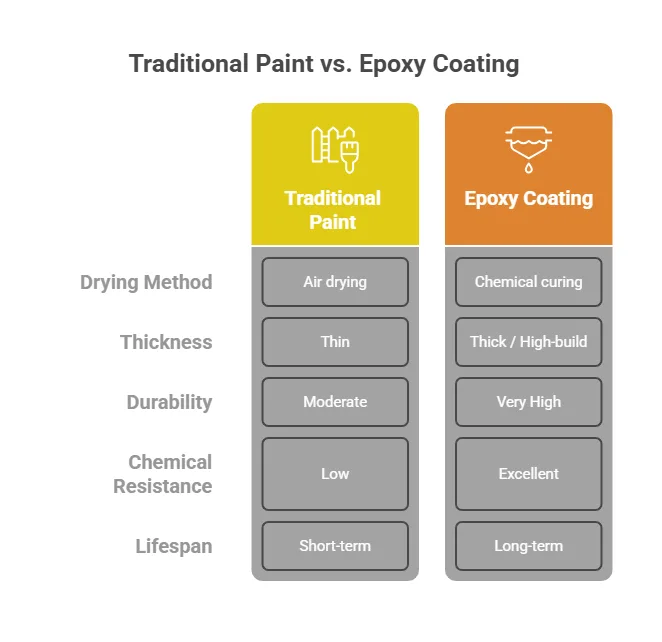
Epoxy paint may look similar, but true epoxy coating is far more robust and long-lasting.
Industrial Demand
The demand for epoxy flooring and coatings has grown significantly due to:
- Expansion of manufacturing industries
- Rising hygiene standards
- Need for chemical-resistant flooring
- Growth of pharma and food processing sectors
- Demand for low-maintenance solutions
Industries prefer epoxy because it reduces downtime, maintenance costs, and surface failures.
How Epoxy Coating Works
Chemical Reaction (Resin + Hardener)
When resin and hardener are mixed:
- Cross-linking polymerization begins
- The liquid mixture transforms into a solid
- A dense molecular structure forms
- The coating gains high mechanical strength
This reaction is irreversible, which makes epoxy a thermoset material.
Protective Layer Formation
After application:
- The epoxy spreads evenly
- It fills pores and minor cracks
- It cures into a seamless protective layer
- The surface becomes non-porous and waterproof
This protective barrier prevents damage from:
- Chemicals
- Moisture
- Impact
- Abrasion
Strong Bonding with Concrete and Metal
Epoxy adheres exceptionally well due to:
- Penetration into concrete pores
- Mechanical interlocking
- Chemical bonding with metal surfaces
Proper surface preparation ensures long-term adhesion without peeling or blistering.
Epoxy Paint vs Epoxy Coating
Composition Differences
Epoxy paint may contain lower epoxy content, while epoxy coating is a true two-component high-solids system designed for heavy-duty applications.
Thickness Comparison
- Epoxy paint: Thin film (microns)
- Epoxy coating: Thick layer (1–5 mm depending on system)
Thicker coatings provide better protection and durability.
Durability Comparison
Epoxy coating outperforms paint in:
- Abrasion resistance
- Impact resistance
- Chemical resistance
- Load-bearing strength
Best Applications
Epoxy Paint:
- Residential garages
- Light commercial walls
- Decorative finishes
Epoxy Coating:
- Factories
- Warehouses
- Parking structures
- Pharma units
Types of Epoxy Systems
Self-Leveling Epoxy
- Smooth and glossy finish
- Ideal for commercial floors
- Thickness: 1–3 mm
- Easy cleaning
High-Build Epoxy
- Multiple layers
- Increased thickness
- Strong abrasion resistance
- Suitable for heavy traffic
Industrial Heavy-Duty Epoxy
- High compressive strength
- Chemical resistant
- Designed for factories
- Withstands heavy machinery
Decorative Epoxy
- Metallic finishes
- Flake systems
- Custom colors
- Aesthetic appeal
Anti-Static (ESD) Epoxy
- Controls static electricity
- Used in electronics manufacturing
- Prevents damage to sensitive equipment
Key Benefits of Epoxy Coating
High Durability
- Withstands heavy loads
- Resistant to mechanical stress
- Suitable for industrial use
Chemical Resistance
- Oil and grease resistant
- Acid and alkali protection
- Ideal for chemical industries
Abrasion Resistance
- Resists forklift traffic
- Minimizes surface wear
- Reduces maintenance
Seamless Surface
- No joints or cracks
- Hygienic finish
- Easy to sanitiz
Moisture Resistance
- Waterproof layer
- Prevents corrosion
- Suitable for humid conditions
Long Lifespan
- 8–15+ years (depending on usage)
- Low maintenance
- Cost-effective investment
Applications of Epoxy Coating
Warehouses
- Supports heavy storage racks
- Handles forklift movement
- Dust-free environment
Factories
- Chemical resistant
- Heavy load capacity
- Long-term durability
Pharma Units
- Hygienic surface
- Easy sterilization
- GMP compliant flooring
Hospitals
- Seamless and bacteria-resistant
- Easy cleaning
- Slip-resistant options
Parking Areas
- Resistant to vehicle load
- Oil spill protection
- Durable surface
Commercial Buildings
- Attractive glossy finish
- High foot traffic resistance
- Customizable colors
Garages
- Oil stain resistance
- Moisture protection
- Improved surface strength
Epoxy for Concrete Surfaces
Surface Preparation
Proper preparation ensures adhesion:
- Cleaning and degreasing
- Grinding or shot blasting
- Moisture testing
Primer Application
- Enhances bonding
- Seals concrete pores
- Prevents air bubbles
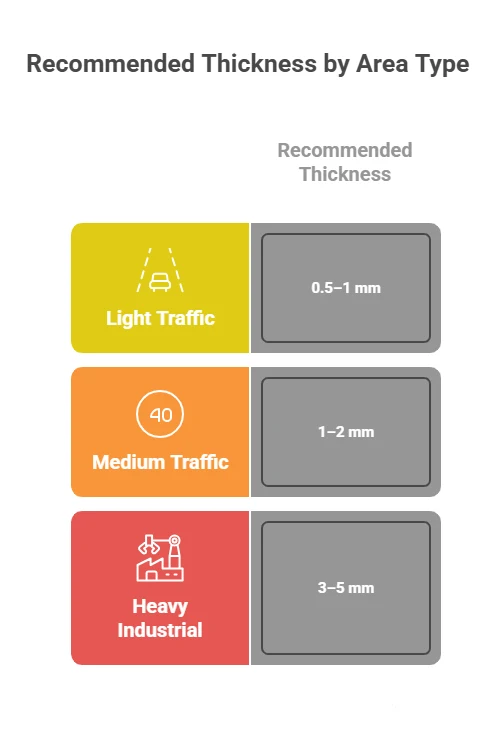
Thickness Guidelines
Long-Term Adhesion
Adhesion depends on:
- Correct mixing ratio
- Proper curing time
- Surface moisture control
- Skilled application
Epoxy Application Process
Surface Grinding
Removes dust, laitance, and weak layers.
Crack Repair
- Fill cracks with epoxy mortar
- Level uneven areas
Mixing Process
- Follow manufacturer ratio
- Mix thoroughly
- Avoid air entrapment
Application Methods
- Roller application
- Trowel method
- Spray system (special cases)
Curing Time
- Touch dry: 8–24 hours
- Light traffic: 24–48 hours
- Full cure: 5–7 days
Maintenance and Lifespan
Cleaning Methods
- Use mild detergents
- Avoid harsh acids
- Regular sweeping
Inspection Schedule
- Quarterly inspection
- Check for cracks
- Monitor high-traffic zones
Recoating Timeline
- Light use: 8–10 years
- Heavy use: 5–7 years
Expected Lifespan
With proper installation and maintenance:
- Industrial floors: 8–15 years
- Commercial floors: 10+ years
- Light residential use: 15+ years
Conclusion
Summary of Benefits
Epoxy coating offers:
- Exceptional durability
- Chemical and abrasion resistance
- Seamless hygienic finish
- Moisture protection
- Long service life
It is far superior to conventional paint systems for industrial and commercial environments.
Smart Flooring Solution
For industries requiring strong, low-maintenance, and long-lasting flooring, epoxy coating is a smart investment. It enhances safety, improves aesthetics, and reduces long-term repair costs.
Professional Installation Recommendation
To achieve maximum performance:
- Ensure proper surface preparation
- Use high-quality materials
- Follow correct mixing ratios
- Hire experienced professionals
A properly installed epoxy coating system not only protects your floor but also improves operational efficiency for years to come.