

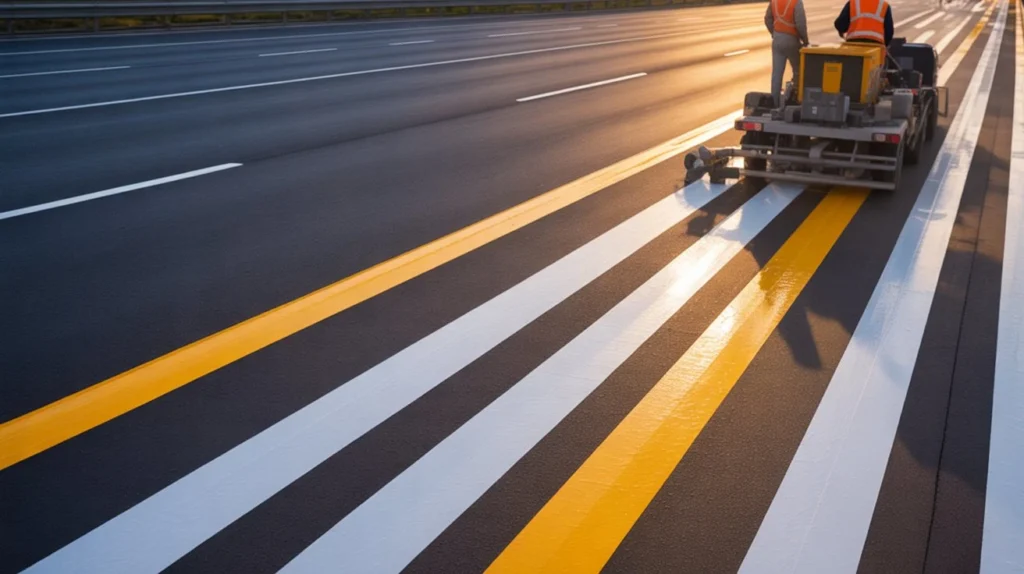
Road marking paint is very important for road safety. It helps create lines, arrows and symbols on roads, highways and parking areas. Good quality road marking guides drivers and helps prevent accidents.
- Different types of road marking paint are used for conditions.
- Some are used for traffic some for bad weather and some for industrial areas.
- Common types are water-based solvent-based, reflective and epoxy paints.
Each type of paint has its benefits. They differ in how they last how well you can see them and how fast they dry.
Choosing the Right Road Marking Paint
The right road marking paint ensures that the lines last long are easy to see during the day and night and improve safety on roads.
Introduction to Road Marking Paint
What Is Road Marking Paint
Road marking paint is a coating. It is used to create lines, arrows and symbols on roads and highways. The paint dries quickly. Sticks strongly to the surface. It remains visible in heavy traffic and bad weather.
Importance of Road Line Marking for Traffic Safety
Road line marking is very important for traffic safety. It guides drivers. Helps organize traffic. Clear lines, pedestrian crossings and warning symbols help prevent accidents.
Key Properties of Road Marking Coatings
road marking coatings have strong adhesion. They dry quickly. Are easy to see. Many paints have glass beads. These beads help you see the lines at night and, in weather.
Thermoplastic Road Marking Paint
What Is Thermoplastic Paint
Thermoplastic road marking paint is a strong material that we use to make road markings that last a long time. We apply it to the road when it is hot and liquid. It becomes hard really fast when it cools down. This type of paint makes an strong layer on the road that can handle a lot of traffic.
Application Process and Equipment
We use machines to apply thermoplastic paint to the road. These machines heat up the paint to high temperatures. Then we. Squeeze the hot paint onto the road and we often add tiny glass beads to make it shine at night.
Advantages for Highways and Heavy Traffic
Thermoplastic road markings are great for highways and busy roads because they stick well to the road and can be seen from away for a long time. They can handle cars driving on them all the time. Can withstand bad weather.
Durability and Reflectivity Benefits
One of the things about thermoplastic paint is that it lasts a long time. It does not wear out fade or crack easily.. With the added glass beads it helps drivers see the road markings at night which makes the road safer.
Water-Based Road Marking Paint
Composition and Eco-Friendly Properties
Water-based road marking paint is made with water, color and other things that help it stick to the road. It is better for the environment than types of paint because it does not release bad chemicals into the air.
Application Areas
We often use this type of paint on city roads parking lots and areas around schools. It is also good for road markings or when we need to fix the road.
Advantages and Limitations
Water-based paint is easy to apply. It is safer for the environment. It also does not have a smell when we apply it.. It might not be as strong as thermoplastic or epoxy paint in areas with a lot of traffic.
Drying Time and Performance
Water-based road marking paint dries fast when the weather’s normal. It looks good. Works well when we apply it to a clean and dry road.
Solvent-Based Road Marking Paint
How Solvent-Based Paint Works
Solvent-based road marking paint uses liquids to carry the color and help it stick to the road. When we apply it the liquid evaporates fast leaving a layer of paint on the road. This helps the paint stick well to the road.
Performance in Humid and Rainy Conditions
One good thing about solvent-based paint is that it works well even when it is humid or a little outside. It dries fast. Sticks well to the road even when the weather is not perfect.
Common Industrial and Road Applications
We use solvent-based road marking paint on highways, city roads, parking areas and industrial sites. It is often chosen for projects where we need fast-drying paint that sticks well to the road.
Reflective Road Marking Paint
Role of Glass Beads in Reflectivity
Reflective road marking paint has glass beads that we add when we apply it. These beads reflect the light from car headlights back to the driver making the road markings shine at night.
Importance for Night Visibility
Good night visibility is essential for safe driving. Reflective road markings help drivers clearly identify lanes, turns, and road boundaries in low-light conditions, fog, or rain.
Safety Benefits on Highways and City Roads
On highways and busy city roads, reflective paint improves lane guidance and reduces the chances of accidents. Clear and visible markings help drivers react faster and maintain proper lane discipline.
Epoxy Road Marking Paint
Two-Component Coating System
Epoxy road marking paint is a two-component system made by mixing epoxy resin and a hardener. When these two components react, they form a strong and durable coating that bonds firmly to the surface.
High Durability and Chemical Resistance
Epoxy paint is known for its excellent durability and resistance to chemicals, abrasion, and heavy traffic. It maintains clear markings for a long time, even in demanding environments.
Use in Industrial and Warehouse Floors
Because of its strength and resistance, epoxy road marking paint is commonly used in factories, warehouses, parking garages, and industrial facilities where long-lasting and highly visible markings are required.
Comparison of Road Marking Paint Types
Durability Comparison
Different road marking paints offer varying levels of durability. Thermoplastic and epoxy paints are the most durable and can handle heavy traffic for long periods. Solvent-based paints provide moderate durability, while water-based paints are better suited for light to medium traffic areas.
Cost Comparison
Water-based road marking paint is generally the most cost-effective option. Solvent-based paint is slightly higher in cost but offers better performance in tough weather conditions. Thermoplastic and epoxy paints are more expensive initially but provide longer service life, reducing maintenance costs over time.
Best Use Cases for Each Type
Thermoplastic paint is ideal for highways and high-traffic roads. Water-based paint works well for city streets and parking lots. Solvent-based paint is suitable for humid environments, while epoxy paint is best for industrial areas, warehouses, and locations requiring strong chemical and abrasion resistance.
How to Choose the Right Road Marking Paint
Traffic Volume Considerations
The amount of traffic on a road plays a major role in selecting the right paint. High-traffic highways require durable options like thermoplastic or epoxy paint, while water-based paint can work well for low to medium traffic areas.
Climate Conditions
Weather conditions also affect paint performance. In hot climates, UV-resistant paint helps prevent fading, while in rainy or humid regions, paints with strong adhesion and quick drying are more suitable.
Surface Type (Asphalt or Concrete)
Road surfaces can be made of asphalt or concrete, and each requires compatible paint. Choosing the right formulation ensures better bonding, improved durability, and longer-lasting markings.
Budget and Maintenance Needs
Budget is another important factor. Lower-cost paints may need frequent repainting, while high-quality paints offer longer life and reduced maintenance over time. Selecting the right balance helps ensure cost-effective road marking solutions.
Conclusion – Choosing the Best Road Marking Paint for Long-Lasting Safety
Choosing the road marking paint is very important for keeping our roads safe and clear. Different types of paint have benefits depending on the traffic, weather and road surface.
Good road marking paint helps us see the road manages traffic and reduces the chance of accidents, on highways, city roads and industrial areas.
By choosing the paint and applying it correctly we can make sure our road markings last a long time and help keep our roads safe and efficient.