

Corrosion has always been one of the most persistent and costly problems faced by industries across the world. From steel bridges and pipelines to machinery, equipment, ships, and even everyday metal surfaces, corrosion slowly eats away at structures—weakening them, reducing their lifespan, and resulting in massive financial losses.
According to global industrial surveys, corrosion damage costs industries trillions of dollars every year, making it a problem that cannot be ignored. The solution? Anti-corrosive paint—a protective coating specifically engineered to shield metal surfaces from moisture, chemicals, oxidation, high temperatures, and harsh environments.
Today’s industries are pushing boundaries in durability, longevity, and environmental performance. With this shift, anti-corrosive coatings have seen rapid evolution—from basic rust-preventive paints to advanced zinc-rich primers, epoxies, polyurethanes, and high-performance hybrid coatings.
This full guide breaks down all major types of anti-corrosive paints, how they work, where they are used, and why they matter in modern industry. Whether you are a contractor, factory owner, engineer, metal fabricator, or home user, this guide gives you clarity and direction for choosing the right coating.
🔥 Why Anti-Corrosive Paint Matters More Today Than Ever
In industries such as marine, oil & gas, manufacturing, chemical processing, automotive, infrastructure, and construction, corrosion is not just an inconvenience—it is a threat to operational safety and structural integrity.
Here’s why anti-corrosive paint is indispensable:
1. Extends Lifespan of Metal Assets
Proper corrosion protection can extend the life of industrial equipment, pipelines, bridges, and metal structures by decades.
2. Reduces Maintenance & Repair Costs
Corrosion-related breakdowns are expensive. Anti-corrosive coatings significantly reduce recurring maintenance expenses.
3. Prevents Safety Hazards
Corroded metal weakens over time, putting workers, machinery, and structures at risk. Anti-corrosive coatings prevent such accidents.
4. Enhances Operational Efficiency
Machines and structures remain functional for longer periods, ensuring smooth operations.
5. Protects Against Environmental Damage
Industries exposed to saltwater, chemicals, humidity, or extreme temperatures rely heavily on high-performance coatings.
From offshore rigs to rooftops, anti-corrosive paints are essential to preserving the strength and quality of metal assets.
🌟 How Anti-Corrosive Paint Works
At the core, these coatings act as a barrier, preventing moisture, oxygen, chemicals, salts, and environmental pollutants from reaching the metal surface.
Anti-corrosive paints operate using one or more mechanisms:
🛡️ 1. Barrier Protection
Creates a solid film that blocks moisture and oxygen.
⚡ 2. Cathodic Protection (Sacrificial Action)
Zinc-rich paints provide protection by sacrificing zinc to protect steel—like a shield.
🧪 3. Inhibitive Protection
Releases corrosion inhibitors to neutralize rust-causing agents.
🔥 4. Temperature Resistance
Some coatings can withstand extreme heat, preventing thermal-induced corrosion.
Understanding these mechanisms helps in selecting the right type of coating for every application.
🛠️ Different Types of Anti-Corrosive Paint & Their Uses—Full Guide
Here is a complete breakdown of today’s most widely used anti-corrosive coatings, their strengths, and where they work best.
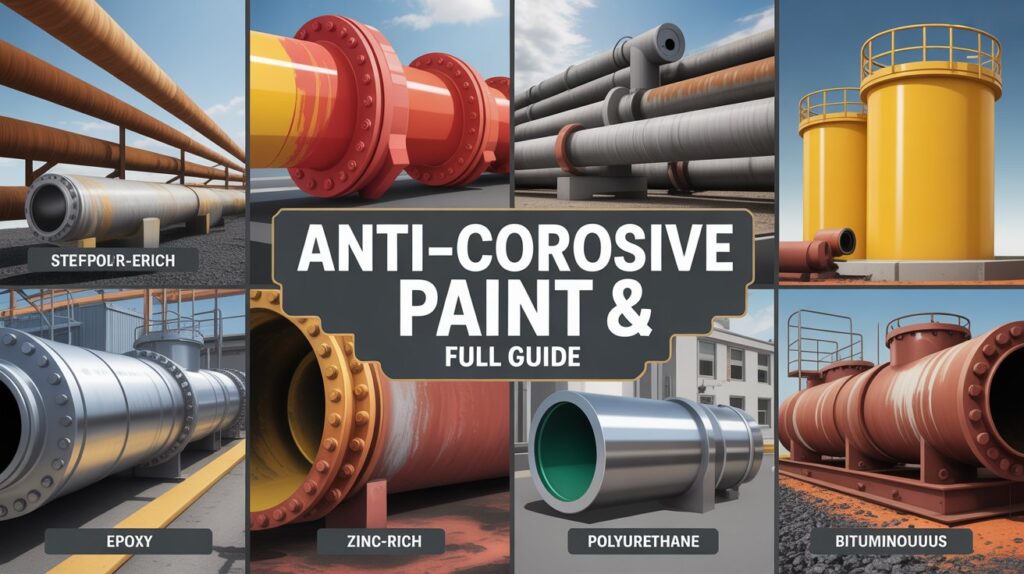
1. Epoxy-Based Anti-Corrosive Paint
Epoxy coatings are one of the strongest, toughest, and most durable corrosion protection systems available today. Known for their high adhesion and chemical resistance, epoxies create a thick protective film over metal surfaces.
✔ Key Features:
- High mechanical strength
- Excellent chemical resistance
- Strong adhesion to metal
- Superb moisture-blocking capabilities
- Long-lasting performance
⭐ Best For:
- Oil & gas pipelines
- Steel structures
- Industrial machinery
- Storage tanks
- Marine equipment
- Chemical plants
- Factory floors
Why Industries Love Epoxy:
Epoxy paint is considered the “industrial backbone” of anti-corrosion technology. It performs exceptionally in harsh environments where other coatings fail.
2. Zinc-Rich Anti-Corrosive Paint
Zinc-rich coatings provide one of the highest levels of protection against rust through cathodic protection—a process where zinc corrodes instead of steel.
These paints contain a high percentage of zinc dust, creating a protective layer that stops rust even if the surface is scratched.
✔ Key Features:
- Provides sacrificial protection
- Extremely resistant to rust
- Ideal for steel and iron
- Works even with surface damage
⭐ Best For:
- Marine environments
- Offshore platforms
- Oil & gas industries
- Ship hulls and decks
- Bridges
- Transmission towers
Why It’s a Game-Changer:
Zinc-rich coatings are considered the gold standard for corrosion prevention in aggressive environments like saltwater.
3. Polyurethane Anti-Corrosive Paint
Polyurethane coatings are known for their superb weather resistance and attractive glossy finish. They provide strong corrosion resistance combined with UV protection, making them ideal for outdoor exposure.
✔ Key Features:
- UV-resistant
- Weather and abrasion-resistant
- Flexible, durable coating
- Glossy and aesthetic appearance
⭐ Best For:
- Exterior steel structures
- Industrial buildings
- Automobiles
- Metal roofs
- Machinery exposed to sunlight
Why It’s Popular:
Polyurethane is often used as a topcoat because it holds color, retains gloss, and delivers long-term outdoor durability.
4. Bituminous Anti-Corrosive Paint
Bituminous paint is a black, asphalt-based coating used primarily for waterproofing. It provides a thick, durable layer that protects metal from moisture and underground conditions.
✔ Key Features:
- Waterproof
- Chemical-resistant
- Affordable
- Ideal for submerged environments
⭐ Best For:
- Underground pipelines
- Storage tanks
- Foundation walls
- Boat hulls
- Ducts and pipelines
Why It Works:
Bituminous paint is one of the best protective coatings for constant wet environments where rust formation is a major issue.
5. Alkyd Anti-Corrosive Paint
Alkyd coatings are versatile, easy to apply, and ideal for general-purpose corrosion protection. They offer good adhesion and a smooth finish.
✔ Key Features:
- Affordable
- Easy to apply
- Good for mild environments
- Available in multiple colors
⭐ Best For:
- Home metal surfaces
- Railings, grills, and gates
- Low-risk industrial equipment
- General metal maintenance
Why Choose Alkyd:
It’s the perfect solution for users who want basic corrosion protection without high cost or specialized application tools.
6. High-Temperature Anti-Corrosive Paint
High-temperature coatings protect metal from both rust and heat-induced damage. They are designed to perform in environments where temperatures range from 200°C to 600°C or more.
✔ Key Features:
- Heat-resistant
- Anti-rust
- Excellent adhesion
- Long-lasting in extreme climates
⭐ Best For:
- Boilers
- Furnaces
- Chimneys
- Exhaust systems
- Industrial heaters
Why It Matters:
Heat accelerates corrosion. These coatings ensure safety and durability in thermal applications.
7. Acrylic Anti-Corrosive Paint
Acrylic coatings are water-based, eco-friendly, and fast-drying. Although not as strong as epoxy or polyurethane, they are ideal for light to moderate corrosion environments.
✔ Key Features:
- Low VOC
- Quick drying
- Flexible and easy to use
- Good weather resistance
⭐ Best For:
- General metal fixtures
- Home metal surfaces
- Light machinery
- Interior metal structures
Why Eco-Friendly Users Prefer It:
Acrylic coatings are safe for the environment and offer a clean, aesthetic finish.
🌐 8. Chlorinated Rubber Anti-Corrosive Paint
Chlorinated rubber coatings provide strong resistance to chemicals, water, and mild acids. They are often used in moisture-prone environments.
✔ Key Features:
- Waterproof
- Chemical-resistant
- Fast drying
- Durable
⭐ Best For:
- Swimming pool metal fixtures
- Water treatment facilities
- Industrial flooring
- Marine structures
⚙️ 9. Coal Tar Epoxy Anti-Corrosive Paint
Coal tar epoxy is a blend of epoxy resin and coal tar, providing heavy-duty protection especially for submerged or buried structures.
✔ Key Features:
- Extreme waterproofing
- Long-term corrosion protection
- Excellent chemical resistance
- Very thick film
⭐ Best For:
- Sewage plants
- Underground pipelines
- Ship hulls
- Marine pilings
Summary: Best Paints for Different Needs
| Use Case | Best Anti-Corrosive Paint Type |
| Marine Environment | Zinc-rich, Coal Tar Epoxy |
| Underground Structures | Bituminous, Coal Tar Epoxy |
| High-Temperature Areas | High-Temp Anti-Corrosive Paint |
| Industrial Machinery | Epoxy |
| Outdoor Structures | Polyurethane |
| Home Use | Alkyd or Acrylic |
| Severe Chemical Exposure | Epoxy or Chlorinated Rubber |
How to Select the Right Anti-Corrosive Paint
Choosing the right coating depends on:
✔ Environment
Moisture? Chemicals? Heat? Saltwater?
✔ Application Surface
Steel, iron, aluminum, or mixed metals?
✔ Expected Lifespan
Short-term vs. industrial-grade long-term protection.
✔ Budget
Epoxy and zinc-rich coatings cost more but last longer.
Matching environment with coating type is the key to success.
Step-by-Step: Applying Anti-Corrosive Paint for Best Results
1. Surface Preparation
- Remove rust
- Clean debris
- Apply primer if needed
2. Choose the Right Primer
Zinc-rich or epoxy primers give best adhesion.
3. Apply Coating in Proper Thickness
Too thin = weak protection
Too thick = cracking risk
4. Allow Correct Drying Time
Avoid premature handling.
5. Follow Manufacturer Guidelines
Different paints need different curing conditions.
Final Thoughts: Why Anti-Corrosive Paint Is a Smart Investment
Anti-corrosive paint is not just a surface coating—it’s a long-term investment that protects machinery, enhances structural strength, and saves industries significant maintenance costs. With the right selection and application, metal surfaces can remain rust-free for years, even decades.
From epoxies to zinc-rich coatings and heat-resistant formulations, each type serves a powerful purpose. Understanding the differences ensures the best results in any environment.