

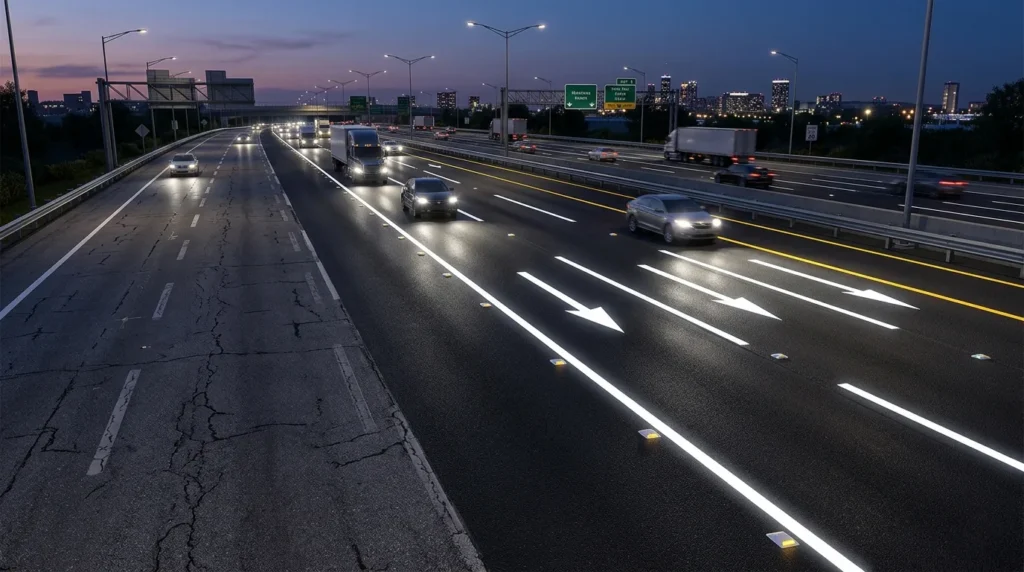
Road marking paint for highways is essential for ensuring safe, organized, and efficient traffic movement. Highways carry fast-moving vehicles, making clear and durable road markings critical for guiding drivers and maintaining lane discipline.
High-quality road marking paint is designed to withstand heavy traffic, harsh weather conditions, and continuous wear. It provides bright and reflective markings that remain visible during both day and night, helping drivers navigate safely even in low-light conditions.
From lane dividers and edge lines to arrows and hazard markings, proper highway road marking improves visibility, reduces confusion, and minimizes accident risks. Choosing the right road marking paint ensures long-lasting performance and safer highways for everyone. 🚧🚗
Introduction to Highway Road Marking Paint
What is road marking paint for highways
Road marking paint for highways is a specially designed coating used to create clear and durable markings such as lane lines, edge lines, arrows, and warning symbols. It is formulated to handle high-speed traffic, heavy vehicle loads, and continuous wear while maintaining strong visibility.
Importance of highway road marking
Highway road marking is essential for guiding drivers, maintaining lane discipline, and ensuring smooth traffic flow. Clear markings help drivers stay in their lanes, follow directions, and react quickly to road conditions, which significantly improves safety on high-speed roads.
Challenges in highway conditions (speed, traffic, weather)
Highways face tough conditions such as fast-moving traffic, heavy vehicle pressure, and extreme weather. Road marking paint must resist fading from sunlight, damage from rain, and wear from constant vehicle movement. Choosing high-quality paint helps ensure long-lasting and effective markings under these challenging conditions.
Why Road Marking Paint Is Critical for Highways
High-speed traffic safety
On highways, vehicles move at high speeds, leaving little time for drivers to react. Clear and durable road marking paint provides instant visual guidance, helping drivers stay alert and make quick, safe decisions.
Lane discipline and navigation
Road markings define lanes and guide vehicle movement, ensuring proper lane discipline. They help drivers maintain their position on the road and navigate safely through curves, exits, and merges.
Night and low-visibility guidance
Reflective road marking paint improves visibility during night driving, fog, or heavy rain. It allows drivers to clearly see lane boundaries and road directions even in low-light conditions.
Accident prevention
Well-marked highways reduce confusion and unsafe driving behavior. Clear lane lines, warning signs, and directional arrows help prevent sudden lane changes and collisions, improving overall road safety.
Types of Road Marking Paint for Highways
Thermoplastic Road Marking Paint
Thermoplastic paint is one of the most commonly used options for highways. It is applied in a heated molten form and quickly hardens on the road surface, creating thick and durable markings. It is ideal for high-traffic roads due to its long lifespan and strong resistance to wear.
Reflective Road Marking Paint
Reflective road marking paint contains glass beads that improve visibility at night. It reflects vehicle headlights back to drivers, making lane lines and symbols clearly visible in low-light conditions. This type is essential for highway safety.
Epoxy Road Marking Paint
Epoxy paint is a two-component system known for its high durability and chemical resistance. It forms a strong bond with the surface and is suitable for highways where long-lasting and heavy-duty performance is required.
Cold Plastic Road Marking Paint
Cold plastic paint is a highly durable marking material applied without heating. It provides excellent wear resistance and is often used for long-term markings such as lane lines and symbols on highways with heavy traffic.
Key Features Required for Highway Road Marking Paint
High reflectivity for night visibility
Highway road marking paint must provide strong reflectivity to ensure clear visibility at night. Reflective materials like glass beads help bounce headlights back to drivers, making lane lines and symbols easy to see in low-light conditions.
Strong adhesion to asphalt and concrete
Good adhesion is essential for long-lasting performance. The paint must bond firmly to both asphalt and concrete surfaces to prevent peeling, cracking, or early wear under heavy traffic.
Fast drying and quick reopening
Highways cannot be closed for long periods, so fast-drying paint is crucial. Quick drying allows roads to reopen to traffic sooner, reducing delays and ensuring efficient project completion.
Weather and UV resistance
Highway markings are exposed to extreme sunlight, rain, and temperature changes. Quality road marking paint must resist UV rays, fading, and weather damage to maintain visibility over time.
High abrasion resistance
Due to constant movement of heavy vehicles, highway markings must be highly resistant to abrasion. Durable paint ensures markings remain visible and effective even after continuous wear and tear.
Application Process for Highway Road Marking
Surface preparation
Proper surface preparation is the first step for effective highway road marking. The road must be clean, dry, and free from dust, oil, and loose materials. A well-prepared surface ensures strong adhesion and longer-lasting paint performance.
Marking layout and line planning
Before application, accurate measurements and layout planning are done. Lines, arrows, and symbols are marked using guides or temporary markings to ensure correct positioning, spacing, and alignment on highways.
Machine application for large-scale roads
Highway road marking is usually done using specialized machines. These machines provide uniform thickness, precise line width, and faster application, making them ideal for large-scale road projects.
Glass bead application for reflectivity
Glass beads are applied during or immediately after painting to create reflective markings. These beads improve visibility by reflecting vehicle headlights, especially during night driving and low-visibility conditions.
Quality inspection and curing
After application, markings are inspected for accuracy, thickness, and visibility. Proper curing time is allowed to ensure the paint fully sets and can withstand traffic without damage.
Common Highway Road Markings
Lane divider lines
Lane divider lines separate traffic moving in the same or opposite directions. They help drivers stay within their lanes and maintain safe distances from other vehicles, improving overall traffic flow and safety.
Edge lines
Edge lines mark the outer boundaries of the road. They help drivers understand the road limits, especially at night or in low-visibility conditions, reducing the risk of vehicles drifting off the road.
Directional arrows
Directional arrows guide drivers on where to go, such as straight, left, or right turns. These markings are especially useful near exits, junctions, and intersections to prevent confusion and ensure smooth navigation.
Hazard and warning markings
Hazard markings are used to highlight dangerous areas such as sharp curves, merges, or road obstacles. These markings alert drivers to slow down and stay cautious, helping prevent accidents.
Reflective lane markers
Reflective lane markers enhance visibility during night driving. They reflect headlights back to drivers, making lane lines and road paths clearly visible even in darkness, rain, or fog. 🚧
Benefits of Road Marking Paint for Highways
Improved driver visibility
High-quality road marking paint provides bright and clear lane markings that are easy to see during both day and night. Reflective properties further enhance visibility in low-light conditions, helping drivers stay on track safely.
Better traffic flow management
Clear highway markings help organize vehicle movement by defining lanes, exits, and directions. This improves traffic flow, reduces congestion, and allows vehicles to move smoothly even during peak hours.
Reduced accident risks
Well-defined road markings guide drivers and reduce confusion on high-speed roads. They help prevent sudden lane changes, wrong turns, and collisions, leading to safer driving conditions.
Long-lasting performance
Durable road marking paint is designed to withstand heavy traffic, harsh weather, and continuous wear. This ensures that markings remain visible and effective for a long time without frequent repainting.
Cost-effective maintenance
Using high-quality road marking paint reduces the need for regular maintenance. Long-lasting markings lower repainting costs and minimize disruptions, making it a cost-effective solution for highway infrastructure. 🚧🚗
Factors to Consider When Choosing Highway Road Marking Paint
Traffic volume and load
Highways carry heavy and fast-moving traffic, including trucks and commercial vehicles. The paint must be strong enough to handle continuous load and wear without fading quickly, making durability a key factor.
Climate conditions
Weather plays a major role in paint performance. In areas with intense sunlight, heavy rain, or temperature changes, it is important to choose paint that offers UV resistance, water resistance, and stable performance in all conditions.
Surface type
Highway surfaces are typically asphalt or concrete, and each requires compatible paint. Selecting the right formulation ensures better adhesion, longer life, and consistent performance.
Durability and lifespan
Long-lasting road marking paint reduces the need for frequent repainting. Choosing high-durability coatings such as thermoplastic or epoxy helps maintain visibility over time and lowers maintenance efforts.
Compliance with safety standards
Road marking paint must meet government and safety regulations. Using certified and approved materials ensures proper visibility, quality, and compliance with road safety standards for highways. 🚧
Maintenance of Highway Road Markings
Regular inspection
Regular inspection is essential to ensure highway road markings remain clear and effective. Authorities should check for fading, wear, cracks, or damage caused by heavy traffic and weather conditions. Early detection helps maintain safety and avoid major repairs.
Repainting schedules
Over time, road markings lose visibility due to constant use. Setting proper repainting schedules ensures that markings remain bright and visible. High-traffic areas may require more frequent repainting compared to low-traffic zones.
Reflectivity checks
Reflectivity is crucial for night visibility. Regular checks should be done to ensure that reflective properties are still effective. If the markings no longer reflect light properly, reapplication of paint or glass beads may be required to restore visibility and safety. 🚧
Conclusion – Choosing the Right Road Marking Paint for Highways
Selecting the right road marking paint for highways is essential for ensuring safety, durability, and efficient traffic management. Highways demand high-performance coatings that can withstand heavy traffic, extreme weather, and continuous wear while maintaining clear visibility.
By choosing the appropriate type of paint—such as thermoplastic, reflective, or epoxy—along with proper application and maintenance, road authorities can ensure long-lasting and highly visible markings.
Investing in quality road marking paint not only improves driver guidance and reduces accident risks but also supports smoother traffic flow and reliable infrastructure for modern highways. 🚧🚗