

Introduction
Heat resistant paint plays a crucial role in protecting surfaces exposed to extreme temperatures. Whether you are dealing with industrial machinery, pipelines, furnaces, or even household appliances, selecting the right coating can significantly impact performance, durability, and safety.
In industrial hubs like Vadodara, where manufacturing and heavy engineering industries are rapidly growing, the demand for high-quality coatings such as ALTIC Heat Resistant Paint is increasing. However, choosing the right paint is not just about picking a product—it requires understanding temperature limits, surface types, and environmental conditions.
This guide will help you make the right decision for long-lasting protection and efficiency.
Understanding Temperature Requirements
One of the most important factors when selecting heat resistant paint is the temperature range it can withstand.
Low Heat Applications (Up to 200°C)
These coatings are suitable for household appliances like ovens, stoves, and heaters. They provide basic protection against heat and prevent discoloration.
Medium Heat Applications (200°C–600°C)
Used in automotive components such as exhaust systems and engine parts, as well as industrial machinery, these coatings offer improved durability and corrosion resistance.
High Heat Applications (600°C–1000°C+)
For extreme environments like furnaces, boilers, and kilns, high-performance coatings such as ALTIC HR Series are designed to withstand intense heat without cracking or peeling.
Matching Paint to Heat Exposure
Choosing a paint with a lower temperature rating than required can lead to coating failure. Always select a product that exceeds your maximum operating temperature.
Identifying the Surface Type
Different surfaces require different types of heat resistant coatings.
Heat Resistant Paint for Metal
Metal surfaces are highly susceptible to oxidation and corrosion under high temperatures. Heat resistant paint forms a protective barrier, preventing rust and extending the life of the material.
Concrete and Masonry Surfaces
These surfaces require coatings that can handle thermal expansion and provide strong adhesion.
Industrial Equipment and Machinery
Machinery often operates under continuous heat and mechanical stress. Choosing a coating with high durability and flexibility is essential.
Surface Preparation Importance
Proper surface preparation—cleaning, degreasing, and removing rust—is critical for achieving maximum adhesion and performance.
Types of Heat Resistant Paint
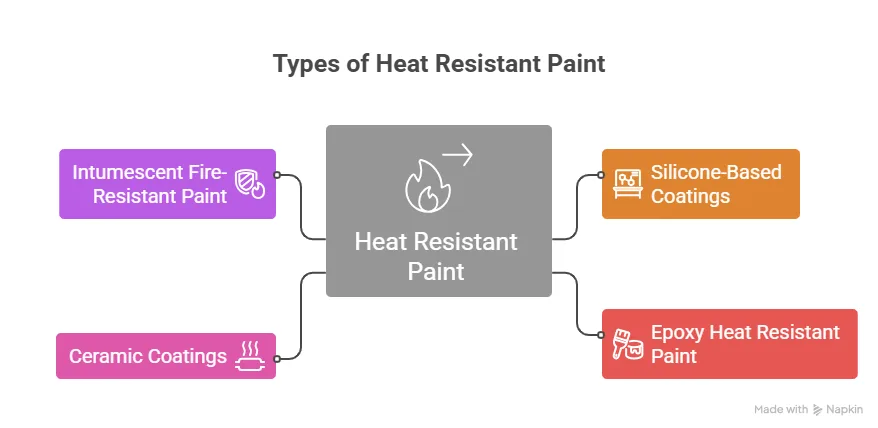
Understanding different types of coatings helps in making the right choice.
Silicone-Based Coatings
These are the most commonly used heat resistant paints, offering excellent thermal stability and weather resistance.
Epoxy Heat Resistant Paint
Epoxy coatings provide strong adhesion and chemical resistance, making them ideal for industrial environments.
Ceramic Coatings
Ceramic-based paints offer superior heat insulation and are used in extreme temperature applications.
Intumescent Fire-Resistant Paint
These coatings expand when exposed to heat, forming a protective barrier that delays fire spread.
Environmental and Working Conditions
The surrounding environment plays a major role in coating performance.
Indoor vs Outdoor Applications
Outdoor applications require UV-resistant and weatherproof coatings, while indoor coatings focus more on heat resistance.
Exposure to Chemicals and Moisture
In industries like oil and gas, coatings must resist both heat and chemical exposure.
UV and Weather Resistance
Sunlight and environmental conditions can degrade coatings over time, so UV stability is important.
Marine and Industrial Environments
In coastal or marine areas, coatings must also resist saltwater corrosion.
Performance and Durability Factors
Choosing a high-quality heat resistant paint ensures long-term benefits.
Corrosion Resistance
Prevents rust and oxidation, especially on metal surfaces.
Adhesion Strength
Strong adhesion ensures the coating remains intact under extreme conditions.
Longevity and Maintenance
High-quality coatings reduce the need for frequent repainting.
Resistance to Cracking and Peeling
Essential for maintaining protection under thermal expansion and contraction.
Application and Curing Process
Proper application is key to achieving the best results.
Surface Cleaning and Preparation
Remove dust, grease, and rust before applying the paint.
Application Methods
Heat resistant paint can be applied using spray, brush, or roller depending on the surface and project size.
Drying and Curing Time
Some coatings require heat curing to achieve maximum performance.
Common Application Mistakes
Avoid applying thick layers or painting on unprepared surfaces, as this can lead to failure.
Budget and Cost Considerations
While cost is an important factor, it should not be the only consideration.
Initial Cost vs Long-Term Value
Cheaper paints may fail quickly, leading to higher maintenance costs.
Maintenance and Recoating Costs
Investing in high-quality coatings reduces the need for frequent repairs.
Choosing Quality Over Price
Brands like ALTIC offer reliable solutions that deliver long-term value.
Industry-Specific Recommendations
Different industries have unique requirements.
Industrial Use (Boilers, Furnaces)
Choose high-temperature coatings designed for extreme heat.
Automotive Applications
Use coatings that resist heat and mechanical stress.
Residential Use (Stoves, Fireplaces)
Select paints that are safe and durable for indoor use.
Oil & Gas and Marine Applications
Opt for coatings with chemical and corrosion resistance.
Conclusion
Choosing the right heat resistant paint is essential for ensuring durability, safety, and efficiency. By considering factors such as temperature range, surface type, environmental conditions, and application methods, you can select the best coating for your needs.
With trusted solutions like ALTIC Heat Resistant Paint, industries and homeowners can achieve long-lasting protection and superior performance. Investing in the right coating not only enhances equipment lifespan but also reduces maintenance costs and improves overall safety.