

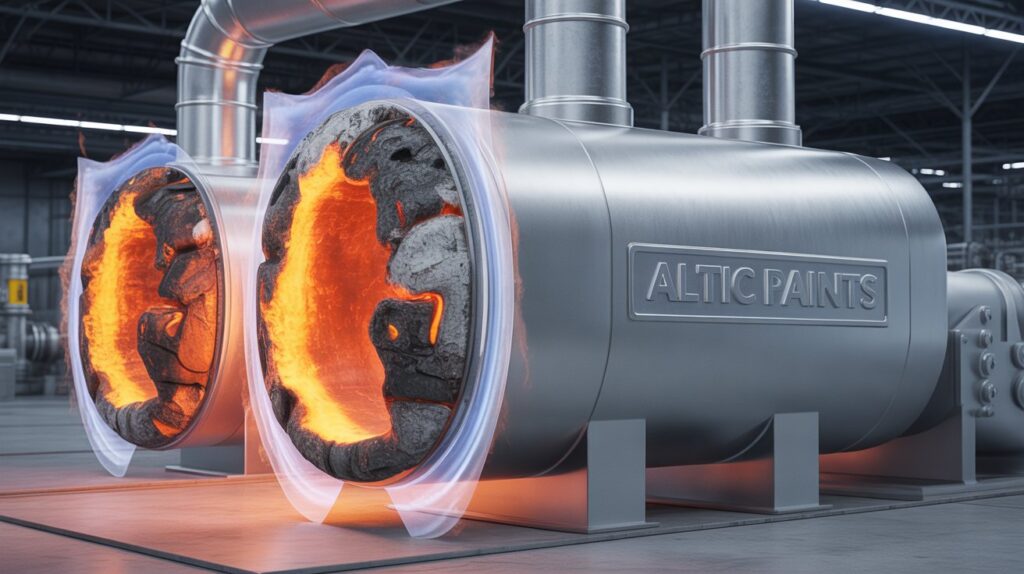
Confronting Extreme Heat in Industrial Environments
Industrial environments—whether found in manufacturing plants, power stations, refineries, or metalwork shops—operate under relentless heat and high-stakes conditions. Extreme temperatures can compromise equipment performance, accelerate wear, and introduce critical safety hazards. Without proper protection, factories may face costly unplanned shutdowns, rapid equipment degradation, and even catastrophic failures. For industries pushing ever closer to the limits of capability and efficiency, robust high-temperature protection is not just a preference; it's a fundamental requirement to stay competitive and safe.
What Are Heat-Resistant Coatings? The Foundation of High-Temperature Protection
Heat-Resistant Coatings, sometimes called high-temperature paints or refractory coatings, are advanced protective layers engineered to withstand and perform under continuous or cyclical exposure to elevated temperatures. Unlike conventional industrial paints, these coatings are formulated from specialized resins, ceramics, and composite materials designed to resist breakdown, colour change, or loss of adhesion even at temperatures exceeding 500°C (932°F).
Heat-resistant coatings serve several purposes:
- Thermal protection: Preventing heat transfer to sensitive equipment surfaces.
- Oxidation and corrosion resistance: Shielding steel and alloys from rust and deterioration at elevated temperatures.
- Aesthetic retention: Maintaining color and finish over the lifespan of the equipment.
- Fire and chemical resistance: Many formulas also provide a degree of fire and chemical resistance, adding an extra layer of security in hazardous settings.
The Science and Technology Behind Heat-Resistant Coatings
Key Materials and Formulations
At the core of every high-performance heat-resistant coating is a blend of technologically advanced materials:
- Silicone resins: Offer outstanding thermal stability, flexibility, and chemical resistance—common in coatings rated for 200°C and above.
- Epoxy systems with high-temperature additives: Used for moderate heat environments, combining durability with chemical resistance.
- Ceramic and inorganic fillers: Boost the coating’s ability to reflect and withstand intense radiant and conducted heat.
- Intumescent agents: Expand when exposed to heat, forming an insulating char barrier that delays heat transfer and fire spread.
Mechanisms of Thermal Resistance
These coatings function by providing a thermal barrier atop the substrate. Silicones and ceramics disperse the heat, resisting thermal decomposition, cracking, and chalking. Intumescent coatings, like those offered by ALTIC, expand under extreme heat, creating a robust protective layer that shields the underlying equipment from fire and structural weakening.
Durability and Longevity
The ability to maintain adhesion, flexibility, and integrity under thermal cycling (repeated rapid temperature shifts) is critical. High-quality formulations are tested for:
- Thermal shock resistance
- Rapid cool-down and reheat cycles
- Resistance to UV exposure, abrasion, and chemicals
These attributes ensure industrial assets are protected for years without frequent recoating or major surface repair.
Key Benefits: Beyond Survival to Excellence
Equipment Longevity
Heat-resistant coatings extend the service life of critical equipment by guarding surfaces against oxidation, scaling, and metal fatigue, even under daily thermal stress. Industrial clients report significant reductions in premature part failure after switching to high-performance coatings.
Safety and Risk Reduction
Industrial fires, explosions, and equipment malfunctions are often traced to heat-compromised machinery. By maintaining the integrity of structural steel, tanks, and pipes, heat-resistant coatings are a frontline defense against workplace accidents, helping companies comply with the latest safety codes and fire regulations.
Energy Efficiency and Temperature Management
Some advanced coatings also offer heat reflective properties, reducing internal temperatures and energy costs associated with cooling, especially valuable in power plants and processing facilities exposed to direct sunlight or combustion sources.
Reduced Maintenance and Downtime
Frequent repainting and corrosion repair are disruptive and expensive. By providing superior resistance to thermal and chemical attack, high-temperature coatings dramatically lower the frequency and severity of maintenance interventions, leading to reduced operational costs and fewer costly shutdowns.
Real-World Industrial Applications
Manufacturing and Metal Processing
In steel mills, foundries, and aluminum smelters, surfaces regularly exposed to molten metal or furnaces must be shielded from oxidation and scale build-up. High-temperature coatings help protect conveyor systems, ducts, and chimneys, enhancing plant safety and uptime.
Oil & Gas Industry
Pipes, valves, and pressure vessels in oil refineries encounter a volatile mix of high heat, chemicals, and corrosive gases. Specialized coatings prevent the rapid decay of these assets, reducing the risk of leaks or catastrophic failure.
Power Generation
Gas turbines, boilers, exhaust stacks, and heat exchangers must operate at peak performance while withstanding relentless heat exposure. Modern heat-resistant coatings enable higher operating temperatures, improved fuel efficiency, and longer overhaul intervals.
Automotive and Heavy Machinery
Exhaust systems, manifolds, and engine components in cars, trucks, and construction equipment benefit from high-temperature protection, ensuring optimal performance and compliance with strict emissions standards.
Traditional Industrial Paints vs. Heat-Resistant Coatings: Performance Matters
| Feature | Traditional Paint | Heat-Resistant Coating |
| Max Service Temperature | Up to 90°C | 200°C – 800°C+ |
| Thermal Stability | Poor | Excellent |
| Resistance to Chalking/Peeling | Weak | High |
| Corrosion Protection at High Heat | Minimal | Superior |
| Longevity in Hot Environments | Months | Years |
| Fire Resistance | None | Many are fire-rated and intumescent |
| Maintenance Needs | Frequent re-application | Extended intervals |
Heat-resistant paint is specifically engineered to address the real-world demands that traditional coatings simply cannot meet.
Choosing the Right Heat-Resistant Coating for Your Equipment
Selecting the ideal high-temperature coating is a multi-step process involving:
1. Temperature Rating
Always match the coating’s maximum temperature with actual operating conditions. Excess heat can cause under-rated coatings to degrade or fail.
2. Substrate Compatibility
Steel, aluminum, masonry, and composite surfaces each interact differently with paint chemistry. Use coatings formulated for your equipment’s specific materials.
3. Chemical and Environmental Resistance
Consider exposure to oils, solvents, acids, and outdoor elements. Coatings with enhanced chemical and UV resistance are ideal for extreme or outdoor facilities.
4. Application Method
Factor in the size, geometry, and accessibility of the equipment—some coatings are optimized for spray, others for brush or dip application.
5. Durability Standards and Certification
Opt for products tested against international fire and quality standards (like ISO or UL). Certified coatings guarantee performance in critical scenarios.
ALTIC’s Innovative Heat-Resistant Coatings: Industrial Protection Meets Modern Chemistry
ALTIC’s line of industrial coatings exemplifies cutting-edge high-temperature protection. Their products, such as medium to ultra-high temperature silicone coatings and advanced intumescent systems (e.g., ALTIC 007), integrate the latest in:
- Expanded ceramic technology for reflective and thermal barrier performance
- High-bond silicone and hybrid binder systems for extreme durability
- Fast-curing formulas for minimal downtime during application
These attributes help industries achieve longer intervals between maintenance, reduce heat-related energy loss, and ensure compliance with strict safety regulations.
Industrial users report that deploying ALTIC coatings on cable trays, steel structures, and high-heat zones results in measurable improvement in corrosion resistance, surface stability, and overall workplace safety.
Call-to-Action: Future-Proof Your Operations with High-Temperature Protection
In 2025, equipment downtime, unexpected repairs, and safety incidents caused by temperature extremes present not just financial setbacks but existential risks—to reputations, contracts, and, most importantly, worker safety. High-performance heat-resistant paint is no longer an optional upgrade—it is a must-have for any operation facing risks from heat, fire, or thermal shock.
Don’t wait for heat damage or regulatory fines to review your protection strategy.
Invest in proven, quality heat-resistant coatings—like those from ALTIC—and transform your operations for better longevity, safety, and efficiency. For tailored recommendations, expert consultation, or an on-site assessment, reach out to ALTIC’s industrial coatings team and fortify your equipment against tomorrow’s challenges—today.
heat-resistant coating, heat-resistant paint, industrial coating, high-temperature protection, equipment safety, ALTIC coatings, equipment longevity, industrial maintenance.
FAQs
Q: How does heat-resistant paint differ from fireproof coatings?
A: Heat-resistant paint protects surfaces from frequent exposure to high temperatures, whereas fireproof coatings (often intumescent) are designed to prevent ignition or delay structural failure under direct fire.
Q: What industries benefit the most from high-temperature coatings?
A: Manufacturing, oil & gas, automotive, power generation, and construction sectors all see substantial safety and longevity improvements.
Q: How often should heat-resistant coatings be inspected?
A: Regular visual checks paired with annual professional assessments are advised for critical assets, especially those exposed to severe heat and chemicals.