

When we talk about fire safety people often get confused about what heat resistant really means. Fireproof materials are made to handle being on fire for an amount of time without falling apart but the truth is that no material can withstand a really bad fire forever. Heat resistant products are made to handle temperatures without getting damaged but they might not be able to handle actual flames. Fire resistant and fire retardant coatings are also important because they help keep people safe by slowing down how fast a fire spreads or by delaying when a fire starts. Fire safety is about using fireproof materials and heat resistant products to protect people and things from fire. Knowing the differences between things can really help people who own businesses or properties pick the kind of protection for the people who work there. This protection is important for keeping everyone safe and making sure things last a long time. It is also necessary for following the rules that the government sets. People need to understand the differences so they can choose the protection, for safety and for things to last and also so they can follow the rules.
Introduction to Fire Protection Terminology
Understanding fire protection is really important when we want to make safety decisions. We often hear words like fireproof heat resistant and fire resistant and people use them to mean the thing but that is not correct. Fire protection terms, like these actually describe kinds of protection from fire. If we do not understand what these fire protection terms mean we might choose the coating or material for what we are doing with fire protection.
Why People Confuse Fireproof, Heat Resistant & Fire Resistant
The confusion usually arises because all three terms relate to heat and fire exposure. In marketing language, “fireproof” is sometimes used broadly, even though most materials are only fire resistant for a specific time. Heat resistant products handle high temperatures but may not protect against open flames. Since the differences are technical, many buyers assume they mean the same thing.
Importance of Choosing the Right Protective Coating
Selecting the correct coating is critical for safety, compliance, and durability. Using a heat resistant paint where a fire rated coating is required can compromise structural integrity during a fire. The right product ensures proper protection, meets safety standards, and reduces long-term risks.
Where These Terms Are Commonly Used
These terms are widely used in construction, industrial manufacturing, oil & gas plants, power stations, and specialty paints. From structural steel and wooden doors to boilers and pipelines, each application requires a specific level of thermal or fire protection.
What Does Fireproof Mean?
The term fireproof is commonly used in construction and industrial safety, but its true meaning is often misunderstood. While it suggests complete protection from fire, the reality is more technical and time-based.
Definition of Fireproof
Fireproof materials are special because they can handle being on fire for an amount of time.
These Fireproof materials are put to the test in a controlled fire to see how they do.
They get a rating, for how they can withstand the fire like 30 minutes or 60 minutes or even 120 minutes.
The main idea of Fireproof materials is to keep things from falling or breaking when there is a fire.
Is Anything Truly 100% Fireproof?
When you think about it nothing can really withstand fire completely. High temperatures and being exposed to fire for a long time can damage almost anything. When we say something is fireproof what we mean is that it can resist fire for an amount of time not that it will never catch fire. Fireproof materials are that they can handle fire for a little while, not forever.
Real-World Examples of Fireproof Materials
People often call fire-rated drywall and treated structural steel and some masonry systems fireproof materials.
These materials are used to stop fires from spreading.
Intumescent coatings are also used for fire protection.
When intumescent coatings get hot they form a layer that helps keep the heat out.
This special layer is like a barrier that protects things from burning.
Fireproof materials like fire-rated drywall and treated structural steel and masonry systems are very important for keeping people safe.
Intumescent coatings do the thing by forming this special barrier when they get hot.
Limitations of the Term “Fireproof”
The biggest problem is that people do not understand what fireproof really means. Fireproof materials are not completely safe from burning or getting damaged. What it really means is that these materials can withstand fire for an amount of time. This time frame is decided when the material is tested under conditions. Fireproof materials can resist fire. Only for that specific certified time frame under testing standards. The key thing to remember is that fireproof materials are not completely safe, from fire they can just resist fire for a time.
What is Heat Resistant?
Heat resistant materials or coatings are made to handle high temperatures. They do not melt, crack, peel. Stop working when it gets very hot. Heat resistant products are different from fire-rated systems. Heat resistant products are designed to deal with temperatures all the time or sometimes not just with direct flames, for a short time. This means heat resistant materials or coatings can withstand the heat without failing which is what they are made for.
Definition of Heat Resistant Materials
Heat resistant materials are really good at keeping their chemical properties when they get very hot. These heat resistant materials stop the surface from getting damaged and they stop corrosion. They stop the structure from getting weak because of too much heat.
How Heat Resistant Coatings Work
Heat resistant coatings are really good at keeping things from heat. They make a layer on the surface that helps to keep the heat out. This layer also stops heat from moving from one thing to another. It protects the thing underneath from getting damaged by oxygen and from getting a thick layer of bad stuff on it. The special kinds of liquids and colors that are used in heat coatings help them to stay strong even when it is really really hot. Heat resistant coatings are able to do all this because of the resins and pigments, in the heat resistant coatings.
Temperature Resistance Ranges (400°C, 800°C, 1200°C etc.)
Temperature limits are a deal when it comes to these formulations. Some coatings can handle heat up to 400°C, which’s pretty good for everyday use.. Industrial systems are a different story. They have coatings that can take the heat up to 800°C or even 1200, °C in really hot environments. These industrial systems and their coatings are made to withstand temperatures.
Common Industrial Applications
People use heat coatings on a lot of things. They put these coatings on boilers and furnaces and chimneys. They also use them on exhaust systems and industrial pipelines. You can even find heat coatings on some automotive components and metal roofs that have to deal with really high temperatures. The heat resistant coatings are used in these places because they are exposed to heat.
What is Fire Resistant?
Fire resistant materials are special because they can handle being on fire and still keep their shape for a while. These fire resistant materials are different from heat things that can only handle high temperatures. Fire resistant systems are actually tested in fires to make sure they do not catch on fire quickly and do not fall apart. This is important, for fire materials and fire resistant systems to keep people safe. Fire materials and fire resistant systems are the best way to prevent fires from spreading fast.
Clear Explanation of Fire Resistant
Fire resistant materials are made to slow down what fire does. They help keep buildings standing reduce how much heat gets through and give people time to get out and for emergency workers to do their job. The idea behind fire materials is not to make something that fire cannot touch but to control fire and slow it down. Fire resistant materials are very important because they help keep people safe, from fire.
Fire Resistance Ratings (30, 60, 120 Minutes)
Fire resistant systems get a rating that says how long they can handle being on fire. This rating is based on time like thirty minutes, sixty minutes or one hundred and twenty minutes. The fire resistant systems rating shows how long the material can be exposed to fire and still work properly. The people who do the testing make sure everything is the same each time so it is a test, for the fire resistant systems.
How Fire Resistant Coatings Slow Fire Spread
Fire resistant coatings are really good at keeping things safe. I mean take intumescent paints for example. When they get exposed to high heat they start to expand. This expansion creates a layer that acts like a shield. It is like a barrier that keeps the stuff underneath it safe and prevents the temperature from getting too high. Fire resistant coatings, like intumescent paints are very useful because they reduce the temperature rise and protect the substrate.
Where Fire Resistant Paints Are Used
Fire resistant paints are commonly applied to structural steel, wooden doors, cable trays, industrial buildings, warehouses, and commercial construction projects where fire safety compliance is essential.
Fire Retardant Meaning Explained
Understanding the fire retardant meaning is essential when comparing fire protection solutions. Fire retardant products are designed to reduce the speed at which fire spreads, helping to control flames and minimize damage.
Simple Definition of Fire Retardant
A fire retardant is something that helps to slow down a fire. It is a kind of substance or coating that stops fires from starting easily and slows down the spread of flames. The fire retardant does not make something completely fireproof. It does make it less likely to catch on fire. It also makes the fire less intense when it does burn. This is because the fire retardant reduces how easily something will burn and it lowers the intensity of the fire when it is burning.
How Fire Retardant Coatings Delay Ignition
Fire retardant coatings do a job of keeping fires from spreading. When fire retardant coatings get hot they start to break down and release gases that help put out fires. These gases stop flames from getting bigger and fire coatings also create a kind of shield that keeps oxygen from getting to the fire. This helps to slow down the fire and gives people time to get out. Fire retardant coatings really work by delaying the time it takes for something to catch on fire. They slow down how fast flames spread. Fire retardant coatings are very good, at stopping fires from getting too big.
Difference Between Fire Retardant and Fire Resistant
Fire retardant products are made to slow down how fast a fire spreads. On the hand fire resistant systems are put to the test to see if they can keep everything standing for a certain amount of time like 30 minutes or 60 minutes or even 120 minutes. The thing about fire protection is that it is rated for a specific amount of time. Fire retardant products are different; they are made to reduce the chances of something catching on fire in the place. Fire retardant products help reduce flammability, which’s a big deal when it comes to fire safety and fire retardant products.
Intumescent Coating Explanation (Expanding Char Layer)
Fire protection systems, like coatings are really useful. They expand when they get very hot. The intumescent coating gets bigger. Forms a thick layer that keeps the heat out. This layer protects the material from getting too hot and helps prevent it from failing when there is a fire. Intumescent coatings are a way to keep things safe during a fire.
Fireproof vs Heat Resistant – Side-by-Side Comparison
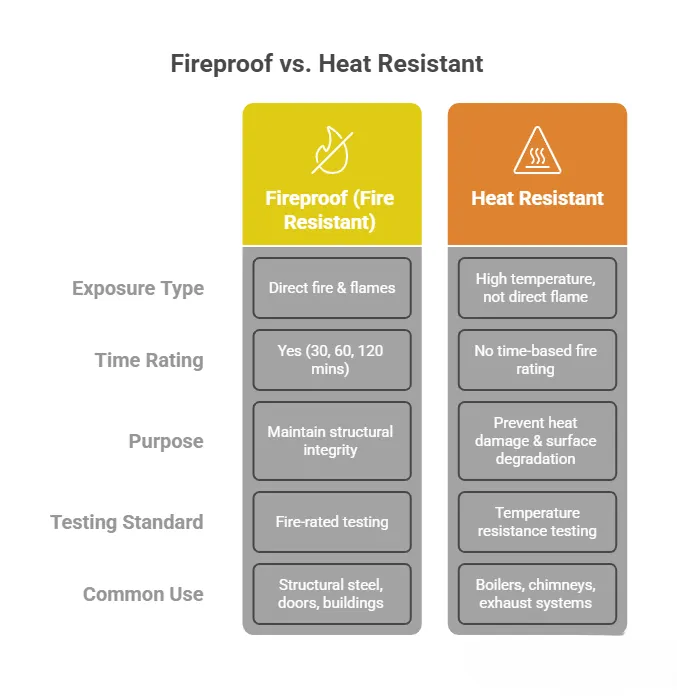
When you are trying to choose the protection system you need to know the difference between fireproof and heat resistant materials. Even though both of these terms are used when talking about temperatures they are not the same thing. Fireproof systems, which are really fire systems are made to withstand being on fire for a certain amount of time.
Heat resistant coatings are made to handle temperatures but they are not meant to stop fires from spreading. They do not have a fire rating, like fire resistant systems do. You have to think about what you need, fireproof or heat resistant to make the choice. Fireproof and heat resistant materials are used in situations so you have to know what each one can do.
Here is a clear comparison:
Key Takeaway:
If you want to be safe from fires you should get a fire system. This is an idea if you need certified fire safety protection.
If you are worried about things getting too hot all the time you should use a heat coating. This is the thing to do if you are dealing with continuous high temperature exposure and you want a fire safety protection that works. Fire safety protection is very important. You should choose a fire resistant system for this.
Fire Resistant vs Fire Retardant – Are They the Same?
Fire resistant and fire retardant are often used to mean the thing but that is not correct. Fire materials and fire retardant materials both help with fire protection. However they do things. Fire resistant materials are made to withstand fire for an amount of time. Fire retardant materials are made to slow down a fire. They are tested in ways. It is important to know the difference, between fire fire retardant so we can be safe. Have good fire protection.
Key Technical Differences
Fire resistant systems are made to stay strong when there is a fire for an amount of time. The main goal of fire systems is to keep everything stable. Fire resistant systems are often used in parts of buildings that hold everything up and in areas where safety is really important like fire resistant systems, in critical safety areas.
Fire retardant products are made to help stop fires from spreading fast. They are designed to slow down the flames. These products do not focus on keeping a building strong for an amount of time. Instead they try to delay the fire from starting in the place. Fire retardant products are really good, at reducing the risk of fires. They help slow down the spread of flames.
Performance During Active Fire
When a fire is burning, materials that can resist fire help stop things from falling down. They do this by keeping the heat from the stuff underneath. Some special coatings get bigger when they are hot and make a layer that keeps things safe. This protective layer is like a shield that stops the heat from getting through. Materials like these are very important because they help keep people safe during a fire. Fire resistant materials are very good, at keeping the heat from the things that they are protecting.
Fire retardant coatings are really good at slowing down how fast a fire spreads. They also make the fire less intense. However the thing is, fire retardant coatings may not be able to give you a structural fire rating. This means that fire retardant coatings can help with the fire. They might not be enough to keep the building strong in a fire. Fire retardant coatings are still useful, for slowing down fires and reducing the intensity of the flames.
Certification & Testing Standards
Fire resistant systems have to go through tests to make sure they can withstand fire. These tests are done according to rules to see how long the systems can resist fire, like thirty minutes or one hour or two hours. On the hand fire retardant products are checked to see how well they can stop fires from spreading across their surface and how much they can burn, rather than seeing how long they can keep their shape in a fire. Fire resistant systems and fire retardant products are both important, for safety. Fire resistant systems are tested for an amount of time like thirty minutes to make sure they can protect people and things from fire.
Which One Should You Choose?
Choosing between fireproof, heat resistant, fire resistant, or fire retardant solutions depends on the type of surface, risk level, and regulatory requirements. Selecting the wrong system can compromise safety and compliance, so understanding the application is essential.
For Industrial Machinery → Heat Resistant
Industrial equipment like boilers and furnaces and exhaust systems and pipelines get really hot all the time.
This is a problem.
So we use heat coatings on these industrial equipment like boilers and furnaces.
They are great because they keep the surfaces of the equipment like boilers and furnaces from getting damaged by the heat.
They also stop the equipment like boilers and furnaces from getting all oxidized and scaled up.
The good thing is that the heat resistant coatings do not need special fire ratings to work on the industrial equipment, like boilers and furnaces.
For Structural Steel → Fire Resistant
Structural steel, in buildings and industrial facilities needs to be able to hold its weight during a fire. This is very important. Fire resistant coatings, the intumescent systems give structural steel time to withstand the fire. This protection can last for 30 minutes, 60 minutes or 120 minutes. The goal of fire coatings is to prevent structural steel from collapsing during a fire. This allows people to get out of the building safely. Structural steel and fire resistant coatings work together to keep people safe during a fire.
For Wood & Fabric → Fire Retardant
Things like wood and fabric can catch fire easily. We can use treatments to make them less likely to catch fire. These treatments help slow down the fire and give us time before things start burning. This makes the fire less strong, at the beginning.
Safety & Compliance Considerations
When you are working on a project you need to think about the building codes and the rules for fire safety. You also have to consider the certification standards for fire safety. Fire-rated systems are required for commercial and industrial projects. On the hand people choose heat resistant or fire retardant products based on the specific risks and what the project needs to operate safely. Fire-rated systems and fire retardant products are very important, for fire safety.
Common Myths About Fireproof Coatings
There are many misconceptions surrounding fireproof, fire resistant, and heat resistant coatings. These misunderstandings can lead to poor product selection and safety risks. Let’s break down some common myths.
Myth: Fireproof Means No Damage Ever
Many people believe that fireproof materials cannot be damaged by fire at all. In reality, “fireproof” usually means fire resistant for a specific, tested duration. Most systems are rated for 30, 60, or 120 minutes under controlled fire conditions. Prolonged or extreme exposure can still cause damage.
Myth: Heat Resistant Paint Stops Fire
Heat resistant paint is designed to withstand high temperatures, not direct flames. It protects surfaces from thermal degradation but does not provide a certified fire rating. It cannot replace a fire resistant or fire retardant system in fire safety applications.
Myth: All Fire Coatings Work the Same
Not all fire protection coatings perform the same function. Fire resistant coatings maintain structural integrity for a rated time, fire retardant products slow flame spread, and heat resistant coatings handle high temperatures. Each serves a specific purpose and should be selected based on application and compliance requirements.
Conclusion – Choosing the Right Protection Matters
Understanding the difference between fireproof vs heat resistant, as well as fire resistant and fire retardant systems, is essential for making informed safety decisions. Each solution serves a specific purpose, and selecting the wrong one can impact both protection and compliance.
Quick Recap of Differences
Fireproof (more accurately fire resistant) systems are designed to withstand direct fire for a certified time period. Heat resistant coatings handle high temperatures but are not intended for flame exposure. Fire retardant products slow ignition and reduce flame spread. Each offers a different level of protection based on application needs.
Importance of Correct Terminology
Using the correct terminology ensures proper product selection, regulatory compliance, and overall safety. Misunderstanding these terms can lead to costly mistakes and inadequate fire protection.
CTA: Consult Experts for Proper Fire Protection Solutions
Before choosing a coating system, consult experienced professionals who understand fire safety standards and application requirements. The right guidance ensures reliable protection, long-term durability, and compliance with industry regulations.