

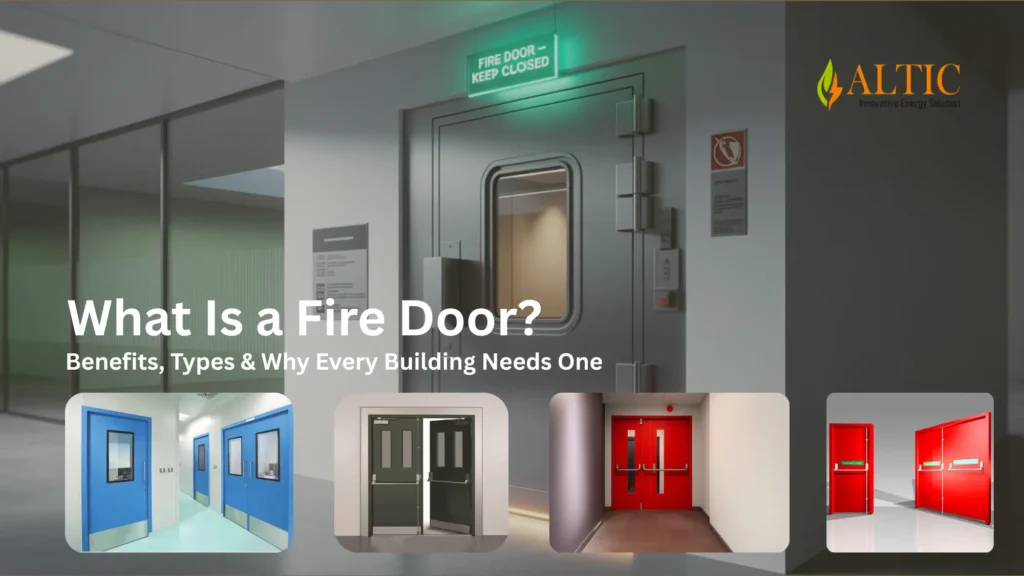
Introduction: Fire Doors — The Silent Guardians of Every Building
In the world of modern construction, safety is not a luxury — it’s a necessity. Whether it’s a home, office, hospital, hotel, mall, warehouse, or factory, every structure is vulnerable to fire-related hazards. While fire alarms and extinguishers often receive the spotlight, there’s one life-saving component that quietly stands in the background, working 24/7 to protect people and property: the fire door.
Fire doors are not just ordinary doors with thicker panels; they are engineered safety barriers designed to slow the spread of flames, heat, and smoke. In a fire emergency, these doors play a critical role by providing precious time for evacuation and minimizing structural damage.
With increasing awareness, stricter building codes, and rising fire risks in urban spaces, fire doors have become indispensable. This blog explores everything you need to know about fire doors — what they are, their core benefits, various types, and why every modern building must have them.
What Is a Fire Door?
A fire door is a specially designed door assembly built to resist fire, smoke, and heat for a specified period — typically 30, 60, 90, or 120 minutes. It forms part of a building’s passive fire protection system.
Unlike regular doors, fire doors undergo strict testing to meet national and international safety standards. They are designed not only to delay fire progression but also to ensure safe evacuation routes remain accessible for longer.
Fire doors are usually made from:
- Fire-rated timber
- Steel
- Gypsum-filled metal cores
- Glass with fire-resistant glazing
- Composite materials
But their true power lies in the combination of door leaf, frame, hardware, seals, and installation techniques — all working together to create a protective shield.
How Fire Doors Work: The Science Behind The Protection
Fire doors use a combination of engineered materials and smart design features to limit fire damage. Here’s how they work:
1. Fire-Resistant Core
The door’s core material expands when exposed to heat, creating insulation that prevents fire from penetrating through the surface.
2. Intumescent Seals
These seals expand multiple times their original size during a fire, filling gaps between the door and frame. This prevents smoke, heat, and toxic gases from passing through.
3. Auto-Closing Mechanism
Fire doors must close automatically during an emergency. This ensures that no door remains accidentally open, which could allow fire to spread rapidly.
4. Specialized Hinges & Hardware
Fire-rated hinges, locks, and latches are used to withstand high temperatures without melting or deforming.
5. Fire-Resistant Glazing
If the door includes a glass window, it uses fire-rated glazing that remains intact under extreme heat.
Each component is tested individually and as a complete assembly to ensure optimal performance.
Benefits of Fire Doors
Fire doors offer far-reaching benefits for building safety, security, and compliance. Let’s take a deeper look.
1. Protects Lives During Emergencies
The primary benefit of fire doors is life safety.
By containing fire and smoke, they give occupants valuable time to escape — often the difference between life and death.
2. Limits Fire and Smoke Damage
Fire doors prevent fire from spreading to other sections of a building, reducing property damage significantly. This containment reduces heat transfer, protecting structural integrity.
3. Ensures Safe Evacuation Routes
Locations like staircases, corridors, and emergency exits rely on fire doors to remain smoke-free. Without fire doors, these escape paths become unusable within minutes.
4. Mandatory For Compliance
Most countries have strict fire safety codes that require fire doors in commercial, industrial, and public buildings. Non-compliance can result in:
- Heavy penalties
- Legal liability
- Insurance claim rejection
- Operational shutdowns
5. Enhances Building Value & Trust
Buildings equipped with certified fire doors are perceived as safer and more reliable by buyers, tenants, and employees.
6. Protects High-Value Equipment & Assets
Fire doors can be strategically placed around critical rooms such as:
- Server rooms
- Electrical control rooms
- Kitchens
- Storage areas
- Manufacturing zones
This protects expensive infrastructure from catastrophic damage.
7. Works Automatically Without Manual Effort
Fire doors do not require human intervention. Their automatic closing system activates immediately when a fire alarm triggers.
Types of Fire Doors
Fire doors come in multiple types based on materials, design, operation, and fire ratings. Choosing the right one depends on the building’s layout and function.
1. Timber Fire Doors
These are manufactured using fire-resistant timber cores, often layered with hardwood or composite sheets. Ideal for interior spaces such as offices, homes, and hotels.
Benefits: Aesthetic, cost-effective, customizable.
2. Steel Fire Doors
Made from galvanized steel sheets with mineral-based cores, these doors offer maximum durability. Commonly used in industrial spaces, factories, warehouses, and exit routes.
Benefits: High strength, impact-resistant, long lifespan.
3. Glass Fire Doors
These include fire-resistant glazing that prevents shattering under heat. Perfect for spaces where visibility, aesthetics, and safety must coexist.
Benefits: Modern look, allows light flow, certified safety.
4. Sliding Fire Doors
Used in large commercial or industrial spaces where swing doors are not practical.
Benefits: Saves space, ideal for warehouses, malls, and hospitals.
5. Double-Leaf Fire Doors
Designed for wider openings, they allow heavy traffic movement while ensuring compliance.
Benefits: Supports large equipment movement, flexible use.
6. Acoustic + Fire-Rated Doors
These combine fire protection with sound insulation, suitable for:
- Studios
- Conference rooms
- Auditoriums
- Hospitals
Benefits: Multi-functional protection.
7. Fire Exit Doors
These are dedicated emergency exit doors designed to withstand fire and facilitate quick evacuation.
Benefits: Secure, panic-bar compatible, safety-certified.
Fire Door Ratings Explained
Fire doors are categorized based on the duration they can resist fire:
- FD30 — 30 minutes
- FD60 — 60 minutes
- FD90 — 90 minutes
- FD120 — 120 minutes
Higher ratings are often required for high-risk areas like industrial plants or data centers.
Where Fire Doors Are Essential
Fire doors are not optional in most buildings; they are strategically required in specific areas:
1. Staircases and Escape Routes
The most crucial areas — they must remain smoke-free.
2. Basements
High risk due to electrical equipment and limited ventilation.
3. Kitchens
Restaurants, hotels, and homes with commercial-grade setups must install them.
4. Server & Electrical Rooms
To protect critical infrastructure.
5. Storage Rooms
Especially those with flammable materials.
6. Industrial Manufacturing Zones
To prevent large-scale fire damage.
7. Commercial Buildings, Malls & Theatres
High footfall areas require enhanced fire protection.
8. Hospitals and Schools
Where evacuation is slow and orderly.
Common Myths About Fire Doors — And the Truth
Myth 1: Fire doors look bulky and unattractive.
Truth: Modern fire doors can be sleek, aesthetic, and available in multiple designs.
Myth 2: Any solid door can act as a fire door.
Truth: Fire doors require certification, testing, seals, hardware, and installation.
Myth 3: Propping open a fire door is harmless.
Truth: A propped-open fire door loses its entire function — and can cost lives.
Myth 4: Fire doors are only needed in commercial buildings.
Truth: Residential spaces also benefit from fire-rated bedroom and kitchen doors.
How to Identify a Certified Fire Door
A professional fire door will have:
- Certification labels (FD30, FD60, etc.)
- Intumescent seals
- Fire-rated hinges
- Self-closing mechanism
- Accurate installation gaps (2–4 mm)
- Manufacturer ID or compliance sticker
If any of these components are missing, the door may not perform as required during an emergency.
Fire Door Maintenance — A Must, Not a Choice
To ensure performance, fire doors require regular inspection:
Checklist for Monthly Maintenance:
- Door closes automatically without obstruction
- No visible damage to the frame or leaf
- Seals are intact and not painted over
- Hinges are tight and lubricated
- No gaps larger than 3–4 mm
- Latches function correctly
- Glazing (if any) is crack-free
Neglecting fire door maintenance can turn a life-saving barrier into a dangerous liability.
Why Every Building Needs a Fire Door
A fire can engulf a building in minutes. Without containment, smoke spreads even faster — often the leading cause of casualties.
Here’s why fire doors are indispensable:
⭐ 1. They Save Lives
By providing time for evacuation.
⭐ 2. They Restrict Destruction
By confining fire to the area of origin.
⭐ 3. They Protect High-Value Assets
Including machinery, documents, and digital systems.
⭐ 4. They Are Legally Required
Compliance is mandatory in commercial, industrial, and many residential buildings.
⭐ 5. They Increase Safety Ratings
Improved safety measures make buildings more marketable.
⭐ 6. They Work Automatically
No need for human activation.
⭐ 7. They Provide Peace of Mind
Knowing that a building is equipped with fire-resistant barriers adds confidence for owners, tenants, and visitors.
Conclusion: Fire Doors Are Not Just Requirements — They Are Lifelines
Fire doors are among the most essential but often overlooked components of a building’s fire safety system. They work silently, without drawing attention, yet they play a monumental role in saving lives and protecting property during emergencies.
Whether you’re designing a new building, renovating an existing one, or ensuring compliance for industrial and commercial spaces, investing in high-quality fire doors is not just recommended — it’s non-negotiable.
In a world where fire risks are increasing and buildings are becoming more complex, fire doors stand as unshakeable protectors. They are more than doors — they are safety guardians, structural shields, and life-saving assets.
Every building deserves one.
Every life depends on one.