

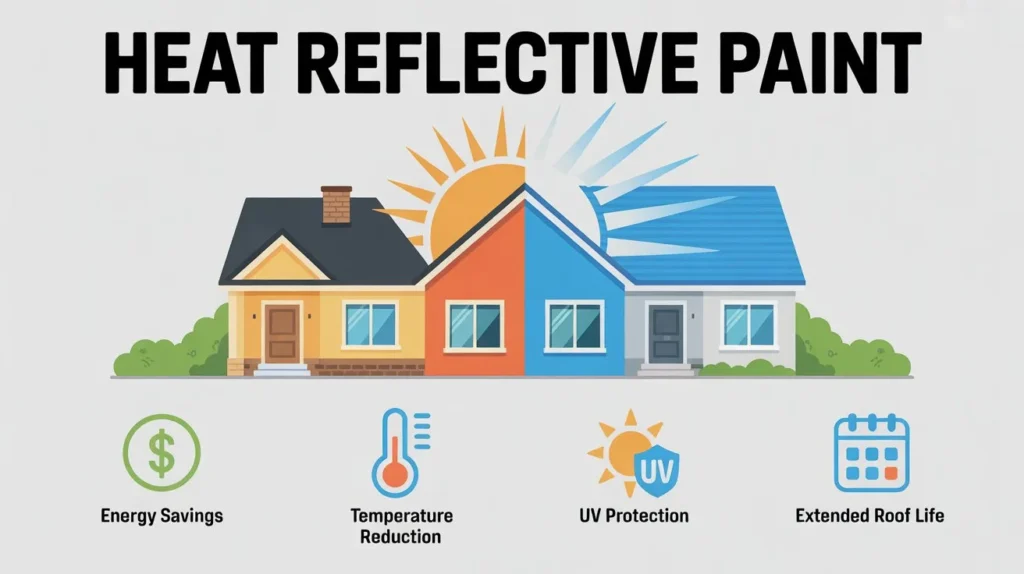
Heat reflective paint is an advanced coating designed to reduce heat absorption on roofs and exterior surfaces by reflecting a large portion of sunlight, including infrared (IR) and ultraviolet (UV) rays. This innovative solution helps keep buildings cooler, lowers indoor temperatures, and reduces dependence on air conditioning. In hot regions such as India, the Middle East, and other high-solar-exposure areas, heat reflective paint has become an effective way to improve energy efficiency and comfort in homes, commercial buildings, and industrial facilities. By minimizing heat buildup on rooftops and walls, it also helps reduce electricity bills and extends the lifespan of building materials. As cities face rising temperatures and increasing energy costs, heat reflective paint offers a practical, eco-friendly solution for modern construction and sustainable cooling.
Introduction – Why Heat Reflective Paint Is Becoming Essential
Rising temperatures and frequent heat waves are becoming a major challenge for buildings, especially in hot climates like India. During summer, rooftops and exterior walls absorb large amounts of solar heat, which increases indoor temperatures and makes living or working spaces uncomfortable. As a result, homes, factories, warehouses, and commercial buildings rely heavily on air conditioning, leading to higher electricity consumption and rising energy costs.
Heat reflective paint is emerging as a practical solution to this problem. By reflecting a significant portion of sunlight and reducing heat absorption, this specialized coating helps keep roofs and walls cooler. It improves indoor comfort, reduces the load on cooling systems, and contributes to energy efficiency. For modern buildings looking for sustainable and cost-effective cooling solutions, heat reflective paint is becoming an essential choice.
What Is Heat Reflective Paint?
Basic Definition
Heat reflective paint is a specialized coating designed to reflect a large portion of solar radiation, including infrared (IR) and ultraviolet (UV) rays, away from building surfaces. Unlike regular paints that mainly focus on color and protection, heat reflective paint helps reduce heat absorption on roofs and walls. This keeps the surface temperature lower and helps maintain a cooler indoor environment, making it an effective solution for buildings exposed to strong sunlight.
How It Differs from Traditional Paint
Traditional paint primarily provides decoration and basic surface protection, but it does not significantly reduce heat buildup. Heat reflective paint, on the other hand, contains special reflective pigments and additives that bounce back sunlight instead of absorbing it. This difference helps lower roof and wall temperatures, reduce indoor heat, and improve energy efficiency. As a result, buildings coated with heat reflective paint often experience better comfort levels and reduced cooling costs compared to those using conventional paint.
Key Benefits of Heat Reflective Paint
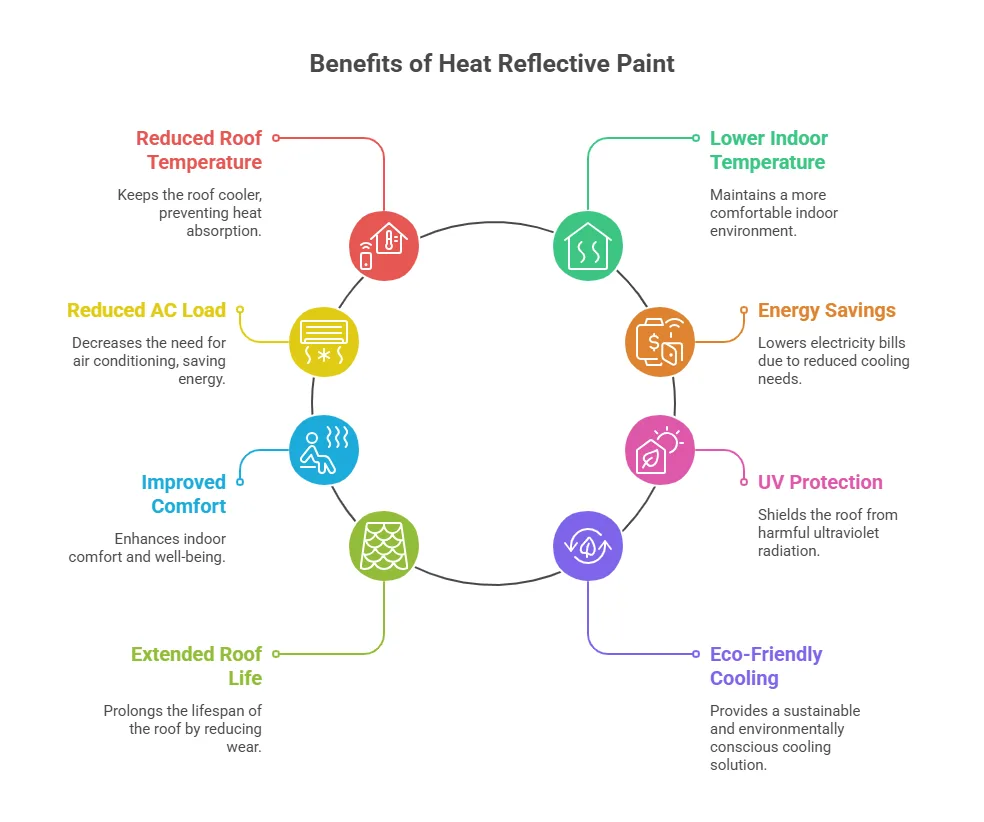
Reduces Roof Surface Temperature
Heat reflective paint reflects a large portion of solar radiation, preventing roofs from absorbing excessive heat. This helps significantly reduce roof surface temperatures, especially during hot summer days when rooftops are directly exposed to sunlight.
Lowers Indoor Temperature
By reducing the heat absorbed by the roof and exterior surfaces, heat reflective paint helps keep indoor spaces cooler. This creates a more comfortable environment inside homes, offices, factories, and warehouses.
Reduces Air Conditioning Load
When indoor temperatures remain lower, air conditioning systems do not need to work as hard to maintain a comfortable temperature. This reduces the overall load on cooling systems and improves their efficiency.
Saves Energy and Electricity Costs
Lower dependence on air conditioning leads to reduced electricity consumption. Over time, this results in noticeable energy savings and lower electricity bills for both residential and commercial buildings.
Improves Indoor Comfort
High indoor temperatures can make living and working spaces uncomfortable. Heat reflective paint helps maintain a balanced indoor climate, improving comfort for occupants and enhancing productivity in workplaces.
Protects Roof from UV Damage
Constant exposure to ultraviolet (UV) rays can weaken roofing materials and cause surface deterioration. Heat reflective paint acts as a protective layer that shields the roof from harmful UV radiation.
Extends Roof Life
By reducing heat stress and protecting the roof from UV damage, heat reflective paint helps extend the lifespan of roofing materials. This reduces the need for frequent repairs and maintenance.
Eco-Friendly Cooling Solution
Heat reflective paint is an environmentally friendly way to reduce building heat. By lowering energy consumption and reducing reliance on air conditioning, it helps decrease carbon emissions and supports sustainable building practices.
Benefits for Different Types of Buildings
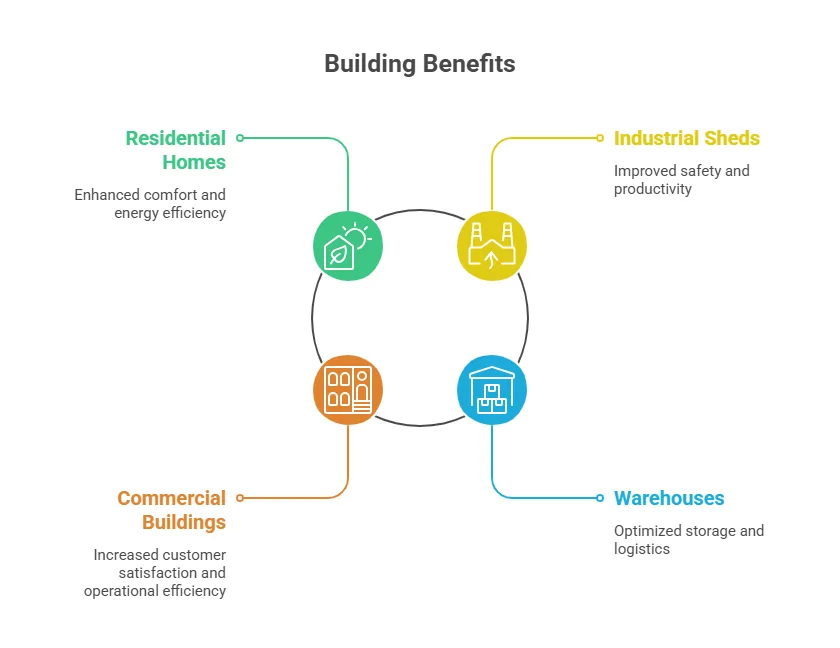
Residential Homes
Heat reflective paint is highly beneficial for residential homes, especially in regions with strong sunlight and high summer temperatures. When applied to rooftops and exterior walls, it helps reduce heat absorption and keeps indoor spaces cooler. This improves comfort for residents and reduces the need for continuous air conditioning, resulting in lower electricity bills.
Industrial Sheds and Factories
Industrial sheds and factories often have large metal roofs that absorb significant heat during the day. Heat reflective paint helps reduce roof temperatures and prevents excessive heat buildup inside the facility. This creates a more comfortable working environment for employees and can improve productivity while lowering cooling costs.
Commercial Buildings
Commercial buildings such as offices, shopping centers, and showrooms can benefit from heat reflective coatings by maintaining a cooler indoor environment. Reduced heat transfer helps decrease the load on HVAC systems, improving energy efficiency and reducing operational expenses over time.
Warehouses and Storage Facilities
Warehouses and storage facilities often store temperature-sensitive goods that can be affected by excessive heat. Applying heat reflective paint to roofs and walls helps control internal temperatures, protecting stored materials while reducing energy usage for cooling systems.
Financial Benefits of Heat Reflective Paint
Lower Maintenance Costs
Heat reflective paint helps protect roofs and exterior surfaces from excessive heat and harmful UV radiation. This protective layer reduces the chances of cracks, surface damage, and material deterioration. As a result, building owners spend less on frequent repairs and maintenance, making it a cost-effective solution for long-term roof protection.
Faster Return on Investment
Although applying heat reflective paint requires an initial investment, the savings on electricity and cooling costs can quickly offset the expense. By reducing the load on air conditioning systems and lowering energy consumption, many buildings experience a faster return on investment within a short period.
Long-Term Cost Savings
Over time, the combined benefits of lower energy bills, reduced maintenance, and extended roof life lead to significant financial savings. Heat reflective paint not only improves energy efficiency but also helps building owners reduce operational costs in the long run, making it a smart and practical investment.
Best Surfaces for Heat Reflective Paint
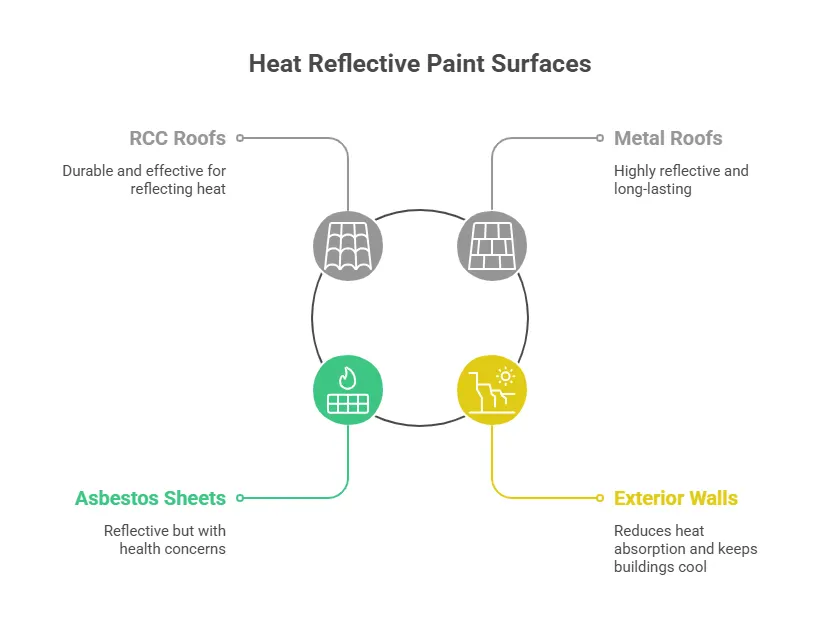
RCC Roofs
Reinforced Cement Concrete (RCC) roofs are one of the most common surfaces where heat reflective paint is applied. RCC roofs absorb large amounts of solar heat during the day, which increases indoor temperatures. Applying heat reflective paint on RCC roofs helps reflect sunlight, reduces heat absorption, and keeps indoor spaces cooler.
Metal Roofs
Metal roofs, often used in industrial sheds and warehouses, heat up very quickly under direct sunlight. Heat reflective paint helps reduce the surface temperature of metal roofs by reflecting solar radiation. This helps maintain a cooler environment inside factories and storage facilities.
Asbestos Sheets
Asbestos sheet roofing is commonly used in older buildings, industrial structures, and temporary facilities. These sheets tend to absorb and retain heat, making indoor spaces extremely warm. Heat reflective paint helps reduce heat buildup and improves indoor comfort in such structures.
Exterior Walls
Exterior walls also absorb heat from sunlight, which contributes to higher indoor temperatures. Applying heat reflective paint on outer walls helps reduce heat transfer into the building and improves overall energy efficiency. This is especially useful for buildings exposed to strong sunlight throughout the day.
Frequently Asked Questions
Does Heat Reflective Paint Really Work?
Yes, heat reflective paint is designed to reflect a significant portion of solar radiation, including infrared (IR) and ultraviolet (UV) rays. By reducing heat absorption on roofs and walls, it helps lower surface temperatures and keeps indoor spaces cooler. Many buildings experience improved comfort and reduced cooling costs after applying heat reflective coatings.
How Long Does Heat Reflective Paint Last?
The lifespan of heat reflective paint depends on the product quality, surface preparation, and environmental conditions. On average, high-quality heat reflective coatings can last between 5 to 10 years with proper maintenance. Regular inspection and occasional recoating can help maintain optimal performance.
Can It Be Applied on Old Roofs?
Yes, heat reflective paint can be applied on old roofs such as RCC, metal sheets, and asbestos surfaces. However, proper surface preparation is essential. Cleaning, repairing cracks, and applying a suitable primer can improve adhesion and ensure better performance of the reflective coating.
Is Heat Reflective Paint Waterproof?
Many heat reflective paints offer a certain level of water resistance, which helps protect roofs from rain and moisture. However, not all reflective coatings are fully waterproof. For areas with heavy rainfall or leakage issues, a dedicated waterproofing layer may be required before applying heat reflective paint.
Conclusion – Why Heat Reflective Paint Is a Smart Investment
Heat reflective paint has become an effective solution for managing rising temperatures in modern buildings. By reflecting solar radiation and reducing heat absorption, it helps keep roofs and walls cooler, which directly improves indoor comfort. This simple coating technology can significantly reduce the load on air conditioning systems, leading to lower electricity consumption and long-term energy savings.
In addition to cooling benefits, heat reflective paint also protects building surfaces from UV damage and excessive heat stress, helping extend the life of roofs and exterior structures. For residential homes, industrial sheds, warehouses, and commercial buildings, it offers both performance and financial advantages.
As energy efficiency and sustainable construction become increasingly important, heat reflective paint stands out as a smart, cost-effective investment for long-term comfort, durability, and energy savings.