Introduction
Every year, corrosion quietly erodes billions of dollars’ worth of infrastructure around the world—from bridges and pipelines to factories and ships. The damage caused by rust, moisture, and chemical exposure not only degrades materials but also weakens essential structures that power our cities and industries. As global infrastructure ages, protecting surfaces against corrosion has become a top priority across construction, marine, and manufacturing sectors.
Anti-corrosive paint has emerged as a revolutionary solution designed to combat this persistent problem. By forming a protective barrier that blocks oxygen, water, and corrosive agents, these coatings dramatically enhance the durability of metals and other materials. At the same time, they preserve appearance and minimize costly maintenance cycles.
This article explores the top ten reasons why investing in anti-corrosive paint is essential for anyone seeking long-lasting, reliable protection against the invisible but powerful threat of corrosion.
1. Superior Protection Against Rust and Corrosion
Anti-corrosive paints act as a physical shield that prevents oxygen, moisture, and salts from coming into contact with metal surfaces. These elements are the primary triggers of corrosion, and once they are blocked, the oxidation process slows dramatically. On a molecular level, the paint’s pigments create a chemical passivation layer, reducing electrochemical reactions that lead to rust.
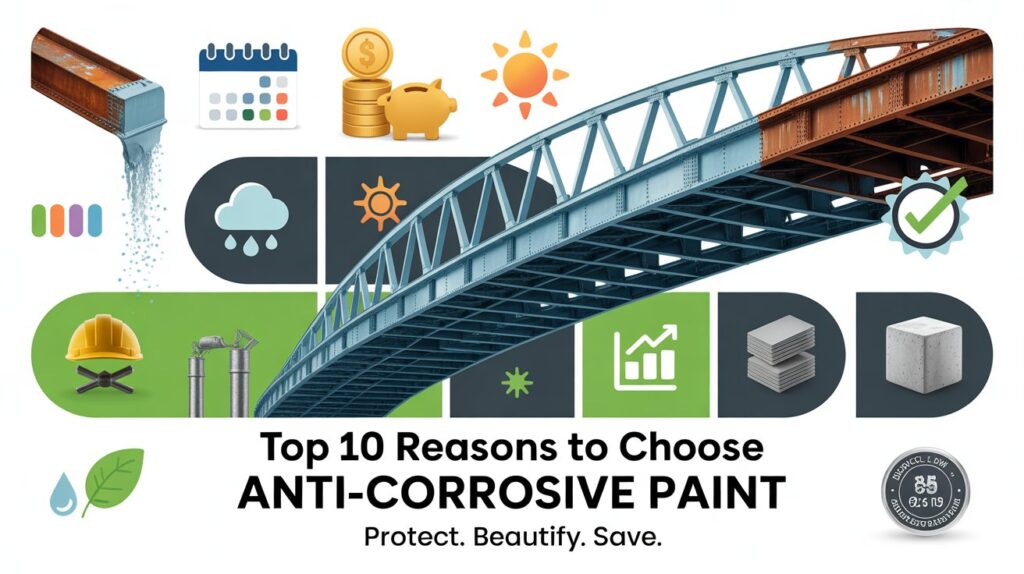
This technology is vital in environments with high humidity, saline air, or industrial pollutants—such as ship hulls, oil rigs, and bridges. For example, coastal bridges coated with advanced anti-corrosive systems can last decades longer before requiring repainting. In heavy industries, these paints safeguard critical assets from degradation, ensuring operational reliability and safety.
2. Extends the Lifespan of Metal Structures
Corrosion gradually weakens metal surfaces, causing pitting, flaking, and eventual structural failure. Without protection, the lifespan of metal assets shortens significantly. Anti-corrosive coatings provide a durable layer that prevents these effects, maintaining the metal’s mechanical strength.
Factories and offshore platforms rely heavily on such coatings. For instance, an oil rig exposed to saltwater and wind uses epoxy-based anti-corrosive paint to maintain stability over long operational cycles. Instead of early replacement, regular inspections and minor touch-ups are enough to preserve performance. This protection can extend service life by 10 to 20 years, translating to massive savings and safety assurance.
3. Reduces Maintenance and Repair Costs
Constant repainting and rust repairs are expensive and time-consuming. Anti-corrosive coatings reduce these expenses by preventing damage at its root. Instead of dealing with scaling or surface degradation, maintenance teams spend less time on repairs.
A cost analysis often shows that while initial coating cost might seem higher, the lifecycle savings are substantial. For example, uncoated steel in coastal conditions could require major maintenance every two years, while coated steel remains protected for up to a decade. Over time, that difference results in significant financial and resource savings.
4. Withstands Harsh Environmental Conditions
Engineered to endure extreme weather, anti-corrosive paints perform even in highly challenging conditions such as marine humidity, desert heat, or industrial pollution. Their formulations include resins and inhibitors that resist UV degradation, acid rain, and chemical exposure.
Before launch, these coatings undergo rigorous tests for salt spray resistance, thermal cycling, and humidity endurance. Selecting the right product for an environment is crucial—zinc-rich coatings excel in offshore zones, while polyurethane topcoats perform well in outdoor UV-heavy conditions. This durability ensures predictable, dependable protection everywhere from shipyards to chemical plants.
5. Enhances Aesthetic Appeal While Protecting
Beyond functionality, anti-corrosive paints also enhance the visual appeal of structures. Modern formulations allow a variety of colors, finishes, and gloss levels while retaining protective capability.
Architects and designers increasingly use these coatings for aesthetic value in exposed metal structures such as facades and industrial frameworks. Whether in gloss, matte, or metallic finish, anti-corrosive paints combine beauty with endurance—making structures both visually pleasing and well-defended against decay.
6. Increases Structural Safety
Corrosion is not just a cosmetic problem—it can compromise structural safety. Rusted beams, corroded tanks, and worn pipelines pose serious risks such as collapse or leakage. By preventing degradation, anti-corrosive coatings preserve the original load-bearing and containment capabilities of metal components.
Many industries, including oil and gas, maritime, and construction, treat anti-corrosive protection as a safety-critical measure. Properly maintained coatings ensure that infrastructure remains secure, reducing the risk of accidents, plant shutdowns, and legal liabilities, while ensuring compliance with engineering safety standards.
7. Environmentally Friendly Formulations
Modern anti-corrosive paints increasingly adopt eco-friendly chemistry. Low-VOC and water-based formulations minimize the release of harmful emissions during application, contributing to safer workplaces and reduced environmental impact.
Technological advances now allow sustainable coatings to perform equally or better than traditional solvent-based types. Many industries are transitioning to these greener solutions to meet environmental regulations and corporate sustainability targets, proving that corrosion protection and eco-responsibility can coexist effectively.
8. Suitable for Multiple Surfaces and Industries
Anti-corrosive paints offer remarkable versatility. They can be applied to steel, aluminum, concrete, and machinery parts across industries such as construction, marine, automotive, railway, and oil and gas. Their adaptability makes them indispensable in both heavy-duty applications and commercial setups.
For instance, machinery in manufacturing plants, bridges in urban infrastructure, or ship hulls exposed to seawater all benefit from these coatings. This broad usability makes anti-corrosive paints a practical choice for engineers and facility managers seeking wide coverage for diverse asset categories.
9. Long-Term Return on Investment
While premium anti-corrosive paints may cost more upfront, they deliver strong long-term value. Reduced maintenance, fewer replacements, and extended service life lead to overall lower operational costs.
For example, a company spending $25,000 on anti-corrosive coating for storage tanks may save more than $100,000 in repairs and downtime over a decade. This investment approach enhances cost efficiency and ensures better asset management—an essential factor for industries focusing on sustainability and profitability.
10. Compliance with International Safety Standards
Leading anti-corrosive coatings comply with globally recognized standards such as ISO, ASTM, and NACE, ensuring proven protection and reliability. These certifications validate that the products meet strict performance, corrosion resistance, and durability benchmarks.
Using certified coatings helps industries meet regulatory obligations and quality inspections. Compliance not only protects assets but reinforces brand credibility, showing clients and stakeholders a commitment to quality and safety.
Conclusion
Anti-corrosive paint represents far more than a surface treatment—it is an investment in durability, safety, and sustainability. By shielding structures from moisture, rust, and harsh environments, it protects both appearance and function for years. Engineers, builders, and industrial professionals who prioritize corrosion prevention can significantly reduce maintenance costs, extend structure lifespans, and enhance safety compliance.
In a world where infrastructure costs continue to rise, proactive protection is the most economical and responsible choice. Don’t let corrosion dictate the life of your structures—choose protection that lasts; choose anti-corrosive paint.